
Specs are compiled from manufacturer listings and verified buyer reviews and can change over time — please confirm the key details on the product page before buying.
If you have ever watched a perfectly healthy houseplant yellow and wilt, then discovered a pot full of wet, compacted sludge, you already know the problem: the wrong soil holds too much water and starves the roots of air. The real fix is a mix that drains fast enough to let roots breathe while still holding a little moisture and food — but most bags labeled “potting mix” actually lock in too much water for succulents, snake plants, fiddle leaf figs, and other plants that hate wet feet.
I’m Rikta — the founder and writer behind Lawn Gear Lab. This guide is built by comparing the manufacturers’ published specifications and the patterns across verified customer reviews, so you get each pick’s real strengths and trade-offs instead of marketing spin.
Whether you are potting a Monstera, repotting a succulent, or rescuing a droopy fiddle leaf fig, the right soil is the single biggest factor in how your plant grows — and this guide to the best well draining potting soil breaks down the six most worthwhile mixes by what they actually do for your plants.
Quick Picks
- Craft Aroid Potting Mix- Elite Organic Alocasia, Philodendron, Monstera Soil Mix — Best Overall
- Jessi Mae Potting Soil — 4-Quart Bag, Perlite, Well-Draining Snake Plant Soil — Best Value
- Soil Sunrise Cactus and Succulent Potting Mix (8 Quarts) Special Blend — Pro Grade
- Rosy Soil Cactus & Succulent Potting Mix — 4 Quarts, Organic, Peat-Free — Premium Pick
- 100% Organic Fiddle Leaf Fig Soil – Optimally-Draining Mix, Made in USA, Large 7.5L Bag — Specialty Pick
- Spike & Bloom High Drainage Cactus Soil Potting Mix with Mycorrhizal Fungi — 8 Pounds / 4 Quarts — Top Performer
How To Choose The Best Well Draining Potting Soil
Not all bags labeled “well draining” actually drain well. Some are just standard potting soil with a handful of perlite thrown in. To get a mix that really works — one that lets water run straight through while keeping roots lightly moist — you need to look past the marketing and focus on the ingredient list and texture. Here is what actually matters.
Texture: Chunky vs. Fine
The most important clue is whether the mix feels chunky or floury. Well draining soil should grip your fingers with coarse bits — bark fines, pumice, lava rock, calcined clay, or coarse sand. If the bag looks like fine brown dust, it will compact when wet and smother roots. Chunky particles create air pockets (pores) that water flows past instead of filling up, so oxygen gets to the root system. The chunkiest mixes, like those with Douglas fir bark or tree fern fiber, also make it almost impossible to overwater because excess water has a clear path out of the pot.
Ingredients to Look For and Avoid
The best fast-draining mixes skip peat moss and perlite. Peat moss holds water like a sponge — great for moisture-loving plants but wrong for succulents, cacti, and aroids. Some brands now use coco coir (washed clean of salts) instead, which holds less water and is more sustainable. For drainage, pumice and lava rock are better than perlite because they are heavier (so they do not float to the top of the pot when you water) and require no high-heat processing. Calcined clay, silica sand, and pine bark fines are other common drainage additives. Avoid soil with heavy topsoil or garden loam — those are designed for in-ground beds and turn into cement in a container.
Organic vs. Synthetic: What It Means for Drainage
Organic soil generally has more coarse organic matter (worm castings, composted bark, green compost) that provides both drainage and slow-release nutrients. That is fine for most plants, but if you are growing succulents that are used to lean, gritty conditions, even organic matter needs to be balanced with a high proportion of sand or rock. Many of the best mixes are organic and peat-free, because skipping the peat means the formula drains faster from the start. If a mix is labeled both organic and “moisture control,” treat it with caution — moisture-control additives often hold extra water that succulents and cacti do not need.
Bag Size and Pot Fill
You will see volumes listed in quarts and liters — and the number on the bag is often smaller than it looks. A standard 4-quart bag (about 3.8 liters) typically fills one 10-inch pot or two 6-inch pots. An 8-quart bag fills a large 12-inch pot. If you have multiple plants or big specimens, check the quart count, not the bag dimensions. A resealable bag helps if you only use part of the mix, because dry or moist soil stored open can attract fungus gnats.
Quick Comparison
On smaller screens, swipe sideways to see the full table.
| Model | Best For | Volume | Key Ingredient | Peat-Free | Amazon |
|---|---|---|---|---|---|
| Craft Aroid Potting Mix | Aroids & Tropicals (Monstera, Philodendron) | 2 Quarts | Pumice & Lava Rock | Yes | Amazon |
| Jessi Mae Potting Soil | Snake Plants & Peace Lillies | 4 Quarts | Perlite | No | Amazon |
| Rosy Soil Cactus & Succulent | Cacti & Succulents (Desert Varieties) | 4 Quarts | Worm Castings & Microbes | Yes | Amazon |
| Soil Sunrise Cactus & Succulent | Premium Cacti & Succulent Terrariums | 8 Quarts | Pine Bark & Calcined Clay | Yes | Amazon |
| Fiddle Leaf Fig Soil (Fiddle Leaf Fig Plant Food) | Fiddle Leaf Figs & Ficus Trees | 7.57 Liters | Biochar & Aged Bark | Yes | Amazon |
| Spike & Bloom High Drainage Cactus Soil | Exotic/Small Cacti & Flowering Succulents | 8 Liters | Mycorrhizal Fungi | No | Amazon |
In‑Depth Reviews
1. Craft Aroid Potting Mix- Elite Organic Alocasia, Philodendron, Monstera Soil Mix
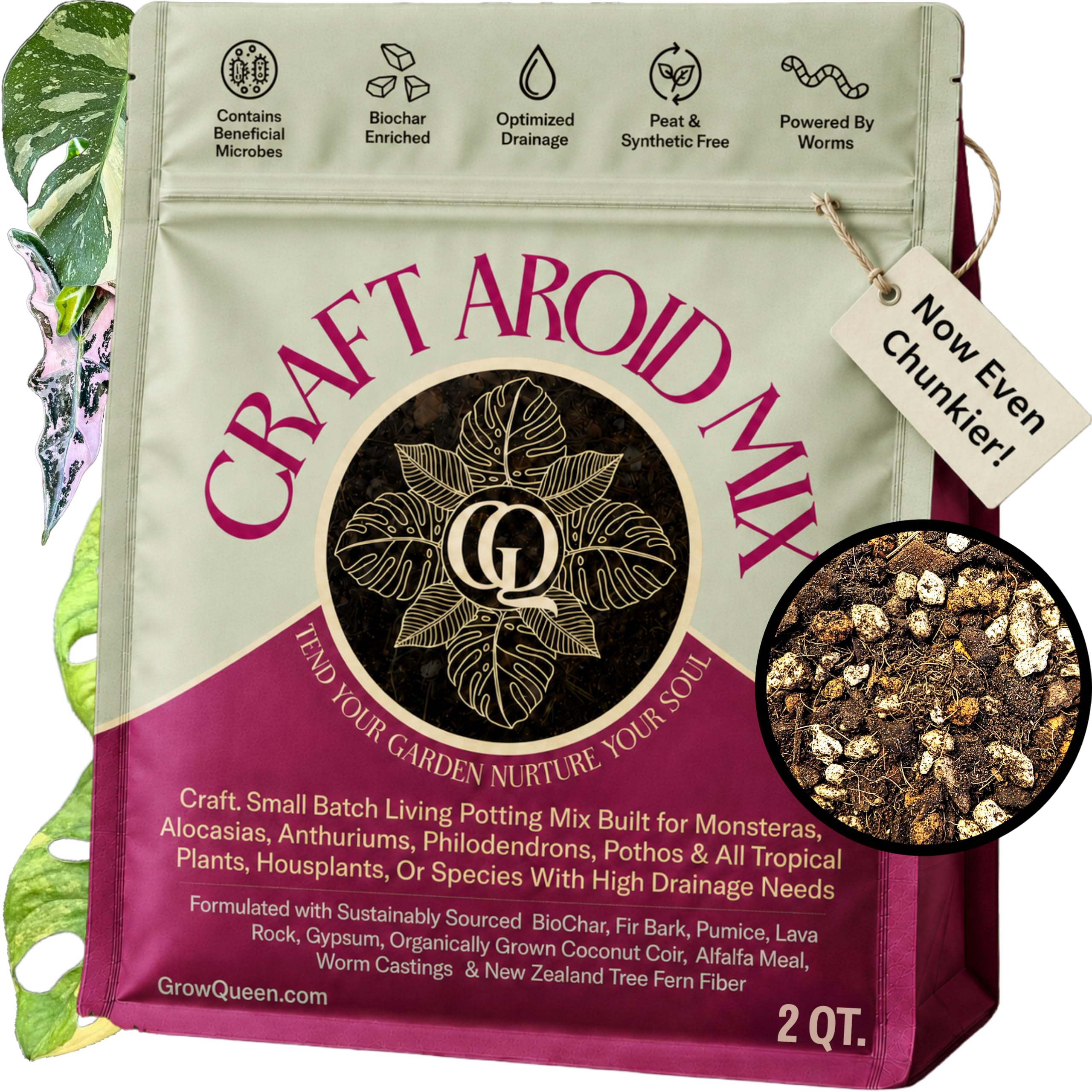
A chunky, airy blend that practically refuses to stay wet.
This mix stops root rot because of what it leaves out: no peat moss and no perlite (the lightweight volcanic glass beads). Instead, it uses pumice and lava rock — natural volcanic stones — with large Douglas fir bark fines to create airy channels that water drains through instantly. The bag holds just 2 Quarts, but for aroids like Monstera, Philodendron, and Alocasia, that small volume hides a heavy punch: the mix weighs 2 Pounds because the rocks have real density, so they stay in the pot rather than floating to the surface like perlite. It includes New Zealand Tree Fern Fiber to adjust the pH to 6.0, which matches the slightly acidic forest soil tropical aroids evolved in.
Buyers report the results are clean and pest-free. One reviewer noted “no mites or pests after 1+ month use,” a strong signal for anyone who battles fungus gnats or spider mites. The soil comes pre-moistened, so you can pot immediately without pre-soaking. Owners mention the drainage is so aggressive that it is “almost impossible to overwater” — the biggest cause of houseplant death.
The honest catch: at 2 Quarts, this bag fills only one small to medium pot (roughly one 6-inch pot or two smaller starts). If you have a large collection, you will need multiple bags. It is not a budget option for big planters. It is also not formulated for succulents or cacti, which need even more grit.
What hands-on owners rave about
- No perlite means no white specks floating to the surface — the mix looks clean and dark.
- The chunky texture holds its structure for months, never compacting into a sludge.
- Certified organic coco coir is washed extra times for low salt, reducing root burn risk.
- Pet-friendly and non-toxic for homes with cats or dogs.
The honest trade-offs to consider
- Small 2-Quart bag fills just one standard pot; repotting multiple plants requires multiple purchases.
- Price per quart is higher than many standard mixes — you pay for the premium ingredient sourcing.
- Not formulated for succulents or cacti (those need even more grit, less bark).
- The pre-moistened bag can feel damp on arrival, which surprises some first-time buyers.
Reach for this if: You own aroids (Monstera, Philodendron, Alocasia) and want a mix that all but guarantees you cannot overwater them — the texture does the work for you.
Look elsewhere if: You need to repot several large plants at once or you are shopping for succulents and cacti, which need a leaner, grittier formula.
2. Jessi Mae Potting Soil — 4-Quart Bag, Perlite, Well-Draining Snake Plant Soil

A balanced, affordable 4-quart bag that suits peace lilies and snake plants equally.
This 4-Quart bag gives you the most volume for a mid-range price, designed for common indoor foliage plants like snake plants, peace lilies, pothos, and parlor palms. The texture is light and fluffy due to added perlite (small white volcanic glass beads), which creates air pockets that water flows through instead of pooling. Jessi Mae hand-mixes this in small batches, and it arrives without the chemical smell some budget soils have. The slightly acidic pH (not given as a number but stated in the description) suits tropical houseplants that prefer a pH from about 6.0 to 6.5.
One buyer mentioned they “used this for my peace lily and it’s giving a new bud after a few weeks,” which shows it holds enough moisture for a peace lily while still draining to prevent root rot. At 4 Quarts, it fills about two 6-inch pots or one large 10-inch pot, making it a practical middle-ground size for most home collections. With the Craft Aroid mix above, you pay for premium aroid ingredients; this Jessi Mae bag is the cost-effective alternative for generalists who are not growing fussy aroids.
The honest trade-off: the perlite works fine for drainage, but it is lightweight and tends to float to the surface over time, which some growers find unsightly. A few customers note a fresh earthy smell for the first couple of days — it fades, but you can let the bag breathe outside for a day if you are sensitive to rich soil aromas.
Standout spec mic-drop: At 4 Quarts and a mid-range price point, this is the most cost-effective way to get a well-draining, slightly acidic mix for your daily houseplants — no premium markup for aroids you are not growing.
Who this pick is for: Beginners and generalists who keep snake plants, peace lilies, pothos, or parlor palms and want a single bag that covers most of the house instead of one specialty mix per plant.
The single caveat: The perlite can drift to the surface after watering — not a functional problem, but a visual annoyance for neat growers.
3. Soil Sunrise Cactus and Succulent Potting Mix (8 Quarts) Special Blend
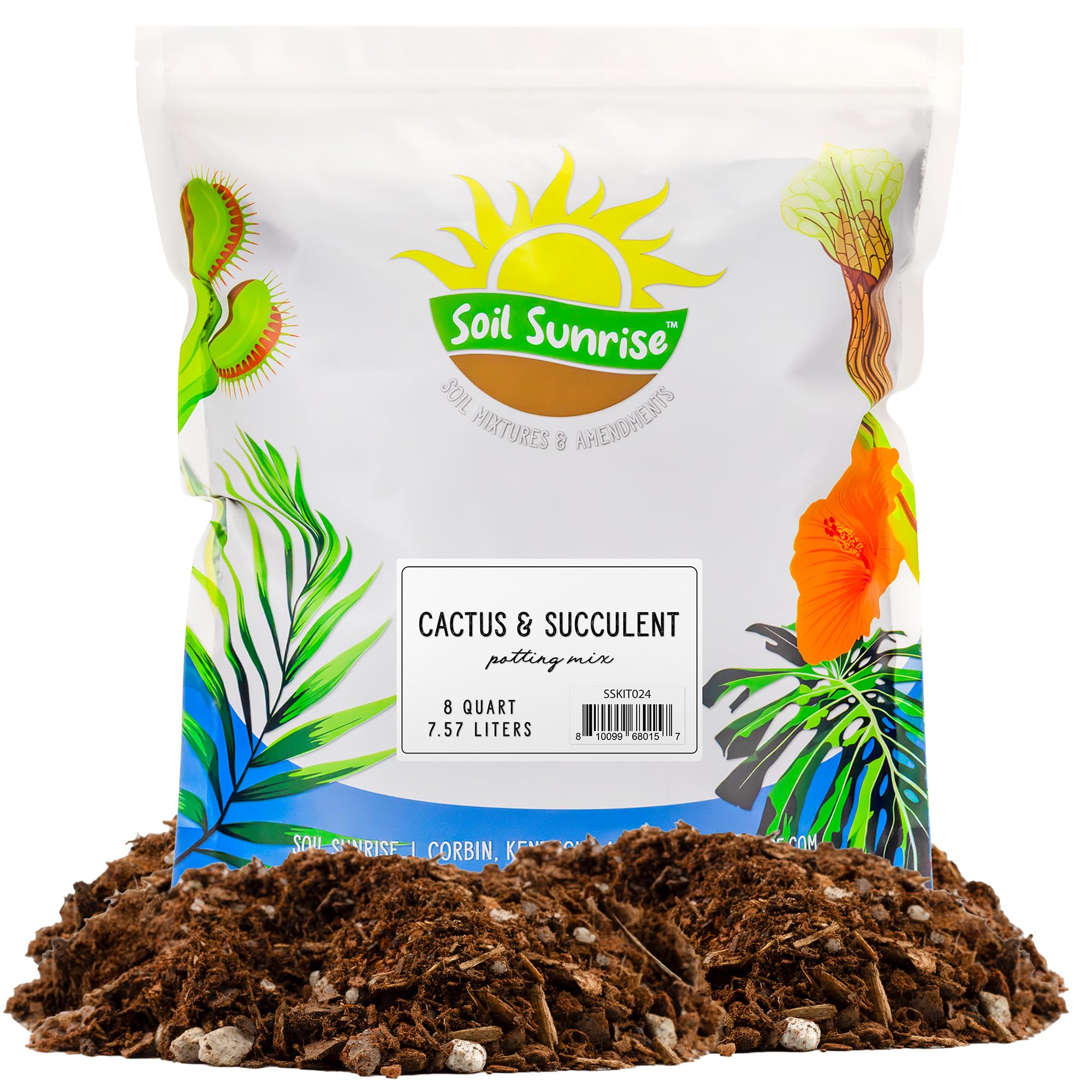
A true gritty mix that needs no amendments, straight from the bag.
Serious succulent growers want a mix that mimics mineral-heavy desert soil — and at 8 Quarts, this is the largest bag in the comparison. The ingredients are minimal and honest: pine bark, silica sand, calcined clay (a fired clay gravel), and pumice. No synthetic fertilizers, no peat moss, no mystery fillers. The gritty texture drains so fast that one buyer used it for a ponytail palm and noted it “dried out in ~8 days,” which tells you the drainage is aggressive enough for plants that like to dry completely between waterings.
Reviewers point out they do not need to add extra perlite or sand, unlike discount brands that are basically standard potting soil dyed brown. The pine bark and calcined clay provide a modest nutrient and moisture buffer, so roots are not instantly arid despite the gravelly look. Reportedly, no bugs or gnats come in the bag, which is a relief given how many cheaper succulent soils arrive infested. The Jessi Mae mix above is a generalist; the Soil Sunrise is a specialist for desert plants that demand mineral, low-organic drainage.
The honest trade-off: the bag is noticeably heavier than others of the same volume because of the sand and clay content — you feel the weight carrying it upstairs. At 8 Quarts, you need a large 12-inch pot or multiple smaller pots to use it up. Also, it looks like coarse gravel, not fluffy soil, which some people do not like.
What makes this the pro-grade pick
- 8 Quarts is the largest bag in this comparison, filling a 12-inch pot with change to spare.
- True gritty texture with calcined clay — unlike Miracle-Gro cactus mix, which is mostly peat.
- Hand-blended in small batches for consistency, not mass-produced on a line.
- No smell, no bugs, no gnats reported across reviews — a clean baseline for sensitive plants.
The honest catch
- Heavier bag per quart than any other mix here due to the sand and clay content.
- The gritty look is not for everyone — it looks like coarse gravel, not fluffy soil.
- Not formulated for moisture-loving plants; use only for cacti, succulents, and desert-type containers.
Confident one-line verdict: If you have a large succulent collection or a big pot, this is the one bag that covers the whole operation without needing to mix your own — just open and pour.
Who should skip it: Anyone looking for a general indoor potting soil — this is purely for drought-tolerant plants that demand mineral, low-organic drainage.
4. Rosy Soil Cactus & Succulent Potting Mix — 4 Quarts, Organic, Peat-Free
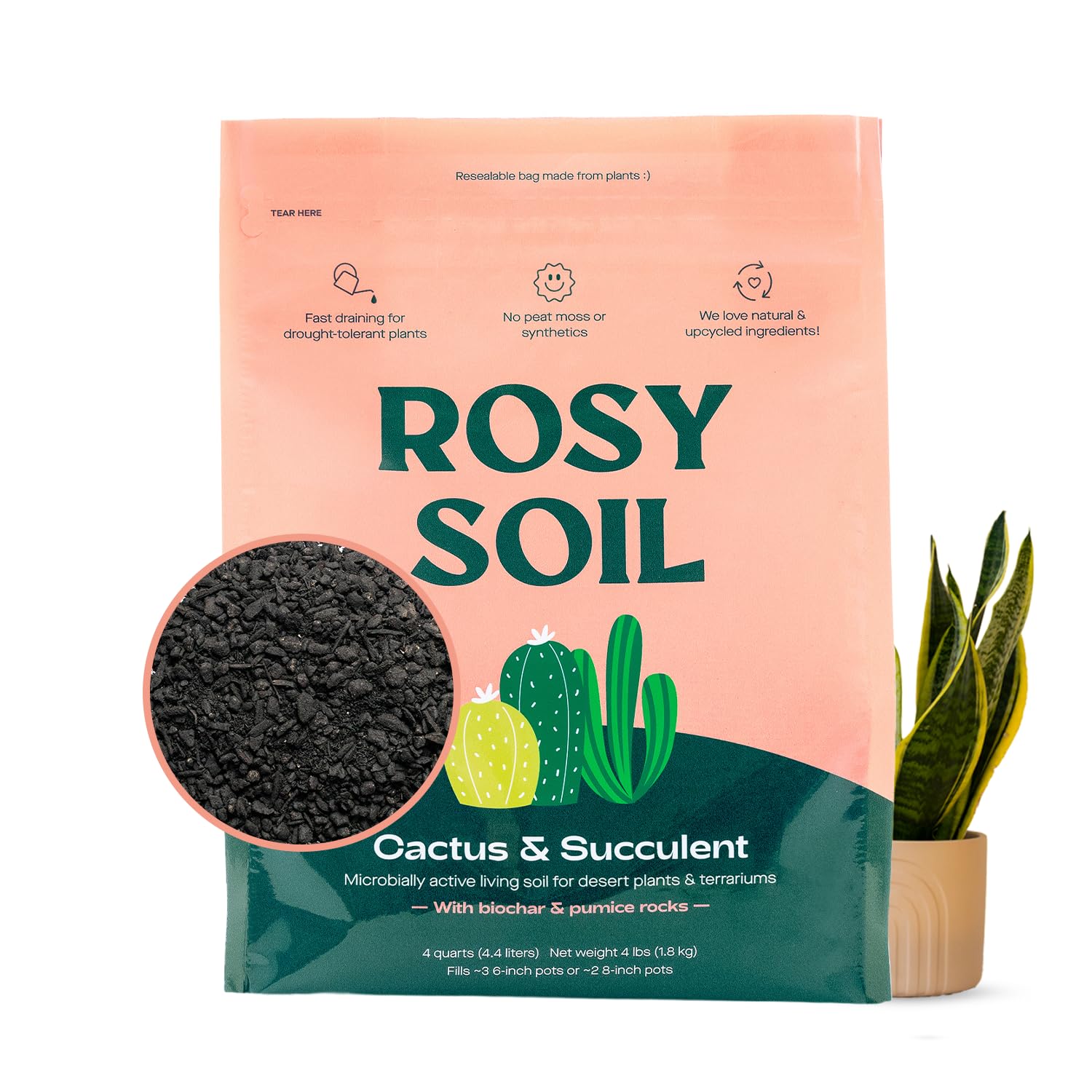
A living soil with pre-loaded microbes and worm castings, optimized for succulents.
This 4-Quart bag takes a different path from the gritty mineral mixes. Instead of relying purely on sand and rock, it uses a chunky, loose organic base enriched with beneficial fungi, microorganisms, and organic worm castings — all built in so you get a working ecosystem from day one. Being peat-free (Rosy skips peat entirely), it drains more freely than standard cactus mixes that use peat as a filler. At 4 Pounds, it is the same volume as the Jessi Mae 4-Quart bag but weighs double — a 2.0x weight gap — because of heavy worm castings and dense organic matter.
Shoppers say great results: “Succulents healthy after 1 month in Rosy soil,” one verified buyer notes. Another found it perfect for rooting new pups (baby succulents) and had no bugs across six bags. The living microbes feed roots without synthetic fertilizers, mimicking the natural soil ecosystem succulents evolved in. For Christmas Cactus, Aloe Vera, Jade, and Lithops, it provides low-moisture, high-drainage structure with a slow, steady nutrient source.
The honest catch: several long-time succulent growers mention you need to add extra grit for older, established plants that want an even leaner mix. The soil is moist when opened (good for microbes, surprising if you expect dry dirt), and the resealable bag’s adhesive does not always hold strongly between uses. It beats the Jessi Mae mix for succulents because of the living organisms and peat-free structure, but falls short of the Soil Sunrise mix for very gritty/desert conditions where heavy sand is the priority.
Who it beats and who it does not: It beats the Jessi Mae mix for succulents because of the living organisms and peat-free structure. It falls short of the Soil Sunrise mix for very gritty/desert conditions where heavy sand is the priority over organic content.
Reach for this if: You want a “set it and rarely feed it” soil for your succulents — the built-in worm castings and microbes reduce your fertilizer schedule.
Look elsewhere if: Your succulents are in a very wet climate or you prefer a bone-dry, nearly inorganic grit mix where organic content is near zero.
5. 100% Organic Fiddle Leaf Fig Soil – Optimally-Draining Mix, Made in USA, Large 7.5L Bag
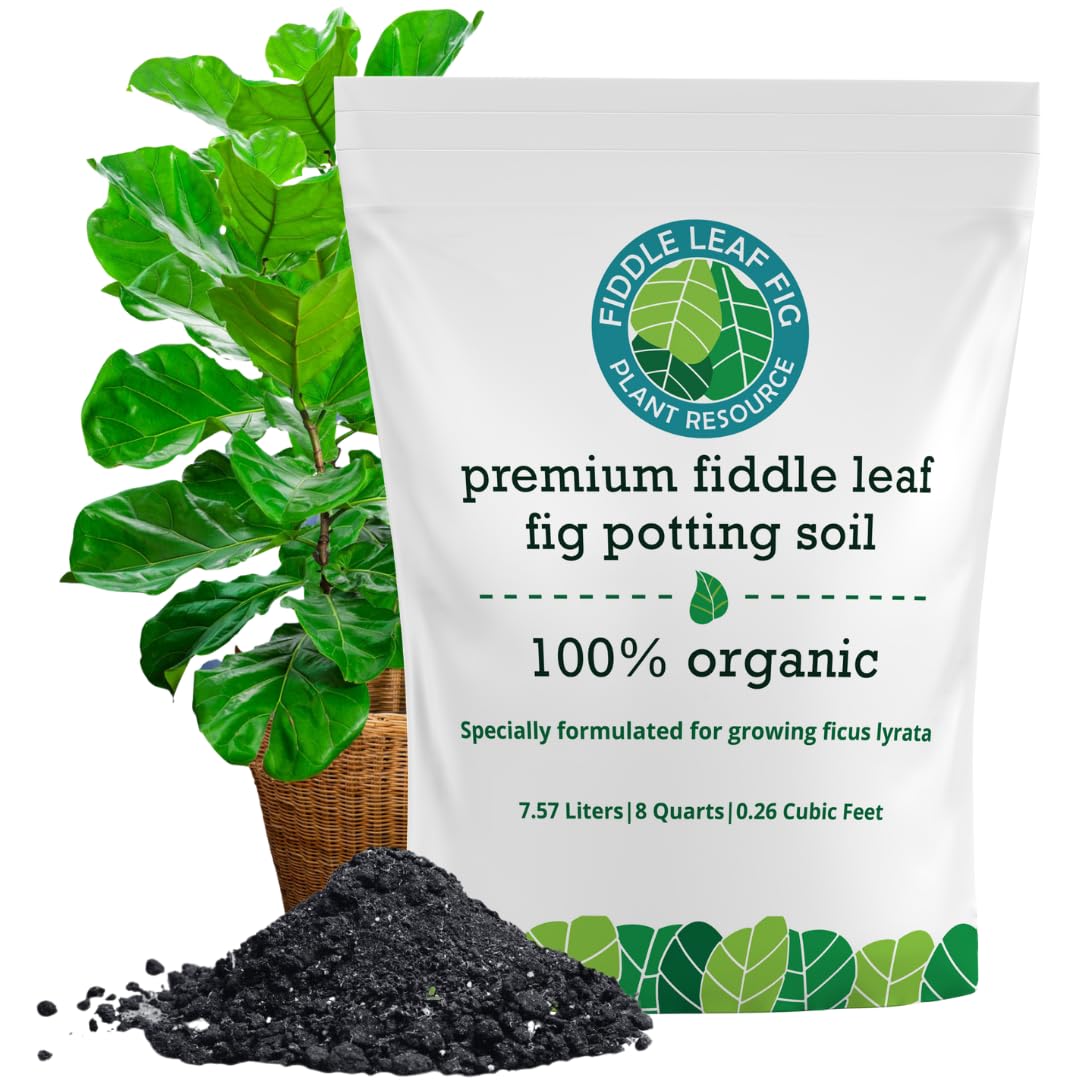
A biochar-enriched, chunky soil formulated to fight brown spots and root rot in ficus trees.
This bag is not for general houseplants — it is made exclusively for fiddle leaf figs and other ficus trees like ficus audrey, rubber trees, and weeping figs. The large 7.57-Liter bag (roughly 8 Quarts) uses aged bark, green compost, and biochar (a form of charcoal that improves soil structure and holds nutrients near roots). The texture is chunky and airy, which is critical because fiddle leaf fig roots rot quickly in dense, waterlogged soil. The manufacturer, Fiddle Leaf Fig Plant Food, blends it in small batches in Oregon and uses a resealable bag.
Buyers report strong results. One owner reported their “fiddle leaf was unhealthy; replaced soil and plant revived in 2 weeks,” while another noted propagation cuttings “grew 2 huge, healthy leaves” after being planted. The biochar creates a balanced moisture buffer to help prevent both overwatering and underwatering. The bag fills one big fiddle leaf pot or two to three medium repots.
The honest catch — and it is real based on reviews — is that at least one buyer experienced a fungus gnat infestation from this soil, suggesting the bag itself was the source. That buyer liked “the soil properties” but recommended sterilizing it in the microwave before use. This risk exists with any organic soil containing composted bark and green matter, which can host gnat eggs if not processed hot enough. If your plant room has a zero-gnat policy, weigh this trade-off carefully.
Standout features for fiddle leaf owners
- Biochar content is rare in bagged soils — it improves root zone aeration and nutrient capture better than plain bark.
- Designed specifically for the moisture tolerance of fiddle leaf figs (they hate wet feet but do not want complete drought).
- Large 7.57-Liter bag fills one big fiddle leaf pot or two to three medium repots.
- Sustainably made in Oregon by a small family operation with local ingredients.
The honest trade-off
- Fungus gnat risk is a known pattern in the reviews — sterilizing the soil is suggested by at least one experienced buyer.
- Expensive relative to general houseplant mixes, though competitive for a specialty organic ficus soil.
- Not suitable for succulents or plants that need purely mineral, low-organic drainage.
Perfect for: The owner of a single special fiddle leaf fig who wants a soil purpose-built to prevent brown spots and encourage upward growth — the biochar and chunky bark are the reason.
The one caveat: Buy a bag, open it away from your other plants, and check for any signs of gnats before bringing it into your indoor collection — then sterilize the remainder as a precaution.
6. Spike & Bloom High Drainage Cactus Soil Potting Mix with Mycorrhizal Fungi — 8 Pounds / 4 Quarts

A precisely engineered mix with mycorrhizal fungi to transform the root architecture of cacti.
This 8-Liter bag (roughly 8.4 Quarts) takes a scientific route, using a custom blend of clays, sands, and a small amount of organic matter. The standout spec is mycorrhizal fungi — beneficial filament fungi that act like an underground net, pulling water and nutrients into the root zone so your cactus can stay in lean, fast-draining soil without starving. The pH is locked at 6.5, the slightly acidic level cacti prefer that prevents nutrient lockout. At 3.17 Kilograms (about 7 lbs), it is the heaviest bag here per quart because of the clay and sand.
Buyers praise the drainage speed. One reviewer used it for a red fishhook barrel cactus and noted water drains “quickly from terracotta pot,” the gold standard for cactus health. Another recommended it for small exotic cacti “prone to root rot,” saying it is ideal for small pots — not for large cacti like saguaro. A 10/10-rated buyer summed it up: “Why buy anything else this is the bees knees of soil.” It is pricier per quart than the Soil Sunrise mix, but for small, valuable cacti where root health matters most, the mycorrhizae investment pays off.
The honest trade-off: it is the most expensive mix per quart on this list. It is also too rich for large, fast-growing cacti like saguaro, which need an even leaner, more mineral-heavy blend. Some owners mention small wood or charcoal pieces that can look like pest eggs at first glance — harmless but surprising.
Why serious growers pick this
- Mycorrhizal fungi are pre-mixed in — a living root extension that standard cactus soils do not have.
- Precise pH 6.5 formulation that matches what most desert cacti encounter in their native range.
- Fine-grit texture that drains fast but does not fall straight through a terracotta pot’s drainage hole.
- Customers note the mix promotes new growth within weeks of repotting.
The honest trade-offs
- Most expensive mix per quart on this list — only worth it if you have the cacti that benefit from mycorrhizae.
- Heavy bag (3.17 kg / 7 lb) makes multi-bag purchases a workout.
- The fine grit includes small wood/charcoal pieces that can look like pest eggs at first glance — harmless, but surprising.
Reach for this if: You have a collection of small to medium exotic cacti or flowering succulents and want the mycorrhizal advantage to push root health and bloom size to a higher level than any plain sand or clay mix can.
Look elsewhere if: You just need a big bag of basic cactus soil for a single large saguaro or a mixed succulent bowl — the price and fine texture are overkill for that job.
Understanding the Specs
Volume (Quarts & Liters)
Volume tells you how many pots a bag will fill, not how heavy the bag is. A 2-Quart bag typically fills one 6-inch pot. A 4-Quart bag fills one 10-inch pot or two 6-inch pots. An 8-Quart bag handles a large 12-inch pot or several smaller repots. Some brands list liters (1 quart ≈ 0.95 liters), so a 7.5-liter bag is roughly the same as an 8-quart bag. Always check the volume, not the bag dimensions, because some bags are puffed up with air.
Texture: Chunky vs. Fine
Texture is the single best predictor of drainage. Chunky mixes with visible bark fines, pumice, lava rock, or calcined clay create air pockets (pores) that water flows past. Fine, powdery mixes compact when wet and trap water against roots. A well draining soil should feel gritty or coarse between your fingers — not like dust. If you can squeeze a handful and it holds its shape with visible gaps, it is chunky enough; if it forms a solid wet ball, it is too fine.
Peat-Free vs. Peat-Based
Peat moss is a natural moisture retainer — it soaks up water like a sponge and releases it slowly. That is great for ferns and tropicals that want consistent dampness but bad for succulents, cacti, and aroids that need to dry out between waterings. Peat-free mixes use alternatives like coco coir, pine bark, or pumice. They drain faster and are also more environmentally sustainable because peat harvesting damages bogs and releases stored carbon.
Weight (Pounds / Kilograms)
Bag weight reveals the density of the ingredients. A heavy bag for its volume (for example, 4 Pounds at 4 Quarts) usually means sand, clay, or worm castings are present, which give good drainage and nutrient density without floating. A light bag at the same volume likely uses perlite or fluffy peat, which drains less effectively and may compact over time. Comparing weights between bags of the same volume helps you predict drainage: heavier usually means grittier and faster-draining.
FAQ
What does “well draining” actually mean for potting soil?
Can I use well draining soil for all my houseplants?
Is perlite good for drainage?
How much well draining soil do I need for a 10-inch pot?
What is the difference between succulent soil and regular potting soil?
Will well draining soil prevent root rot?
Should I be worried about fungus gnats in bagged soil?
How do I store leftover well draining soil?
Can I make my own well draining potting mix?
What does “pH 6.5” mean for my plants?
Final Thoughts: The Verdict
For most buyers, the best well draining potting soil winner is the Craft Aroid Potting Mix because its pumice-and-lava-rock formula makes it almost impossible to overwater aroids and tropicals while staying peat-free and pest-free. If you want a large-value gritty mix for cacti and succulents, grab the Soil Sunrise 8-Quart Special Blend. And for the fiddle leaf fig owner who wants a biochar-enriched, purpose-built formula, the standout is the 100% Organic Fiddle Leaf Fig Soil.
How We Picked
We do not accept paid placement, and we did not hands-on test every unit. Instead, we match each pick to a real buyer and use-case by comparing the manufacturers’ published specifications against the patterns in verified customer reviews — so you get each pick’s real strengths and trade-offs instead of marketing copy.
Sources & Methodology
Specifications: manufacturer listings and product documentation. Review insights: verified customer reviews, as of July 2026. Pricing: not shown on this page (it changes often); check the current price via the retailer link.
As an Amazon Associate, Lawn Gear Lab earns from qualifying purchases. This does not affect which products we feature.