
Specs are compiled from manufacturer listings and verified buyer reviews and can change over time — please confirm the key details on the product page before buying.
Walking the fertilizer aisle feels like reading a confusing test you didn’t study for — numbers like 5-1-1 and 3-4-4 stare back at you with no explanation. The real question every vegetable gardener has is simple: which bag actually makes your tomatoes, peppers, and lettuce thrive without dumping synthetic chemicals into your soil.
I’m Rikta — the founder and writer behind Lawn Gear Lab. This guide is built by comparing the manufacturers’ published specifications and the patterns across verified customer reviews, so you get each pick’s real strengths and trade-offs instead of marketing spin.
Whether you are starting a raised bed or tending a full backyard plot, the organic fertilizer for veggies you choose determines how your plants perform all season long — and the right one balances feeding power with safety and ease of use.
Quick Picks
- Down To Earth All Natural Fertilizers Organic Vegetable Garden 4-4-4 — Best Overall
- Alaska Fish Fertilizer OMRI Listed 5-1-1 — Leafy Green Power
- Espoma Organic Plant-Tone 5-3-3 — All-Purpose Champ
- Espoma Organic Garden-Tone 3-4-4 — Veggie Specialist
- Down To Earth All Natural Fertilizers Tomato & Vegetable 4-6-2 — Tomato Booster
- The Grow Co Organic Fish Emulsion Fertilizer 2-3-1 — Gentle Liquid Feed
- Back to the Roots Organic Worm Castings — Soil Builder
How To Choose The Best Organic Fertilizer For Veggies
Picking the right organic fertilizer depends on understanding what your vegetables actually need, not what the flashiest bag claims. The three numbers on every label — NPK — tell you the balance of nitrogen, phosphorus, and potassium in that mix. Nitrogen fuels leafy green growth, phosphorus supports roots and flowers, and potassium helps overall plant health and fruit development.
Match the NPK to the crop
Leafy greens like lettuce and kale want a higher first number (nitrogen), so something like a 5-1-1 works well. Fruiting vegetables such as tomatoes and peppers prefer a more balanced or phosphorus-heavy ratio like 3-4-4 or 4-6-2 — that middle number drives flower and fruit production. If you are growing a mixed garden, an all-purpose formula around 4-4-4 covers everything without overdoing any one nutrient.
Liquid, granular, or castings — each has a different job
Liquid fertilizers (like fish emulsion) feed your plants fast because the nutrients are already dissolved. They are great as a quick boost every few weeks, but they wash through the soil faster. Granular fertilizers break down slowly, feeding your vegetables over a longer period with fewer applications. Worm castings are a gentle soil amendment that adds microbes and nutrients without any risk of burning your plants — they improve the soil itself rather than just feeding the plant.
Look for OMRI listing and honest ingredients
The OMRI (Organic Materials Review Institute) seal means the product qualifies for certified organic production. It is the most trustworthy label for organic gardeners. Beyond that, scan the ingredient list — real ingredients like fish bone meal, feather meal, kelp, and langbeinite signal a quality product. Avoid anything vague or synthetic-sounding.
Quick Comparison
On smaller screens, swipe sideways to see the full table.
| Model | Best For | NPK Ratio | Item Form | Weight | Amazon |
|---|---|---|---|---|---|
| Down To Earth Organic Vegetable Garden 4-4-4 | Large gardens & bulk feeding | 4-4-4 | Granules | 25 Pounds | Amazon |
| Alaska Fish Fertilizer 5-1-1 | Fast green growth boost | 5:1:1 | Liquid | 8.8 Pounds | Amazon |
| Espoma Organic Plant-Tone 5-3-3 | Versatile all-purpose feeding | 5-3-3 | Granules | 4 Pounds (Pack of 2) | Amazon |
| Espoma Organic Garden-Tone 3-4-4 | Vegetable & herb specialists | 3:4:4 | Granules | 4 Pounds (Pack of 2) | Amazon |
| Down To Earth Tomato & Vegetable 4-6-2 | Tomatoes, peppers & heavy feeders | 4:6:2 | Granules | 5 Pounds | Amazon |
| The Grow Co Fish Emulsion 2-3-1 | Gentle liquid feeding | 2-3-1 | Liquid | 2.25 Pounds | Amazon |
| Back to the Roots Worm Castings | Soil health & no-risk amendment | — | Granules | 5 Pounds | Amazon |
In‑Depth Reviews
1. Down To Earth All Natural Fertilizers Organic Vegetable Garden 4-4-4
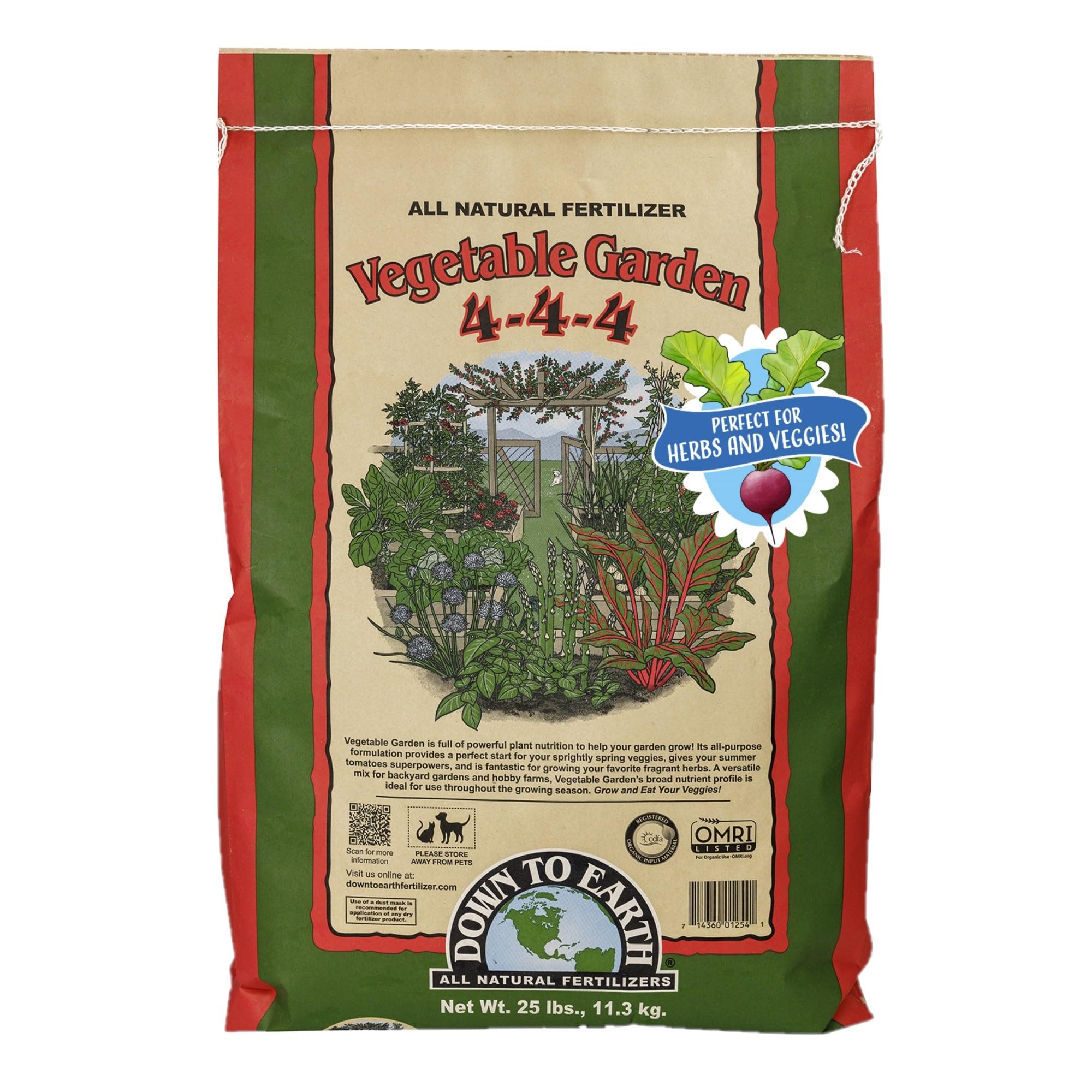
The 25-pound workhorse that feeds a whole season of vegetables without the hassle of remixing.
You get one balanced 4-4-4 NPK ratio that works across your entire garden — leafy greens, tomatoes, peppers, herbs, and raised beds all get exactly what they need. It is a granular, slow-release product, so you apply it once and it feeds your plants steadily over weeks. Buyers report that using it as both an initial and side-dressing fertilizer eliminated the need for homemade mixes, and one reviewer noted that their organic garden showed no transplant shock and immediate vigor after switching to this.
Unlike the liquid options in this list, the 25-pound bag means you are not buying a new bottle every month — one bag covers a large garden for a full growing season. It is OMRI listed for organic production, and the ingredients list includes fish bone meal, alfalfa meal, feather meal, langbeinite, basalt, dolomite, and seaweed meal. There is no synthetic crash, just sustained feeding.
One trade-off is the size — at 25 pounds it is the heaviest product here, so storage space matters. But for the price per pound, it is the most economical choice for anyone with a serious vegetable patch.
What stands out
- Balanced 4-4-4 NPK fits virtually all vegetables without guesswork
- Large 25-pound bag offers far better value per feeding than smaller packs
- OMRI listed with clean, recognizable organic ingredients
The catch
- Heavy bag requires floor or shelf space for storage
- Granular format takes longer to show results than liquid options
Reach for this if: you have a medium to large vegetable garden and want one product that covers everything from spring greens to fall tomatoes without remeasuring ratios.
Look elsewhere if: you need fast, immediate feeding or only have a few container plants — a smaller bag or liquid will suit you better.
2. Alaska Fish Fertilizer OMRI Listed 5-1-1

A liquid nitrogen punch that pushes your greens tall and thick — but it does announce its presence.
This fish-based liquid fertilizer delivers a high-nitrogen 5:1:1 ratio that is perfect for leafy vegetables like lettuce, kale, and spinach. It also works great on herbs and as a general spring boost for any plant that needs a green-up. Because it is a liquid, you mix it with water and apply every three weeks during the growing season — the nutrients are available to your plants immediately. Owners mention they have relied on it as a proven organic nitrogen source for over ten years, and one mentioned that their tomatoes blossomed quickly after just two months of use.
At 8.8 pounds for a 115-fluid-ounce jug, this liquid option weighs 8.8 pounds, while several granular picks here weigh 4 to 5 pounds, but it covers up to 1,000 square feet. The nitrogen content is 5 in this 5-1-1 formula versus 3 in Espoma Garden-Tone 3-4-4, making this the right choice when your vegetables need a foliage-focused boost rather than balanced feeding.
The honest downside is the smell — multiple reviewers call it pungent and advise using it in a ventilated area. The odor fades within a day, but it is real. Also, because it is nitrogen-rich, you will want a separate phosphorus-potassium supplement for the flowering and fruiting stage of tomatoes and peppers.
Decisive feeding tool: This is the fastest way to correct a nitrogen deficiency or jump-start leafy growth in your vegetable garden. The fishy smell is temporary, but the growth response is not.
Best for: gardeners who want quick, visible results on leafy greens and are comfortable mixing liquid fertilizer every few weeks.
skip it if: you prefer a low-maintenance granular feed, or if a strong fish odor in storage is a dealbreaker.
3. Espoma Organic Plant-Tone 5-3-3

The ready-to-use granular that works on flowers, shrubs, and vegetables without mixing a thing.
Espoma Plant-Tone brings a 5-3-3 NPK ratio with 5% calcium added, making it a versatile option for vegetables like tomatoes, peppers, squash, and lettuce, as well as trees and shrubs. The granules are ready to use right from the bag — you sprinkle them around the drip line and water in. It is OMRI listed and contains the company’s exclusive Bio-tone formula, a blend of beneficial microbes that help roots take up nutrients. Customers note that plant organizations recognize it as a preferred organic fertilizer, and one buyer mentioned their plants showed rapid spring growth quickly after application.
The pack of two provides a total of 128 ounces, while the Espoma Garden-Tone 3-4-4 pack provides 64 ounces. While the 5-3-3 ratio has a bit more nitrogen, it is still balanced enough for mixed gardens. Unlike the liquid Alaska 5-1-1, this granular formula releases slowly, so you apply monthly rather than every three weeks. One owner reported it has a noticeable smell similar to chicken manure, so applying upwind is a practical tip.
Because it is all-purpose, it is not optimized specifically for fruiting vegetables the way a 4-6-2 or 3-4-4 formula would be. If tomatoes and peppers are your main crop, a more phosphorus-focused option might give slightly better flowering results.
Why it works
- Ready-to-use granules require no measuring or mixing
- 5% calcium supports strong cell walls and prevents blossom end rot in tomatoes
- Two-bag pack covers a large area without immediate repurchase
Does not fit if
- You need a phosphorus-heavy formula for heavy fruiting
- You prefer liquid feeding for faster nutrient uptake
Your pick if: you want a single organic fertilizer that works on everything from your vegetable bed to your rose bushes without needing different bags.
Consider something else if: you are strictly growing heavy-fruiting vegetables and want a higher middle number for maximum yields.
4. Espoma Organic Garden-Tone 3-4-4

A granular feed with a phosphorus edge that targets tomatoes, peppers, and squash exactly where they need it.
The 3-4-4 NPK ratio is designed specifically for vegetables and herbs, with extra phosphorus (the middle number) to drive strong flower and fruit development. It works on both cool-season crops like lettuce, kale, and cabbage, and warm-season plants like tomatoes, peppers, squash, and melons. Like the Plant-Tone, it contains 5% calcium and the Bio-tone microbe blend. Use it monthly by sprinkling granules around the drip line and watering in. Reviewers point out that their plants love it, and one long-time gardener said it was a “standout” compared to other fertilizers they had used for years.
The pack of two gives you 64 total ounces, while the Plant-Tone two-pack gives you 128 ounces, but the formula is more tailored to edible crops. A gardener who grows both flowers and vegetables might still prefer the Plant-Tone for single-bag convenience, but if vegetables are your focus, this ratio better supports fruiting. Shoppers say a smell, but overall results speak for themselves — one user called it their “go-to fertilizer” after years of consistent results without burning plants.
The granular format means it is slower than liquid fish options, and it weighs 4 pounds per two-pack, which is lighter and more manageable than the Down To Earth 25-pound bag but less economical per feeding.
The honest read: If your garden leans heavily toward vegetables rather than ornamentals, this formula gives you the middle-number boost that makes a real difference in tomato and pepper yields. The difference between 3-4-4 and a balanced 4-4-4 is subtle but real for heavy feeders.
Choose this when: you have a dedicated vegetable garden and want a fertilizer specifically designed for edible crops with extra phosphorus and calcium for fruit quality.
Not ideal if: you want a single product for both flowers and vegetables — the Plant-Tone 5-3-3 is more versatile for mixed beds.
5. Down To Earth All Natural Fertilizers Tomato & Vegetable 4-6-2

A phosphorus-heavy granular blend that revived pale tomato plants in two weeks, according to real buyers.
The 4-6-2 formula is built for transplants and heavy feeders. The elevated middle number (phosphorus) targets root development and flower production, making this a strong option for tomatoes, peppers, herbs, and flowers. It is a gentle, non-burning granular that delivers a steady supply of nutrients — you apply it at planting time and then as a side-dressing. Buyers report that it revived pale, flimsy tomato plants within two weeks after application, which is a fast turnaround for a granular product. The ingredient list includes fish bone meal, blood meal, feather meal, rock phosphate, langbeinite, greensand, humates, and kelp meal.
Compared to the balanced Down To Earth 4-4-4, this specific Tomato and Vegetable mix has 6 phosphorus versus 4 and 2 potassium versus 4, which makes it a better choice when your goal is bigger tomatoes and peppers. It is OMRI listed and comes in a manageable 5-pound box — far easier to store than the 25-pound bag but less economical per feeding. One customer observed an unpleasant smell that dissipates in a few days, which is normal for organic ingredients like blood and fish meal.
The 5-pound size serves a small to medium garden well. If you have a large plot, you will need to buy multiple boxes, whereas the 25-pound 4-4-4 bag offers better value.
What earns its spot
- Phosphorus-heavy 4-6-2 ratio specifically supports blooming and fruiting on vegetables
- Gentle, non-burning formula safe for transplants and seedlings
- OMRI listed with diverse organic ingredients for soil health
Limitations to know
- 5-pound box runs out quickly on larger gardens
- Strong organic smell during and right after application
Grab this if: tomatoes and peppers are the stars of your garden and you want a phosphorus-focused granular feed that delivers visible results on fruiting and flowering.
pass on it if: you grow a wider mix of vegetables including leafy greens — the higher nitrogen in a 4-4-4 or 5-1-1 formula better supports foliage growth.
6. The Grow Co Organic Fish Emulsion Fertilizer 2-3-1

A lower-nitrogen fish emulsion that lets you feed frequently without overwhelming your soil.
With a 2-3-1 NPK ratio, this liquid fish emulsion is lighter on nitrogen and slightly higher in phosphorus than most fish fertilizers. That makes it ideal for frequent, light applications throughout the growing season — you mix it at a 1:100 ratio with water and use it as a soil drench or even a gentle foliar spray. It is 100% cold-pressed and made from sustainably sourced fish, meaning the nutrients, vitamins, and amino acids are retained. Owners mention that it works well alongside other fertilizers and promotes vigorous growth and abundant vegetables. One reviewer with over 50 years of gardening experience noted that it goes a long way and gives great results.
Compared to the Alaska 5-1-1, this formula has 2 nitrogen versus 5 and 3 phosphorus versus 1. That makes it a safer choice for all-season feeding on a mixed garden, since high nitrogen in late summer can push leaves at the expense of fruit. The 128-ounce bottle covers more than 160 gallons of mixed solution, which is excellent value. Like all fish products, the smell is noticeable — the makers are upfront about it, stating “if it doesn’t smell, then it’s not real fish.”
Because the NPK is lower overall, you will need to apply it more often than a granular feed. It is best paired with a slow-release granular for base nutrition and used as a supplementary liquid boost.
The real story: This is the fish fertilizer to pick when you value a gentler, more balanced formula that supports both leaves and fruit without the nitrogen jolt. The smell is authentic, not a defect.
Right for you if: you want a liquid organic fertilizer you can apply lightly and often throughout the season without worrying about burning your plants or throwing off your soil balance.
Not the best if: you need a high-nitrogen boost for leaf growth or want a set-and-forget granular option.
7. Back to the Roots Organic Worm Castings

Straight worm castings that add microbes to your soil and feed your vegetables with zero burn risk.
This is not a formulated NPK fertilizer in the traditional sense — it is pure vermicompost (worm castings) that enriches your soil biology while providing a gentle, slow-release nutrient supply. The granules blend easily into chunky soil mixes like coco chips, perlite, and charcoal without compacting the soil. Customers note that the castings are rich and clean, and one reviewer specifically mentioned that they are safe for sensitive plants like milkweed for monarchs. There is no smell, no odor, and no risk of burning even if you over-apply, which makes it a simple to use addition for beginners and experts alike.
Unlike all the other products on this list, worm castings are not measured by an NPK ratio — they work by improving the soil’s ability to hold and cycle nutrients rather than dumping a specific dose. That makes them a perfect companion to any of the granular or liquid fertilizers above. If you use the Down To Earth 4-4-4 as your base feed, adding worm castings boosts microbial activity and helps seedlings resist pathogens. One user highlighted that castings hold a lot of moisture, so adjust your watering accordingly when using them as an amendment.
The 5-pound bag is a good starter size. For a large garden you may need multiple bags, but a little goes a long way when mixed into planting holes or sprinkled around established plants.
Best reason to buy
- Absolutely no risk of burning plants — safe for the most delicate seedlings
- Adds beneficial microbes and improves soil structure beyond just feeding
- Odorless and easy to handle, unlike fish emulsions
Trade-off
- Not a standalone high-dose fertilizer — works best alongside a granular or liquid feed
- Small bag size may require multiple purchases for large gardens
Get this to: build long-term soil health and give your vegetables a steady microbial boost without worrying about over-fertilizing. It is the perfect sidekick to any granular fertilizer.
Not enough on its own if: you are growing heavy-feeding vegetables in poor soil and need a concentrated NPK source to correct a deficiency.
Understanding the Specs
NPK Ratio — the three numbers that matter
The three hyphenated numbers on every fertilizer bag — for example 4-6-2 — represent the percentage by weight of nitrogen (N), phosphorus (P), and potassium (K) in that product. Nitrogen drives leaf and stem growth, which is why you see high first numbers on products meant for greens. Phosphorus supports root development, flowers, and fruit set — the middle number is the one to watch for tomatoes and peppers. Potassium helps overall plant health, disease resistance, and fruit quality. A balanced mix like 4-4-4 works across the board, while a specialized mix like 3-4-4 or 4-6-2 tilts toward fruiting crops.
Liquid vs Granular — how you apply changes how it works
Liquid fertilizers such as fish emulsion are absorbed by the plant within hours of application, making them excellent for a quick boost or correcting a deficiency. You mix them with water and apply every one to three weeks. Granular fertilizers are spread dry onto the soil and break down over several weeks with the help of moisture and soil microbes. They feed more slowly but last longer, so you apply them less often. Worm castings are a third category — a soil amendment that improves the soil itself rather than directly feeding the plant with a concentrated NPK dose.
FAQ
What does OMRI listed mean for a vegetable fertilizer?
Can I use a high-nitrogen fertilizer like 5-1-1 on tomatoes?
How often should I apply granular organic fertilizer to my vegetable garden?
Is fish fertilizer safe to use on vegetables I plan to eat?
What is the difference between fish emulsion and fish fertilizer?
Will worm castings alone provide enough nutrients for heavy-feeding vegetables?
How do I know if my vegetable plants need more phosphorus?
Can I mix different organic fertilizers together?
What does the calcium in fertilizers like Espoma Garden-Tone actually do for vegetables?
How long does a 5-pound bag of granular fertilizer last for a small vegetable garden?
Final Thoughts: The Verdict
For most gardeners growing a mix of vegetables, the best organic fertilizer for veggies is the Down To Earth Organic Vegetable Garden 4-4-4 because its balanced NPK, large 25-pound bag, and OMRI listing cover everything from spring greens to fall tomatoes without needing to juggle multiple products. If you want a fast-acting liquid for leafy greens or to correct a deficiency, the Alaska Fish Fertilizer 5-1-1 delivers immediate nitrogen. And for building long-term soil health with zero risk, grab the Back to the Roots Organic Worm Castings as a companion to any granular feed.
How We Picked
We do not accept paid placement, and we did not hands-on test every unit. Instead, we match each pick to a real buyer and use-case by comparing the manufacturers’ published specifications against the patterns in verified customer reviews — so you get each pick’s real strengths and trade-offs instead of marketing copy.
Sources & Methodology
Specifications: manufacturer listings and product documentation. Review insights: verified customer reviews, as of July 2026. Pricing: not shown on this page (it changes often); check the current price via the retailer link.
As an Amazon Associate, Lawn Gear Lab earns from qualifying purchases. This does not affect which products we feature.