
Specs are compiled from manufacturer listings and verified buyer reviews and can change over time — please confirm the key details on the product page before buying.
A metal compost bin keeps your yard and kitchen scraps contained, lets air flow through the pile, and doesn’t warp or crack like plastic can after a few seasons of sun and rain. The real question is if you want a simple wire bin you set on the ground or an elevated tumbler you spin by hand — and that choice depends entirely on how much effort you want to put into turning the pile.
I’m Rikta — the founder and writer behind Lawn Gear Lab. This guide is built by comparing the manufacturers’ published specifications and the patterns across verified customer reviews, so you get each pick’s real strengths and trade-offs instead of marketing spin.
You will find a metal compost bin here that fits your garden, if you need a budget-friendly bin for leaves or a heavy-duty tumbler that handles kitchen scraps all winter.
Quick Picks
- Jora Composter JK 270 – Outdoor Dual Chamber Compost Tumbler – 70 Gallon – Galvanized Steel Construction — Best Overall
- Bosmere K765 Wire Compost Bin – 30″ x 30″ x 30″ Outdoor Composting Bin with Front Access Door — Top Performer
- Garden Wire Compost Bin 36x36x30 inches, Black, Garden Bed Fencing — Large Capacity
- Garden Wire Compost Bin 30x30x24 inches, Black, Garden Bed Fencing — Budget Champion
How To Choose The Best Metal Compost Bin
Picking a compost bin depends on three things: volume, effort, and durability. Here is what matters for each.
Volume vs. Household Waste
A 70-gallon tumbler like the Jora handles 7-8 gallons of waste per week, which suits a family that cooks often. Smaller wire bins in the 15-22 cubic foot range work fine for leaves and grass clippings but fill fast if you add daily kitchen scraps.
Access and Turning
Wire bins need you to lift the whole cage or reach through a door to turn the pile. Tumblers let you spin the drum by hand, which aerates the material without heavy lifting. If bending over is hard for you, a raised tumbler with hand cranks saves your back.
Insulation and Speed
Insulated metal bins hold heat above 160 degrees F, which breaks down material in 4-5 weeks. Uninsulated wire bins work fine but take longer, especially in cold weather. Zone 5a reviewers with the insulated tumbler report year-round composting.
Quick Comparison
On smaller screens, swipe sideways to see the full table.
| Model | Best For | Capacity | Material | Weight | Amazon |
|---|---|---|---|---|---|
| Jora JK 270 | Serious composting, year-round | 70 gallons | Galvanized steel | 52 lb | Amazon |
| Bosmere K765 | Easy access, storm resistance | 15.6 cu ft | Coated steel wire | — | Amazon |
| MTB 36x36x30 | Large volume, low cost | 22.5 cu ft | Powder-coated steel | 9.7 lb | Amazon |
| MTB 30x30x24 | Budget starter, leaves only | 21600 cu in | Powder-coated steel | 7.54 lb | Amazon |
In‑Depth Reviews
1. Jora Composter JK 270 – Outdoor Dual Chamber Compost Tumbler – 70 Gallon – Galvanized Steel Construction

A 70-gallon insulated tumbler that keeps cooking year-round, even in cold climates.
This is the bin for people who want finished compost in weeks, not months. The dual chambers let you fill one side while the other side matures, so you always have a fresh batch ready. Insulation (food-grade, non-toxic) lets the interior climb beyond 160 degrees F, which breaks down material fast — reviewers report compost in 4-5 weeks with minimal leakage. It handles 7-8 gallons of waste per week, enough for a family that cooks daily.
Buyers report assembly is the real challenge. The foam panels need serious force to align — one reviewer needed a pipe clamp and another had their 200lb husband compress it. Once assembled, it works year-round in zone 5a, handles meats and cheese (things most bins cannot), and maintains heat even when outside temps hit 40 degrees F. At 52 pounds versus 7.54 pounds for the smaller MTB wire bin, the galvanized steel body holds up for years.
Unlike the simpler wire bins from MTB and Bosmere, the Jora requires patience upfront but returns rich compost fast. Reviewers mention paint fades slightly over time, but after 7 years the bin is still durable with no maintenance needed. A top choice for anyone serious about cutting landfill waste.
Why it wins
- Dual chambers let you fill and harvest at the same time
- Insulation keeps temps above 160 degrees F for quick breakdown
- Handles kitchen scraps including meats and cheese
- Galvanized steel stands up to years of outdoor use
The real hurdle
- Assembly is genuinely difficult due to tight foam panels
- Paint may fade over time
- Price is much higher than wire bins
Your best bet if: You produce steady kitchen waste and want finished compost in 4-5 weeks without heavy lifting — the dual chambers do the turning for you.
Look elsewhere if: You want a zero-assembly bin you set up in minutes, or you are only composting leaves a few times a year.
2. Bosmere K765 Wire Compost Bin – 30″ x 30″ x 30″ Outdoor Composting Bin with Front Access Door

A wire bin that braces against storms and lets you grab finished compost from the front door.
Bosmere’s 30x30x30-inch bin holds up to 15.6 cubic feet of yard waste, and the front access door means you do not have to lift the entire cage to reach the rich stuff at the bottom. The open wire mesh promotes airflow and drainage, which helps organic material break down evenly. A coated steel frame keeps the bin rigid in outdoor conditions.
Owners mention the bin stays sturdy through storms and animal attacks — a major advantage over flimsy plastic bins that warp. One reviewer has bought four over the years and says they join together to make larger batches. The removable sides also allow easy bucket access from any area, and layering food waste, yard waste, and leaves results in great compost by spring.
Unlike the MTB wire bins that use anchor spikes at corners, the Bosmere uses a unified wire frame that stays put without extra hardware. Assembly takes minutes with no tools. It is lighter than the Jora tumbler but heavier-duty than the entry-level MTB options. A solid middle-ground pick that balances cost, durability, and convenience.
Sturdy and simple: The front door is a genuine convenience — you can pull out finished compost without disturbing the active pile above it.
One thing to know: Like all open-air wire bins, it is slower than an insulated tumbler (expect months, not weeks), and some buyers line the mesh with cardboard to keep fine particles inside.
Reach for this if: You want a low-maintenance bin that holds up to weather, handles yard debris, and gives you easy access through the front door.
skip it if: You need fast compost or must process kitchen scraps that attract animals — the open mesh does not keep critters out on its own.
3. Garden Wire Compost Bin 36x36x30 inches, Black, Garden Bed Fencing
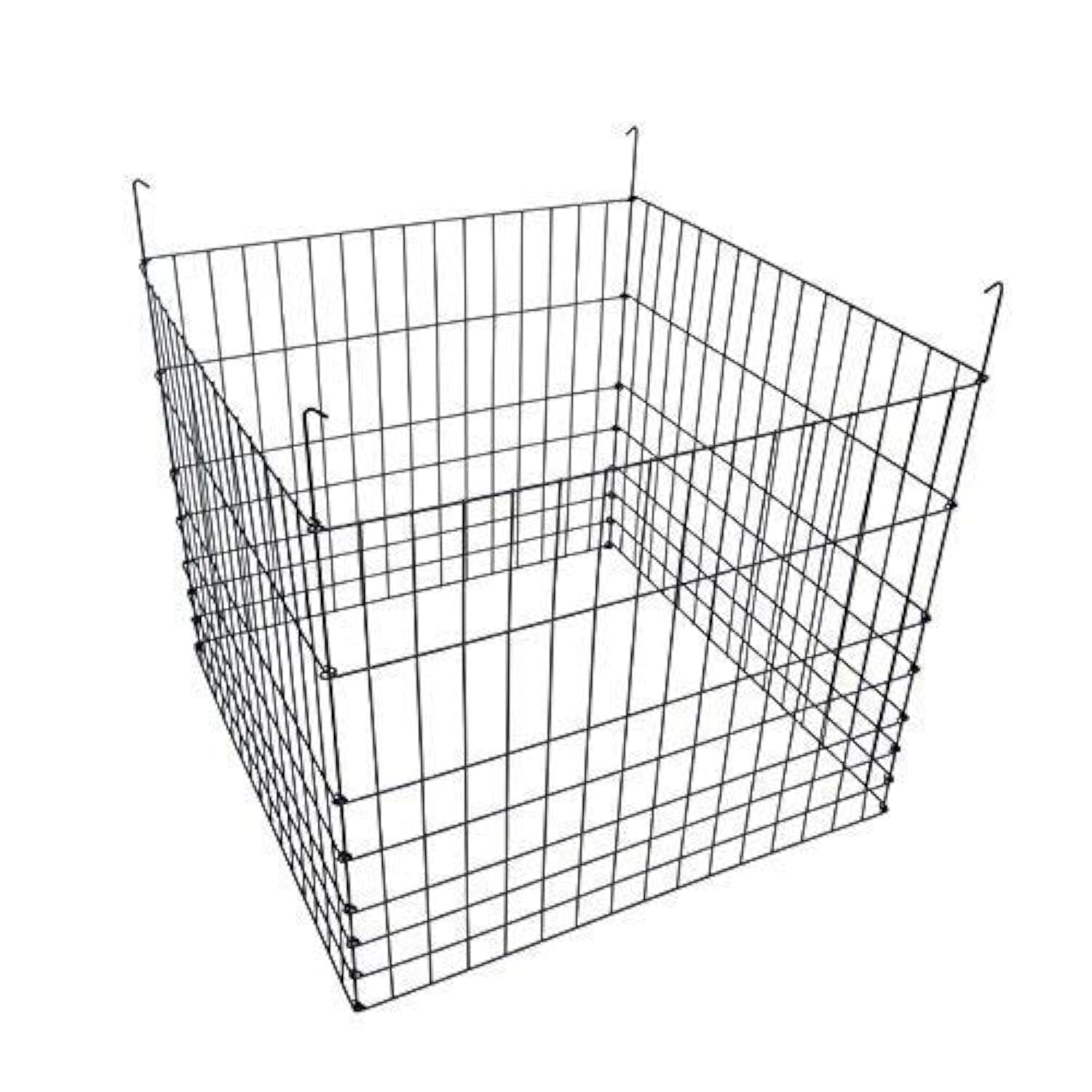
The biggest wire bin in this lineup, holding 22.5 cubic feet of leaves and grass clippings.
With 36-inch sides and a 30-inch height, this MTB Supply bin gives you 22.5 cubic feet of capacity (roughly 140 gallons). That is 22.5 cubic feet versus 21,600 cubic inches for the 30x30x24-inch version below, and 22.5 cubic feet versus the Bosmere’s 15.6 cubic feet. It is a great choice if you have a large yard with lots of fall leaves or grass clippings throughout the growing season.
Assembly is tool-free: four equal-size mesh panels link together with anchor spikes at each corner to form a square. The bin collapses flat for off-season storage. The black powder-coated heavy gauge steel wire resists rust. Customers note the wire spacing is too wide to retain fine particles — reviewers point out added fencing and zip ties fix that. Good airflow is a benefit of that same wide mesh.
At 9.7 pounds, it is heavier than the smaller MTB bin but still much lighter than the 52-pound Jora tumbler. It works well for discarding plant material, weeds, and vegetable scraps without turning (contents settle on their own). It can also double as decorative fencing or a raised bed border to keep out rabbits. A versatile, low-effort bin for large-volume yard waste.
What you get
- Large 22.5 cu ft capacity handles a big yard’s worth of leaves
- No-tools assembly in minutes
- Can be used as garden fencing or dog kennel
The trade-off
- Wide wire mesh lets fine particles fall out — may need lining
- No lid or door, so critters can access the pile
Best suited for: Yard-heavy composters who want the most volume for the money and do not mind adding a little fencing to keep particles inside.
Not ideal if: You primarily compost kitchen scraps — the open top and wide mesh will attract pests without extra covers.
4. Garden Wire Compost Bin 30x30x24 inches, Black, Garden Bed Fencing
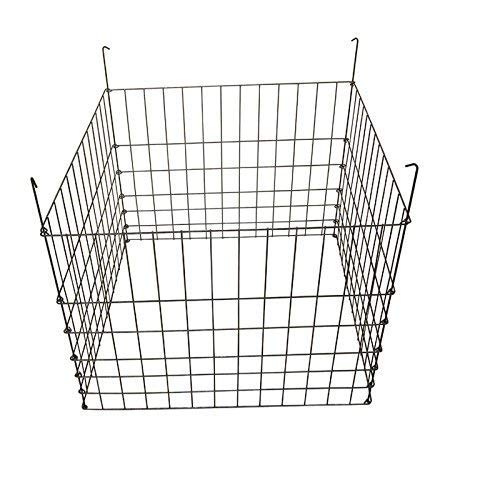
The entry-level wire bin that costs very little and sets up fast for leaf composting.
At 30 inches per side and 24 inches tall, this MTB Supply bin is the smallest and lightest of the four picks at just 7.54 pounds. It holds 21,600 cubic inches of material — fine for a modest yard or a beginner who wants to try composting without a big investment. The black powder-coated steel wire resists rust, and the four-panel design assembles in minutes with no tools. Just unfold the panels and push the anchor spikes into the ground.
Buyers call it affordable, easy to assemble, and durable. The main drawback shows up in reviews: the wire spacing is too wide, so small scraps and fine particles can fall through. Several owners mention fixing this with added fencing or by lining the inside with cardboard. One reviewer noted the bin collapsed while inserting the corner stakes, so watch your fingers during setup. Good airflow is the upside of that same wide mesh — it helps leaves break down faster.
Unlike the 9.7-pound larger MTB version, this bin measures 30x30x24 inches versus 36x36x30 inches, so it fits tighter garden spaces. It works well for discarding plant material, weeds, and vegetable scraps — no turning needed as contents settle on their own. It also doubles as a dog kennel or raised bed border to keep out rabbits. A no-frills starter bin that does the job if you keep expectations realistic.
Why it sells
- Extremely easy to set up — no tools, no hardware
- Powder-coated steel resists rust
- Collapses flat for storage
The catch
- Wide wire spacing loses fine particles
- Open top and gaps attract animals if used for kitchen scraps
- Small capacity limits use to leaves and yard waste
Grab this if: You want the lowest-cost way to keep leaves contained and see if composting fits your routine — it is a capable trial bin.
Better options exist if: You need to compost kitchen scraps, want a lid, or prefer a bin that does not need extra lining to hold materials inside.
Understanding the Specs
Capacity (Cubic Feet vs. Gallons)
Wire bins measure capacity in cubic feet (cu ft) because they are open boxes. The Bosmere holds 15.6 cu ft, and the bigger MTB holds 22.5 cu ft. Tumblers use gallons: the Jora holds 70 gallons, which is roughly 9.4 cu ft. A higher number means more waste per load, but tumblers make up for smaller volume by processing faster.
Insulation and Temperature
Insulated bins (like the Jora) trap heat from microbial activity, pushing internal temps above 160 degrees F. That heat breaks down material in weeks instead of months. Uninsulated wire bins stay at ambient temperature, so they work fine in warm weather but slow down or stop in cold zones.
FAQ
Can I compost kitchen scraps in a wire metal bin?
How long does it take to get compost from a metal bin?
Will a metal compost bin rust?
Which is better: a wire bin or a tumbler?
Do I need to add worms to a metal compost bin?
Can I use a metal compost bin in winter?
How do I turn compost in a wire bin?
Is a 70-gallon bin too big for one person?
Can I assemble a metal compost bin by myself?
What is the best way to prevent odors in a metal compost bin?
Final Thoughts: The Verdict
For most buyers, the metal compost bin winner is the Jora JK 270 because its insulated dual chambers deliver finished compost in 4-5 weeks and handle kitchen scraps most bins cannot. If you want a simple wire bin that holds up to weather and lets you access finished compost through a front door, grab the Bosmere K765. And for a large-capacity bin that handles a big yard’s leaves on a smaller budget, the MTB 36x36x30 gives you 22.5 cubic feet of space for minimal effort and cost.
How We Picked
We do not accept paid placement, and we did not hands-on test every unit. Instead, we match each pick to a real buyer and use-case by comparing the manufacturers’ published specifications against the patterns in verified customer reviews — so you get each pick’s real strengths and trade-offs instead of marketing copy.
Sources & Methodology
Specifications: manufacturer listings and product documentation. Review insights: verified customer reviews, as of July 2026. Pricing: not shown on this page (it changes often); check the current price via the retailer link.
As an Amazon Associate, Lawn Gear Lab earns from qualifying purchases. This does not affect which products we feature.