
Specs are compiled from manufacturer listings and verified buyer reviews and can change over time — please confirm the key details on the product page before buying.
Standing at the base of a tall tree, loppers in hand, you realize the branch you need to cut is a solid ten feet above your head. Reaching for a ladder on uneven ground feels risky, and most pruners simply won’t stretch that far. Getting the right tool means you stay safe on the ground and still make a clean cut without the strain.
I’m Rikta — the founder and writer behind Lawn Gear Lab. This guide is built by comparing the manufacturers’ published specifications and the patterns across verified customer reviews, so you get each pick’s real strengths and trade-offs instead of marketing spin.
Whether you’re shaping fruit trees or clearing dead limbs from a tall maple, a telescopic pruner turns an awkward overreaching chore into a simple one-handed snip.
Quick Picks
- Fiskars Telescopic Pole Pruner (Extends from 3-feet to 8-feet) — Best Overall
- YRTSH Loppers for Tree Trimming Heavy Duty Branch Cutter — Best Value
- YRTSH Loppers Branch Cutter Heavy Duty Tree Trimmer, Extendable 28-41″ — Budget Champion
- STEELHEAD Heavy-Duty 27-40″ Adjustable Gear-Bypass Limb & Branch Lopper — Premium Pick
- TRUPER TR-82M-A Tree Pruner w/ Extendable Aluminum Pole — Saw Specialist
- LeafLux Extendable Tree Cutter & Fruit Picker, 3.67-5.45 FT Telescopic Pole Pruner — Fruit Picker
- Tree Trimmer Loppers – Double Ratcheting Bypass Pruners – Kings County Tools — Power Pick
How To Choose The Best Telescopic Pruner
The biggest mistake is grabbing a pruner that claims a 2-inch cut but flexes when you squeeze. You need a blade that stays sharp, a handle that extends without wobbling, and a mechanism that matches the wood you trim most often. Here is what to look for.
Cutting Capacity and Blade Type
Look at the cutting width first. A 2-inch capacity sounds great, but if the handle bends under pressure, you won’t get that full cut on green wood. Bypass blades — which slice like scissors — are best for live, green branches because they leave a clean wound. Anvil blades crush the branch against a flat surface and work better on dead, dry wood.
Handle Reach and Material
The whole point of a telescopic pruner is the extendable handle. Check the collapsed length against the fully extended length. Aluminum handles keep the tool light enough to hold overhead for several cuts. Steel adds durability but also weight — at 3.8 pounds, a heavy pruner tires your arms fast when you are reaching up repeatedly.
Mechanism: Ratcheting vs. Compound Action
A ratcheting mechanism cuts in stages — you squeeze, the blade grips, then the ratchet clicks forward to deepen the cut. This lets you slice through thick limbs with less hand strength. Compound action uses a gear or pivot to multiply your force, giving you more power from the same squeeze. Both reduce fatigue, but ratcheting is especially helpful for older users or anyone with weak grip.
Quick Comparison
On smaller screens, swipe sideways to see the full table.
| Model | Best For | Cutting Width | Extended Length | Weight | Amazon |
|---|---|---|---|---|---|
| Fiskars Telescopic Pole Pruner | All-around lightweight saw | 12-inch saw blade | 8 feet | 3.65 lbs | Amazon |
| YRTSH Loppers (Compound) | easy 2-inch cuts | 2 Inches | 41 Inches | — | Amazon |
| YRTSH Branch Cutter (Anvil) | Dry/dead wood chopping | 2 Inches | 41 Inches | — | Amazon |
| STEELHEAD Gear-Bypass Lopper | Ratcheting power for tough limbs | 1.38 Inches | 40 Inches | 1 lbs | Amazon |
| TRUPER TR-82M-A Pruner | Saw precision on high branches | 12-inch SK5 saw | 2.4 m | — | Amazon |
| LeafLux Telescopic Pruner | Light fruit picking & trimming | 1/2 Inch | 5.45 Feet | 0.86 kg | Amazon |
| Kings County Tools Lopper | Double-ratcheting power | 2 Inches | 40 Inches | 3.8 lbs | Amazon |
In‑Depth Reviews
1. Fiskars Telescopic Pole Pruner (Extends from 3-feet to 8-feet)
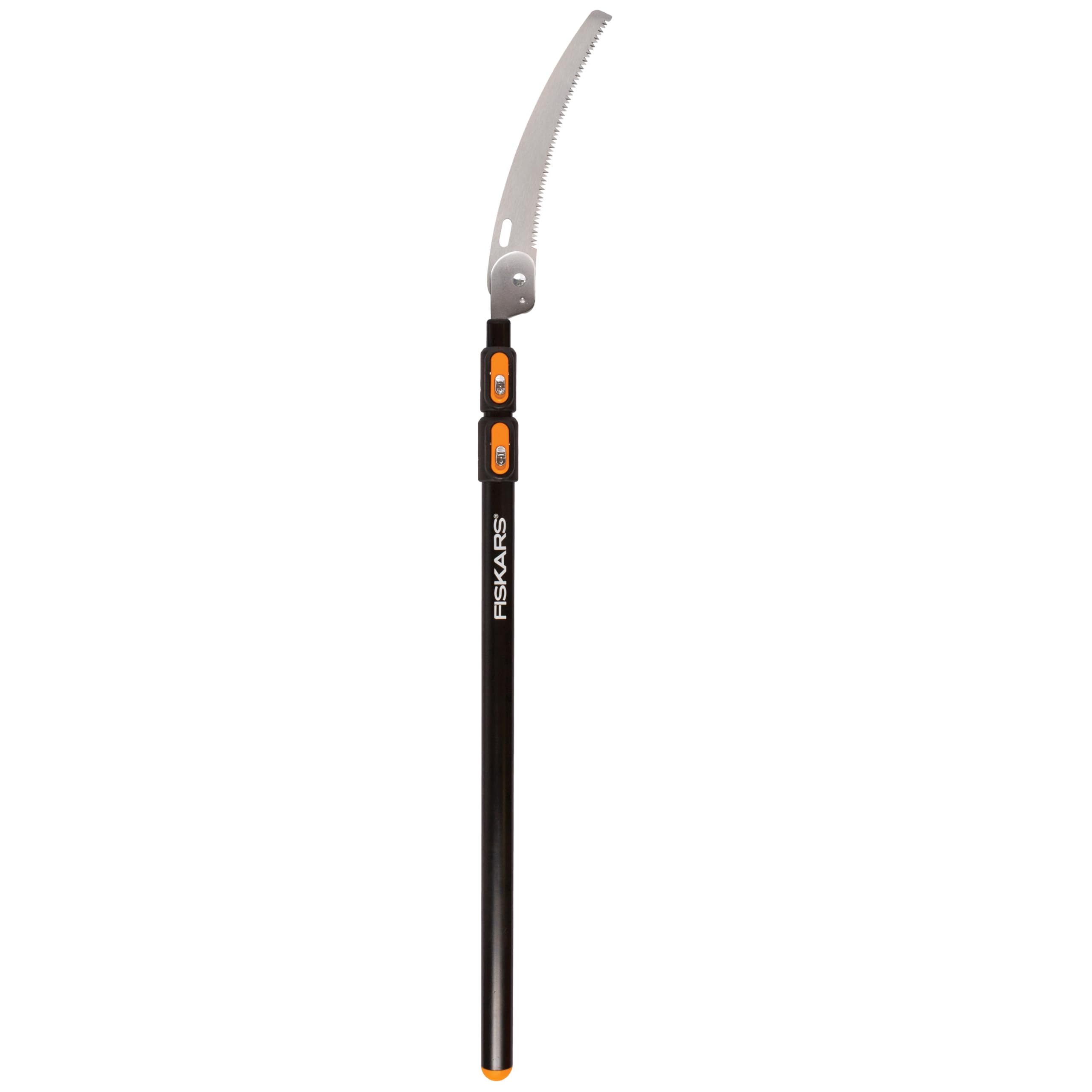
The saw-based design that reaches high limbs without lifting a ladder.
You get more reach here than any other pick — this Fiskars uses a 12-inch double-grind saw blade on a steel pole that extends from 3 feet to a full 8 feet. That saw action handles branches thicker than your thumb, where lopper jaws might struggle or bend. The blade stays sharp through heavy use, and the steel pole feels sturdy in hand.
At 3.65 pounds, this Fiskars is heavier than the STEELHEAD Gear-Bypass lopper at 1 pound. Buyers report it is “lightweight, doesn’t wear out your arms” and note the locking clips never slipped during farm work. One owner said they “cleared 1000ft treeline” with it. The trade-off: it is a saw, not a lopper, so you need two hands to work it, and for very thin green twigs a bypass lopper is faster.
The collapsed length is just over 3 feet, making it easy to store. Unlike the TRUPER pruner, this Fiskars is built around a saw rather than a cutter rope, giving you more control on dense wood but less precision on small fruit-tree branches.
Saw reach winner: If you need to saw through thick limbs 8 feet up without leaning, this is the most reliable tool for the job. The 12-inch blade and steel pole handle real cutting force.
Note the catch: It is a saw, not a lopper — one-handed operation isn’t an option, and very narrow green twigs are better snipped with shears.
Reach for this if: you regularly prune branches 1-3 inches thick from tall trees and want a tool that collapses to a compact 3 feet for storage.
Look elsewhere if: you need a quick one-handed snip on thin green wood — a bypass lopper is faster for that.
2. YRTSH Loppers for Tree Trimming Heavy Duty Branch Cutter
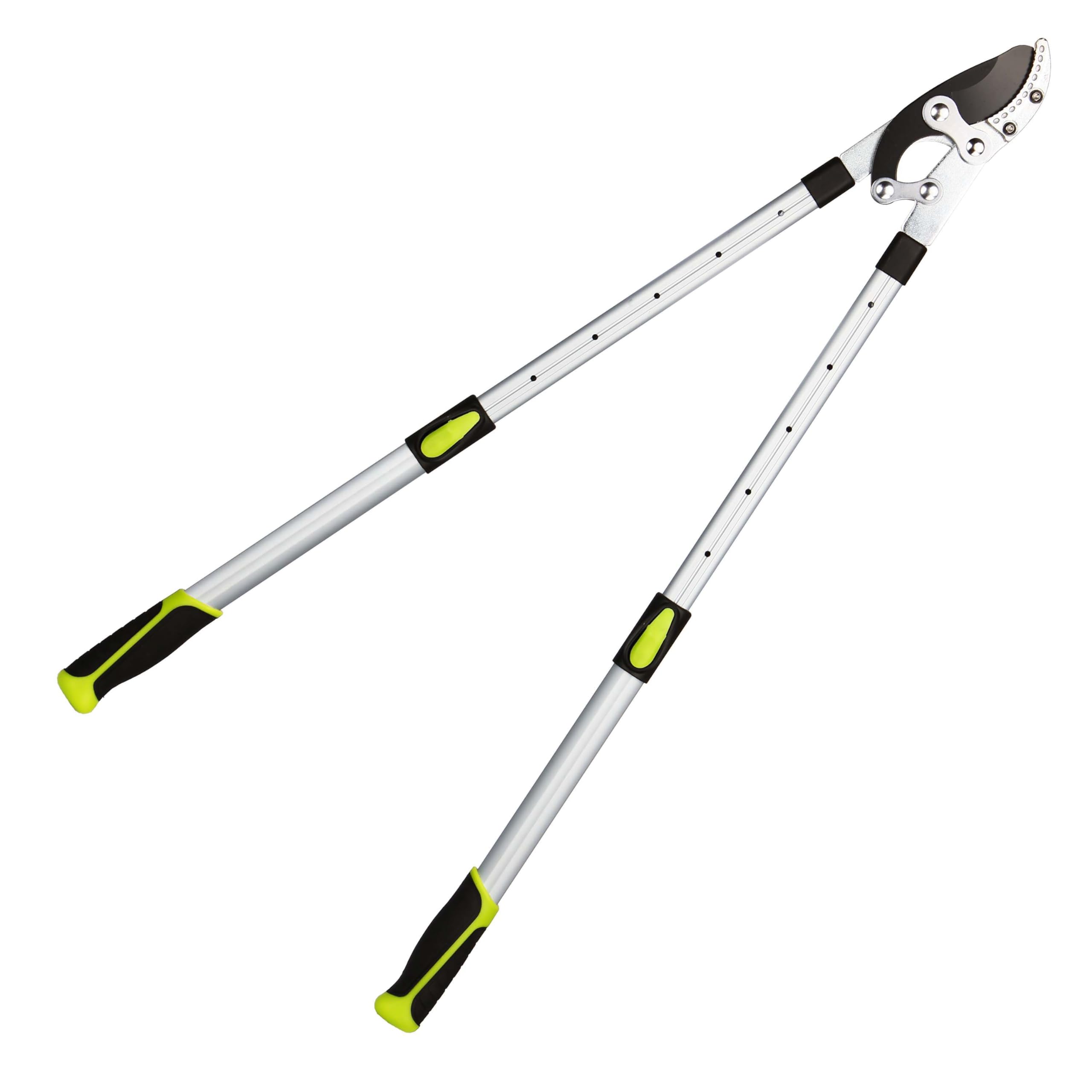
Compound-action loppers for 2-inch wood.
Compound action technology multiplies your squeezing force so you can cut through branches up to 2 inches thick without fighting the handles. The blade has a low-friction, non-stick coating that keeps sap from gumming up the cut. The handle extends in 6 steps from 28 to 41 inches, and the alloy aluminum build keeps it light enough for extended trimming sessions.
Owners mention this tool works brilliantly for rose bushes and maple tree branches, with one reviewer saying “I’ve been using this tool for months” and noting it is easy to keep working because it does not tire your arms. Another owner, who identified as a senior, called it “very nice for a senior” needing to trim limbs without a ladder. The catch: being a bypass lopper, it fares best on green, living wood — dead or extremely dry branches may crush rather than slice cleanly.
Compared to the Fiskars saw above, this YRTSH is a true two-handed lopper that cuts faster on green wood under 2 inches but cannot chew through a 3-inch limb the way a saw does.
Buyer-Approved Strengths
- Compound action delivers noticeable power on 2-inch green branches
- Adjustable handle with 6 extension steps fits different reach needs
- Light enough for older users to handle comfortably
Real-World Limits
- Bypass blade is best for green wood, not dead dry branches
- Handle length tops out at 41 inches — shorter than some competitors
Best for: homeowners who want a powerful bypass lopper for green branches up to 2 inches thick and appreciate compound-action leverage that reduces hand fatigue.
skip it if: you need to cut dead wood or branches thicker than 2 inches — an anvil lopper or saw would suit you better.
3. YRTSH Loppers Branch Cutter Heavy Duty Tree Trimmer, Extendable 28-41″
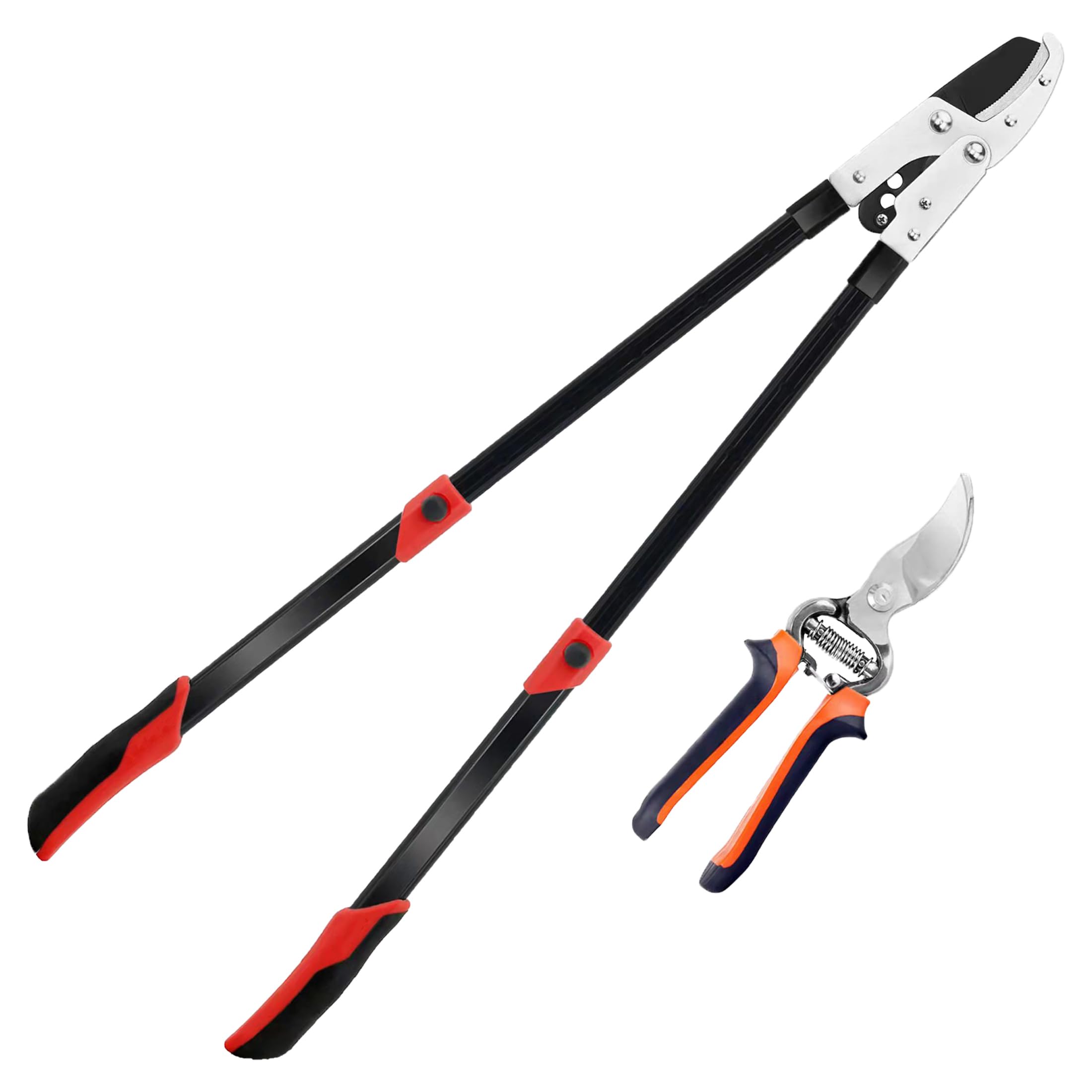
An anvil-style cutter that chops dead dry wood without blunting.
This version uses an anvil blade — a single sharp blade pushes down against a flat metal surface, crushing the branch rather than slicing it like scissors. That makes it a better match for dead, dry, or hardwood limbs, where a bypass blade would dull faster or bind. It still offers the same 2-inch cutting width and a 6-step telescoping handle from 28 to 41 inches, with a Teflon-coated alloy steel blade that resists sap build-up.
Customers note it is “lightweight, high-quality” and easy for a 73-year-old woman to use on hibiscus and dry banana leaves. However, one owner found it “cannot cut 2″ green wood overhead; handles bend” — a key trade-off. The anvil design crushes green wood instead of slicing it cleanly, so the branch may splinter. The same buyer noted the tool cuts 1.25-inch live oak limbs easily with the extension.
At the same price tier as the previous YRTSH bypass model, choose this anvil version if you mainly trim dead branches and dried-out wood, and the bypass version if most of your pruning is on living trees.
Where It Shines
- Anvil blade handles dead and dry wood without dulling fast
- Teflon coating reduces friction and sap stickiness
- 6-step telescoping handle offers good reach for overhead cuts
Where It Struggles
- Handles may bend when cutting 2-inch green wood overhead
- Anvil action can crush and splinter green branches
Reach for this if: you mostly cut dead limbs, dry branches, or hardwood from the ground and want a budget-friendly anvil lopper.
Look elsewhere if: you prune living green trees — the bypass version of this same brand is a cleaner cut for live wood.
4. STEELHEAD Heavy-Duty 27-40″ Adjustable Gear-Bypass Limb & Branch Lopper

A ratcheting bypass lopper that multiplies your force three times per squeeze.
This is the only lopper on the list with a compound-ratcheting gear-bypass jaw — it cuts in stages: squeeze, click, squeeze again, and the ratchet deepens the cut each time. The tool extends tool-free from 27 to 40 inches, and the bypass blade design is ideal for green, living wood.
At 1 pound, the STEELHEAD is lighter than the Fiskars pole saw at 3.65 pounds, which makes a real difference when you hold it overhead for several minutes. Reviewers point out “solid locking mechanism, light weight, sharp” and say the telescoping handles make cutting easier when a branch is particularly thick or resistant. The 1.38-inch cutting width is lower than the 2-inch capacity of YRTSH models, so the STEELHEAD is realistically designed for limbs up to about 1.38 inches thick.
The rubber overmold grips fit a wide range of hand sizes, and the high-carbon steel blade has a non-stick corrosion-resistant finish. The lifetime US-based support from Atlanta, Georgia, adds confidence.
Ratcheting Advantages
- Ratcheting gear mechanism helps users with weaker grip
- Weighs only 1 pound — the lightest telescoping lopper on this list
- Lifetime US-based customer support included
Capacity Limitation
- 1.38-inch cutting width versus 2-inch capacity on YRTSH models
- Ratcheting takes more squeezes per branch than a single-snip compound-action lopper
Best for: anyone with limited hand strength who needs a lightweight, ratcheting lopper for green branches up to 1.38 inches — the force multiplication makes tough cuts feel easy.
pass on it if: you regularly cut branches thicker than 1.5 inches — the YRTSH compound-action models have a larger jaw capacity.
5. TRUPER TR-82M-A Tree Pruner w/ Extendable Aluminum Pole

A tempered SK5 steel saw that slices high branches with precision.
Like the Fiskars pick, this Truper is a saw-based pruner, but it uses a fully tempered SK5 steel blade with triple-edged teeth — a harder steel that holds an edge longer than standard alloy. The aluminum telescopic handle extends to 2.4 meters (about 7.9 feet), similar to the Fiskars, and the saw blade is 12 inches long with 60 teeth for aggressive cutting speed.
Buyers describe it as “one of my very favourite garden tools,” noting it offers precise trimming at full length with balanced weight. One reviewer noted it was “easy for a small woman to control” and recommended cleaning sap with cooking oil or WD40. Another user reported it can cut trunks up to 5 cm in diameter. The tool is lightweight enough for overhead work, and the aluminum pole doesn’t rust. Unlike the Fiskars, this Truper saw has a rectangular blade shape and a multicolor finish — build quality is solid, though the brand is less common in North American hardware stores.
One difference: the Fiskars pole is steel (strong but heavier), while the Truper uses aluminum (lighter but less rigid on very thick wood). If you cut branches in the 1-2 inch range and value a lightweight aluminum pole, the Truper may feel easier to maneuver.
Why It Stands Out
- SK5 steel blade with 60 teeth stays sharp through many cuts
- Aluminum telescopic pole is rust-resistant and lightweight
- Capable of cutting trunks up to 5 cm thick
Consider This
- Saw-only design — no lopper head for quick snips on small twigs
- Brand support and replacement parts less common than major garden tool brands
Best for: gardeners who prefer a saw over loppers for higher precision on medium branches and want a lightweight aluminum pole that reaches nearly 8 feet.
it’s not for you if: you need a quick scissor-style cut on small green branches — a bypass lopper is faster for that task.
6. LeafLux Extendable Tree Cutter & Fruit Picker, 3.67-5.45 FT Telescopic Pole Pruner
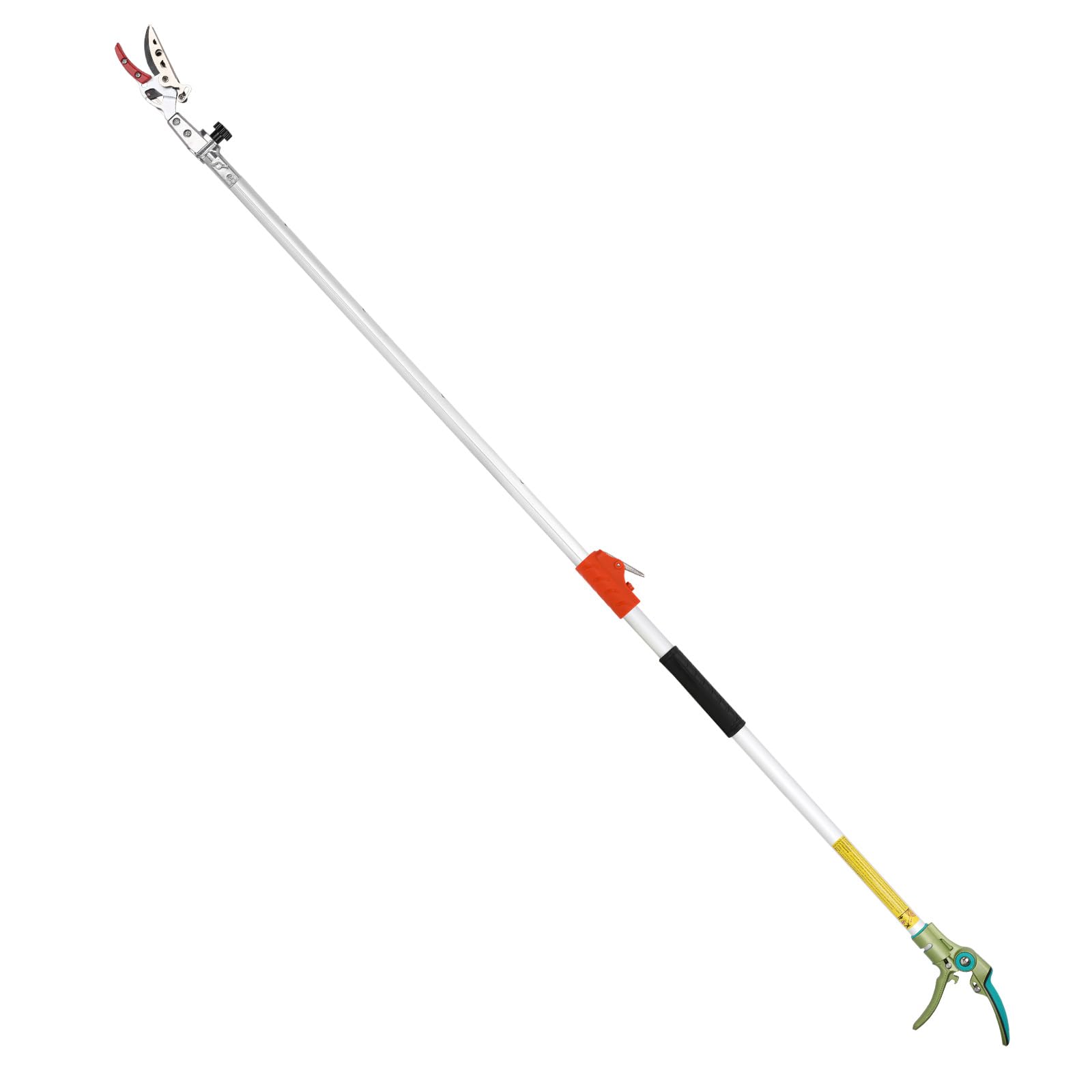
A unique cut-and-hold head that catches fruit so it doesn’t hit the ground.
This is the light-duty specialist of the group. The cutting capacity is just 1/2 inch — far less than any other pruner on this list — but the real innovation is the rotating pruner head that clamps the branch after cutting it, allowing you to pick apples, persimmons, and flowers without them dropping and bruising. The telescopic pole extends from 3.67 to 5.45 feet, giving access to branches about 10 feet high, and the rubberized handle reduces strain.
Buyers says it is “great for light yard work” and “cuts thinner branches perfectly.” One 5-foot-2 reviewer noted, “Don’t need my husband!” because the pruner catches the branch and lowers it to the bin. However, a separate review discovered the gripper broke on the first use and would not stay closed after each branch — suggesting quality control may vary. For light tasks like brambles, stinging nettles, and fruit picking, this tool is excellent. For any branch over 1/2 inch, it will struggle.
The safety locking mechanism prevents accidental cuts when stored, which is a thoughtful touch for a tool with a sharp bypass blade. Given its short extended length, it is better suited to smaller yards and low-hanging fruit than tall trees.
Unique Features
- Cut-and-hold head catches fruit and flowers without dropping them
- Rotating head for comfortable cutting angle
- One-handed operation with stability support from other hand
Real Limitations
- Only cuts branches up to 1/2 inch thick
- Some shoppers say the gripper mechanism breaks quickly
Best for: picking fruit and trimming thin brambles where catching the cut piece is more important than raw cutting power.
look elsewhere if: you need to cut branches thicker than half an inch — every other pruner in this list has a larger jaw capacity for heavier work.
7. Tree Trimmer Loppers – Double Ratcheting Bypass Pruners – Kings County Tools
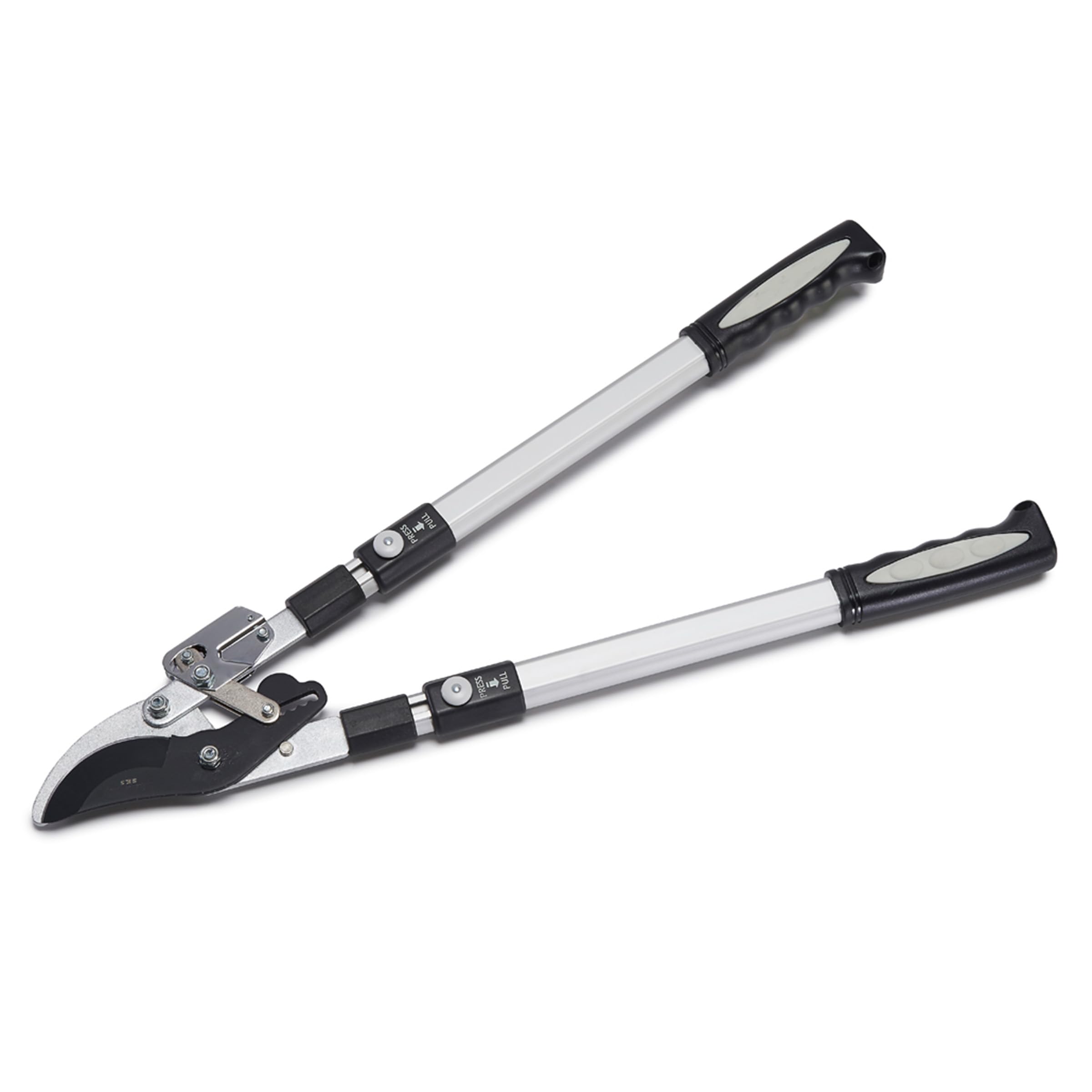
Double ratcheting bypass jaws that chew through 2-inch green wood in stages.
The Kings County Tools lopper stands out because it combines a 2-inch jaw capacity with a double ratcheting mechanism — two stages of ratcheting per squeeze cycle, giving you massive cutting force on green, living wood. It telescopes from 26 to 40 inches via six pin-locked positions, and the steel and wood handle construction feels substantial. At 3.8 pounds, it is the heaviest lopper in this group, alongside the 3.65-pound Fiskars saw.
Buyers call it “the real deal” and say the ratcheting action “provides extra torque for easy cutting.” One buyer mentioned their blade broke on the third use cutting a 1-inch dead branch, but after contacting the manufacturer, they received a replacement — a good sign for customer service recovery. Another owner said it is “heavy compared to other units I have used” — a fair trade-off for the ratcheting power. The double ratcheting is ideal for anyone who wants to cut 2-inch live limbs without needing strong hands, but the weight means it will tire your arms faster than the 1-pound STEELHEAD.
Unlike the anvil-style YRTSH branch cutter, this Kings County tool is a bypass lopper designed specifically for wet, green wood — it will crush dead branches rather than slice them cleanly.
Ratcheting Power
- Double ratcheting mechanism delivers huge cutting force on 2-inch live wood
- Extendable 26-40 inch handles with 6 pin-locked stops
- Bypass blade designed specifically for green, living branches
What to Watch For
- At 3.8 pounds, it is heavy — overhead use will fatigue your arms
- One report of a blade breaking on a dead branch (replaced under support)
Best for: serious gardeners who regularly cut 2-inch green limbs and want double-ratcheting power but can handle the extra weight.
steer clear if: you need a lightweight tool for frequent overhead pruning — the STEELHEAD weighs 1 pound, while this model weighs 3.8 pounds, so it is less tiring to hold up.
Understanding the Specs
Cutting Width (Capacity)
This number tells you the thickest branch the pruner can cleanly cut. A 2-inch capacity is common on lopper-style pruners, but real-world performance depends on whether the branch is green or dead, and whether the handle bends under load. Some pruners claim 2 inches but only deliver that on soft green wood. If you cut mostly dead limbs, an anvil blade with a 2-inch capacity is a better bet. For live branches, a bypass blade (which slices like scissors) leaves a cleaner wound that heals faster.
Ratcheting vs. Compound Action
Both mechanisms multiply your hand force, but they work differently. A ratcheting mechanism cuts in stages — each squeeze clicks forward and deepens the cut, so a thick 2-inch limb may need 3-4 squeezes. Compound action uses a gear or pivot to multiply the force of a single squeeze, letting you cut through in one motion. Ratcheting is better for weaker hands or very thick wood, while compound action is faster on medium branches.
Handle Material and Weight
Aluminum handles keep the tool light and resist rust, making them ideal for overhead pruning where you hold the tool up for minutes at a time. Steel handles are stronger and more rigid but add weight — a pruner over 3.5 pounds can tire your shoulders quickly. The handle’s collapsed length also matters: a 3-foot collapsed pruner is easy to store, while a 5-foot one may not fit in a standard shed.
Bypass vs. Anvil Blade
A bypass blade has two curved blades that pass each other like scissors, giving a clean, precise cut that heals well on living trees. An anvil blade has one sharp blade that pushes against a flat metal surface, crushing the branch rather than slicing it. Use bypass for green, live wood and anvil for dead, dry branches — the crushing action won’t hurt dead wood, and the anvil stays sharper longer on dirty bark.
FAQ
Can a telescopic pruner cut 2-inch branches?
What is the difference between a bypass and an anvil blade?
How long should a telescopic pruner handle be?
Is a heavier pruner better for cutting thick branches?
Can I use a telescopic pruner one-handed?
What is the advantage of a ratcheting mechanism?
Will a telescopic pruner work on dead wood?
How do I maintain the blade on my telescopic pruner?
Can I replace the blade on a telescopic pruner?
Why does my pruner bend when cutting thick overhead branches?
Final Thoughts: The Verdict
Across the board, the telescopic pruner winner is the Fiskars Telescopic Pole Pruner because its 12-inch double-grind saw blade and 8-foot steel pole offer the best combination of reach, cutting power, and reliability for the majority of home pruning tasks. If you want a lightweight, ratcheting lopper for green branches, grab the STEELHEAD Gear-Bypass Lopper. And for fruit picking and thin brambles where catching the cut piece matters, the standout is the LeafLux Extendable Tree Cutter.
How We Picked
We do not accept paid placement, and we did not hands-on test every unit. Instead, we match each pick to a real buyer and use-case by comparing the manufacturers’ published specifications against the patterns in verified customer reviews — so you get each pick’s real strengths and trade-offs instead of marketing copy.
Sources & Methodology
Specifications: manufacturer listings and product documentation. Review insights: verified customer reviews, as of July 2026. Pricing: not shown on this page (it changes often); check the current price via the retailer link.
As an Amazon Associate, Lawn Gear Lab earns from qualifying purchases. This does not affect which products we feature.