
Specs are compiled from manufacturer listings and verified buyer reviews and can change over time — please confirm the key details on the product page before buying.
Getting big, tender okra pods means giving this heat-loving plant exactly the right meal at the right time. Too much nitrogen and you get giant plants with few pods; too little and the harvest stalls out mid-summer. This guide cuts through the shelf of bags and boxes to find the seven best blends that actually push pod production without burning your plants or your budget.
I’m Rikta — the founder and writer behind Lawn Gear Lab. This guide is built by comparing the manufacturers’ published specifications and the patterns across verified customer reviews, so you get each pick’s real strengths and trade-offs instead of marketing spin.
Whether you are growing in-ground or in containers, each option below earns its spot by matching the specific nutrient demands of okra through heat and drought. Let’s find the best fertilizer for okra that fits your garden style and yield goals.
Quick Picks
- The Old Farmer’s Almanac Tomato & Vegetable Plant Food Mini Spikes (6-4-6) — Best Overall
- FoxFarm Happy Frog Tomato & Vegetable Fertilizer (5-7-3) — Top Performer
- Miracle-Gro Water Soluble All Purpose Plant Food (24-8-16) — Budget Champion
- Fertilome Gardener’s Special Plant Food (11-15-11) — Bloom Booster
- Big A Premium Organic Fertilizer with Kelp — Organic Concentrate
- Alaska Fish Fertilizer OMRI Listed (5-1-1) — Liquid Nitrogen
- Jobe’s Organics Granular All Purpose Fertilizer (4-4-4) — Long-Term Feed
How To Choose The Best Fertilizer For Okra
Okra is a heavy feeder that thrives in hot weather, but it is picky about balance. A fertilizer that works wonders for tomatoes can actually stunt okra pod production if the nitrogen is too high. Here are the three specs you need to check before you buy.
NPK Ratio: The Nitrogen Trap
Nitrogen pushes green leafy growth, which sounds good until your okra plant is a towering bush with only a handful of pods. A balanced or slightly lower-nitrogen ratio, like a 6-4-6 or 5-7-3, is better for directing energy into fruiting. The phosphorus number (the middle digit) is what supports flower and pod development.
Release Speed: Granules vs Liquid vs Spikes
Water-soluble powders feed your okra instantly but wash away fast, so you reapply every one to two weeks. Granular organic blends break down slowly, feeding over several weeks with each watering. Spikes release steadily for up to eight weeks without any measuring. Your choice depends on if you want a low-maintenance approach or total weekly control.
Calcium Content
Blossom end rot (a dark, sunken spot on the bottom of the pod) is a common okra problem caused by calcium deficiency. Some fertilizers include added calcium to prevent this, which is a major advantage if you have had rotting pods in previous seasons.
Quick Comparison
On smaller screens, swipe sideways to see the full table.
| Model | Best For | NPK Ratio | Form | Weight | Amazon |
|---|---|---|---|---|---|
| The Old Farmer’s Almanac Mini Spikes | Set & forget feeding | 6-4-6 | Spikes | 4.8 oz | Amazon |
| Miracle-Gro All Purpose 24-8-16 | Fast green growth | 24-8-16 | Granules (water soluble) | 5 lb | Amazon |
| FoxFarm Happy Frog 5-7-3 | Organic pod production | 5-7-3 | Granules | 4 lb | Amazon |
| Fertilome Gardener’s Special 11-15-11 | Bloom boost | 11-15-11 | Granules | 4.1 lb | Amazon |
| Big A Premium Organic w/ Kelp | Organic flavor boost | — | Powder | 12 oz | Amazon |
| Alaska Fish Fertilizer 5-1-1 | Vegetative growth | 5-1-1 | Liquid | 8.8 lb (115 fl oz) | Amazon |
| Jobe’s Organics 4-4-4 Granular | Balanced long-term feed | 4-4-4 | Granules | 16 lb | Amazon |
In‑Depth Reviews
1. The Old Farmer’s Almanac Tomato & Vegetable Plant Food Mini Spikes (6-4-6)
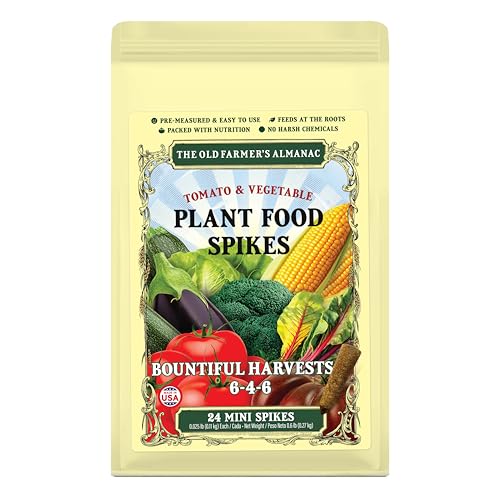
Push in a spike and let the 6-4-6 ratio feed pods for two months straight.
This is the easiest okra feeding method you will find — no mixing, no measuring, no blue dust on your hands. Each pre-measured spike delivers a 6-4-6 blend that keeps nitrogen modest enough to avoid all-leaf-no-pod syndrome while the phosphorus pushes flowers. Push them into the soil around each okra plant and the patented TruSpike design (buyers report it will not break, chip, or crush) releases nutrition directly into the root zone.
Apply every six to eight weeks, which means a single application covers nearly the whole okra season. The 24-count box handles a decent-sized row. One reviewer grew ten-foot tomato plants with these spikes and noted zero burning — a strong sign for okra, which can be sensitive to salt buildup from conventional granular feeds. The only real trade-off is that the 6-4-6 ratio is lower in phosphorus than the FoxFarm Happy Frog, so if your soil is already phosphorus-depleted you might see faster pod set with a higher middle number.
Hands-off feeding: Perfect for gardeners who want one application per planting and consistent results without fuss.
The catch: Not adjustable if your okra shows a deficiency mid-season — you commit to the spike’s rate for eight weeks.
Reach for this if: You want the lowest-maintenance path to steady pod production and hate measuring scoops every week.
Look elsewhere if: You need to fine-tune nutrients weekly based on plant appearance — go with a water-soluble powder instead.
2. FoxFarm Happy Frog Tomato & Vegetable Fertilizer (5-7-3)

Calcium and fungi in a 5-7-3 blend built for heavy-fruiting vegetables.
This is the go-to for okra growers who care about organic soil health and want to avoid blossom end rot before it starts. The 5-7-3 ratio has more phosphorus than the Farmer’s Almanac spikes, at 7 versus 4 in the middle number — and phosphorus is exactly what okra uses to convert flowers into fat pods. It also contains calcium to prevent that black sunken rot on the bottom of pods, plus mycorrhizal fungi that expand root efficiency in hot, dry soil where okra typically grows.
Owners mention that tomatoes produced baby fruit days after feeding — the same quick pod-set response translates directly to okra. The 4-pound bag is lighter than the 5-pound Miracle-Gro bag, but the NPK focus is much more targeted for fruiting vegetables. It works as a dry granular top-dress that you water in, and customers note no chemical smell and no root burn even when used generously around sensitive transplants.
Why it wins for okra
- Added calcium directly targets blossom end rot prevention.
- Mycorrhizal fungi help roots access water in dry spells.
- Phosphorus-heavy 5-7-3 ratio is ideal for pod set.
One limitation
- Must be reapplied every few weeks during heavy rain or frequent watering.
Perfect for: Organic gardeners growing okra in hot, dry conditions who want to prevent rot and maximize pod counts.
Not ideal if: You want a single-season application — this needs periodic re-application during long fruiting windows.
3. Miracle-Gro Water Soluble All Purpose Plant Food (24-8-16)

The classic blue powder that pushes fast leaf growth and covers 2,000 square feet.
If your okra plants are small and you want to bulk them up fast before fruiting, this is the fuel. The 24-8-16 ratio is nitrogen-heavy, at 24 nitrogen versus FoxFarm Happy Frog’s 5, which drives rapid stem and leaf expansion. Reviewers point out it doubles plant size in a week and works instantly after mixing. The 5-pound bag feeds about 2,000 square feet of garden area, making it the most economical choice per square foot here.
The catch: that nitrogen blast is aggressive for okra. If you keep using it after pods start forming, you will get a forest of okra trees with slim pickings. Use it as a pre-season green-up only, then switch to a lower-nitrogen option like the FoxFarm or Farmer’s Almanac spikes once flowering begins. Also, the fine blue powder stains hands and blows in the wind — mix it carefully on a calm day.
Two-phase strategy: Great for kick-starting young okra transplants, but swap it out once the first flowers appear to avoid sacrificing pods for leaves.
Watch for: One reviewer noted it is safe for most plants but not for orchids or Venus flytraps — and it can burn okra roots if over-applied in hot soil.
Buy it for: The first three weeks after transplanting to build strong, fast foliage before the pod push.
Skip if: You only want one fertilizer for the whole season — get a balanced or bloom-focused feed instead.
4. Fertilome Gardener’s Special Plant Food (11-15-11)
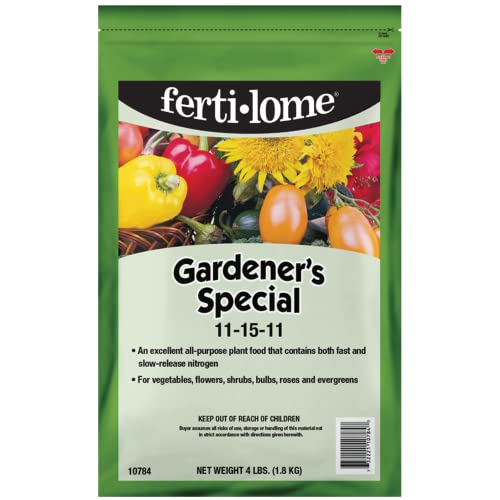
An 11-15-11 granular blend with fast and slow nitrogen for sustained okra harvests.
This is a middle-ground option that works well if you want a single granular feed that covers both early growth and pod production. The 15% phosphorus is the highest middle number in this lineup — beating even the FoxFarm Happy Frog — which makes it a strong choice for pushing okra flowers into pods. The 11% nitrogen is split between fast-release and slow-release sources, so you get an initial green-up without the leaf-only explosion that pure quick-release nitrogen causes.
Shoppers say it works wonders on new garden beds and keeps flowering plants blooming again after a mid-season lull. The 4.1-pound bag is compact, and application is simple: spread granules around the soil at the label rate, mix in, and water. It is not organic, so if you are avoiding synthetic chemicals this is not your pick, but for conventional row gardening it delivers a reliable yield boost at a reasonable price.
Best for conventional growers: If you want one bag of granules that bridges vegetative growth and heavy fruiting without juggling multiple products.
The trade-off: Not OMRI listed, so it won’t fit an organic certification plan.
Ideal for: In-ground okra rows where you want a single application that covers both stem growth and pod set.
Not for: Organic gardeners or anyone needing a slow-release option safe for no-till beds.
5. Big A Premium Organic Fertilizer with Kelp

North Atlantic sea kelp and amino acids in a highly soluble organic powder.
The high solubility means it enters the soil quickly, giving okra a rapid organic boost when you water it in. Buyers in Zone 7 reported that six tomato plants produced large fruit by October after weekly feeding starting in July.
The downside is the bag is small for the price. If you have a large okra patch, you will go through this fast. It is best used as a supplemental bloom booster rather than a primary soil amendment. The lack of a published NPK ratio on the spec sheet means you cannot precisely track nitrogen-phosphorus balance, so pair it with a known base feed like the FoxFarm Happy Frog for best results.
Concentrated organic boost: Ideal for weekly foliar or root feeding during the fruiting stage to push pod size and flavor.
Trade-off: Small bag size and unlisted NPK ratio make it a supplement, not a standalone solution for a full season.
Best for: Small organic gardens where you want to supplement a base fertilizer with kelp-derived micronutrients for bigger, juicier pods.
Not for: Large row plantings — the value per square foot does not compete with granular options.
6. Alaska Fish Fertilizer OMRI Listed (5-1-1)

Cold-processed fish emulsion that feeds soil microbes and greens up okra without synthetic salts.
This is your organic nitrogen source for the early vegetative stage. The 5-1-1 ratio is almost pure nitrogen with very little phosphorus, making it a poor choice for the pod-fruiting phase but a fantastic one for getting young okra plants off to a lush, fast start. It is OMRI listed for organic use and uses cold processing to preserve micronutrients. Buyers report it revived sad houseplants in January and produced stronger stems on tomatoes, basil, and cucumbers.
The smell is the main event here — it is fish fertilizer, so it smells like it. Owners mention the odor dissipates within a day outdoors, but it can linger indoors and may attract pets that dig in the treated soil. Use every three weeks during the growing season. Because it is low in phosphorus and potassium, you will need to supplement with a bloom-focused fertilizer like the FoxFarm Happy Frog once okra starts flowering.
Vegetative stage only: Excellent for building strong green growth in May and June, but swap out once the first okra flowers appear.
Watch for: The fishy smell — apply in well-ventilated areas and water it in immediately to reduce odor.
Buy this for: The first month after planting to build sturdy foliage and root systems organically.
Skip if: You want a single-season fertilizer or you are sensitive to strong odors near your garden.
7. Jobe’s Organics Granular All Purpose Fertilizer (4-4-4)

Sixteen pounds of balanced 4-4-4 organic granules that double as a liquid tea.
This is the biggest bag in the lineup by weight — 16 pounds — and it is designed for the gardener who wants to feed the soil, not just the plant. The even 4-4-4 NPK ratio is mild enough that it will not burn young okra roots, and it is OMRI listed for organic gardening. You can either spread the granules dry and water them in, or steep one cup of granules in a gallon of dechlorinated water for 24 hours to make a liquid tea. One buyer mentioned that liquid feeding caused rapid budding and flowering in squash and cucumbers within 48 hours — the same principle applies to okra.
It is not as targeted for fruiting as the FoxFarm Happy Frog, since the phosphorus is lower (4% vs 7%). For maximum pod production, you might want to supplement with a bloom booster during the fruiting stage. The resealable bag is convenient for storing the large volume without spills, and the granular form works well in a hand-crank spreader for larger plots.
Strengths
- 16 lb bag offers the lowest cost per pound in this lineup.
- Dual use as dry granular or liquid tea gives feeding flexibility.
- Mild 4-4-4 ratio is safe for all growth stages.
Limitations
- Lower phosphorus than fruit-specific blends — expect fewer pods without a supplement.
- Pungent smell during brewing, though milder than raw manure.
Best for: Large organic gardens where you want an all-purpose base fertilizer that feeds the soil biology and can be used across multiple crops.
Not for: Okra-only growers who want a phosphorus-rich pod maximizer — pair it with a bloom booster for best results.
Understanding the Specs
NPK Ratio
The three numbers on a fertilizer bag stand for Nitrogen (N), Phosphorus (P), and Potassium (K). Nitrogen drives leaf and stem growth. Phosphorus supports flower and fruit (pod) development. Potassium builds strong roots and stress tolerance. For okra, a middle number (phosphorus) that is equal to or higher than the first number (nitrogen) is ideal — think 6-4-6 or 5-7-3 rather than 24-8-16. Too much nitrogen results in tall, leafy plants with sparse pods.
Organic vs Synthetic
Organic fertilizers (like fish emulsion, bone meal, or kelp) feed the soil microbes, which then release nutrients slowly to the plant. They are less likely to burn roots and improve long-term soil structure. Synthetic fertilizers (like water-soluble crystals) deliver nutrients in a form plants can absorb immediately, which is useful for correcting a deficiency fast but can salt up the soil over time and requires careful dosing.
FAQ
What NPK ratio is best for okra plants?
Can I use tomato fertilizer on okra?
How often should I fertilize okra during the growing season?
Is fish fertilizer good for okra?
What causes blossom end rot on okra and how do I prevent it?
Should I use liquid or granular fertilizer for okra?
Can I over-fertilize okra?
Do I need a special fertilizer for okra grown in containers?
Is organic fertilizer better than synthetic for okra?
Can I use 10-10-10 fertilizer on okra?
Final Thoughts: The Verdict
For most okra growers, the best fertilizer for okra is the The Old Farmer’s Almanac Mini Spikes because the 6-4-6 ratio and 8-week release schedule remove all guesswork and keep pods coming. If you want an organic granular feed that actively prevents blossom end rot with added calcium and mycorrhizal fungi, grab the FoxFarm Happy Frog. And for budget-minded gardeners who want to kick-start young plants fast before switching to a bloom feed, the Miracle-Gro All Purpose covers the most ground for the lowest cost.
How We Picked
We do not accept paid placement, and we did not hands-on test every unit. Instead, we match each pick to a real buyer and use-case by comparing the manufacturers’ published specifications against the patterns in verified customer reviews — so you get each pick’s real strengths and trade-offs instead of marketing copy.
Sources & Methodology
Specifications: manufacturer listings and product documentation. Review insights: verified customer reviews, as of July 2026. Pricing: not shown on this page (it changes often); check the current price via the retailer link.
As an Amazon Associate, Lawn Gear Lab earns from qualifying purchases. This does not affect which products we feature.