
Specs are compiled from manufacturer listings and verified buyer reviews and can change over time — please confirm the key details on the product page before buying.
Your Monstera wants more light than your windowsill gives it right now. Without enough direct sunlight, those iconic leaves stay small, the stems get leggy, and the fenestrations (the splits and holes that make them look so distinctive) never develop properly. The fix is a dedicated grow light that delivers the right wavelengths and intensity, not just any desk lamp you have lying around.
I’m Rikta — the founder and writer behind Lawn Gear Lab. This guide is built by comparing the manufacturers’ published specifications and the patterns across verified customer reviews, so you get each pick’s real strengths and trade-offs instead of marketing spin.
if you need a floor-standing tower for a tall mature Monstera deliciosa or a compact clip-on for a smaller plant on a shelf, here is the best light for monstera that fits your setup and keeps your plant growing strong through every season.
Quick Picks
- FECiDA 2026 Floor Grow Light — Best Overall
- MIEEMCLUX Floor & Desk Grow Light — Premium Pick
- LBW Grow Light with Stand — Best Value Stand
- Wiaxulay Floor Grow Light — Sleek Floor Light
- SANSI Dual Gooseneck Clip Grow Light — Dual-Head Clip
- Xuligron 3-Pack Halo Clip Grow Light — 3-Pack Value
- SANSI Clip-on Plant Lamp 10W — Entry Clip-On
How To Choose The Best Light For Monstera
Monsteras are understory plants that naturally get dappled sunlight, so a grow light that mimics that full natural range works best. Here are the key points to think through before you buy.
Full Spectrum vs White or Red/Blue Only
A full-spectrum light covers wavelengths from roughly 380nm to 800nm, which includes the blue and red bands your plant uses for photosynthesis. It also produces a warm white glow that looks natural in your home, unlike the harsh pink or purple tint of older grow lights.
Fixture Height and Coverage Area
A floor-standing model with a tall pole works for a mature Monstera that hits 3 feet or more. Clip-on or smaller fixtures are fine for a young plant on a shelf. Check the adjustable height range in the specs — you want the light to sit 6 to 12 inches above the top leaves without you having to stack something underneath.
Timer and Dimming Features
A built-in timer that cycles daily saves you the hassle of remembering to turn the light on and off. Look for settings like 6/8/12/16 hours so you pick the right duration for your plant. Dimmable brightness also helps you dial the intensity down if the light is close to new or sensitive growth.
Quick Comparison
On smaller screens, swipe sideways to see the full table.
| Model | Best For | Height Range | Timer Options | Brightness Levels | Amazon |
|---|---|---|---|---|---|
| FECiDA Floor Grow Light | Tall indoor trees and large aroids | 40″ – 76″ | 4/8/12/16/20 Hr | — | Amazon |
| MIEEMCLUX Floor & Desk Grow Light | Versatile floor or tabletop use | 15″ – 56″ | 4/8/12 Hr | 10 levels | Amazon |
| LBW Stand Grow Light | Large floor plants, easy setup | 20″ – 68″ | 6/8/12/16 Hr | 5 levels (20% – 100%) | Amazon |
| Wiaxulay Floor Grow Light | Large plants with flexible positioning | 17″ – 61″ | 4/8/12/16 Hr | 5 levels (20% – 100%) | Amazon |
| SANSI Dual Gooseneck Clip Light | Multiple medium plants at once | — (clip + gooseneck) | 4/8/12 Hr | — | Amazon |
| Xuligron 3-Pack Halo Clip Light | Multiple small pots or shelves | — (clip + gooseneck) | 6/12/16 Hr | 5 levels | Amazon |
| SANSI Clip-on Plant Lamp 10W | Single mid-sized plant on a shelf | — (clip + gooseneck) | 3/6/12 Hr | 4 levels (25% – 100%) | Amazon |
In‑Depth Reviews
1. FECiDA 2026 Floor Grow Light
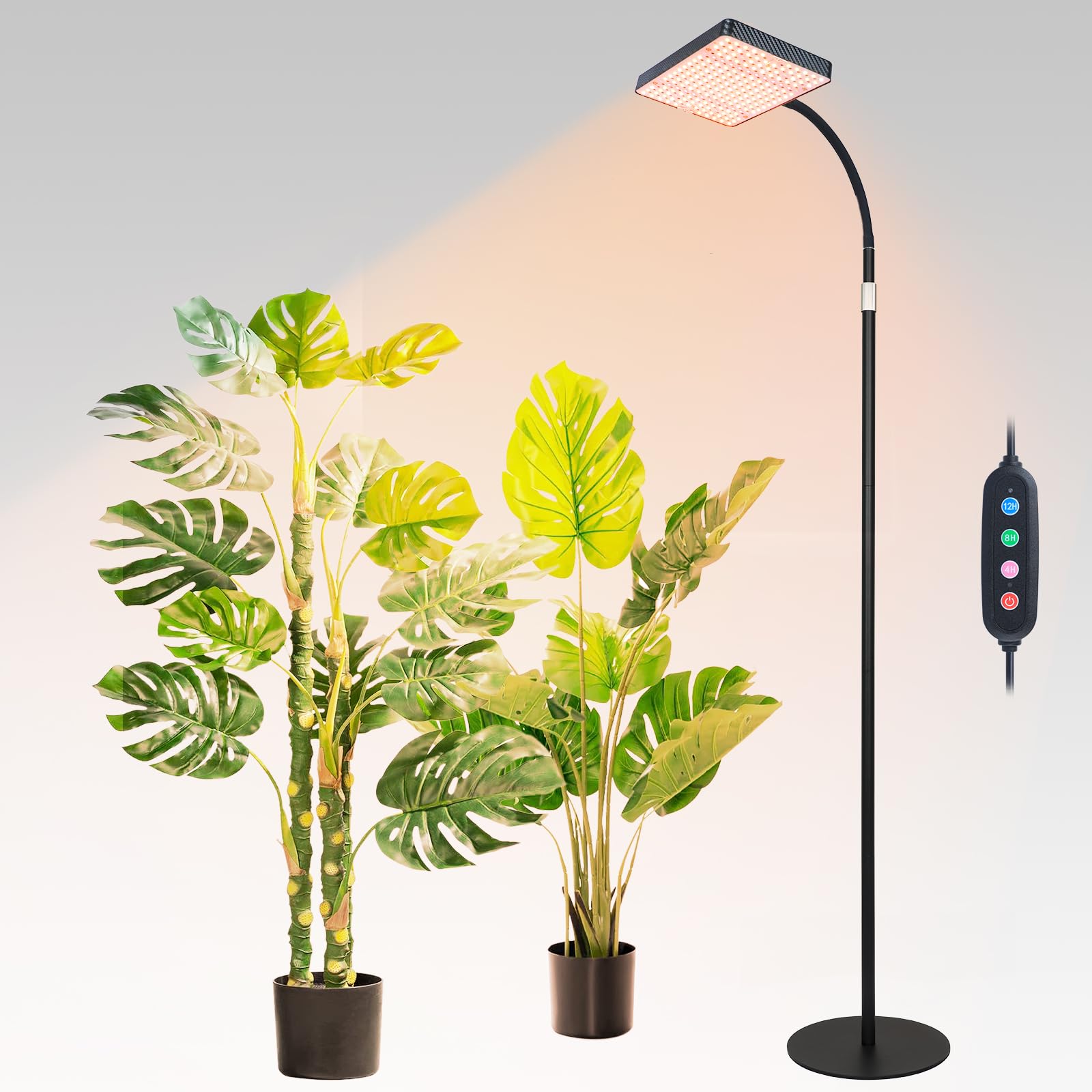
The floor-standing powerhouse that towers over a mature Monstera.
Your biggest plant deserves a light that reaches it without being propped up on boxes. This FECiDA model extends from 40 inches all the way up to 76 inches, so a tall Monstera deliciosa or a climbing aroid gets full coverage from the canopy down to the lower leaves. The rated power draw is 25 watts, and it pumps out 2000 lumens of brightness — a solid match for plants that need a lot of light.
The timer gives you five options: 4, 8, 12, 16, and 20 hours (you push two buttons together for the 16 and 20 hour settings). That means you can set a long 16-hour cycle during the darker winter months without any extra gear. Buyers report the adjustable height is ideal for aroids as they climb and get taller, and they appreciate the simple on/off switch if they prefer to use a separate timer for more flexibility. The 2000 lumen output is noticeably brighter than the LBW’s 1080 lumens.
One thing to plan for: it does not have a built-in timer according to some reviews (the switch is manual), so if the preset timer combos do not fit your schedule, you can plug it into an external timer outlet. The daisy-chain function also lets you connect up to three units using a single power socket — a nice bonus if you have several large plants across a room.
What stands out
- 76-inch max height fits very tall Monsteras
- 2000 lumens at 25W draw keeps electricity use low
- Daisy-chain up to three lights from one outlet
Trade-offs
- Timer is a manual switch with combo buttons
- Needs an external timer for more flexible scheduling
Reach for it if: you have a large Monstera or several tall indoor plants that need a tall, bright light that does not cost much to run.
Look elsewhere if: you want a set-and-forget built-in timer without pressing two buttons together.
2. MIEEMCLUX Floor & Desk Grow Light
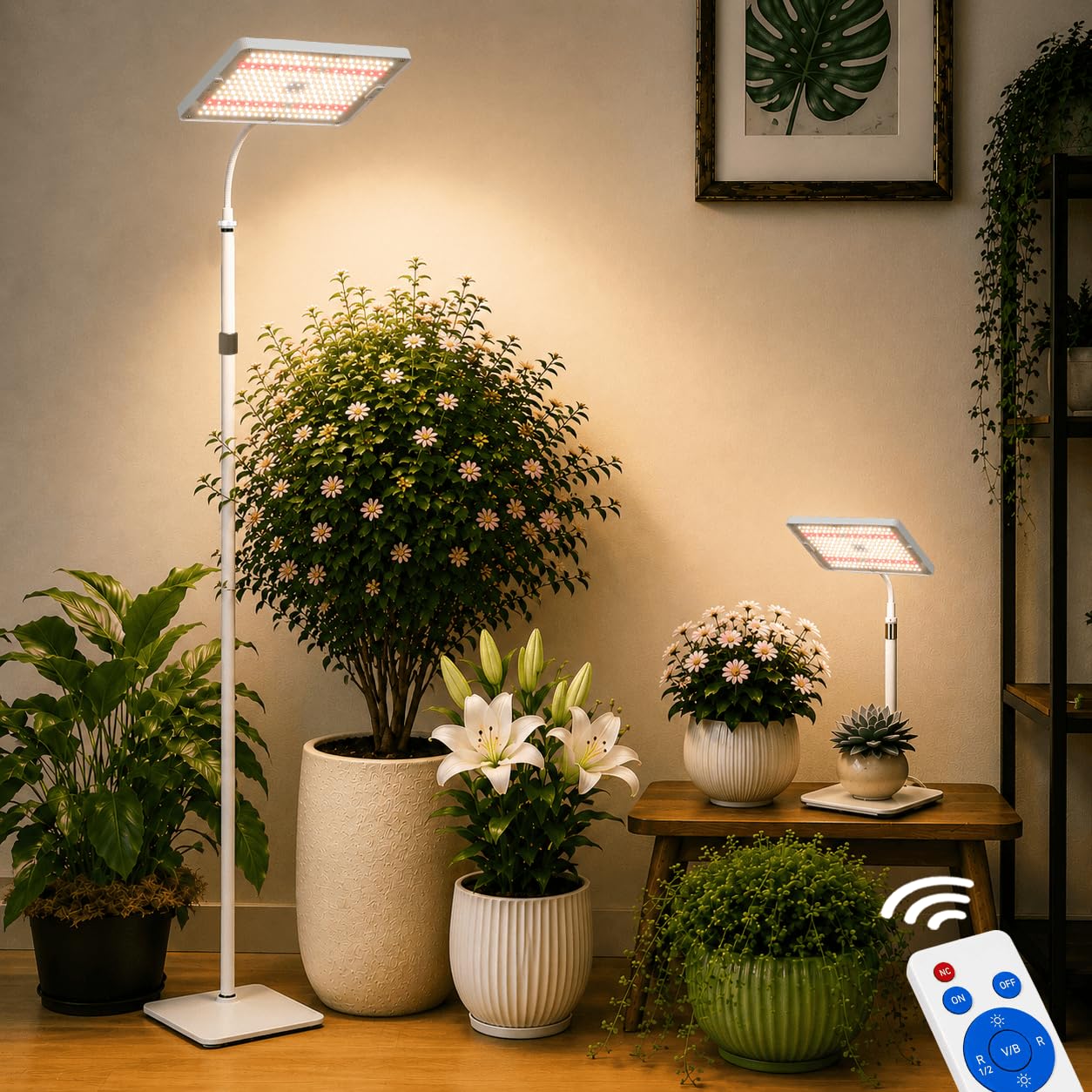
A versatile panel with remote control that adjusts to floor or table height.
With 242 high-efficiency LEDs (204 white, 28 red, 6 UV, and 4 IR) packed into the panel, this light delivers a full spectrum that mimics natural sunlight. It covers the plant from seedling stage through flowering, which means your Monstera gets the exact wavelengths it needs for those deep green leaves and new fenestrations. The light source wattage is 25 watts.
The adjustable height range goes from 15 inches up to 56 inches, so you can run it as a floor lamp for a medium Monstera or drop it down to a desk setup for a smaller pot. The included remote control lets you change brightness across 10 levels, switch between 3 lighting modes, and set the timer for 4, 8, or 12 hours — all without bending over. Buyers mention the remote works best within about 13 feet (4 meters) and must point toward the receiver on the back of the panel.
Reviewers report that the weighted base keeps the stand stable, even on carpet, and that the full spectrum combined with the dimmed-to-red options helps plants stay healthier and show better color after months of use. One buyer specifically said it helps their Monstera with fenestration (the splits in the leaves) when placed in a dark corner. The light covers roughly 3 feet of space.
Why it stands out
- 242 LEDs include UV and IR for full-spectrum coverage
- Remote control for brightness, mode, and timer adjustments
- Adjustable down to 15″ for tabletop positioning
Note
- Stand stability is good but not as heavy as some floor-only models
- Remote batteries are not included
Grab this for: a Monstera owner who wants the most complete spectrum and the convenience of a remote without bending over.
Skip it for: the tallest Monsteras — the 56-inch max is shorter than the FECiDA’s 76-inch reach.
3. LBW Grow Light with Stand
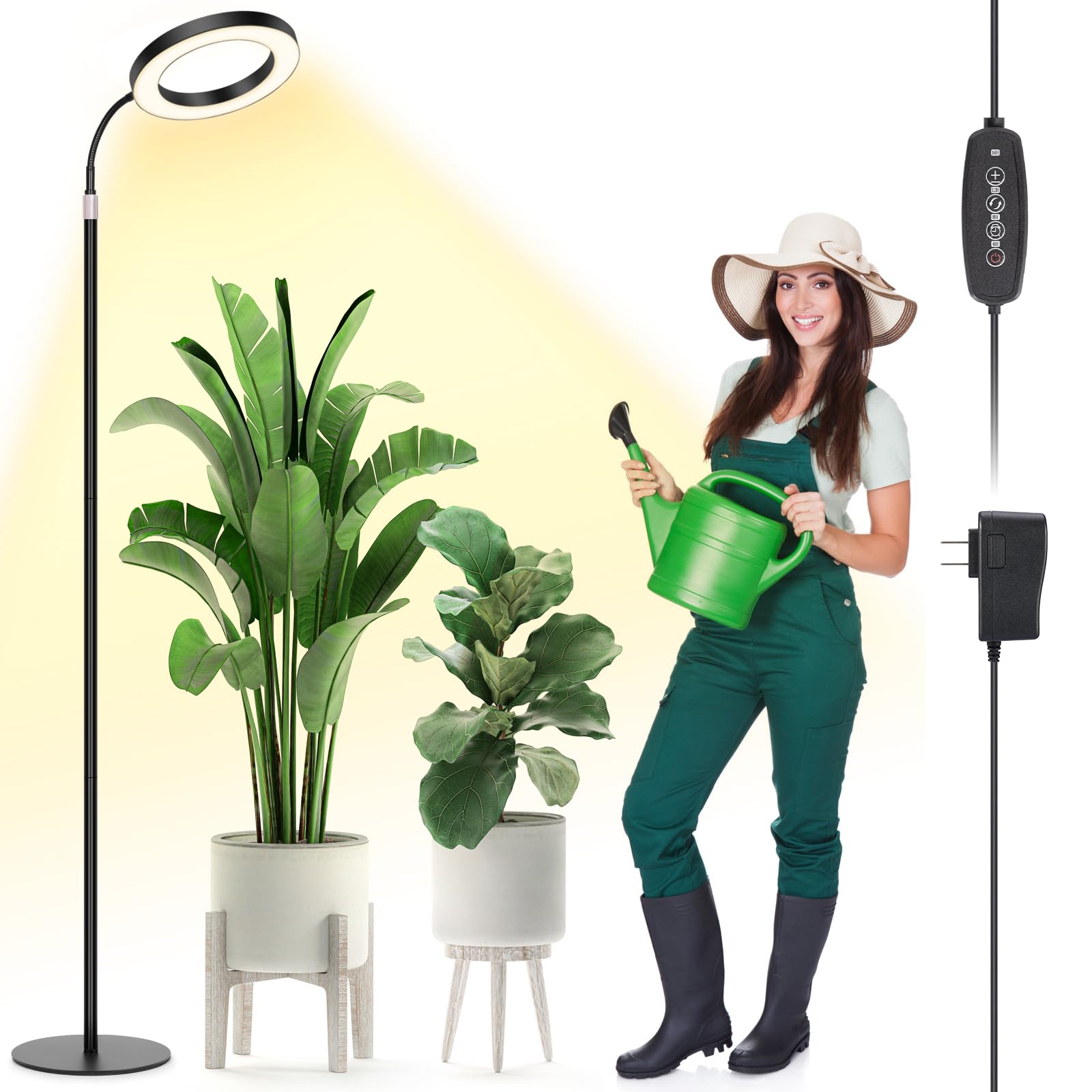
A budget-friendly floor stand that grows with your plant up to 68 inches.
LBW keeps things simple and effective with this adjustable stand. It starts at 20 inches and telescopes up to 68 inches, so it fits a young Monstera on the floor and still has room for it to grow taller. The 80 high-output LEDs produce 1080 lumens of full-spectrum light covering 380-800nm wavelengths, and the aluminum body stays cool enough to touch — buyers confirm it gives off very low heat even after hours of use.
The timer offers four options: 6, 8, 12, and 16 hours. You also get three lighting modes and five brightness levels from 20% up to 100%, so you can dial in a gentler light for a new leaf or crank it up for active growth. One reviewer noted that after five months of daily use, the light supported new growth on their Monstera of about 2 feet, and they noted the adjustable brightness helped prevent overheating. The heavy-duty metal base with non-slip pads keeps the whole thing stable, even next to a large pot.
Assembly is tool-free — you just connect the pole, attach the gooseneck and light head, then plug it in. No screws, no extra parts to lose. The main trade-off compared to the FECiDA is the lower lumen output (1080 vs 2000), so this LBW is better suited for a medium to large Monstera rather than a massive floor tree. At 8.2 inches by 6.3 inches at the base, its footprint is compact enough to tuck next to a pot.
Strong points
- Tool-free assembly ready in minutes
- 5-level dimming from 20% to 100%
- Buyers saw 2 feet of new Monstera growth in 5 months
Limitations
- 1080 lumens is lower than premium options
- Not as tall as the FECiDA at max height
Best for: someone who wants a no-fuss, stable floor light for a medium to large Monstera without spending much.
Not ideal if: you need a super bright 2000-lumen output or the tallest extension past 68 inches.
4. Wiaxulay Floor Grow Light
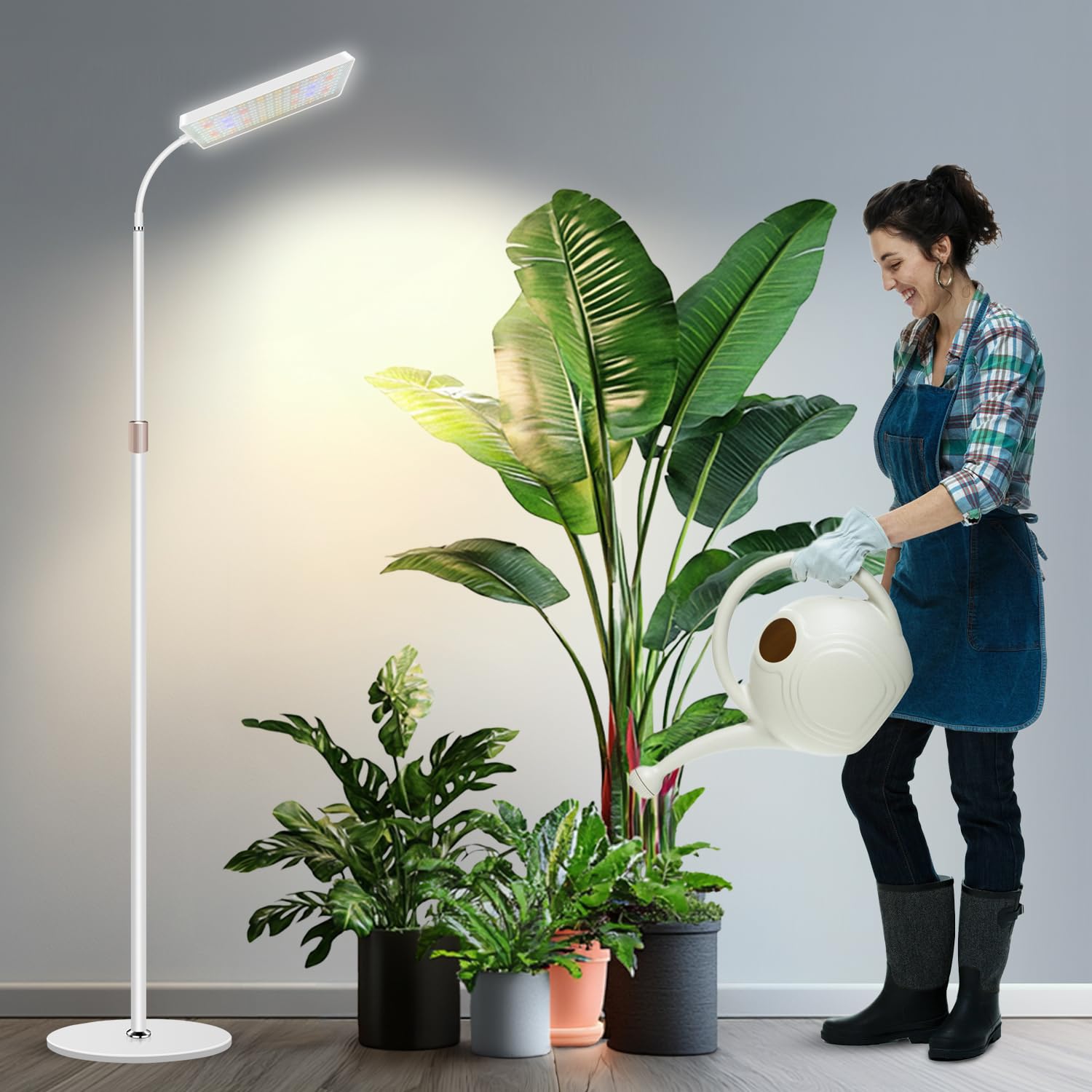
A tall white floor light with a flexible gooseneck that aims light exactly where you need it.
This Wiaxulay model uses 153 LEDs in a full spectrum from 380nm to 800nm, so it covers the red and blue bands that plants need most. The height adjusts from 17 inches to 61 inches by simply turning a metal ring — no pole disassembly required. That makes it easy to raise the light as your Monstera grows up a moss pole or stake. The 7.8-inch gooseneck at the top bends in all directions, letting you tilt the light head directly over a leaf that just unfurled.
The controller has 5 brightness levels from 20% to 100%, three lighting spectrum options (white, warm white, and red/blue mix), and a timer with 4/8/12/16 hour cycles. Owners mention the stand is stable and the assembly is straightforward. The lights get only slightly warm during use, and the gooseneck holds its position well without flopping down — a common issue with cheaper flexible necks. One buyer mentioned the remote control attaches to the pole, which is handy.
On the downside, the pole and base are made of aluminum with a matte white finish that looks clean but may show scuffs over time if moved around often. The brightness is adequate for large plants, but the 153 LEDs produce less total output than the FECiDA’s 208 LEDs.
Highlights
- Tool-free height adjustment with a twist ring
- Gooseneck head aims light precisely at specific leaves
- Runs cool and stays stable
Trade-offs
- Max height of 61 inches is shorter than the FECiDA
- Matte finish may scuff easier than darker metals
Pick this for: a bright, adjustable floor light that lets you direct the beam to a specific spot on a tall plant.
Pass on it for: a jungle of multiple plants that need wider, more powerful coverage.
5. SANSI Dual Gooseneck Clip Grow Light

Two adjustable heads and a lifetime bulb replacement plan for serious growth.
SANSI stands out here by packing two 10-watt heads (20 watts total) that each measure just 2.99 inches tall. That is a 2.0x wattage gap vs the single 10W SANSI clip-on model — you get twice the output from a fixture that clamps onto a shelf or pole. The dual gooseneck arms let you aim one head at the upper leaves and another lower down for under-canopy coverage. The full spectrum covers 380nm to 800nm, and the maker claims it draws only 20W while producing a bright light output of 2000 lumens.
The timer offers 4, 8, or 12 hour cycles based on a 24-hour schedule. If you set the 8-hour option, the light stays on for 8 hours and off for 16, repeating daily. The clamp is substantial and secure, though some customers note the heads are a bit heavy for the clip strength, which limits where you can position them without the neck drooping over time. The bulbs can get very hot — reviewers warn to keep foliage at least a few inches away to avoid burning leaves.
The biggest differentiator here is the lifetime free bulb replacement. If a bulb fails, SANSI sends a new one rather than making you buy a whole new fixture. That alone makes this a long-term value play, especially if you plan to run the light for many hours a day.
Why it stands out
- Dual 10W heads provide 2000 lumens total output
- Lifetime free bulb replacement from SANSI
- Two independent goosenecks for flexible targeting
Caveats
- Heads run hot — keep away from leaves
- Clip strength struggles with the weight of both heads
Ideal for: growing one or two medium Monsteras on a shelf where you need adjustable, high-output light from a clip-on setup.
Not for: a floor-standing solution or if you prefer a fixture that runs cool to the touch.
6. Xuligron 3-Pack Halo Clip Grow Light
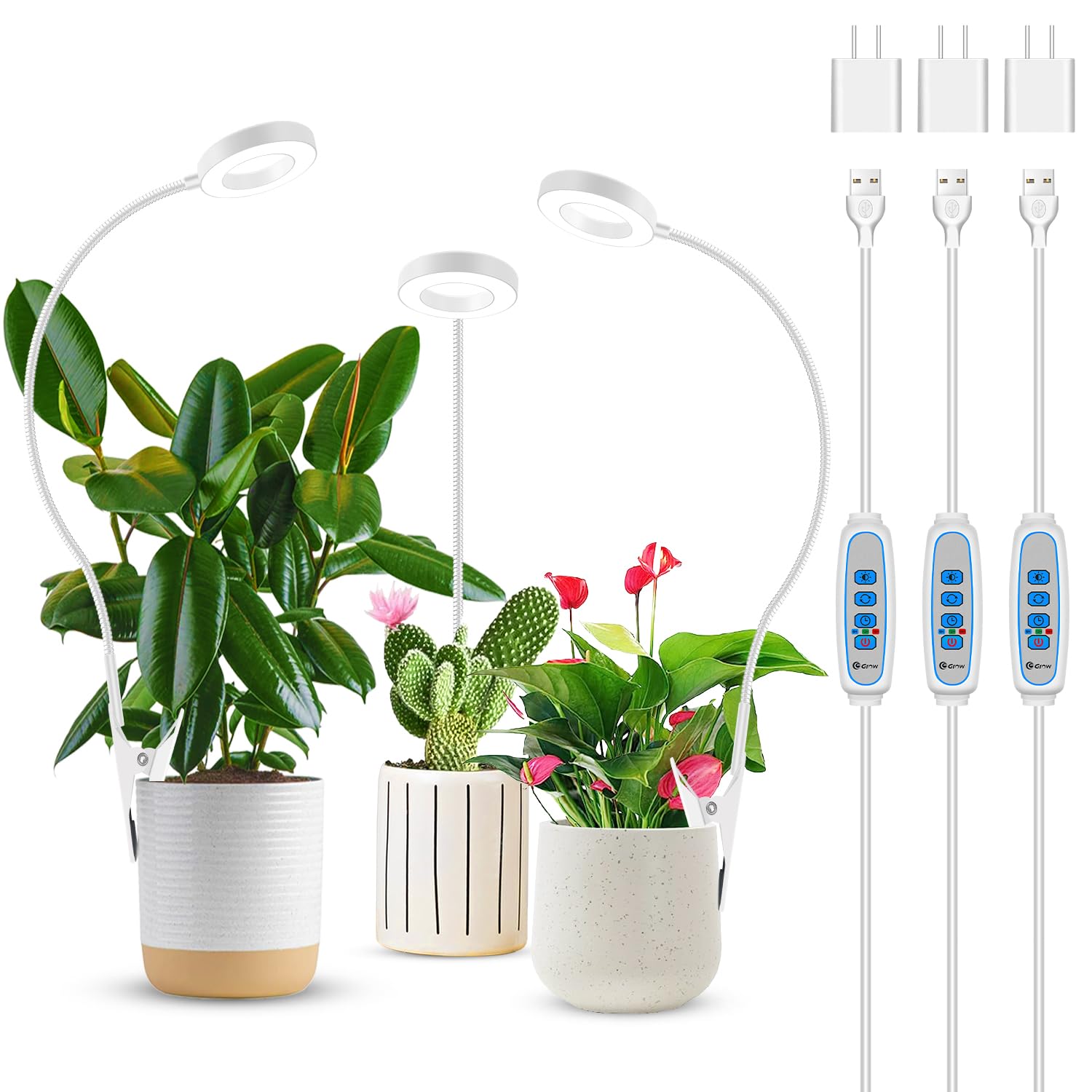
Three halo-shaped clip lights that cover a whole plant shelf for the price of one premium fixture.
Buying a three-pack like this gives you the flexibility to light up multiple Monsteras or layer several lights on a single large plant from different angles. Each halo light contains red light at 660 nm, warm light at 3500K, and white light at 6000K — a combination designed to push photosynthesis for both leaf growth and flowering if your plant ever blooms indoors. The goosenecks are tall and bend in all directions, so you can wrap one around a pot rim and another through a shelf slot.
Each unit has 3 lighting modes and 5 dimming levels. The timer goes up to 16 hours, which is longer than many competing clip-ons (the SANSI caps at 12 hours). You can also choose between clipping the light to the pot edge or using the included ground stake to push it directly into the soil — a nice option for plants in deep pots where the rim is too thick. Reviewers point out the lights run cool and do not produce excessive heat, even after long cycles.
The one catch is the clip itself. Some buyers mention it is not very strong and can be hard to reposition once it is clamped on. Many end up just sticking the stake in the soil instead. If you need a really firm grip on a thick pot edge, the SANSI single clip is more sturdy.
Pros
- Three lights in one box for multi-plant setups
- 16-hour timer option for long winter days
- Stake-in-soil mount included for deep pots
Cons
- Clip is weak and hard to reposition
- Not as bright per unit as the SANSI 10W clip
Best for: a collection of smaller Monsteras on a shelf or counter where you want to spread light across several pots.
Skip it for: a single large Monstera that needs intense, direct light from a powerful fixture.
7. SANSI Clip-on Plant Lamp 10W

A compact clip that packs enough punch to push a new leaf in one month.
Do not let the small size fool you. This SANSI clip-on uses a ceramic base technology that the maker says provides 169.7 μmol/s/m² of growing power at 6 inches from the plant — 4.7 times more efficient than other 10W grow lights. It draws 10 watts and produces 100 lumens per watt, so it is energy-thrifty while still being strong enough to promote new Monstera growth. One owner reported that it pushed out a new Monstera leaf within a month of regular use.
The flexible 360-degree gooseneck and clamp attach easily to a pot rim or shelf edge. The timer offers 3/6/12 hour cycles with a repeating daily schedule, so you can set it to run for 12 hours and forget it. Four brightness levels (25%, 50%, 75%, 100%) let you dial down the intensity if the light is close to sensitive new growth or if your Monstera is still adjusting. The finish is polished white and looks clean against most pots.
The main limit is its reach. With just one 10-watt head, it is best for a single mid-sized Monstera (up to about 12-15 inches tall) or a cluster of small pots grouped together. For larger plants or multiple Monsteras, the dual-head SANSI above is a better call. Also, the A19 bulb shape is small, so the light coverage is concentrated — you need to keep it 4 to 6 inches from the leaves for best results.
What works
- Compact and easy to clip anywhere
- Shoppers say new Monstera leaves in one month
- 4 brightness levels for precise control
What holds it back
- Coverage is limited to one plant
- Gooseneck may be too short for tall pots
Reach for it if: you have a single medium Monstera on a desk or shelf and want a simple, proven light that works.
Pass on it if: your plant is over 15 inches tall or you want to cover multiple pots with one fixture.
Understanding the Specs
PPFD vs Lumens
PPFD (Photosynthetic Photon Flux Density) tells you how many usable photons reach the plant per second — measured in μmol/s/m². Lumens measure human-perceived brightness, not plant-useful light. For a Monstera, a PPFD around 150-300 μmol/s/m² at the canopy works well. Most spec sheets only list lumens, so look for units that advertise high PPFD numbers (like the SANSI 10W at 169.7 μmol/s/m²) as a sign of efficient plant lighting.
Full Spectrum and the 380-800nm Range
A light that covers 380nm to 800nm includes the red (around 660nm) and blue (around 450nm) wavelengths plants use most for photosynthesis. It also includes green and far-red light, which helps with stem elongation and leaf expansion. For Monstera, a full-spectrum light produces the most natural leaf shape and encourages those splits (fenestrations) that collectors love. Lights that only emit red and blue (the pink/purple glow) work but look harsh in a living room.
FAQ
How far should a grow light be from a Monstera?
Can I use a regular desk lamp for my Monstera?
How many hours a day should a Monstera get grow light?
Will a grow light burn my Monstera leaves?
What is the difference between a clip light and a floor stand light?
Can I use a grow light with a timer on a power strip?
Do I need red and blue lights specifically, or is white full spectrum fine?
What does “dimmable” mean for a grow light?
Is a grow light with a metal base better than a plastic one?
Will a grow light increase my electricity bill a lot?
Final Thoughts: The Verdict
For most people, the light for monstera winner is the FECiDA Floor Grow Light because its 76-inch reach, 2000-lumen output, and long timer options give a mature plant everything it needs without a fuss. If you want a remote-controlled fixture with the broadest spectrum, grab the MIEEMCLUX Floor & Desk Light. And for a compact clip-on that fits a shelf and pushes new growth quickly, the standout is the SANSI Clip-on 10W.
How We Picked
We do not accept paid placement, and we did not hands-on test every unit. Instead, we match each pick to a real buyer and use-case by comparing the manufacturers’ published specifications against the patterns in verified customer reviews — so you get each pick’s real strengths and trade-offs instead of marketing copy.
Sources & Methodology
Specifications: manufacturer listings and product documentation. Review insights: verified customer reviews, as of July 2026. Pricing: not shown on this page (it changes often); check the current price via the retailer link.
As an Amazon Associate, Lawn Gear Lab earns from qualifying purchases. This does not affect which products we feature.