
Specs are compiled from manufacturer listings and verified buyer reviews and can change over time — please confirm the key details on the product page before buying.
Your tiny seedlings are at their most fragile stage — a single strong dose of conventional fertilizer can burn tender roots before they get a real start. The goal with an organic fertilizer here is to feed gently, build living soil, and avoid the nitrogen shock that stalls or kills young plants. This guide lines up the top options that match that exact need.
I’m Rikta — the founder and writer behind Lawn Gear Lab. This guide is built by comparing the manufacturers’ published specifications and the patterns across verified customer reviews, so you get each pick’s real strengths and trade-offs instead of marketing spin.
After comparing six leading options side-by-side, you’ll know exactly which organic fertilizer for seedlings fits your seed-starting setup, budget, and preferred application type — if you need a granular slow-release, a liquid concentrate, or a microbial-rich starter.
Quick Picks
- Espoma Organic Bio-Tone Starter Plus 4-3-3 — Best Overall
- Jobe’s Organics Granular All Purpose Fertilizer — Best Value Granular
- Back to the Roots Organic Worm Castings — Best No-Burn Amendment
- Dr. Earth Premium Gold All Purpose Fertilizer — Premium Powder
- MAXIROOT Organic Seedling Solution — Best Liquid Starter
- Ounce of Hope OMRI Listed Organic Concentrated Fish Poop — Advanced Organic
How To Choose The Best Organic Fertilizer For Seedlings
Seedlings need a gentle, consistent source of nutrients that won’t burn their small, developing root systems. The main factors you want to evaluate are the NPK ratio (nitrogen-phosphorus-potassium, the three key nutrients plants need), the physical form (granular, liquid, or castings), and any living ingredients like mycorrhizal fungi (beneficial fungi that attach to roots) or beneficial microbes that can help protect young plants during their first weeks of growth. Knowing what these numbers and terms mean will help you pick the most effective product for your specific setup.
NPK Ratio — What Those Three Numbers Actually Mean
The three numbers on the label stand for nitrogen (N), phosphorus (P), and potassium (K). Nitrogen drives green leaf growth, which is important but can be too much for a tiny seedling. A balanced ratio like 4-4-4 or a slightly lower-nitrogen mix like 2-1-4 is better for encouraging a strong root system. High-nitrogen mixes might make a seedling leggy and weak.
Form: Granules vs Liquid vs Castings
Granular fertilizers need to be mixed into the soil and rely on soil moisture and microbes to release the nutrients, making them slow and steady. Liquids, by contrast, are available to the roots immediately after watering — ideal for the first few weeks when the seedling has a tiny root ball. Worm castings sit in a middle zone: they condition the soil and release nutrients slowly as they break down, and their natural biology suppresses some soil-borne diseases. The best choice depends on whether you are starting seeds indoors or planting out.
Living Ingredients: Mycorrhizae and Microbes
For seedlings especially, products that contain endo- and ecto-mycorrhizal fungi (two types of beneficial root fungi) or soil bacteria like archaea give your seedling an early boost. These organisms extend the reach of the tiny root system and help the plant access water and nutrients it could not reach on its own. Many premium starter fertilizers include them specifically for this reason, and buyers often report that the initial growth spurt is significantly stronger compared to plain soil or a synthetic product.
Quick Comparison
On smaller screens, swipe sideways to see the full table.
| Model | Best For | NPK Ratio | Form | Weight/Volume | Amazon |
|---|---|---|---|---|---|
| Espoma Bio-Tone Starter Plus | Transplant & root establishment | 4-3-3 | Granules | 4 lb (pack of 2) | Amazon |
| Jobe’s Organics All Purpose | All-purpose mid-price granular | 4-4-4 | Granules | 4 lb | Amazon |
| Dr. Earth Premium Gold | Small-space and potted plants | — | Powder | 1 lb | Amazon |
| Back to the Roots Worm Castings | No-burn soil amendment | — | Granules (castings) | 5 lb | Amazon |
| MAXIROOT Seedling Solution | Indoor seed starting & clones | 16:1 mix | Liquid | 32 fl oz | Amazon |
| Ounce of Hope Fish Poop | Advanced organic feeding | 2-1-4 | Liquid | 16 fl oz | Amazon |
In‑Depth Reviews
1. Espoma Organic Bio-Tone Starter Plus 4-3-3
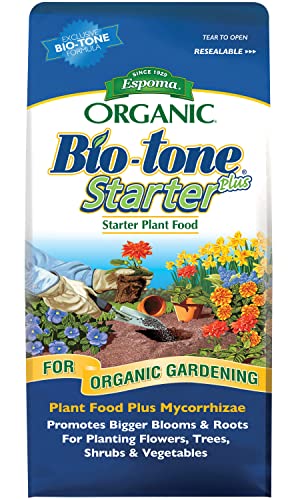
The starter that gives a tiny seedling a giant root system before it hits the real world.
This product was built for the moment of transplant — the most vulnerable phase for any seedling. It features a 4-3-3 NPK ratio (nitrogen-phosphorus-potassium, where the middle number supports root development). Unlike the Jobe’s 4-4-4 granular below, which is a general all-purpose feed, Espoma added both endo- and ecto-mycorrhizal fungi — the microscopic fungi that latch onto roots and boost water and nutrient absorption dramatically.
Buyers report that mixing Bio-Tone into the soil before planting significantly boosts early growth — one reviewer noted that a tree planted with it outgrew a two-year-old tree in a single season. It comes as a 4-pound bag packed 2 to a unit, so you get enough for a large planting session. The granules are meant to be mixed directly into the planting hole’s backfill soil, putting the nutrients and fungi right where the roots need them.
One honest catch is the odor. Owners mention it smells strongly — one called it “a stinker, but in a good way” — so it’s best used outdoors or with good ventilation. It is also a premium-priced product, but the dual mycorrhizal boost is a feature you won’t find on the budget-friendly granular options.
Bio-Tone starter
- Contains both endo & ecto mycorrhizae to supercharge root system reach
- 5% calcium in the mix supports strong cell wall development
- Approved for organic gardening and meets organic input material standards
slow initial release
- Strong smell during application — plan for outdoor mixing
- Pricier than all-purpose granular options per pound
- Granules need to be mixed into backfill soil, not just surface applied
seedlings: you are transplanting seedlings into a garden or larger pot and want the strongest possible root establishment early on.
mature plants: you need a budget-friendly granular for a large area or are sensitive to strong organic smells during mixing.
2. Jobe’s Organics Granular All Purpose Fertilizer

The mid-price workhorse that revived a “bed of death” with a third of a bag.
This 100% organic granular option from Jobe’s has a balanced 4-4-4 NPK ratio and a major advantage: it contains billions of archaea — beneficial microorganisms that aggressively break down organic materials into available nutrients. The result is a faster release compared to many other granular organics, which buyers appreciated when they needed quick results. One buyer mentioned that after applying 1/3 of the box to nitrogen-deficient, poorly composted soil, their basil, peppers, and beans all thrived.
The 4-pound bag comes in a resealable package, which helps keep the granules dry between uses. Unlike the Espoma starter above, this is a general-purpose feed that works on vegetables, flowers, shrubs, and trees — not just transplants. It is an excellent all-rounder if you are feeding both seedlings and maturing garden plants from the same bag.
The biggest trade-off is the smell: multiple reviews mention it is fragrant (one buyer compared it to “magical poop pellets”), and it can attract dogs who want to roll in it. Mix it into the soil a layer below the surface to contain the odor. While the bag is small for the price according to some reviewers, the results are consistently strong — one owner reported it revived their dying herbs within a couple days.
fast granular feed: The archaea microbes break down organic matter faster than standard granules — buyers saw greener leaves and abundant flower buds within a week of the first feeding.
strong smell: This fertilizer has a strong smell that is odorless once worked into soil, but you need to store it away from curious pets.
quick greening: you need a single bag that can revive poor soil and feed both seedlings and mature plants while staying affordable.
sensitive noses: the smell bothers you or you need a specialized transplant starter with mycorrhizae (the Espoma above is a better fit).
3. Back to the Roots Organic Worm Castings

Pure worm castings that feed slowly, build soil biology, and absolutely never burn roots.
Worm castings (vermicompost) are one of the safest possible feeds for young seedlings, because they release nutrients only as microbes break them down — so there is zero risk of nitrogen burn even if you apply generously. This product comes in a 5-pound bag, while the Dr. Earth powder comes in a 1-pound package. Customers note it is high quality for the money.
The castings contain beneficial microbes that suppress harmful pathogens in the root zone — an important safety net for young seedlings that are vulnerable to damping-off disease. Unlike the MAXIROOT liquid or the Ounce of Hope fish poop below, this product has no strong odor during use and no unpleasant smell in the house. It works as a soil amendment (mix into your seed-starting mix) or as a top dressing around established seedlings.
One buyer pointed out a practical detail: the castings hold a lot of moisture, so you want to be mindful of that when using them as an amendment in pots — do not overwater. It is a slow-release source, so if you need a quick green-up in the first week of a seedling’s life, a liquid feed like the MAXIROOT below will act faster.
worm castings: Pure vermicompost adds live microbes that protect seedlings from harmful pathogens — a built-in disease defense that synthetic fertilizers cannot offer.
high moisture: Holds moisture well, so adjust your watering schedule accordingly to avoid waterlogged soil in smaller seedling pots.
soil health: you want the safest possible feed for ultra-sensitive seedlings and prefer to improve the soil’s biology rather than just add nutrients.
dry climates: you need a fast-acting liquid boost for the first week of growth or have a strict aversion to any moisture-holding amendments in small pots.
4. Dr. Earth Premium Gold All Purpose Fertilizer

A handcrafted powder that treats potted seedlings like fine cuisine — fresh ingredients, no sludge.
This 100% organic powder blend features fish bone meal, kelp meal, feather meal, and alfalfa meal — a whole-food recipe rather than a generic granular. It is explicitly free of chicken manure and sewage sludge (“bio solids”), which matters if you want clean ingredients for edible seedlings. The powder form mixes easily into potting soil and works well for small-scale applications: one buyer uses 1 tablespoon to revive weak plants in pots. At just 1 pound, it is dramatically smaller than the 5-pound worm castings above or the 4-pound Jobe’s bag, but that size suits gardeners with only a few pots or a small seed-starting tray.
Buyers point out a clear difference when they used it in a controlled test: one person applied it to half a flower bed and left the other half untreated, and the flowers on the treated side grew bigger and bloomed more. Another long-time user says it has never burned any plant in 10 years of use, even on succulents and staghorn ferns. It includes beneficial microbes and mycorrhizae to improve soil health, similar to the Espoma above, but in a smaller and more concentrated format.
The trade-off is price per pound — this is a premium product for the amount you get. If you need to cover a large garden bed, the Jobe’s 4-pound bag or the Back to the Roots 5-pound castings will give you more material for the money. But for someone starting seedlings in a few pots, the quality of the blend justifies the smaller size.
clean formula
- No GMOs, chicken manure, or sewage sludge — just fish bone, kelp, feather, and alfalfa meals
- Contains beneficial microbes and mycorrhizae for healthy soil biology
- Won’t burn plants — a 10-year user confirms it is safe on succulents, roses, and ferns
large bag
- 1-pound bag is small compared to the 5-pound worm castings
- More expensive per pound than the Jobe’s or Back to the Roots options
- Powder form can be dusty during mixing — use light gloves and a mask if sensitive
precision feeding: you have a small seedling setup and want a premium, clean blend with no questionable fillers.
small spaces: you need a large volume for garden beds or prefer a granular format for easy sprinkling.
5. MAXIROOT Organic Seedling Solution
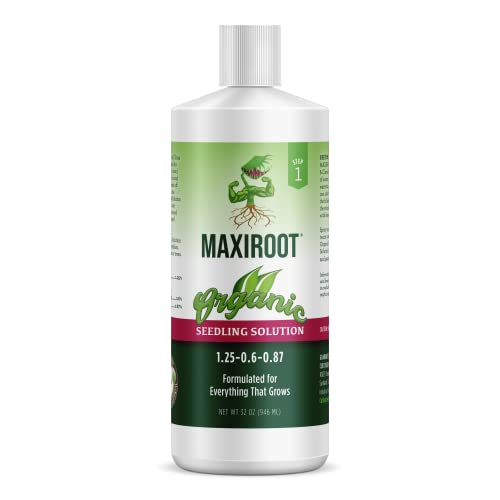
The liquid lifeline that one buyer credits for saving their entire spring garden.
This is a liquid concentrate made from natural seaweed and fish-derived ingredients, designed specifically for the earliest stage of plant life. The mixing ratio is 2 oz per gallon of water, and you apply it weekly. Because it is liquid, the nutrients are immediately available to tiny roots — no need for microbial breakdown. One buyer wrote that “this stuff saved my little seedlings this spring which meant I had a full garden with lots of veggies this fall.” Another reported that their seedlings grow amazingly when using this concentrate at the 2 oz per gallon rate.
Unlike the granular options (Jobe’s, Espoma, and Dr. Earth) which sit in the soil and release over time, this liquid acts fast. It is ideal for indoor seed-starting trays where you want controlled feeding without disturbing delicate seedlings through mixing granules into a limited root space. It is listed on the CDFA OIM (organic input material) list, so it meets standards for certified organic production.
The catch is the smell. Multiple reviewers describe it as strong — one said “beware the stench of stale excrement” even at just 1 cap per gallon, and another noted the odor lingers in the room between uses. Another reviewer, however, says it smells like the ocean and finds it pleasant. So if you are sensitive to strong fishy odors, keep this one in a greenhouse or well-ventilated area and don’t leave the mixed solution sitting in a closed watering can.
instant uptake: As a liquid, the nutrients are water-soluble and available to the seedling’s roots right after watering — faster than any granular or casting option on this list.
fishy odor: The fish-derived smell is very strong and can linger — one reviewer compared it to primitive toilets while another enjoys it as an ocean scent.
seedlings: you start seeds indoors in trays and want a fast-acting, gentle liquid feed that is immediately available to tiny roots.
indoor use: strong organic odors bother you or you prefer a more hands-off granular application that you can mix into soil once.
6. Ounce of Hope OMRI Listed Organic Concentrated Fish Poop
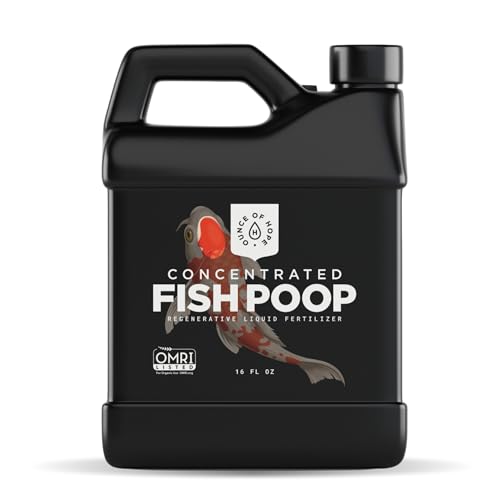
A specialized, OMRI-listed fish manure that delivers a 2-1-4 NPK angle for flavor and yield.
This is a concentrated liquid made from koi and tilapia manure collected from an aquaponic hemp farm in Memphis, TN. The 2-1-4 NPK ratio has lower nitrogen than Jobe’s 4-4-4 and Espoma 4-3-3, and potassium of 4 versus Jobe’s 4 and Espoma’s 3, which makes it a better choice for later growth phases and for encouraging flavor development in edibles. It is OMRI-listed, meaning it meets strict organic standards. The manufacturer claims it is odorless and ammonia-free, unlike the strong smell of the MAXIROOT liquid and the Jobe’s granular, which is a meaningful advantage if you are sensitive to organic fertilizer odors.
The concentrate is highly variable in dosage: 1-2 oz per gallon for general feed, 6-10 oz per gallon for vegetative stage, and 8-12 oz per gallon for flowering. For seedlings, you would stay at the low end of the range. One user highlighted that their plants love this stuff, though another noted it works slowly and they had to use it several times before noticing results. It covers 187.5 sq ft per bottle, so the reach is substantial compared to the single-tray focus of the MAXIROOT liquid.
The main trade-off for seedlings is the NPK focus: with its low nitrogen (2) relative to potassium (4), this product is geared toward mature plants and flavor development rather than the soft green growth a young seedling needs for leaf production. For the very first weeks, you may want to pair it with a more balanced or higher-nitrogen option. Also, some buyers found the liquid surprisingly clear rather than murky — one skeptical reviewer said it did not match their mental image of “concentrated fish poop” — but that does not affect its nutrient content.
fish poop blend
- 2-1-4 ratio is potassium-heavy for supporting flavor, flower, and fruit development in edibles
- OMRI-listed and made from pure fish manure — clean, traceable ingredients
- Odorless and ammonia-free, which is rare for a fish-based liquid fertilizer
low phosphorus
- Low nitrogen ratio (2) means it is not the best choice for early leaf development on tiny seedlings
- One reviewer found it slow to work, requiring multiple applications to see change
- High concentration flexibility can be confusing for beginners
nitrogen boost: you grow edible seedlings that you want to push toward higher flavor and yield later, and you value an odorless organic liquid.
bloom stage: you need a nitrogen-heavy formula for your seedlings’ first two weeks of leafy green growth.
Understanding the Specs
NPK Ratio — The Three Numbers Explained
The NPK ratio (nitrogen-phosphorus-potassium) tells you what proportion of the three primary nutrients is in the bottle or bag. For seedlings, focus on the phosphorus number (the middle digit) because that is the nutrient that supports root development. A balanced ratio like 4-4-4 is safe for general use, while a potassium-heavy formula like 2-1-4 is better for plants that have already established their first set of true leaves and are heading into the vegetative stage. A product with no NPK label (like pure worm castings) releases nutrients slowly as soil microbes break down the organic matter — safe, but you never know exactly how much is available.
Form: Granules vs Liquid vs Castings vs Concentrate
Granules need to be mixed into moist soil; the nutrients release slowly as the granules break down. Liquids (like the MAXIROOT and Ounce of Hope products) are immediately available to the roots because the nutrients are already dissolved in water, making them the fastest option for a seedling that looks pale or needs a quick food source. Worm castings sit in a category of their own: they are not concentrated like a synthetic or organic granular, but they feed the soil biology over a long period, which in turn feeds the plant. Concentrated liquids require careful mixing to avoid burning the roots, especially on young seedlings where the root system is shallow and sensitive.
FAQ
Can I use a regular all-purpose organic fertilizer on seedlings?
What is the best NPK ratio for seedlings?
Are liquid fertilizers better than granular for seedlings?
How often should I fertilize my seedlings with organic fertilizer?
Will organic fertilizer burn my seedlings?
What is the difference between worm castings and regular organic granular fertilizer?
Can I use fish-based liquid fertilizer on indoor seedlings without the smell?
How do I apply granular organic fertilizer to seedlings without damaging them?
What is mycorrhizae and why does it matter for seedlings?
Should I use a starter fertilizer for seeds directly planted in the ground?
Final Thoughts: The Verdict
For most buyers, the best organic fertilizer for seedlings winner is the Espoma Organic Bio-Tone Starter Plus because its dual mycorrhizae and balanced 4-3-3 NPK ratio are designed specifically for transplant success, and reviewers point out dramatic root growth from day one. If you want a liquid feed for indoor seed-starting, grab the MAXIROOT Seedling Solution. And for a no-burn, soil-building option that doubles as a disease suppressant, the standout is the Back to the Roots Organic Worm Castings.
How We Picked
We do not accept paid placement, and we did not hands-on test every unit. Instead, we match each pick to a real buyer and use-case by comparing the manufacturers’ published specifications against the patterns in verified customer reviews — so you get each pick’s real strengths and trade-offs instead of marketing copy.
Sources & Methodology
Specifications: manufacturer listings and product documentation. Review insights: verified customer reviews, as of July 2026. Pricing: not shown on this page (it changes often); check the current price via the retailer link.
As an Amazon Associate, Lawn Gear Lab earns from qualifying purchases. This does not affect which products we feature.