
Specs are compiled from manufacturer listings and verified buyer reviews and can change over time — please confirm the key details on the product page before buying.
Black spot on roses is a stubborn fungal infection that turns leaves yellow and makes them drop, leaving your rose bush weak and bare. The right treatment stops the spread, protects new growth, and keeps your roses healthy through the season.
I’m Rikta — the founder and writer behind Lawn Gear Lab. This guide is built by comparing the manufacturers’ published specifications and the patterns across verified customer reviews, so you get each pick’s real strengths and trade-offs instead of marketing spin.
You need a spray that stops black spot fast and lasts through rain. For most rose growers, the Ortho Rose & Flower Disease Control is the best pick because its systemic formula (absorbed into the leaves) resists rain and keeps working for up to 4 weeks per application — the best balance of convenience and reliable control. If you want an organic triple-action concentrate that also kills aphids and mites, the Bonide Rose Rx covers fungus, insects, and mites in one mix. And for a heavy-duty systemic cure when other sprays keep failing, the Atticus Gravex 20EW delivers professional-level myclobutanil (the same active ingredient as Eagle 20EW) that moves inside the plant and lasts up to 28 days.
Quick Picks
- Ortho Rose & Flower Disease Control Concentrate, 16 oz — Best Overall
- Bonide Rose Rx Multi-Purpose Fungicide, Insecticide and Miticide, 16 oz Concentrate — Top Performer
- Atticus Gravex 20EW Fungicide (16 oz) – Myclobutanil 19.7% — Professional Strength
- Garden Safe Brand Fungicide3, 1 Gallon, Fungicide, Insecticide and Miticide — Best Value Gallon
- Earth’s Ally Disease Control Concentrate for Plants, 32 oz — Versatile Concentrate
- Monterey Neem Oil RTU – 32oz Fungicide/Insecticide/Miticide — Ready-to-Use
- Neudorff Plant Fungicide Spray, Copper Soap Fungicide for Roses, 16 oz RTU — Entry Level
How To Choose The Best Fungicide For Black Spot On Roses
Choosing the right spray means understanding how each formula attacks the black spot fungus. You have three main types: contact sprays that coat the leaf surface, systemic fungicides that move inside the plant, and multi-purpose treatments that also kill insects. Each plays a different role in protecting your roses.
Contact vs. Systemic: What Gets Absorbed Matters
A contact spray, like a copper soap or neem oil, stays on the leaf surface and kills spores on contact. If rain washes it off, the protection washes away too. A systemic fungicide, such as one with myclobutanil (a compound the plant absorbs through its leaves), soaks into the leaf tissue and moves through the plant. That means it can protect new growth for up to 28 days and resists rain once it dries — so a sudden storm won’t ruin your work. For black spot, which spreads quickly in wet weather, systemic protection gives you more margin for error.
Concentrate vs. Ready-to-Use: Which Fits Your Garden Size
A ready-to-use (RTU) spray, like the 32 oz Neudorff bottle, comes pre-mixed — just shake and spray it on your roses. It is convenient for a dozen rose bushes. A concentrate, such as the Earth’s Ally 32 oz bottle that makes 10 gallons, saves money if you have a larger garden or multiple plants to treat. The trade-off is mixing time and needing a separate sprayer, but the cost per treatment drops significantly.
Neem Oil vs. Copper Soap vs. Synthetic: Active Ingredients Compared
Neem oil (found in Garden Safe and Bonide Rose Rx) is a natural extract that works as a fungicide (kills fungus), insecticide (kills insects), and miticide (kills mites) — a triple threat. Copper soap (in the Neudorff spray) is also organic and gentle on plants, but it only works on contact — meaning it needs thorough coverage and can wash off. Synthetic options like myclobutanil (Atticus Gravex) provide the longest residual protection (up to 28 days) and the strongest curative action, making them the best choice for an established infection that other sprays haven’t stopped.
Quick Comparison
On smaller screens, swipe sideways to see the full table.
| Model | Best For | Type | Size | Active Ingredient | Amazon |
|---|---|---|---|---|---|
| Ortho Rose & Flower Disease Control | Rain-proof systemic control | Systemic Concentrate | 16 oz | Systemic formula (not specified) | Amazon |
| Bonide Rose Rx | Organic triple-action concentrate | Concentrate | 16 oz | Neem oil extract | Amazon |
| Atticus Gravex 20EW | Professional-strength systemic control | Systemic Concentrate | 16 oz | Myclobutanil 19.7% | Amazon |
| Garden Safe Fungicide3 | Large-scale neem oil coverage | Ready-to-Use | 128 oz (1 Gallon) | Neem oil extract | Amazon |
| Earth’s Ally Disease Control | Gentle citric acid concentrate | Concentrate | 32 oz (makes 10 gal) | Citric acid | Amazon |
| Monterey Neem Oil RTU | Quick triple-action spray | Ready-to-Use | 32 oz | Neem oil | Amazon |
| Neudorff Copper Soap Spray | Gentle ready-to-use organic spray | Ready-to-Use | 16 oz | Copper octanoate | Amazon |
In‑Depth Reviews
1. Ortho Rose & Flower Disease Control Concentrate, 16 oz

This systemic spray keeps working even after a downpour hits your roses.
This is the pick that takes the worry out of unpredictable weather. The Ortho formula works systemically — meaning the plant absorbs it through the leaves — so once it dries, a heavy rain cannot wash it off. That is a huge relief if you have watched careful spraying get ruined by an unexpected storm. It starts working within 24 hours and continues protecting the plant for up to 4 weeks per application, so you only need to reapply once a month. That is much less frequent than the contact sprays below, which need re-spraying every 7–10 days.
Unlike the contact-only sprays in this lineup (like the Neudorff Copper Soap), the Ortho concentrate controls and prevents black spot, rust, and powdery mildew from the inside out. Buyers report that their rose bush leaves turned back to green after getting yellow and black spots. It is not for sale in NY, so check local restrictions, but for most rose growers, this is the most dependable rain-proof solution you can buy.
Systemic Advantages
- Works systemically (absorbed by the plant) so it cannot be washed off by rain once dry
- Controls black spot, rust, and powdery mildew
- Starts working within 24 hours
- Protection lasts up to 4 weeks per application
One Drawback
- Not available for sale in New York (check local restrictions)
Reach for this if: you want a systemic fungicide that stays active through rain and only needs reapplication every month.
Look elsewhere if: you need a ready-to-use spray with no mixing required, or you live in New York where this product is restricted.
2. Bonide Rose Rx Multi-Purpose Fungicide, Insecticide and Miticide, 16 oz Concentrate

A concentrated neem oil formula that takes on fungus, aphids, and mites in one pass.
Bonide Rose Rx is designed specifically for rose care. The active ingredient is a clarified hydrophobic extract of neem oil (basically, a concentrated neem oil), which is approved by the USDA for organic gardening. It works as a fungicide (kills fungus) to prevent black spot, powdery mildew, and rust, and it also kills insects like aphids (tiny sap-sucking bugs), spider mites, and caterpillars at the same time — the Ortho pick above is only a fungicide and won’t kill bugs. Since it is a concentrate, the 16 oz bottle goes further than a ready-to-use spray — making it a stronger value for serious rose gardeners with many bushes.
Reviewers call it their “go-to” solution for white flies, aphids, and fungal disease. A few note that it smells bad right after spraying, but the smell disappears quickly, and one reviewer says it works “better than all the many products I’ve used.” Mix it with water in a hand sprayer and apply it to both sides of the leaves for complete coverage.
Why It Stands Out
- USDA-approved for organic gardening
- Triple action: kills fungus, insects, and mites
- Concentrate formula is cost-effective for multiple bushes
- Safe for use on vegetables and herbs
What to Know
- Neem oil has a strong smell right after spraying (though it fades quickly)
the balance for organic growers: a concentrated neem oil spray that handles both black spot and common rose pests in one mixing session.
skip it if: you prefer a rain-proof systemic formula — neem oil is a contact spray and can wash off if it rains before it dries.
3. Atticus Gravex 20EW Fungicide (16 oz) – Myclobutanil 19.7%
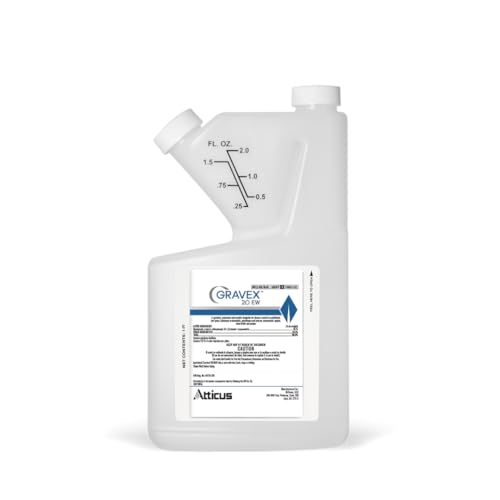
This systemic fungicide moves inside the plant to protect new growth for weeks.
Atticus Gravex contains 19.7% myclobutanil (a systemic compound absorbed by the plant), the same active ingredient as the professional-grade Eagle 20EW. This is a systemic fungicide, meaning the plant absorbs it and moves it upward into tender new leaves where black spot loves to strike. That makes it rain-proof once dry, just like the Ortho pick, but with a different active ingredient. It provides both curative action (killing existing fungus) and preventive protection for up to 28 days. If you have a serious black spot infection that is not responding to gentler sprays like the Bonide Rose Rx, this is the product that turns it around.
Owners mention visible improvement in 24 hours on potted plants with powdery mildew, with the infection mostly gone in 3-4 days. One reviewer managed to control brown rot on peaches after losing much of the crop the previous year. It is approved for over 100 ornamental plants and common turf species, but it is not available for sale in Alaska, District of Columbia, New York, Puerto Rico, or Vermont — check the label for your state.
Key Strengths
- Systemic absorption (soaks into the plant) protects new growth from the inside out
- Same active ingredient (myclobutanil 19.7%) as professional Eagle 20EW
- Provides both curative and preventive control for up to 28 days
- Controls over 38 listed fungal diseases including black spot
Important Caveat
- Not available for sale in AK, DC, NY, PR, or VT — verify state regulations
Bring out the big guns: when contact sprays like Bonide Rose Rx keep failing and you need a systemic cure that penetrates the leaf tissue and lasts nearly a month.
Pass on this if: you are in a restricted state or prefer an organic, contact-based approach for light infestations.
4. Garden Safe Brand Fungicide3, 1 Gallon, Fungicide, Insecticide and Miticide
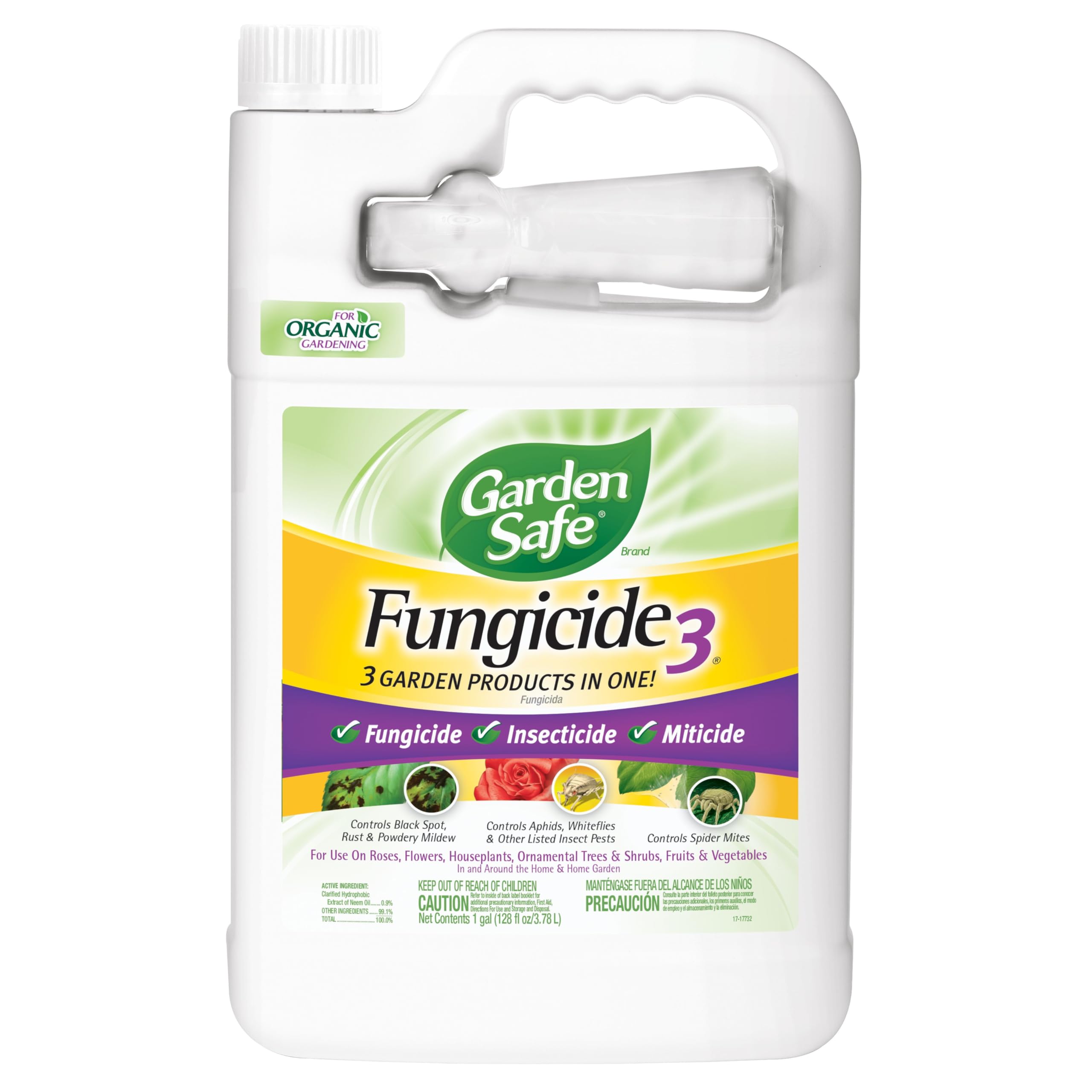
A gallon of neem oil spray that covers your whole garden without running out.
If you have a large rose bed, a vegetable plot, and ornamentals to protect, the 128 fluid ounces in this one gallon give you far more coverage than any 16 oz or 32 oz bottle in this list — it holds 8 times the volume of the Neudorff spray. The active ingredient is a clarified hydrophobic extract of neem oil (concentrated neem oil), and it works as a fungicide (kills fungus like black spot, rust, powdery mildew), an insecticide (kills insects like aphids, whiteflies), and a miticide (kills mites like spider mites). It is ready-to-use out of the bottle, so you skip the mixing step entirely — unlike the Ortho concentrate which requires mixing.
One buyer reports that weekly use (except winter) eliminated mildew, improved foliage and blooms, and even increased their blueberry yield. Another reviewer says “absolutely amazing stuff” but warns it works too well if you use more than half the recommended dose — start low, test on a leaf, and avoid spraying in direct daytime sun. The built-in sprayer design gets mixed feedback; some found the hose too short at about 4 inches to reach plants easily, so buyers recommend using your own sprayer.
Why Buy the Gallon
- 128 fl oz — the largest volume in this review, covers a whole garden
- 3-in-1: fungicide, insecticide, and miticide all in one spray
- Ready-to-use out of the bottle — no mixing or measuring
- Contains neem oil extract, suitable for organic gardening
A Few Caveats
- Built-in sprayer has a short hose (about 4 inches) — buyers recommend using your own sprayer
- Can burn plants if you use more than half the recommended dose; start light
Best for the big garden: one gallon covers roses, vegetables, and ornamentals without needing to buy multiple bottles.
Not for you if: you prefer a gentle systemic spray for a few potted roses — the neem oil contact action requires thorough coverage and careful dosing.
5. Earth’s Ally Disease Control Concentrate for Plants, 32 oz
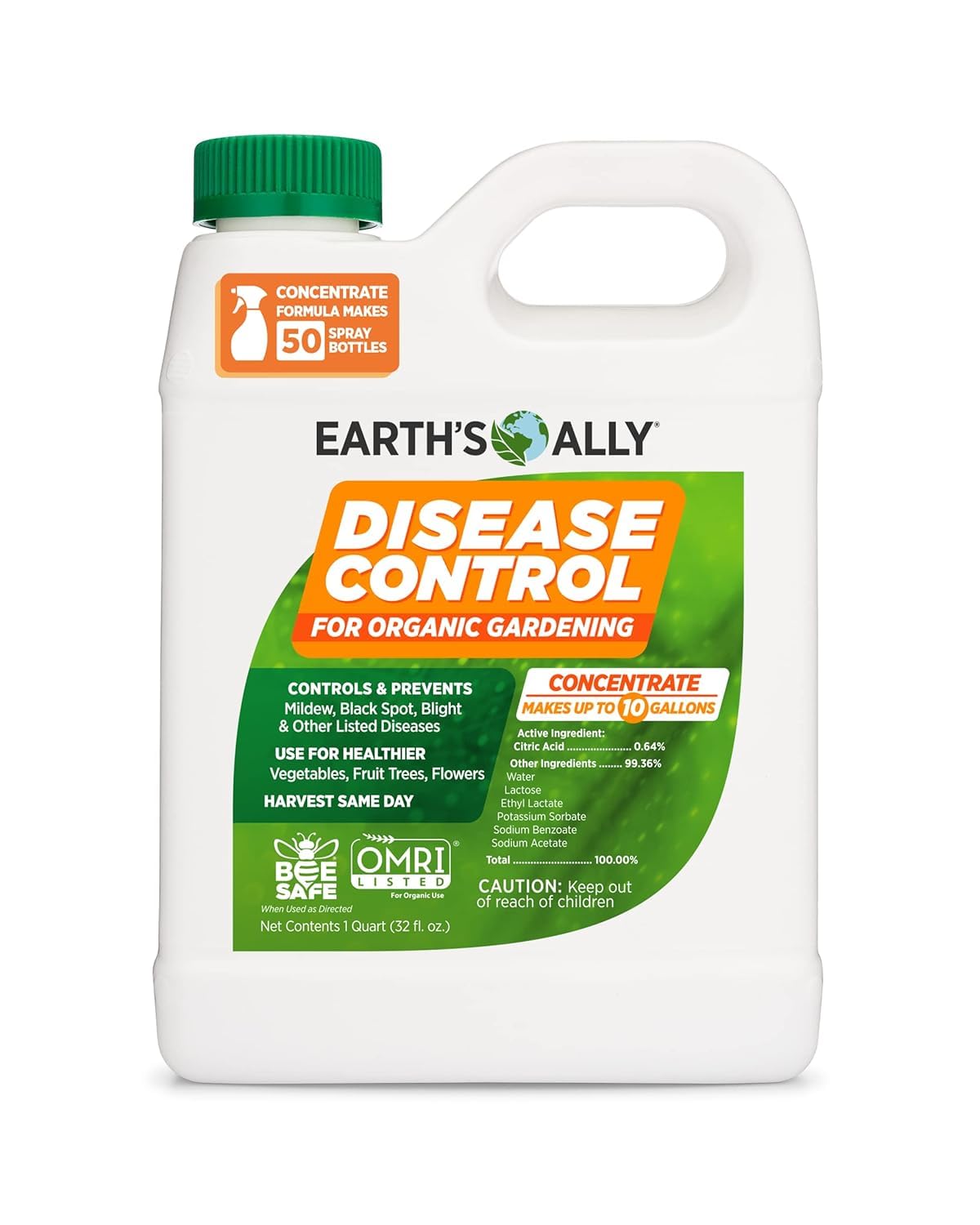
A gentle citric acid concentrate that fights black spot without harsh chemical residue.
Earth’s Ally uses citric acid as its active ingredient — a natural approach that breaks down without leaving harmful residues on your plants or soil. It is OMRI Listed (approved for use in organic gardening by the Organic Materials Review Institute), and you can spray it on fruits and vegetables right up until the day of harvest. The 32 oz concentrate makes 10 gallons of ready-to-use product when you mix 6 tablespoons per gallon of water, making it a highly economical choice — far more cost-effective per treatment than ready-to-use sprays like the 32 oz Monterey Neem Oil, which only gives you 32 oz of coverage.
Customers note it stopped root fungus in 2 applications, and their rose leaves look “MUCH healthier.” One reviewer is hopeful it will help their roses thrive after just starting to use it. It treats powdery mildew, downy mildew, blight, canker, black spot, and leaf spot. Because it is a contact spray, thorough coverage of both the tops and undersides of leaves is essential for it to work — unlike the Atticus Gravex, which moves inside the plant.
Gentle Yet Effective
- Citric acid formula — no harsh chemicals, safe for people and pets
- OMRI Listed for use in organic gardening
- 32 oz concentrate makes 10 gallons of spray — very economical
- Safe to use on edibles up until harvest day
A Limitation
- Contact-only action — can wash off in rain, requires thorough leaf coverage
Perfect for the organic gardener: a citric acid concentrate that is soft on plants, safe around kids and pets, and stretches to 10 gallons — far more than the Ortho concentrate offers per bottle.
pass on it if: you need a systemic fungicide that resists rain — this is a contact spray that must stay on the leaf surface to work.
6. Monterey Neem Oil RTU – 32oz Fungicide/Insecticide/Miticide
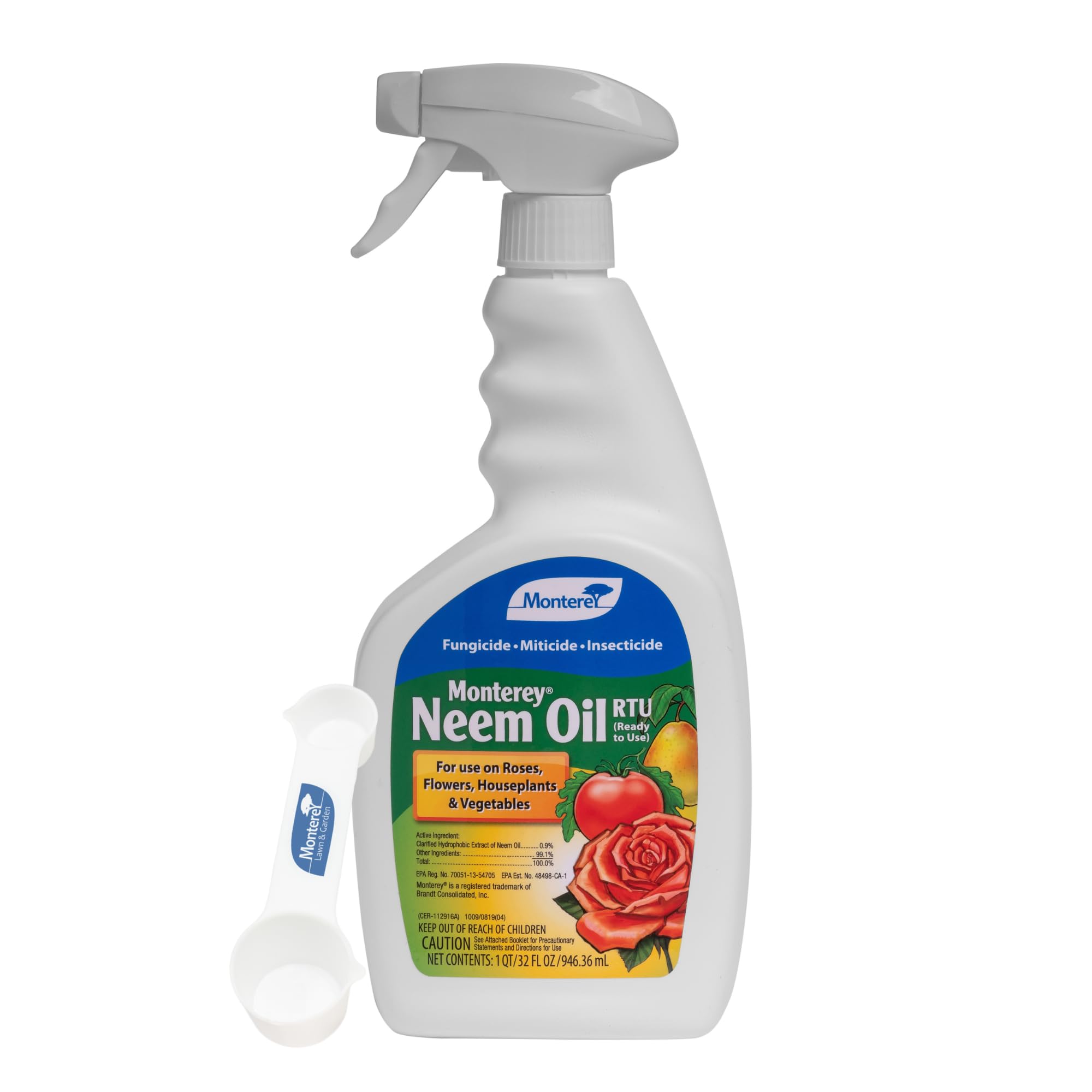
A grab-and-go neem spray that takes on black spot, mildew, and aphids without measuring.
Monterey Neem Oil RTU (ready-to-use) eliminates the mixing step — just shake the bottle, point, and spray. It works as a fungicide, insecticide, and miticide (kills fungus, insects, and mites), controlling black spot, powdery mildew, rust, aphids (tiny sap-sucking bugs), whiteflies, and spider mites. One buyer with a small container garden found it effective for combatting both caterpillars and powdery mildew on tomatoes. The neem oil also works as a leaf shine, giving your roses a cleaner appearance between treatments.
The biggest trade-off is the smell: one reviewer calls it “neem stinks, but it works!” and notes the odor sticks around for a while after spraying. Another reviewer points out it is effective against black spot and whiteflies but was ineffective against spider mites in their experience — so you may need a more targeted product if mites are your main problem. At 32 oz, it costs a bit more per treatment than mixing your own from a concentrate like Bonide Rose Rx, but the convenience is worth it if you only have a dozen or so rose bushes to treat and want to grab it off the shelf when you spot the first sign of black spots.
Convenience Wins
- Ready-to-use spray with no mixing required
- Triple action: fungicide, insecticide, and miticide
- Safe for use on edible plants up until harvest day
- Also works as a leaf shine for roses
Things to Consider
- Strong neem smell that lingers after spraying
- One reviewer found it ineffective against spider mites
Grab this if: you want the easiest possible spray experience — no measuring, no mixing, just shake and go for a small to medium rose garden.
Look elsewhere if: you are sensitive to strong smells or have a large garden where a concentrate like Bonide Rose Rx would be more cost-effective per treatment.
7. Neudorff Plant Fungicide Spray, Copper Soap Fungicide for Roses, 16 oz RTU

A copper soap spray that starts working right away and is gentle enough for edibles.
The Neudorff Copper Soap Spray uses copper octanoate — a low-concentration copper formula that breaks down into soluble copper and fatty acid, both of which can be used by microbes and plants. It is OMRI-compatible for organic gardening, and you can use it right up until the day of harvest on fruits, vegetables, and herbs. One buyer confirms it is “effective immediately against black spot, powdery mildew, red blotch.” The sprayer is easy to use, the liquid has a blue dye so you can see where you have sprayed, and the scent is mild — unlike the strong neem smell of the Monterey spray.
At just 16 fluid ounces and weighing 1 pound, this is the smallest volume product in the lineup — and the 8.0x volume gap to the 128 oz Garden Safe bottle shows how fast a small bottle goes on a big garden. A reviewer warns it burned their hostas, so test it on one leaf before spraying your whole rose bush. It is a contact spray that needs reapplication every 7-10 days and after rain — much more frequent than the 28 days of protection from the Atticus Gravex.
What We Like
- Effective immediately against black spot, powdery mildew, red blotch
- Copper octanoate formula breaks down naturally in soil
- Ready-to-use sprayer with blue dye for visible coverage
- Can be used up until day of harvest on edibles
What Holds It Back
- Small 16 oz bottle goes fast on a large garden (128 oz gallon has 8x more volume)
- One reviewer experienced leaf burn on hostas — test on a small area first
- Contact-only spray needs reapplication every 7-10 days and after rain
Best for beginners or small gardens: a small, gentle, and immediately effective organic spray that is easy to use right from the start.
Move up if: you are treating more than a few rose bushes or want a rain-proof systemic formula — this small bottle will run out fast and washes off in wet weather.
Understanding the Specs
Contact vs. Systemic Fungicides
A contact fungicide (like copper soap or neem oil) stays on the leaf surface and kills spores that land there. It needs to be reapplied after rain because water washes it away. A systemic fungicide (like myclobutanil in Atticus Gravex or the Ortho Rose & Flower formula) is absorbed into the leaf tissue and moves through the plant, so it keeps working even if it rains an hour after spraying. For black spot, which thrives in wet weather, systemic protection is a significant advantage.
Ready-to-Use vs. Concentrate
A ready-to-use (RTU) spray comes pre-mixed in the bottle — just shake and spray. It is convenient for small gardens but costs more per treatment. A concentrate requires you to mix it with water in a separate sprayer, which adds a step but saves money, especially if you have many rose bushes or other ornamentals. For example, Earth’s Ally concentrate (32 oz) makes 10 gallons of spray, while a 32 oz RTU bottle gives you exactly 32 oz of coverage. Pick based on how many plants you need to protect.
FAQ
How does black spot on roses start and how fast does it spread?
Can I use a fungicide for black spot on roses when it is raining?
Will a fungicide for black spot on roses also kill aphids and spider mites?
How often should I apply a fungicide for black spot on roses to keep it under control?
Is it safe to use a fungicide for black spot on roses around pets and children?
Can I use a fungicide for black spot on roses on my vegetable garden?
Will a fungicide for black spot on roses fix leaves that are already damaged?
What is the difference between neem oil and copper soap for treating black spot on roses?
Why is the Ortho Rose & Flower Disease Control not available in New York?
Can I mix my own fungicide for black spot on roses if I have a very large garden?
Final Thoughts: The Verdict
If you want one dependable pick, the fungicide for black spot on roses winner is the Ortho Rose & Flower Disease Control because its systemic formula resists rain and protects the plant for up to 4 weeks — the best balance of convenience and reliable control. If you want an organic triple-action concentrate that also kills aphids and mites, grab the Bonide Rose Rx. And for a heavy-duty systemic cure when nothing else has worked, the Atticus Gravex 20EW offers professional-level myclobutanil that absorbs into the plant and lasts up to 28 days.
How We Picked
We do not accept paid placement, and we did not hands-on test every unit. Instead, we match each pick to a real buyer and use-case by comparing the manufacturers’ published specifications against the patterns in verified customer reviews — so you get each pick’s real strengths and trade-offs instead of marketing copy.
Sources & Methodology
Specifications: manufacturer listings and product documentation. Review insights: verified customer reviews, as of July 2026. Pricing: not shown on this page (it changes often); check the current price via the retailer link.
As an Amazon Associate, Lawn Gear Lab earns from qualifying purchases. This does not affect which products we feature.