
Specs are compiled from manufacturer listings and verified buyer reviews and can change over time — please confirm the key details on the product page before buying.
Trimming around flower beds, along fence lines, or between pavers usually means a choice between a noisy string trimmer that flings debris or getting down on your knees with a pair of awkward clippers. The right grass shears turn that chore into a quick, precise snip — they let you reach into places a mower or weed whacker cannot touch without sacrificing control or comfort.
I’m Rikta — the founder and writer behind Lawn Gear Lab. This guide is built by comparing the manufacturers’ published specifications and the patterns across verified customer reviews, so you get each pick’s real strengths and trade-offs instead of marketing spin.
Every pair below serves a slightly different grip, cutting angle, or blade type, so you can match the tool to your own yard’s tight spots. This is your plain-English breakdown of the best grass shears for edging and detail trimming, built from hard specs and real owner experience.
Quick Picks
- Kimura® Pro Grass Shears — Best Overall
- Woodland Tools Heavy Duty Rotating Grass Shears — Pro Pick
- Corona GS 6750D ClassicCUT Grass Shear — Heirloom Build
- Bahco GS-76 3-Position Grass Shear — Flex Angle
- Fiskars 392290-1001 Grass Shears — Value Standard
- Kings County Tools Garden Clippers — Power Cutter
- BERGER Grass Shears 2200 — German Precision
How To Choose The Best Grass Shears
Picking grass shears feels simple until you realize the pair you grab can make the difference between a clean five-minute edge job and a twenty-minute hand-ache. Focus on three things: how the blade cuts, how the handle fits your hand, and what the steel is made from.
Blade type and coating
Bypass blades slice like scissors — one sharp blade crosses past a thicker one for a clean cut that is gentle on grass. A non-stick coating (like PTFE, a low-friction plastic) stops sap and damp grass from gumming up the action, which also helps resist rust. Without that coating, you will be wiping and drying after every use.
Handle ergonomics and rotating head
Standard straight shears force your wrist into an awkward angle when you cut along a flat surface. A rotating head — either 180 or 360 degrees — lets you keep your hand in a natural position while the blade turns to follow the edge. A padded or contoured grip also spreads the squeezing force across more of your palm, which matters if you have arthritis or plan to trim for more than a few minutes.
Steel quality and sharpness retention
Not all steel is the same. High-carbon steel (like Japanese SK5 or alloy steel) holds a keen edge longer than standard stainless. Some blades are stamped thin for easier cutting; others are forged thicker for durability. A blade you can re-sharpen on a stone beats a disposable one, especially if you trim regularly.
Quick Comparison
On smaller screens, swipe sideways to see the full table.
| Model | Best For | Blade Material | Cutting Width | Weight | Amazon |
|---|---|---|---|---|---|
| Kimura Pro | Arthritis-friendly rotating precision | Japanese SK5 steel | 5 mm | 0.34 kg | Amazon |
| Woodland Tools | 180° pivot for wider edging reach | High Carbon Steel | — | — | Amazon |
| Corona GS 6750D | All-metal heirloom build | Alloy Steel | 4.5 inches | — | Amazon |
| Bahco GS-76 | 3-position blade flexibility | Alloy Steel | — | 0.4 kg | Amazon |
| Fiskars 392290 | Lightweight ambidextrous budget pick | Aluminum, Steel | — | — | Amazon |
| Kings County Tools | Heavy-duty long-blade power | Alloy Steel | 6 inches | 13.6 oz | Amazon |
| BERGER 2200 | German-made self-sharpening durability | Metal | 300 mm | 0.61 lbs | Amazon |
In‑Depth Reviews
1. Kimura® Pro Grass Shears

Rotates a full circle so your wrist stays straight while the blade follows every edge.
The Kimura Pro makes edging feel graceful because the head spins 360 degrees and locks into 16 different positions. You keep your hand in a natural, unstrained angle and the blade pivots to meet the grass. That matters when you are trimming along a long driveway or around a curved flower bed. The blade is Japanese SK5 steel (a high-carbon steel that holds a sharp edge well) and it has a PTFE coating — a low-friction layer that stops sap and wet grass from sticking to the metal and helps prevent rust.
Buyers report they spray WD40 on the blades after each use and have never had a sticking issue, a quick habit that keeps the action smooth. At 0.34 kilograms, it is lighter than the Bahco GS-76 at 0.4 kilograms, so your arm tires less during longer trimming sessions. The reinforced ABS body and riveted handles feel sturdy without adding bulk. The one trade-off to note: the cutting width is listed at 5 millimeters, so it is built for precise snips, not for mowing down large patches of tall grass.
What makes it stand out
- Full 360° rotating head with 16 lock positions for any trimming angle
- Japanese SK5 steel blade resists dulling longer than basic steel
- PTFE anti-stick coating repels sap and grass residue
One real limitation
- 5 mm cutting width means it is a detail trimmer, not a bulk cutter
Perfect for detail edgers: If you trim around beds, fences, and curbs and want a rotating head that saves your wrist, this is the pick.
skip it if: You need to cut through thick patches or woody stems — this is a grass shear, not a hedge shear.
2. Woodland Tools Heavy Duty Rotating Grass Shears
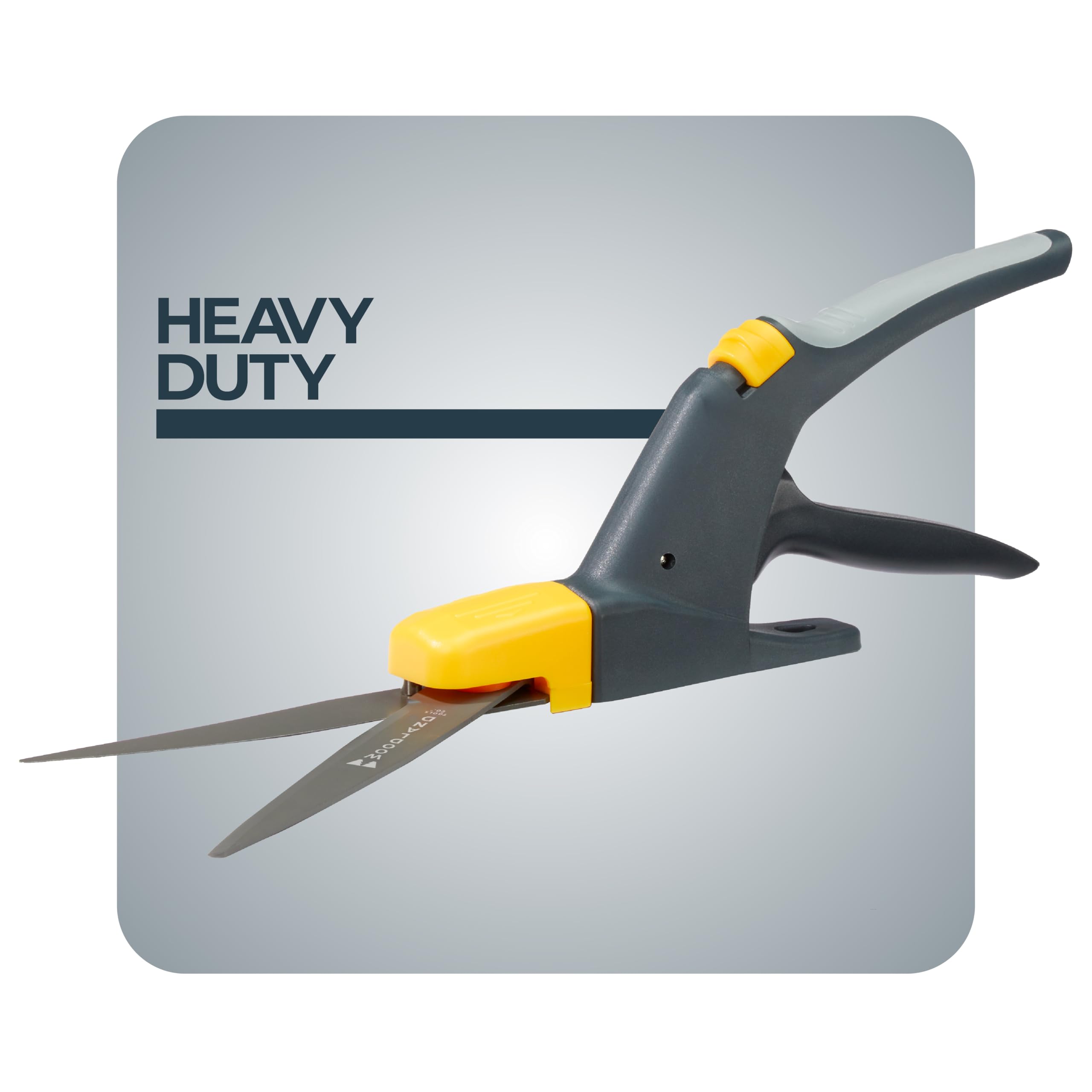
A 180-degree blade pivot that bends where you bend so you don’t have to.
The wooden handles of the Corona below feel classic, but for sheer wrist relief the Woodland Tools takes a different approach: the blade pivots 180 degrees in both directions, letting you cut along a path edge or under a shrub without twisting your arm. The handle has a one-handed thumb lock that makes storage and closing safe without fumbling. The steel blades carry a non-stick coating so grass glides through cleanly rather than jamming the pivot point.
One reviewer noted these shears are “easy on these 75-year-old arthritic hands,” which speaks directly to the ergonomic grip design. At 15.5 inches long by 4.75 inches wide, this is a noticeably larger tool than the Corona GS 6750D at 1.62 inches by 2.25 inches, meaning you get more leverage but also a bulkier tool to store. The high-carbon steel blades are sharp from the start, but several reviewers recommend wearing protective gloves because the edge is aggressive.
Why it shines
- 180° rotating head in both directions for versatile cutting angles
- One-handed thumb lock for easy, safe storage
- Non-stick coated steel resists grass buildup
The catch
- Larger size compared to other picks — not as compact for tight storage
Smart for older hands: If you have arthritis or reduced grip strength, the pivoting head and comfort grip reduce strain significantly.
Not for small toolboxes: The longer frame takes up more space in a shed drawer or garden caddy.
3. Corona GS 6750D ClassicCUT Grass Shear
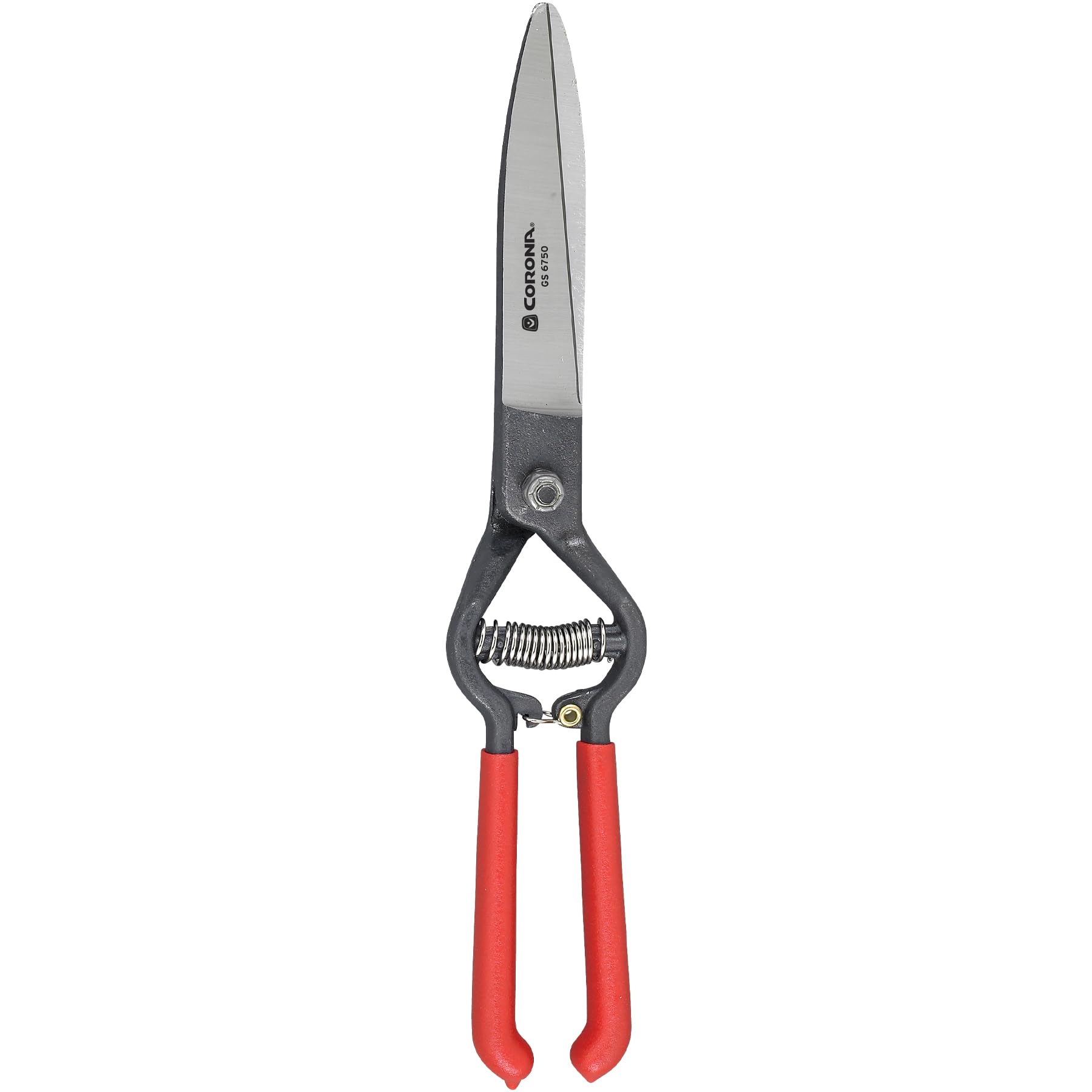
No plastic, no shortcuts — forged steel and wood that feel solid in your hand.
The Corona GS 6750D takes the opposite approach from the Kimura and Woodland rotating heads: it is a straight, classic grass shear with natural wood handles and a vinyl coating for comfort. There is no swivel mechanism, no plastic body — just a simple, durable all-metal build that buyers consistently call “best handheld grass shears I’ve owned.” The 4.5-inch alloy steel blades are sharp enough to cut cleanly at the tips or along the full length, and the spring action is firm but reliable.
One experienced reviewer summed it up: “Durable all-metal build (no plastic), smooth cut, worth higher price.” The trade-off is the weight — the solid steel construction makes it heavier than the feathery Fiskars, but owners mention it is “heavy but not tiring.” The firm spring may challenge people with small hands or weak grip, which is where the Kimura or Woodland models with rotating heads feel easier. The blades are also re-sharpenable, which extends the life of the tool well beyond a single season.
Why it lasts
- Forged alloy steel blades you can re-sharpen on a stone
- All-metal build with zero plastic — no brittle parts to break
- Natural wood handles with vinyl coating for a comfortable, balanced grip
One drawback
- Firm spring can be tough to squeeze repeatedly for small or arthritic hands
Built for buyers who hate plastic tools: If you want a shear that feels like it was made to be passed down, this all-metal Corona is your match.
Think twice if: You have small hands or need a rotating head to avoid wrist strain — the fixed-angle design demands more arm movement.
4. Bahco GS-76 3-Position Grass Shear

Three blade angles let you switch from flat edging to vertical trimming in a click.
Instead of a continuous rotating head, the Bahco GS-76 gives you three preset blade positions that snap into place. You can cut flat along the ground, angled for a beveled edge, or straight up for trimming vertical growth. The hardened alloy steel blades are driven by a precise spring mechanism that keeps the blades aligned even after repeated use. At 0.4 kilograms it is heavier than the Kimura Pro (0.34 kg), but some users appreciate the extra heft for stability.
Not every review is glowing, however. One buyer mentioned the shear “looses sharpness quickly” and said they “would not purchase again, nor recommend this brand to others.” That is a notable split from the overall positive reviews. On the plus side, other owners praise it as “the best one of all” and find it “very sharp and precise” for edging. The plastic handles (Kunststoff in the spec sheet) feel less premium than the all-metal Corona or the BERGER, but the three-position versatility is a feature you do not find on the other picks here.
what separates it
- Three preset blade positions for flat, angled, or vertical cutting
- Precise spring mechanism keeps blades aligned
- Hardened alloy steel for decent out-of-box sharpness
Mixed feedback
- Some customers note the blade loses sharpness faster than expected
- Plastic handle construction feels less durable than all-metal rivals
A good fit if: You want the flexibility of three cutting angles for different edging styles without buying multiple tools.
Hold off if: Edge retention is your top priority — the mixed reviews on sharpness suggest you may need to sharpen or replace sooner.
5. Fiskars 392290-1001 Grass Shears
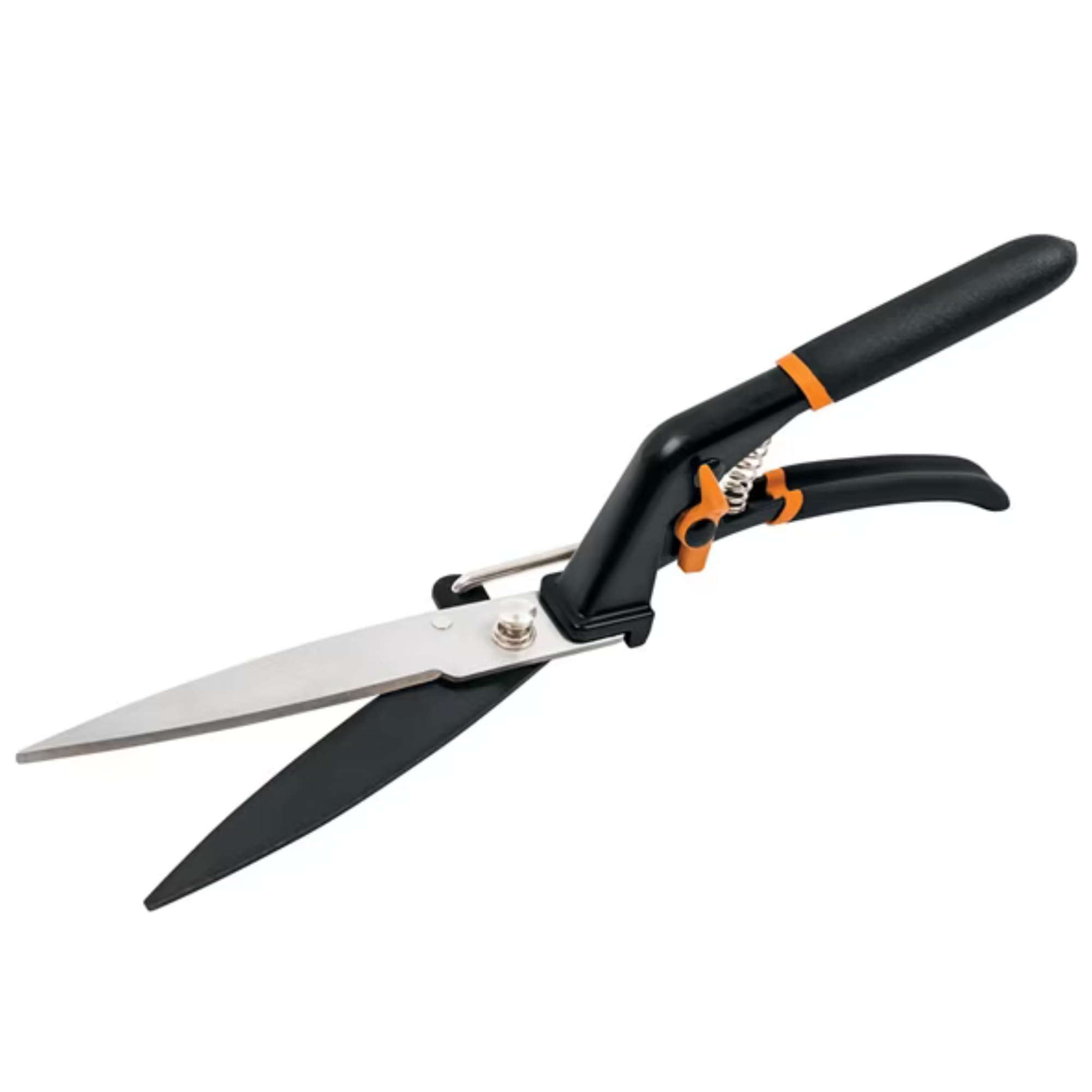
A featherweight classic that cuts right to the point without any extra frills.
The Fiskars 392290 has no rotating head, no multi-position angles, and no special coating. What it does have is a sharp, precision-ground blade edge on hardened steel that stays sharp for a reasonable time, and a non-slip comfort lower grip. It is ambidextrous — both right and left-handed users can operate it comfortably. If you want a simple, lightweight shear for spot-trimming around hostas or pulling weeds at the base of vegetable plants, this basic design gets the job done with zero fuss.
The honest catch, as one owner reported: “Blades rusted due to beach salt environment.” The rust preventative on these shears is water-based, so it works fine in dry conditions but struggles in coastal humidity or if you leave them damp. A few reviewers also note the blades can get sticky after cutting wet plant material — wiping them down mid-session helps. But for the price, the feedback is overwhelmingly positive: “Super sharp, and easy on my hand” is a typical sentiment. The Fiskars is also noticeably lighter and more compact than the long-bladed Kings County Tools shear below.
Simple strengths
- Precision-ground blade edge for clean cuts right from the start
- Very lightweight — easy to maneuver with one hand
- Non-slip lower grip works for both right and left handed users
Where it falls short
- Water-based rust preventative is weak in humid or salt-air environments
- Blades can get sticky with damp plant residue during use
Best for dry-climate gardeners: If you live inland and need a cheap, sharp, ambidextrous shear for quick touch-ups, this is your tool.
Not for coastal yards: The rust reports are real — if you garden near the ocean, the non-stick coated Kimura or all-metal Corona will hold up much better.
6. Kings County Tools Garden Clippers
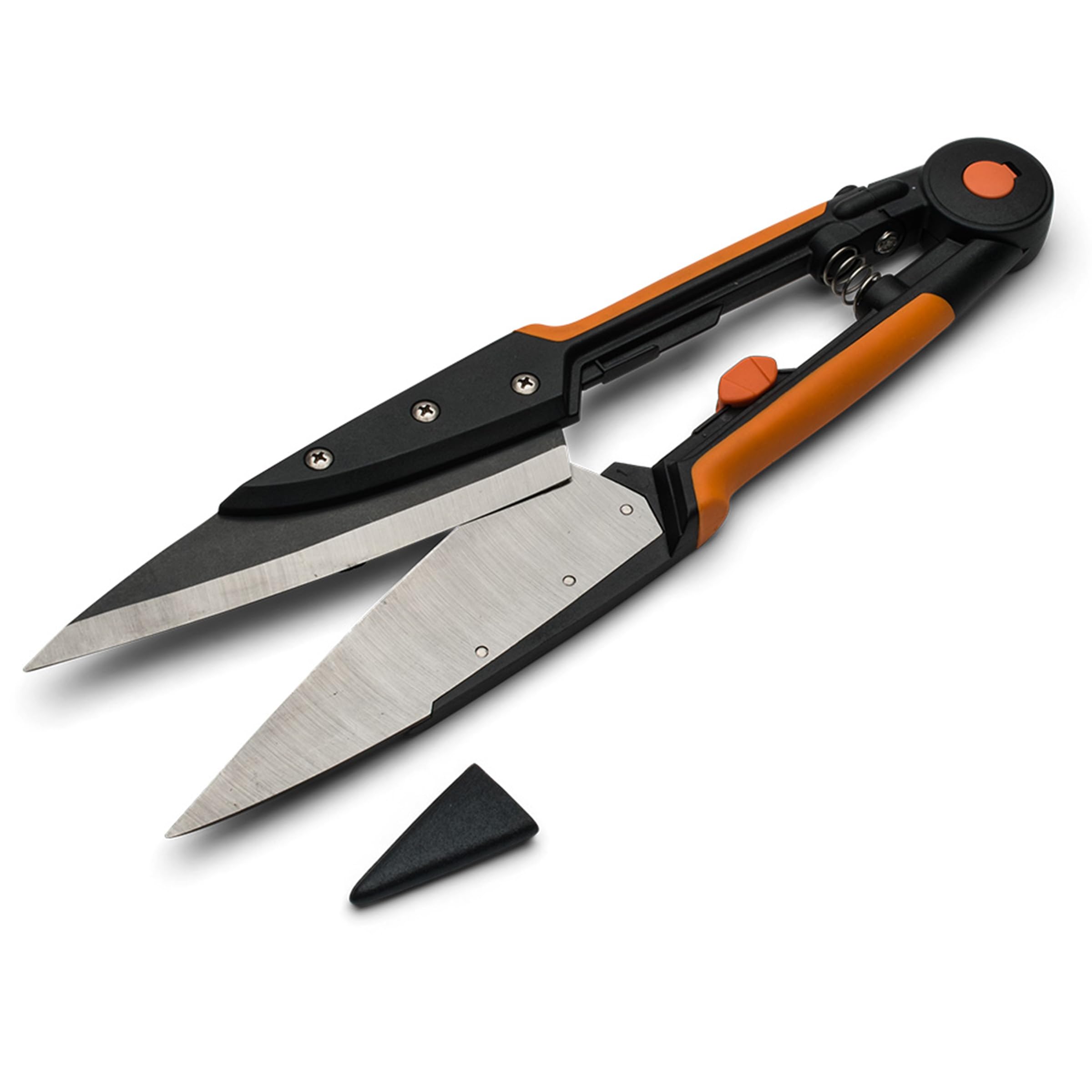
Long blades that let you slash whole clumps instead of snipping one stem at a time.
Every other shear on this list is a detail tool. The Kings County Tools clippers are a power tool disguised as a hand shear — the blades measure 6 inches long, giving you enough cutting coverage to pare down thick patches of weeds or tall fescue in a single squeeze. The alloy steel blades are razor sharp and the pivot point is tuned so the action feels smooth, not stiff. One Florida landscaper reported these “cut like butter” through tough weeds, and several reviewers point out the high-carbon tool steel (not stainless) can be removed and sharpened on water stones when it eventually dulls.
The trade-off is weight and hand fit. At 13.6 ounces, it is the heaviest pick in this lineup, and the thick blades require hand strength. A buyer with smaller hands noted the tool can feel tiring and the extremely sharp tip can pierce gloves if you are not careful. The plastic-coated handles with rubberized grips add some comfort, but this is clearly designed for medium-to-large hands that can generate leverage. It is also worth keeping the blades oiled after use — the thin steel edge is prone to rust if left wet, unlike the anti-stick coated BERGER below.
Why it is a beast
- 6-inch blades give you the widest cutting width of any pick here
- Removable blades can be re-sharpened on water stones
- Slices through thick weeds and clumps that stall standard shears
What holds it back
- Heaviest at 13.6 oz — can fatigue smaller hands over time
- Blade tip is extremely sharp and can puncture gloves
Perfect if: You have the hand strength and need one tool that can both detail-edge and cut whole clumps of tall grass or weeds.
Not ideal if: You have small hands or want a lightweight tool for quick touch-ups — the Fiskars or Kimura will serve you better.
7. BERGER Grass Shears 2200
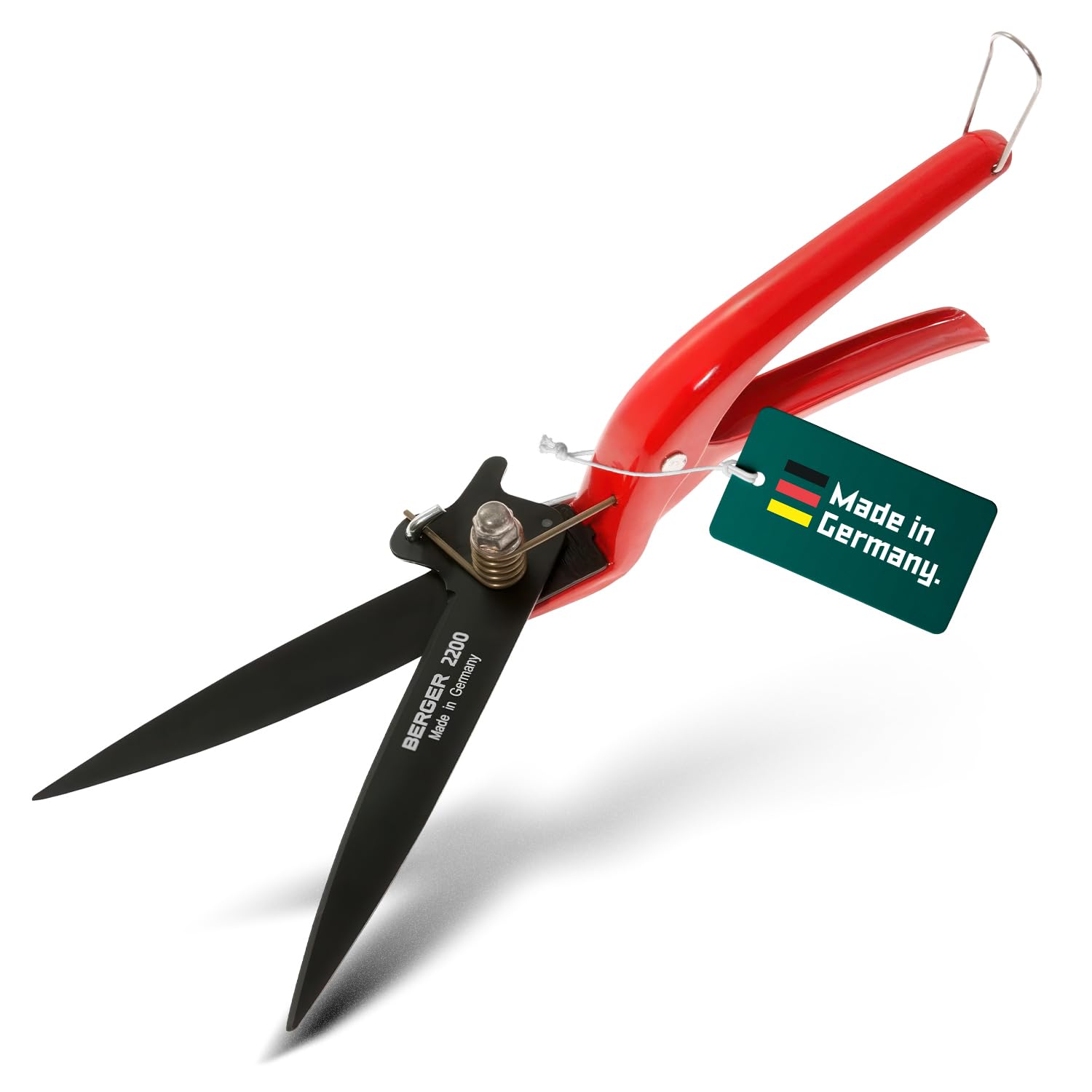
Made in Germany with a self-sharpening blade that cuts without squeezing the grass.
The BERGER 2200 is one of the few grass shears on the market with a self-sharpening feature — the blade edge hones itself as you open and close it, so the cut stays fresh without needing a stone or file. The anti-stick coating on the blade does double duty: it prevents grass sap from building up and also resists rust, two of the biggest complaints buyers have about shears in this class. The full metal body (no plastic) and the VPA-GS safety seal give it a solid, professional feel that reviewers describe as “heirloom quality.”
One owner noted that the all-metal design and non-stick coating prevent rust, and that it handles large clumps without binding. However, there is a minor comfort issue: the metal handles can cause blisters even when wearing gloves, so a few users recommend adding a foam handle wrap for longer sessions. At 0.61 pounds it sits between the featherweight Kimura and the heavier Kings County clippers. The listed 300 millimeters refers to the overall length, and at 0.61 pounds it has enough heft to help with decent-sized clumps without jamming.
Engineered advantages
- Self-sharpening blade keeps the edge keen without manual honing
- Anti-stick coating prevents sap buildup and resists rust
- All-metal German build with VPA-GS safety certification
Small annoyances
- Metal handles can cause blisters — foam wrap recommended for long sessions
- Heavier than rotating-head alternatives at 0.61 lbs
Best for low-maintenance buyers: If you want a shear that stays sharp without sharpening and resists rust so you can just grab and cut, the BERGER delivers.
Consider comfort first: If you have sensitive hands or plan to trim for an hour at a time, add a foam grip or lean toward the padded-handle Kimura.
Understanding the Specs
Blade steel and coating
The blade material determines how long the shear stays sharp and how easily it cuts. High-carbon steel (like Japanese SK5 or alloy steel) holds a sharper edge longer than basic stainless, but it can rust faster if not dried and oiled. An anti-stick coating (PTFE or similar) prevents grass sap from gumming up the blades and adds a layer of corrosion resistance. Uncoated blades require more maintenance — wiping dry after every use and occasional oiling — to avoid rust spots.
Rotating head vs. fixed angle
A rotating head (180° or 360°) lets the blade pivot so you can cut along a flat edge while keeping your wrist in a neutral position — a big deal if you trim regularly or have arthritis. Fixed-angle shears (like the Corona or Fiskars) are simpler, lighter, and have no pivot mechanism to wear out, but they force you to bend or angle your arm to match the cutting line. Some shears offer a third middle-ground: preset blade positions (like the Bahco GS-76) that lock into a few useful angles without a full swivel.
FAQ
What is the difference between bypass and straight blade grass shears?
How do I stop grass shears from rusting?
Are rotating head shears worth the extra cost?
How long do grass shears stay sharp?
Can I use grass shears to trim small hedges?
Do I need a specific shear for left-handed use?
What does cutting width mean for grass shears?
Can I sharpen grass shear blades at home?
Final Thoughts: The Verdict
Across the board, the best grass shears winner is the Kimura Pro because the 360° rotating head and Japanese SK5 steel deliver precision and wrist comfort at a mid-range price that outpaces the competition. If you want a classic all-metal build that will last decades, grab the Corona GS 6750D. And for the buy-it-for-life crowd that never wants to sharpen a blade again, the BERGER 2200 with its self-sharpening German steel and anti-stick coating is the clear value-over-time champion.
How We Picked
We do not accept paid placement, and we did not hands-on test every unit. Instead, we match each pick to a real buyer and use-case by comparing the manufacturers’ published specifications against the patterns in verified customer reviews — so you get each pick’s real strengths and trade-offs instead of marketing copy.
Sources & Methodology
Specifications: manufacturer listings and product documentation. Review insights: verified customer reviews, as of July 2026. Pricing: not shown on this page (it changes often); check the current price via the retailer link.
As an Amazon Associate, Lawn Gear Lab earns from qualifying purchases. This does not affect which products we feature.