
Specs are compiled from manufacturer listings and verified buyer reviews and can change over time — please confirm the key details on the product page before buying.
Getting lantanas to explode with those clusters of bright yellow, orange, and pink flowers isn’t about dumping more fertilizer on them — it’s about giving them the right type. Too much nitrogen, and you’ll get a bushy green plant with hardly any blooms. The real trick is a fertilizer that focuses on phosphorus, the middle number in the bag, to push flower production without pushing leaves. This guide breaks down the best mixes, forms, and application schedules drawn straight from the label specs and verified buyer experiences.
I’m Rikta — the founder and writer behind Lawn Gear Lab. This guide is built by comparing the manufacturers’ published specifications and the patterns across verified customer reviews, so you get each pick’s real strengths and trade-offs instead of marketing spin.
Whether you grow lantanas in containers, hanging baskets, or sprawling across a garden bed, the right plant food makes all the difference in flower yield. Here is a straightforward look at the top-performing options for fertilizer for lantana, matched to how you garden.
Quick Picks
- BR-61 Fertilizer 9-58-8 (24 oz) — Bloom Nuke
- Espoma Organic Bloom! 16-Ounce Concentrated Plant Food — Hanging Basket Hero
- Miracle-Gro Performance Organics Blooms Plant Nutrition Granules (2.5 lb) — Organic Easy-Apply
- Jobe’s Organics Granular All Purpose Fertilizer (4 lbs) — Soil Rebuilder
How To Choose The Best Fertilizer For Lantana
Lantana is a tough, sun-loving plant that can survive in poor soil, but it needs a specific nudge to put forth its best flowers. The wrong fertilizer can push it into leaf-only mode. Here is what actually matters when shopping.
Look at the Middle Number (Phosphorus)
Fertilizer labels show three numbers like 10-10-10: Nitrogen (N), Phosphorus (P), and Potassium (K). For flowering plants like lantana, you want the middle number — phosphorus — to be the highest. This signals the plant to produce buds and blooms rather than just leaves. A ratio like 5-7-10 or the ultra-high 9-58-8 is perfect for maximizing flower output.
Granular vs. Liquid
Granular fertilizers are slow-release and feed the soil over weeks. You sprinkle them on the ground and water them in. Liquid concentrates, on the other hand, are mixed with water and feed the plant immediately through the roots. For busy gardeners, granules mean less frequent application. For someone who wants rapid results during the peak blooming season, a liquid or water-soluble option is better.
Check for Organic Certification
If you are growing lantana near vegetable gardens or areas where kids and pets play, an organic granular or liquid formula avoids synthetic chemicals. Look for labels like OMRI (Organic Materials Review Institute) listing. These feeds also improve the long-term health of the soil by feeding beneficial microbes, which helps your lantana establish deeper root systems.
Quick Comparison
On smaller screens, swipe sideways to see the full table.
| Model | Best For | NPK Ratio | Form | Weight | Amazon |
|---|---|---|---|---|---|
| BR-61 Fertilizer | Extreme bloom boost (tropical yards) | 9-58-8 | Water-Soluble Granules | 1.5 lbs | Amazon |
| Espoma Organic Bloom | Organic liquid for containers/hanging baskets | 1-3-1 | Liquid Concentrate | 16 fl. oz | Amazon |
| Miracle-Gro Performance Organics | Easy organic granules for bed planting | 5-7-10 | Granules | 2.5 lbs | Amazon |
| Jobe’s Organics All Purpose | General soil health + slow feeding | 4-4-4 | Granules | 4 lbs | Amazon |
In‑Depth Reviews
1. BR-61 Fertilizer 9-58-8 (24 oz)
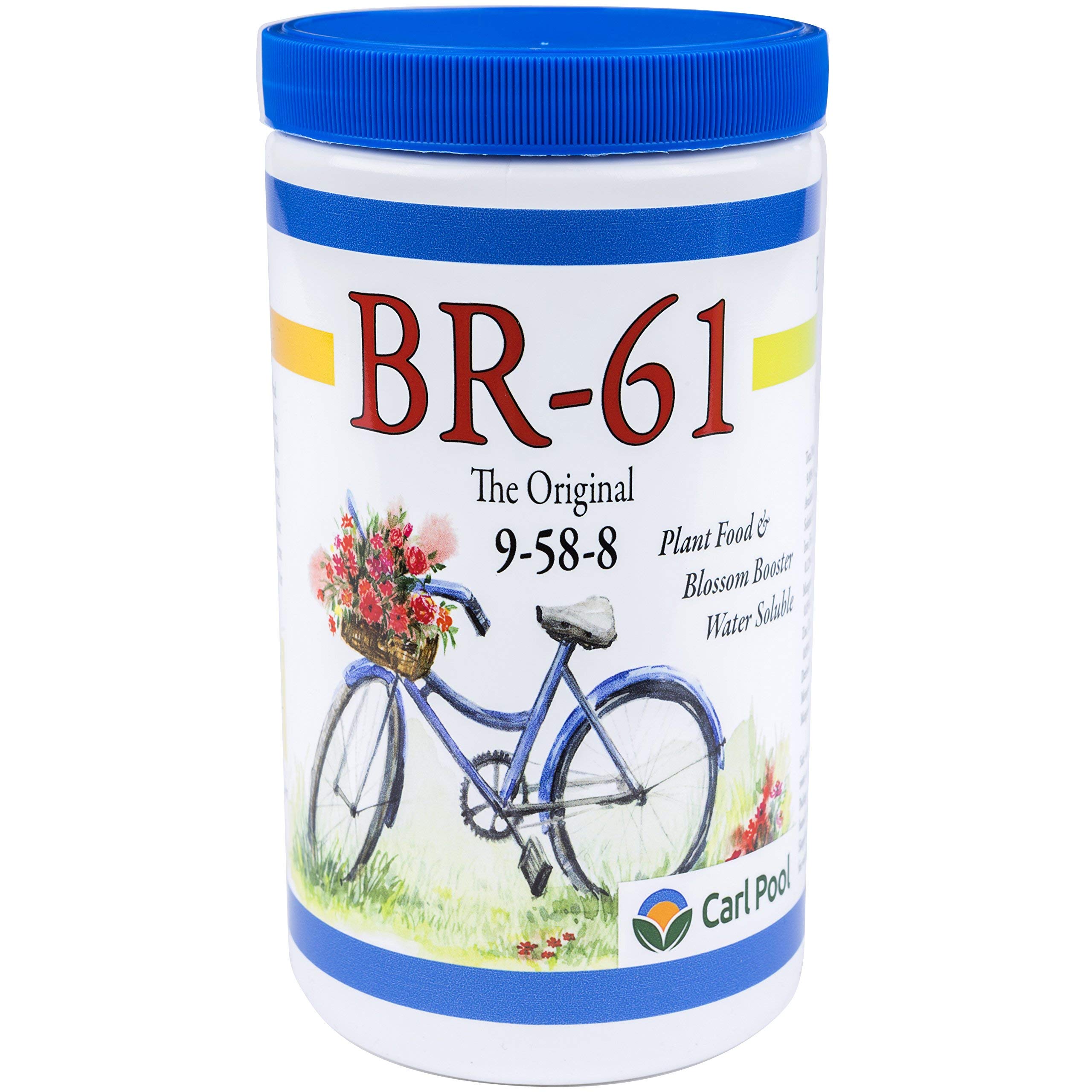
The secret weapon for gardeners who want their lantanas covered in flowers.
The NPK ratio of 9-58-8 tells you everything: this is a phosphorus juggernaut, delivering the highest bloom-driving middle number of any product in this lineup. Unlike the balanced 4-4-4 you see in general organic feeds, this one pushes the plant into flower-growing mode nearly immediately. You mix the water-soluble granules into your watering can and apply. One reviewer in southern Arizona noted, “My lantanas have the most blossoms and last longer than others in my southern Arizona yard.”
The catch is that this is not an all-purpose soil builder. It focuses purely on flower production, so if your lantana is already pale and struggling from nitrogen deficiency, you might want to use a balanced feed first. Buyers also report it works incredibly fast on other flowering plants — bougainvillea bloomed within days — so you are not gambling on slow results. At just 1.5 lbs of granules, it is a targeted purchase for the blooming season rather than a soil overhaul.
Flower-Focused Formula
- The 58 phosphorus level is class-leading for triggering buds
- Water-soluble granules dilute into a large batch for multiple plants
- Proven for lantana in hot, low-humidity climates
Single-Use Limitations
- Not a balanced soil amendment; low in nitrogen
- Bag is small (24 oz) for the price, not a budget bulk buy
Trust it if: your lantana is already healthy and green but refuses to flower — this unblocks the blooms.
Switch gears if: your plant shows yellow leaves or stunted growth; fix the nitrogen deficiency with a balanced feed first.
2. Espoma Organic Bloom! 16-Ounce Concentrated Plant Food

A liquid boost that keeps container lantanas in constant flower mode all summer.
This is the one you want for hanging baskets and pots because the liquid concentrate absorbs fast, and you control the dose. The 1-3-1 analysis is low overall but high in phosphorus relative to nitrogen, making it a targeted bloom booster. Simply mix one capful per gallon of water and apply every 2 to 4 weeks during the growing season. It is also OMRI-listed for organic gardening, so there is no worry about synthetic residue near vegetable patches or play areas.
The trade-off is that this 16-ounce bottle does not go far — buyers report it “doesn’t last very long” for large gardens. If you have a 15,000 sq ft lot with multiple flower beds, you would need to buy several bottles. But for a handful of lantana pots or hanging baskets, it delivers. One verified reviewer wrote, “Works great on my lantanas. So many more flowers!” The only real complaint is a pungent organic smell when mixing, so wear gloves and keep it away from noses.
Container Performer
- Contains kelp extracts and humic acids for root health
- Approved for organic production (OMRI listed)
- Quick absorption through roots for visible results in weeks
Volume Concern
- Small 16 fl. oz bottle goes fast with bi-weekly application
- Strong odor when mixing; gloves recommended
Reach for this if: you have containers or hanging baskets and want an organic liquid you can mix fresh each watering.
Look elsewhere if: you need to feed a large in-ground garden bed without constant re-purchasing.
3. Miracle-Gro Performance Organics Blooms Plant Nutrition Granules (2.5 lb)

A granular feed that makes flowering easy without messy measuring every week.
With a 5-7-10 ratio, this specialty organic formula gives lantana the phosphorus and potassium it craves without going overboard on nitrogen. You simply sprinkle the granules around the base of the plant, water them in, and reapply every 4-6 weeks. One bag covers up to 165 square feet, making it a solid option for a row of lantana along a walkway or a bigger garden bed. It is OMRI listed, so it qualifies for organic gardening programs. Owners mention visible results within 1-2 weeks, with one noting “produced large blooms, especially on butterfly bush.”
Compared to the BR-61 above, the Miracle-Gro has a gentler phosphorus boost (10 vs 58), so it is better for maintenance feeding over the whole season rather than a quick-fix burst. At 2.5 pounds, it is still easy to handle, but the granules stretch well per application. One buyer did note the bottle “didn’t look completely full” on delivery, but overall the results speak for themselves. It bridges the gap between a high-impact bloom booster and a balanced organic soil feed.
Maintenance Feed
- Easy “sprinkle and water” application
- Covers 165 sq. ft. per bag — good for bed planting
- OMRI listed organic formula for natural gardens
Outshone for Urgent Bloom
- Potassium (10) is higher than phosphorus (7), so slower bloom kick than high-P options
- Bag weight is 2.5 lbs — verify coverage for large areas
Best suited for: the gardener who wants a simple, organic granular that maintains blooms across a mid-size bed without weekly mixing.
Not your pick if: you need an instant flower explosion for stubborn, leaf-only lantanas — go with the BR-61 instead.
4. Jobe’s Organics Granular All Purpose Fertilizer (4 lbs)

The balanced, organic option that feeds the soil first, flowers second.
This 4-lb bag of 4-4-4 granules is the soil health champion. It contains billions of archaea microorganisms that aggressively break down organic material in the soil, improving root zone vitality. For lantana, the balanced ratio means it will not force-bloom like the high-P options, but it will build a strong, resilient plant that flowers naturally over time. It is a fantastic choice for poor, depleted soil where lantana is not just failing to bloom — it is failing to thrive. One reviewer noted it “revived pale, slow-growing seedlings within a week.”
The honest limitation is the 4-4-4 ratio itself: it lacks the high phosphorus punch that experienced lantana growers look for. While it weighs 4 lbs versus the 2.5 lb Miracle-Gro Performance Organics bag, most of that weight is balanced nutrients rather than bloom-specific fuel. Also, customers note it has a strong, manure-like smell when applied, and dogs are attracted to it. The smell fades once you water it into the soil. Use it for early spring soil prep or for lantanas that need general recovery, then switch to a bloom-booster later in the season for maximum flowers.
Soil Health Base
- Contains beneficial microorganisms to build healthier soil
- Largest bag at 4 lbs — best value for bulk feeding
- Resealable bag to keep moisture out between uses
Bloom Limitation
- Buzzwords like “organic” come with a strong smell that attracts dogs
- Balanced 4-4-4 ratio is not a dedicated bloom booster for flower-heavy lantana
Perfect as a: foundational feed for new garden beds or rehabbing lantana that looks weak and pale.
Swap for a booster: once the plant is lush and green but you need a flower surge; team it with a high-P liquid or soluble mix.
Understanding the Specs
The NPK Ratio
Every fertilizer bag shows three hyphenated numbers like 9-58-8. These stand for Nitrogen, Phosphorus, and Potassium — the three main nutrients plants need. For lantana, the middle number (Phosphorus) is the most important because it directly stimulates flower and bud development. If you see a balanced ratio like 4-4-4, it is great for general soil health, but a ratio like 5-7-10 or 9-58-8 gives you far more blooms per plant.
Granular vs. Water-Soluble vs. Liquid
Your application style matters. Granules (like Jobe’s Organics and Miracle-Gro Performance Organics) are slow-release: you sprinkle them on the soil and they break down over weeks with watering. Water-soluble granules (like BR-61) dissolve in your watering can and feed the plant immediately. Liquid concentrates (like Espoma Organic Bloom!) mix with water and also give fast results but require more frequent application. Choose granules for low-maintenance feeding and liquids/solubles for quick response in the peak blooming season.
FAQ
Can I use a general 10-10-10 fertilizer on lantana?
How often should I fertilize my lantana during the growing season?
Is organic or chemical fertilizer better for lantana?
What happens if I use a fertilizer with too much nitrogen on lantana?
Can I use a bloom booster and general fertilizer at the same time?
Should I fertilize lantana in partial shade differently?
Does lantana need fertilizer in pots and containers versus in-ground?
Is it safe to use a high-phosphorus fertilizer around pets?
Final Thoughts: The Verdict
If you want your lantana to pump out flowers all summer with the least effort, start with the BR-61 Fertilizer 9-58-8. Its high phosphorus number (phosphorus is the nutrient that fuels bloom production) — a 9-58-8 ratio — is designed to push heavy flowering in sun-loving plants. For containers, choose the Espoma Organic Bloom! if you want an organic option. And for garden beds, the Miracle-Gro Performance Organics Blooms gives you a slow-release granule (a dry pellet that feeds over weeks) with natural ingredients, so you apply it once and it keeps working.
How We Picked
We do not accept paid placement, and we did not hands-on test every unit. Instead, we match each pick to a real buyer and use-case by comparing the manufacturers’ published specifications against the patterns in verified customer reviews — so you get each pick’s real strengths and trade-offs instead of marketing copy.
Sources & Methodology
Specifications: manufacturer listings and product documentation. Review insights: verified customer reviews, as of July 2026. Pricing: not shown on this page (it changes often); check the current price via the retailer link.
As an Amazon Associate, Lawn Gear Lab earns from qualifying purchases. This does not affect which products we feature.