
Specs are compiled from manufacturer listings and verified buyer reviews and can change over time — please confirm the key details on the product page before buying.
The moment new grass seed hits the soil, the wrong fertilizer can scorch tender roots before they have a chance. The right one speeds up germination and builds deep roots that survive summer heat and winter cold. This guide compares five starter fertilizers based on published specs and verified buyer reviews, so you know exactly which bag to choose.
I’m Rikta — the founder and writer behind Lawn Gear Lab. This guide is built by comparing the manufacturers’ published specifications and the patterns across verified customer reviews, so you get each pick’s real strengths and trade-offs instead of marketing spin.
If you are planting new grass seed or laying sod this season, choosing the right starter fertilizer for lawn is the single most important step you can take to ensure fast, even growth and deep root establishment.
Quick Picks
- Lesco 18-24-12 Starter Fertilizer NOS (50 lb) — Best Overall
- The Andersons Premium New Lawn Starter 20-27-5 (18 lb) — Premium Pick
- Jonathan Green Green-Up Lawn Food for Seeding & Sodding (12-18-8) — Best for Seed
- Lawn Synergy Starter Fertilizer 15-20-10 (18 lb) — Pro Grade
- Fertilome New Lawn Starter Fertilizer 9-13-7 (20 lb) — Budget Champion
How To Choose The Best Starter Fertilizer For Lawn
The first feed after planting sets your lawn’s entire first season. A starter fertilizer has a high phosphorus content (the middle NPK number) because phosphorus fuels root development. Here are three factors to weigh before you buy.
NPK Ratio — Focus on the Middle Number
Nitrogen (N) pushes top growth and green color. Phosphorus (P) drives root formation and seedling strength. Potassium (K) supports overall plant health and stress tolerance. For a starter fertilizer, you want the phosphorus number (P) to be the highest or second-highest in the trio. Ratios like 9-13-7, 12-18-8, and 20-27-5 are designed for this job. A balanced all-purpose lawn food with equal numbers will not give your new grass the root boost it needs.
Coverage Area Per Bag
Manufacturers list the total square footage a bag covers. A 20-pound bag covering 5,000 square feet works for a typical suburban yard. If your project is bigger, a 50-pound bag covering 12,000 square feet saves you from buying multiple bags. The weight of the bag matters less than the coverage number — a dense, nutrient-rich formula may weigh less but cover more area.
Slow-Release vs. Quick-Release Nitrogen
Quick-release nitrogen gives you an immediate green-up but can burn tender seedlings if you over-apply it. Slow-release nitrogen (sometimes called XCU, a coated form of nitrogen that dissolves slowly, or controlled-release) feeds the grass steadily over weeks, lowering burn risk and extending the feeding window. Some premium formulas blend both types so you get early color plus sustained nutrition for up to two months.
Quick Comparison
On smaller screens, swipe sideways to see the full table.
| Model | Best For | NPK Ratio | Coverage | Bag Weight | Amazon |
|---|---|---|---|---|---|
| Lesco 18-24-12 | Large lawns & pros | 18-24-12 | 12,000 sq ft | 50 lb | Amazon |
| Andersons Premium 20-27-5 | Fast, dense growth | 20-27-5 | 5,000 sq ft | 18 lb | Amazon |
| Jonathan Green 12-18-8 | Seeding & overseeding | 12-18-8 | 5,000 sq ft | 15.2 lb | Amazon |
| Lawn Synergy 15-20-10 | Professional-grade home use | 15-20-10 | 4,500 sq ft | 18 lb | Amazon |
| Fertilome 9-13-7 | Budget-friendly starter | 9-13-7 | 5,000 sq ft | 20 lb | Amazon |
In‑Depth Reviews
1. Lesco 18-24-12 Starter Fertilizer NOS (50 lb)

Covers a full acre-sized lawn in one trip — the heavy lifter for big projects.
The Lesco 18-24-12 covers 12,000 square feet from a single 50-pound bag, so you avoid buying multiple bags. It is ideal for large lawns: this bag weighs 3.3 times more than the Jonathan Green 15.2-pound bag. The NPK ratio of 18-24-12 delivers a strong phosphorus push for root growth while the stabilized nitrogen (infused with DCD, a compound that slows nitrogen loss to the air) means less product wasted and longer-lasting greening. Buyers report their lawn gets “lots of compliments how green it is.”
Unlike the Andersons 18-pound bag that also uses a premium ratio, the Lesco uses a Nitrogen Optimizing System that reduces nitrogen leaching into the environment, according to the brand. At 50 pounds it weighs more than the Jonathan Green bag — a trade-off you notice when carrying it from the driveway to the spreader. The 18-24-12 ratio makes it a no-brainer for new seed germination and continued growth.
One limitation: the item is non-returnable and non-refundable once purchased, so you want to be sure your lawn needs a full 50-pound bag before you click. It is also marketed under both the Lesco and Lawn Synergy brand names, which can be confusing at first glance.
Why it earns the top spot
- Covers 12,000 sq ft from one 50-lb bag — 3.3x more than Jonathan Green’s 15.2-lb bag
- Stabilized nitrogen technology for less leaching and extended greening
- Fast germination results from real buyers
One honest catch
- Non-returnable — no do-overs if you misjudge your coverage needs
- Heavy bag at 50 pounds is a workout to carry and pour
Grab this if: your lawn area is 5,000 square feet or larger and you want a single-bag solution with professional-grade stabilized nitrogen.
Think twice if: you are working on a small patch under 2,000 sq ft — a smaller bag saves you the weight and cost.
2. The Andersons Premium New Lawn Starter 20-27-5 (18 lb)
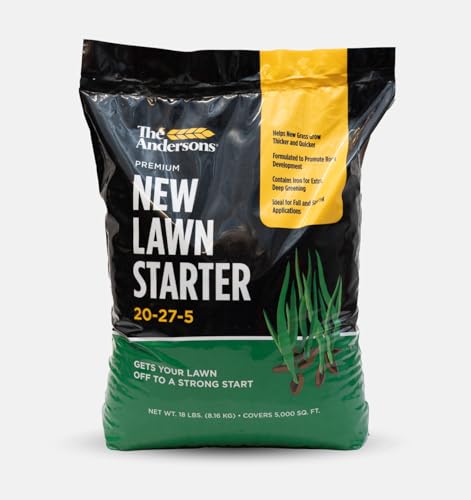
The fastest route from bare dirt to mowable grass — with 27 phosphorus versus 13 in the budget pick.
The Andersons 20-27-5 is the highest phosphorus concentration in this lineup — a 20-27-5 ratio that pushes roots harder than any other pick here. That middle 27 number is higher than Fertilome’s 13 in the 9-13-7 formula, and owners mention visible results fast: one reviewer noted they “was able to get grass in just over a week.” The 18-pound bag covers 5,000 square feet, making it a compact but potent option for a standard lawn.
The Andersons formula packs quick- and slow-release nitrogen plus 1% iron for deep greening. Iron gives a dark green color without pushing excessive top growth that would outrun the root system. The bag is safe for all turf types, so it works whether you are seeding Kentucky bluegrass, tall fescue, or a custom blend.
One reviewer combined it with dethatching, overseeding, and peat moss and reported significantly improved results over Milorganite alone. The trade-off is a higher phosphorus content than some local regulations allow in certain areas — check your state’s phosphorus restrictions before buying if you are in a region with lawn fertilizer limits.
Fast and dense results
- 20-27-5 ratio is the highest phosphorus in the list — excellent for root establishment
- Contains 1% iron for extra deep greening without excessive nitrogen
- Real customers note grass in just over one week
Where it trips
- High phosphorus may be restricted in some states
- Only covers 5,000 sq ft vs Lesco’s 12,000 sq ft for a similar price
Reach for this if: you want the absolute fastest germination and deepest root development, especially in spring or fall seeding projects.
Look elsewhere if: your local county bans high-phosphorus lawn fertilizers — the Jonathan Green 12-18-8 is a slightly lower alternative.
3. Jonathan Green Green-Up Lawn Food for Seeding & Sodding (12-18-8)
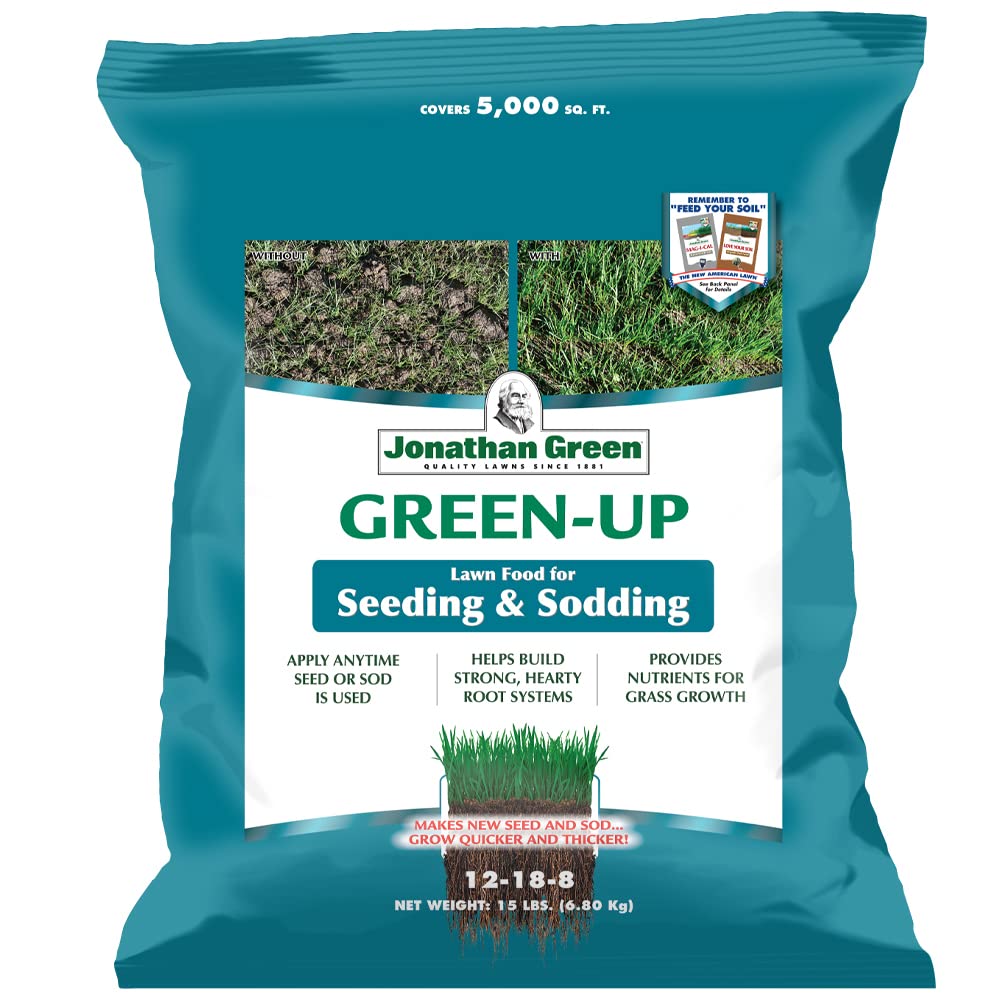
A match for seeding shady spots — one buyer saw 90% coverage in 4 weeks from seed.
The Jonathan Green 12-18-8 formula is designed for the day you seed or lay sod — you apply it the same day you plant. It contains humates, which are organic compounds that help the soil hold onto nutrients longer so your new seedlings get a consistent supply. Reviewers point out “90% coverage of new lawn in 4 weeks from seed, using Black Beauty Original,” and one reviewer in Minnesota noted it grows well in shade, which is a tough environment for many starter fertilizers.
At 15.2 pounds versus the Lesco 50-pound bag, this is a much easier choice for homeowners without a heavy-duty spreader or a truck to haul it. The 12-18-8 ratio is rich in phosphorus for root formation but lower in total nitrogen than the Andersons, which reduces the risk of burning new seedlings. The bag feeds for up to two months, so you get sustained growth without reapplying.
One buyer mentioned it pairs perfectly with Jonathan Green’s Black Beauty grass seed line, creating a matched ecosystem of seed and feed.
Built for seed success
- Apply the same day as seeding or sodding with no wait time
- Real buyer saw 90% lawn coverage in 4 weeks from seed
- Works well in partial shade — rare for starter fertilizers
The cost trade-off
- Higher per-pound cost than Fertilome and some competitors
- 15.2 lb bag is small for large yards over 5,000 sq ft
Best fit: homeowners with shaded sections or anyone pairing it with Jonathan Green grass seed. The ecosystem approach delivers consistent results.
skip it if: you want to cover more than 5,000 sq ft — the Lesco covers 12,000 sq ft in one bag.
4. Lawn Synergy Starter Fertilizer 15-20-10 (18 lb)
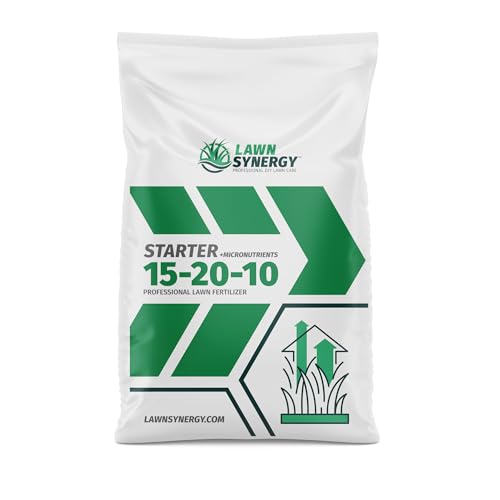
A professional-grade blend that skips filler and feeds roots consistently — less burn than the Andersons 20-27-5.
The Lawn Synergy 15-20-10 formula is sold directly to homeowners but is the same proprietary blend used by lawn care pros, according to the brand. It includes slow-release XCU nitrogen (a coated form of nitrogen that dissolves slowly over time), ammonium sulfate for quick green-up, and iron for color. The 15-20-10 ratio is slightly higher in phosphorus than the Jonathan Green but lower than the Andersons — a middle ground that still drives strong root growth.
Buyers mention it “handled easily in my spreader” and produces a “nice dark green” color. The granules are described as clean and easy to spread, reducing the frustration of clumpy or uneven coverage.
Like the Lesco product, the Lawn Synergy brand name overlaps with Lawn Synergy’s own starter fertilizer, which can create some confusion when shopping. One buyer praised that the bag contained no filler or weed seed, unlike some cheaper seed-and-feed combos. The price is higher per square foot covered than the Fertilome, but you get a more concentrated, professional-grade nutrient package.
Why pros like it
- XCU slow-release nitrogen for steady feeding without burn
- Less filler means more active nutrients per pound
- Smooth-flowing prills (granules) work with any spreader type
One practical limit
- Covers only 4,500 sq ft — less than the 5,000 sq ft from Fertilome
- Price per square foot is higher than mid-range options
Choose this if: you want a granular, professional-grade starter that won’t burn new seedlings and keeps feeding for weeks.
Skip if: your budget is tight — the Fertilome 9-13-7 covers more area per dollar spent.
5. Fertilome New Lawn Starter Fertilizer 9-13-7 (20 lb)
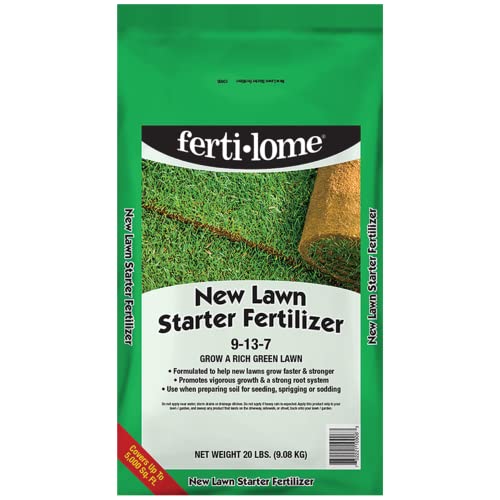
Gets the basics right without the premium price tag — same 5,000 sq ft coverage as the Andersons.
The Fertilome 9-13-7 is the entry-level workhorse of this list. It contains 13% phosphate (phosphorus, a form of the nutrient that plants can absorb) to promote strong root growth, and the 20-pound bag covers 5,000 square feet — the same coverage as the Jonathan Green and Andersons products. Buyers confirm the “balanced 9-13-7 NPK promotes strong roots and growth” and note it produces a “dark rich green” lawn when applied correctly.
One owner reported that the granules are larger than Scott’s product, which means a slower release rate and less risk of burning new seedlings. That larger-granule design also means it spreads easily through a drop spreader or broadcast spreader without clumping. You need to apply 4 pounds per 1,000 square feet, so the math is straightforward: the whole 20-pound bag covers exactly 5,000 square feet.
The trade-off is the lowest NPK ratio here — 9-13-7 versus the Andersons’ 20-27-5. For a small patch or a budget-conscious project, it works great. For a large lawn where you want maximum growth speed, the higher-concentration options deliver faster visible results.
Smart value pick
- 20 lb bag covers 5,000 sq ft — same coverage as high-end bags at a lower cost
- Larger granules mean slower release and lower burn risk
- Proven results — real buyers see dark green grass and filled weak spots
Where it cuts corners
- 9-13-7 ratio is the least concentrated in this list, versus the Andersons’ 20-27-5
- Requires dry storage and may need multiple applications for full-season feeding
Best for: new homeowners on a budget or small re-seeding projects where you do not need high-concentration professional-grade feed.
Not ideal for: large spring installations or anyone wanting the fastest possible greening — the Lesco or Andersons deliver faster results.
Understanding the Specs
NPK Ratio: The Three Numbers on the Bag
Every fertilizer bag shows three numbers separated by dashes, such as 9-13-7 or 20-27-5. The first number is Nitrogen (N) for leaf growth and green color. The second is Phosphorus (P) for root development — this is the most important number when you are starting a new lawn. The third is Potassium (K) for overall plant health and disease resistance. A starter fertilizer should always have a higher middle number (phosphorus) than a balanced all-purpose lawn food, so new grass prioritizes building deep roots over pushing tall blades.
Coverage and Bag Weight
Coverage is listed in square feet (sq ft) and tells you how much lawn area one bag treats at the recommended application rate. A typical residential bag treats 4,500 to 5,000 square feet, about the size of a quarter-acre lot. Bag weight is separate from coverage — a nutrient-dense bag might weigh 15 pounds and cover 5,000 square feet, while a less concentrated bag might need to weigh 20 pounds to cover the same area. Always check the coverage number first, not the bag weight, to make sure you buy enough for your yard.
FAQ
What is the difference between starter fertilizer and regular lawn fertilizer?
Can I use starter fertilizer on an existing lawn that is not new?
How soon after applying starter fertilizer can I seed or sod?
Will starter fertilizer burn my new grass seed?
How long does starter fertilizer take to show results?
Which NPK ratio is best for a shady lawn?
How much starter fertilizer do I need for a 10,000 square foot lawn?
Is it safe to use starter fertilizer with sod?
What is the best time of year to apply starter fertilizer?
Can I use starter fertilizer in a drop spreader?
Final Thoughts: The Verdict
For most people planting a new lawn, the best starter fertilizer for lawn is the Lesco 18-24-12 because it covers a massive 12,000 square feet in one 50-pound bag and uses stabilized nitrogen technology for longer-lasting feeding. If you want the fastest possible germination, grab the The Andersons Premium 20-27-5 with its industry-leading phosphorus levels. And for a budget-friendly project that still gets solid results, the Fertilome 9-13-7 delivers 5,000 square feet of coverage.
How We Picked
We do not accept paid placement, and we did not hands-on test every unit. Instead, we match each pick to a real buyer and use-case by comparing the manufacturers’ published specifications against the patterns in verified customer reviews — so you get each pick’s real strengths and trade-offs instead of marketing copy.
Sources & Methodology
Specifications: manufacturer listings and product documentation. Review insights: verified customer reviews, as of July 2026. Pricing: not shown on this page (it changes often); check the current price via the retailer link.
As an Amazon Associate, Lawn Gear Lab earns from qualifying purchases. This does not affect which products we feature.