7 Best 12/2 Landscape Wire | Stop Digging Twice for Wire

Specs are compiled from manufacturer listings and verified buyer reviews and can change over time — please confirm the key details on the product page before buying.

You dig a trench, lay your cable, cover it up, and hope it survives the rain, the frost, and the lawnmower. The wrong 12/2 landscape wire rots underground, cracks in the cold, or dims your lights because the voltage drop is too high. This guide cuts through the spec sheets to show you which cables actually hold up when they are buried in the dirt. For most homeowners, the Lightkiwi 100ft is the one worth buying: its 65-strand pure copper construction makes it the easiest to work with and it has safety certification for direct burial.

I’m Rikta — the founder and writer behind Lawn Gear Lab. This guide is built by comparing the manufacturers’ published specifications and the patterns across verified customer reviews, so you get each pick’s real strengths and trade-offs instead of marketing spin.

You will find seven of the best 12/2 landscape wire options ranked by real-world durability, pure copper construction, and direct burial readiness — from budget-friendly spools to premium 250-foot rolls that handle a whole yard without voltage drop. 12/2 landscape wire is the backbone of any low-voltage outdoor lighting system, and this guide makes sure you pick the one that stays buried for years, not months.
Quick Picks

How To Choose The Best 12/2 Landscape Wire

Choosing the right 12/2 landscape wire is about looking past the price tag and checking the three things that keep your lights shining season after season: the conductor material, the strand count, and the jacket durability. Here is what actually matters.

Pure Copper vs. Copper-Clad Aluminum (CCA)

Pure copper conductors deliver lower resistance and higher conductivity than CCA (copper-clad aluminum — a thin copper coating over an aluminum core). That means less voltage drop across long runs, so your lights at the end of the line are just as bright as the ones closest to the transformer. Copper is also stronger and less likely to break during installation, especially in cold weather when the wire stiffens up.

Strand Count and Flexibility

The number of strands inside each conductor determines how bendy the wire is. A 30-strand wire (common on budget cables) is stiffer and harder to snake around tight corners and tree roots. A 65-strand wire is noticeably more flexible, which makes laying it in a trench and stripping the jacket much less frustrating. If your yard has lots of curves, a higher strand count is worth the small premium.

Voltage Rating and Direct Burial Certification

Most 12/2 landscape wire is rated for 30 volts, which covers standard low-voltage transformers. Some cables carry a higher 150V or 300V rating, giving you extra headroom for longer runs or higher-wattage systems. Direct burial certification means the jacket resists moisture, UV rays, and temperature swings — typically rated from -40°F to 140°F — so the insulation does not crack in a freeze or soften in the summer sun.

Quick Comparison

On smaller screens, swipe sideways to see the full table.

Model Best For Length Voltage Rating Strands Amazon
Lightkiwi 100ft Best Overall 100 ft 30V 65 Amazon
EP 12/2 100ft High Voltage Run 100 ft 300V 30 Amazon
Sunvie 100ft Flexible Install 100 ft 30V Multi Strand Amazon
Cableague 100ft Budget Champion 100 ft 150V Multi Strand Amazon
Southwire 100ft Proven Longevity 100 ft 12 strands Amazon
Uboory 250ft Large Yard Kit 250 ft 300V Multi Strand Amazon
Lightkiwi 250ft Pro-Grade Bulk 250 ft 30V 65 Amazon

In‑Depth Reviews

Best Overall

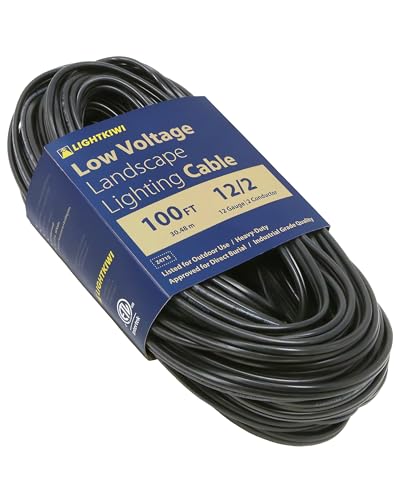
1. Lightkiwi 12/2 Landscape Wire 100ft

65 StrandsETL Listed

The flexible 65-strand spool that bends around roots without fighting you.

Getting wire to lay flat in a shallow trench around a garden bed is a lot easier when each conductor has 65 strands — the Lightkiwi 12/2 has 65 strands versus the EP 12/2 with 30 strands, both in 100-foot lengths. That extra flexibility means it twists around tree roots and paver edges without kinking or fighting back. The wire is pure bare copper, not CCA (copper-clad aluminum — a cheaper material with higher resistance), so your pathway lights at the far end of a 100-foot run stay equally bright.

The jacket is ETL listed (independently tested to meet North American safety standards) and rated for direct burial, resisting UV rays, moisture, and temperatures from the data sheet’s unspecified cold range. Buyers report it carries current fine and is easy to strip with standard tools. One owner noted the spool design helps roll out the wire conveniently, which saves time when you are laying a long run by yourself.

The trade-off is the voltage rating: 30 volts. That covers standard low-voltage landscape transformers (most run at 12V to 24V), but if you are planning a high-power system that pushes near 30 volts, you have zero headroom. For 95% of homeowners wiring path lights and spotlights, that is a non-issue.

Flexibility Advantage

  • 65 strands make it noticeably more bendable than 30-strand wires
  • Pure bare copper delivers lower resistance than CCA (copper-clad aluminum)
  • ETL listed for safety and direct burial certified
  • Lifetime satisfaction guarantee from the manufacturer

One Limitation

  • 30-volt rating leaves no extra headroom for high-voltage systems

Reach for this if: you want the easiest-to-bend 100-foot spool with pure copper and safety certification — ideal for most standard low-voltage landscape lighting jobs.

Look elsewhere if: your system runs near or above 30 volts and you want a higher voltage buffer.

High Voltage Buffer

2. EP 12/2 Low Voltage Landscape Lighting Wire 100ft

300 Volts30 Strands

The 300-volt rated cable that laughs at voltage drop on long runs.

Most 12/2 landscape wire tops out at 30 volts, but the EP 12/2 carries a 300-volt rating — 300 volts versus the Lightkiwi 100ft at 30 volts, giving you a large safety buffer for longer cable runs or systems with a high-wattage transformer pushing power through many fixtures. The conductors are 100% pure copper (not CCA) with 30 strands inside, which means it conducts well while staying stiff enough to hold its shape in a straight trench.

It is ETL listed and rated for direct burial in temperatures from -40°F to 140°F, so the jacket does not crack in a freeze or soften in direct summer sun. Owners mention it handles animals and branches without needing burial cover and that one spool worked for multiple projects. One owner mentioned they had it installed for about a year with zero issues. The main downside is the 30-strand count — it is noticeably stiffer than the Lightkiwi’s 65 strands, so routing it around tight corners in a rock garden takes more effort.

Voltage Headroom

  • Rated for 300 volts versus standard 30V landscape wire
  • Pure copper conductors for low resistance and strong current flow
  • Withstands -40°F to 140°F without cracking or softening
  • ETL listed for North American safety compliance

The Drawback

  • 30 strands make it stiffer and harder to bend than higher-strand-count wires

Choose this for: long runs or high-wattage landscape lighting systems where a 300-volt rating eliminates any worry about voltage drop.

skip it if: you have lots of tight bends in your trench layout and want a more flexible wire.

Flexible Install

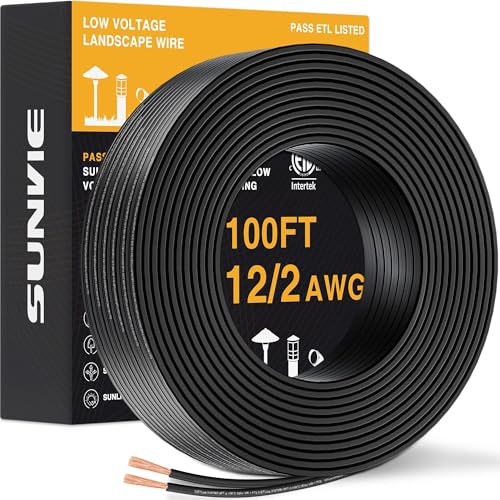
3. SUNVIE 100FT 12 Gauge Low Voltage Wire

Multi StrandETL Listed

The multi-strand spool that stays flexible in both hot and cold weather.

Sunvie designed this 100-foot wire with a multi-strand core and an improved PVC (polyvinyl chloride — a durable plastic insulation) jacket that stays flexible in hot conditions and does not turn stiff when the temperature drops. That flexibility matters when you are tucking wire into a shallow trench along a winding pathway or feeding it through conduit under a patio. The conductors are 100% pure copper, not CCA (copper-clad aluminum), so your lights at the far end of a 125-foot run maintain consistent brightness — buyers noted minimal voltage drop at that distance.

It is ETL listed and rated for direct burial, meaning the jacket resists sunlight, abrasion, and moisture. The maximum working voltage is 30 volts, which is standard for low-voltage landscape transformers. One buyer purchased it a second time because the first roll worked so well for their low-voltage lighting needs. The catch is that Sunvie does not publish a strand count, so it is hard to compare flexibility directly against the Lightkiwi 100ft (65 strands). The price lands in the mid-range, making it a solid value for homeowners who want certified pure copper without paying a premium.

All-Weather Flexibility

  • Pure copper conductors maximize conductivity and minimize voltage drop
  • PVC insulation stays flexible in hot and cold conditions
  • ETL listed for safety and direct burial certified
  • Customers note consistent brightness even at 125 feet

Missing Detail

  • Exact strand count is not specified, making flexibility comparison harder

Best for: a homeowner wiring a medium-sized yard who wants proven pure copper performance at a fair price without guessing about voltage drop.

Consider another if: you need a known 65-strand wire for maximum bendability around tight obstacles.

Budget Champion

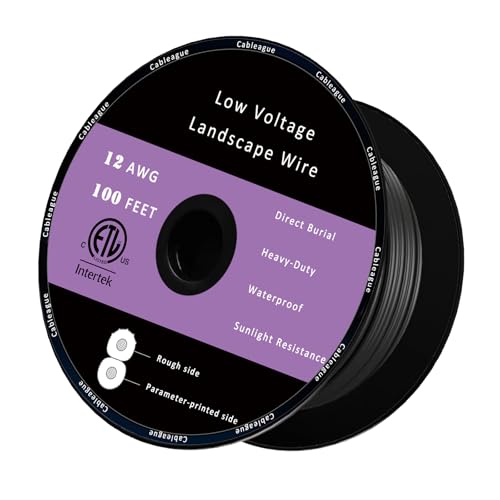
4. Cableague 12/2 Low Voltage Landscape Lighting Wire 100ft

150 VoltsETL Complied

The 150-volt wire that passed a Seattle winter underground with no issues.

The Cableague 12/2 carries a 150-volt rating — 150V versus standard 30V wires and the EP’s 300V, giving you extra headroom for long runs without paying a premium for maximum voltage. It is 100 feet of 12 AWG (American Wire Gauge — a standard wire thickness) with 2 conductors, made from stranded bare copper with PVC insulation. It is UL listed Type CL2 (a safety standard for low-voltage circuit cables) and ETL complied, meaning it meets recognized safety benchmarks.

Reviewers point out burying this wire 6 inches underground in the rainy Seattle winter for 3 months with no issues, though one buyer emphasized the need for good quality waterproof connectors at the splice points. The temperature rating is -20°C to +60°C (-4°F to 140°F), which covers most climates, but the lower end is not as cold-tolerant as the EP wire (-40°F). The price is the lowest of the 100-foot spools, making it a smart pick if you are running a shorter circuit and do not need the highest strand count or coldest temp rating.

Price-to-Voltage Ratio

  • 150-volt rating gives good headroom for most residential landscape runs
  • Stranded bare copper conductors with PVC insulation
  • UL listed Type CL2 and ETL complied for safety
  • Verified to handle wet winter ground burial (buyer-tested in Seattle)

Cold Weather Limit

  • Temperature rating starts at -4°F, not as cold-tolerant as the -40°F rated EP wire

Reach for this if: you want a low-cost 12/2 spool with a 150-volt buffer and proven real-world durability in wet climates.

Look elsewhere if: you live where ground temperatures regularly drop below -4°F and need the extra cold tolerance.

Proven Longevity

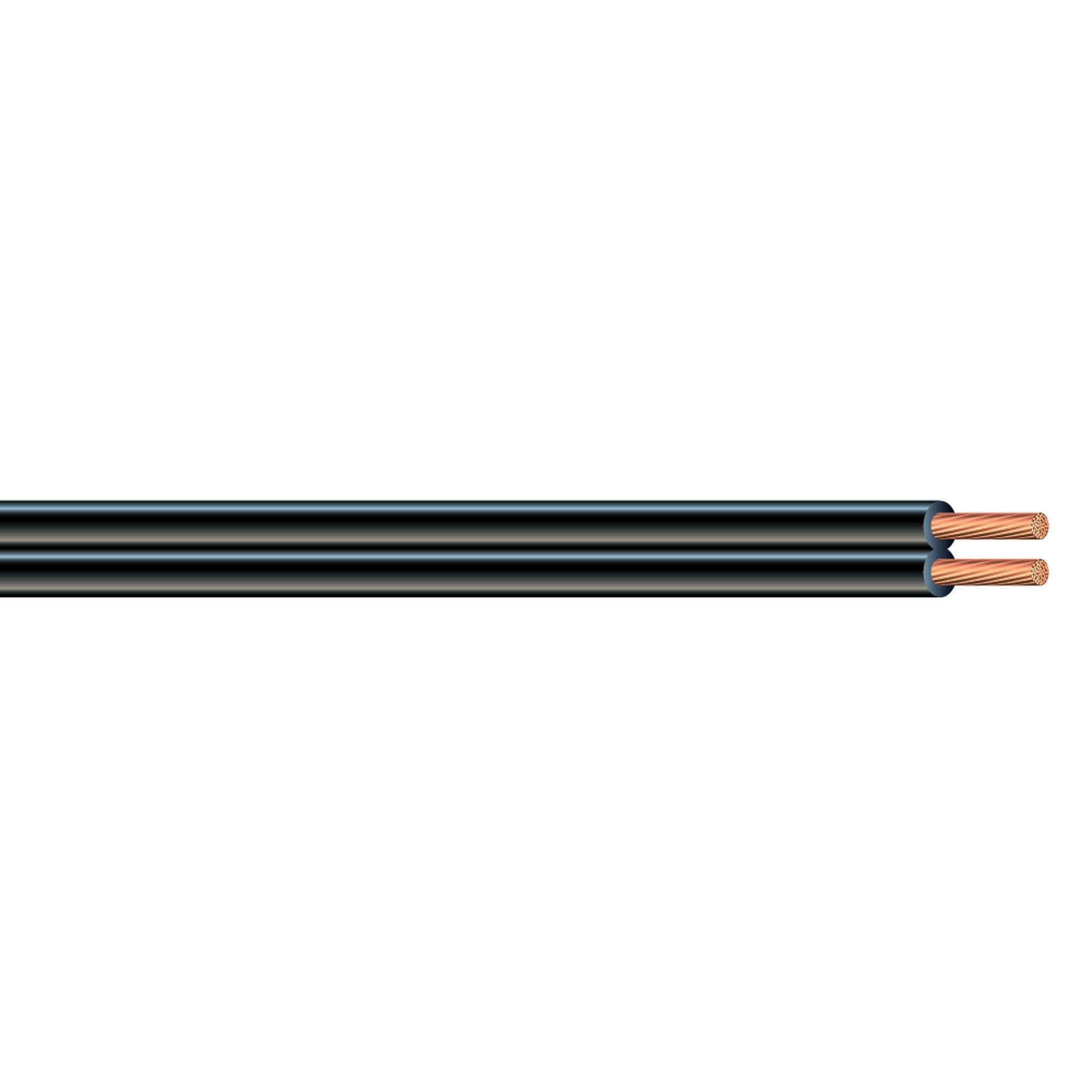
5. Southwire 55213443 100-Feet 12/2 Low-Voltage Unde

12 StrandsUL Listed

The industry-standard brand that buyers trust for 10-year reliability outdoors.

Southwire is a name contractors recognize, and this 100-foot spool of 12/2 landscape wire has the track record to match. It is UL listed (Underwriters Laboratories — a major North American safety certification), CSA certified (Canadian Standards Association), RoHS compliant (Restriction of Hazardous Substances), and Greenspec approved, making it among the most certified wires in this comparison. The wire has 12 strands and a thick vinyl jacket that is water, dust, and dirt resistant, rated for temperatures from -40°F to 140°F so it withstands both deep freezes and summer sun without cracking or softening.

Shoppers say this is the only landscape wire they have used for a decade, praising the thick 12-gauge build and excellent weather resistance over 3+ years. One owner noted the insulation is thick and the multi-stranded core strips easily with a proper tool, though the stiff wire can be hard to connect to cheap plastic connectors — they suggest separating the two conductors a bit to make the connection easier. At 6.7 pounds for the spool, it is a heavy-duty cable that feels built to last.

Certification Heavyweight

  • UL listed, CSA certified, RoHS compliant, and Greenspec approved — maximum safety compliance
  • Rated for -40°F to 140°F, handling extreme climates
  • Buyers report 3+ years of outdoor weather with no deterioration
  • Thick vinyl jacket resists water, dust, and direct sunlight

Stiff Connector Fit

  • 12-strand core is stiffer than higher-strand wires; may need effort to fit certain connectors

Pick this for: long-term reliability in extreme climates with a brand name that contractors and electricians trust for decades of use.

Consider another if: you need a very flexible wire for tight bends and low-effort stripping.

Large Yard Kit

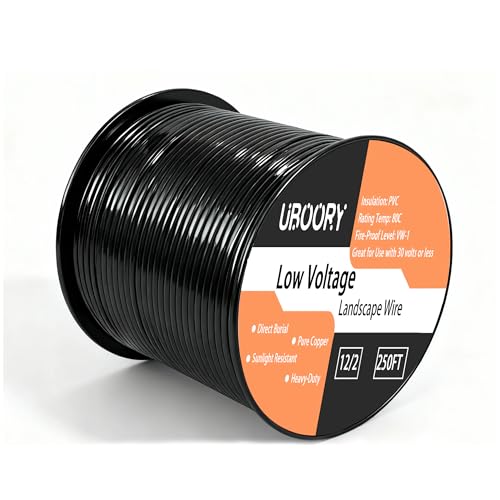
6. Uboory 12 Gauge 2 Conductor 250FT Low Voltage Landscape Wire

250 Feet300 Volts

The 250-foot bulk roll with 300-volt rating for covering a sprawling property.

When your yard spans the whole block, a 100-foot spool leaves you short halfway through the layout. The Uboory 250-foot roll gives you 250 feet versus the Lightkiwi 100ft at 100 feet, with a maximum working voltage of 300 volts — the same high-voltage capacity as the EP 12/2. That combination means you can run a single uninterrupted line across a large property without worrying about voltage drop or needing to splice multiple spools together.

The conductors are pure bare copper (not CCA) with a heavy-duty PVC jacket that protects against tearing, cuts, and scrap. It is built for direct burial, resisting sunlight, moisture, and wear. Owners mention it is high quality and durable, with true 12-gauge thickness, sturdy insulation, and easy stripping without fraying. One owner found the wire held its shape well and delivered stable power with consistent brightness for outdoor lighting. The brand offers a lifetime warranty, which adds confidence for a long-term install. The main consideration is the bulk — a 250-foot spool is heavier and takes more space to store than a 100-foot roll.

Long Run Capacity

  • 250 feet covers large yards without splicing multiple spools
  • 300-volt rating for high-power systems and minimal voltage drop
  • Pure bare copper with a durable PVC jacket
  • Lifetime warranty from the manufacturer

Bulk Factor

  • Larger and heavier spool requires more storage space and effort to handle

Reach for this if: you are wiring a large property and want a single continuous 250-foot run with a high 300-volt buffer and lifetime warranty backing.

Look elsewhere if: you only need a short run and do not want to store a bulky spool.

Pro-Grade Bulk

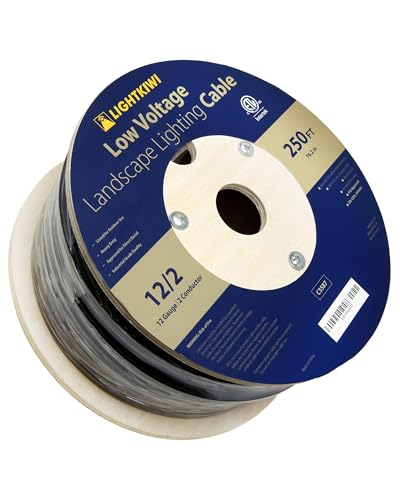
7. Lightkiwi 12/2 Landscape Wire 250ft

65 Strands250 Feet

The same 65-strand flexibility as the 100ft version but stretched to 250 feet.

If you already know you want the Lightkiwi’s 65-strand flexibility for easy trenching but your project calls for a longer run, this 250-foot spool delivers exactly that — the same 65 strands per conductor and pure bare copper construction as the Lightkiwi 100ft, with a 30-volt rating for standard low-voltage landscape transformers. The 65-strand count gives it 65 strands versus the Southwire cable’s 12 strands, making it easier to snake around flower beds, step stones, and tight corners across a full-acre layout.

It is ETL listed and rated for direct burial above or below ground, with a heavy-duty jacket that resists sunlight, dust, moisture, and extreme environments. The manufacturer backs it with a lifetime satisfaction guarantee. Customers note it carries current fine, strips easily, and seems durable for outdoor use. One owner noted it worked well and was good value compared to other options. The catch is the same as the 100ft version: the 30-volt rating leaves no headroom if you are pushing near the limit with a high-wattage transformer, but for standard 12V to 24V landscape lighting that is rarely an issue.

Flexible Bulk Coverage

  • 65 strands per conductor for maximum flexibility on long, winding runs
  • Pure bare copper minimizes voltage drop across 250 feet
  • ETL listed and direct burial certified for underground installation
  • Lifetime satisfaction guarantee from the manufacturer

Voltage Ceiling

  • 30-volt rating offers no extra headroom for higher-voltage systems

Choose this for: large-scale landscape lighting projects where 65-strand flexibility and 250 feet of pure copper make installation smooth and voltage drop negligible.

Look elsewhere if: you need a higher voltage rating than 30V for a non-standard transformer setup.

Understanding the Specs

Strand Count

The number of small copper wires twisted together inside each conductor. A higher strand count (like 65) makes the wire more flexible and easier to bend around tight corners and tree roots without kinking. A lower strand count (like 12 or 30) makes the wire stiffer, which can be harder to route but sometimes easier to strip cleanly with a wire stripper. For most residential landscape layouts with curves, a higher strand count is worth it.

Voltage Rating

The maximum voltage the wire insulation can safely handle. Standard low-voltage landscape transformers run at 12V to 24V, so a 30-volt wire covers most setups. A 150V or 300V rating gives you a big safety buffer — useful for very long cable runs where resistance could push voltage higher, or if you are using a high-wattage transformer. A higher voltage rating does not make your lights brighter; it just means the insulation can handle more electrical stress.

FAQ

Can I bury 12/2 landscape wire directly underground without conduit?
Yes, if the wire is rated for direct burial. All the products in this guide are direct burial rated, meaning the jacket is thick enough to resist moisture, soil acidity, and minor abrasion without needing a protective conduit. Check the product description for “direct burial” wording — standard speaker wire or indoor electrical wire should never be buried without conduit.
How deep should I bury 12/2 landscape wire?
For low-voltage landscape lighting (under 30 volts), most local codes require a minimum burial depth of 6 inches. Some contractors bury it 8 to 12 inches for extra protection against shovels and aerators. Always check your local electrical code for the exact requirement in your area.
What is the difference between 12/2 and 16/2 landscape wire?
12/2 uses 12-gauge conductors (thicker wire, lower resistance, handles more current), and 16/2 uses 16-gauge conductors (thinner wire, higher resistance, less current capacity). For long runs over 50 feet or systems with many lights, 12/2 is the better choice because it minimizes voltage drop. For very short runs with just a few lights, 16/2 can work but is not as future-proof.
How long does 12/2 landscape wire last buried underground?
With pure copper conductors and a direct burial rated jacket, 12/2 landscape wire typically lasts 10 to 20 years underground. The PVC jacket resists moisture and soil chemicals, but physical damage from digging or rodent chewing can shorten that. Reviewers point out Southwire wire holding up for over 3 years with no issues, and EP wire showing zero problems after a year.
Can I use 12/2 landscape wire for outdoor speakers?
Yes. 12/2 low-voltage landscape wire is thick enough to carry speaker-level audio signals over long distances in a yard. Several buyers in the Southwire reviews noted using it for outdoor speakers for up to a decade. Just make sure the wire is rated for direct burial if you plan to hide the cable underground.
Is CCA (copper-clad aluminum) wire bad for landscape lighting?
CCA wire has higher electrical resistance than pure copper, which means more voltage drop over long runs — your lights at the far end of a 100-foot run will be noticeably dimmer. CCA is also more brittle and can break more easily during installation, especially in cold weather. Pure copper is a better long-term investment for landscape lighting.
How do I connect 12/2 landscape wire to my transformer?
Strip about 1/2 inch of the PVC jacket from each conductor using a wire stripper tool — not a knife, which can nick the copper. Insert the bare copper ends into the transformer’s terminal screws or push connectors, matching polarity (most wires have one conductor marked with a ridge or a stripe). Tighten the screws securely or push the connectors until they lock.
What does ETL listed mean for landscape wire?
ETL listed means the wire has been independently tested by Intertek (a safety certification organization) and meets North American safety standards for electrical products. It is equivalent to UL listing in terms of safety rigor. ETL listed wire has passed tests for insulation strength, flame resistance, and temperature tolerance, so it is a reliable mark of quality.
Can I splice 12/2 landscape wire if my spool is not long enough?
Yes, you can splice two lengths of 12/2 wire using waterproof underground splice connectors designed for direct burial. Use connectors rated for 12-gauge wire and seal the connection with silicone-filled gel caps or heat-shrink tubing to keep moisture out. Bury the splice at least 6 inches deep and consider marking the location with a small flag in case you need to dig it up later.
Is higher strand count always better for landscape wire?
Higher strand count (like 65) makes the wire more flexible and easier to route around obstacles, but it does not affect electrical conductivity — a 12-gauge wire with 12 strands carries the same current as one with 65 strands. The trade-off is cost: higher strand count wires tend to cost a bit more. For straight runs in open soil, a lower strand count works fine. For winding paths around gardens, the extra flexibility is worth it.

Final Thoughts: The Verdict

For most people, the 12/2 landscape wire winner is the Lightkiwi 100ft because its 65-strand pure copper construction makes it the easiest to work with while carrying safety certification for direct burial. If you want extra voltage headroom for long runs or a high-power system, grab the EP 12/2 100ft with its 300-volt rating. And for covering a large property without splicing, the standout is the Lightkiwi 250ft 65-strand spool for flexible, long-run installation.

How We Picked

We do not accept paid placement, and we did not hands-on test every unit. Instead, we match each pick to a real buyer and use-case by comparing the manufacturers’ published specifications against the patterns in verified customer reviews — so you get each pick’s real strengths and trade-offs instead of marketing copy.

Sources & Methodology

Specifications: manufacturer listings and product documentation. Review insights: verified customer reviews, as of July 2026. Pricing: not shown on this page (it changes often); check the current price via the retailer link.

As an Amazon Associate, Lawn Gear Lab earns from qualifying purchases. This does not affect which products we feature.

Please use a real email you check. If it's fake or mistyped, your message won't reach us and we can't reply — wrong addresses are rejected automatically.

Leave a Comment

Your email address will not be published. Required fields are marked *