
Specs are compiled from manufacturer listings and verified buyer reviews and can change over time — please confirm the key details on the product page before buying.
Your loquat tree needs feeding, but the wrong fertilizer can burn its shallow roots or push leaves instead of fruit. Many general-purpose plant foods overshoot on nitrogen (shorthand for the “N” in “NPK” ratings, the nutrient that drives leaf growth) or lack micronutrients such as zinc, iron, and manganese that prevent the classic yellowing between leaf veins called interveinal chlorosis (a condition where leaf veins stay dark green but the area between them turns pale). This guide matches specific NPK ratios—the three hyphenated numbers on a bag (for example 6:2:4)—organic options, and application methods to what your loquat tree actually demands.
I’m Rikta — the founder and writer behind Lawn Gear Lab. This guide is built by comparing the manufacturers’ published specifications and the patterns across verified customer reviews, so you get each pick’s real strengths and trade-offs instead of marketing spin.
Below you will find six fertilizers real loquat and citrus growers rely on. They are ranked by how well their specifications fit a fruit tree’s nutrient needs, along with honest trade-offs and application tips you need before buying the fertilizer for loquat tree care.
Quick Picks
- Down To Earth All Natural Fertilizers Organic Fruit Tree 6-2-4, 5 lb — Top Performer
- Espoma Organic Tree-Tone 6-3-2, 36 lb. Bag — Orchard Scale
- Jobe’s Organics Fruit & Citrus Tree Fertilizer Spikes, 3-5-5, 6 Spikes — Best Value
- FoxFarm Happy Frog Fruit & Flower Fertilizer, 4 lb — Bloom Booster
- HiThrive 32oz Citrus Fertilizer & Fruit Tree Fertilizer (Makes 64 Gallons) — Fast Fix
- Jobe’s Garden Fertilizer Spikes, 8-11-11, 5 Count — Budget Champion
How To Choose The Best Fertilizer For Loquat Tree
A loquat tree is a moderate feeder — it is not a nitrogen-hungry lawn grass, but it does need a balanced supply of phosphorus (the middle number in NPK, supporting roots and fruit set) and potassium (the third number, for overall health and fruit quality) to set fruit. It also needs a steady trickle of nitrogen to support leaf and branch growth without overwhelming the roots. Choosing the right fertilizer depends on matching three things: the NPK ratio, the release speed, and the presence of trace minerals that loquats seem particularly sensitive to.
NPK ratio: why 6-2-4 or 3-5-5 fits a loquat better than a general 10-10-10
Loquat trees produce fruit in winter and early spring, which means the energy demand for flower and fruit formation overlaps with cooler soil where bacteria break down organic matter slowly. A ratio with moderate nitrogen and higher phosphorus (the middle number) and potassium (the third number) — such as 3-5-5 or 6-2-4 — supports root development and fruit quality without pushing excessive leafy growth that attracts pests. General 10-10-10 blends are too strong for young or potted loquats and can cause leaf burn or salt buildup.
Slow release vs liquid: matching the application to your tree’s size and location
Spikes and granular slow-release formulas feed the tree gradually over several months, which works well for in-ground loquats that need one or two feedings per year. Liquid concentrates (mixed per gallon of water) act faster and are easier to adjust for potted loquats or for correcting a visible deficiency — buyers report that a liquid feed can green up yellow leaves within a week. The trade-off is that liquids require more frequent reapplication and accurate measuring to avoid overdoing it.
Micronutrients: the hidden cause of yellow loquat leaves
Loquats are prone to interveinal chlorosis — yellow leaves with green veins — when the soil lacks zinc, iron, or manganese. Many citrus-specific fertilizers include these trace elements because citrus trees share the same sensitivity. If your loquat’s new leaves come out pale or the tree drops fruit early, a fertilizer that lists magnesium, sulfur, iron, manganese, and zinc on the label is a smarter pick than a basic N-P-K formula.
Quick Comparison
On smaller screens, swipe sideways to see the full table.
| Model | Best For | NPK Ratio | Item Weight | Number of Items | Amazon |
|---|---|---|---|---|---|
| Down To Earth 6-2-4 | In-ground mature loquats | 6:2:4 | 5 Pounds | 1 | Amazon |
| Espoma Tree-Tone 6-3-2 | Large orchards and shade trees | 6:3:2 | 36 Pounds | 1 | Amazon |
| Jobe’s Organics Spikes 3-5-5 | Container and potted loquats | 3:5:5 | — | 6 | Amazon |
| FoxFarm Happy Frog 4 lb | Quick flower and fruit support | — | 4 Pounds | 1 | Amazon |
| HiThrive Liquid 32 oz | Reversing yellow leaves fast | 1:128 | 1.2 Pounds | 1 | Amazon |
| Jobe’s Spikes 8-11-11 | Budget-friendly twice-a-year feed | 8:11:11 | 0.4 Kilograms | 5 | Amazon |
In‑Depth Reviews
1. Down To Earth All Natural Fertilizers Organic Fruit Tree 6-2-4, 5 lb

A 5-pound organic powder that covers a mature loquat for a full season with one application.
You get a balanced 6:2:4 NPK ratio that delivers moderate phosphorus and potassium for fruit development without the excessive nitrogen surge that pushes out soft, pest-prone leaves. The formula includes feather meal, fish bone meal, kelp meal, and langbeinite (a natural mineral source of potassium and magnesium), plus added calcium carbonate for stronger fruit cell walls. One buyer reports their crabapple tree showed “healthy leaves, abundant berries, and stronger roots” after two years of struggling.
At 5 pounds it is heavier than the 1.2-pound HiThrive liquid, which makes this the better pick if you have multiple in-ground loquats or a larger backyard orchard. You work the powder into the top couple inches of soil around the drip line (the circle under the tree’s outermost branches where feeder roots are active) and water it in — no mixing gallons of water. The bag is certified organic (OMRI-listed, meaning it meets the Organic Materials Review Institute standards), so it fits into an organic gardening routine.
Organic fruit specialist
- 6:2:4 ratio matches the nutritional demands of a fruiting loquat
- 5-pound box covers multiple trees or a full season
- Calcium content improves fruit firmness and disease resistance
Slow nutrient release
- Powder requires working into the soil — not a set-and-forget spike
- Strong natural smell from feather and bone meal can attract animals if left on the surface
Organic orchards: you have an established in-ground loquat and want a single organic feed that covers spring and fall without constant reapplication.
Quick feeders: you need a quick foliar fix for yellow leaves — this works slower than liquid concentrates like the HiThrive.
2. Espoma Organic Tree-Tone 6-3-2, 36 lb. Bag

A 36-pound organic bag sized to feed multiple loquats or an entire home orchard.
If you have several loquat trees, the 36-pound volume makes this the most cost-efficient choice per pound. The 6-3-2 NPK analysis includes 5% calcium, which loquats use to build strong cell walls and reduce fruit cracking. Espoma has made organic fertilizers since 1929, and this blend is approved for organic gardening with no sludges or toxic ingredients. Reviewers report it produced “spectacular blooms” on an 80-year-old White Oak and works well on apple, pear, and peach trees.
The granules are ready to use with no mixing — you spread them under the tree’s drip line and water in. The trade-off is physical: at 36 pounds this bag is heavy. It suits a gardener who wants to buy once and store for a couple of seasons rather than someone with a single small potted loquat.
Balanced NPK formula
- 36 pounds provide multiple applications for several trees
- Calcium content helps prevent fruit split in loquats
- Approved for organic production — no synthetic chemicals
Bulk bag weight
- Heavy bag is cumbersome for gardeners with limited mobility or storage
Large gardens: you maintain a small orchard or multiple loquat trees and want an organic granular feed you can store and use for years.
Small spaces: you only have one potted loquat on a balcony — the bag is overkill and the granules can be messy to measure in small amounts. The Jobe’s 3-5-5 spikes are far neater for a single potted tree.
3. Jobe’s Organics Fruit & Citrus Tree Fertilizer Spikes, 3-5-5, 6 Spikes

Pre-measured organic spikes that eliminate guesswork — tap them in and forget for months.
These spikes use a 3:5:5 NPK ratio (higher phosphorus and potassium relative to nitrogen), which is ideal for loquats entering their fruiting phase. Each package comes with 6 spikes; you push them into the soil around the tree. The spikes are OMRI-listed for organic gardening and include Jobe’s proprietary Biozome — a microorganism archaea that the brand says breaks down material faster to release nutrients. A reviewer with three potted Meyer lemon trees says “I get an abundance of juicy, sweet lemons every year” using these. Because the spikes release slowly, they are safer for shallow loquat roots than drenching with liquid concentrate.
The catch is placement: timing and distance from the trunk matter. One reviewer noted initial issues from incorrect placement and timing (too close to the trunk, applied mid-season), which resolved when they followed the package directions for late fall and early spring, keeping spikes outside the root zone.
Easy spike application
- Zero mixing, zero measuring — just tap in with a hammer
- 3:5:5 ratio supports fruit set without nitrogen overload
- Organic with Biozome for faster soil breakdown
Limited root zone
- You need 6 spikes per tree per application; a single pack covers one loquat
- Incorrect placement (too close to trunk) can delay results
Container trees: you want the easiest, cleanest application for a potted loquat or a single in-ground tree — no scooping, no spilling, no mixing.
Deep soil: you have multiple large loquats — you will need several packs and the cost per tree adds up compared to bulk powder like the Down To Earth 6-2-4.
4. FoxFarm Happy Frog Fruit & Flower Fertilizer, 4 lb

A phosphorus-rich granular feed designed to push loquats into heavy flowering and fruit set.
FoxFarm’s Happy Frog line is built around abundant flowering and fruiting — the rich phosphorus content supports vibrant blooms, and the granules supply nitrogen for sustained growth throughout the season. It also includes mycorrhizal fungi (beneficial root fungi that hook onto loquat roots), which increase root efficiency and water absorption. Owners mention it “revived banana trees after cold winter” and produced healthier, more vigorous plants. The 4-pound bag is easy to handle — just sprinkle it around the drip line and water.
Because the label does not print the exact NPK ratio on the spec sheet, you are trusting FoxFarm’s general formula for fruit and flowering plants. The lack of a specific N-P-K makes it harder to compare directly to Down To Earth’s 6:2:4 or Jobe’s 3:5:5. It works best as a mid-season supplement rather than a primary annual feed if you want precise nutrient control.
Blooms booster
- Mycorrhizal fungi improve loquat root health and water uptake
- Granules are ready to use — no mixing, no odor
- Customers note it revived stressed trees after cold weather damage
Small package
- Exact NPK ratio is not listed on the spec sheet — harder to dial in precision
Flowering plants: your loquat tree is established but not flowering well, and you want a root-friendly fungi boost alongside the nutrients.
Heavy feeders: you need a precise, repeatable NPK ratio for young or potted loquats — you will get better control from a labeled powder or spikes like the Down To Earth 6-2-4.
5. HiThrive 32oz Citrus Fertilizer & Fruit Tree Fertilizer (Makes 64 Gallons)
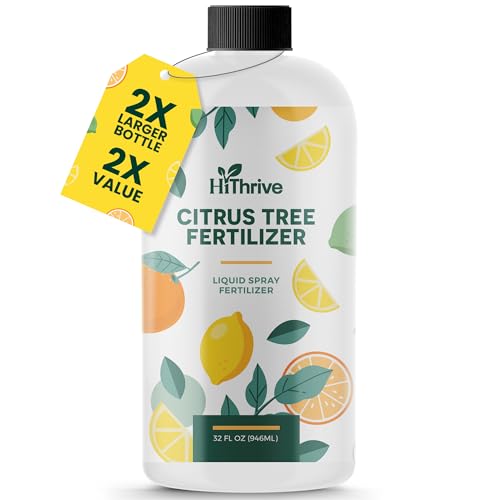
A liquid concentrate that greens up yellow loquat leaves within a week when standard fertilizers failed.
This liquid is designed to address nutrient deficiencies fast — it contains magnesium, sulfur, iron, manganese, and zinc, all micronutrients that loquats need to prevent interveinal chlorosis (yellow leaves with green veins). You mix 1 tablespoon per gallon of water; for a visible deficiency, the label says to use 2 tablespoons per gallon and apply twice monthly until the problem resolves. One buyer mentioned it “revived a miniature orange tree with yellow leaves after standard fertilizer failed; leaves turned green, shiny, and healthy.” A 32-ounce bottle makes 64 gallons of tree food, so it goes a long way for a single loquat.
Unlike the 5-pound Down To Earth powder, this liquid weighs 1.2 pounds and requires mixing — it is not a set-and-forget option. You need to apply it every one to two weeks during the growing season to keep the benefit going, which is more labor than a spike or a granular feed. For a potted loquat that you can water easily, the trade-off is acceptable; for a mature in-ground tree, you might prefer a slower-release base feed.
Deficiency corrector
- Targeted micronutrients (iron, zinc, manganese) fix yellow leaves fast
- 32 oz makes 64 gallons — high value per bottle
- Safe for potted trees; cannot burn roots when mixed correctly
Liquid concentrate
- Requires mixing and repeat applications every 1-2 weeks
- Not a complete slow-release feed — best used alongside a granular base like the Down To Earth 6-2-4
Nutrient fix: your loquat has yellowing leaves right now and you want a targeted rescue treatment with micronutrients that works within a week.
General use: you want a once-and-done seasonal feed — this liquid needs frequent reapplications to maintain nutrients.
6. Jobe’s Garden Fertilizer Spikes, 8-11-11, 5 Count

A no-frills spike that gets the job done for budget-conscious loquat owners willing to feed twice a year.
These Jobe’s spikes carry an 8-11-11 NPK — the nitrogen is higher than the organic 3-5-5 spikes from Jobe’s above, but the phosphorus and potassium are still strong enough to support fruit production. Each package contains 5 spikes, and application is the same hammer-and-forget method the brand is known for. A reviewer with a Meyer lemon tree noted: “I bought a Meyer Lemon tree and then learned I need to feed it regularly. Didn’t feel like mixing a water based food, or doing it weekly so I got these spikes. So far, my tree loves them.” The spikes are produced to avoid wasteful runoff, mess, hazards, and smells, which is a real advantage if you are feeding a tree near a patio or walkway.
For a loquat, the higher nitrogen (8) can push leafy growth at the expense of fruit if the tree is already in rich soil. It is a budget-friendly entry point when you have multiple small citrus or fruit trees and just need a reliable baseline feed. Two packs (10 spikes) cover a medium loquat for a full year with spring and fall applications.
Budget friendly
- Lowest cost per spike — economical for multiple trees
- No mixing, no mess, no runoff — hammer in and done
- 8-11-11 provides a solid phosphorus boost for fruiting
Low nitrogen
- Higher nitrogen may push leaf growth over fruit on young loquats
- Only 5 spikes per pack — you need two packs per tree per year
Cost saving: you are on a budget and need a simple, clean spike feed for a young or established loquat without measuring or mixing.
High growth: your loquat is in nutrient-poor sandy soil or has shown yellow leaves — you would get better results from the HiThrive liquid concentrate with trace micronutrients first.
Understanding the Specs
NPK ratio: what the three numbers actually mean for a loquat
The three hyphenated numbers (8-11-11, 3-5-5, 6-2-4) represent nitrogen (N), phosphorus (P), and potassium (K) by percentage. Nitrogen drives leaf and branch growth — good for young loquats but too much can delay fruiting. Phosphorus supports root development and flower/fruit formation, which is why a loquat in its fruiting years benefits from a higher middle number. Potassium improves overall plant health, disease resistance, and fruit quality. For loquats, a ratio where phosphorus and potassium are equal to or higher than nitrogen (like 3-5-5 or 6-2-4) generally produces more fruit and better color than a high-nitrogen lawn fertilizer.
Organic vs synthetic: release speed and root safety
Organic fertilizers (feather meal, fish bone meal, kelp meal, langbeinite) release nutrients slowly as soil microbes break them down. This is safer for loquats’ shallow root systems because the nutrients become available over weeks rather than all at once. Synthetic fertilizers (often labeled as “water-soluble” or “instant”) deliver a quick green-up but can burn roots if applied too heavily on dry soil. The trade-off is speed — organics take longer to show results (2-4 weeks) while synthetics can green leaves in days. For a loquat tree that is already healthy, the slow-release organic path reduces the risk of overfeeding and matches the tree’s natural growth rhythm.
FAQ
When should I fertilize a loquat tree for best results?
Can I use a general-purpose 10-10-10 fertilizer on my loquat tree?
How do I tell if my loquat tree has a micronutrient deficiency versus a nitrogen deficiency?
Is it safe to use spikes on a potted loquat tree?
Should I water my loquat tree before or after applying fertilizer?
How far from the trunk should I place fertilizer spikes or granules?
Can I combine a slow-release granular feed with a liquid micronutrient feed?
Is there a difference between citrus fertilizer and loquat fertilizer?
What does “time-release” mean on a fertilizer label?
How long after fertilizing will I see results on a loquat tree?
Final Thoughts: The Verdict
For most loquat owners, the fertilizer for loquat tree winner is the Down To Earth All Natural Fertilizers Organic Fruit Tree 6-2-4 because its 6:2:4 ratio matches what a fruiting loquat actually needs, the 5-pound box lasts a full season, and the organic calcium supports fruit quality without burning roots. If you want a zero-mess spike solution for a potted loquat, grab the Jobe’s Organics 3-5-5 Spikes. And for reversing yellow leaves fast with targeted micronutrients, the HiThrive 32 oz Liquid Concentrate is the best fix to buy alongside a base feed.
How We Picked
We do not accept paid placement, and we did not hands-on test every unit. Instead, we match each pick to a real buyer and use-case by comparing the manufacturers’ published specifications against the patterns in verified customer reviews — so you get each pick’s real strengths and trade-offs instead of marketing copy.
Sources & Methodology
Specifications: manufacturer listings and product documentation. Review insights: verified customer reviews, as of July 2026. Pricing: not shown on this page (it changes often); check the current price via the retailer link.
As an Amazon Associate, Lawn Gear Lab earns from qualifying purchases. This does not affect which products we feature.