
Specs are compiled from manufacturer listings and verified buyer reviews and can change over time — please confirm the key details on the product page before buying.
You want soil that grows stronger plants, but buying biochar on Amazon is confusing — bags and buckets look similar until you see how each is made. The big difference is whether the product comes pre-loaded with living microbes (so it feeds roots right away) or if it is just raw charcoal that needs to be soaked in compost tea first. This guide sorts the products that give you fast results from the ones that need extra work, using only the published specs and patterns from real buyer reviews.
I’m Rikta — the founder and writer behind Lawn Gear Lab. This guide is built by comparing the manufacturers’ published specifications and the patterns across verified customer reviews, so you get each pick’s real strengths and trade-offs instead of marketing spin.
Whether you are building raised beds for vegetables or nursing a single houseplant, the right choice depends on your soil’s starting point. Here is how to choose the best biochar for gardening that matches your dirt and your workload.
Quick Picks
- Char Bliss (24 Qts) – Organic Biochar Soil Amendment for Plants & Gardening — Best Overall
- FOOP Organic Inoculated Biochar – 128oz Bag — Best for Instant Results
- FOOP Organic Inoculated Biochar – 64oz Bag — Best for Small Beds
- Rosy Soil Biochar Booster, 8 Quarts — Best Living Soil Blend
- Superchar – Premium Charcoal Soil Amendment – 128oz & 24oz Bundle — Best for Large Gardens
- Old Potters Premium Biochar Soil Enhancer – 24 Quarts — Best Bulk Economy
- The Andersons HumiChar Organic Soil Amendment – 12 lb — Best for Lawns
How To Choose The Best Biochar For Gardening
The biggest mistake gardeners make is buying raw, uncharged biochar and mixing it straight into the soil. Raw biochar acts like a dry sponge — it will pull nutrients and moisture away from your plant roots until it soaks up enough to be full. That can stunt growth for weeks. You want a biochar that is already “charged” or “inoculated” with compost, worm castings, or microbial tea so it starts working for your plants on day one.
Particle Size and Texture
Biochar that is ground into a fine dust has more surface area to hold water and nutrients, which is great for containers and compacted soil. Larger, chunky bits improve aeration in heavy clay but break down slowly. A mix of sizes gives you both benefits. Some products arrive with a lot of dust at the bottom of the bag, while others are coarse — check what suits your soil type.
Volume and Coverage
Products are sold in quarts, fluid ounces, and pounds, which makes direct comparison tricky. A typical recommendation is to mix about 5% to 10% biochar into your soil — roughly 1 cup per cubic foot of soil. A bag labeled “24 quarts” covers much more ground than an “8 quart” bag, even if the packaging looks similar. Figure out how many cubic feet of soil you need to amend before choosing a size.
Quick Comparison
On smaller screens, swipe sideways to see the full table.
| Model | Best For | Volume | Particle Texture | Pre-Charged | Amazon |
|---|---|---|---|---|---|
| Char Bliss (24 Qts) | Best Overall Value | 24 Quarts | Fine, low dust | No (natural) | Amazon |
| FOOP 128oz Inoculated | Best for Instant Results | 128 fl oz | Pre-soaked granules | Yes (microbes) | Amazon |
| FOOP 64oz Inoculated | Best for Small Beds | 64 fl oz | Pre-soaked granules | Yes (microbes) | Amazon |
| Rosy Soil Biochar Booster | Best Living Soil Blend | 8 Quarts | Fine with compost bits | Yes (mycorrhizae) | Amazon |
| Superchar Bundle | Best for Large Gardens | 128 oz + 24 oz | Granules | Yes (liquid pack) | Amazon |
| Old Potters 24 Qt | Best Bulk Economy | 24 Quarts | Fine particle | No (raw) | Amazon |
| The Andersons HumiChar | Best for Lawns | 12 Liters | Uniform spherical granules | Yes (humic acid) | Amazon |
In‑Depth Reviews
1. Char Bliss (24 Qts) – Organic Biochar Soil Amendment for Plants & Gardening
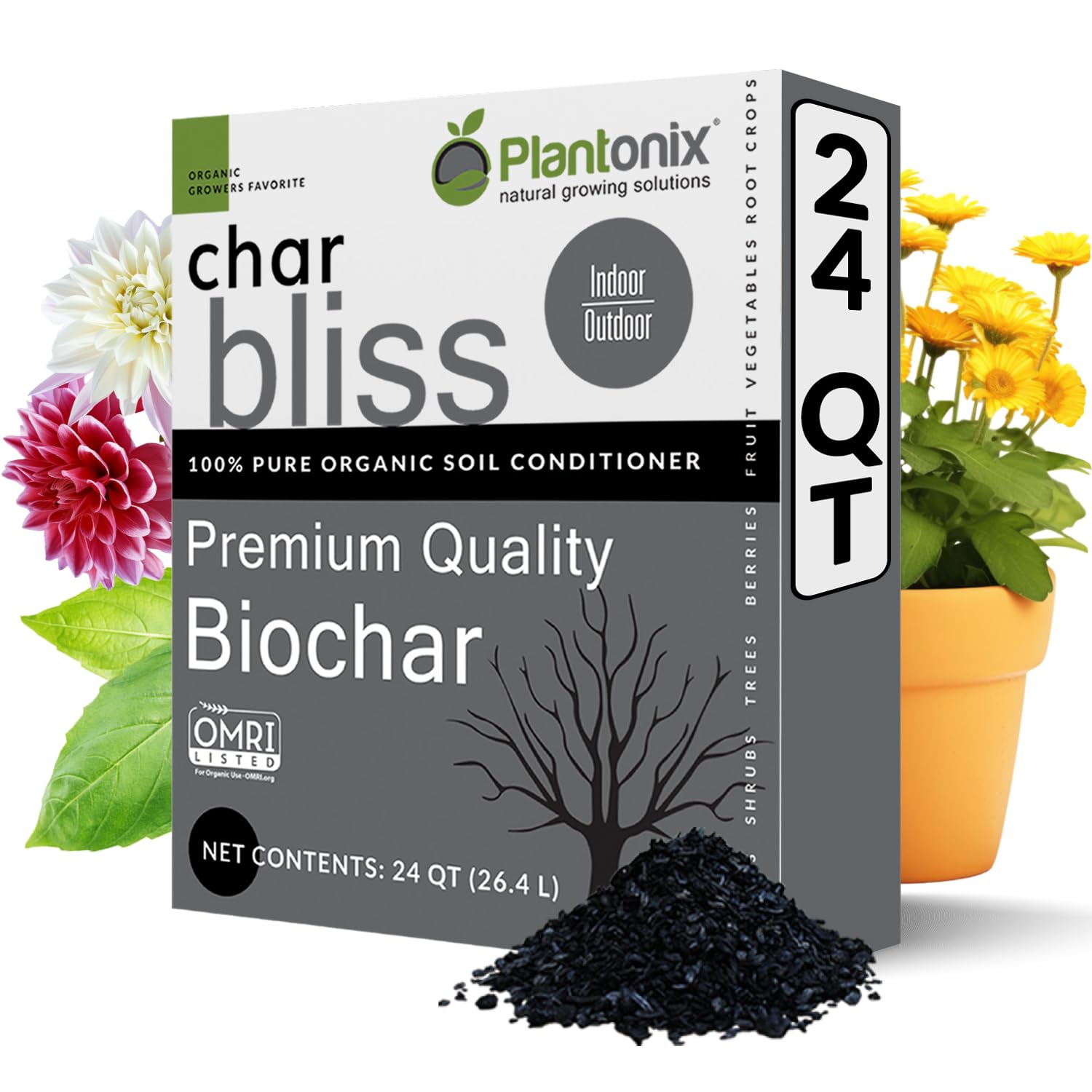
The volume king — 24 quarts of organic biochar for raised beds and big containers.
You get the most material per bag with this one — a full 24 quarts of organic biochar made from wood and tree trimmings. That is 24 quarts versus the Rosy Soil 8-quart bag, so it goes much further in raised beds and large containers. A reviewer confirmed the bag holds 10 pounds and measures 17 by 13 by 6 inches, with a fine texture that mixes without too much dust.
Buyers report that adding just 1 cup per 3 cubic feet of soil made their fig trees more vigorous and larger, and one gardener noted they have not had a single plant with root rot since they started using it. The 100% natural formula means it does not come pre-charged with microbes — you blend it with compost or worm castings to avoid the initial nutrient grab.
Straightforward workhorse: Choose this if you need to amend large volumes of soil and you are comfortable charging biochar yourself with compost or fertilizer. The OMRI listing (Organic Materials Review Institute approval) matters for organic gardeners who want third-party verification that no synthetics are present.
One trade-off to know: It is not pre-soaked. If you mix it directly into potting soil without any amendments, the biochar will initially draw down available nitrogen. Mix it with compost or a liquid fertilizer and you avoid that setback entirely.
Reach for this if: you want the most biochar per bag and have big garden beds or many containers to fill.
Look elsewhere if: you prefer a ready-to-use product that is already inoculated with microbes and requires zero prep.
2. FOOP Organic Inoculated Biochar – 128oz Bag
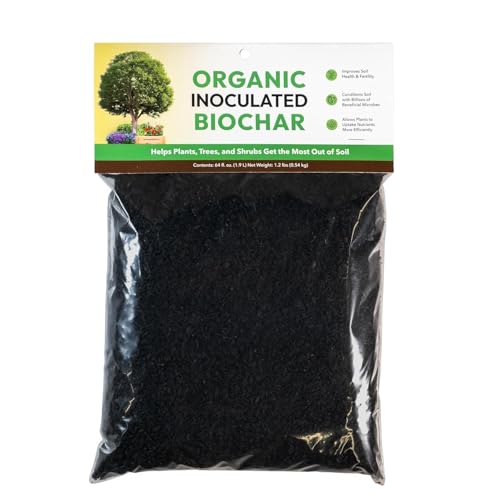
Pre-loaded with millions of soil-enriching microorganisms so your soil wakes up immediately — unlike the uncharged Char Bliss.
This one arrives already soaked in a microbial tea (a liquid full of beneficial organisms), so it is ready to support roots the moment it hits the soil. FOOP says it comes preloaded with billions of soil-enriching microorganisms, making it a faster route to improved soil fertility, especially for containers and small beds where you cannot wait weeks for raw biochar to balance out. The bag has 128 fluid ounces, which mixes with a standard 2 cubic foot bag of potting soil.
Owners mention that this product “transformed unhealthy soil into healthy soil” — one gardener said a peony planted with it grew immediately compared to the prior one that rotted. Another uses it as an essential ingredient for homemade potting mix and noted it is “already soaked in tea so it won’t suck the nutrients out of your soil.” It is sourced from pine industry waste and the manufacturer says no PPE (personal protective equipment) is needed because there are no dusty particles.
Plug-and-play soil fix: You get the benefit of a charged biochar that is safe to use straight from the bag. The 128-ounce volume is 128 fluid ounces, while the Char Bliss bag is 24 quarts, so this covers a few large pots or a compact raised bed and arrives already activated.
Watch the volume: The 64-ounce sibling (reviewed below) costs less and suits a single project. For bigger areas, the 128-ounce size is the right step up, though it is still smaller than the bulk economy options.
Buy this for: first-time biochar users who want zero risk of nutrient lockout and no extra charging step.
skip it if: you need to amend large garden beds, because the volume runs out fast compared to a 24-quart bag.
3. FOOP Organic Inoculated Biochar – 64oz Bag
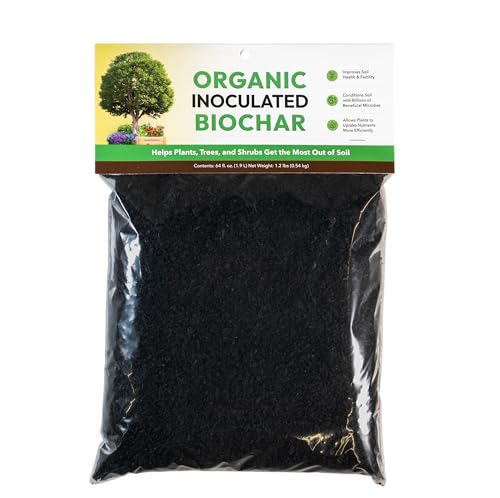
The same ready-to-go microbes in a bag that matches exactly one cubic foot of soil.
This is the same product as the 128-ounce FOOP bag — preloaded with millions of microorganisms, organically sourced, and made in the USA — but in a 64-ounce size that matches exactly one cubic foot of soil. That is a perfect ratio if you are filling a single container or a small flower bed and do not want leftovers sitting around. Like its larger sibling, it is sustainably sourced from pine industry waste and has no dusty particles.
A first-time gardener said a master gardener was surprised they had already taken this approach to amending their soil. Another reviewer uses it for dragon fruit potting mix and noted biochar is “really hard to find” in their area. The cost per ounce is higher than the bulk options, but the convenience of a perfectly matched single-bag mix is tough to top for small-scale projects.
What you gain
- Pre-inoculated and ready to use with zero extra steps
- Matched ratio — one bag to one cubic foot of soil
- Low dust and no PPE required
The catch
- Higher cost per unit volume than buying a larger bag
- Not enough coverage for big garden beds or lawns
Grab this if: you are working with a single raised bed, a few large pots, or are trying biochar for the first time and want a no-fuss entry.
Pass on it if: you need to cover many square feet and would rather buy in bulk to save money.
4. Rosy Soil Biochar Booster, 8 Quarts

Not just charcoal — a living blend of mycorrhizae, worm castings, and compost.
This is the most complex product because it combines biochar with mycorrhizae (beneficial fungi that attach to roots to help them absorb water and nutrients), worm castings, bokashi, and compost — all in one bag. The idea is you skip the mixing step: one 8-quart bag amends up to 5 cubic feet of soil or covers about 32 square feet. The mixture ratio is about 5% (roughly 1 cup per cubic foot), so a little goes a long way.
One reviewer noted they use a 10% mix with their soil and it “definitely helps with moisture retention.” A bonsai grower pointed out that it is great for the job but expensive in that quantity — 8 quarts compared to the 24-quart Char Bliss bag. The product is peat-free and uses packaging made from 60% post-consumer recycled material.
All-in-one biological booster: If you want the most complete soil starter without buying separate bags of compost and mycorrhizae, this is a clean solution. The mycorrhizae form a symbiotic web around roots, which expands nutrient uptake compared to plain biochar alone.
Volume vs. value: At 8 quarts versus 24 quarts for Char Bliss, you pay more per quart. But the included ingredients mean you do not need to buy anything else to charge it — a fair trade-off for small-space gardeners.
Choose this when: you want a plug-and-play living soil formula that includes fungi and worm castings, especially for containers and raised beds under about 32 square feet.
Think twice if: you need to cover a large garden area on a budget, as the raw cost per quart is higher than bulk alternatives.
5. Superchar – Premium Charcoal Soil Amendment – 128oz & 24oz Bundle
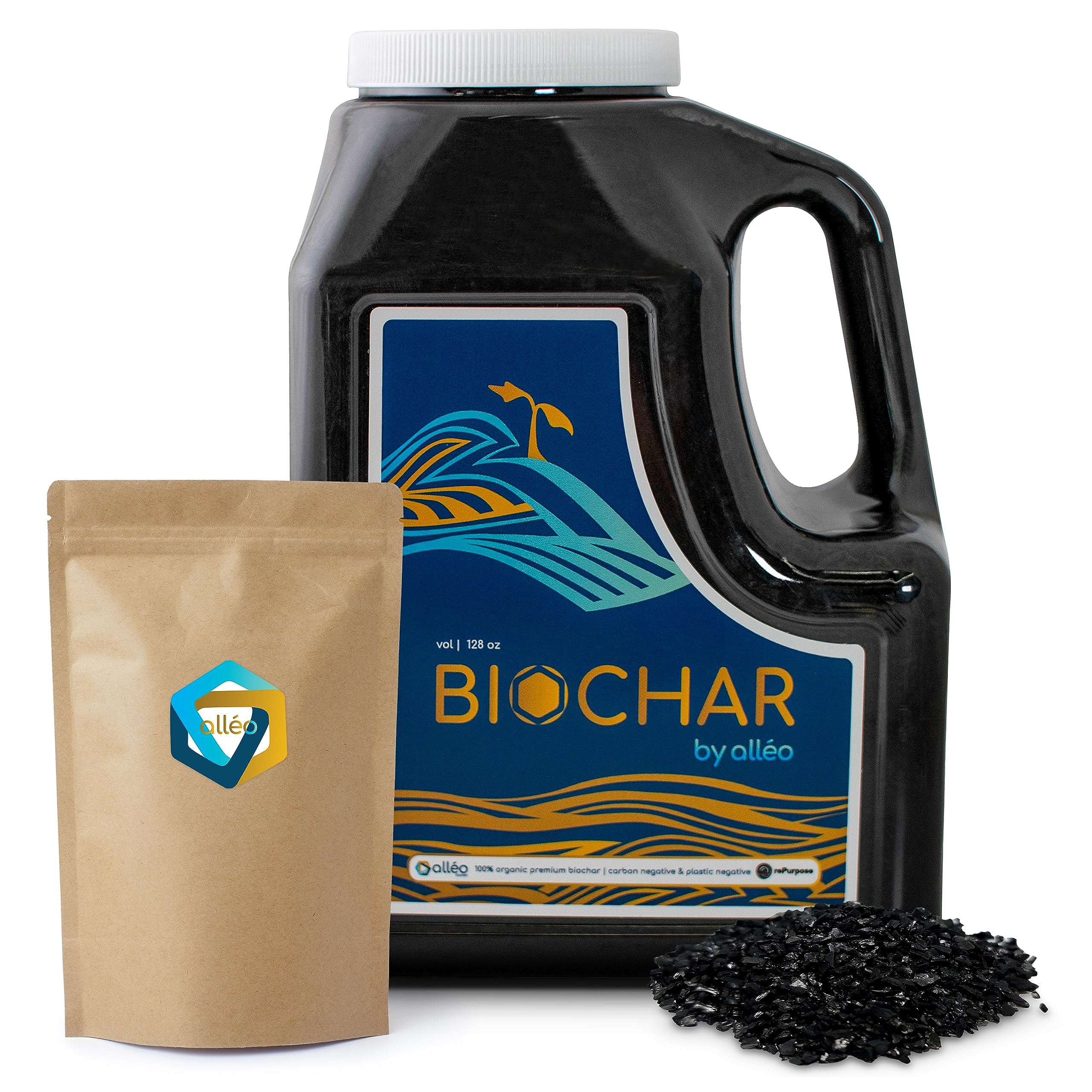
A two-part system — granules plus a liquid super-charge pack so the charcoal does not steal nutrients.
Superchar comes as a bundle: a 128-ounce bag of granulated biochar plus a smaller 24-ounce liquid amendment pack. The mixing ratio is 1 part biochar to 9 parts soil, and the liquid pack provides an immediate nutritional boost so the charcoal does not strip nutrients while it settles. The biochar is made from forest residues and agricultural waste, and the manufacturer partners with rePurpose Global (a plastic-credit program) to remove plastic waste with every purchase.
Customers note dramatic improvements: one gardener in Houston said it pushed spring vegetables — tomatoes, peppers, eggplants — to fruit by “early May vs. late June,” and noted reduced snails and cutworms. Another user said “plants sprouted” sooner than expected after blending this into the soil. One reviewer plans to use the liquid pack on tomatoes and the granules on fruit trees to avoid a spring recovery period.
What works
- Includes a liquid super-charge pack to pre-charge the biochar instantly
- Granular texture with good particle size for mixing
- Carbon-negative production backed by plastic offset program
Watch for
- Two containers to manage rather than a single bag
- Coverage depends on the 1:9 ratio; the 128-ounce bag mixes into roughly 9 gallons of soil
Best suited for: serious vegetable gardeners who want a measurable jump in early-season yields and are happy to follow a two-step application.
Consider skipping if: you prefer a single, mix-and-forget product without an extra liquid step.
6. Old Potters Premium Biochar Soil Enhancer – 24 Quarts
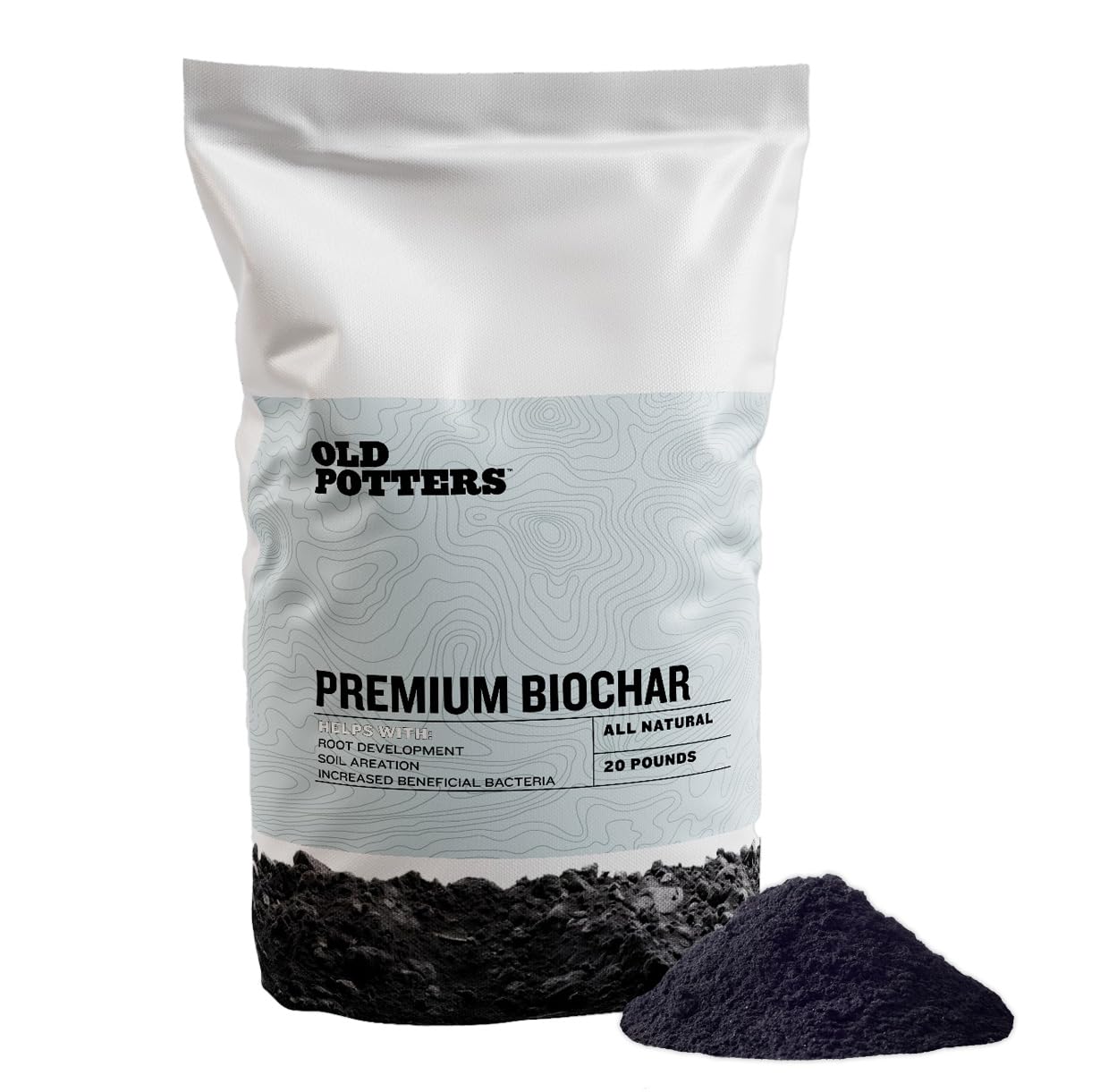
Plain, effective biochar at a price that rewards covering lots of ground — no frills, no markup.
Old Potters gives you what the Char Bliss product does — a large volume of raw, uncharged biochar — but with a fine particle size that reviewers point out is ideal for lawn top-dressing when mixed with coco coir and worm tea. The 24-quart bag (labeled as 12 quarts in some specs) weighs about 20 pounds and is packed in straightforward, no-frills packaging. One buyer described it as “bulk price, no expensive packaging or marketing — a good deal and good product, win-win.”
Shoppers say dramatic results: one gardener said their corn grew almost 8 feet tall after using it across three 8-by-4 beds, and called it the “best squash and tomatoes ever.” Another reviewer appreciated the fine particle size, which makes it easier to handle than making biochar from scratch. The product is 100% organic and aims to balance soil pH, though it does not come pre-charged or inoculated.
Bare-bones bulk option: You get the most weight for your money here, but you need to charge it yourself — blend it with compost, worm castings, or a liquid fertilizer before planting. The fine grind makes it blend quickly into soil.
The fine print: Because it is uncharged, you should not plant directly into a mix that contains this biochar without adding a nitrogen source or letting it sit for a couple of weeks after mixing.
Buy this for: large garden plots and lawn projects where volume matters most and you are experienced enough to charge your own biochar.
Not for: first-time users who want a no-prep product or anyone planting seeds immediately after mixing.
7. The Andersons HumiChar Organic Soil Amendment – 12 lb

A patented granule that blends humic acid and biochar — designed to go through a broadcast spreader for lawns.
This product is different from everything above because it is designed for lawn application, not potting mix. HumiChar combines 30% high-quality humic acid with 43% granulated biochar in a spherical, low-dust “DG” (Dispersible Granule) format that spreads through a broadcast spreader. A single 12-pound bag covers up to 12,000 square feet, which is far more area than any bagged biochar product on this list. It is OMRI listed and the manufacturer says it is environmentally friendly.
Buyers report it transforms sandy soil: one user in the South said after 20 months and about 100 pounds applied, it “eliminated sandy soil, cutting irrigation 40% and fertilizer use 50%.” Another gardener working with Georgia clay said after 7 treatments on half an acre, “soil turns black and yard health improves yearly,” and they now use less fertilizer. Note that this product is not sold in California or Oregon.
Strengths
- Broadcast-ready granules for easy lawn coverage up to 12,000 sq ft
- Combines quick humic acid action with long-term biochar structure
- Patented low-dust DG Technology for even spreading
Limitations
- Not ideal for container plants or potting soil mixes
- Higher cost per pound — one buyer mentioned it is “pricey” and better for small lawns
- Not available in CA or OR
Choose this for: lawn care and turf improvement where you need to cover thousands of square feet with a spreader, and you want both immediate humic acid benefits and lasting biochar structure.
Avoid if: you are amending container plants, potting soil, or small raised beds — the granular format and coverage area are designed for lawns, not garden beds.
Understanding the Specs
Charged vs. Uncharged Biochar
This is the single most important distinction on the shelf. “Charged” or “inoculated” biochar has been soaked in a nutrient-rich liquid — usually compost tea, worm castings, or microbial inoculants — so it is ready to support plant roots immediately. Uncharged biochar is simply the raw, porous charcoal. If you mix uncharged biochar directly into soil and plant right away, it can temporarily absorb nitrogen and stunt growth. The fix is easy: soak it in compost tea or mix it with fertilizer and let it sit for a week before planting.
Volume and Coverage
You will see quarts, fluid ounces, liters, and pounds on the labels. As a rule of thumb, a typical application rate is 5% to 10% of your total soil volume — about 1 cup of biochar per cubic foot of soil. A 24-quart bag (which is about 1 cubic foot of volume) will amend roughly 10 to 20 cubic feet of soil, depending on your mix ratio. Pay attention to the unit count on the label rather than the bag size, because a “4-quart” bag and a “128-fluid-ounce” bag could hold the same amount — 128 fluid ounces is exactly 4 quarts.
FAQ
What is the difference between biochar and regular charcoal?
Do I need to charge biochar before using it?
How much biochar should I mix into my soil?
Can I use biochar in containers and pots?
Will biochar change my soil pH?
How long does biochar last in the soil?
Is biochar safe for organic gardening?
Can I use biochar on my lawn?
What is the difference between humic acid and biochar?
Why is some biochar not sold in California or Oregon?
Final Thoughts: The Verdict
For most gardeners, the best biochar for gardening is the Char Bliss 24-Quart bag because it gives you the most volume for your money, it is OMRI listed, and the fine texture works well in both containers and garden beds. If you want instant results with zero prep, the FOOP 128-ounce Inoculated Biochar is ready to use straight from the bag. And for lawns, the standout is the broadcast ease of The Andersons HumiChar which covers up to 12,000 square feet in a single pass.
How We Picked
We do not accept paid placement, and we did not hands-on test every unit. Instead, we match each pick to a real buyer and use-case by comparing the manufacturers’ published specifications against the patterns in verified customer reviews — so you get each pick’s real strengths and trade-offs instead of marketing copy.
Sources & Methodology
Specifications: manufacturer listings and product documentation. Review insights: verified customer reviews, as of July 2026. Pricing: not shown on this page (it changes often); check the current price via the retailer link.
As an Amazon Associate, Lawn Gear Lab earns from qualifying purchases. This does not affect which products we feature.