
Specs are compiled from manufacturer listings and verified buyer reviews and can change over time — please confirm the key details on the product page before buying.
Magnolia scale is a sticky, stubborn pest that coats branches in a hard waxy shell, and if you grab the wrong spray, you will be fighting it all season long. The key difference between a treatment that works and one that just sits on the surface is whether the product actually gets inside the tree’s circulation or fully smothers the scale’s armor.
I’m Rikta — the founder and writer behind Lawn Gear Lab. This guide is built by comparing the manufacturers’ published specifications and the patterns across verified customer reviews, so you get each pick’s real strengths and trade-offs instead of marketing spin.
If you are tired of scale crawling back every summer, you need a product that hits hard at every stage of the life cycle. That is exactly what this breakdown of the insecticide for magnolia scale delivers, covering systemic root-absorbed killers and heavy-duty horticultural oils so you know which one fits your tree, your garden style, and your patience level.
Quick Picks
- Monterey Once A Year Insect Control II Bundled with Measuring Spoon — Best Overall
- Monterey Horticultural Oil Bundled with Measuring Spoon — Best Heavy Spray
- Safari 20SG Sprayable Systemic Insecticide — Rescue Pick
- Bonide Systemic Insect Control, 16 oz Concentrate — Fast Worker
- Fertilome (16096) Neem Oil Ready to Use Insecticide — Organic Ready Spray
How To Choose The Best Insecticide For Magnolia Scale
Magnolia scale sucks sap from your tree’s branches and leaves behind a sticky honeydew that grows black sooty mold. Your choice of insecticide depends on how much time you have, whether you prefer to spray or pour, and if you need an organic-certified option.
Systemic vs. Contact — Which Gets Into the Sap?
A systemic insecticide is absorbed through the roots or leaves and circulates inside the tree, which means scale feeding on the sap gets poisoned from the inside. Contact insecticides like neem oil or horticultural oil must coat the scale directly — they work best when you catch the crawler stage before the waxy shell hardens.
Residual Protection — How Long Does One Application Last?
Some products like Monterey Once A Year claim season-long control from a single root drench, while a neem oil spray requires reapplication every 7 to 14 days. If you want to treat a tall magnolia once and be done, a systemic soil drench is your best bet. If you have a smaller tree you can spray thoroughly, a horticultural oil is effective and has a shorter environmental footprint.
Organic vs. Synthetic — Is the Label Important?
OMRI Listed products (like the neem oil and horticultural oil in this list) are approved for certified organic gardening. Synthetic systemics like Bonide and Safari are powerful and long-lasting but are not labeled for organic use. Neither is wrong — it just depends on whether you garden under organic rules or just want the most effective tool.
Quick Comparison
On smaller screens, swipe sideways to see the full table.
| Model | Best For | Form & Size | Application Type | Organic Status | Amazon |
|---|---|---|---|---|---|
| Monterey Once A Year | Whole-season systemic control | 32 oz concentrate | Soil Drench | Not OMRI Listed | Amazon |
| Monterey Horticultural Oil | Dormant & growing-season sprays | 1 gallon | Foliar Spray | OMRI Listed | Amazon |
| Safari 20SG | Professional-grade rescue | 12 oz sprayable systemic insecticide | Spray or Drench | Not OMRI Listed | Amazon |
| Bonide Systemic Insect Control | Fast-acting on ornamentals | 16 oz concentrate | Spray | Not OMRI Listed | Amazon |
| Ferti-lome Neem Oil | Organic ready-to-use spray | 32 oz ready-to-use | Spray | OMRI Listed | Amazon |
In‑Depth Reviews
1. Monterey Once A Year Insect Control II Bundled with Measuring Spoon
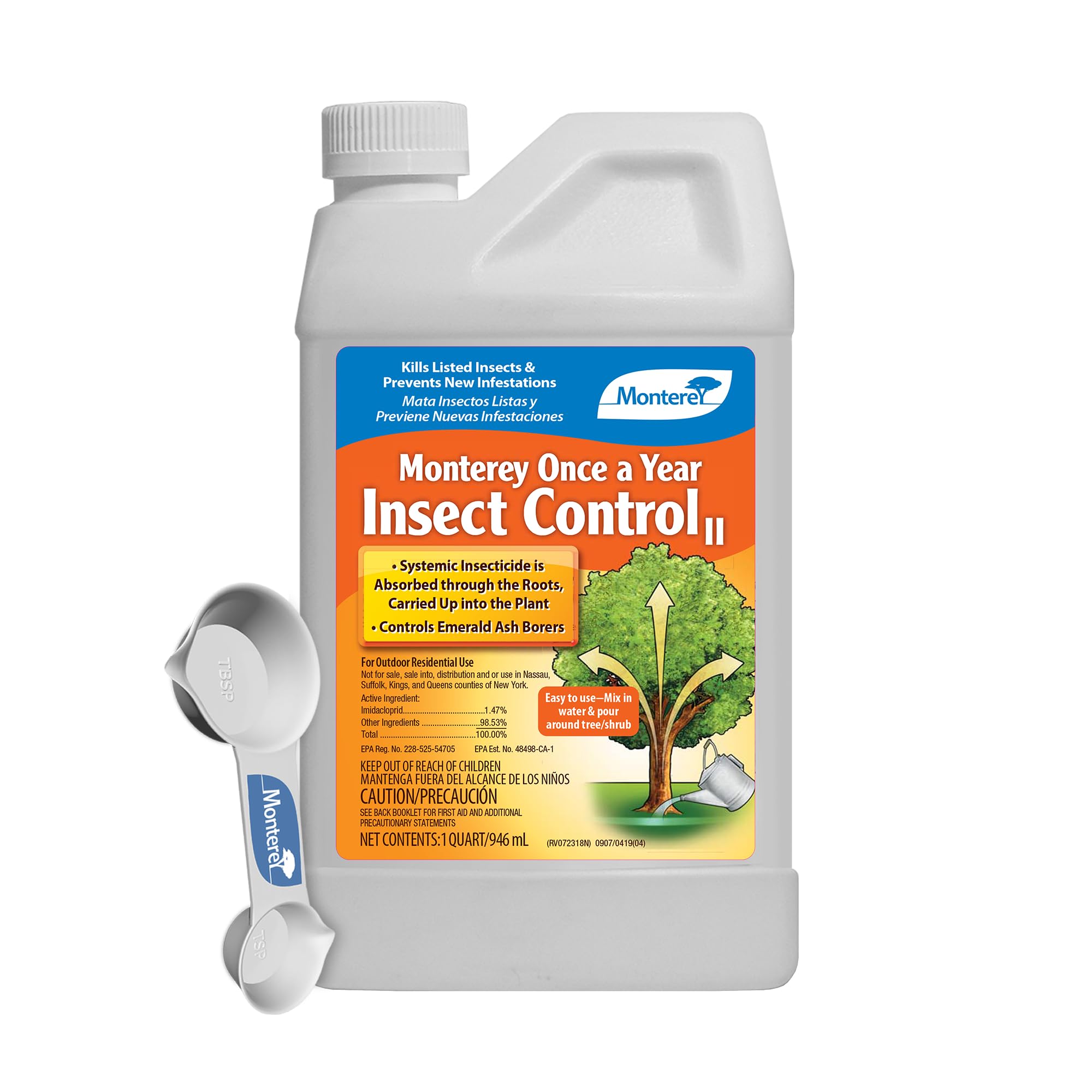
The pour-and-forget root drench that keeps magnolia scale off for a full year.
This is the only insecticide here that promises year-long protection from a single application — a big help if your magnolia is tall and hard to reach with a sprayer. You mix the concentrate in a bucket of water and pour it around the root zone; the product moves through the soil, gets absorbed by the roots, and travels upward through the tree, so both existing scale and new growth stay protected.
Buyers report that it eliminated borers and scale within days, with no new infestations in 9 months, and one reviewer noted that a nursery specifically recommended it for scale. The systemic action means rain or overhead watering will not wash it off the leaves — a major advantage over contact sprays. Keep in mind this is a 32 oz concentrate, and a handful of buyers received bottles where the emulsion had separated from freeze-thaw damage; always shake well and check for clumping before mixing.
Compared to the Monterey Horticultural Oil (which must coat the scale directly), this product works from the inside out and lasts longer — but it is not OMRI Listed, so skip it if you need an organic-certified option.
Set-and-Forget Advantages
- Single soil drench provides protection for a full year — no frequent spraying needed
- Absorbed through roots so it reaches every branch, even on tall magnolias
- Controls scale, borers, and Japanese beetles with one application
Before You Pour
- Not labeled for organic gardening
- Emulsion can curdle if exposed to freeze-thaw — inspect the bottle before mixing
- Must be mixed carefully and applied away from water runoff to be effective
Reach for this if: you want the least amount of effort for the longest-lasting scale control on a mature magnolia tree.
Look elsewhere if: you need an organic-certified treatment, or you do not want to handle a concentrate that requires careful mixing.
2. Monterey Horticultural Oil Bundled with Measuring Spoon
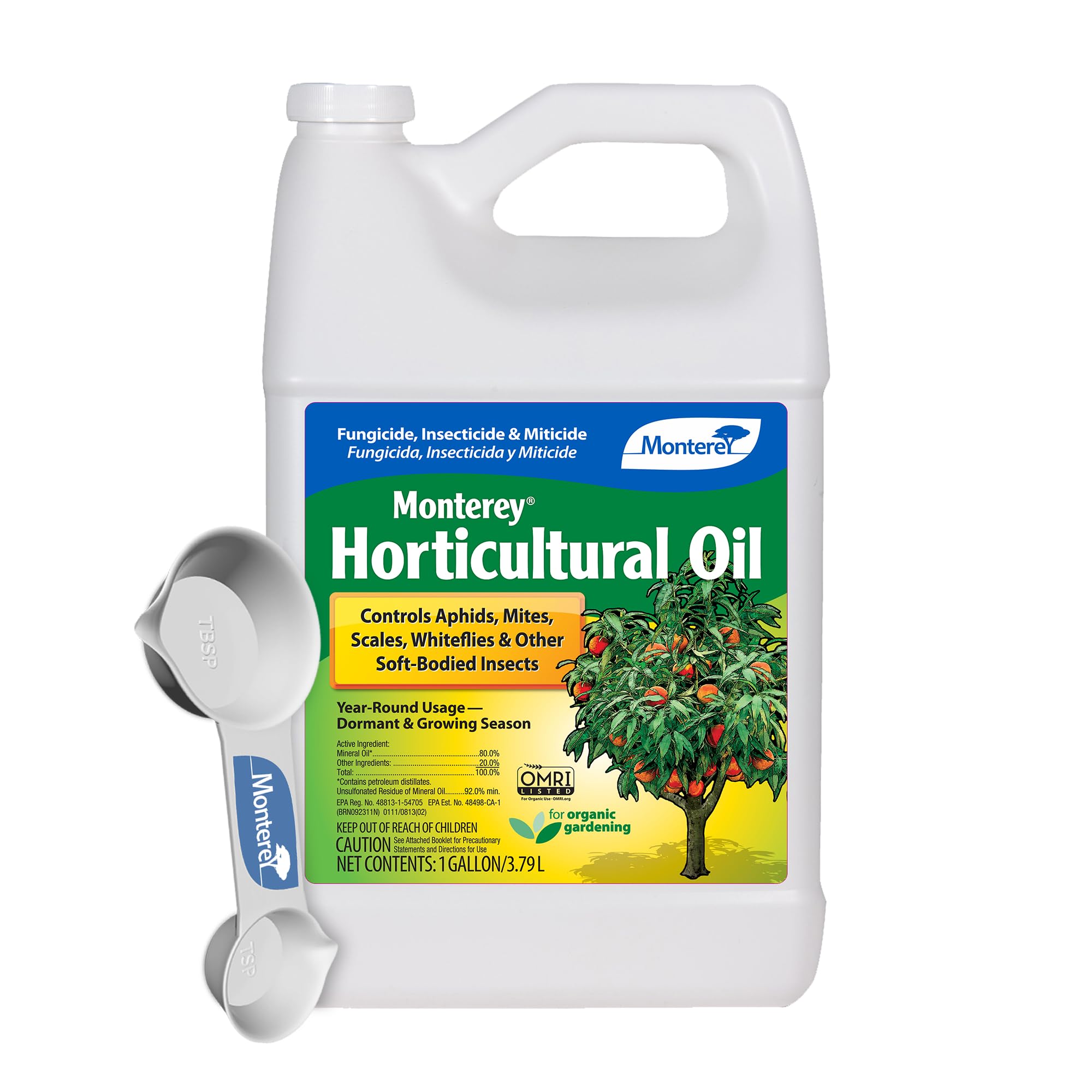
The broad-spectrum oil that smothers scale eggs and crawlers without harsh chemicals.
If you prefer an organic contact spray, this gallon of horticultural oil is your best bet against magnolia scale. It works by coating the insect’s body and eggs, suffocating them, and it is safe to use during both the dormant season (when overwintering eggs are exposed) and the growing season (when crawlers are active).
One buyer with banana magnolia shrubs reported it effectively treated what they called “faux scale” and outperformed neem oil, noting it requires two applications and works best when sprayed at sunset to avoid leaf burn in midday heat. The oil also controls aphids, spider mites, leaf miners, and thrips, so it covers many pests that bother magnolias.
At 7.41 pounds, this is a heavy jug — it makes 1 gallon of concentrate, which goes a long way on a single large tree. Unlike the Monterey Once A Year systemic, this oil must physically contact every scale to work, so you need to spray upward into the canopy and get the undersides of leaves. It is OMRI Listed for organic gardening.
Smother Power
- OMRI Listed for certified organic production and gardening
- Safe for dormant and growing-season use — flexible timing
- Controls eggs of all insects, not just adult scale
Spray Discipline Required
- Must coat every scale directly — misses on the back of leaves mean survivors
- Needs at least two applications for heavy infestations
- Apply at sunset or when temperatures are mild to prevent leaf burn
Perfect for organic growers: this oil is the non-toxic, contact-based solution that handles scale without synthetic chemistry.
Not ideal if: you cannot reach the top branches of a tall magnolia with a sprayer, or you only want a single application.
3. Safari 20SG Sprayable Systemic Insecticide

The nuclear option for stubborn scale that laughs at weaker sprays.
Safari 20SG is a sprayable systemic insecticide that professionals reach for when nothing else works. It is labeled as “best in class for control of scales” by the manufacturer and works either as a foliar spray or a root drench on ornamental plants in landscapes, nurseries, and greenhouses.
Buyers reports are dramatic — one owner said it kept an 18-inch ash tree healthy while all neighbors’ trees died from emerald ash borer, and another noted it was effective against euonymus scale in Florida. Unlike the Monterey Once A Year, which is a concentrate you drench, this is a 12 oz jug that you mix with water. It is not for sale in the state of New York due to its active ingredient profile, so check regional restrictions before buying.
The trade-off is steep: at a much higher cost than the other products here, and reviewers mention it is useless on spider mites, so you still need to correctly identify your pest. If you have a large, valuable magnolia tree that is being destroyed by scale year after year, this is the stuff to call in.
Professional Punch
- Labeled best in class specifically for control of scale insects
- Can be applied as a spray or a soil drench for flexible use
- Owners mention multi-year protection against listed pests
The Catch
- Highest cost in this guide — the premium price is significant
- Not for sale in New York; check state regulations
- Does not control spider mites, so wrong target is wasted money
For desperate situations only: this is the no-compromise choice when scale is killing a mature tree and other treatments have failed.
pass on it if: you have a small infestation, are on a budget, or do not want to handle a dry professional-grade chemical.
4. Bonide Systemic Insect Control, 16 oz Concentrate

The cheap, stinky workhorse that kills scale immediately on ornamentals.
Bonide Systemic Insect Control is a fast-acting concentrate that targets scale along with thrips, mealybugs, and whiteflies on over 100 ornamental plant varieties. It is not labeled for use on vegetables or fruit plants, but for magnolia trees, shrubs, and roses, it works quickly.
Customers note it works well — one review said it “eliminated fungus gnats immediately,” and another said it stopped bagworms on arborvitae after one season. The smell is a real downside: multiple reviewers describe it as “actual poop” or “a dumpster baking in the sun.” That is the acephate (an organophosphate insecticide) doing its job, but you should spray on a breezy day and keep windows closed.
At 1 pound, this 16 oz concentrate is the lightest option here; it makes 16 gallons of spray solution. Unlike the Monterey Once A Year systemic that uses a soil drench, Bonide is a foliar spray, so you need to hit the scale directly. Be cautious about spraying in full sun — one buyer mentioned leaf burn spots when the insecticide interacted with sunlight.
Quick Knockdown
- Fast-acting formula kills scale and listed insects on contact and systemically
- Makes 16 gallons from a single 16 oz bottle — high value for the price
- Can be mixed with certain fungicides for a combined treatment
Drawbacks
- Extremely strong odor — buyers warn it smells like sewage
- Not labeled for use on vegetable or fruit plants
- Can burn leaves if applied in direct sunlight; spray at dusk
Choose this if: you want a fast, cheap systemic spray and can tolerate the smell for the quick results on ornamentals.
Pass if: you garden near open kitchen windows, have sensitive noses, or need an organic solution.
5. Fertilome (16096) Neem Oil Ready to Use Insecticide
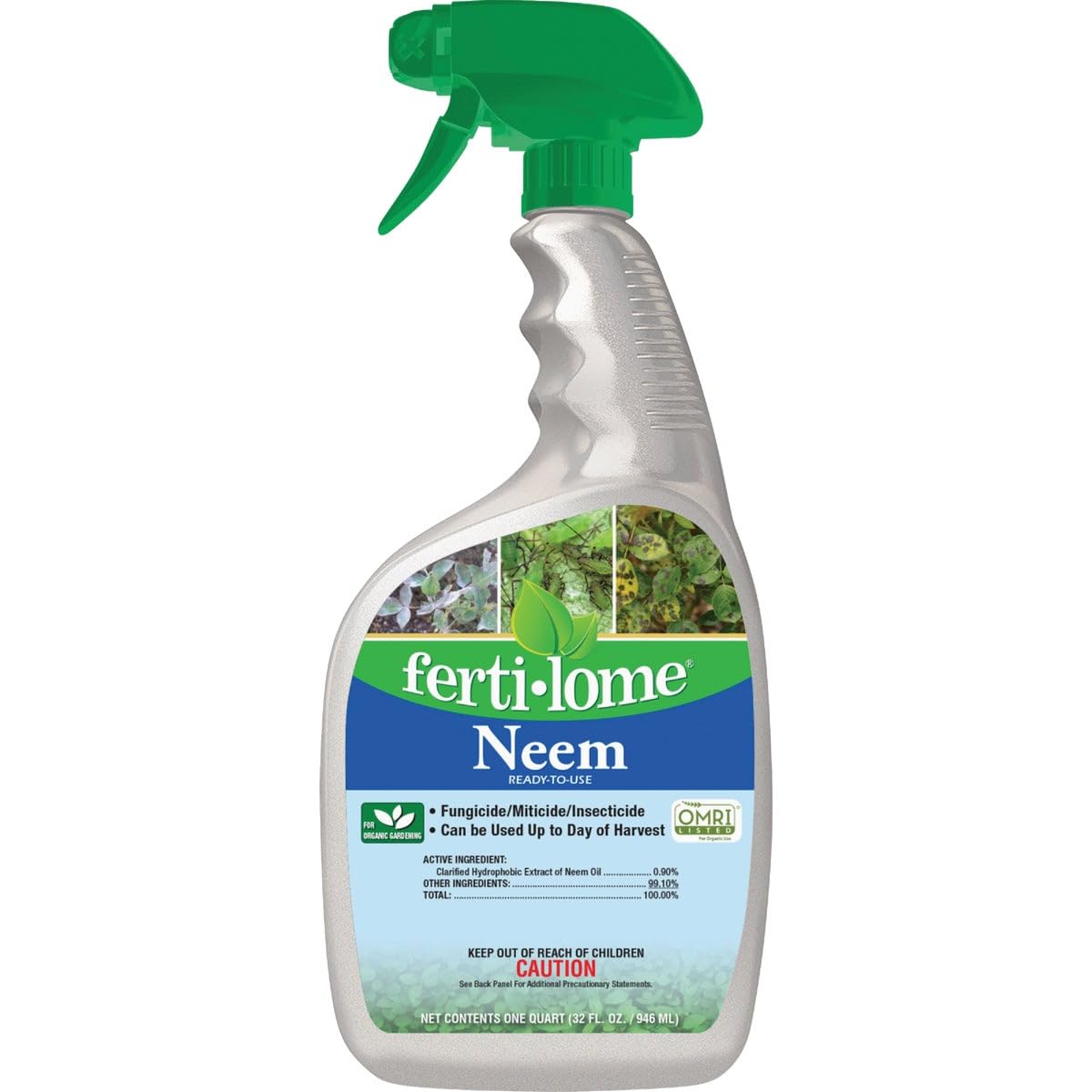
The no-mix organic spray that gently handles light scale on smaller magnolias.
If you have a young or small magnolia and want an organic, ready-to-use spray straight out of the bottle, this Fertilome neem oil is the simplest option. It contains 70% Clarified Hydrophobic Extract of Neem Oil and is OMRI Listed — no mixing, no measuring cup, just point and spray.
Reviewers point out it works well on citrus trees, with one saying their lemon plants “perked up immediately” after application, and another mentioning their 20‑ft passionfruit vine stays lush with regular use. Keep in mind that for magnolia scale, neem oil works best as a preventative (applied every 7 to 14 days) rather than as a rescue treatment for a heavy infestation. Once scale builds its hard waxy shell, neem oil struggles to penetrate compared to a horticultural oil.
Compared to the Monterey Horticultural Oil (which is also OMRI Listed but must be mixed), this is more convenient but less concentrated and typically less effective against mature, armored scale. The 32 oz bottle is enough for a few thorough sprayings on a small to medium tree.
Grab-and-Go Organic
- Ready to use — no mixing, no measuring, no cleanup
- OMRI Listed for certified organic gardening
- Gentle on the plant; shoppers say it does not burn leaves like some brands
Organic Limits
- Must be reapplied every 7 to 14 days — not a one-and-done
- Less effective on mature, waxy scale compared to horticultural oil
- Best used as a preventative, not a rescue treatment for established infestations
Best for new scale prevention: the easiest, gentlest way to keep small magnolias pest-free without harsh chemicals or mixing.
Not for heavy infestations: if scale has already built its hard shell, reach for a systemic or horticultural oil instead.
Understanding the Specs
Systemic vs. Contact — How the Insecticide Reaches Scale
Systemic insecticides (like the Bonide, Monterey Once A Year, and Safari in this list) are absorbed into the tree’s sap or sprayed onto leaves, so when scale feeds on the sap, it ingests the poison. Contact insecticides (the neem oil and horticultural oil) must physically coat the scale’s body or eggs to smother or dehydrate them — they do not move inside the tree. For magnolia scale, a systemic is ideal when the scale has already formed its hard waxy shell, because the poison hits it from the inside.
OMRI Listed — What It Means for Organic Gardening
OMRI (Organic Materials Review Institute) reviews products to ensure they comply with the USDA’s National Organic Program standards. An OMRI Listed product — like the Fertilome neem oil and the Monterey Horticultural Oil — can be used in certified organic gardens. Non-OMRI products like the Safari and Bonide are synthetic systemics that are effective but not allowed under organic certification. If you are not organic-certified, the synthetic products tend to be stronger and last longer.
FAQ
Will a neem oil spray kill magnolia scale on a large tree?
How long does a systemic soil drench last against magnolia scale?
Is it safe to spray insecticide on magnolia trees during bloom?
Can I use Bonide Systemic Insect Control on my vegetable plants?
What is the difference between a horticultural oil and neem oil?
Do I need to spray the undersides of magnolia leaves for scale?
Is Monterey Once A Year safe for pets and children after it dries?
Why is Safari 20SG not sold in New York?
Can I mix insecticide with fertilizer to treat magnolia scale?
How do I know if the scale on my magnolia is dead after treatment?
Final Thoughts: The Verdict
For the majority of shoppers, the insecticide for magnolia scale winner is the Monterey Once A Year Insect Control II because it gives whole-year protection from a single soil drench — no ladder or leaf-by-leaf spraying needed. If you want an organic-certified contact spray that kills scale eggs and crawlers without synthetic chemicals, choose the Monterey Horticultural Oil. And for a professional-grade rescue when scale has already damaged a mature tree, the Safari 20SG is the strongest option — but it costs more and requires a mask and gloves to apply.
How We Picked
We do not accept paid placement, and we did not hands-on test every unit. Instead, we match each pick to a real buyer and use-case by comparing the manufacturers’ published specifications against the patterns in verified customer reviews — so you get each pick’s real strengths and trade-offs instead of marketing copy.
Sources & Methodology
Specifications: manufacturer listings and product documentation. Review insights: verified customer reviews, as of July 2026. Pricing: not shown on this page (it changes often); check the current price via the retailer link.
As an Amazon Associate, Lawn Gear Lab earns from qualifying purchases. This does not affect which products we feature.