
Specs are compiled from manufacturer listings and verified buyer reviews and can change over time — please confirm the key details on the product page before buying.
A philodendron’s roots tell you everything: they need air, not a swimming pool. The right pot gives those roots a home where water drains freely and the soil dries out between drinks, which is the single most important thing for keeping a philodendron healthy and happy indoors.
I’m Rikta — the founder and writer behind Lawn Gear Lab. This guide is built by comparing the manufacturers’ published specifications and the patterns across verified customer reviews, so you get each pick’s real strengths and trade-offs instead of marketing spin.
You need a pot that keeps your philodendron’s roots from rotting and your table dry. Every pot here has a drainage hole, a solid saucer, and the right proportions for a philodendron’s spreading root system — making this your shortcut to the best pot for philodendron that actually fits your space and your plant’s needs.
Quick Picks
- LE TAUCI 6.8″ Ceramic Pot — Top Performer
- SQOWL 6″ Ceramic Planter — Best Value
- Tuscan 6.29″ Ceramic Planter — Rustic Charm
- Root & Vessel 8.5″ Cylinder Pot — Lightweight Choice
- EPFamily 6″ Ceramic Pot — Glazed Beauty
- Svxtoby 11″ Plastic Pot 3-Pack — Budget Multi-Pack
- HERDUK 6″ Porcelain Pot — Textured Elegance
How To Choose The Best Pot For Philodendron
Philodendrons are forgiving plants, but they will not tolerate soggy feet. The wrong pot turns watering into a gamble. Here is what to check before you buy.
Drainage is the only rule that matters
A pot without a drainage hole is a trap for philodendron roots. Water collects at the bottom, oxygen gets pushed out, and root rot takes over. Every pot in this list has one, but check that the hole is big enough to let water flow freely — some decorative pots give you a tiny pinprick that clogs fast.
Ceramic retains moisture; plastic drains faster
Unglazed ceramic and terracotta let the pot “breathe,” pulling moisture out through the walls so the soil dries more evenly between waterings. Glazed ceramic slows that process, and plastic holds moisture longest. If you tend to underwater, go ceramic. If you tend to over-love your plants with water, plastic gives you a bigger safety margin.
Diameter should match the root ball, not the leaves
A philodendron’s roots are not huge, but they spread sideways. Aim for a pot about one to two inches wider than the current root ball. Too large a pot means water sits in unused soil, and too small a pot means the roots get cramped and stop growing.
Quick Comparison
On smaller screens, swipe sideways to see the full table.
| Model | Best For | Material | Diameter | Drainage | Amazon |
|---|---|---|---|---|---|
| LE TAUCI 6.8″ Ceramic | Premium Stability | Ceramic | 6.8″ | Hole + Mesh + Saucer | Amazon |
| SQOWL 6″ Ceramic | Value Ceramic | Ceramic | 5.79″ | Hole + Mesh + Saucer | Amazon |
| Tuscan 6.29″ Ceramic | Rustic Decor | Ceramic | 6.29″ | Hole + Removable Plug | Amazon |
| Root & Vessel 8.5″ Plastic | Lightweight Large Pot | Plastic | 8.75″ | Numerous Holes + Removable Tray | Amazon |
| EPFamily 6″ Ceramic | Starter Ceramic | Ceramic | 6.18″ | Hole + Saucer | Amazon |
| Svxtoby 11″ Plastic 3-Pack | Multi-Pot Budget | Plastic | 11″ | Multiple Holes + Saucer | Amazon |
| HERDUK 6″ Porcelain | Textured Style | Porcelain | 6″ | Hole + Mesh + Saucer | Amazon |
In‑Depth Reviews
1. LE TAUCI 6.8″ Ceramic Pot
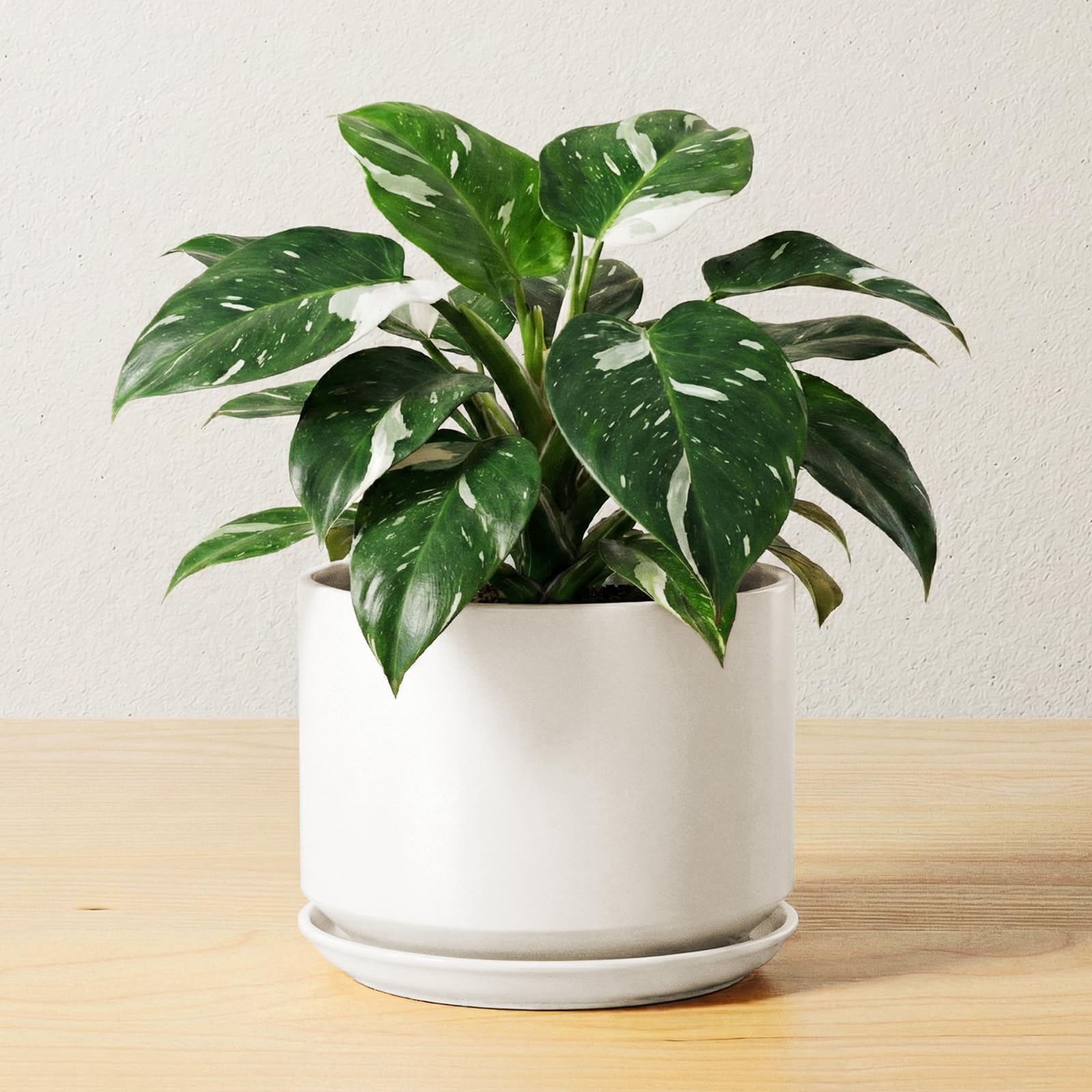
A heavy, stable ceramic pot that refuses to tip over even with top-heavy philodendrons.
Your philodendron stays upright and safe because this pot’s thick walls and weighted base create a solid anchor. It measures 6.8 inches in diameter and 5.3 inches tall, which is a desktop-friendly size that fits a peace lily, pothos, or a medium philodendron without overwhelming your shelf.
The drainage setup here is thoughtful — a drain hole in the bottom, a mesh screen over it to keep soil in, and a matching saucer that catches the runoff so your table stays dry. Buyers report the attached saucer is secure and the thick ceramic build feels stable enough that “it definitely won’t tip over.” Unlike plastic pots that flex, this one gives you a clean, low-maintenance watering experience.
The soft white glaze is a neutral backdrop that makes your philodendron’s leaves pop. It resists stains and wipes clean easily, so it looks good for years without fuss. For the price of a mid-range ceramic, you get premium stability and a drainage system that actually works.
Solid anchor: This pot’s thick ceramic walls and weighted base give it a reassuring heft that lighter plastic pots lack — it stays put on your shelf even when the plant gets top-heavy.
One real trade-off: The 6.8-inch diameter is a good fit for medium philodendrons, but if your plant is already in a larger nursery pot, you will need to size up. This is a desktop companion, not a floor planter.
Reach for this if: You want a stable ceramic pot that resists tipping, drains cleanly, and keeps your desk or windowsill spot-free. The thick build and mesh-lined drainage make it ideal for medium philodendrons that you do not want to repot every season.
Look elsewhere if: Your philodendron is already in a pot larger than 6.8 inches, or you prefer a lighter pot you can move around easily. This one has some weight.
2. SQOWL 6″ Ceramic Planter

A peacock-blue ceramic pot with a drainage hole and matching tray for snake plants and philodendrons.
This is the pot that makes your watering routine simpler. At 5.79 inches in diameter and 4.57 inches tall, it suits smaller philodendrons and succulents. Its 1.4-pound weight feels solid without being heavy, versus the 0.6-pound plastic Root & Vessel pot.
The drainage hole and matching ceramic tray work together to let excess water escape, and the included mesh pad keeps soil from washing out. Owners mention that ceramic can help retain moisture — so if you tend to forget watering, this pot buys you time. The smooth peacock-blue glaze adds a pop of color that looks good on a desk or shelf.
The tray is well-proportioned, though one reviewer wished it were an inch larger to catch more splash. For the price, it delivers solid ceramic quality with a beautiful finish and no fuss drainage.
Why it works
- Ceramic body is kiln-fired and resists cracking from weather or regular watering
- Drainage hole with mesh pad stops soil loss while letting water escape
- Matching ceramic tray catches overflow so you can place it on any surface
The catch
- Saucer is close to the pot base — some buyers wish it were an inch wider for more drip clearance
- At 5.79 inches, it is a tighter fit if your philodendron has an especially wide root ball
Who it fits: Budget-conscious buyers who want ceramic’s moisture-retaining advantage for philodendrons and succulents. The two-week watering interval reported by buyers is a real convenience for busy plant owners.
Who should skip it: Anyone looking for a wider saucer or a pot size above 6 inches — this one stays compact.
3. Tuscan 6.29″ Ceramic Planter

A rustic green pot with a removable plug that turns drainage on or off when you want it.
If you like the weathered, farmhouse look, this one delivers. It measures 6.29 inches in diameter and 5.12 inches tall, which is a nice middle ground — big enough for a medium philodendron but compact enough for a shelf or tabletop. The distressed, crackle-glaze finish gives it a vintage feel that stands out from the usual glossy ceramics.
The drainage hole has a removable plastic plug, so you can use it as a planter with drainage or seal it for use as a vase — buyers specifically call out the “drainage hole with removable plastic plug” as a key feature. At 1.17 kilograms (about 2.6 pounds), it is noticeably heavier than the SQOWL and feels premium in hand. The floral pattern adds a subtle decorative touch without being loud.
One thing to note: the crackle glaze is part of the design, so the distressed look is intentional. If you prefer a smooth, uniform finish, this might not be for you. But for farmhouse or boho decor, it is a natural fit.
Customers note it “looks more expensive than it is” and that the quality feels solid. For a ceramic pot with a unique finish and a removable drain plug, it is tough to top at this price point.
Versatile drain plug: The removable plastic plug lets you switch between planter mode and vase mode — a rare feature in this price range that buyers specifically noted as useful.
Weight consideration: At around 2.6 pounds, this is a heavy pot for its size — great for stability, but not ideal if you need to move plants around frequently.
Best for: Decor-focused buyers who want a rustic, farmhouse look with the flexibility of a removable drain plug. The crackle glaze and floral pattern add character that plain pots lack.
Consider another if: You need a smooth, uniform finish or a pot lighter than 2.6 pounds — this one has presence and heft.
4. Root & Vessel 8.5″ Cylinder Pot

A lightweight plastic pot with numerous drainage holes and a removable bottom tray for large philodendrons.
When your philodendron has outgrown its nursery pot, this 8.75-inch diameter cylinder gives it room to spread. At 6.4 inches tall, it is a noticeably larger pot than the other picks here — 51% more diameter than the SQOWL 6-inch — so it is the right choice for a mature plant that needs breathing space. The 0.6-pound weight makes it the lightest option, so moving a full pot is easy on your back.
The drainage system is excellent: numerous drainage holes spread across the bottom plus a removable tray that reviewers point out is “extremely difficult to disconnect” when new (one reviewer recommends breaking the clips to prevent accidental snapping). This is a plastic pot made in the USA with a matte black finish that looks clean and modern, not cheap. It works both indoors and outdoors.
The trade-off is that it is plastic, not ceramic, so it will not retain moisture as well — you may need to water slightly more often. But if you tend to overwater, this is actually an advantage because the soil dries faster.
Some shoppers say it feels “a little flimsy” if you move it around a lot, but for a stationary pot, it is sturdy enough. The width-to-height ratio is ideal for plants like Hoyas and philodendrons that like room to spread.
Strong points
- Numerous drainage holes with a removable tray for easy cleaning
- Ultra-lightweight at 0.6 pounds — easy to move even when filled with soil
- Built-in tray protects indoor surfaces from water damage
Consider this
- Plastic feels lighter and less premium than ceramic — some buyers report it is “a little flimsy” when moved
- Tray clips are very tight; one reviewer recommends breaking them to avoid accidental disconnection
Reach for it when: You need a large, lightweight pot for a mature philodendron and you want excellent drainage. The 8.75-inch diameter and numerous drain holes make this a practical choice for big plants on a budget.
skip it if: You prefer the weight and moisture-retention of ceramic, or you move your pots around frequently and need something more rigid.
5. EPFamily 6″ Ceramic Pot
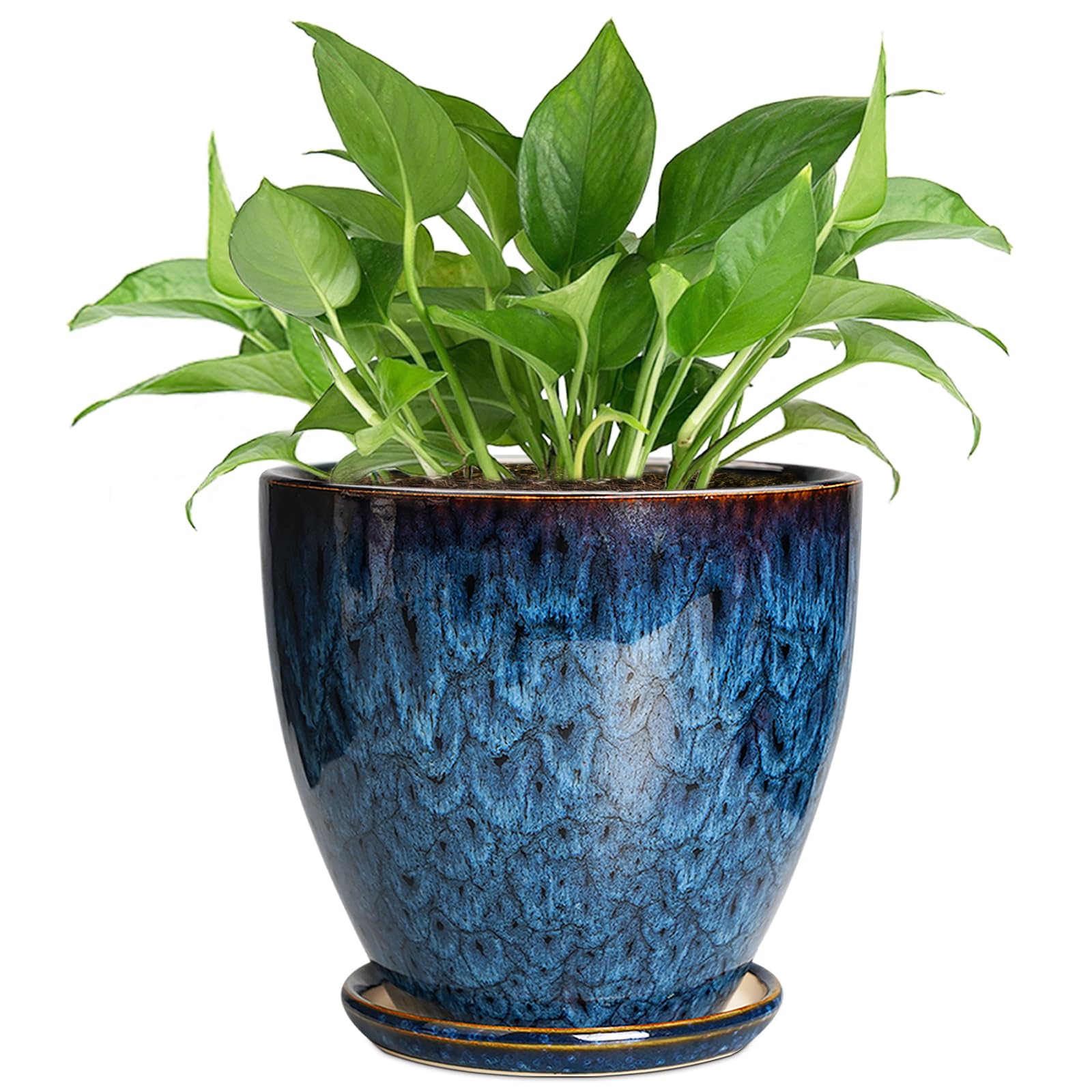
A flowing blue-glazed ceramic pot with a drainage net and saucer for starter philodendrons.
This is the entry-level ceramic that does not cut corners. At 6.18 inches in diameter and 6.02 inches tall, it has a slightly taller profile than the SQOWL, giving it a more vase-like shape that suits philodendrons with upright growth. The flowing glaze blends vintage charm with a modern finish, and owners mention it “looks rich” against the green leaves of a plant.
The drainage setup includes a hole, a drainage net to prevent soil from escaping, and a matching saucer. It is a complete system that lets you water confidently without worrying about mess. The ceramic is kiln-fired for durability and comes with fade-resistant and weather-resistant properties, so it works outdoors too. One reviewer noted they ordered four different sizes and loved them all.
At this price point, you get a clean, well-finished pot that looks more expensive than it is. The only catch is that it is a glazed ceramic, which means it does not breathe as much as unglazed terracotta — but for a philodendron that prefers consistent moisture, that is actually a benefit.
If you are starting a collection and want a cohesive look, the matching sizes let you build a set over time.
Complete starter kit: Comes with drainage hole, drainage net, and saucer — everything you need for healthy philodendron care from the start.
Design note: The flowing glaze creates unique variations in color, so no two pots look exactly alike. That is part of the charm, but know that the finish is not uniform.
Perfect for: New plant owners who want a beautiful, functional ceramic pot that does not cost a lot. The glazed finish resists stains and wipes clean easily.
Not ideal if: You need unglazed ceramic for faster drying — this one is glazed and holds moisture longer.
6. Svxtoby 11″ Plastic Pot 3-Pack

Three large 11-inch plastic pots with multiple drainage holes for a growing collection.
If you have multiple philodendrons or want to repot several plants at once, this three-pack gives you the most pot for your money. Each pot measures 11 inches in diameter and 6.8 inches tall, with a 2.5-gallon capacity — big enough for a large philodendron or a grouping of smaller plants. The copper-colored finish with a leaf pattern adds a modern decorative touch that customers note looks “just as nice in person as they are in their picture.”
The drainage system features multiple holes across the bottom to promote air circulation around the roots, plus a matching tray for each pot. One reviewer notes the tray is a bit shallow, so you need to avoid overwatering, but the design works well for draining excess water. The plastic is extra-thick and UV-resistant, so it holds up outdoors without cracking or fading.
At this size and price, you are getting plastic pots that are lightweight and durable. They are not as refined as ceramic, but they are practical, and the curved rim adds stability that keeps the pot from flexing. If you are building a collection on a budget, this three-pack is a smart move.
Practical advantages
- Three pots in one pack at a budget-friendly price — best per-pot value in this list
- 11-inch diameter fits large philodendrons with room to grow
- UV-resistant and weather-resistant for outdoor use
Trade-offs
- Saucers are shallow — buyers recommend being careful not to overwater
- Plastic does not have the same premium feel as ceramic
Best for: Plant collectors who need multiple large pots at once. The three-pack saves money and the 11-inch size works for big philodendrons, monsteras, or grouping small plants.
pass on it if: You prefer the look and weight of ceramic, or you need deeper saucers to catch heavy watering.
7. HERDUK 6″ Porcelain Pot

A porcelain pot with horizontal line texture and a crackled green glaze that looks like art.
This one is for buyers who want their pot to do double duty as decor. It measures 6 inches in diameter and 6 inches tall, giving it a true cylinder shape with horizontal lines running around the body. The green crackled glaze over a beige base creates a textured, organic look that stands out from smooth ceramics. Reviewers point out it has “a simple, elegant design” and that the saucer fits perfectly, making the two pieces look like one.
The drainage hole comes with a mesh pad to keep soil from washing out, and the saucer catches any runoff. At 1 pound, it is light enough to move but feels substantial in hand. The porcelain material is kiln-fired for durability, and the crackle glaze is part of the design — the lines and textures are intentional, not defects.
If you are drawn to handcrafted, textured pottery, this is a beautiful choice. Just note that the crackle glaze pattern is not uniform; each pot has its own variation. One buyer received a replacement quickly when theirs arrived damaged, so the customer service is solid.
Design-forward: The combination of horizontal line texture and crackled green glaze makes this pot look like artisan pottery — it adds a tactile element to your plant display.
Practical detail: The mesh pad prevents soil from escaping through the drainage hole, keeping your saucer cleaner.
Reach for this if: You want a pot that looks handcrafted and adds texture to your decor. The crackled glaze and horizontal lines make it a conversation piece, and the drainage system is functional.
Look elsewhere if: You prefer a smooth, uniform finish — the crackle glaze is intentionally distressed and not perfectly even.
Understanding the Specs
Drainage Holes & Saucers
The most important spec for a philodendron pot. A drainage hole lets excess water escape so roots are not sitting in soggy soil. A saucer catches the runoff so you do not damage your furniture. Some pots include a mesh pad over the hole to keep soil in. Multiple holes mean better airflow to the root zone. Without a drainage hole, your philodendron is at high risk of root rot.
Pot Material: Ceramic vs Plastic
Ceramic (including porcelain) is heavier, retains moisture longer, and feels more premium. Unglazed ceramic allows the pot to breathe, pulling moisture out through the walls. Glazed ceramic and porcelain hold moisture inside, which can reduce watering frequency. Plastic is lightweight, drains faster, and is less expensive. Plastic is better if you tend to overwater; ceramic is better if you want more time between waterings. Plastic also holds up better outdoors in extreme weather.
FAQ
Does my philodendron pot need a drainage hole?
What size pot should I choose for my philodendron?
Is ceramic or plastic better for a philodendron?
Can I use a pot without drainage if I add a layer of rocks at the bottom?
Do philodendrons like to be root bound?
Should I repot my philodendron right after buying it?
What is the best pot shape for a philodendron?
How often should I water a philodendron in a ceramic pot vs a plastic pot?
Can I leave my philodendron in a plastic pot outdoors?
What does “BPA-free” mean for a plastic plant pot?
Final Thoughts: The Verdict
For most buyers, the pot for philodendron winner is the LE TAUCI 6.8″ Ceramic Pot because its thick ceramic walls, mesh-lined drainage hole, and stable weighted base give you everything a philodendron needs: consistent moisture control and a pot that will not tip over. If you want the best value in a smaller size, grab the SQOWL 6″ Ceramic Planter. And for a large, lightweight pot that handles a mature philodendron without breaking your back, go with the Root & Vessel 8.5″ Cylinder Pot.
How We Picked
We do not accept paid placement, and we did not hands-on test every unit. Instead, we match each pick to a real buyer and use-case by comparing the manufacturers’ published specifications against the patterns in verified customer reviews — so you get each pick’s real strengths and trade-offs instead of marketing copy.
Sources & Methodology
Specifications: manufacturer listings and product documentation. Review insights: verified customer reviews, as of July 2026. Pricing: not shown on this page (it changes often); check the current price via the retailer link.
As an Amazon Associate, Lawn Gear Lab earns from qualifying purchases. This does not affect which products we feature.