
Specs are compiled from manufacturer listings and verified buyer reviews and can change over time — please confirm the key details on the product page before buying.
Blueberries are acid snobs — they simply refuse to thrive unless the soil pH sits between 4.5 and 5.5. The wrong dirt turns leaves yellow, stops fruit from forming, and wastes your time. This guide cuts past the bag labels to find the dirt for blueberries that actually delivers the acidic environment your bushes need, using the real specs and genuine buyer experiences.
I’m Rikta — the founder and writer behind Lawn Gear Lab. This guide is built by comparing the manufacturers’ published specifications and the patterns across verified customer reviews, so you get each pick’s real strengths and trade-offs instead of marketing spin.
You will find the four best contenders broken down by volume, ingredients, and that all-important pH aim, so you can confidently choose the dirt for blueberries that matches your pot size and budget without guessing.
Quick Picks
- Coast of Maine Organic & Natural Planting Soil for Acid Loving Plants (20 Qt) — Best Overall
- Soil Sunrise Acid Loving Plant Potting Soil Mix (12 Quarts) — Proven Growth
- Specialty Blueberry Potting Mix by Perfect Plants (8qt) — Feeds for Months
- Specialty Blueberry Potting Mix by Perfect Plants (4qt) — Starter Size
How To Choose The Best Dirt For Blueberries
Throwing any potting mix into a blueberry pot is a fast way to kill the plant. The single thing that separates good soil from bad is how well it keeps the pH low. Here is exactly what to check before you buy.
Start with the pH, not the label
A bag that says “for acid-loving plants” should sit below 5.5, but the reviews on this list show that is not always true. Read recent buyer feedback to confirm the mix actually lands in the 4.5-5.5 range — a pH meter costs far less than replacing a dead bush.
Match the bag volume to your pot size
A single 4-quart bag barely fills one small container, while 20 quarts handles a couple of raised-bed refreshes. The table below shows exactly how each option stacks up, so you do not end up short on planting day.
Look for peat moss and pine bark in the ingredients
Sphagnum peat moss naturally lowers pH over time. Pine bark adds drainage and a touch more acidity. Avoid mixes heavy on composted manure or lime, which push pH upward and work against everything a blueberry needs.
Quick Comparison
On smaller screens, swipe sideways to see the full table.
| Model | Best For | Volume | Key Ingredients | Fertilizer Included | Amazon |
|---|---|---|---|---|---|
| Coast of Maine Organic & Natural Planting Soil | Large pots or bed refreshes | 20 Quarts | Peat Moss, Compost, Aged Bark | No | Amazon |
| Soil Sunrise Acid Loving Plant Potting Soil Mix | Proven growth with natural ingredients | 12 Quarts | Peat moss, Pine bark, Sphagnum moss | No | Amazon |
| Perfect Plants Blueberry Potting Mix (8qt) | Container blueberry boost | 8 Quarts | Pine bark, Granite sand, Peat moss | Yes (18-6-8 slow-release) | Amazon |
| Perfect Plants Blueberry Potting Mix (4qt) | Single small container planting | 4 Quarts | Pine bark, Granite sand, Peat moss | Yes (18-6-8 slow-release) | Amazon |
In‑Depth Reviews
1. Coast of Maine Organic & Natural Planting Soil for Acid Loving Plants (20 Qt)

The biggest bag at a fair price, with a pH aim that actually matches your blueberry’s needs.
This mix delivers 20 Quarts — a full 5.0x more volume than the smaller Perfect Plants bag, giving you enough to refresh two large containers or top up a small raised bed without buying a second bag. The blend combines peat moss, compost, and aged bark to create a low-pH environment while keeping the texture light enough for strong root growth. The brand also holds an OMRI listing for organic use, which means the ingredients are certified for organic gardening without synthetic additives.
The trade-off: unlike the Perfect Plants mixes, Coast of Maine does not include a slow-release fertilizer in the bag. You will need to feed your blueberries separately during the growing season. However, buyers consistently give this soil five-star ratings — one reviewer called it “very very good product” and another noted it was “perfect for my strawberries” because of the slightly acidic pH. The bag stays at 20 Quarts, which is heavy but gives you far more coverage per dollar than any small-format option.
One thing it does not beat is the Soil Sunrise bag on long-term growth claims — but at 20 Quarts versus 12 Quarts, the value advantage is clear if you are filling multiple containers.
Volume leader with organic cred: At 20 Quarts and an OMRI listed organic formula, this is the pick for anyone who values quantity and certified organic ingredients over built-in fertilizer or flashy packaging.
Watch the nutrient gap: Because there is no slow-release fertilizer in the bag, you must add your own feeding schedule during the season to keep bushes productive.
Reach for this if: You have two or more blueberry containers or a small raised bed and want the biggest organic volume for the money.
Look elsewhere if: You need an all-in-one soil that feeds your plants for months without any extra work.
2. Soil Sunrise Acid Loving Plant Potting Soil Mix (12 Quarts)
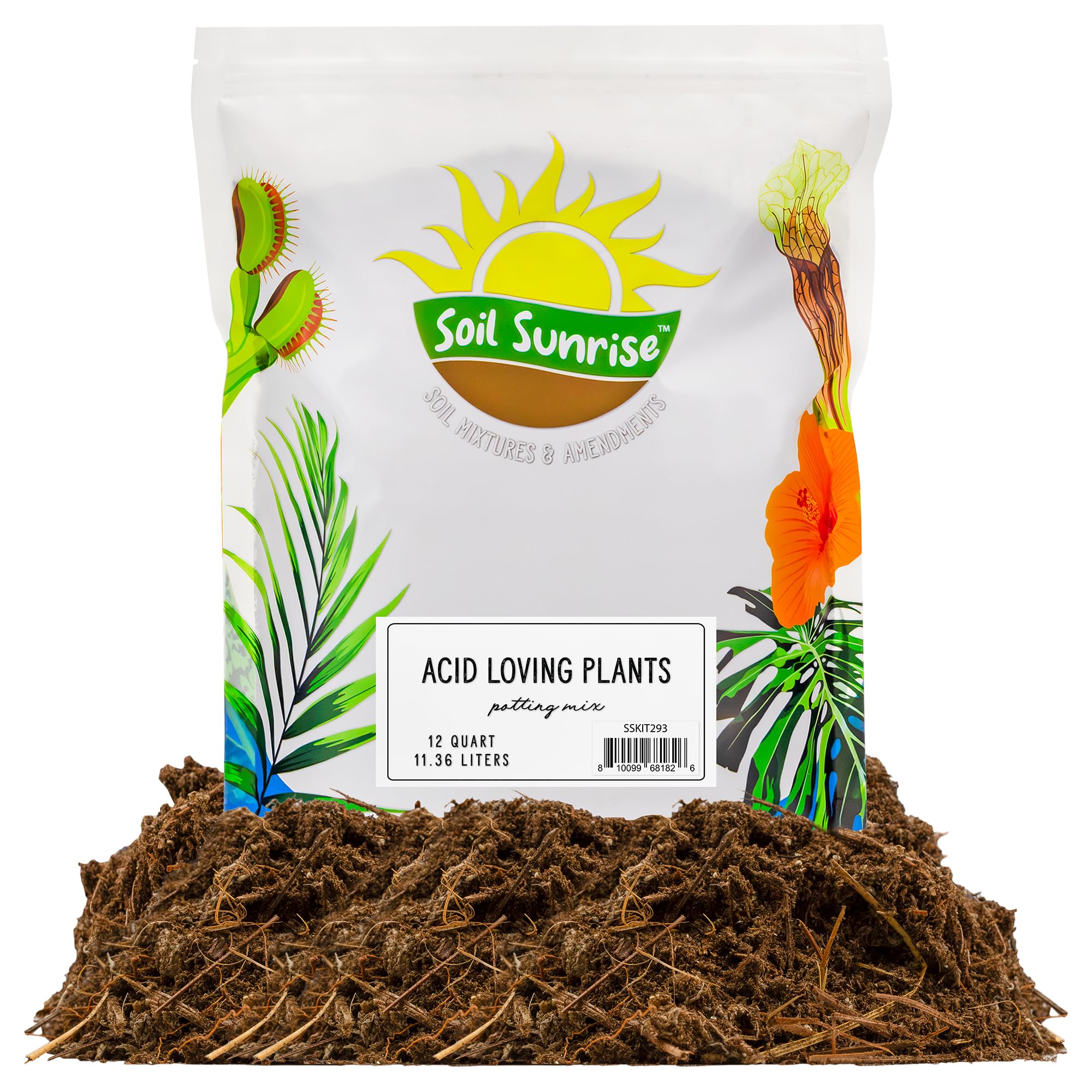
An artisan-crafted Kentucky blend that one buyer says turned a 6-inch cutting into a 5-foot bush.
Soil Sunrise skips the generic filler and uses peat moss, pine needle mulch, pine bark mulch, sphagnum moss, and vermiculite to build a mix that drains quickly while retaining enough moisture for container plants. At 12 Quarts, it sits between the big Coast of Maine bag and the small Perfect Plants options — a useful middle ground for one large planter or two medium pots. The brand calls the bag “Modern,” but the ingredients are classically acidic: the pine elements help push pH down naturally.
Buyers report impressive results here. One reviewer noted an “Olive cutting grew from 6in to 5ft bush in 3 years” and said their coffee plant doubled in size after repotting in this mix. Another said their fuchsia saw “lots of growth and flowers.” There is a catch though — a buyer mentioned the mix arrives “initially hydrophobic” and advised soaking it thoroughly before potting to fix the water-repelling issue. After that first soak, the soil “accepts water normally.”
One reviewer was surprised by the bag size, calling it “tiny” compared to the product image, so double-check the 12 Quarts volume before you order.
Growth champion for acid-lovers: The combination of four pine-based ingredients creates an environment that owners mention fuels explosive growth — the olive-bush story is hard to argue with.
The initial water trick: Plan to saturate the soil thoroughly before planting; a single brief soak fixes the hydrophobic start and the mix performs normally afterward.
Best for: Gardeners who want a proven, all-natural acidic mix and are willing to do a little prep work for exceptional results.
skip it if: You want a bag that is ready to go straight from the package without an initial soaking step.
3. Specialty Blueberry Potting Mix by Perfect Plants (8qt)
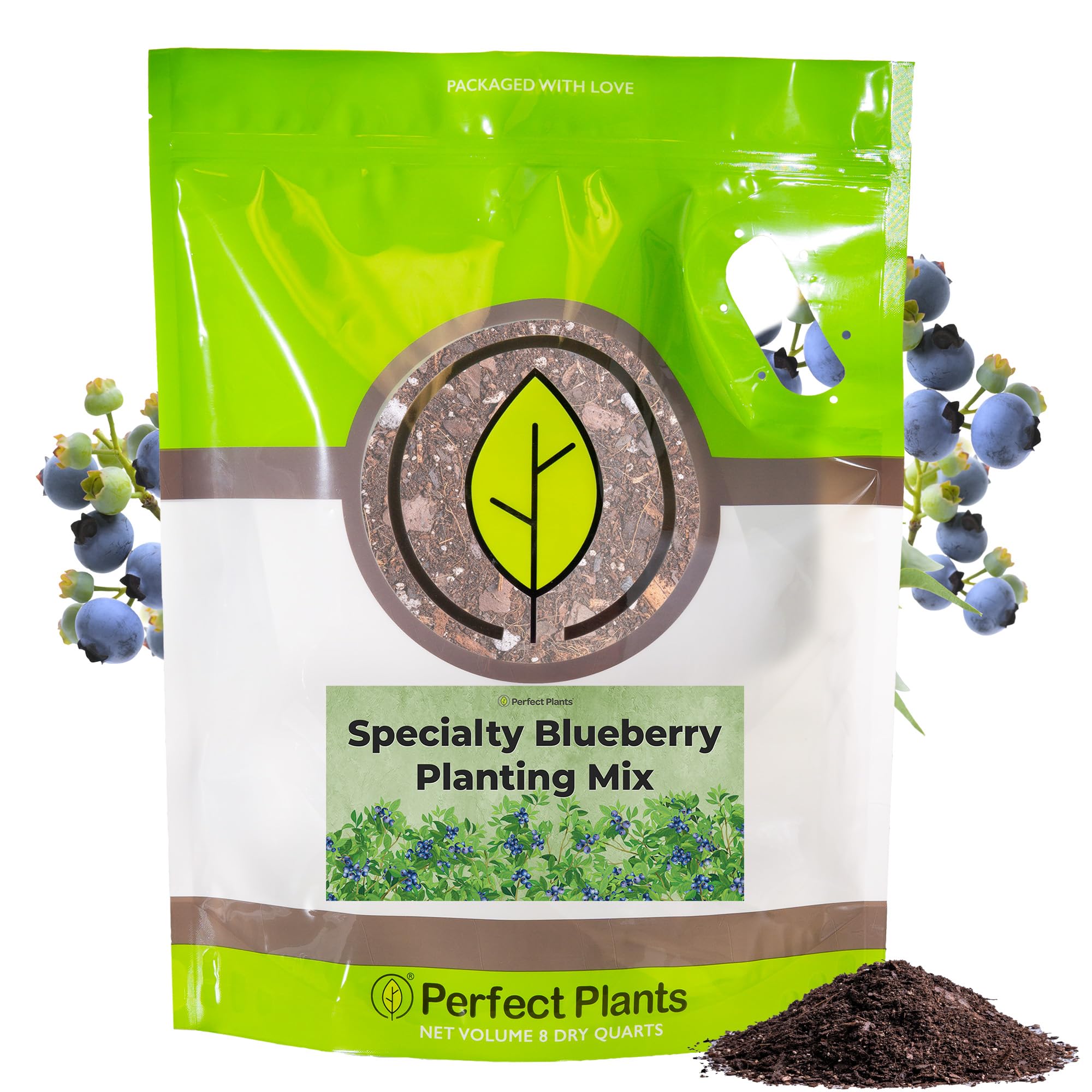
A bag that does double duty — acidic soil plus a full year of built-in feeding.
This 8-Quart mix from Perfect Plants combines composted pine bark, granite sand, peat moss, and an 18-6-8 slow-release fertilizer that the maker says nourishes for up to 12 months. That means you can pot a blueberry in spring and not think about feeding it again until next year. The medium-drainage formula is designed for container blueberries of all varieties, including rabbit eye and northern high bush. The bag is also resealable, which helps keep leftover mix from drying out between uses.
The honest warning, though, is serious. Multiple one-star customers note that this product arrived extremely alkaline rather than acidic. One reviewer wrote plainly: “Product is not acidic soil; it is extremely alkaline.” Another said their “plant changed color after use; pH reader confirmed high alkalinity.” If you buy this bag, test the pH with a meter before you commit your plant to it. The positive reviews are there too — several reviewers point out the mix “perked up my potted blueberry bushes” and had “buds on them” quickly. The ingredient list and concept are sound; the batch-to-batch pH consistency appears to be the weak link.
Compared to the Coast of Maine, this bag holds only 8 Quarts, so you get about 40% of the volume — but you also get the built-in fertilizer that the Coast of Maine lacks.
Built-in convenience: The 18-6-8 slow-release fertilizer is a real time-saver — one bag covers your soil and feeding needs for up to a year.
pH roulette: Verified buyer reports of high alkalinity mean you must check the pH yourself before trusting it for your blueberry.
Grab it if: You want a two-in-one soil-and-feed solution for a single container blueberry and you own a pH meter to verify the mix.
Pass on it if: You are not willing to test the pH yourself — the risk of an alkaline surprise is real.
4. Specialty Blueberry Potting Mix by Perfect Plants (4qt)
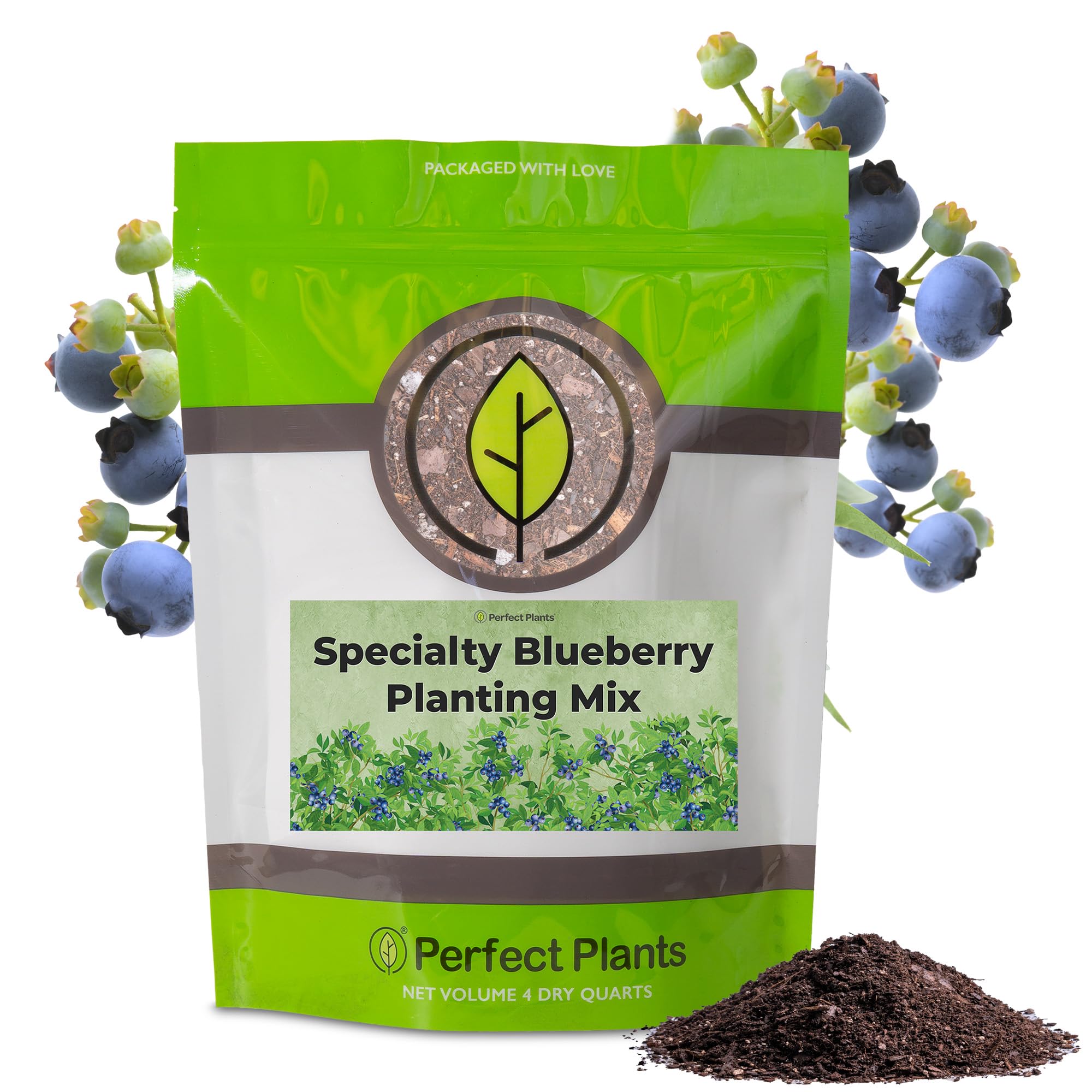
A small, affordable bag that fits a single container — but shares the same pH question mark.
This is the 4-Quart version of the same Perfect Plants formula. The ingredients are identical: pine bark, granite sand, peat moss, and the same 18-6-8 slow-release fertilizer that feeds for up to 12 months. The bag is heavy-duty and resealable, which matters at this small size — you will likely use it all in one go for a single pot. The volume here is just 4 Quarts, making it the smallest option on the list and a perfect match for one young blueberry plant or a single small container.
The same reliability issue appears again. One buyer called it “saddened” and said “Product is extremely alkaline, not acidic. Caused plant to change color; may not survive.” Another echoed that complaint. On the other hand, several five-star reviewers said their plants were “flourishing and happy” and that the soil was “perfect for acid-loving plants.” Hand-mixed on a family-owned farm in the USA with over 40 years of experience, the concept is solid — but the execution seems inconsistent. If you buy the 4-Quart bag, test the pH before you plant.
Compared to the 20-Quart Coast of Maine, this is a 5.0x smaller bag, so you are paying for convenience and the built-in fertilizer, not for volume.
One-pot wonder: At 4 Quarts, this is the ideal trial size if you have just a single blueberry bush to plant and want the fertilizer included.
Inconsistent pH: Same caution as the 8-Quart version — verified buyer reports of high alkalinity make a pH meter essential before use.
Good for: A single container planting with built-in feeding, provided you are comfortable checking and correcting the pH.
Not for: Anyone who wants a guaranteed acidic mix straight out of the bag without extra testing or amendments.
Understanding the Specs
pH Level (Acidity)
This is the single most critical number for blueberries. These plants need a soil pH between 4.5 and 5.5 to access the nutrients in the soil. If the pH climbs above 6.0, the leaves turn yellow (chlorosis) and the plant stops producing fruit. Bag labels that say “for acid-loving plants” are a guide — not a guarantee. The only way to be sure is to test the mix yourself with a soil pH meter before you plant.
Bag Volume (Quarts)
Volume tells you how much soil you are actually getting. A 4-Quart bag is enough for one small container (roughly a 10-inch pot), while a 20-Quart bag can fill two large containers or a small raised bed section. The trade-off is weight — larger bags are heavier and harder to move, but they cost less per quart. Always measure your pot beforehand so you do not end up with a half-filled container.
Ingredients (Peat Moss & Pine Bark)
Sphagnum peat moss is the gold standard ingredient for lowering pH naturally. It is lightweight, holds moisture, and slowly acidifies the soil as it breaks down. Pine bark fines (small pieces) provide drainage and a secondary acidifying effect. Avoid mixes that list composted manure or limestone near the top of the ingredient list — both push pH upward and undo the acidic environment your blueberries need.
Fertilizer (Slow-Release vs. None)
Some blueberry soils come with a slow-release granular fertilizer already blended in, typically an 18-6-8 ratio (18% nitrogen, 6% phosphorus, 8% potassium). This can feed the plant for up to 12 months without extra effort. Other mixes contain no fertilizer, which means you must supply nutrients yourself during the growing season. Neither is right or wrong — it depends on whether you prefer convenience or full control over feeding.
FAQ
Can I use regular potting soil for blueberries?
How many quarts of soil does one blueberry bush need?
Will the Perfect Plants blueberry mix always be acidic?
How can I lower the pH of my blueberry soil after planting?
Does the Coast of Maine soil drain well enough for container blueberries?
What does 18-6-8 fertilizer in the Perfect Plants mix mean?
How long does a 12-quart bag of Soil Sunrise last?
Can I mix two different brands of blueberry soil together?
What does “hydrophobic” mean in the Soil Sunrise review?
Is any of these mixes safe for organic blueberry gardening?
Final Thoughts: The Verdict
If you want one dependable pick, the dirt for blueberries winner is the Coast of Maine Organic & Natural Planting Soil because it delivers the largest organic volume (20 Quarts) at a reasonable cost with consistent acidic pH feedback from buyers and ORI organic certification. If you want a bag that also feeds your plant for a full year in one go, grab the Perfect Plants 8-Quart Blueberry Mix — but test its pH first. And for exceptional long-term growth results from a natural Kentucky blend, the standout is the Soil Sunrise Acid Loving Plant Potting Soil Mix.
How We Picked
We do not accept paid placement, and we did not hands-on test every unit. Instead, we match each pick to a real buyer and use-case by comparing the manufacturers’ published specifications against the patterns in verified customer reviews — so you get each pick’s real strengths and trade-offs instead of marketing copy.
Sources & Methodology
Specifications: manufacturer listings and product documentation. Review insights: verified customer reviews, as of July 2026. Pricing: not shown on this page (it changes often); check the current price via the retailer link.
As an Amazon Associate, Lawn Gear Lab earns from qualifying purchases. This does not affect which products we feature.