
Specs are compiled from manufacturer listings and verified buyer reviews and can change over time — please confirm the key details on the product page before buying.
If your azalea leaves are yellowing or the blooms are sparse, the problem is often the soil pH — and the fertilizer you are using might be making it worse. Azaleas are acid-loving plants that need a specific nutrient balance to thrive, and picking the wrong feed can actually lock out the essential minerals they need.
I’m Rikta — the founder and writer behind Lawn Gear Lab. This guide is built by comparing the manufacturers’ published specifications and the patterns across verified customer reviews, so you get each pick’s real strengths and trade-offs instead of marketing spin.
Whether you are nursing a single potted azalea or feeding a whole hedge of rhododendrons, the right azalea fertilizer makes the difference between a plant that survives and one that puts on a show every spring.
Quick Picks
- Schultz Azalea, Cameillia, Rhododendron, ACR 14-7-7 Slow Release Plant Food — Best Overall
- Dr. Earth Organic & Natural MINI Acid Lover Azalea, Camellia, Rhododendron & Maple Fertilizer (1 lbs) — Organic Power
- Miracle-Gro Water Soluble Azalea, Camellia, Rhododendron Plant Food – 5 lb. — Value Size
- Azaleas, Camellia, Gardenia Fertilizer 04-08-08 – 4lb Bag — Bloom Focus
- GARDENWISE 8-4-8 Acidic Fertilizer for Azaleas, Camellias, Hydrangeas, Blueberries – 1 Quart — Iron Rich
- True Organic Azalea, Camellia & Rhododendron Food – 12lb Bag — Large Organic
- Espoma Organic Holly-Tone 4-3-4 – 36 lb. Bag — Mega Bag
How To Choose The Best Azalea Fertilizer
The first thing to understand is that standard all-purpose plant food often contains too much nitrogen or the wrong balance of nutrients, which can push leafy growth at the expense of flowers. Azaleas and their acid-loving relatives need a formulation that keeps the soil pH low and supplies iron and micronutrients in a form they can actually absorb.
The N-P-K Ratio and Soil pH
The three numbers on any fertilizer bag — nitrogen (N), phosphorus (P), and potassium (K) — tell you the nutrient balance inside. For azaleas, you want a formula with a higher middle number (phosphorus) to encourage blooms, and a lower first number (nitrogen) so the plant does not put all its energy into leaves. Many effective azalea fertilizers also include sulfur, which gently lowers soil pH, making iron and manganese available to the plant. If your soil is naturally alkaline, a feed with sulfur will do double duty.
Release Speed: Liquid vs. Granular
Water-soluble formulas like the Miracle-Gro option give you quick results — you mix the powder with water and feed every 7-14 days during the growing season. This is the speed route when a plant is struggling and needs an immediate boost. Slow-release granules, on the other hand, are scatter-and-forget: you apply them once or twice a year, and they meter out nutrients gradually with each rain or watering. Slow-release is easier on your schedule and harder to overdo, but you will wait a little longer to see results.
Organic vs. Synthetic Ingredients
Organic fertilizers like Dr. Earth or True Organic rely on ingredients like seabird guano, crab shell meal, and composted waste to feed the soil microbes that then nourish the plant. These feeds are typically slower-acting but build long-term soil health. Synthetic fertilizers deliver targeted nutrients in a highly soluble form that the plant absorbs immediately. The choice depends on your gardening philosophy — if you want to feed the soil over years, go organic; if you are correcting a deficiency right now, a synthetic can work faster.
Quick Comparison
On smaller screens, swipe sideways to see the full table.
| Model | Best For | N-P-K Ratio | Item Weight | Item Form | Amazon |
|---|---|---|---|---|---|
| Schultz ACR 14-7-7 | Fast visible results | 14-7-7 | 1 lb | Granules | Amazon |
| Dr. Earth MINI Acid Lover | Pure organic gardening | — | 1 lb | Powder | Amazon |
| SouthernGRO 04-08-08 | Heavy bloom production | 04-08-08 | 4 lb | Granules | Amazon |
| Miracle-Gro Water Soluble | All-around quick feed | — | 5 lb | Powder | Amazon |
| GARDENWISE 8-4-8 | Iron-rich slow feeding | 8-4-8 | 0.96 kg (≈2.1 lb) | Granules | Amazon |
| True Organic 5-4-3 | Large organic gardens | 5-4-3 | 12 lb | Granules | Amazon |
| Espoma Holly-Tone 4-3-4 | Biggest coverage per bag | 4-3-4 | 36 lb | Granules | Amazon |
In‑Depth Reviews
1. Schultz Azalea, Cameillia, Rhododendron, ACR 14-7-7 Slow Release Plant Food

The fastest bloom booster that still lets you low-maintenance.
Schultz packs a punch with a 14-7-7 N-P-K ratio — a notably high nitrogen number for an azalea feed, but buyers report this combination produces “vibrant blooms and lush foliage” with results visible in about a week. The slow-release granules mean you do not mix or measure water; just scatter the granules around the base and water them in, and the formula includes micronutrients that help support overall plant health.
At just 1 pound, this bag is smaller than the 5-pound Miracle-Gro below, so it is a better fit for a handful of shrubs rather than a full hedge line. The trade-off is coverage — you will need to buy more bags if you have a large garden, but the “noticeable results in ~1 week” speed that buyers mention means you see the payoff fast on each bush you treat.
Why it earned the top spot
- Noticeable results in ~1 week according to buyers
- No mixing required — scatter and water
- Contains micronutrients for overall health
The one limit to know
- 1-pound bag covers fewer plants than larger options
Reach for it if: you want the fastest visible improvement on a few treasured shrubs without measuring or mixing.
Look elsewhere if: you are feeding a long hedge or a whole bed — the larger bags from Miracle-Gro or Espoma will last longer.
2. Dr. Earth Organic & Natural MINI Acid Lover Azalea, Camellia, Rhododendron & Maple Fertilizer (1 lbs)

The revival expert for sad acid-lovers that went silent for years.
Dr. Earth is the only Non-GMO Project Verified fertilizer among this list, and it is handcrafted from human and feed grade ingredients with zero synthetic chemicals. One reviewer noted they “revived sad camellias” by simply tossing the powder on the surface and watering — the plant “greened up, new leaves” appeared, and a nearby agapanthus “flowered a month early.” Another reviewer said their rhododendron that “hadn’t bloomed for two years” sprang to life and was “covered with huge pink flowers” soon after application.
The powder form mixes directly into the top layer of soil, and the formula is enriched with multi-minerals, proteins, carbohydrates, humic acids, and trace elements. Unlike the Schultz or SouthernGRO products that use faster synthetic routes, this one feeds the soil biology first, so results are a little slower but the soil health builds over seasons. At 1 pound, it is a compact bag, but its “people & pet safe” label means you can use it freely around garden beds where children and dogs roam.
The big turnaround: This is the pick to try when a stubborn azalea or rhododendron has refused to bloom for one or more seasons — the organic micronutrients seem to unlock whatever is blocked in the soil.
Who this is for: organic gardeners who want the highest purity standard (non-GMO verified, OMRI listed) and are patient enough to wait a few weeks for results.
Who might prefer another: anyone who needs a fast, scheduled feed every 7-14 days — the water-soluble Miracle-Gro is more precise for that routine.
3. Miracle-Gro Water Soluble Azalea, Camellia, Rhododendron Plant Food – 5 lb.

The reliable all-rounder that covers everything from indoor orchids to outdoor hydrangeas.
Mixed with water and applied every 7-14 days using a watering can or a Miracle-Gro Garden Feeder, it delivers instant nutrition to the roots. One buyer mentioned how it “truly helped our rhododendron to recover and look stunning this summer,” and another said the resealable bag seals better than ziplock alternatives.
The mixing ratio changes depending on where you are feeding: 1:144 for indoor plants and 1:18 for outdoor use. Because it is water-soluble, you get precise control over how much each plant receives, which is harder to achieve with scatter-on granules. The manufacturer says it “won’t harm other plants or burn foliage” when used as directed, making it a safe choice even if you accidentally feed a neutral-soil plant nearby.
The strengths
- Works on 8+ types of acid-loving plants
- Two mixing ratios for indoor vs. outdoor feeding
- 5-pound bag lasts many seasons for a medium garden
The trade-off
- Requires mixing every feeding — not a scatter-and-forget routine
Best choice for: anyone who already uses a Miracle-Gro watering routine and wants one powder that feeds azaleas, hydrangeas, and houseplants from the same bag.
Consider something else if: you prefer a single application in spring and fall — the slow-release granules like Schultz or True Organic require less schedule discipline.
4. Azaleas, Camellia, Gardenia Fertilizer 04-08-08 – 4lb Bag
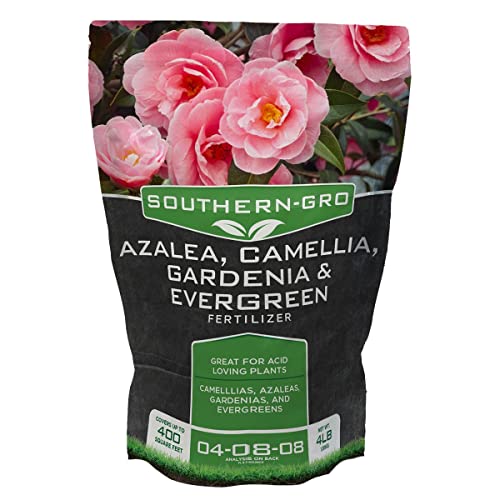
The phosphorus-heavy formula engineered specifically for maximum flower production.
SouthernGRO’s 04-08-08 ratio is the most bloom-focused entry on this list, with 8 phosphorus versus 7 in the Schultz 14-7-7. In plain terms, that means this fertilizer pushes the plant’s energy into flower and root development rather than leafy growth. One owner reported it gave them the “best display of flowers this year,” and another reviewer humorously noted “didn’t kill my plants — I am sure it will help my Encore azaleas to have good blooms in the fall.”
At 4 pounds, this bag offers a good middle-ground size — bigger than the 1-pound Schultz and Dr. Earth bags, but much smaller than the 12 or 36-pound options from True Organic and Espoma. It is safe to use on azaleas, camellias, gardenias, and evergreens, though the manufacturer lists “No warranty” explicitly, so you are betting on the consistent granular mix rather than a brand guarantee.
What makes it stand out
- Highest phosphorus ratio (08) for intense blooming
- 4-pound bag is a practical size for small-to-medium beds
- Works on azaleas, camellias, gardenias, and evergreens
The catch
- No warranty listed — product quality relies entirely on the mix
Grab this when: you are willing to trade a bit of brand reassurance for a 04-08-08 ratio that is dialed in to make your azaleas flower as heavily as possible.
skip it if: you want a trusted consumer brand with customer service backing — the Espoma or Miracle-Gro options offer more manufacturer support.
5. GARDENWISE 8-4-8 Acidic Fertilizer for Azaleas, Camellias, Hydrangeas, Blueberries – 1 Quart
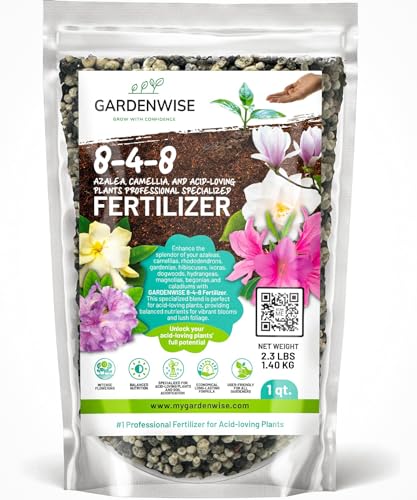
The slow-release specialist that also lowers soil pH with live bacterial microbes.
GARDENWISE 8-4-8 is enriched with magnesium, iron, and manganese — three micronutrients that prevent chlorosis (yellowing leaves) in acid-loving plants. Its slow-release granules require just three feedings per year, making it the lowest-maintenance option in this lineup. One buyer wrote that their rhododendron had “doubled in size” after using it, and another said the plant “came back to life” with greener leaves and a “large number of beautiful blooms” after just one season.
The formula also includes live bacterial microbes derived from a bio-solid treatment process that strips “all toxins and heavy metals.” This is an unusual feature among granular fertilizers — most feeds focus solely on the N-P-K numbers and skip the soil microbiology. The target species list is long: azaleas, camellias, hydrangeas, magnolia trees, evergreens, blueberries, gardenias, and berry plants.
Why choose this
- Only 3 feedings per year — the lowest frequency here
- Live bacterial microbes improve soil health
- Enriched with iron, magnesium, and manganese
Keep in mind
- 1-quart bag is small — suitable for a handful of shrubs, not a large hedge
Ideal for: the gardener who wants both a soil acidifier and a slow-release feed in one product, applied only three times a year.
Not the best if: you need to cover a large bed in one go — the 36-pound Espoma bag below goes much further for the same effort.
6. True Organic Azalea, Camellia & Rhododendron Food – 12lb Bag
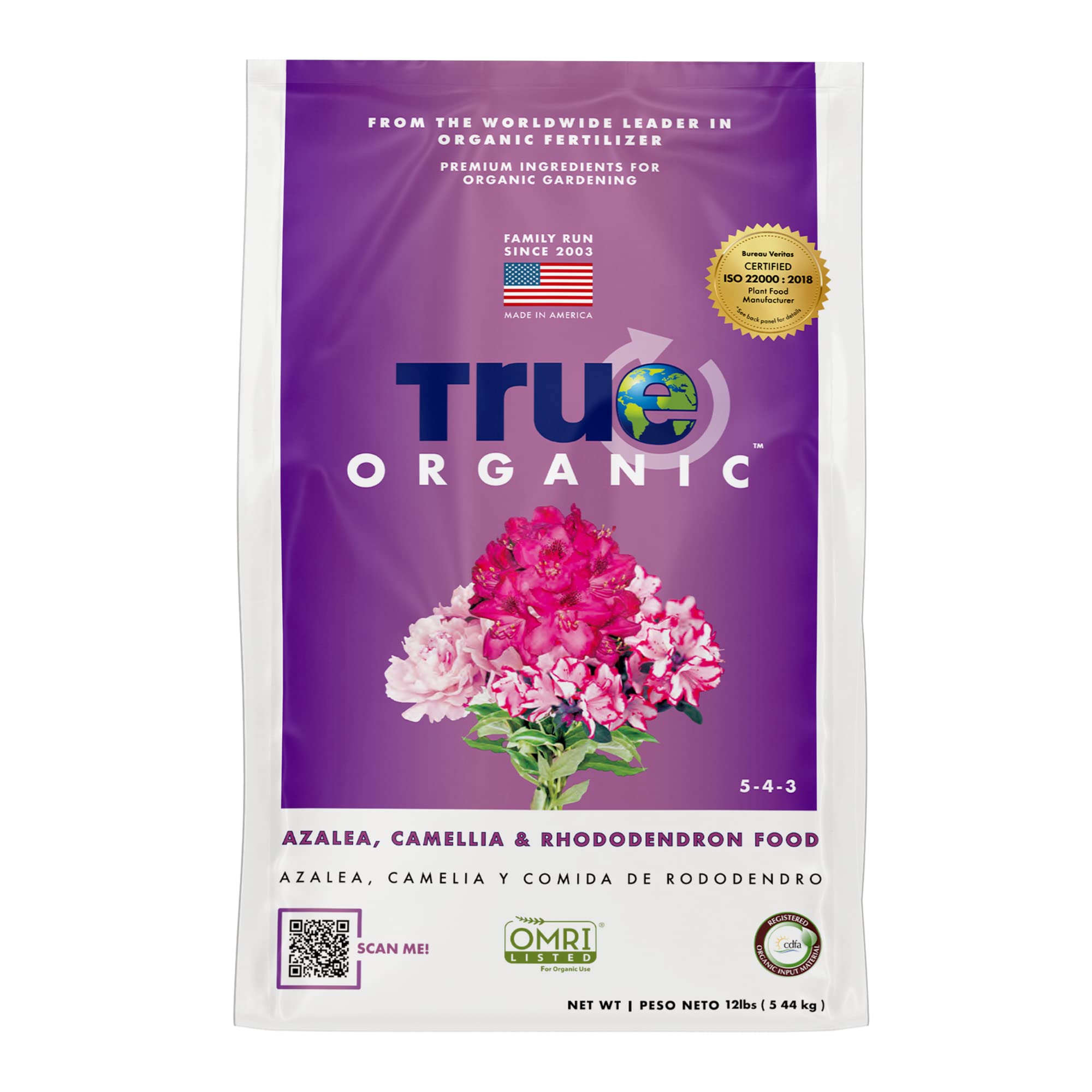
The organic heavyweight that naturally acidifies soil through sulfur and seabird guano.
True Organic takes a different route from the synthetic feeds: its 5-4-3 formula includes 5% soil sulfur to actively lower pH, plus seabird guano, shrimp and crab shell meal, and other natural ingredients. The 12-pound bag covers up to 261 square feet — a meaningful jump from the 1-pound organic bags above, making this the choice for a serious bed of acid-lovers. Owners mention it is “cost-effective vs. expensive fish fertilizers” and one said their rose bush grew “from 2-3 ft to 7 ft tall” after regular use, though those were roses rather than azaleas.
The twice-yearly application schedule (spring and fall) is the simplest routine among the organic options here. Unlike the Dr. Earth powder that you may need to reapply more often, True Organic’s granules break down slowly over months. The ingredient list is 100% organic inputs, but the 5% sulfur means it will smell earthy — one customer observed an “earthy smell but all-natural” as a minor note.
Big bag value: At 12 pounds covering 261 sq ft, this is the most area-efficient organic pick — you get twice the coverage of a 4-pound bag at a similar per-pound value.
Choose this for: established azalea beds or mixed acid-lover borders where you want organic ingredients, low maintenance (twice a year), and enough bag to cover a large space.
Consider a smaller bag if: you only have one or two bushes — the 1-pound Dr. Earth sample size may suit you better without leftover product sitting in the shed.
7. Espoma Organic Holly-Tone 4-3-4 – 36 lb. Bag

The original acid-lover formula since 1929, now in a bag that lasts years.
Espoma Holly-Tone is the heritage pick — it has been the standard organic feed for acid-loving plants since 1929, and the 36-pound bag is the largest size in this guide. Its 4-3-4 analysis includes 5% sulfur, and the exclusive Bio-tone formula (a blend of natural organics) breaks down slowly to provide a “long-lasting reservoir of plant nutrients.” One reviewer called it “on the miracle level” and said they “never will use another fertilizer” after seeing the bloom results on azaleas and hydrangeas.
Because it weighs 36 pounds, versus 12 pounds for the True Organic bag above, this is a serious commitment in both storage space and upfront cost. But if you have multiple acid-loving shrubs, trees, and berry patches, one bag covers spring and fall feedings for a full season. It is approved for organic gardening and registered as an Organic Input Material, so it meets organic production standards without any synthetic shortcuts.
Why serious gardeners buy it
- 36 pounds covers a large property for a full year of feedings
- Original formula with Bio-tone — proven since 1929
- Approved for organic gardening
The practical trade-off
- Heavy bag to carry and store — requires space and strength
Buy this if: you have a large landscape with azaleas, rhododendrons, hollies, blueberries, and other acid-lovers, and you want the original organic formula that has worked for nearly a century.
Pass on this if: you only feed a few potted azaleas — the 36-pound bag will outlast the product’s effectiveness over many seasons of storage.
Understanding the Specs
N-P-K Ratio
These three numbers stand for nitrogen (N), phosphorus (P), and potassium (K) — the primary nutrients every plant needs. For azaleas, a lower first number (nitrogen) prevents excessive leafy growth, while a higher middle number (phosphorus) promotes flower bud development. A 14-7-7 ratio feeds the leaves more than the blooms; a 04-08-08 flips that to focus on flowers and roots. If you are unsure which balance your soil needs, an intermediate 8-4-8 or 5-4-3 is a safe starting point for most acid-loving plantings.
Item Weight and Coverage
Bag weight directly translates to how many plants you can feed. A 1-pound bag covers just a few shrubs; a 36-pound bag covers a large bed or multiple properties. Pay attention to whether the product lists square-foot coverage — for example, the True Organic 12-pound bag covers up to 261 square feet, while a 1-pound mineral feed might cover the same area if it is more concentrated. Heavier bags are cheaper per pound but require more storage space.
Item Form: Granules vs. Powder
Granules are dry particles you scatter on the soil surface; they break down slowly with rain or watering, feeding the plant over weeks or months. Powder dissolves in water and delivers nutrients immediately to the roots. Granules are better for a low-maintenance twice-a-year schedule, while powder works well for a weekly routine or when a plant shows sudden signs of deficiency like yellowing leaves. Both forms can be effective — the choice depends on how much time you want to spend feeding.
Soil Sulfur and pH Management
Some azalea fertilizers include sulfur as an added ingredient (listed as a percentage on the bag). Sulfur gradually lowers soil pH, making iron and manganese more available to the plant — this is why azaleas, which need acidic soil, often green up and bloom better after a sulfur-enriched feed. Products like True Organic (5% sulfur) and Espoma Holly-Tone (5% sulfur) do this naturally, while other feeds rely on the N-P-K alone and assume your soil is already acidic enough.
FAQ
Can I use regular all-purpose fertilizer on my azaleas?
How often should I feed my azaleas with slow-release granules?
Will water-soluble azalea fertilizer burn my plants if I use too much?
What does the N-P-K ratio 04-08-08 mean for my azaleas?
How do I know if my soil is acidic enough for azaleas?
What is the difference between organic and synthetic azalea fertilizer?
Can I use azalea fertilizer on other plants in my garden?
How do I apply granular azalea fertilizer correctly?
My azalea leaves are turning yellow — will azalea fertilizer fix that?
How many pounds of azalea fertilizer do I need for my garden?
Final Thoughts: The Verdict
Across the board, the azalea fertilizer winner is the Schultz ACR 14-7-7 because it combines the fastest visible results (customers note noticeable improvements in about a week) with the convenience of a no-mix slow-release granule and a balanced nutrient profile that includes micronutrients. If you want a water-soluble feed that works on eight different types of acid-loving plants from indoor orchids to outdoor hydrangeas, grab the Miracle-Gro Water Soluble Azalea Food. And for the organic gardener with a large landscape who wants the lowest-maintenance twice-a-year schedule and a proven formula since 1929, the Espoma Holly-Tone 36 lb bag is the season-spanning value pick that serious growers have relied on for generations.
How We Picked
We do not accept paid placement, and we did not hands-on test every unit. Instead, we match each pick to a real buyer and use-case by comparing the manufacturers’ published specifications against the patterns in verified customer reviews — so you get each pick’s real strengths and trade-offs instead of marketing copy.
Sources & Methodology
Specifications: manufacturer listings and product documentation. Review insights: verified customer reviews, as of July 2026. Pricing: not shown on this page (it changes often); check the current price via the retailer link.
As an Amazon Associate, Lawn Gear Lab earns from qualifying purchases. This does not affect which products we feature.