
Specs are compiled from manufacturer listings and verified buyer reviews and can change over time — please confirm the key details on the product page before buying.
A regular flower pot can kill your indoor orchid. Those amazing blooms you brought home have roots that need to breathe, not sit in wet soil. The right pot gives them air and drainage so they can live for years instead of weeks. This guide cuts through the confusion by comparing manufacturer specs and buyer reviews.
I am Rikta, founder of Lawn Gear Lab. Each pick here shows real strengths and trade-offs based on published specs and verified customer patterns.
These are the best pots for orchids indoors that give your plant the airflow and drainage it actually needs.
Quick Picks
- Orchid Pot,3 4 5 6 Inch 8 Pack Clear Plastic (YOPIKUU) — Best Value
- T4U Orchid Pot, 6 Pack 6.3 Inch Clear Plastic — Best Overall
- Orceler 6 Inch Terracotta Orchid Pots, 3-Pack — Premium Pick
- vensovo 6 Inch Terracotta Orchid Pots, 3-Pack — Classic Clay
- W&W Orchid Pot with Holes and Saucer, Teal, 9.7 Inches — Decorative Choice
How To Choose The Best Pots For Orchids Indoors
Orchids are epiphytes (plants that naturally grow on trees, not in soil). The pot you choose must mimic that tree-bark environment. Here is what to check before you buy.
Drainage and Side Holes Are Non-Negotiable
A pot without drainage will drown your orchid. You need holes on the bottom to let water escape and side slits or openings to let air reach the roots. Without both, the roots stay wet and rot quickly — that is the number-one cause of orchid death in homes.
Clear Plastic vs. Terracotta vs. Ceramic
Clear plastic lets you watch root health and soil moisture at a glance, which helps beginners avoid overwatering. Terracotta (a type of porous clay) wicks moisture away from the soil, but it dries out faster and roots sometimes attach to the clay surface. Glazed ceramic (clay with a glass-like coating) is decorative and holds moisture longer, so you must be more careful with watering. No single material is best — it depends on how often you water.
Size and Root Space
Orchids like snug pots. A container that is too large holds too much moisture around the roots, which causes rot. A pot that is too small restricts growth. You want a pot that fits the root ball with about an inch of space around it. A set with multiple sizes lets you match the pot to the plant.
Quick Comparison
On smaller screens, swipe sideways to see the full table.
| Model | Best For | Number of Pieces | Material | Key Feature | Amazon |
|---|---|---|---|---|---|
| YOPIKUU 8-Pack Clear | Value & Variety | 8 | Plastic | Clear visibility | Amazon |
| T4U 6-Pack Clear | Consistent 6.3″ Size | 6 | Polypropylene (PP) | 360° airflow holes | Amazon |
| vensovo Terracotta 3-Pack | Classic Breathability | 3 | Clay Terracotta | Baked at high temp | Amazon |
| Orceler Terracotta 3-Pack | Higher Firing Temp | 3 | Clay Terracotta | Fired at 1922℉ | Amazon |
| W&W Ceramic 9.7″ | Decorative Statement | 1 | Ceramic | Glazed teal finish | Amazon |
In‑Depth Reviews
1. Orchid Pot,3 4 5 6 Inch 8 Pack Clear Plastic (YOPIKUU)

Eight pots in four sizes (3, 4, 5, and 6 inches) so you can repot a whole collection at once.
This set gives you eight pots with matching saucers — two each of 3, 4, 5, and 6 inches — so you can match the pot to each orchid without buying separate containers. The clear plastic lets you see root health and soil moisture at a glance, which helps beginners avoid overwatering. Each pot has slotted side holes and bottom drainage that the maker says are sized so the potting medium does not fall out.
Buyers report that “this and some chunky orchid mix saved my three storebought orchids and helped them bloom a second time.” That shows the airflow design works for real plants. The whole package measures 3 x 6 x 2.6 inches and weighs just 0.23 Kilograms total, so you can move them easily. A few owners mention the pots run shorter than expected, so they fit small orchids leaving nursery pots better than tall-rooted specimens. At this count, you get 8 pieces versus the vensovo terracotta set’s 3 pieces, giving you more flexibility for different plants.
The plastic is thicker than you might expect for the price, and multiple reviews say none arrived broken. They are not self-watering, but buyers mention watering about once a week works fine. If you own several orchids or plan to grow more, this is the practical way to get them all into proper pots at once.
Four sizes, one price: Two each of 3, 4, 5, and 6-inch pots with saucers — enough to repot a whole windowsill without buying extras.
Watch your roots grow: The clear plastic lets you see root health and soil moisture instantly, and sunlight can reach the roots through the pot itself.
Grab this if: you want the most pots for your money and need multiple sizes for different orchids.
Think twice if: you need tall, narrow pots for orchids with long root systems — these run shorter than some alternatives.
2. T4U Orchid Pot, 6 Pack 6.3 Inch Clear Plastic
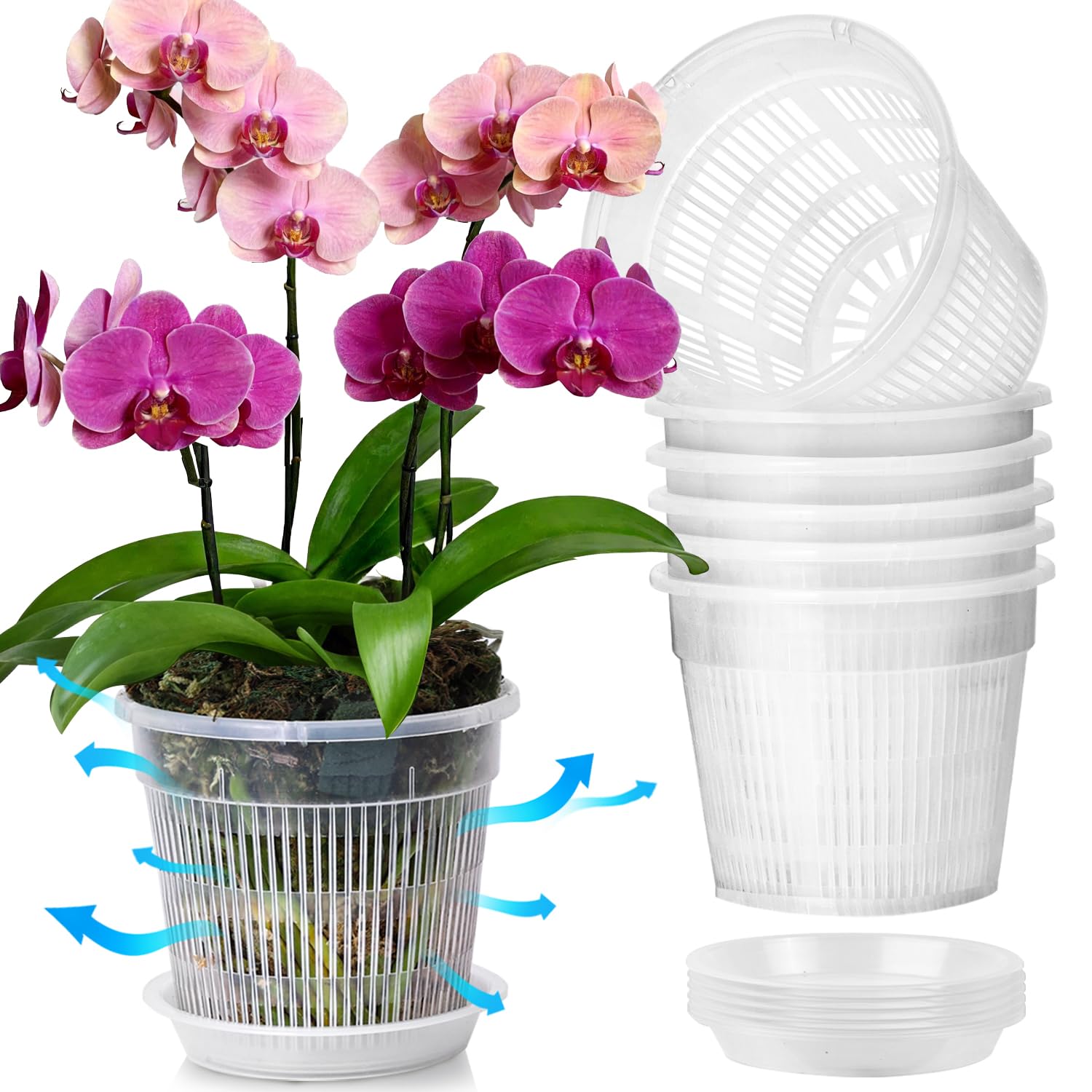
Uniform 6.3-inch size with 360° airflow that gives mature roots more room than the YOPIKUU set.
At 6.3 inches across and 5.63 inches tall, these pots are slightly larger than the YOPIKUU’s biggest option, giving mature roots more room to spread. Each pot holds 0.76 gallons of potting material. Made from polypropylene (PP) plastic (a rigid, durable plastic type), they feel sturdier than basic nursery pots. The 360° airflow design means side holes and bottom drainage work together to keep roots from sitting in water.
Customers note that “the side holes are 3mm wide and medium bark must be used as fine bark went through the openings.” That is a practical tip — you need chunky orchid bark here, not fine mix. Reviews consistently say the pots are perfect for phalaenopsis, dendrobium, and oncidium orchids. Each pot weighs 0.36 Kilograms, versus the YOPIKUU plastic pots at 0.23 Kilograms total for the set, which gives them a more substantial feel. The set includes six pots, all the same 6.3-inch size, with matching saucers.
One honest downside flagged by a reviewer is that the flat bottom sometimes causes roots to grow out sideways rather than down. But the overall verdict from buyers is strong: sturdy build, excellent ventilation, and a good fit for orchids that need consistent airflow. Pick this uniform-size set over the mixed-size YOPIKUU if you have a collection of similar plants.
Why It Works
- 0.76 gallon capacity gives roots space to spread
- Multiple drainage and side holes create good airflow
- Sturdy PP plastic feels durable
The Catch
- 3mm side holes can lose fine bark — use medium chunky mix only
- Flat bottom can cause roots to grow horizontally
Reach for this if: you need a uniform set of sturdy, well-ventilated pots for multiple orchids of similar size.
Look elsewhere if: you prefer fine bark mix or need varied pot sizes in the same order.
3. Orceler 6 Inch Terracotta Orchid Pots, 3-Pack

Fired at 1922℉ versus the vensovo set’s 1796℉ for better crack resistance.
These unglazed clay pots are fired at 1922℉, a higher temperature than the vensovo set’s 1796℉. The maker says this improves crack resistance and durability — so the pot lasts longer without breaking. Each pot measures 4.7 inches tall and 6 inches wide. The saucer is 0.98 inches tall and 4.6 inches wide. The side holes and bottom drainage mimic the natural airy conditions orchids grow in on tree bark.
Reviewers point out that the pots “hold moisture like tree bark, allows root growth” and that the “draining holes deter bacteria/fungus.” Several reviews say watering once a week by soaking works well, and the packaging arrived secure with no broken pieces. The unglazed terracotta is porous (it has tiny holes that let air and moisture pass through the clay wall), which wicks moisture away from the roots and lets the pot breathe. That is a big advantage if you tend to overwater. One reviewer advises using larger orchid soil “due to fairly large holes,” so you will want a chunky mix here too.
The set of three pots is a good middle ground: enough for a small collection without the waste of a larger multi-pack. The terracotta material also gives a natural, earthy look that fits any decor. The dimensions are 5 x 6 x 5 inches, identical in width to the vensovo set but with a higher firing temperature for potentially better durability.
High-heat build: Fired at 1922℉ for greater durability and crack resistance compared to standard terracotta.
Breathes like bark: The porous unglazed clay naturally wicks moisture away, reducing the risk of root rot.
Get these if: you want the best terracotta option with higher temperature firing and proven crack resistance.
Skip if: you prefer to watch root growth through clear plastic or need a larger number of pots for a bigger collection.
4. vensovo 6 Inch Terracotta Orchid Pots, 3-Pack
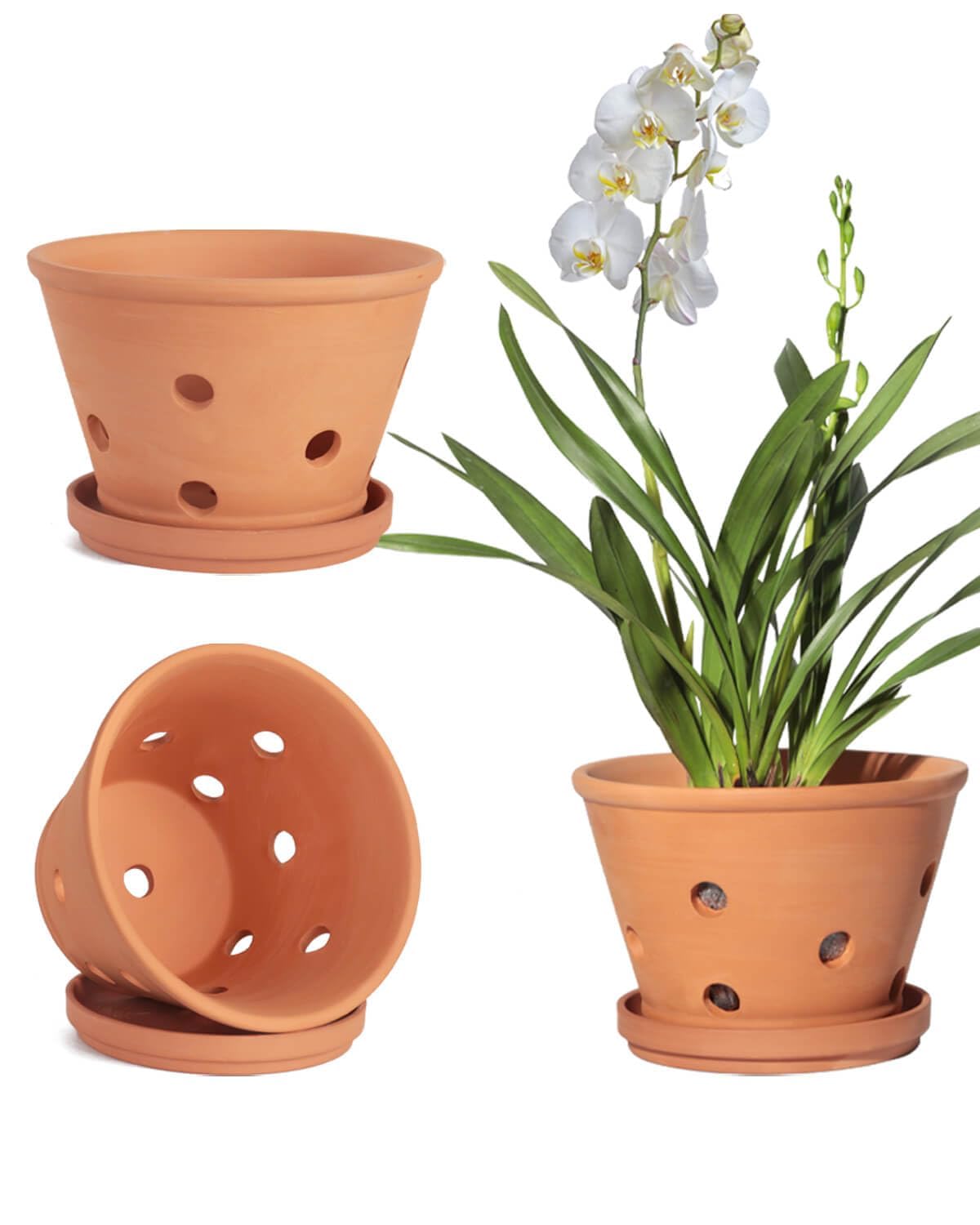
The reliable terracotta set with packaging that the maker says passes a 3-foot drop test.
The vensovo pots are made from top-quality clay and baked at 1796℉. The manufacturer says all packages pass a 3-foot drop test to keep pots intact during delivery. The pots measure 6 inches across and 4.6 inches tall, with a 4-inch bottom diameter. Multiple side holes and a bottom drainage hole aim to support air circulation and root health.
Buyers consistently praise the packaging — many reviews say “it arrived packaged so well with no broken pieces” and “the seller packed it well and all 3 pots and saucers arrived in perfect condition.” That matters for terracotta, which is fragile in transit. However, one reviewer with a different experience said “every orchid plant did not do well in these,” and another noted that one pot broke during unpacking. The general positive sentiment is that these are great for repotting larger orchids, and the clay and holes seem to make the plants happy.
Compared to the Orceler set, the vensovo pots fire at a slightly lower temperature (1796℉ vs 1922℉), which may mean less crack resistance over time. Both offer the same breathable terracotta advantage over plastic. If the Orceler set is out of stock or you want a brand with strong packaging feedback, this is a reliable alternative.
What Stands Out
- Well-packed and rarely arrives broken
- Classic terracotta look and breathability
- Good size for larger orchids
Noted Issues
- Some shoppers say orchids did not thrive in these
- One report of breakage during unpacking
Best for: buyers who want classic terracotta with reliable packaging and who have had good luck with clay pots before.
Not for: anyone whose orchids are sensitive to terracotta — some plants did not adapt well according to reviews.
5. W&W Orchid Pot with Holes and Saucer, Teal, 9.7 Inches
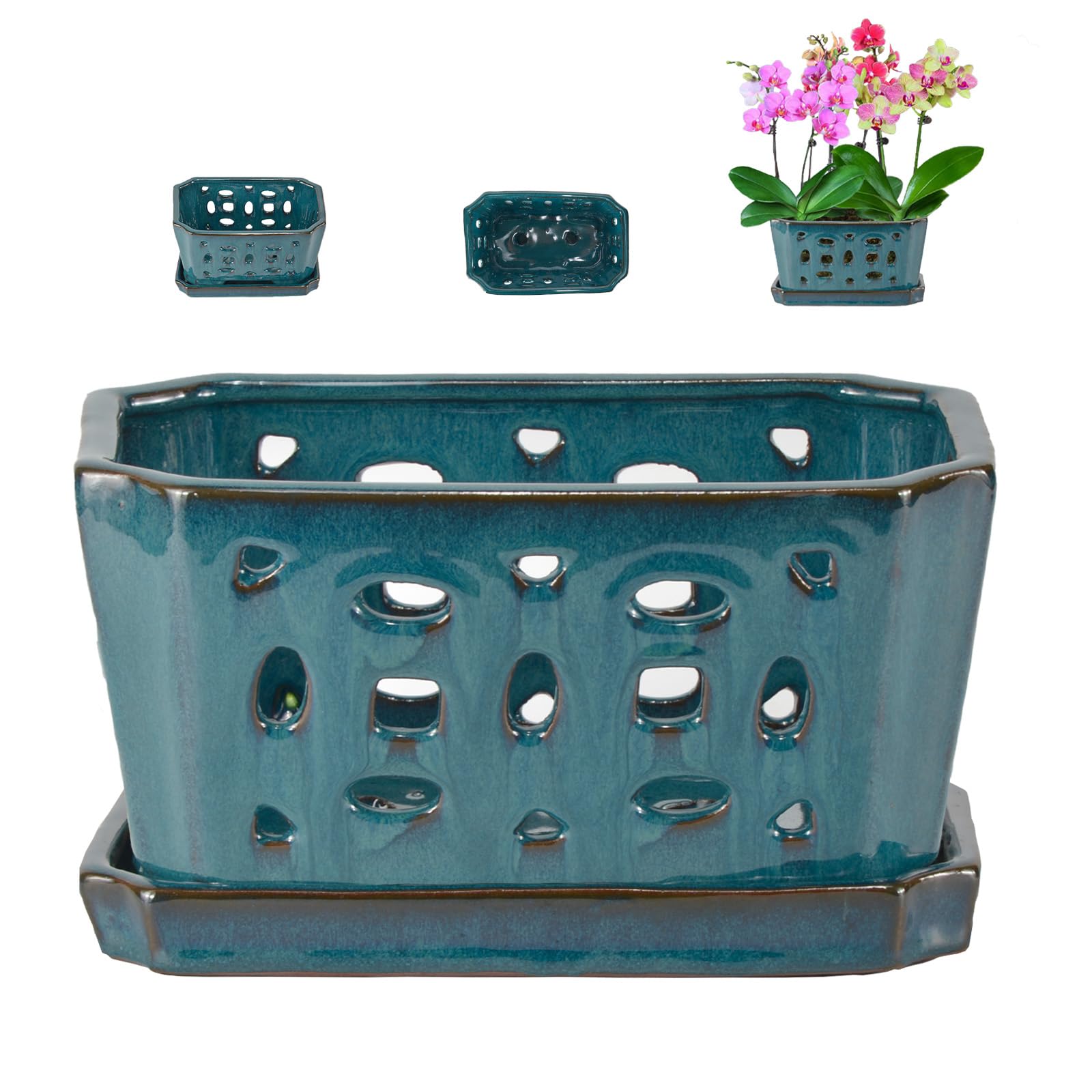
A glazed ceramic (glass-coated clay) pot that turns your orchid into a room accent.
This is the only decorative option in the list, and it makes no apologies for it. The teal color and glazed finish give it a refined look that stands out on a coffee table or entryway console. It measures 9.37 x 6.02 x 5.31 inches and weighs 2.7 Kilograms — significantly heavier than any plastic or terracotta option here, which helps it feel substantial and stable. It includes a saucer and has drainage holes designed for orchids.
Buyers love the look. One review says “this is beautiful! Of course I love anything blue! Perfect for orchids!” Another notes they have been growing an orchid for years that “has yet to bloom and I believe this orchid planter is going to allow is to spread and bloom.” However, because the ceramic is glazed (coated with a glass-like layer), it does not breathe like unglazed terracotta or offer the transparent visibility of clear plastic. You will need to be more careful with watering — the glaze keeps moisture inside longer. The pot is also a single piece, so it makes sense if you have one special orchid to show off rather than a collection to manage.
If the priority is aesthetics and you are confident in your watering habits, this pot brings the beauty. If you are still learning how to care for orchids or need multiple pots, the clear plastic or terracotta options give you more practical advantages.
Room-ready look: The glazed teal finish and ceramic weight make this pot a decorative accessory first, a planter second.
One special plant: This is a single pot (9.7 inches), so it is best for that one orchid you want to highlight rather than a full repotting session.
Choose this if: you want your orchid pot to double as home decor and you are experienced enough to manage moisture in a glazed container.
Pass if: you need multiple pots, prefer clear root visibility, or tend to overwater — the glazed finish does not wick moisture away.
Understanding the Specs
Drainage Holes and Side Slits
These are not just decorative holes. Drainage holes on the bottom let excess water escape after watering. Side slits or openings allow air to reach the root zone, which is essential for epiphytic plants like orchids. Without both, roots suffocate and rot. The T4U and YOPIKUU plastic pots have slotted side holes, while the terracotta pots have multiple smaller round side holes.
Firing Temperature for Terracotta
Terracotta pots are made by baking clay at high temperatures. Higher firing temperatures (like 1922℉ for the Orceler pots versus 1796℉ for the vensovo) generally mean denser, harder, and more crack-resistant clay. Unglazed terracotta is porous (has tiny holes in the clay wall), which pulls moisture away from the soil and lets the pot walls breathe — a natural advantage over glazed or plastic pots.
FAQ
Can I use a regular pot with a drainage hole for orchids?
Should I choose clear plastic or terracotta for my orchid?
How many pots come in each set?
What kind of potting mix should I use with slotted orchid pots?
Can I put a clear plastic orchid pot inside a decorative ceramic pot?
How do I know what size pot my orchid needs?
Is terracotta better than plastic for orchids?
Will the pots break during shipping?
Can these pots be used outdoors?
How often should I water an orchid in a pot with drainage holes?
Final Thoughts: The Verdict
Across the board, the best pots for orchids indoors is the T4U 6-Pack Clear Plastic because it offers a uniform 6.3-inch size, 360° airflow, sturdy PP plastic, and a practical 0.76-gallon capacity — all backed by strong buyer feedback. If you want the most pots for your money, grab the YOPIKUU 8-Pack. And for a decorative statement that shows off a single special orchid, the W&W Teal Ceramic Pot covers that need with its glazed teal finish and 2.7 Kilogram weight.
How We Picked
We do not accept paid placement, and we did not hands-on test every unit. Instead, we match each pick to a real buyer and use-case by comparing the manufacturers’ published specifications against the patterns in verified customer reviews — so you get each pick’s real strengths and trade-offs instead of marketing copy.
Sources & Methodology
Specifications: manufacturer listings and product documentation. Review insights: verified customer reviews, as of July 2026. Pricing: not shown on this page (it changes often); check the current price via the retailer link.
As an Amazon Associate, Lawn Gear Lab earns from qualifying purchases. This does not affect which products we feature.