
Specs are compiled from manufacturer listings and verified buyer reviews and can change over time — please confirm the key details on the product page before buying.
You are buying the biggest bag of potting soil so your plants get enough root room to thrive, not so you can haul around a bag of heavy, wet dirt that suffocates them. The best large bags use ingredients like perlite (a volcanic glass that creates air pockets) and sphagnum peat moss (a fibrous organic material that holds water) to stay light and airy through the season. This guide finds the bags that give you the most volume for your money without turning into hard, crusty soil.
I’m Rikta — the founder and writer behind Lawn Gear Lab. This guide is built by comparing the manufacturers’ published specifications and the patterns across verified customer reviews, so you get each pick’s real strengths and trade-offs instead of marketing spin.
Whether you are filling raised beds, repotting large houseplants, or starting a major container garden, these are the top contenders for the biggest bag of potting soil that balances volume, aeration, and nutrient content for serious plant health.
Quick Picks
- Espoma Organic Potting Soil Mix — Best Overall
- FoxFarm Happy Frog Potting Soil — Top Performer
- Miracle-Gro Moisture Control Potting Mix — Best for Beginners
- Premier Pro Mix HP with Mycorise — Specialist Pick
- Roots Organic Formula 707 Growing Mix — Big Volume Champ
How To Choose The Best Biggest Bag Of Potting Soil
Picking the right large bag of potting soil is about understanding the trade-offs between volume, weight, aeration, and nutrient content. Here are the three specs that matter most.
Bag Volume vs. Actual Usable Soil
A 2 cubic foot bag is the standard benchmark for large mixes. But some bags are loose and fluffy, meaning they settle after a few waterings, while others are denser and heavier. Always check the unit count—some premium brands ship a 2-count (two separate bags) even when the overall volume is the same as a single bag. For big container projects, a 3 cubic foot bag like the Roots Organic option gives you a noticeable volume advantage without needing to buy multiple bags.
Aeration and Drainage Texture
Roots need oxygen as much as they need water. A good mix stays “chunky” and loose thanks to perlite, pumice, or coarse peat moss. Soils that are too dense (often the cheaper heavy bags) can become waterlogged and lead to root rot. Look for a mix that is described as “loamy” or “high-porosity” – these terms mean the soil has enough open spaces for air to circulate around the roots.
Added Nutrients and Mycorrhizae
Many premium soils come “pre-charged” with fertilizers and beneficial fungi. Mycorrhizae (a beneficial fungus that attaches to plant roots) help the plant access water and nutrients more efficiently. Soils with earthworm castings, bat guano, or kelp meal give your plants an initial boost without needing supplemental fertilizer for weeks. If you plan to feed your own schedule, a leaner mix like Roots Organic 707 gives you full control from seed to flower.
Quick Comparison
On smaller screens, swipe sideways to see the full table.
| Model | Best For | Volume | Weight | Key Texture | Amazon |
|---|---|---|---|---|---|
| Espoma Organic Potting Mix | All-around organic indoor/outdoor | 2 Cu Ft (2 Count) | Not listed | Loamy, chunky | Amazon |
| FoxFarm Happy Frog | High-yield container gardens | 2 Cu Ft | 42 Pounds | Live microbes & forest products | Amazon |
| Miracle-Gro Moisture Control | Forgetful waterers & moisture lovers | 2 Cu Ft | 40.51 Pounds | AquaCoir absorbs 33% more water | Amazon |
| Premier Pro Mix HP | Cuttings & low-light growing | 2.8 Cu Ft | 27 Pounds | High porosity, peat-based | Amazon |
| Roots Organic 707 | Large containers & custom feeding | 3 Cu Ft | Not listed | Less perlite, high water retention | Amazon |
In‑Depth Reviews
1. Espoma Organic Potting Soil Mix

The balanced, all-natural mix that keeps roots breathing without synthetic chemicals.
This pick hits the balance between volume and quality. You get a 2 Count package with 2 cubic feet of potting soil that buyers describe as “loamy, chunky soil that doesn’t get dense/crusty.” That texture is the key advantage here—the blend of sphagnum peat moss, perlite, humus, and earthworm castings stays open and airy so water flows through easily rather than pooling on the surface. The added Myco-Tone (a proprietary blend of endo and ecto mycorrhizae) helps roots expand and find nutrients more efficiently, which is a real boost for both indoor houseplants and outdoor vegetable containers.
Unlike the denser Miracle-Gro Moisture Control mix, which some buyers report stays “swampy” for succulents, the Espoma mix drains freely enough that you do not have to worry about root rot in standard containers. Reviewers also mention it contains no large wood chunks or sticks, so the consistency is uniform from the first scoop to the last.
One trade-off: the two-bag configuration means you have to store two separate bags, whereas a single larger bag from Roots Organic might be simpler for a single big project. But for the versatility spanning vegetables, herbs, and houseplants, this is the most reliable all-rounder in the list.
What stands out
- Loamy, chunky texture resists crusting and compaction
- Myco-Tone mycorrhizae boost root efficiency
- Clean mix with no synthetic chemicals
What to consider
- Two separate bags (2 Count) require more storage space
- Premium price compared to standard all-purpose soils
Who it fits: The best choice for a gardener who wants one organic mix that works equally well in indoor pots and outdoor vegetable containers, without needing to add anything extra.
The one limitation: If you need a single giant bag to fill a raised bed fast, the multi-bag format is less convenient than a loose 3 cubic foot option.
2. FoxFarm Happy Frog Potting Soil
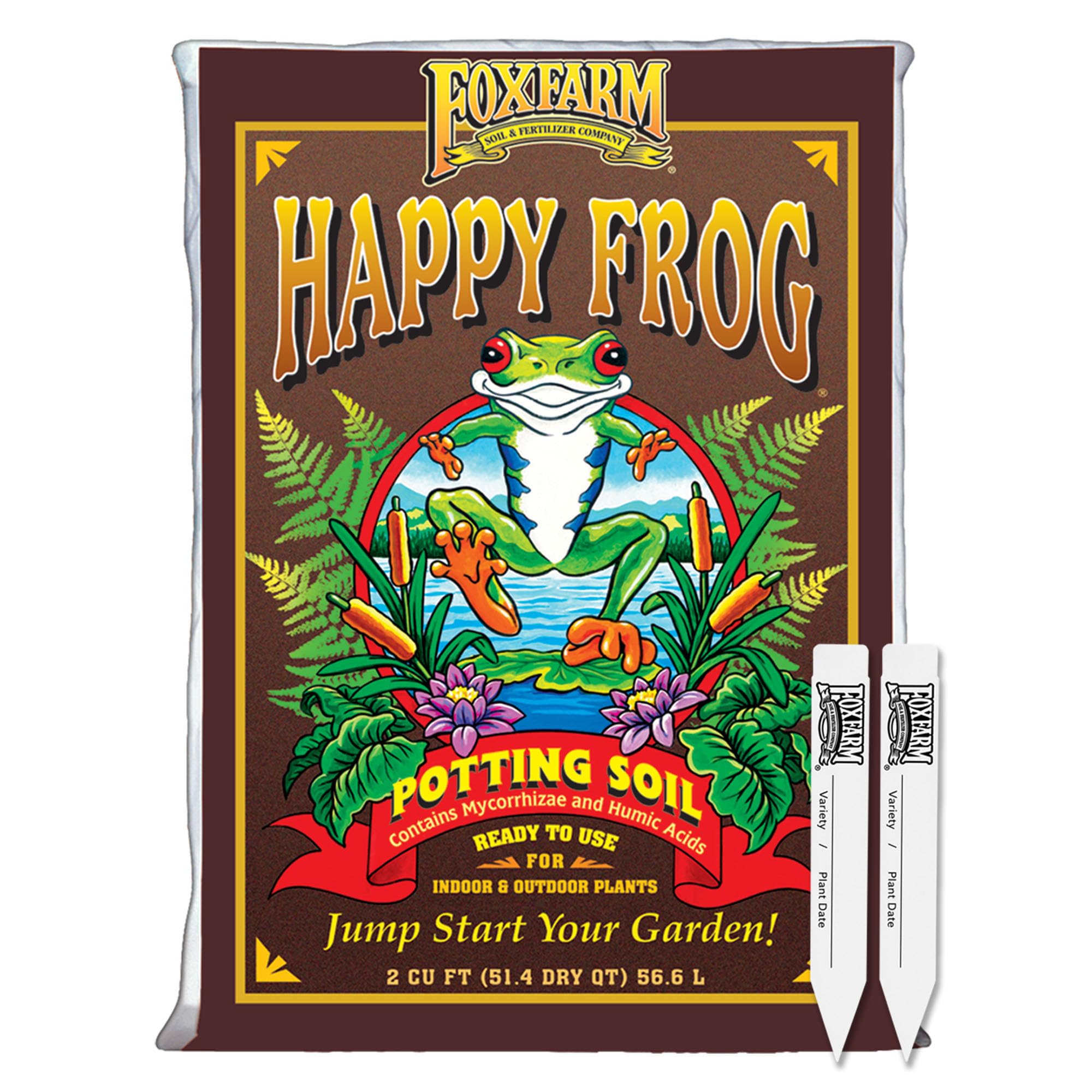
The weighty, microbe-packed mix that jump-starts containers for serious yields.
At 42 pounds for a 2 cubic foot bag, this is the heaviest option in the list—and that weight comes from its rich ingredient list. The blend of 50-60% aged forest products, sphagnum peat moss, perlite, earthworm castings, bat guano, and oyster shell makes it a potent mix right out of the bag. The beneficial soil microbes and mycorrhizal fungi are alive in the bag, designed to dramatically expand root development and boost fruit and flower production. Owners mention, “I was glad to see they ship the bag in boxes to protect the bag from ripping,” which is a thoughtful touch for a heavy product.
In head-to-head comparison, the FoxFarm is significantly heavier than the Premier Pro Mix HP (42 pounds vs 27 pounds), which reflects its denser nutrient profile—it is essentially a pre-fertilized mix. Customers note it supports “strong, high-yielding plants” and one described it as the best soil they have ever used for a raised bin and planter setup. It is designed specifically for container plants, and the included plant tags are a small bonus for labeling varieties.
The catch is that this density means it holds moisture well but can feel heavy in large planters. If you need a light, high-porosity mix for rooting cuttings (like the Premier Pro Mix below), this is not the right choice. But for mature container plants that need a nutrient-dense home, it is tough to top.
Why it wins for yield: The live microbes and bat guano create a self-feeding environment that fuels strong growth for up to two months without supplemental fertilizer.
Best for: Container gardeners growing fruiting plants like tomatoes, peppers, or banana trees who want a heavy-hitting mix that feeds and aerates roots simultaneously.
skip it if: You need a lightweight mix for seed starting or low-light conditions—the density can be too much for young, delicate roots.
3. Miracle-Gro Moisture Control Potting Mix

The forgiving mix that saves forgetful waterers from killing their plants.
This bag uses Miracle-Gro’s exclusive AquaCoir Formula, which the maker says absorbs up to 33% more water than basic potting soil that does not contain sphagnum peat moss, coir, and a wetting agent. The practical benefit is a wide margin for error: even if you skip a watering or overwater, the mix self-regulates to protect roots. Reviewers point out that “two weak pepper plants revived in pure moisture control potting mix, showing 100% turnaround with greener foliage and fruit.” That kind of rebound is exactly what new container gardeners need.
However, not all plants love it. One reviewer noted this mix stays “swampy” and risks root rot for succulents and drought-tolerant plants, calling it dense when wet and needing aeration. It is also heavier than the Premier Pro Mix (40.51 pounds vs 27 pounds), which hints at its denser structure. This bag is a solid choice for moisture-loving plants like pothos, ferns, and annual flowers in standard containers.
One 2 cu. ft. bag fills two 14-inch containers, so the volume is predictable for planning your planting layout. The fertilizer feeds for up to 6 months, meaning you do not need to add plant food during that window—handy for low-maintenance growers.
Where it shines
- AquaCoir formula protects against both over- and under-watering
- Feeds plants for up to 6 months automatically
Where it struggles
- Too moisture-heavy for succulents and cacti
- Dense when wet, risking compaction and root rot for sensitive plants
Who will love it: New container gardeners who struggle with consistent watering schedules or anyone growing moisture-loving annuals and houseplants.
Who should avoid it: Anyone cultivating succulents, cacti, or Mediterranean herbs that need fast drainage and dry cycles between waterings.
4. Premier Pro Mix HP with Mycorise

The featherweight, high-porosity mix that forgives overwatering and supercharges cuttings.
This lightness comes from its high-porosity, peat-based structure, which is specifically formulated for “water sensitive crops, rooting cuttings, and low-light growing conditions.” Shoppers say a “90% success rate with Salvia dorrii cuttings indoors; previous soils gave <20% with mold.” The difference is the aeration: this mix stays so loose that water drains freely, and roots have constant access to oxygen.
The included Mycorise (a mycorrhizal inoculant) helps colonize the root zone, making this an ideal base for seedlings and clones. Reviewers also praise its consistent pH and nutrient availability, with one noting it “combines coco benefits with soil ease.” It is the go-to medium for growers who want full control over their fertilizer schedule without fighting compaction or mold issues.
The trade-off is that this mix is almost too light for heavy feeders in their final containers—you will need to add your own fertilizer regularly. It is a pro-level base, not a complete all-in-one soil. If you want a bag that feeds your plants for months without intervention, the Espoma or FoxFarm options are better fits.
The edge: It offers 2.8 cubic feet of mix at 27 pounds, giving you a large-volume, lightweight option for seed starting and propagation.
Perfect for: Anyone starting seeds or rooting cuttings indoors who has struggled with damping-off or mold in denser soils.
Not for: Gardeners who want a fully pre-fertilized, ready-to-go mix for mature heavy-feeding plants in large pots.
5. Roots Organic Formula 707 Growing Mix
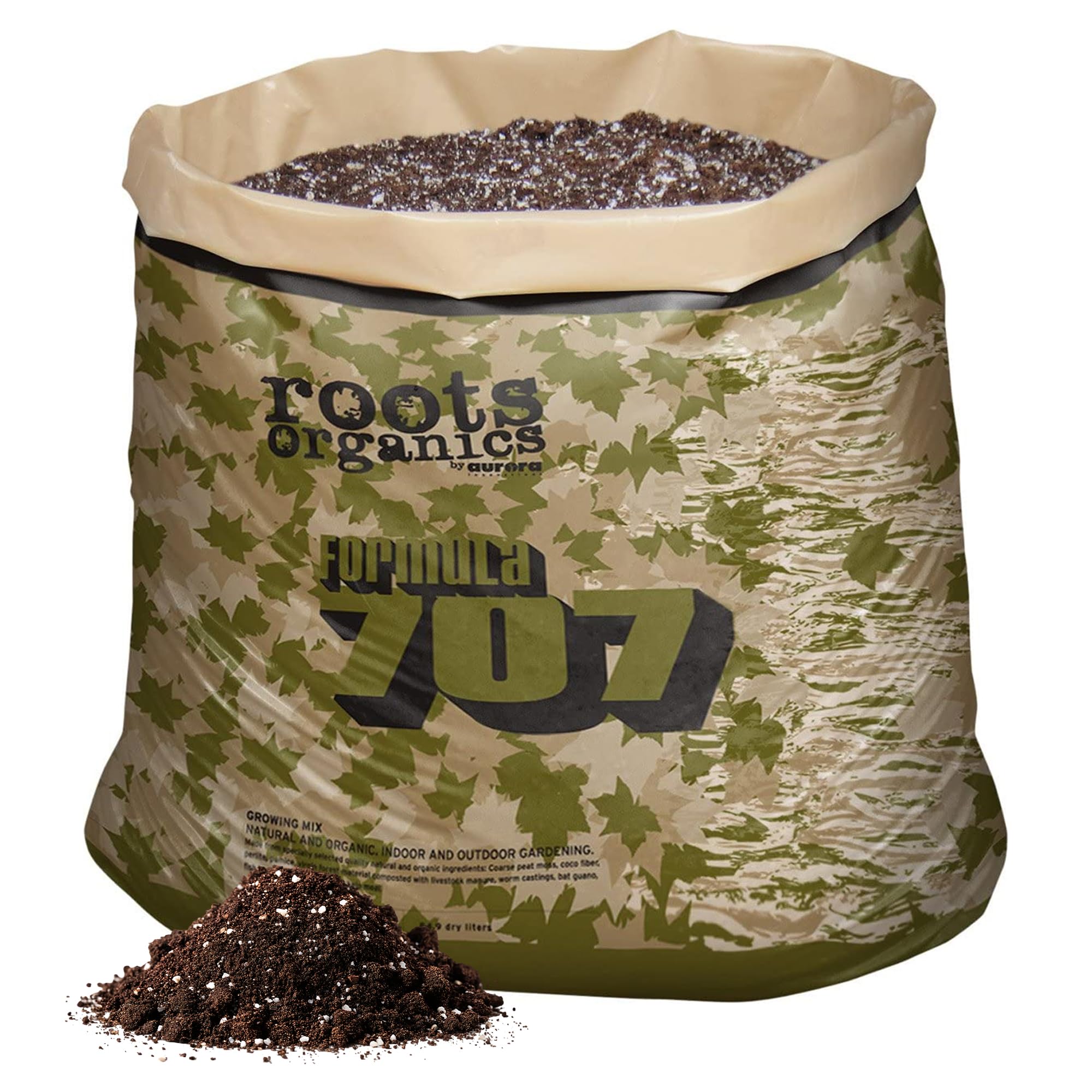
The biggest bag here that lets you go seed to flower without adding a drop of food.
The blend of peat moss, coco fiber, worm castings, and manure is crafted for large containers, with less perlite and pumice than typical mixes to promote better water circulation and moisture retention. One buyer mentioned going “seed to flower with no food till flower,” reflecting the nutrient-dense charge in this mix.
However, this bag has a real packaging issue. Buyers report that shipping can be rough—one owner reported the bag arrived with the box “missing just a cut out with the shipping label” and estimated about 1/3 of the soil lost in transit. If you order this, prepare for potential cleanup. The mix itself is excellent once it arrives: it is described as ready to go “right out of the bag, no mixing needed” for any indoor growing system.
Compared to the Espoma and FoxFarm options, this one gives you more volume per purchase, but it is heavier to move and store. It is also notably a leaner mix than the pre-fertilized options, so if you want a controlled feeding schedule, this is the best blank canvas.
Why buy this bag
- Largest volume at 3 cubic feet (30-gallon bag)
- Nutrient-dense enough to support plants from seed to flower without added fertilizer
What to watch for
- Packaging in transit can leak soil; bag damage reported
- Less perlite means heavier texture; may need aeration for some plants
Best for: Growers filling a single very large container (or multiple large planters) who want maximum volume in one purchase and full control over their own feeding schedule.
Consider first: The shipping integrity is inconsistent—if you cannot risk losing soil to a torn bag, consider the better-protected FoxFarm or Espoma alternatives.
Understanding the Specs
Bag Volume (Cubic Feet vs. Quarts)
Most large potting soil bags are measured in cubic feet. A 2 cubic foot bag is the standard benchmark—it typically fills two 14-inch diameter containers. A 3 cubic foot bag gives you 50% more volume for large projects. Some manufacturers list volume in quarts (1 cubic foot = roughly 25.7 quarts), so the Roots Organic 3 cubic foot bag is about 77 quarts. Compare volumes carefully between brands, as fluffy mixes take up more space but settle after watering.
Weight and Aeration Density
Weight per bag varies dramatically—the FoxFarm Happy Frog weighs 42 pounds for 2 cubic feet, while the Premier Pro Mix HP weighs just 27 pounds for 2.8 cubic feet. This difference signals how much sand, compost, and heavy organic matter are packed in. Lighter mixes generally drain better and are easier to move, but they also need more frequent feeding. Heavier mixes are nutrient-dense but can compact over time if not aerated with perlite or pumice.
FAQ
How many cubic feet of potting soil do I need for a 10-gallon container?
What is the difference between potting soil and potting mix?
Does bigger bag weight mean better quality?
Can I use these large bags for raised garden beds?
How long does potting soil last once the bag is opened?
What is the difference between Espoma and FoxFarm for vegetables?
Will Premier Pro Mix HP work for houseplants?
Does Miracle-Gro Moisture Control prevent overwatering completely?
Final Thoughts: The Verdict
If you want one dependable pick, the biggest bag of potting soil winner is the Espoma Organic Potting Soil Mix because its loamy, chunky texture and organic Myco-Tone formula work across indoor houseplants, vegetables, and outdoor containers without crusting or synthetic chemicals. If you want a high-porosity mix that forgives overwatering and gives you maximum volume per pound, grab the Premier Pro Mix HP. And for the absolute biggest single bag that lets you control your own feeding schedule from seed to flower, the standout is the Roots Organic 707.
How We Picked
We do not accept paid placement, and we did not hands-on test every unit. Instead, we match each pick to a real buyer and use-case by comparing the manufacturers’ published specifications against the patterns in verified customer reviews — so you get each pick’s real strengths and trade-offs instead of marketing copy.
Sources & Methodology
Specifications: manufacturer listings and product documentation. Review insights: verified customer reviews, as of July 2026. Pricing: not shown on this page (it changes often); check the current price via the retailer link.
As an Amazon Associate, Lawn Gear Lab earns from qualifying purchases. This does not affect which products we feature.