
Specs are compiled from manufacturer listings and verified buyer reviews and can change over time — please confirm the key details on the product page before buying.
Hibiscus flowers are magnets for aphids, whiteflies, and spider mites that ruin blooms and weaken leaves fast. The right insecticide stops those pests in their tracks without harming the plant or the good bugs in your garden, and we have broken down the top options by what they actually do.
I’m Rikta — the founder and writer behind Lawn Gear Lab. This guide is built by comparing the manufacturers’ published specifications and the patterns across verified customer reviews, so you get each pick’s real strengths and trade-offs instead of marketing spin.
Whether you are battling a sudden infestation indoors or a recurring pest cycle in your flower beds, our guide to the best insecticide for hibiscus helps you match the right formula to your exact problem and garden setup.
Quick Picks
- Bonide Captain Jack’s Neem Oil — Best Overall
- Garden Safe Brand Fungicide3 — Best Value
- Monterey Spinosad Insecticide Concentrate — Top Performer
- Bonide Eight Insect Control Yard & Garden — Heavy Duty
- Fertilome Spinosad Soap Insecticide — Best for Chewing Pests
- Miracle-Gro Leaf Protect & Shine — Best for Indoor
- Arber Organic Insecticide Concentrate — Best Systemic
How To Choose The Best Insecticide For Hibiscus
Hibiscus is a magnet for sap-sucking pests like aphids, whiteflies, and spider mites. Picking the wrong spray can burn the leaves or fail to control the pest. Here is what actually matters when you shop.
Match the active ingredient to the pest
If you see tiny webs and stippled leaves, you need a miticide. If caterpillars are eating holes through blooms, spinosad is your best tool. For general prevention, neem oil or a multi-purpose formula handles most soft-bodied insects and also stops powdery mildew.
Check if it is safe for blooms
Some insecticides cause flower buds to drop or discolor petals. Look for a product labeled safe for ornamentals and follow the dilution rate. A ready-to-use formula reduces guesswork if you are treating a few potted hibiscus on the patio.
Quick Comparison
On smaller screens, swipe sideways to see the full table.
| Model | Best For | Active Ingredient | Liquid Volume | Form | Amazon |
|---|---|---|---|---|---|
| Bonide Captain Jack’s Neem Oil | Organic 3-in-1 control | Neem Oil | 128 fl oz | Ready-to-Use | Amazon |
| Garden Safe Fungicide3 | Large-volume coverage | Neem Oil Extract | 128 fl oz | Ready-to-Use | Amazon |
| Monterey Spinosad Concentrate | Caterpillars & leafminers | Spinosad | 8 fl oz | Oil | Amazon |
| Bonide Eight Insect Control | Yard & garden perimeter | Insect killer formula | 32 fl oz | Ready-to-Spray | Amazon |
| Fertilome Spinosad Soap | Contact killer for chewing insects | Spinosad + Soap | 32 fl oz | Ready-to-Use | Amazon |
| Miracle-Gro Leaf Protect & Shine | Indoor houseplant prevention | Neem Oil | 8 fl oz | Ready-to-Use | Amazon |
| Arber Organic Insecticide | Systemic soil drench | Biological concentrate | 8 fl oz | Concentrate | Amazon |
In‑Depth Reviews
1. Bonide Captain Jack’s Neem Oil
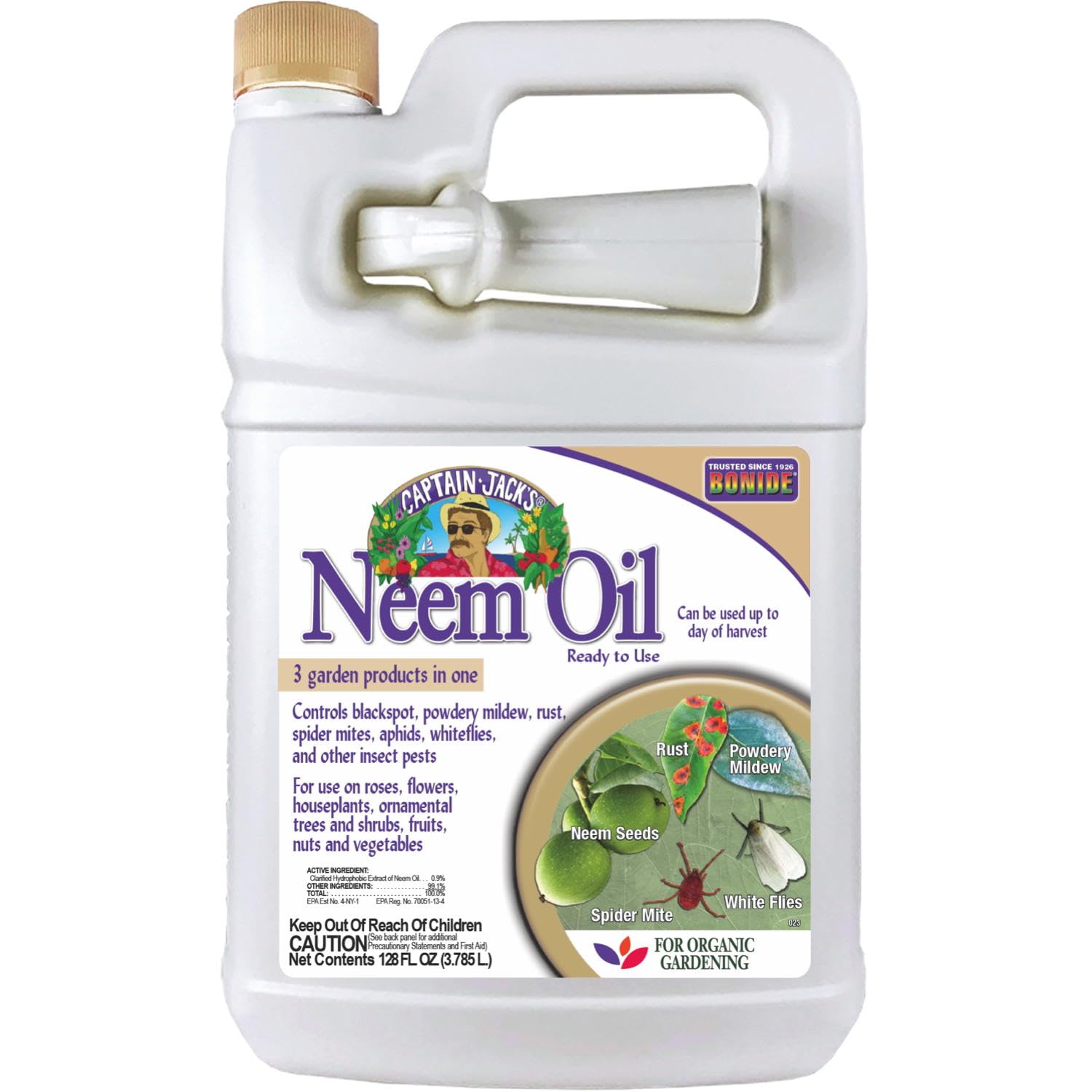
The premium neem-oil workhorse that keeps hibiscus pest-free and mildew-safe.
Your hibiscus gets three layers of protection — a fungicide, an insecticide, and a miticide — all from a single ready-to-use spray. The 128 oz volume means you can treat a whole flower bed without rationing. The active ingredient is clarified hydrophobic extract of neem oil (a refined form of neem oil that mixes with water better and stays on leaves longer) so it kills eggs, larvae, and adult stages of common pests like aphids, whiteflies, and spider mites while also preventing rust and powdery mildew.
Buyers report that it saved their hibiscus from earwigs, and one reviewer noted a light, fresh scent that makes it feel safe enough for indoor use. Unlike the Garden Safe Fungicide3 below, this one is a ready-to-use formula that needs no mixing — you shake the bottle and spray. The catch is the smell: several reviewers mention an eggy odor during application, although the results justify it.
Why it dominates
- Triple-action formula covers fungi, insects, and mites
- Huge 128 oz volume versus the 32 oz competitors
- Safe up until day of harvest for organic produce
The trade-offs
- Strong eggy smell during application
- Requires reapplication every 7–14 days for lasting results
Reach for this if: you want one product that handles fungus, mites, and insects on your hibiscus without buying separate bottles.
Look elsewhere if: you need something odor-free or you are only treating a single small houseplant.
2. Garden Safe Brand Fungicide3
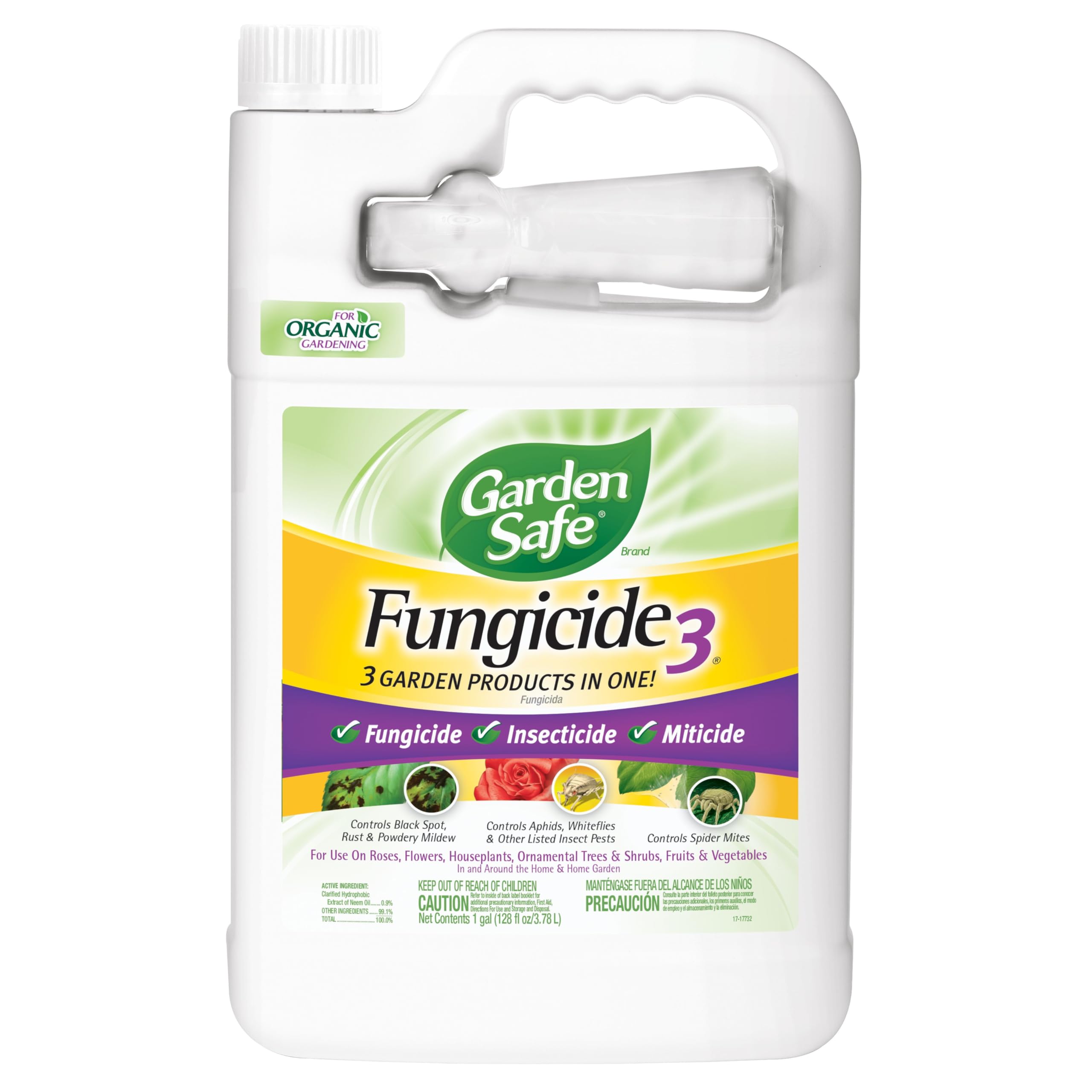
A gallon of neem-based power that matches the premium pick at a lower cost.
If you need the same 128 oz volume for less, this bottle uses clarified hydrophobic extract of neem oil (same active ingredient as the Bonide Captain Jack’s) to prevent black spot, rust, powdery mildew, and a wide range of insects including aphids and spider mites. The sprayer attaches directly to the container, which makes it easy to walk around the garden and treat multiple plants without a separate tank.
One buyer mentioned it “worked amazingly” on their orchids, and another said weekly applications cured mildew on their hibiscus, roses, and tomatoes and “improved foliage and yields.” The main complaints are the quality of the sprayer — users report it has a short reach and can leak — and the fact it can burn plants if used during the heat of the day.
Best for large gardens: the 128 oz volume matches the premium Bonide at a friendlier price, and the neem oil extract formula is EPA-specified for organic gardening.
Buy this if: you have a large hibiscus collection and prefer a budget-friendly gallon that handles fungus and insects.
skip it if: you want a reliable sprayer — you will likely need to replace or refill into a better bottle.
3. Monterey Spinosad Insecticide Concentrate
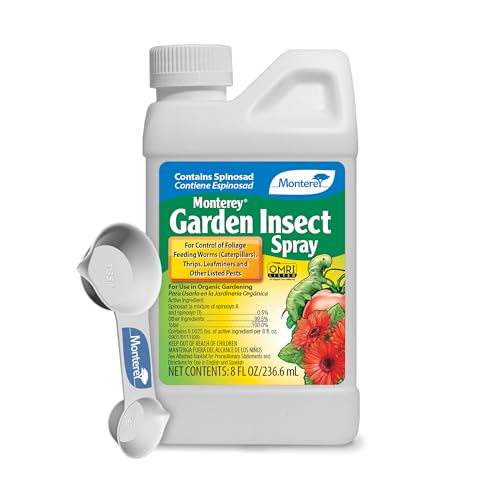
The spinosad specialist that wipes out caterpillars and leafminers on contact.
If chewing insects are tunneling through your hibiscus leaves and blooms, this spinosad concentrate (a naturally occurring bacteria that pests ingest and die from within days) is the targeted fix. It is OMRI Listed for organic gardening, so you can use it on vegetables and fruit trees right up to harvest. The 8 oz concentrate makes up to several gallons of spray — unlike the ready-to-use Fertilome Spinosad Soap below, this one lets you control the dilution strength for light maintenance or heavy flare-ups.
Owners mention it works on harvester ants and sawfly caterpillars on roses. One owner reported it “finally found something that gets rid of leaf miners” and reapplied weekly to stay ahead of new infestations. The downsides: it is expensive for the concentrate size, and it is a broad-spectrum insecticide — use it only on the infested plants rather than spraying everything in sight.
Why it is a specialist
- Targets caterpillars, leafminers, borers, and fire ants
- Odorless — no smell during or after application
- Organic certified and safe for vegetables
Considerations
- Concentrate needs mixing — not grab-and-go
- Can also harm beneficial insects if over-applied
Perfect for: when you see caterpillars, leafminers, or sawflies on your hibiscus and need a fast, organic cure.
Not for: general prevention or indoor plants — use a gentler multi-purpose spray for routine care.
4. Bonide Eight Insect Control Yard & Garden

The perimeter spray that covers 5,000 sq ft and kills over 100 pest types.
When the infestation goes beyond a few aphids and spreads across the whole yard, this hose-end spray is what you attach to your garden hose and walk the property line. Bonide claims it controls over 100 insects — ants, ticks, fleas, beetles, caterpillars — and keeps working for up to 4 weeks. The 32 oz quart treats up to 5,000 square feet, making it the broadest coverage option in this list.
Customers note dramatic long-term results: one customer observed that after one year of use there were far fewer box elder bugs, and after 2 years they hardly saw any. Another reviewer noted it cleared up whitefly gunk on bougainvilleas. The trade-off is it is a synthetic insecticide (permethrin) — it is not approved for organic gardening, and some users found it ineffective on Japanese beetles on landscape bushes despite working well on pine trees.
Garden-wide protection: the 32 oz liquid covers 5,000 sq ft and the hose-end sprayer makes application simple — but it cannot be used indoors and is not for plants you plan to eat.
Best for: large yards with hibiscus planted among shrubs and trees where a perimeter spray is needed.
Not for: potted houseplants or organic gardens — choose a neem oil product for those.
5. Fertilome Spinosad Soap Insecticide

Contact-killing soap and spinosad that stops chewing insects instantly.
This ready-to-use formula pairs potassium salts of fatty acids (0.940%) with spinosad (0.005%) — the fatty acids break down the insect’s outer shell on contact while the spinosad works internally. It controls a wide range of pests including caterpillars, beetles, aphids, leafhoppers, and fruit flies, and it is OMRI Listed for organic gardening.
Reviewers point out that “so far its worked remarkably well — right on contact first use.” The same reviewer noted you “need to alternate with Oil due to insect resistance,” which is a smart practice when using spinosad products long-term. It worked on citrus trees and general garden pests. The main limitation is it is designed for outdoor use on vegetables, trees, and ornamentals — it is not labeled for indoor houseplant use. Unlike the Monterey concentrate, this is ready-to-use, so you do not need to mix anything yourself.
Points for
- Fast contact kill — works right on the first spray
- Organic listed, safe for edible gardens
- Ready-to-use spray bottle, no mixing
Against
- May need to alternate with other sprays to prevent resistance
- Outdoor use only — not for indoor houseplants
Grab this for: a fast knockdown on aphids, caterpillars, and beetles on your outdoor hibiscus without mixing a concentrate.
Pass if: you need to treat indoor plants or want a long-residual spray — this requires repeated contact to work.
6. Miracle-Gro Leaf Protect & Shine
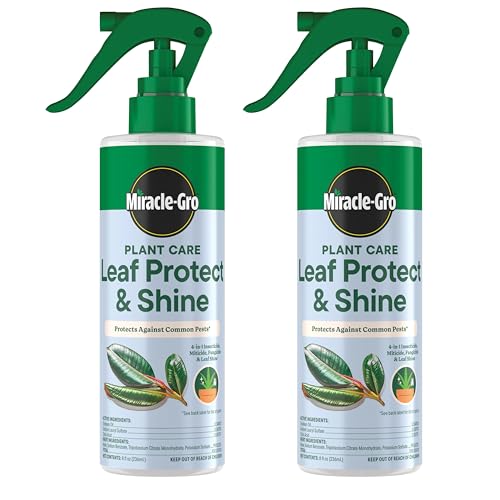
A dual-pack that shines leaves while fighting mites, thrips, and mildew.
This 4-in-1 spray is a combination insecticide, miticide, fungicide, and leaf shine — so you treat pests and end up with glossy leaves after the application. It targets mites, thrips, aphids, and whiteflies, and it includes a fungicide to protect against powdery mildew. The formula has no noticeable smell, which makes it a strong candidate for indoor hibiscus and houseplants like fiddle leaf figs, monsteras, and pothos.
One user highlighted “my plants look radiant and healthy after two days of using these products.” Others confirmed it combines pest control and leaf shine without a greasy finish. The catch is the small 8 fl oz bottle — compared to the 128 oz Garden Safe gallon, this is meant for spot treatment on a few plants rather than a whole garden. It is also not recommended for succulents based on user experience, and some reviewers found the shine effect less dramatic than expected.
Indoor-friendly design: no strong odor, gentle on leaves, and the two-bottle pack gives you backup when one runs out.
Ideal for: anyone growing hibiscus as a houseplant who wants pest control plus a clean, shiny leaf finish.
Not for: large outdoor gardens — you will drain the small bottle fast.
7. Arber Organic Insecticide Concentrate
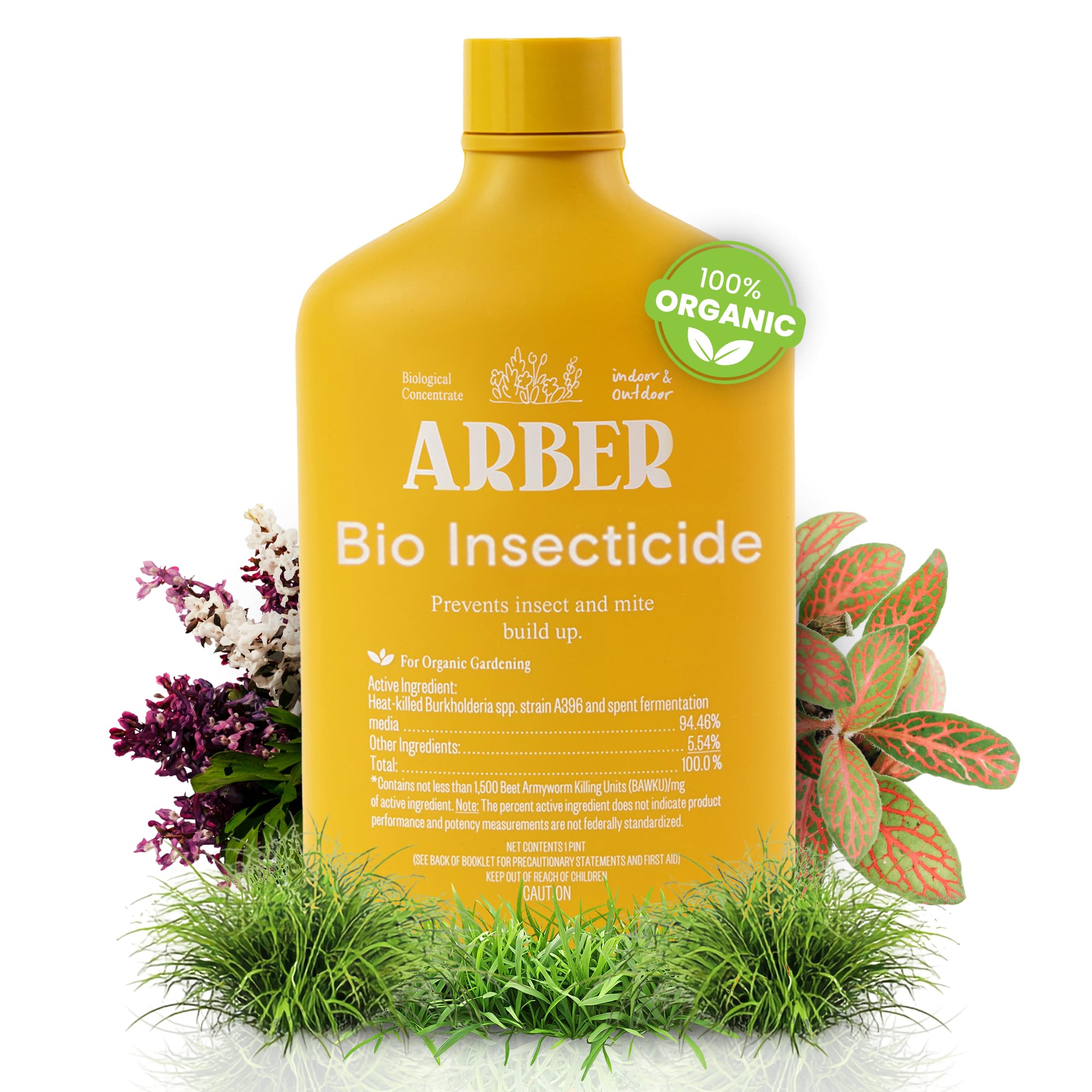
A biological concentrate that works from the soil up to break the pest life cycle.
Arber uses a true liquid concentrate made from organic biologicals (living or naturally derived microorganisms that target pests at the root level) that you mix with water and apply to both the soil and the leaves. It disrupts the pest life cycle in the potting mix — effective against fungus gnat larvae, aphids, whiteflies, and spider mites — instead of just killing adults on contact. The dilution is customizable for everything from delicate seedlings to mature shrubs.
Shoppers say that the Arber combo (water plus spray every 5 days then biweekly) “killed both larvae and adults after 3 applications” and found it “cost-effective long-term.” Another reviewer said it controls spider mites without leaf burn. The major caveat is the liquid concentrate grows mold or scum in the spray bottle within about a week, which can clog your sprayer. You need to mix small batches and use them fresh. Some users also report it was ineffective for fungus gnats and actually seemed to increase them.
How it stands out
- Systemic action — targets larvae in the soil, not just surface bugs
- Gentle on plants — no leaf burn even at higher concentrations
- Low-odor, dye-free formula for indoor and outdoor use
The catch
- Mixed liquid grows mold in the bottle after about a week
- Mixed reviews on fungus gnat control — some users say it made them worse
Best for: growers who want to attack root-level pests like fungus gnat larvae and prefer a biological approach.
Avoid if: you want a ready-to-use spray that lasts in the bottle — this concentrate requires fresh mixing each use.
Understanding the Specs
Neem Oil vs. Spinosad
Neem oil (clarified hydrophobic extract of neem oil) smothers soft-bodied insects and fungal spores. It works as a preventative and a light treatment. Spinosad is a bacterial byproduct that insects ingest and die from within a few days — it is better for chewing pests like caterpillars and beetles that actually eat the leaves. Use neem for general care; use spinosad when you see physical leaf damage.
Concentrate vs. Ready-to-Use
A concentrate (like the Monterey spinosad) requires you to mix the specified amount with water in a sprayer, which gives you more applications per bottle and lets you adjust the strength for different pests. A ready-to-use formula (like Bonide Captain Jack’s Neem Oil) needs no mixing — you spray directly from the bottle or hose-end. Ready-to-use is easier for small jobs; concentrate is more economical for large gardens.
FAQ
Can I use neem oil on hibiscus blooms without damaging them?
How often should I spray insecticide on my hibiscus?
Will insecticide kill the good bugs like bees and ladybugs?
What is the difference between Bonide Captain Jack’s Neem Oil and Garden Safe Fungicide3?
Is spinosad safe for indoor hibiscus plants?
Can I mix insecticide with fertilizer and apply at the same time?
How do I treat fungus gnats in hibiscus potting soil?
Will Bonide Eight Insect Control work on Japanese beetles eating my hibiscus?
Can I use these insecticides on edible hibiscus varieties used for tea?
Why does my hibiscus have sticky leaves after spraying?
Final Thoughts: The Verdict
For most hibiscus growers, the insecticide for hibiscus winner is the Bonide Captain Jack’s Neem Oil because its 128 oz ready-to-use formula kills insects, mites, and fungus with zero mixing and is safe for organic gardens. If you want a budget gallon that does the same job, grab the Garden Safe Fungicide3. And for caterpillar and leafminer emergencies, the standout is the targeted power of the Monterey Spinosad Concentrate.
How We Picked
We do not accept paid placement, and we did not hands-on test every unit. Instead, we match each pick to a real buyer and use-case by comparing the manufacturers’ published specifications against the patterns in verified customer reviews — so you get each pick’s real strengths and trade-offs instead of marketing copy.
Sources & Methodology
Specifications: manufacturer listings and product documentation. Review insights: verified customer reviews, as of July 2026. Pricing: not shown on this page (it changes often); check the current price via the retailer link.
As an Amazon Associate, Lawn Gear Lab earns from qualifying purchases. This does not affect which products we feature.