
Specs are compiled from manufacturer listings and verified buyer reviews and can change over time — please confirm the key details on the product page before buying.
If you have sprayed bamboo leaves with a weed killer only to see fresh canes pop up ten feet away, you have seen why contact sprays fail. Bamboo survives because of its root system — a dense mat of underground stems called rhizomes that can travel 15 feet or more from the main plant. A contact spray (a chemical that only burns the leaves it touches) will not reach those rhizomes. You need a systemic herbicide (a chemical that the plant absorbs through its leaves, then moves through its internal transport system to the roots). The active ingredient that reliably does this job is triclopyr (a compound that mimics a plant growth hormone, causing uncontrolled growth that kills the root tissue). The four products below each deliver triclopyr in different liquid volumes and concentrations so you can match the size of your bamboo patch.
I’m Rikta — the founder and writer behind Lawn Gear Lab. This guide is built by comparing the manufacturers’ published specifications and the patterns across verified customer reviews, so you get each pick’s real strengths and trade-offs instead of marketing spin.
If you are tired of spot-spraying bamboo canes only to see new shoots grow back a few feet away in the spring, you need the right herbicide for bamboo — one formulated to move through the plant’s vascular system and shut down regrowth at the source.
Quick Picks
- Crossbow Herbicide (2.5 Gallon) — Best Overall
- Dow AgroScience PastureGard HL Herbicide, 1 Gallon — Premium Pick
- Remedy Specialty Herbicide Weed Killer & Brush Control, 1 Gallon — Mid-Range Workhorse
- Southern AG 01113 Brush Weed Killer, 1 Quart (32 oz) — Budget Champion
How To Choose The Best Herbicide For Bamboo
Bamboo is a grass, but with a woody stem and a root system that can travel 15 feet or more from the main clump. A contact herbicide that only burns the leaves will not touch the rhizomes (the underground stems that send up new shoots), and the bamboo will be back within weeks. Your choice depends on three things: the active ingredient, the liquid volume you need to cover your patch, and whether the product leaves your grass unharmed.
Look for Triclopyr — Not Just Glyphosate
Every product in this list uses triclopyr (a systemic herbicide that the plant pulls into its vascular system and transports to the roots) as its primary active ingredient. Buyers report that triclopyr-based products cause wilting within a day on tough brush, while glyphosate (a common weed killer that often works on annual plants) often stalls on mature bamboo. For running bamboo species (the invasive kind that spreads through underground rhizomes), triclopyr is the compound that actually penetrates the rhizome network.
Match the Volume to Your Task
The liquid volume in the container tells you how much concentrated product you have to mix. A 1-quart bottle like the Southern AG is enough for spot-treating a small grove or cut stumps. A 1-gallon jug suits a medium pasture or fence line. The 2.5-gallon Crossbow jug covers 2.5 acres, which is necessary for a large-scale infestation. Buying too small means you run out mid-job; buying too large means the concentrate sits on a shelf for years.
Check What It Spares
If bamboo is mixed into a lawn or a pasture with desirable grasses, you need a selective herbicide (a chemical that kills broadleaf weeds and woody plants but leaves grasses unharmed). Crossbow and Remedy both allow grass to survive, which buyers confirm in reviews. PastureGard HL goes a step further — according to the maker, it is formulated to kill invasive species like sericea lespedeza without harming native warm-season grasses. If you are spraying a pure bamboo patch or cut stumps with no grass around, selectivity matters less.
Quick Comparison
On smaller screens, swipe sideways to see the full table.
| Model | Best For | Active Ingredient | Liquid Volume | Unit Count | Amazon |
|---|---|---|---|---|---|
| Crossbow Herbicide | Acres of brush & bamboo | Triclopyr | 2.5 Gallons | 320.0 Fluid Ounces | Amazon |
| Remedy Specialty Herbicide | Pasture & fence-line brush | Triclopyr | 1 Gallon | 128.0 Fluid Ounces | Amazon |
| Southern AG Brush Killer | Small patches & stumps | Triclopyr | 1 Quart | 32.0 Fluid Ounces | Amazon |
| Dow PastureGard HL | Selective woody control | Triclopyr/Fluroxypyr | 1 Gallon | 128.0 Fluid Ounces | Amazon |
In‑Depth Reviews
1. Crossbow Herbicide (2.5 Gallon)

The big-jug solution for anyone with a serious bamboo grove to eliminate.
You get 2.5 gallons of concentrate (320.0 Fluid Ounces) in this jug — enough to cover 2.5 acres of brush. That is a 10.0x gap in unit count compared to the 32.0 Fluid Ounce Southern AG bottle below, which tells you this jug is for a full property, not a test patch. Crossbow is a postemergent product (meaning you spray it on weeds that are already growing) that targets woody plants and brush while leaving grasses unharmed, so if your bamboo is mixed into a lawn, the grass around it stays green. The concentrate is rainfast within two hours, meaning a surprise shower will not wash your work away.
Buyers confirm its strength on tough plants: one review says “spraying them once kills the weeds every time,” referencing thistles, autumn olive, and Japanese barberry. Another buyer notes it works great on blackberries, which share bamboo’s stubborn rhizome habit. At 30 pounds, the jug is heavy, so you need a backpack or tractor sprayer to handle the volume comfortably. The catch is that it may be restricted in some states, so check local regs before ordering. Compared to the 1-gallon Remedy, Crossbow gives you 2.5x the volume for the same active ingredient, making it the better value per ounce for large jobs.
Big-area advantage
- 2.5 gallons covers 2.5 acres — the most volume of any pick here
- Selective: kills woody brush but leaves grass unharmed
- Rainfast in 2 hours, so weather is less of a worry
Jug-size drawback
- 30-pound jug is heavy to carry; requires a wheeled or tractor sprayer for large jobs
- State restrictions may prevent shipping to your address — check before purchase
Reach for this if: you are tackling a big patch of running bamboo across part of your property and want a single jug that lasts the whole job.
Look elsewhere if: you only have a small clump of clumping bamboo — the volume is overkill and the upfront cost is hard to justify for spot-treating a few canes.
2. Dow AgroScience PastureGard HL Herbicide, 1 Gallon
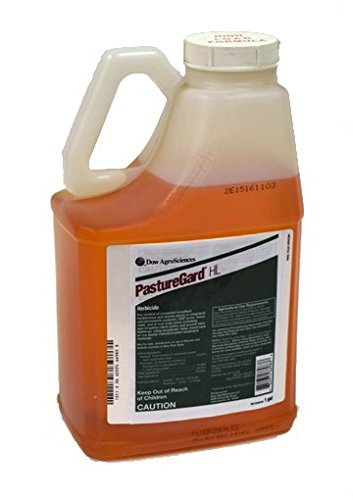
Dual-ingredient chemistry for the toughest bamboo stands you can find.
Two active ingredients — triclopyr combined with fluroxypyr — set this 1-gallon jug (128.0 Fluid Ounces) apart from the single-ingredient picks. The maker says this double-action formula is designed for thorough translocation (the plant pulls the herbicide into its vascular system and carries it down to the roots). It targets hard-to-control brush like blackberry, rose, privet, wax myrtle, sweet gum, persimmon, and osage orange — all woody species that share bamboo’s stubborn regrowth pattern. The recommended mix rate is 1.5 to 4 pints per acre, so a single gallon stretches across a meaningful area.
Buyers confirm its strength against tough invasives: one says “PastureGuard (triclopyr/fluroxypyr) effectively kills invasive sericea lespedeza without harming native warm-season grasses, unlike inconsistent glyphosate.” That selectivity is key if your bamboo is in a pasture or natural area where you want grasses to survive. Another reviewer reports it works on prickly pear cactus in West Texas, which shows how deeply it penetrates woody tissue. One honest note: it is pricey, and a buyer mentions Grazon worked about the same for less money but was unavailable — so if you are on a tight budget, check availability of the alternative first. Compared to the single-triclopyr Crossbow, PastureGard HL is the stronger chemistry but the worse value per ounce for pure volume jobs.
Selective power
- Two active ingredients (triclopyr + fluroxypyr) for deep root kill
- Spares native warm-season grasses — ideal for pasture and natural areas
- Effective against a very wide range of woody brush
Cost and availability
- Premium price per gallon — the most expensive pick here by unit cost
- May be hard to find in some states; verify shipping restrictions
For the tough-job owner: if you have a persistent bamboo infestation that laughs at cheaper sprays, the dual-ingredient formula gives the highest chance of a one-and-done kill.
The catch: the price stings, and if your bamboo is in a pure lawn with no other brush, the cheaper Crossbow will do the same job for less.
3. Remedy Specialty Herbicide Weed Killer & Brush Control, 1 Gallon
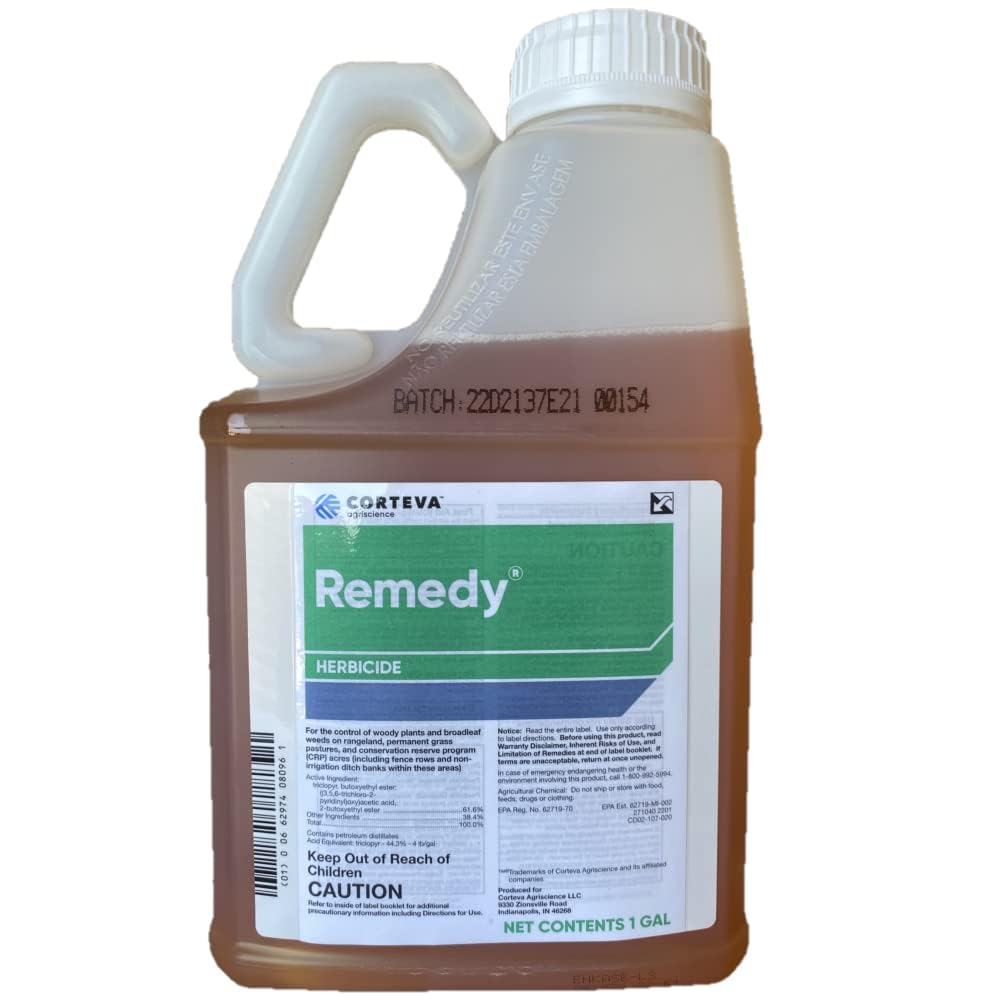
The pasture favorite that brings low odor and deep root penetration to bamboo duty.
Remedy Specialty delivers triclopyr in a 1-gallon jug (128.0 Fluid Ounces) and is labelled as a top-rated pasture herbicide. what separates it from the others is the low-odor formula — it smells less harsh while you spray, which matters if your bamboo is close to the house. The manufacturer also claims it is safe to use around children and pets when applied according to the label. The maker says it works on the entire plant — both roots and top growth — and is ideal for pasture restoration, fence-line brush control, and general brush work. Unlike the 2.5-gallon Crossbow, this volume is manageable with a backpack sprayer.
Buyers confirm its strength on aggressive weeds: one says it “absolutely annihilated my cogon grass problem” — cogon grass being a notoriously deep-rooted invasive that bamboo shares a survival strategy with. Another buyer notes a “basal application is wonderfully deadly on Honey Locust trees” when mixed with diesel at a 1:3 ratio, indicating you can dilute it for cut-stump treatment on bamboo. The tradeoff one reviewer flags is that it is expensive for a gallon, and another says it was ineffective on their particular weeds — likely user error or a misapplication. Compared to Crossbow, Remedy costs more per ounce but offers the low-odor benefit that Crossbow does not advertise.
Household-friendly
- Low-odor formula — less harsh to breathe while spraying
- Labeled safe around children and pets after drying
- 128 oz covers a large fence line or bamboo stand
Price-per-ounce reality
- Expensive per gallon compared to the Crossbow jug on a per-ounce basis
- Some owners mention it ineffective on certain weeds; works best when mixed for cut-stump application
Pick this for: the homeowner who wants a powerful triclopyr concentrate without the heavy odor, and who values the safety window around kids and pets.
Skip it for: large acreage — the Crossbow jug gives you 2.5x the volume for a similar price bracket, making it the better value for big jobs.
4. Southern AG 01113 Brush Weed Killer, 1 Quart (32 oz)

The small-bottle entry point for testing triclopyr on a single bamboo clump.
Southern AG comes in a 1-quart bottle (32.0 Fluid Ounces), the smallest and most affordable entry into the triclopyr family. That is a 10.0x unit-count gap compared to the 320.0 Fluid Ounce Crossbow, so you get a test-sized amount rather than a property-sized one. The label says it covers 512-1024 square feet per gallon when mixed, so the quart will treat a small patch of bamboo shoots or a ring of cut stumps. The active ingredient is triclopyr, the same chemistry as the bigger jugs, so the killing power is the same — just in a smaller, lighter package.
Customers note good results on tough brush within that scale. One says “applied in morning with full sun; leaves wilted by day’s end on blackberry and cherry trees” — a fast visible response similar to what you would expect on bamboo leaves. Another says it “worked exactly as expected” on weeds growing through weed block and rock. The main limit, as one reviewer points out, is that it did nothing to strangler fig, meaning very large or deeply rooted woody plants may need repeated applications or a larger volume. Unlike the larger packages, this bottle lets you prove the method works before you commit to a full gallon.
Low-risk trial
- Smallest and most affordable option — perfect for testing triclopyr on your bamboo
- 9.6 oz bottle is easy to carry and mix in a hand sprayer
- Same active ingredient as premium picks; you are not sacrificing chemistry
Volume limitation
- Only 32 oz of concentrate — insufficient for more than a small patch
- Some tough woody plants may need multiple treatments due to limited coverage
If you are unsure triclopyr will work on your bamboo, start here. A small grove of clumping bamboo or a few cut stumps is exactly what this bottle is sized for.
If you have running bamboo taking over a quarter-acre or more, skip this bottle. You will run out mid-job and pay more per ounce than the larger jugs.
Understanding the Specs
Triclopyr: The Root-Killing Ingredient
Triclopyr is a systemic herbicide (a chemical that the plant absorbs and moves through its internal transport system) that mimics a natural plant-growth hormone. When you spray it on bamboo leaves, the plant absorbs it and carries it down through its vascular system into the rhizomes (the underground stems that send up new canes). Because bamboo spreads through rhizomes rather than seeds, a contact-only spray that burns the leaves does nothing to stop new shoots from popping up ten feet away. Triclopyr, however, reaches those hidden growth points and stops them from regenerating. Every product in this review uses triclopyr as its primary active ingredient.
Unit Count vs. Coverage Area
Unit count is the total fluid ounces of concentrate in the bottle. That is different from the coverage area, which depends on how much you dilute the concentrate with water. For example, the Southern AG label says it covers 512-1024 square feet per gallon (of mixed spray), while the Crossbow jug says it covers 2.5 acres. The more concentrated the product, the fewer fluid ounces you need per gallon of water — but the higher the unit count, the more total spray you can mix. Buying a larger jug gives you a lower cost per ounce of concentrate, which matters if you need to treat a large bamboo grove repeatedly.
FAQ
Will this herbicide kill bamboo permanently in one application?
Can I use these products on bamboo if it is growing near my grass lawn?
Which application method works best for bamboo: foliar spray or cut-stump?
How long after spraying can I let my kids and pets back on the treated area?
Is triclopyr safe to use near a water source or pond?
Which volume should I buy for a 50-foot fence line of bamboo?
Do these products have a strong odor when spraying?
Will these herbicides kill other plants if I accidentally spray them?
What is the difference between Remedy and PastureGard HL for bamboo?
Final Thoughts: The Verdict
For the majority of shoppers, the herbicide for bamboo winner is the Crossbow Herbicide because its 2.5-gallon jug (320.0 Fluid Ounces) gives you the best cost per ounce for large jobs, and it leaves your grass unharmed. If you want a dual-ingredient formula for the toughest bamboo stands, grab the Dow PastureGard HL. And for testing triclopyr on a small clump before committing to a gallon, the Southern AG Brush Killer is the budget-friendly entry point that still uses the same active chemistry.
How We Picked
We do not accept paid placement, and we did not hands-on test every unit. Instead, we match each pick to a real buyer and use-case by comparing the manufacturers’ published specifications against the patterns in verified customer reviews — so you get each pick’s real strengths and trade-offs instead of marketing copy.
Sources & Methodology
Specifications: manufacturer listings and product documentation. Review insights: verified customer reviews, as of July 2026. Pricing: not shown on this page (it changes often); check the current price via the retailer link.
As an Amazon Associate, Lawn Gear Lab earns from qualifying purchases. This does not affect which products we feature.