
Specs are compiled from manufacturer listings and verified buyer reviews and can change over time — please confirm the key details on the product page before buying.
The biggest frustration with a raised bed is the backache from bending over and the disappointment when a bed warps or rots after a single season. You want a cedar bed that handles deep roots, stands up to weather, and puts the soil at a comfortable working height. This guide compares the four strongest contenders, from a massive 8-foot-long planter that holds nearly half a ton of soil to a compact elevated bed built for patios and accessible gardening.
I’m Rikta — the founder and writer behind Lawn Gear Lab. This guide is built by comparing the manufacturers’ published specifications and the patterns across verified customer reviews, so you get each pick’s real strengths and trade-offs instead of marketing spin.
Whether you are filling a small deck corner or mapping out a full vegetable patch, this page breaks down the specs and real-owner experiences that separate a lasting diy cedar raised bed from one that splinters, bows, or leaves you hunched over.
Quick Picks
- Infinite Cedar Deep Root Cedar Raised Bed Garden Kit — Best Overall
- BlueWish 96”L x 24”W x 30”H Outdoor Cedar Garden Bed, 2×8 FT — Premium Pick
- Greenes Fence Original Cedar Elevated Garden Bed, 24″ W x 48″ L x 31″ H — Best Value
- BlueWish 72”L x 23”W x 30”H Outdoor Cedar Garden Bed, 2×6 FT — Budget Champion
How To Choose The Best DIY Cedar Raised Bed
Picking a cedar raised bed depends on three main factors: how deep the soil needs to be for what you want to grow, how much you are willing to bend over during planting and harvesting, and how long the cedar will last before weather takes its toll. Get these three right and the bed lasts for years. Get one wrong and you will replace it next spring.
Depth Matters More Than Width
A bed that is 6 to 7.5 inches of interior soil depth (the standard on many elevated models) works great for lettuce, herbs, strawberries, and shallow-root flowers. But if you want to grow carrots, tomatoes, peppers, or any deep-rooted vegetable, you need at least 12 inches of soil — ideally 16 inches or more. That is the difference between an elevated planter box and a deep-root garden kit. Deep beds hold moisture longer and give roots room to spread, but they also require much more soil to fill, which adds weight and cost. Check the interior depth number, not just the overall bed height.
Table Height vs Ground Level
The biggest physical difference between these beds is standing height versus ground level. Elevated beds with legs put the soil surface at roughly 30 inches off the ground, so you can work standing up or sitting on a stool without ever hunching over. Ground-level beds sit directly on the lawn or patio, which means you will be kneeling or bending to reach the plants. Elevated beds eliminate bending for gardeners with back pain, knee problems, or mobility issues. For the gardener who wants maximum soil volume and a more traditional look, a deep ground-level box is the classic choice. Both styles use cedar, but the elevated models add legs and drainage holes to manage water.
Quick Comparison
On smaller screens, swipe sideways to see the full table.
| Model | Best For | Soil Capacity | Interior Depth | Weight Capacity | Amazon |
|---|---|---|---|---|---|
| Infinite Cedar Deep Root Kit | Deep-root vegetables | 16 cubic feet | 16.5 inches | — | Amazon |
| BlueWish 96″ x 24″ x 30″ | High-capacity elevated planting | 9.8 cubic feet | 8.66 inches | 990 lbs | Amazon |
| Greenes Fence Elevated Bed | Patio and accessible gardening | 7 cubic feet | 7.5 inches | — | Amazon |
| BlueWish 72″ x 23″ x 30″ | Mid-size elevated beds | 6.8 cubic feet | 8.66 inches | 661 lbs | Amazon |
In‑Depth Reviews
1. Infinite Cedar Deep Root Cedar Raised Bed Garden Kit

The deep-root champion that lets carrots and tomatoes stretch their legs.
If you have ever tried growing carrots in a shallow planter and ended up with stubby, twisted roots, this kit is the fix. The interior soil depth is 16.5 inches — nearly double the 8.66 inches of the elevated models — which means root vegetables have room to grow straight and deep. The soil capacity is 16 cubic feet, which is a 2.4x gap compared to the 6.8 cubic feet of the smaller BlueWish elevated bed. That volume also means the bed holds moisture longer between waterings during hot weeks.
The boards are 1-inch-thick premium Western Red Cedar, which is naturally rot-resistant and untreated. Buyers report that assembly takes about 15 minutes and that the wood is smooth and easy to work with. One reviewer noted they lined the bottom with hardware cloth to keep gophers out and added internal bracing to prevent the sides from bowing under wet soil — a smart precaution given the 73.5 x 39.5 inch footprint. The kit includes all hardware and can be disassembled if you move beds later.
The trade-off is that this ground-level bed requires kneeling or bending to tend plants. The listed dimensions can shift by about 2 inches depending on how you seat the boards inside the brackets, as one buyer discovered. But for root-deep growing and the most durable construction in the lineup, this kit is the obvious pick.
What makes it the winner
- Deepest soil by far at 16.5 inches — perfect for carrots, tomatoes, peppers
- 1-inch thick Western Red Cedar resists rot without chemical treatments
- Easy 15-minute assembly; simple to disassemble later if needed
What to know before buying
- Ground-level design means you will bend or kneel; no elevated height
- Actual dimensions can vary by 2 inches depending on board placement
- No hardware cloth or liner included — budget for adding gopher protection
Best for deep-root growers: pick this if carrots, potatoes, and tomatoes are the main event in your garden and you want a rugged, long-lasting box that stays put on the lawn.
skip it if: you need a table-height work surface to avoid bending over — this bed sits flat on the ground.
2. BlueWish 96”L x 24”W x 30”H Outdoor Cedar Garden Bed, 2×8 FT
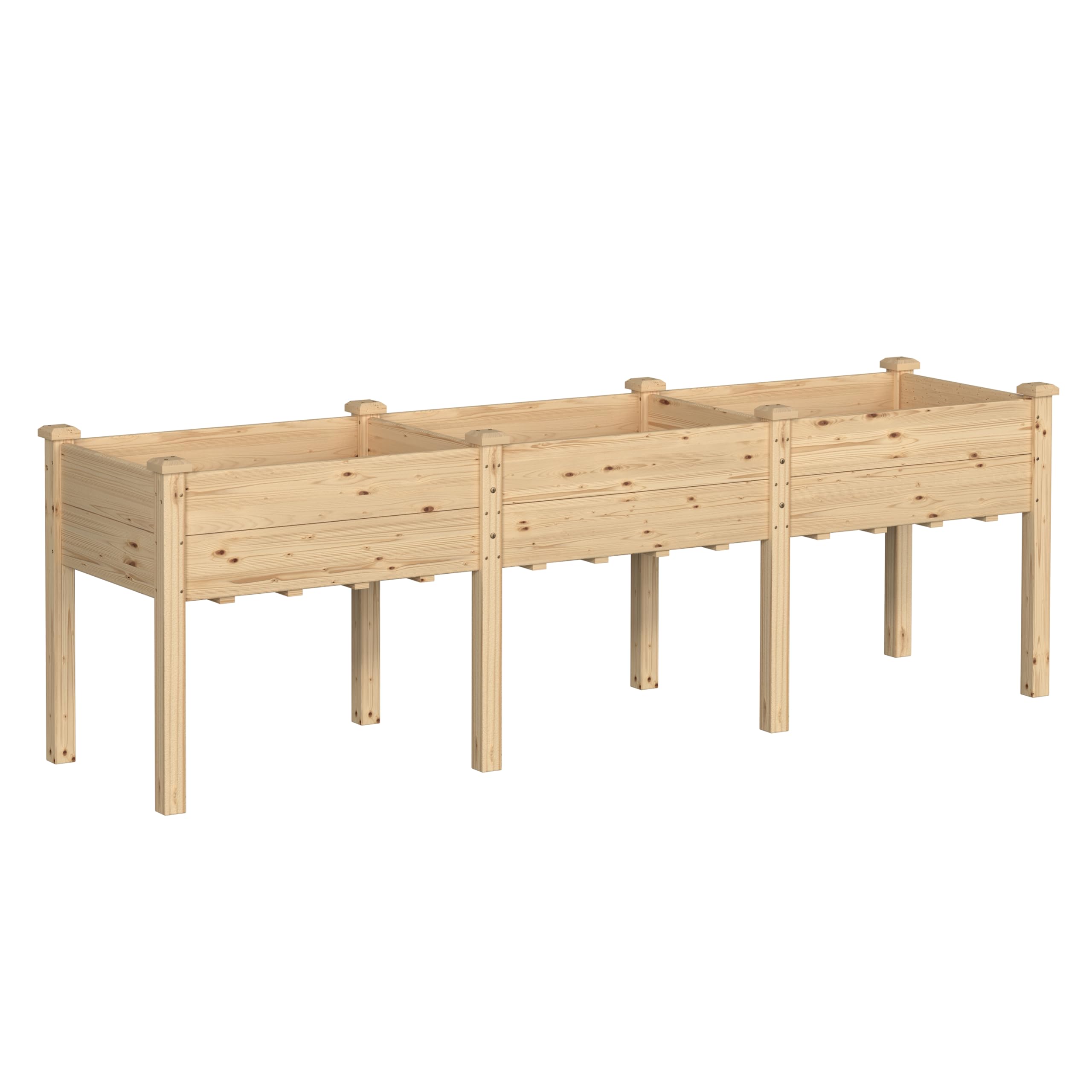
Eight feet of cedar that holds nearly half a ton of soil at standing height.
At 96.46 inches long and 30.2 inches tall, this is the largest elevated bed in the lineup — a serious structure for anyone who wants to grow a lot of food without wrecking their back. With 9 drainage holes in the flat bottom, excess water drains quickly, which protects roots from rot in wet climates.
The interior soil depth is 8.66 inches, which is typical for an elevated bed and works well for shallow-root plants like lettuce, herbs, strawberries, and flowers. Owners mention that assembly runs about an hour with a power drill, and that the wood is untreated pale cedar with a pleasant smell. One buyer mentioned that the bottom boards on their two planters did not align perfectly and required cutting — a minor fitting issue that some builders will encounter. The height above ground is 18.5 inches, which combined with the legs gives you a comfortable standing work surface.
If you want the biggest elevated footprint possible without moving to a ground-level box, this is the pick. Just be ready for the screw count. One owner reported that the build requires roughly 80 screws and an electric screwdriver to keep assembly moving quickly. The 8 legs provide solid support, but the long span means you will want to place it on level ground to avoid wobble.
Why it stands out
- Enormous 8-foot length and 990 lb weight capacity — the biggest elevated bed here
- 9 drainage holes prevent waterlogging effectively
- Ergonomic 30.2 inch height means no bending while planting or weeding
What to watch for
- 8.66 inch interior depth is fine for shallow roots but not for deep vegetables
- Customers note bottom boards can require trimming to fit correctly
- Assembly takes roughly 80 screws; a power drill is strongly advised
Perfect for the high-volume elevated gardener: choose this if you have a large, level space and want to grow a wide variety of shallow-root crops without stooping.
Look elsewhere if: you need deep soil for carrots or tomatoes, or you want a quicker, less screw-heavy assembly.
3. Greenes Fence Original Cedar Elevated Garden Bed, 24″ W x 48″ L x 31″ H

A back-saving patio bed that assembles in 15 minutes with a rubber mallet.
The standout feature is the 15-minute assembly. Unlike the BlueWish models that need roughly 80 screws and an electric screwdriver, the Greenes Fence bed uses pre-cut slats and brackets that fit together with just four screws total. Several reviewers point out putting the whole thing together in about 15 minutes using a rubber mallet on a few tight spots. That ease of assembly makes this the best pick for anyone who wants gardening results this weekend.
The soil capacity is 7 cubic feet (7 cubic feet according to the specs, and one buyer verified it holds roughly three 50-quart bags of soil). The interior depth is 7.5 inches — enough for herbs, lettuce, peppers, and flowers, but not deep enough for carrots or large tomatoes. The bed is made from unfinished North American Cedar, and the rustic cut means edges can be splintery. Many reviewers advise wearing gloves during assembly and note that a couple of hours of sanding transforms the surface to a smooth, sauna-like feel. The natural drainage happens through gaps between the bottom slats, and a fabric liner is included to keep soil from falling through.
At 31 inches tall, this is the highest bed in the comparison, giving you the most comfortable standing work height for tending plants. The compact 48-inch length fits neatly on a deck, patio, or small balcony without overwhelming the space. It also includes a mesh guard in the gaps to control drainage and keep the soil in place. The trade-off is that the wood is rough-cut and untreated, so you may want to seal or stain it yourself to extend its life beyond a few seasons — the manufacturer markets it as a rustic look by design.
What wins you over
- Lightning-fast assembly with just four screws; mallet optional for tight fit
- Highest overall bed height at 31 inches for back-friendly gardening
- Includes fabric liner and mesh drainage control; Made in the USA
What you should know
- Splintery rough-cut cedar needs gloves for handling and optional sanding
- 7.5 inch depth is too shallow for deep-rooted vegetables
- Unfinished wood means you may want to apply sealant for longevity
Great for the casual or mobility-conscious gardener: pick this if you want a quick, lightweight elevated bed for a patio and you plan to grow shallow-root crops like herbs and lettuce.
Not ideal if: you need deep soil for root vegetables or prefer a smooth, pre-sanded finish from the start.
4. BlueWish 72”L x 23”W x 30”H Outdoor Cedar Garden Bed, 2×6 FT
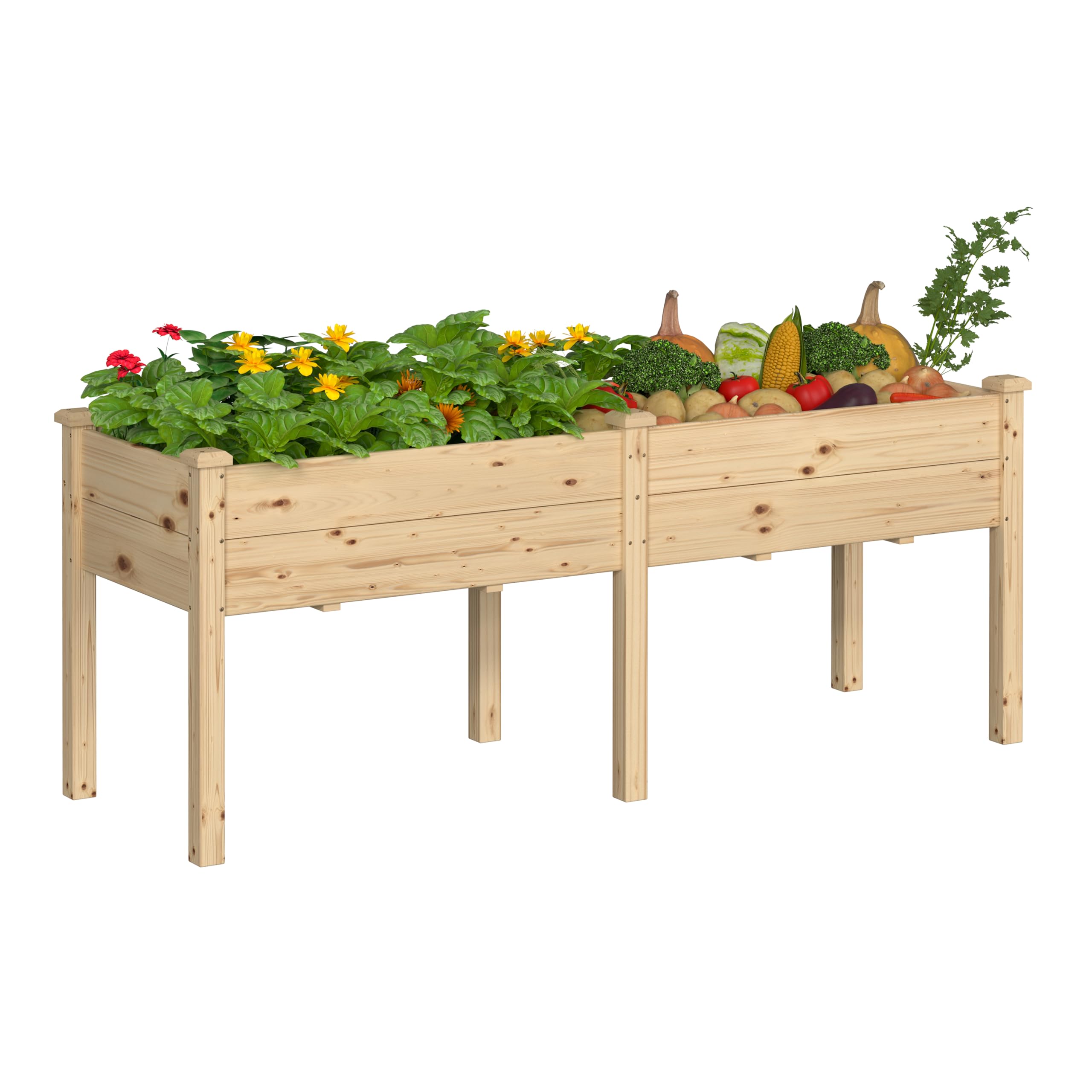
A big elevated bed at a budget-friendly price — just be ready for 80 screws.
This 6-foot elevated bed takes the same basic design as the premium 8-foot model above but shrinks it down to a more manageable 72-inch length and a 6.8 cubic foot soil capacity. The weight capacity is 661 lbs, which is still enough for several large plants and wet soil. The 30-inch overall height and 18.5 inch ground clearance keep you standing upright while you work — the same ergonomic benefit as its bigger sibling. The 8 drainage holes in the flat bottom help prevent water from pooling around your plant roots.
Assembly follows the same pattern as the 8-foot BlueWish model: roughly 80 screws and a strong recommendation for an electric screwdriver. One customer observed the bottom boards on some units did not align perfectly and required a trim with a saw. The wood is untreated pale cedar, not the darker red cedar you might expect, but several reviewers mention the wood smells great during assembly and looks attractive once built. Two people working together can finish the bed in a little over an hour, according to a buyer who built two of them in an afternoon.
The interior depth is 8.66 inches, which is exactly the same as the larger BlueWish bed and the standard for elevated planters. This works well for lettuces, herbs, flowers, and shallow-root vegetables, but it will not accommodate deep-root crops like carrots or potatoes. Compared to the Greenes Fence bed above, this BlueWish offers a longer planting area (72 inches vs 48 inches) and a bigger soil capacity (6.8 cubic feet vs 7 cubic feet as listed — a close match). However, the assembly is significantly more involved, and the wood arrives unfinished, so you may want to apply a sealant yourself to extend its lifespan.
What you get for the money
- Long 72-inch elevated bed at a lower entry price point
- 30 inch height keeps you upright while gardening
- 661 lbs capacity is ample for soil, plants, and rain weight
Assembly trade-offs
- Requires roughly 80 screws; a power drill is almost mandatory
- Some bottom boards may need trimming for proper alignment
- 8.66 inch depth is fine for shallow plants but not for deep roots
Best for the bargain-conscious elevated gardener: choose this if you want the longest possible elevated bed at the lowest cost and are comfortable with a 1-hour assembly project.
Step away if: you prefer a quick, no-screw assembly like the Greenes Fence bed, or you need deeper soil for root vegetables.
Understanding the Specs
Interior Depth vs Overall Height
These are two different numbers and mixing them up is the most common mistake. Overall height includes the legs or ground clearance. Interior depth is how deep the soil actually is — the space from the bottom of the bed to the top of the boards. For example, the BlueWish beds have a 30 inch overall height but only 8.66 inches of interior depth. The Infinite Cedar kit has a lower 16.5 inch overall height but the entire space is soil depth because it has no legs. Always check the interior depth number when deciding what to grow.
Weight Capacity and Soil Load
Wet soil is heavy. A cubic foot of moist garden soil weighs roughly 10 to 12 pounds. That means a 9.8 cubic foot bed like the large BlueWish model will hold about 100 to 120 pounds of dry soil, and significantly more once it rains. The 990 lb weight capacity of that bed gives you a generous safety margin even when the soil is saturated. The 661 lb capacity of the smaller BlueWish model is adequate for its 6.8 cubic foot volume. The Infinite Cedar kit does not list a weight capacity, but its 1-inch thick boards and sturdy joint design are built to handle the wet soil load without bowing.
FAQ
What is the difference between interior depth and overall bed height?
Can I grow carrots and tomatoes in an elevated bed with 8.66 inches of soil?
How many screws do I need for these beds?
Do these cedar beds come treated or untreated?
Which bed is easiest to assemble?
What tools do I need for assembly?
Will the sides bow out when filled with wet soil?
What does the soil capacity number actually mean for me?
Are there drainage holes in these beds?
Final Thoughts: The Verdict
If you want one dependable pick, the diy cedar raised bed winner is the Infinite Cedar Deep Root Kit because it offers the deepest soil at 16.5 inches, the most durable 1-inch thick Western Red Cedar, and the best long-term value for serious vegetable growers. If you want an elevated bed that saves your back and fits on a patio, the Greenes Fence Elevated Bed is the fastest to assemble and the most comfortable to work at. And for the biggest elevated planting area with the highest weight capacity, the BlueWish 8-Foot Elevated Bed delivers massive capacity at a standing height.
How We Picked
We do not accept paid placement, and we did not hands-on test every unit. Instead, we match each pick to a real buyer and use-case by comparing the manufacturers’ published specifications against the patterns in verified customer reviews — so you get each pick’s real strengths and trade-offs instead of marketing copy.
Sources & Methodology
Specifications: manufacturer listings and product documentation. Review insights: verified customer reviews, as of July 2026. Pricing: not shown on this page (it changes often); check the current price via the retailer link.
As an Amazon Associate, Lawn Gear Lab earns from qualifying purchases. This does not affect which products we feature.