
Specs are compiled from manufacturer listings and verified buyer reviews and can change over time — please confirm the key details on the product page before buying.
You want to knock out garden pests without coating your vegetables, flowers, or home in harsh chemical poisons. The challenge is finding an all-natural pesticide that actually works on the specific bugs or fungus you are dealing with—without needing a chemistry degree to figure out the label. This guide cuts through the clutter by focusing on plant-based and mineral-based formulas that have real customer proof behind them, not just marketing claims.
I’m Rikta — the founder and writer behind Lawn Gear Lab. This guide is built by comparing the manufacturers’ published specifications and the patterns across verified customer reviews, so you get each pick’s real strengths and trade-offs instead of marketing spin.
Fungus on your rose bushes, spiders in your basement, or caterpillars on your tomato plants—each needs a different natural solution. This roundup of the best all natural pesticide options matches the right product to your exact pest.
Quick Picks
- Earth’s Ally Disease Control Concentrate for Plants — Best Overall
- Monterey B.t. Caterpillar Killer Ready to Use Spray — Smart Value
- Athena IPM Plant Pest Control Ready-to-Use Spray — Broad Spectrum
- Peppermint Oil Insect and Spider Repellent Spray (Waspika) — Indoor Barrier
- Peppermint Oil Spray for Insects & Rodents (Smart Grower) — Maximum Strength
- RobiGuard Diatomaceous Earth Food Grade & Peppermint Powder — Powder Power
How To Choose The Best All Natural Pesticide
Not all natural pesticides work the same way—some kill on contact, others create a barrier, and a few target a single type of insect. Here is what to look for so you do not end up spraying the wrong thing on your plants.
Identify your target pest or disease first
A fungicide like Earth’s Ally (citric acid) will do nothing against spiders, and a peppermint oil spray that repels ants will not cure powdery mildew. Look at what is actually damaging your plants—chewed leaves (caterpillars), white powdery coating (fungus), or tiny webs (spider mites)—then match the active ingredient to the problem.
Ready-to-use vs. concentrate
A ready-to-use spray is convenient—just shake and spray with no mixing. A concentrate, like the Earth’s Ally 32 oz bottle that makes 10 gallons, saves money over time but requires measuring and mixing in a sprayer. If you are treating a small garden or indoor plants, ready-to-use is easier. For large-scale garden maintenance, a concentrate is more economical.
OMRI Listed and food-safe labels
If you are spraying on vegetables, fruits, or herbs, look for an OMRI Listed label. This means an independent review board has verified the product meets USDA organic standards. The Monterey B.t. and Earth’s Ally Disease Control both carry this certification, so you can use them on edibles right up until harvest day.
Quick Comparison
On smaller screens, swipe sideways to see the full table.
| Model | Best For | Active Ingredient | Item Form | Size | Amazon |
|---|---|---|---|---|---|
| Earth’s Ally Disease Control | Fungus & blight on plants | Citric acid | Liquid concentrate | 32 oz | Amazon |
| Monterey B.t. Caterpillar Killer | Caterpillars & worms on veggies | Bacillus thuringiensis (B.t.) | Liquid ready-to-use | 32 oz | Amazon |
| Athena IPM Plant Pest Control | Spider mites & powdery mildew | EPA 25(b) min risk ingredients | Liquid ready-to-use | 32 oz | Amazon |
| Diatomaceous Earth & Peppermint Powder | Crawling insects & garden pests | Diatomaceous earth & peppermint oil | Powder | 16 oz | Amazon |
| Peppermint Oil Insect & Spider Spray (Waspika) | Indoor spiders, ants, roaches | Peppermint oil | Liquid ready-to-use | 16 oz | Amazon |
| Peppermint Oil Spray (Smart Grower) | Rodents, spiders, wasps | Peppermint oil | Liquid ready-to-use | 16 oz | Amazon |
In‑Depth Reviews
1. Earth’s Ally Disease Control Concentrate for Plants
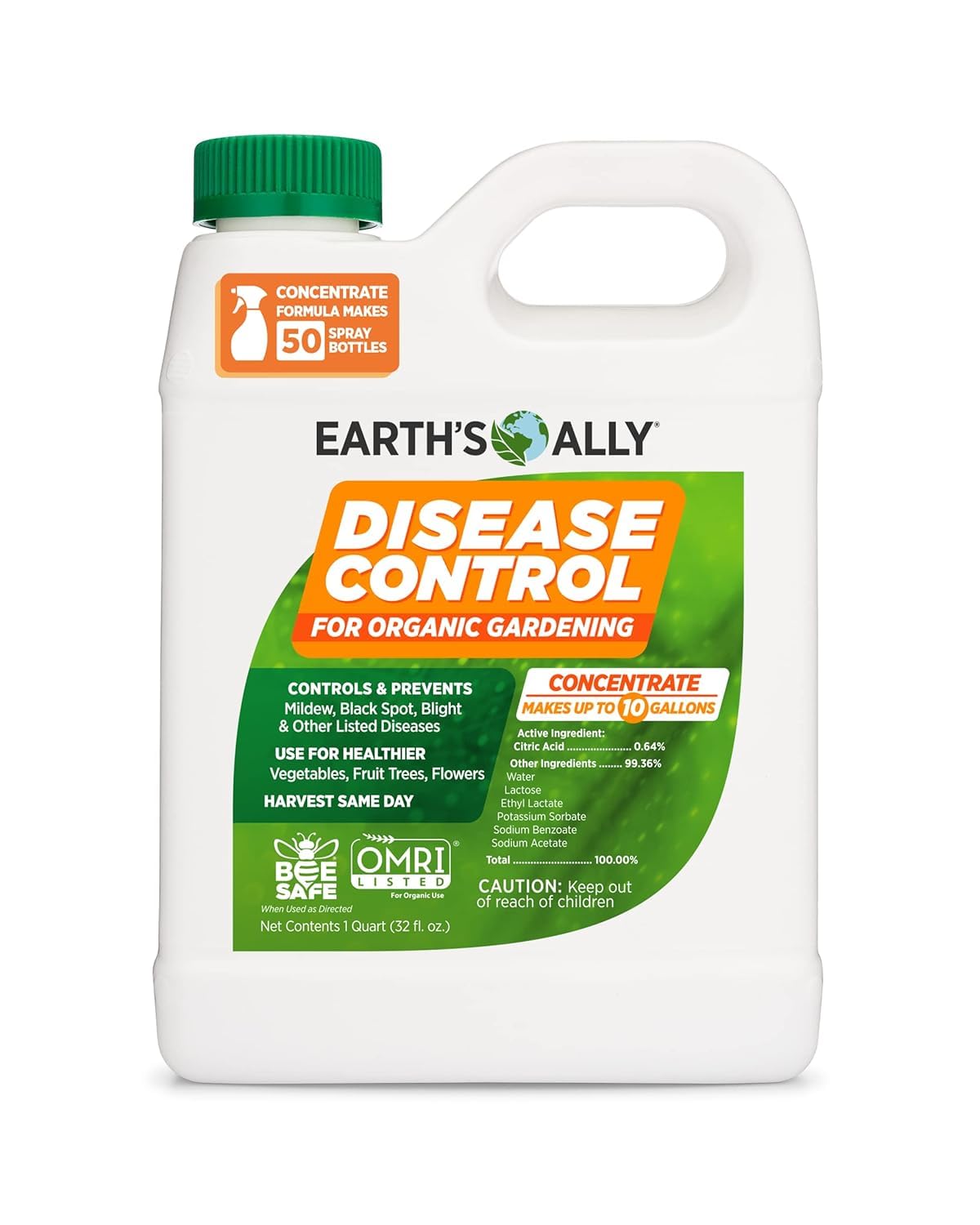
A fungus-fighting concentrate that saves trees and rose bushes without synthetic chemicals.
If powdery mildew, black spot, or blight is ruining your ornamentals, this citric-acid based fungicide targets the disease directly. The formula is OMRI Listed for organic gardening, so you can spray it on fruits and vegetables right up to the day you harvest. It comes as a 32 oz concentrate—you mix 6 tablespoons into 1 gallon of water—and one bottle makes 10 full gallons of ready-to-use spray, which is far more economical than buying pre-mixed bottles.
Buyers report serious results. One reviewer noted that the product “saved a Palo Verde tree from root fungus after two deep soil treatments” with the tree greening up within a week. Another said their rose leaves look “MUCH healthier” after using it. At 2.26 pounds, this bottle is noticeably heavier than the 1.26-pound peppermint oil sprays, but that extra weight comes from a concentrated formula that goes a lot further. The trade-off is that you need a sprayer and a little measuring time, unlike the ready-to-use options below.
Why it leads the list
- Concentrate makes 10 gallons—great value for large gardens
- OMRI Listed, safe for edibles up to harvest day
- Citric acid formula tackles multiple diseases (powdery mildew, blight, black spot)
The one extra step
- Requires mixing and a separate sprayer
- Heavier bottle (2.26 lbs) than most ready-to-use sprays
Tops for treatment: Reach for this if you have a confirmed fungal issue on ornamentals or edibles and want the most product for your money.
Not for quick fixes: skip it if you just need a quick indoor spider repellent—the peppermint sprays below are better for that.
2. Monterey B.t. Caterpillar Killer Ready to Use Spray
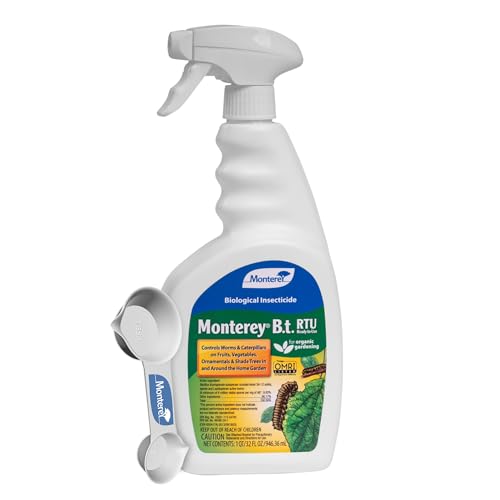
A biological weapon that kills only leaf-eating worms while leaving bees and birds alone.
This is the most targeted pesticide in the lineup. It uses Bacillus thuringiensis (B.t.), a naturally occurring soil bacterium that, when eaten by caterpillars, produces a protein that stops them from feeding. It does absolutely nothing to bees, earthworms, or ladybugs—making it the safest choice for flowering vegetable gardens. The 32 oz bottle is ready-to-use with a trigger sprayer, so you do not need to mix anything.
Monterey B.t. is OMRI Listed (certified for organic gardening), and reviewers confirm it works fast. One buyer mentioned it “effectively eliminated cabbage loopers” that had destroyed their flower seedlings the previous year, while another noted it “got rid of the little caterpillars eating my Texas Laurel.” The catch is its narrow focus: it only kills caterpillars and worm-type insects (cabbage looper, bagworm, gypsy moth, fall cankerworm, elm spanworm). If you have aphids, mites, or fungus, you need a different product.
Biological advantage
- Zero harm to bees, earthworms, ladybugs, and birds
- OMRI Listed and ready-to-use straight from the bottle
- Highly effective on specific caterpillar pests (cabbage looper, bagworm, gypsy moth)
Narrow spectrum
- Only kills caterpillars and worm-type insects—useless against aphids, mites, or fungus
- Comes with a measuring spoon but it is a ready-to-use spray, not a concentrate
Perfect for veggie patches: Grab this if caterpillars are chewing holes in your tomatoes, broccoli, or cabbage and you want zero collateral damage to pollinators.
Wrong for general pests: Look elsewhere if you need a broad-spectrum spray for mites, aphids, or indoor insects.
3. Athena IPM Plant Pest Control Ready-to-Use Spray
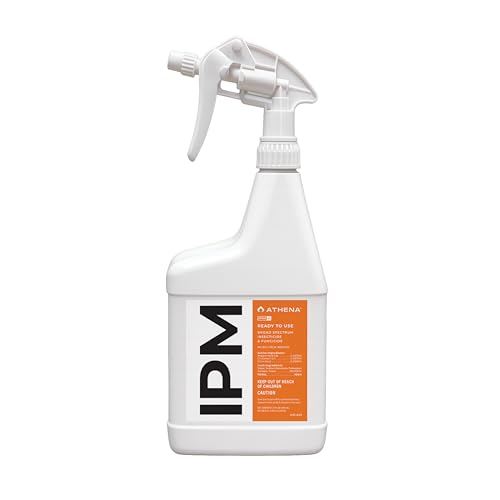
A dual-action spray that nukes spider mites and powdery mildew without measuring a thing.
Athena IPM is a rare hybrid: it works as both a fungicide (for powdery mildew) and an insecticide (for spider mites, aphids, and thrips). It uses EPA 25(b) minimum risk ingredients, meaning the EPA has reviewed it and classified its components as safe enough to be exempt from standard pesticide registration—so no harsh synthetic chemicals. The 32 oz bottle is ready-to-use: just shake and spray, no mixing or special equipment required.
Buyers praise its broad effectiveness. One reviewer called it “the best of the best” for battling pests that come dormant in grow media, adding that it “zaps mites as well as all the other critters that cause problems.” Another said it is “literally the best product I’ve used so far” for marijuana plants. It is trusted by both professional commercial cultivators and home gardeners. Unlike the Earth’s Ally concentrate above, this is a ready-to-use liquid, so you pay a premium for convenience—you do not get the 10-gallon yield of the concentrate.
Two-in-one punch
- Kills both fungus (powdery mildew) and insects (spider mites, aphids, thrips)
- EPA 25(b) ingredients mean no harsh chemicals; safe around people and pets when used as directed
- Zero measuring—just shake and spray
Price per use
- Ready-to-use formula costs more per ounce than a concentrate like Earth’s Ally
- Not OMRI Listed (uses EPA 25(b) exemption instead)
Best for indoor and greenhouse growers: Choose this if you need one spray that handles both mildew and mites on houseplants, hydroponics, or grow rooms.
Skip if you go through gallons: For large outdoor garden beds, the Earth’s Ally concentrate is cheaper per treatment.
4. Peppermint Oil Insect and Spider Repellent Spray (Waspika)

A minty home defense that drives away spiders and ants without staining your baseboards.
If your main problem is spiders web-building in corners or ants marching across the kitchen counter, this peppermint-oil spray is your simplest solution. It is plant-based and safe around pets and family when used as directed—no harsh fumes or chemical smell. The 16 oz bottle sprays a fine mist that dries quickly and leaves no sticky residue, so you can use it on baseboards, entryways, patios, and garages without worrying about stains.
Reviewers consistently report a “significant decrease in spiders and cobwebs” after just a few days of use. One owner reported the “pleasant natural aroma” and said the spray is “easy to apply” both indoors and outdoors. At 1.26 pounds, it is significantly lighter than the Earth’s Ally concentrate (2.26 pounds), making it easier to carry around the house during a full perimeter spray session. The main trade-off is that it is a repellent and contact killer, not a long-term residual poison—you will need to reapply after rain or heavy cleaning.
House-friendly formula
- Non-staining and dries residue-free on baseboards and fabrics
- Fresh peppermint scent is pleasant, not chemical-smelling
- Safe for use around pets and family when used as directed
Reapplication needed
- Does not leave a persistent killing barrier; must reapply after rain or cleaning
- Only 16 oz per bottle—goes fast if you are spraying a large home perimeter
Best for quick indoor relief: Reach for this when you see a spider or ant trail and want an immediate, pleasant-smelling spray that is safe around kids and pets.
Not a set-and-forget solution: If you want a product that kills on contact and leaves a long-lasting toxic barrier, you would need a synthetic pesticide—this is not that.
5. Peppermint Oil Spray for Insects & Rodents (Smart Grower)
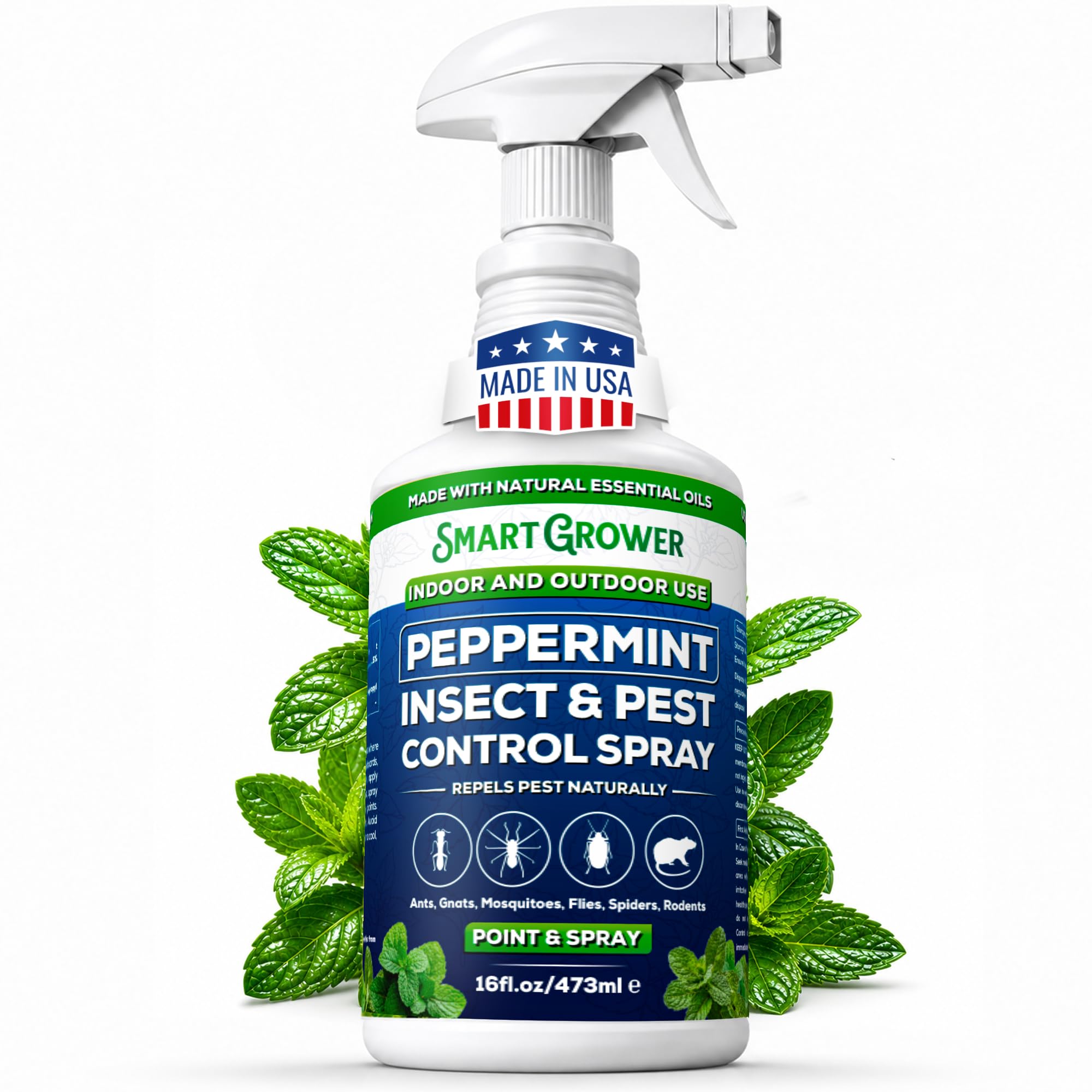
The extra-concentrated peppermint spray that sends mice, bats, and wasps packing.
This spray stands apart because it also targets rodents—mice, rats, and even bats—not just insects. The “extra strength” label means a higher concentration of pure peppermint essential oil compared to standard peppermint sprays, which is what makes it effective against larger pests that are usually harder to deter naturally. It is ready-to-use with no mixing required, and the 16 oz bottle covers both indoor and outdoor areas.
Buyers have found creative uses. One customer observed it “works great if you are having a bat issue”—they soaked the area where bats were flying in and out of their awning and reapplied over a few days, and the bats stopped coming. Another reviewer uses it on a farm and says it “pretty much eliminate the issue” with flies around door frames. A third noted it is safe around their two dogs and effective on crickets, camel spiders, ants, and aphids in the garden. The downside is that the strong peppermint concentration can be too intense for some—one reviewer had a spill from a warm bottle, so let it cool before securing the nozzle.
Rodent and bat deterrent
- Repels mice, rats, and bats—unique among natural sprays here
- Extra strength formula means fewer applications needed
- Pleasant peppermint scent with no chemical odor
Intense fragrance
- Very strong peppermint smell may be overwhelming in small enclosed spaces
- Not effective against river mosquitoes according to one reviewer
Best for multi-pest households: Pick this if you need one spray that handles insects, spiders, and rodents (including bats) around the home and farm.
Too strong for sensitive noses: If you are sensitive to strong scents, the milder Waspika spray above is a better choice.
6. RobiGuard Diatomaceous Earth Food Grade & Peppermint Powder

A dust-on-contact powder that dehydrates crawling insects without poisons or fumes.
Diatomaceous earth (DE) is the fossilized remains of tiny aquatic organisms called diatoms. The microscopic sharp edges cut into the exoskeleton of crawling insects like ants, roaches, fleas, silverfish, and bedbugs, causing them to dehydrate and die. This RobiGuard blend mixes food-grade DE with peppermint oil powder—the peppermint acts as an attractant and adds a repellent scent. The 16 oz pouch is light at 0.55 kilograms (about 1.2 pounds) and comes in a resealable bag.
Buyers love its humane side. One user highlighted the “food-grade DE & peppermint powder mix effectively repelled squirrels from rose garden without harming them.” Another noted it “reduced gnats and fleas” in their home, and after one week the gnats were “nearly gone.” A third reviewer uses it for “ants, slugs, fleas” and says it is “safe for pets.” The trade-off is that it is a fine powder—reviewers recommend wearing a mask during application because the dust can irritate lungs. It also stops working when wet, so it is best for dry indoor areas or covered outdoor spots.
Mechanical killer
- Food-grade DE is safe around people and pets; no chemical poisoning risk
- Effective on a huge range of crawling insects (ants, roaches, fleas, silverfish, bedbugs)
- Humane on larger pests—repels squirrels without harming them
Application challenges
- Fine powder requires careful application and a dust mask to avoid inhalation
- Useless when wet—must be reapplied after rain or moisture exposure
- Strong peppermint odor may be an issue around pets with respiratory conditions (asthmatic cats, per one reviewer)
Ideal for dry indoor crawl spaces and gardens: Use this where you want a long-lasting mechanical barrier (not a poison) that stops ants, fleas, and slugs without synthetic chemicals.
Wrong for wet areas or foliage: If you need to spray plant leaves or treat a damp basement, choose a liquid spray instead—DE is ineffective when wet.
Understanding the Specs
Active Ingredient
This is the single most important spec. Citric acid (Earth’s Ally) is a fungicide that kills fungal spores on contact. Peppermint oil (Waspika, Smart Grower) repels and kills insects by overwhelming their sensory system. Diatomaceous earth (RobiGuard) physically cuts and dehydrates crawling insects. Bacillus thuringiensis or B.t. (Monterey) is a bacteria that only harms caterpillars. Match the active ingredient to your specific pest—do not spray a fungicide on ants.
Ready-to-Use vs. Concentrate
A ready-to-use spray (Athena IPM, Monterey B.t., both peppermint sprays) is pre-mixed so you can spray immediately with no measuring. A concentrate (Earth’s Ally) requires you to mix a specific amount (6 tablespoons per gallon) in a separate sprayer. Concentrates are cheaper per treatment and yield more total product (Earth’s Ally makes 10 gallons), but they require extra equipment and a few minutes of preparation time.
OMRI Listed
OMRI (Organic Materials Review Institute) is an independent nonprofit that reviews products to confirm they meet USDA organic standards under the National Organic Program. An OMRI Listed product—like Earth’s Ally Disease Control and Monterey B.t.—can be used on certified organic farms and is safe for edible crops right up to harvest day. Products without the OMRI seal (like Athena IPM) may still use safe ingredients, but they have not gone through that specific certification process.
Item Form: Liquid vs. Powder
Liquid sprays (liquid form) cover plant foliage, baseboards, and large surface areas quickly and evenly. Powder (diatomaceous earth) is better for cracks, crevices, and dry areas where you want a long-lasting barrier that stays put. The trade-off: liquid dries and needs reapplication, while powder stops working if it gets wet. For indoor use against crawling insects, powder often works better. For outdoor garden disease, liquid is the standard.
FAQ
Can I mix different natural pesticides together?
Will peppermint oil sprays harm my dog or cat?
How often should I reapply diatomaceous earth powder?
Is the Earth’s Ally concentrate safe for vegetable gardens?
Does Monterey B.t. kill all types of caterpillars?
Will Athena IPM stain my houseplants or furniture?
Can I use the Smart Grower peppermint spray to repel bats?
How long does a 32 oz bottle of ready-to-use spray last?
Is diatomaceous earth safe for bees if I use it outdoors?
What does EPA 25(b) mean on the Athena IPM label?
Final Thoughts: The Verdict
For most people, the best all natural pesticide winner is the Earth’s Ally Disease Control Concentrate because it tackles the widest range of fungal diseases (powdery mildew, blight, black spot) and makes 10 gallons of spray from one bottle—the best value for gardeners. If you need to stop caterpillars on your vegetable patch without harming bees, grab the Monterey B.t. Caterpillar Killer. And for immediate indoor spider and ant relief with a pleasant scent, the Waspika Peppermint Oil Spray is the ready-to-use pick.
How We Picked
We do not accept paid placement, and we did not hands-on test every unit. Instead, we match each pick to a real buyer and use-case by comparing the manufacturers’ published specifications against the patterns in verified customer reviews — so you get each pick’s real strengths and trade-offs instead of marketing copy.
Sources & Methodology
Specifications: manufacturer listings and product documentation. Review insights: verified customer reviews, as of July 2026. Pricing: not shown on this page (it changes often); check the current price via the retailer link.
As an Amazon Associate, Lawn Gear Lab earns from qualifying purchases. This does not affect which products we feature.