
Roses are heavy feeders, and getting the nutrient balance exactly right determines whether you get a handful of scraggly blooms or a season-long explosion of color. The 10-10-10 ratio delivers equal parts nitrogen (N, for green leaves), phosphorus (P, for strong roots and flowers), and potassium (K, for overall plant health and disease resistance), making it the go-to choice for rose growers who want a single, straightforward product without guesswork.
I’m Rikta — the co-founder and writer behind Lawn Gear Lab. This guide is built by comparing the manufacturers’ published specifications and the patterns across verified customer reviews, so you get each pick’s real strengths and trade-offs instead of marketing spin.
Choosing the right 10-10-10 fertilizer for roses comes down to understanding application ease, release speed, and total coverage value.
How To Choose The Best 10-10-10 Fertilizer For Roses
Selecting the right 10-10-10 fertilizer for your roses is not just about grabbing the cheapest bag. You need to match the form (granular vs. liquid), the release speed, and the total quantity to your garden size and how much effort you want to put into feeding.
Granular vs. Liquid: Which Form Fits Your Routine?
Granular fertilizers are the standard choice for outdoor rose beds. You sprinkle them onto the soil around the base of the plant and water them in. They break down slowly, feeding the roots over several weeks. Liquid fertilizers, on the other hand, are mixed with water and applied directly to the soil or as a foliar spray. They are absorbed faster, which is great for giving a struggling rose bush a quick boost, but they require more frequent applications.
Slow-Release vs. Quick-Release: The Timing Factor
A slow-release granular 10-10-10 feeds your roses steadily for weeks or even months with a single application. This minimizes the risk of burning the roots and saves you from having to remember to fertilize every weekend. Quick-release formulas (both granular and liquid) deliver nutrients immediately, which is useful at the start of the growing season to wake up the plant, but they can lead to a “nutrient spike” that stresses the plant if over-applied.
Bag Size and Coverage: Calculating What You Need
A 4-pound bag is perfect for a small rose bed with a few bushes, whereas a 35-pound bag could cover a large landscape with dozens of roses and other plants. Check the product’s coverage rate (usually given in square feet or per plant) to avoid underestimating how much you need for the whole season. A bigger bag saves money per pound but requires dry storage space.
Quick Comparison
On smaller screens, swipe sideways to see the full table.
| Model | Category | Best For | Key Spec | Amazon |
|---|---|---|---|---|
| Espoma Garden Food | Premium | Large rose gardens & deep root feeding | 216 oz (two 6.75-lb bags) | Amazon |
| Southern Ag All Purpose | Mid-Range | Roses & shrubs with specific dosage needs | 5 lb granule bag | Amazon |
| Lilly Miller All Purpose | Value | Quick revival of yellowing plants | 4 lb granule bag | Amazon |
| Bigmeta Slow-Release | Mid-Range | Indoor/outdoor versatility & gentle feeding | 32 oz granule bag | Amazon |
| TPS Nutrients Liquid | Premium | Targeted feeding for trees & shrubs | 32 oz liquid concentrate | Amazon |
| Covington Naturals Liquid | Premium | Lawn & large area liquid feeding | 32 oz liquid concentrate | Amazon |
| Howard Johnsons 7136 | Budget | Large-scale landscaping & high-volume feeding | 35 lb granule bag | Amazon |
In‑Depth Reviews
1. Espoma 10-10-10 Garden Food (6.75-Pound Bag, Pack of Two)
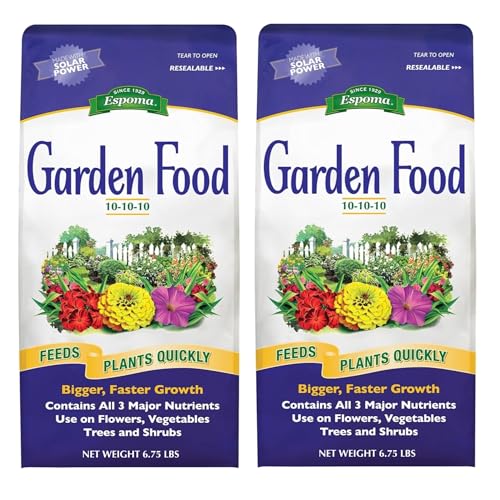
216 ounces of slow-release granules across two bags — 6.8 times more product than the 32-ounce Bigmeta bag — makes the Espoma 10-10-10 Garden Food the top pick for serious rose growers with large flower gardens, multiple rose bushes, trees, and shrubs needing consistent monthly feeding all season.
Buyers report that this fertilizer dramatically revived a 57-year-old magnolia tree struck by lightning three years ago, leaving it covered in fragrant pink flowers, and that a single fig tree produced roughly 5,000 fruits after application. The granular form needs no mixing — just spread it around the drip line of each rose bush and water it in deeply, and at 13.5 pounds total, one pack can easily cover a substantial garden for a whole season.
The only honest trade-off is the upfront investment: you are buying two bags at once, which is a premium-tier purchase compared to single-bag options. But for the quantity and proven results, it is a confident one-line verdict for any gardener with a medium-to-large rose collection.
Why it’s great
- 216 ounces total across two bags, making it 6.8x larger than entry-level options
- Proven to revive struggling trees and massively boost fruit and flower production
- Premium Espoma brand quality meeting strict state certification standards
Good to know
- Premium price point compared to single-bag alternatives
- Granules need watering in after application to prevent leaf burn
2. Southern Ag All Purpose Granular Fertilizer 10-10-10 (5 LB)

Compared to the top pick Espoma, the Southern Ag All Purpose Granular Fertilizer delivers more precise feeding guidance for roses — it specifies 2 to 2.5 cups per 4 feet of plant height, whereas Espoma offers no rose-specific dosage. At just 5 pounds, this bag is 2.7 times lighter than Espoma’s 13.5-pound option, making it far easier to handle and ideal for a small rose bed with only a few bushes rather than a full landscape.
Owners mention that “it takes only a little every two weeks to keep my plants fed and happy through the growing season,” and the fertilizer also works well on dogwoods, vegetable gardens, and flowerbeds. Its uniform granular formulation spreads easily and breaks down evenly, providing consistent coverage without clumping.
If you have a modest rose collection of 5 to 10 bushes and want a bag you can finish in one or two seasons without worrying about long-term storage or stale product, choose the Southern Ag over the top pick Espoma.
Where it shines
- Provides specific dosage instructions for roses and large shrubs
- 5-pound bag is easy to carry and store compared to heavier multi-bag packs
- Uniform granules ensure consistent, even application without clumps
Worth noting
- Bag is not resealable, so you need a separate container for storage
- Instructions could be clearer on watering-in frequency
3. Lilly Miller All Purpose Planting And Growing Food 10-10-10 (4lb)
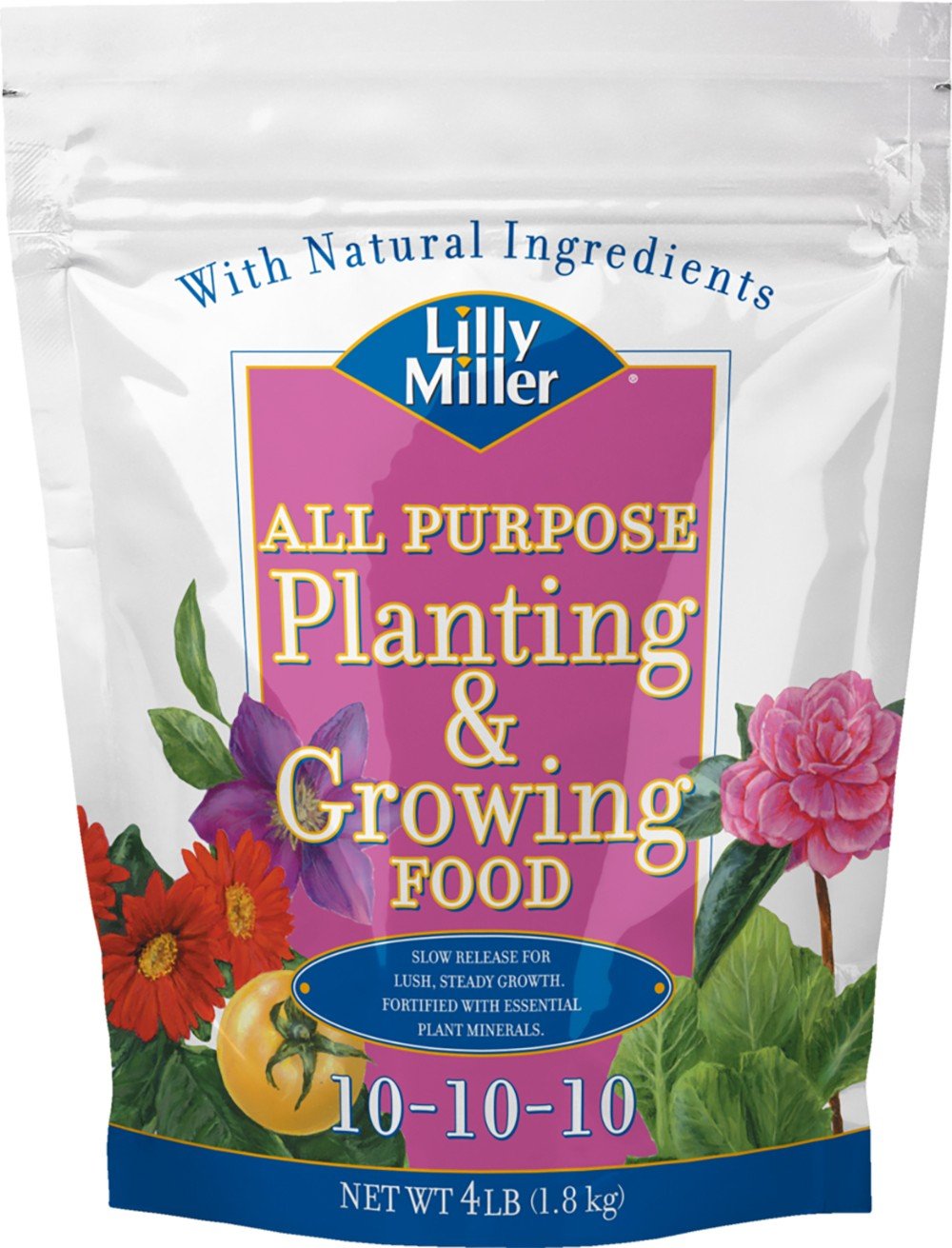
A rose grower who spots yellowing leaves and wants a fast-acting granular that works within days will find a small bag of Lilly Miller the perfect fix. Customers note it “revives yellowing tomato plants overnight” and “revived dying basil with bigger leaves,” making it a solid emergency boost for a stressed rose bush after a harsh winter or pest attack.
The 4-pound bag (weighing 16 ounces itself) is very compact, but it contains concentrated, fast-acting ingredients that pack a punch. It weighs half as much as the Southern Ag’s 5-pound bag, so you get a smaller footprint ideal for a gardener with just a few rose bushes in pots or a small border garden. Reviewers point out one bag “lasts forever” for indoor containers, and it works great for both potted and in-ground flowers.
Standout spec: the dry fertilizer has a noticeable odor, so wear a mask when applying to avoid dust — but once watered in, the smell disappears completely, leaving your roses with richer colors and stronger growth.
What stands out
- Fast-acting ingredients show visible results in days, not weeks
- 4-pound bag is perfect for small rose beds or container roses
- Can be steeped as a “tea” for liquid application on indoor roses
The trade-offs
- Dry fertilizer has an unpleasant odor; wear a mask to avoid dust
- Small bag size runs out quickly for larger rose gardens
4. Bigmeta 10-10-10 Slow-Release Premium Fertilizer (1 Quart)
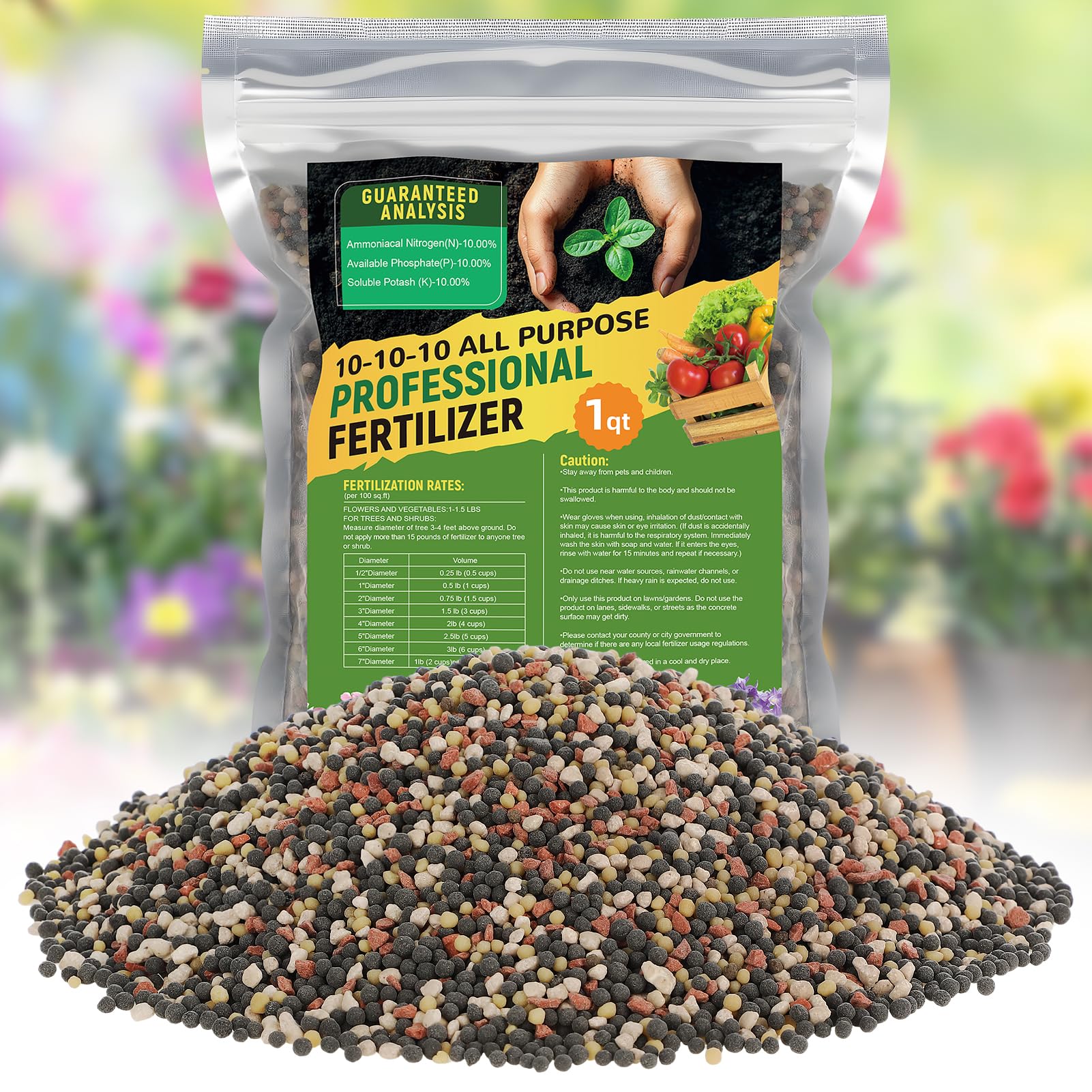
The single most important feature for a cautious rose grower is the release speed, and the Bigmeta offers up to 8 weeks of steady, slow nutrition, preventing the “nutrient spike” that burns delicate roots. This makes it the lowest-risk choice for newly planted rose bushes or container roses where the soil ecosystem is more fragile.
The catch you accept is the bag size — at 32 ounces total, it is much smaller than the Southern Ag (5 pounds) or Espoma (13.5 pounds), so you will need to repurchase more frequently. Shoppers say the bag is “smaller than anticipated but easy to handle,” and it worked well on a small tree the gardener feared was going to die, proving its gentle formula can still turn around struggling plants.
For a small patio rose garden or a first-time rose grower who wants a safe, no-burn option from a resealable container, this is a solid price-to-value read.
The upsides
- Slow-release technology prevents root burn on delicate seedlings and roses
- Resealable container keeps granules fresh and dry between uses
- Safe for indoor and outdoor use, including succulents and houseplants
Keep in mind
- 32-ounce bag is small and requires more frequent repurchasing
- Label claims natural ingredients but exact source is not certified organic
5. TPS Nutrients Liquid 10-10-10 Fertilizer for Trees and Shrubs (32 oz)

What you actually get at this lower price is a 32-ounce bottle of liquid 10-10-10 that includes added iron and micronutrients often missing from standard granular blends, giving you full control over how much each rose bush receives via a watering can. The liquid formula starts working immediately in the soil, making it ideal for a rose showing early signs of chlorosis or nutrient deficiency.
Buyers report that after applying this fertilizer just twice, they saw a “noticeable increase in growth and leaf output” on struggling young oak trees. For roses, mixing 1 to 2 ounces of concentrate per gallon of water and applying it as a soil drench every two weeks during the growing season gives precise, deep-root feeding without the mess of spreading granules around thorny canes.
The downside is the 32-ounce bottle size covers roughly 160-320 square feet, meaning a large rose garden with a dozen or more bushes will require multiple bottles to last a full season. It is the exact budget buyer it is perfect for: the grower who values immediate results and precise dosing over bulk quantity.
Why we’d pick it
- Liquid formula with added iron and micros corrects yellowing leaves fast
- Simple 1-2 oz per gallon mixing ratio for precise, customizable feeding
- Works well on struggling trees, shrubs, and container plants
A few caveats
- 32 oz bottle covers only 160-320 sq ft, requiring repurchase for large gardens
- Liquid requires mixing before each use, unlike ready-to-spread granules
6. Covington 10-10-10 NPK Liquid Fertilizer (32oz)

The Covington liquid fertilizer is the perfect choice for the rose owner who waters their garden with a hose-end sprayer and wants to feed their lawn, flower beds, and rose bushes in one pass without mixing multiple products. Its liquid concentrate mixes easily with water and works with hose-end or pump sprayers, making large-area feeding far less labor-intensive than hand-spreading granules around each thorny cane.
A buyer reports their dogwood tree “looked nearly dead” and after applying this product with the Covington soil revitalizer, it showed new leaf and berry growth within one month — not the claimed 4 weeks. The formula has a low salt index, which means it is much less likely to burn your rose roots compared to some other quick-release liquid feeds, and it uses food-grade ingredients for a pure nutrient source.
The limitation is that the 32-ounce bottle is on the smaller side for a liquid concentrate, and you will likely need a second bottle halfway through the growing season if you have a medium-to-large garden.
Strong points
- Works with hose-end and pump sprayers for easy, large-area coverage
- Low salt index formula is gentle on rose roots and won’t cause leaf burn
- Visible results reported in as little as 10 days on struggling trees
Before you buy
- 32 oz concentrate covers large areas, but needs repurchase mid-season for heavy feeding
- Best results reported when combined with a soil revitalizer product
7. Howard Johnsons 7136 All-Purpose Fertilizer 10-10-10 (35-Lbs)

The Howard Johnsons 35-pound bag is the best value in this comparison because its raw cost per pound is dramatically lower than any smaller bag — you get 560 ounces of product, which is a massive 17.5 times more than the 32-ounce Bigmeta bag, making it the clear choice for anyone feeding a large landscape with dozens of rose bushes.
What that money actually gets you is a straightforward, no-frills granular fertilizer that owners mention should “last at least 2 seasons” and that “the price is right and works well.” It contains no weed pre-emergent or weed killer, which is a huge plus if you grow companion flowers like bluebonnets that are killed by those additives. One buyer called it “good balanced food” and noted their grass looked great without growing too fast.
The one reason to choose Howard Johnsons over every other pick is simple: you have a big property and want the longest-lasting, most economical bag possible, even if it means dealing with a heavy 36-pound bag that requires a scoop and bucket for daily use.
What we like
- 35-pound bag offers the lowest cost per pound for large-scale feeding
- Contains no weed pre-emergent or killer, safe for companion flowers
- Covers full property for 2+ seasons, reducing trips to buy more
The downsides
- 36-pound bag is heavy to carry and store
- May need added potassium for maximum bloom production on roses
Understanding the Specs
NPK Ratio (10-10-10)
The three numbers on a fertilizer bag stand for Nitrogen (N, for leafy green growth), Phosphorus (P, for strong roots and flower production), and Potassium (K, for overall plant health and disease resistance). A 10-10-10 ratio means each nutrient is present at 10% by weight. For roses, this balanced ratio ensures you get both lush foliage and abundant blooms without overloading any one nutrient.
Slow-Release vs. Quick-Release
Slow-release fertilizers have a coating or chemical structure that breaks down gradually in the soil, providing a steady stream of nutrients over 6 to 8 weeks. This reduces the risk of “burning” the roots and means you apply less often. Quick-release fertilizers (both granular and liquid) deliver all the nutrients immediately, which is useful for correcting a deficiency fast but requires more careful dosing and frequent reapplication to avoid overfeeding and root damage.
Granular vs. Liquid Form
Granular fertilizers are dry, solid particles that you sprinkle on the soil around the plant and water in. They are best for outdoor rose beds and trees because they break down slowly. Liquid fertilizers are concentrated solutions you dilute with water and apply as a soil drench or foliar spray. They are absorbed faster and give you more control over the exact dose, making them ideal for container roses or when you need a quick correction, but they require more frequent applications.
Unit Count and Coverage
The unit count tells you the total weight or volume of the fertilizer in the package (for example, 32 ounces or 216 ounces). This directly affects how many rose bushes you can feed and how often you need to buy more. A general rule: a 4-pound bag of granular 10-10-10 covers roughly 100-200 square feet of rose bed per growing season, while a 35-pound bag covers 1000+ square feet. Always check the product’s specific coverage instructions for roses to calculate your needs.
FAQ
Can I use 10-10-10 fertilizer on all types of roses?
How often should I apply 10-10-10 fertilizer to my roses?
Is granular or liquid 10-10-10 better for roses?
Can 10-10-10 burn my rose roots?
Final Thoughts: The Verdict
For most rose gardeners, the 10-10-10 fertilizer for roses winner is the Espoma Garden Food because it offers the best combination of premium slow-release quality, massive 216-ounce quantity, and proven results on both roses and large specimen trees. If you want a smaller, more manageable bag with rose-specific dosage instructions, grab the Southern Ag All Purpose. And for the grower with a large property who wants the absolute best cost per pound, the standout is the Howard Johnsons 35-pound bag.