
Petunias are heavy feeders — they need constant nutrition to keep pumping out those colorful blooms all season long. The wrong fertilizer can leave you with leggy plants and few flowers, while the right one turns your baskets and beds into a waterfall of color.
I’m Rikta — the co-founder and writer behind Lawn Gear Lab. This guide is built by comparing the manufacturers’ published specifications and the patterns across verified customer reviews, so you get each pick’s real strengths and trade-offs instead of marketing spin.
For trailings (like wave petunias in hanging baskets) or upright varieties in garden beds, the best fertilizer for petunias delivers high phosphorus (the middle number in the N-P-K ratio) to drive bloom production without burning delicate roots.
How To Choose The Best Fertilizer For Petunias
Petunias have a reputation for being “heavy feeders” — they grow fast and bloom non-stop, which means they drain nutrients from the soil quickly. The three key things to get right are the nutrient ratio, the form of fertilizer, and the feeding schedule that matches how you grow them (baskets, beds, or containers).
N-P-K Ratio — The Middle Number Is the Star
Every fertilizer label shows three numbers separated by dashes, like 10-30-20. The first is nitrogen (N) for leaf growth, the second is phosphorus (P) for blooms and root development, and the third is potassium (K) for overall plant health. For petunias, look for a product where the middle number is higher than the first — this pushes the plant to focus energy on flowers instead of just leaves. A ratio like 10-30-20 or 5-7-10 works well.
Water-Soluble Powder vs. Liquid vs. Granules
Water-soluble powders like Jack’s Classic mix with water and give you the most control over how much you apply — a little powder makes multiple gallons of fertilizer. Ready-to-use liquids skip the mixing step but cost more per feeding. Granules are sprinkled on the soil and release nutrients slowly over weeks, which is convenient but harder to adjust if your petunias need a quick boost.
Feeding Frequency
Most petunia fertilizers are designed to be applied every 7 to 14 days during the growing season. Water-soluble options let you feed at every watering (at a diluted rate), which matches how fast petunias consume nutrients in hanging baskets. Granule-based products like the Miracle-Gro Performance Organics recommend reapplying every 4 to 6 weeks — easier on your schedule but less responsive.
Quick Comparison
On smaller screens, swipe sideways to see the full table.
| Model | Category | Best For | Key Spec | Amazon |
|---|---|---|---|---|
| Jack’s Classic 10-30-20 (4lbs) | Premium | Long-term value for large gardens | 10-30-20 N-P-K ratio | Amazon |
| Great Big Roses & Flowers (32oz) | Premium | Soil health & root development | 70 chelated trace minerals | Amazon |
| Growth Technology GT Flower Focus (1L) | Premium | Indoor & hydroponic setups | 33.81 fl oz liquid concentrate | Amazon |
| Miracle-Gro LiquaFeed Bloom Booster (2-pack) | Mid-Range | Easy squeeze-bottle feeding | 64 fl oz total liquid volume | Amazon |
| Petunia Fertilizer by TPS Nutrients (32oz) | Mid-Range | Petunia-specific formula | 32 fl oz liquid concentrate | Amazon |
| Jack’s Classic 10-30-20 (8oz) | Mid-Range | Trying before buying bulk | 8 oz water-soluble powder | Amazon |
| Miracle-Gro Performance Organics Blooms (2.5lbs) | Budget | Organic slow-release feeding | 2.5 lbs granules, OMRI listed | Amazon |
In‑Depth Reviews
1. Jack’s Classic 10-30-20 Blossom Booster Water-Soluble Fertilizer (4lbs)
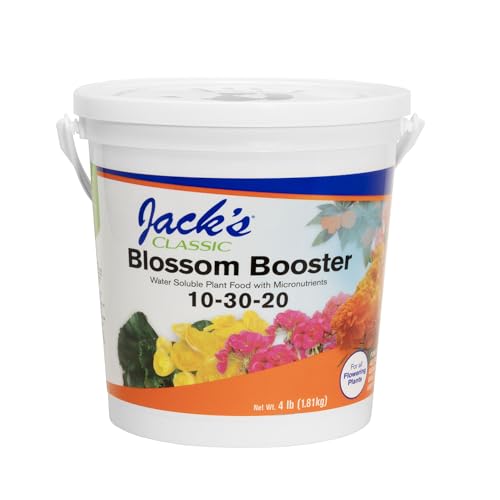
You get the strongest bloom push of any pick here — the 10-30-20 N-P-K (Nitrogen-Phosphorus-Potassium) ratio delivers three times more phosphorus than nitrogen, steering your petunias toward flower production instead of leaf growth. This 4-pound tub makes roughly 64 gallons of liquid fertilizer when mixed at the recommended rate, which buyers report lasts a full season even for large gardens.
Owners mention “noticeable improvement in flower health, vibrancy, bloom size, color, and stem strength within weeks.” The micronutrient package (iron, manganese, zinc) prevents common deficiencies that cause yellowing leaves, so your petunias stay dark green while producing flowers.
This is a powder, so you do need to mix it with water each time — not as grab-and-go as a liquid. One honest limit: the container is a plastic tub with a snap lid, not a resealable bag, so some buyers recommend transferring it to an airtight jar if you store it in a damp shed. For petunia growers who want the most flowers per gallon, this is the one.
Why it’s great
- Highest bloom-driving phosphorus ratio (30) in a proven formula
- Creates up to 64 gallons of liquid fertilizer from one tub
- Included measuring spoon makes mixing consistent and easy
Good to know
- Powder must be mixed with water — not a ready-to-use liquid
- Storage container not fully airtight; may clump in humidity
2. Great Big Roses and Flowers Liquid Fertilizer Booster (32oz)
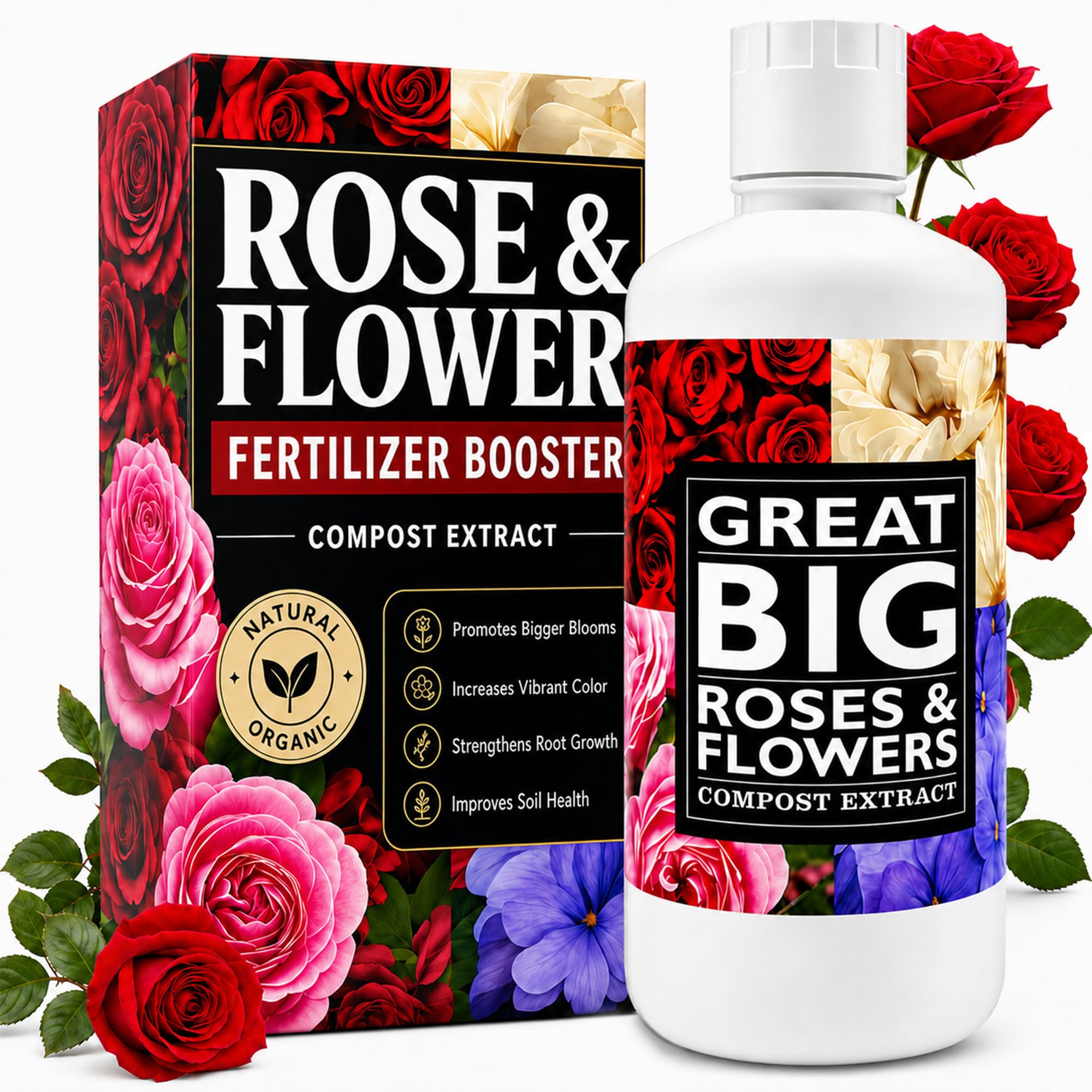
While the Jack’s Classic top pick is a straight bloom booster, this one goes deeper — it contains over 70 chelated trace minerals plus humic acid and seaweed that activate soil nutrients already in your garden bed. It does not replace fertilizer so much as amplify whatever you are already using, which makes it a different tool rather than a direct competitor. Customers note it “produces abundant buds and early blooms even after harsh winter.”
For petunias in established garden beds, this is especially valuable because petunias often struggle in soil that has been drained by previous seasons. The humic acid (a natural organic compound that helps roots absorb more nutrients) and seaweed extract stimulate root development, which translates to stronger stems and more bloom sites. Mix 4 ounces per gallon of water — one 32-ounce bottle makes 8 gallons of feed.
The catch is the bottle design: reviewers point out “the giant mouth” makes it easy to spill, and at this price point every drop counts. Choose this one if your petunias are in garden soil that has been used before, or if you want a product that conditions the soil itself rather than just feeding the plant.
Where it shines
- 70 chelated trace minerals + humic acid condition the soil itself
- Can be used alongside other fertilizers to amplify results
- Shoppers say blooms within weeks even after harsh winters
Worth noting
- Bottle opening is wide, leading to easy spills during measuring
- Premium price point compared to basic bloom boosters
3. Growth Technology GT Flower Focus Liquid Plant Nutrient (1 Liter)
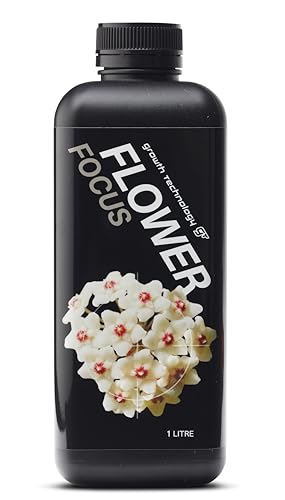
If your petunias live in a sunny window or a hydroponic setup (growing in water instead of soil), this is the one to reach for. The liquid formula dissolves completely with no sediment, and the manufacturer provides different mixing ratios for soil (3-5 ml per liter of water) versus hydroponics / semi-hydro (5-7 ml per liter of water), giving you precision that all-purpose fertilizers rarely offer.
Buyers report “the new growth and leaf size is significantly larger” and that it “promotes healthier foliage, stronger growth, vibrant leaves.” The balanced mineral profile includes all essential elements for flowering plants, and because it is a liquid concentrate a little goes a long way — one reviewer notes “you only need a teeny tiny bit, so it lasts forever.”
The downside: the original bottle sometimes leaks during shipping, according to buyer reports. The single-liter bottle also has the highest per-ounce cost among the premium picks, though the concentrated dose means you actually use very little per feeding. A standout spec: it works in both soil and soil-less growing mediums, making it the most versatile option here for mixed gardens.
What stands out
- Works flawlessly in soil, hydroponics, and semi-hydro setups
- Clear mixing instructions for different growing methods
- Concentrated formula lasts a long time despite the small bottle
The trade-offs
- Original bottle packaging reported to leak during shipping
- Higher per-ounce cost than water-soluble powders
4. Miracle-GRO 100404 LiquaFeed Bloom Booster Flower Food (2-Pack)

The single number that matters most in this category is 64 fluid ounces total volume — this two-pack gives you double the amount of the Petunia Fertilizer by TPS Nutrients (32 fl oz), making it the largest liquid option by volume. Designed for use with Miracle-Gro’s LiquaFeed feeder (sold separately), you simply attach the bottle, squeeze, and water. Owners mention they “use this plant food 2-3 times a week to keep our flowers blooming and help promote healthy growth.”
The trade-off is that you need the separate LiquaFeed sprayer to use these bottles efficiently — without it, measuring the correct dose is harder. The 1:0 mixing ratio listed in the specifications means this is a ready-to-use formula when paired with the feeder, so there is no mixing or measuring on your part.
For price-to-value, this two-pack covers a lot of ground: at 64 total ounces, it feeds large container gardens and hanging baskets for weeks without needing to mix powder. If you already own the LiquaFeed system or plan to buy one, this is the most convenient bloom booster you can grab. It also means you have 2x the volume of the TPS Nutrients option for a comparable outlay.
The upsides
- 64 fl oz total volume — the largest liquid option on this list
- No mixing required when used with the LiquaFeed feeder
- Customers note visible bloom improvement with 2-3 uses per week
Keep in mind
- Requires the Miracle-Gro LiquaFeed feeder (sold separately)
- Liquid form costs more per feeding than water-soluble powders
5. Petunia Fertilizer – Liquid Plant Food by TPS Nutrients (32oz)
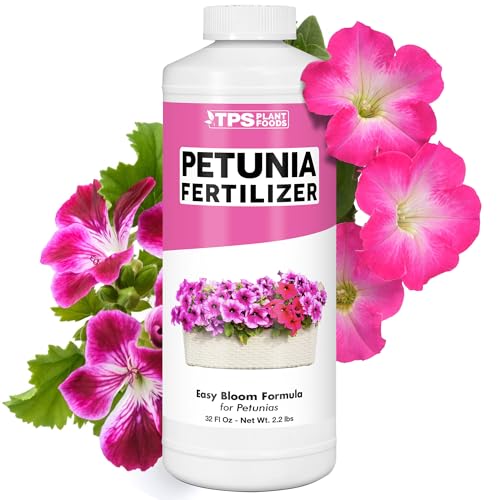
What you actually get at this lower price is a 32-ounce liquid concentrate formulated specifically for petunias, not for “all flowering plants” in general. It mixes at 2 tablespoons per gallon of water, and reviewers point out it is “highly effective: vibrant, full flowers within 1-2 weeks, more blooms, richer color.” The balanced nutrition targets the way petunias grow in crowded baskets and containers, where they compete for nutrients.
What you give up is the higher phosphorus numbers that the Jack’s Classic powders deliver — this does not have a published N-P-K ratio on the label, so you cannot compare it numerically to the competition. That said, buyers consistently note “no harsh chemical smell” and that it thrives in hanging baskets and garden beds, which is exactly where most petunias live.
The liquid form is ready to mix and apply with any watering can or hose-end sprayer, skipping the measuring spoon step. For a gardener who grows a mix of petunias but also wants something that works on nasturtiums and other annuals (buyers confirm it boosts nearby flowers too), this strikes a solid balance between specialized and versatile. The exact budget-minded buyer it is perfect for: someone who grows 5-10 baskets and wants a dedicated petunia feed without a huge leftover supply.
Why we’d pick it
- Specifically formulated for petunias (not a general flower food)
- Shoppers say visible results — more blooms and richer color — within 1-2 weeks
- No harsh chemical smell; pleasant to apply around the house
A few caveats
- No published N-P-K ratio to compare bloom-boosting strength
- Not the cheapest per-feeding option compared to water-soluble powders
6. Jack’s Classic 10-30-20 Blossom Booster Water-Soluble Fertilizer (8oz)
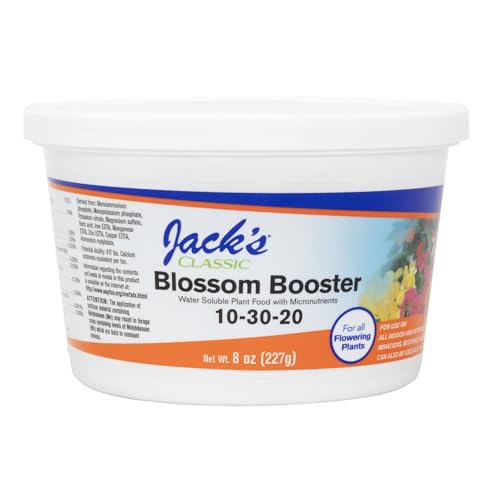
This 8-ounce container is perfect for the gardener who wants to try the same 10-30-20 bloom-boosting formula as the 4-pound top pick but is not ready to commit to a bulk tub. It is exactly the same powder blend — just in a smaller size. Buyers report that “the 8oz container is sample size; entire container used in one day for outdoor flower beds/pots,” so size this one carefully to your garden scale.
The main difference from the 4-pound version is purely volume: you get one-eighth the powder for roughly half the price. The included measuring spoon is identical, and the mixing ratio (the small scoop per gallon) stays the same. One buyer warns to “wear gloves while using it” because they felt a slight burning sensation on skin, so treat this as a standard chemical fertilizer that requires basic handling care.
This is the right choice for a single large hanging basket, a few window boxes, or a first-time petunia grower who wants to test a bloom booster before buying in bulk. A gentle caution: if your garden is larger than 10 square feet of flower beds, the 8-ounce size will run out fast and the 4-pound tub ends up being better value per feeding.
Strong points
- Same proven 10-30-20 formula as the top pick in a smaller package
- Comes with a measuring spoon for accurate mixing
- Great “try before you bulk” option for new petunia growers
Before you buy
- Small 8 oz size may only last one day for larger gardens
- Powder can cause mild skin irritation; wear gloves when mixing
7. Miracle-Gro Performance Organics Blooms Plant Nutrition Granules (2.5lbs)

At 2.5 pounds of granules covering up to 165 square feet, this is the largest physical volume for the lowest outlay — making it the most budget-friendly option for covering big garden areas. Owners mention “it works within 1-2 weeks” and “produced large blooms, especially on butterfly bush.” The 5-7-10 N-P-K ratio is lower in phosphorus than the Jack’s Classic 10-30-20, but the slow-release granules mean constant nutrition over 4-6 weeks rather than a quick spike and drop.
The biggest trade-off with granules vs. water-soluble powders is control: once you sprinkle them on the soil, you cannot turn off the release. If your petunias are in containers that get heavy rain, the granules may release faster than intended. That said, this is OMRI listed (certified for organic use), so it meets organic gardening standards while still giving you the convenience of a single application lasting a month.
This is the pick for the gardener who hates mixing — just sprinkle, water, and walk away. Compared to the rest of the field, it sacrifices the high phosphorus bloom punch for organic certification and effort-free feeding. The one clear reason to choose it is that your petunias share a bed with vegetables or herbs where you want to keep everything organic.
What we like
- OMRI listed for organic gardening — suitable for veggie-adjacent beds
- One application covers up to 165 square feet for 4-6 weeks
- No mixing required; just sprinkle and water
The downsides
- 5-7-10 ratio is lower in bloom-driving phosphorus (7) vs. Jack’s Classic (30)
- Slow-release granules mean less control over feeding schedule
Understanding the Specs
N-P-K Ratio (Nitrogen-Phosphorus-Potassium)
This is the three-number code on every fertilizer label. For petunias, the middle number (phosphorus) is the one that drives flower production — the higher it is relative to the first number (nitrogen), the more energy the plant puts into blooms rather than leaves. A ratio like 10-30-20 means three times more phosphorus than nitrogen, which is ideal for heavy-blooming annuals.
Water-Soluble vs. Granules vs. Liquid Concentrate
Water-soluble powders (like Jack’s Classic) dissolve in water and let you feed at every watering with precise control. Liquid concentrates (like the TPS Nutrients or Growth Technology) are pre-dissolved and mix faster but cost more per gallon. Granules (like the Miracle-Gro Organics) release nutrients slowly over weeks — lower maintenance but less responsive if your petunias need an immediate boost.
FAQ
How often should I fertilize petunias in hanging baskets?
What N-P-K ratio is best for petunia blooms?
Can I use tomato fertilizer on petunias?
Final Thoughts: The Verdict
For most people, the best fertilizer for petunias winner is the Jack’s Classic 10-30-20 Blossom Booster in the 4-pound tub because it delivers the highest phosphorus ratio to maximize blooms, creates up to 64 gallons of feed, and offers the best cost-per-feeding value among the premium options. If you want a ready-to-use liquid that requires zero mixing, grab the Miracle-Gro LiquaFeed Bloom Booster 2-pack. And for organic gardeners who want slow-release convenience without synthetic chemicals, the standout is the Miracle-Gro Performance Organics Blooms Granules.