
Feeding potatoes in a container is different from feeding them in the ground. Too much nitrogen (the first number on a fertilizer bag) makes the leaves huge and green, but the tubers stay small. The trick is to pick a fertilizer with a high second number—phosphorus (a nutrient that tells the plant to send energy down to developing spuds)—so your potatoes swell up fat inside that bag or pot. This guide breaks down six proven options, from gentle organic soil builders to targeted liquid feeds, so you can pick the one that matches how you grow.
I’m Rikta — the co-founder and writer behind Lawn Gear Lab. This guide is built by comparing the manufacturers’ published specifications and the patterns across verified customer reviews, so you get each pick’s real strengths and trade-offs instead of marketing spin.
The best fertilizer for potatoes in containers hands down is the Cz Garden 5-10-10 because its middle number (phosphorus) is double its nitrogen, pushing energy straight into tuber growth. If you want mycorrhizal fungi (beneficial fungi that help roots absorb more water) plus calcium, the FoxFarm Happy Frog Tomato & Vegetable is your pick. And for the fastest feeding speed, the TPS Nutrients Potato Fertilizer is the only 5-10-10 liquid designed specifically for potatoes.
How To Choose The Best Fertilizer For Potatoes In Containers
Picking the right fertilizer for your container potatoes is simpler once you understand one key number: the NPK ratio (the three numbers on the bag that stand for nitrogen, phosphorus, and potassium). Nitrogen (the first number) pushes leafy green growth, which you want early on but not too much of later. Phosphorus (the second number) is your tuber-growing hero—it tells the plant to send energy down to those developing spuds. Potassium (the third number) helps with overall plant health and disease resistance. For potatoes in containers, a ratio with a higher middle number—like 5-10-10—is often the sweet spot.
Granular vs. Liquid: Which one fits your routine?
Granular fertilizers are the “set it and forget it” option. You mix them into the potting soil at planting time and they release nutrients slowly over weeks. Liquid fertilizers let you feed your potatoes every time you water, which can be a big help in containers where nutrients wash out faster. The catch is that liquid requires more regular application.
Organic ingredients matter more in containers
In a container, your potato plant has a limited amount of soil to pull nutrients from. Organic fertilizers like worm castings or fish emulsion not only feed the plant but also improve the soil structure and boost the beneficial microbes (tiny living organisms in the soil that help break down nutrients). This keeps the whole root zone healthy, which is critical when your plant is confined to a single pot.
Quick Comparison
On smaller screens, swipe sideways to see the full table.
| Model | Category | Best For | Key Spec | Amazon |
|---|---|---|---|---|
| Back to the Roots Worm Castings | Organic Granules | Gentle soil building | 5 Pounds / 80.0 oz | Amazon |
| Cz Garden 5-10-10 | Granular | Targeted tuber feeding | 5-10-10 NPK | Amazon |
| FoxFarm Happy Frog Tomato & Vegetable | Granular + Fungi | Vigorous fruit/root crops | 5-7-3 NPK | Amazon |
| FoxFarm Happy Frog All Purpose | Slow Release | Gentle all-around feeding | 6-4-5 NPK | Amazon |
| TPS Nutrients Potato Fertilizer | Liquid | Quick, potato-specific feeding | 32 fl oz / 5-10-10 NPK | Amazon |
| The Grow Co Fish Emulsion | Liquid Organic | High-volume organic feeding | 128 fl oz / 2-3-1 NPK | Amazon |
In‑Depth Reviews
1. Cz Garden Supply 5-10-10 Tomato & Vegetable Fertilizer

5-10-10 (phosphorus equal to nitrogen and potassium combined) makes this the top pick for anyone who wants to prioritize tuber growth over leafy stems. This 4-pound granular pouch (64 ounces total) requires only 1 to 2 tablespoons per plant every two weeks during fruiting, and one longtime buyer calls it an “effective late-season veggie fertilizer for fruiting plants” that lasts an entire year. Its phosphorus punch is 20% higher than the FoxFarm Happy Frog All Purpose (6-4-5), so if that single number matters most, this is your choice.
The downside is that it is a synthetic granular formula. If you insist on purely organic soil-feeding without chemical inputs, this isn’t your match.
For a straightforward, no-nonsense fertilizer that gives your container potatoes exactly the phosphorus they need, this is the one to beat.
Why it’s great
- Perfect 5-10-10 NPK ratio for tuber development
- Resealable pouch keeps granules dry
- Very clear instructions and easy to measure
Good to know
- Synthetic formula, not certified organic
- Apply every two weeks for best results
2. FoxFarm Happy Frog Tomato & Vegetable Fertilizer

Compared to the top pick Cz Garden 5-10-10, which delivers 20% more phosphorus, this FoxFarm Happy Frog counters with a 5-7-3 ratio that also includes calcium and mycorrhizal fungi (tiny beneficial fungi that attach to roots and help them absorb more water and nutrients). That added calcium is a big deal—owners mention it “quickly boosted tomato production and provided calcium to prevent blossom end rot,” a common issue in container growing where the bottom of the fruit rots due to calcium deficiency.
This is a 4-pound granular formula for vigorous feeders like tomatoes and potatoes. The 5-7-3 ratio gives your plants solid phosphorus for tuber formation while keeping nitrogen moderate to avoid excessive leaf growth. The mycorrhizal fungi help your container-bound potato roots make the most of every nutrient in that limited soil space. Compared to the Happy Frog All Purpose (6-4-5), this has higher phosphorus, making it the better choice specifically for potatoes.
If you grow potatoes alongside other heavy feeders like tomatoes or peppers in a container bed, this covers all of them. Choose it over the top pick if you value root-boosting fungi and calcium over raw phosphorus numbers.
Where it shines
- Contains calcium to prevent blossom end rot
- Mycorrhizal fungi improve root efficiency
- Odorless and easy to apply
Worth noting
- Phosphorus is lower than the Cz Garden 5-10-10
- Designed more for vigorous feeders overall, not potato-specific
3. Back to the Roots Organic Worm Castings

If you’re a container gardener who wants to feed the soil microbiome rather than just force-feed the plant, this 5-pound bag (80 ounces) of pure vermicompost from Back to the Roots is your go-to. Customers note it provides “high quality worm castings for the money” and note it is “better than what I usually get at Costco,” and it offers 25% more product by weight than the 4-pound Cz Garden bag.
Worm castings add beneficial microbes that help break down organic matter for plant roots and improve soil structure without any burn risk. You mix this into your potting soil at planting time, then top-dress every few weeks for a steady, gentle nutrient release, though the granules hold a lot of moisture so be mindful not to overwater your containers.
The trade-off is that worm castings have an undefined NPK ratio—they are a soil enhancer, not a targeted tuber-feeding fertilizer—so for best results with container potatoes, use this as your base soil amendment and supplement with a phosphorus-rich granular or liquid feed during the tuber-growth stage.
What stands out
- 100% organic with no burn risk
- Adds beneficial microbes to soil
- Odorless and safe for all plants
The trade-offs
- Undefined NPK ratio, not a complete fertilizer
- Holds moisture, so adjust watering habits
4. FoxFarm Happy Frog All Purpose Fertilizer

The key number here is 6-4-5, which gives your plants gentle, balanced feeding across all three macronutrients. But it has more nitrogen than the 5-10-10 options, so it is better for the early growth phase of your potatoes, not the tuber-swelling stage. One reviewer says it “revived yellow tomato/zucchini plants within a week,” and monthly use led to their best garden ever.
This is a 4-pound slow-release granular that includes beneficial soil microbes and mycorrhizal fungi. It is OMRI-listed (Organic Materials Review Institute certified, meaning it is approved for organic gardening) and works well as a base fertilizer you mix into your container soil at planting. The big trade-off is the smell—reviewers point out it “smells bad but effective” and one warns it “is very pungent” and requires good ventilation if used indoors. You also need to sprinkle it thinly, as thick layers can cause white mold after watering.
If you are growing a mix of leafy greens and root crops in containers, this is a solid all-around option for the price. But if your only goal is potatoes, the higher-phosphorus options—like the Cz Garden 5-10-10—will serve you better.
The upsides
- OMRI-listed for organic gardening
- Contains beneficial soil microbes and fungi
- Gentle slow-release formula, hard to overdo
Keep in mind
- Strong pungent odor
- Nitrogen is too high for late-season tuber focus
5. TPS Nutrients Potato Fertilizer – Liquid Plant Food
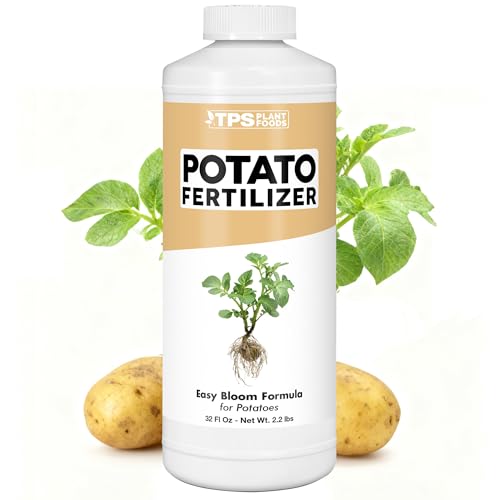
This is the only potato-specific liquid fertilizer in the lineup, with a 5-10-10 NPK ratio that matches the ideal phosphorus-heavy profile for tuber growth. The 32-ounce bottle is a large 8.0x the volume of the FoxFarm Happy Frog All Purpose liquid, giving you many more feedings per purchase.
Liquid fertilizer is the fastest route to get nutrients into your container potatoes because it is absorbed immediately through both roots and leaves. Reviewers confirm it is “easy to apply and works quickly, because it is in liquid form. Mix it with water and voilá!” One grower in Zone 8B (a warmer climate zone) fed their potatoes twice over 4 weeks and spotted a golf-ball-sized red potato near the top of the soil by week 9, confirming the formula helps tuber formation.
Being liquid, you will need to apply it every 1-2 weeks during the growing season, which is more hands-on than mixing granules into the soil once. But if you prefer the control and speed of liquid feeding, this is the most targeted product available for container potatoes.
Why we’d pick it
- Potato-specific 5-10-10 NPK ratio
- Fast-acting liquid absorption
- Large 32 oz bottle goes a long way
A few caveats
- Requires regular applications every 1-2 weeks
- Not a slow-release option
6. The Grow Co Organic Fish Emulsion Fertilizer

This 1-gallon jug (128 fluid ounces) is perfect for the budget-conscious container potato grower who wants the most liquid volume per dollar and a 2-3-1 NPK ratio that delivers the phosphorus potatoes need while keeping nitrogen low to prevent excessive leafy growth. The NPK 2-3-1 is higher in phosphorus than many standard fish emulsions, which tend to have higher nitrogen.
The formula is sustainably sourced and hydrolyzed (a cold-pressure process that keeps natural nutrients intact without heat damage). A 50+ year gardener reviewer calls it “good value, goes a long way” and recommends mixing it with rainwater for a powerful “tea” with kelp for vigorous growth. The real trade-off is the smell—”it stinks!” one buyer says bluntly, adding that “this is good because it’s supposed to stink.” The manufacturer even owns that it “smells like fish because it’s made from fish!” This is not a product for indoor use or for gardeners sensitive to odors.
If you have multiple large containers and want an organic, all-natural fertilizer that covers your potatoes and everything else, this gallon jug wins on sheer quantity and value. Just plan to use it outdoors and store it where the smell won’t bother you—its one weakness is the powerful fish odor that makes it unsuitable for indoor or enclosed spaces.
Strong points
- 1 gallon covers 160+ gallons of mixed feed
- Phosphorus-focused 2-3-1 NPK for fruiting
- Sustainably sourced and fully organic
Before you buy
- Very strong fishy odor
- Requires mixing and regular applications
Understanding the Specs
NPK Ratio – The Three Numbers
The NPK ratio (the three hyphenated numbers on every fertilizer label, such as 5-10-10) tells you the percentage of nitrogen (N), phosphorus (P), and potassium (K) in the mix. For potatoes in containers, you want a higher middle number (phosphorus) to encourage tuber growth. A 5-10-10 ratio is excellent because it doubles the phosphorus relative to nitrogen. Too much nitrogen (a high first number) will create bushy plants with tiny potatoes.
Liquid vs. Granular – Speed and Convenience
Granular fertilizers are dry pellets you mix into the soil or sprinkle on top—they break down slowly over weeks and provide a steady release of nutrients. Liquid fertilizers are concentrated liquids you dilute with water and pour onto the soil; they get absorbed immediately by the roots. In containers, where frequent watering can wash nutrients out, liquid fertilizers let you control the feeding more precisely, but they require more regular application than granules.
Organic vs. Synthetic – Soil vs. Plant Feeding
Organic fertilizers (like worm castings or fish emulsion) come from natural sources and feed the soil’s microbial life (tiny organisms that break down organic matter). They improve soil structure over the long term but release nutrients more slowly. Synthetic fertilizers are chemically formulated to deliver precise nutrient ratios quickly—they feed the plant directly. For container potatoes, a mix of both can be effective: organic matter for soil health and a synthetic 5-10-10 for targeted tuber feeding.
Micronutrients – The Extra Helpers
Beyond the main NPK numbers, some fertilizers add calcium, iron, or mycorrhizal fungi (beneficial fungi that attach to roots and help them absorb more water and nutrients). Calcium prevents blossom end rot (a common problem where the bottom of tomatoes or potatoes rots due to calcium deficiency). Iron prevents yellowing leaves and supports overall plant vigor. Mycorrhizal fungi are especially useful in containers because they make the limited soil volume work harder for your plants.
FAQ
What NPK ratio is best for potatoes in containers?
Should I use liquid or granular fertilizer for container potatoes?
Can I use tomato fertilizer on potatoes?
How often should I fertilize potatoes in a container?
Is fish emulsion good for potatoes?
Final Thoughts: The Verdict
The Cz Garden 5-10-10 wins for most container potato growers because its phosphorus-heavy ratio pushes energy straight into tubers, not leaves—a one-bag solution that delivers exactly what potatoes need. Choose the FoxFarm Happy Frog Tomato & Vegetable if you want mycorrhizal fungi and calcium in a granular mix that also covers tomatoes and peppers. And if you prefer the speed of liquid feeding with a potato-specific 5-10-10 formula, the TPS Nutrients Potato Fertilizer is the fastest-absorbing option.