
Finding a bag of soil that gives your jalapeño plants exactly the drainage, aeration, and organic nutrition they need without bringing home weeds, bugs, or a cloggy mess can feel like a chore. You want a consistent mix that keeps pepper plants producing through the season — not one that turns into concrete or sprouts mystery seedlings. This guide breaks down each contender by how it handles the real demands of growing hot peppers in containers or raised beds.
I’m Rikta — the co-founder and writer behind Lawn Gear Lab. This guide is built by comparing the manufacturers’ published specifications and the patterns across verified customer reviews, so you get each pick’s real strengths and trade-offs instead of marketing spin.
Whether you are starting seeds indoors or transplanting established plants into bigger pots, choosing the right growing medium makes a big difference. Here is our roundup of the soil for jalapenos that delivers the best results for your spicy harvest.
How To Choose The Best Soil For Jalapenos
Jalapeño plants are not the fussiest vegetables, but they do have a clear preference: a lightweight, well-draining mix that stays airy enough for roots to breathe. If the soil holds water too long or compacts into a dense block, you risk root rot and a very disappointing harvest. Here is what to check before you buy.
Drainage and Aeration
Peppers hate sitting in soggy soil. Look for a potting mix that includes perlite or vermiculite (small white or silvery granules) or coarse materials like bark fines. Those particles create air pockets that let extra water drain away quickly and keep oxygen near the roots — critical for vigorous pepper growth.
Organic Ingredients and Nutrients
Jalapeños are heavy feeders once they start fruiting. A soil that already contains worm castings, compost, kelp meal, or alfalfa meal gives your plants a steady supply of nutrients from the start, so you do not have to fertilize as often. Organic certifications like the OMRI (Organic Materials Review Institute) list help you know what you are getting.
pH Level
Pepper plants prefer a slightly acidic to neutral pH range of roughly 6.0 to 6.8. Many quality potting soils include dolomitic limestone (a natural mineral powder) to balance the acidity of peat moss or coconut coir, which keeps nutrients like calcium and magnesium available for the plant to absorb.
Size and Quantity
Think about how many pots you plan to fill. A standard 10-inch container needs about 4 to 6 quarts of soil, and a larger 14-inch pot can take 10 to 14 quarts. Buying a bigger bag from the start often saves you from having to mix different bags later.
Quick Comparison
On smaller screens, swipe sideways to see the full table.
| Model | Category | Best For | Key Spec | Amazon |
|---|---|---|---|---|
| Back to the Roots All-Purpose Potting Mix | Mid-Range | Peat-free reliable mix | 6 Quarts | Amazon |
| Miracle-Gro Organic Indoor Potting Mix | Mid-Range | Over and under watering protection | 8 Quarts | Amazon |
| Espoma Organic Potting Soil Mix | Premium | Nutrient-rich organic formula | 8 Liters | Amazon |
| Premium Potting Soil Mix with Peat Moss, Vermiculite, Perlite | Mid-Range | Professional-grade ingredients | 4 Quarts | Amazon |
| Coast of Maine Organic & Natural Planting Soil for Vegetables | Premium | Large volume vegetable garden | 20 Quarts | Amazon |
| Coast of Maine Bar Harbor Blend Potting Soil | Premium | All-purpose container garden | 16 Quarts | Amazon |
In‑Depth Reviews
1. Back to the Roots All-Purpose Potting Mix 6 Quarts (Best Value), 100% Organic & USA Made for Herbs, Veggies, Flowers, w/Nutrient Rich Plant Food, Worm-Castings, & Moisture Controlling Yucca, 2 Packs
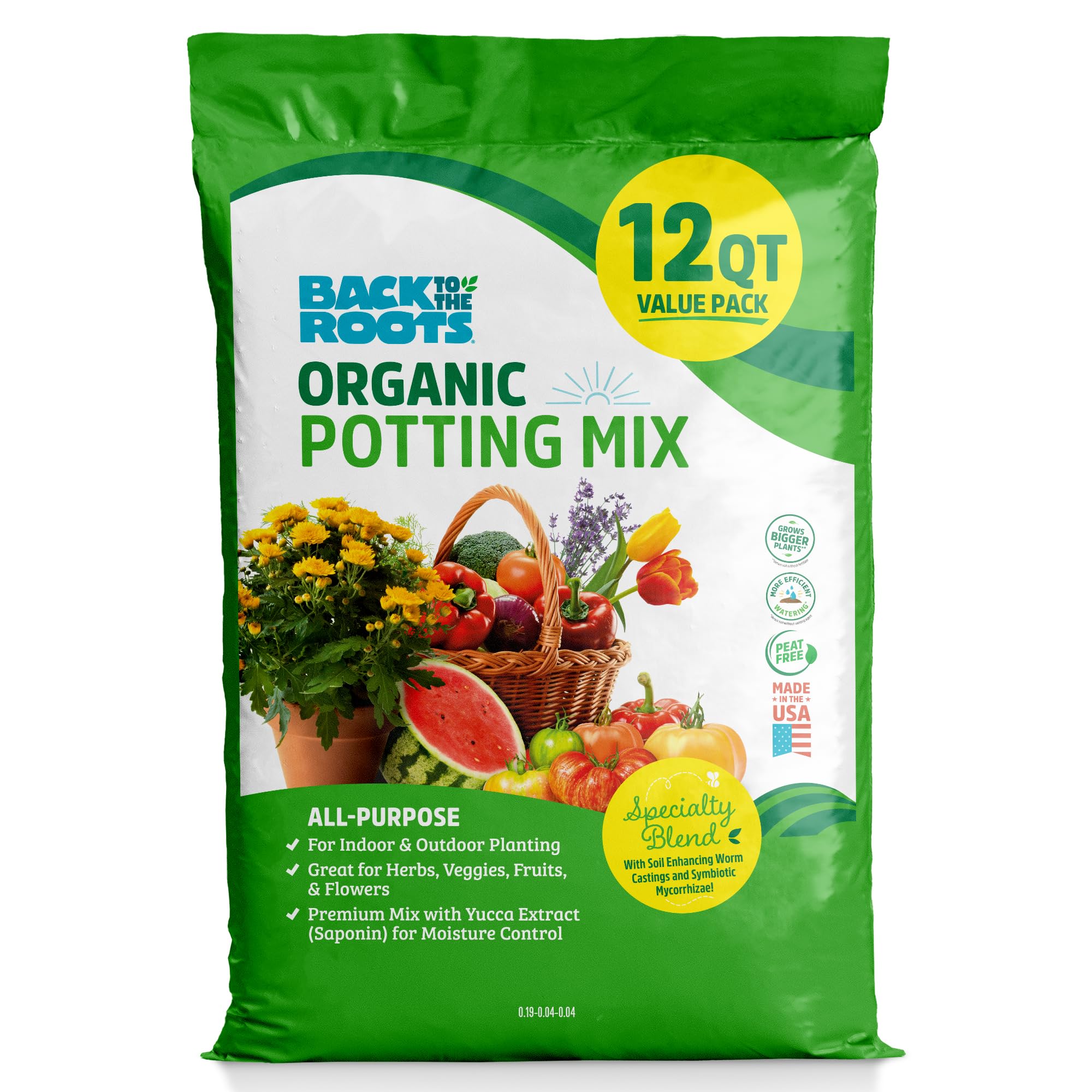
6 quarts (two 3-quart bags) for under $20 makes this the best value pick for anyone repotting multiple jalapeño plants into containers without overspending.
Its formula includes mycorrhizae (beneficial fungi that attach to roots to help them absorb water and nutrients) and yucca extract (a natural wetting agent), so the 4.4-pound bag stays fluffy and consistent without needing extra amendments. Buyers report that it contains larger bark particles that work well for established plants but can be tough for tiny seedlings — one reviewer noted it is “great value and just what I need for 24 pots,” which tells you it spreads far for the price.
The honest limit here is the bark particle size: if you are starting pepper seeds from scratch, sift out the chunks or pick a finer mix for that first stage. For transplanting young jalapeño plants into bigger containers, this gives you everything you need at a reasonable price.
Why it’s great
- 100% peat-free and coconut-coir based — sustainable and stays aerated.
- Contains mycorrhizae and yucca extract for root health and moisture control.
- Includes pH-balancing dolomitic limestone to keep nutrients available.
Good to know
- Larger bark particles make it less ideal for very small seedlings.
- Only 6 quarts per pack, so plan ahead for multiple pots.
2. Miracle-Gro Organic Indoor Potting Mix – Protects Against Over and Under Watering, Planting Soil for Indoor Container Plants, Houseplants and Starter Plants, OMRI Listed, 8 qt. (2-Pack)

The Back to the Roots mix relies on yucca extract, but this Miracle-Gro formula takes a different path to help prevent both over and under watering — a smart guard for anyone nervous about drowning their jalapeño plants. At 9 pounds for the two-pack, it is notably heavier than the Back to the Roots bag (which weighs 4.4 pounds), giving you more soil mass per order.
One of the key complaints about growing peppers indoors is fungus gnat outbreaks, and owners mention that after switching to this mix, “gnats went down to almost non-existent” — partly because the responsibly sourced sphagnum peat moss and coir blend is processed to reduce pest eggs. That moisture retention also helps during germination, keeping seed-starting trays evenly damp without you having to mist constantly.
If you are growing jalapeños in containers inside your home or in a greenhouse where you cannot water every day, this is the mix that gives you a wider safety margin against missed watering or accidental overpouring. It is not the cheapest per quart, but the peace of mind against rot and gnats is worth it for indoor growers.
Where it shines
- Formulated to protect against both over and under watering.
- High moisture retention ideal for seed starting and indoor containers.
- Customers note it dramatically reduces fungus gnat problems.
Worth noting
- Indoor-focused — less ideal for large outdoor raised beds.
- Heavier bag at 9 pounds feels dense compared to peat-free alternatives.
3. Espoma Organic Potting Soil Mix – All Natural Potting Mix For All Indoor & Outdoor Containers Including Herbs & Vegetables. For Organic Gardening, 8qt. bag. Pack of 1

If you are a gardener who prefers a soil that already packs a punch of organic nutrients — including earthworm castings, alfalfa meal, kelp meal, and feather meal — this mix from Espoma gives you 8 liters (about 33% more volume than the Back to the Roots bag) in a single bag. For growing jalapeños that need steady feeding, having that built-in buffet of decomposed matter can reduce how often you reach for liquid fertilizer.
Buyers have used this mix successfully with tomatoes, peppers, lettuce, and herbs, calling it “the best organic mix used” and noting it is “biologically rich in humus and organisms.” However, there is a real quality-control catch: multiple reviewers report issues with a 2019 batch that contained “puncture holes, roots, branches, bugs, fruit fly eggs, and worms,” suggesting that consistency from bag to bag has not always been reliable. Later reviews from recent years are far more positive, so current batches appear cleaner.
The standout here is the inclusion of Myco-Tone (a proprietary blend of beneficial mycorrhizal fungi), which gives your jalapeño roots a direct line to more water and nutrients. If you want a single bag with serious organic nutrition and do not mind rolling the dice on batch consistency, this is a strong contender.
What stands out
- Rich blend of earthworm castings, alfalfa meal, kelp meal, and feather meal.
- Contains Myco-Tone mycorrhizae for enhanced root development.
- Larger volume at 8 liters for filling multiple pots.
The trade-offs
- Some historical batches had contamination issues (bugs, weeds, roots).
- Higher price per bag compared to basic peat-based mixes.
4. Premium Potting Soil Mix with Peat Moss, Vermiculite, Perlite (Made in USA) (4 Dry Quarts)

The single number that matters most in potting soil is how it handles water, and this mix scores high with its triple blend of peat moss (for moisture retention), vermiculite (for holding water and nutrients), and perlite (for creating air pockets). Buyers describe it as having a “light, fluffy texture” with “perfect moisture retention and drainage,” which is exactly the kind of balanced environment jalapeño roots love — they get enough water without being smothered.
The catch is volume: at only 4 quarts, this bag is small compared to the Coast of Maine 20-quart bag (which holds five times more), so you will need multiple bags for a decent-sized container garden. One reviewer points out that you need to “soak soil before use to prevent quick drainage,” which means it can shed water too fast if not pre-moistened.
Price-per-quart this sits in the mid-range, but the quality of the blend — no weeds, no bugs, made in the USA — makes it a reliable choice for a single large pot or a few smaller containers. If you only have one or two jalapeño plants and want a premium touch, this is a clean, hassle-free option.
The upsides
- Professional-grade blend of peat moss, vermiculite, and perlite.
- Light and fluffy texture — promotes strong root growth.
- No weeds or bugs reported; consistent quality.
Keep in mind
- Small 4-quart bag — buy multiple if filling several pots.
- Needs pre-soaking to fix quick drainage right out of the bag.
5. Coast of Maine Organic & Natural Planting Soil for Vegetables & Tomatoes – Premium Planting Soil w/ Composted Manure, Sphagnum Peat Moss for Multi Use Ground & Containers – Enhanced Drainage (20 Qt)

What you actually get at this lower price is a 20-quart bag of Coast of Maine Organic & Natural Planting Soil for Vegetables & Tomatoes, a general vegetable and tomato soil that includes composted manure and sphagnum peat moss to give peppers a steady source of organic nutrients. Reviewers point out it is “lightweight” and “excellent for vegetables” with good moisture drainage.
What you give up with the bigger size is precision — it is a general vegetable and tomato soil, not a tailored jalapeño blend. Some buyers noted fungus gnats in their bags and recommend disinfecting before use, which is a common risk with compost-heavy soils. One reviewer summed it up honestly: “if you have one or two tomatoes this is worth it, but for anything more steer clear and seek cheaper alternatives.”
For price-to-volume, this is one of the best values on the list if you are planting a serious garden. The “wife approval factor” is real, as one buyer put it, and the aromatic wood in the mix helps deter insects. If you have space and want bulk, this is your move — it is perfect for the budget buyer who needs a large quantity of organic soil for a substantial vegetable garden.
Why we’d pick it
- Huge 20-quart bag perfect for raised beds and large containers.
- Composted manure provides rich organic nutrition for heavy-feeding peppers.
- Lightweight texture with good moisture and drainage balance.
A few caveats
- Some bags may contain fungus gnat eggs — consider pre-treatment.
- Not as refined as smaller premium mixes; expect some woody chunks.
6. Coast of Maine Organic & Natural Bar Harbor Blend Potting Soil – Organic Soil w/Perlite for Enhanced Drainage & Aeration – for Flowers, Herbs & Veggies, Floral Baskets & Container Gardening (16 QT)
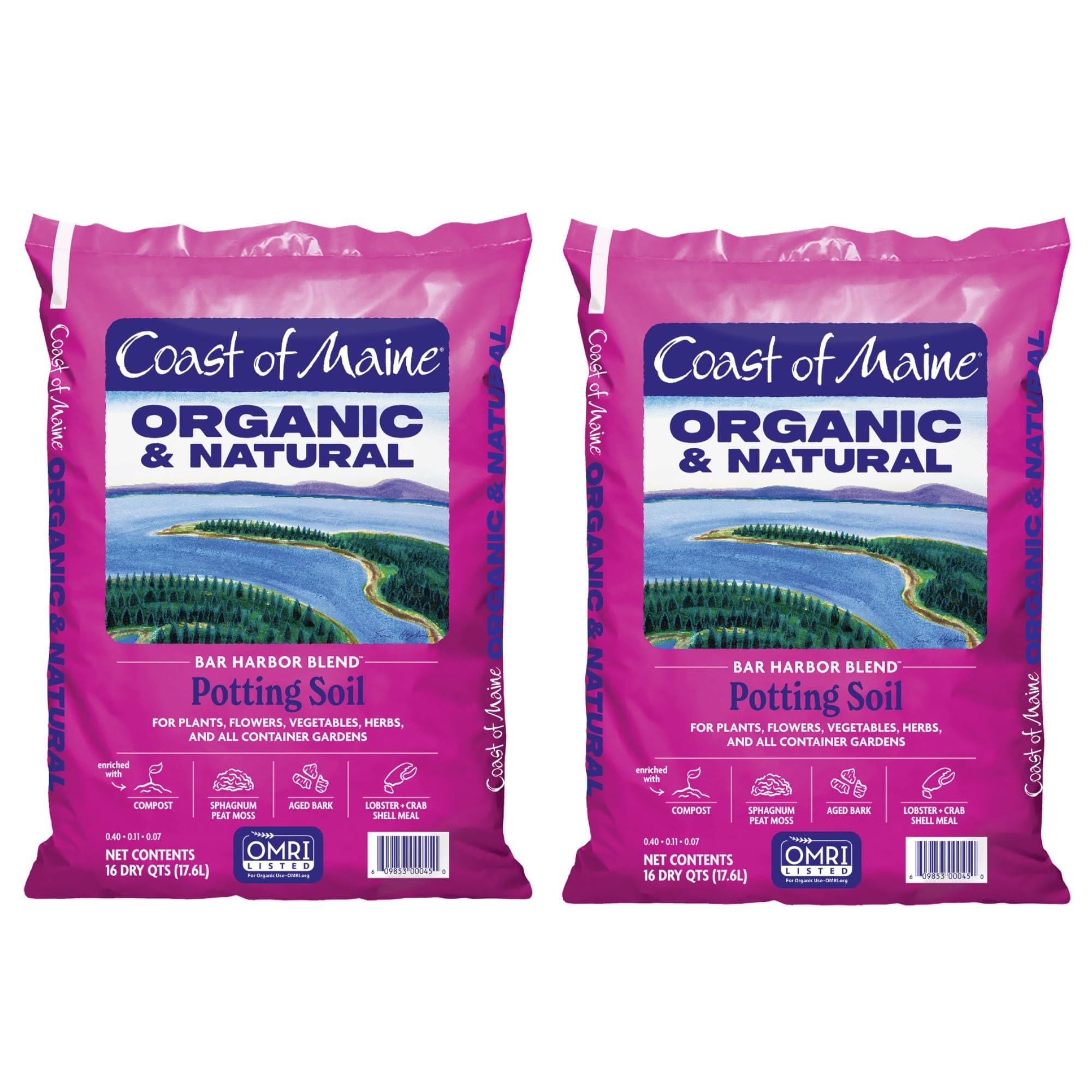
This Bar Harbor Blend is perfect for the jalapeño grower who wants a premium, compost-rich organic mix with natural slow-release nutrients and is willing to pay a little more for a smaller bag. Compared to the larger Coast of Maine vegetable soil (20 quarts for a lower price per quart), this Bar Harbor Blend costs more but brings a premium ingredient list: lobster and crab shell meal plus kelp meal add natural slow-release nitrogen and trace minerals that jalapeño plants love during fruiting. At 16 quarts, it is still generous for container gardening without the bulk of the 20-quart bag.
What that money actually gets you is a noticeably darker, compost-rich texture that shoppers say is “super nice feeling” and “not full of sticks like some others.” One buyer mentioned that their “tomatoes never looked so good” and that they now “will never go back” to the big mainstream brand they used before. The inclusion of perlite keeps drainage working despite the high compost content, so your jalapeño roots get both nutrition and air.
The one reason to choose this over the standard Coast of Maine vegetable soil is the lobster and crab shell meal — it provides a gentle, organic nitrogen source that encourages leafy growth early and supports fruit development later without burning the plant. If you want a ready-to-use mix that feels truly crafted, this is the best pick among the premium tier. Just note that its higher cost per quart makes it less economical for large plantings or multiple big containers.
Strong points
- Unique blend of lobster/crab shell meal and kelp meal for natural nutrition.
- Rich, dark, stick-free texture that plants thrive in.
- 16-quart bag balances value and quality for multiple containers.
Before you buy
- Higher price per quart than the standard Coast of Maine vegetable soil.
- Compost-heavy, so pre-moistening helps settle the initial texture.
Understanding the Specs
Drainage and Perlite
Perlite (small white volcanic glass beads) and vermiculite (silvery mineral flakes) create air pockets in the soil so water does not pool around the roots. For jalapeños, you want enough perlite that water runs out the bottom within a few seconds of watering, not minutes. Soils without these additives tend to compact into a dense, wet brick that suffocates roots.
Organic Matter and Nutrients
Ingredients like worm castings, compost, kelp meal, and feather meal provide a slow-release buffet of nitrogen, phosphorus, and potassium. Jalapeño plants are heavy feeders once they start setting fruit, so pre-loaded organic nutrients reduce the need for liquid fertilizer during the season. Look for “OMRI Listed” on the bag, which means the ingredients meet organic farming standards.
FAQ
Can I use regular garden soil for jalapeños in containers?
How often should I repot my jalapeño plants into fresh soil?
Final Thoughts: The Verdict
Across the board, the soil for jalapenos winner is the Back to the Roots All-Purpose Potting Mix because it gives you a peat-free, coco-coir base with mycorrhizae and yucca extract at a fair price per quart. If you want the best moisture-control safety net for indoor containers, grab the Miracle-Gro Organic Indoor Potting Mix. And for a premium organic blend packed with lobster shell meal and kelp meal, the standout is the Coast of Maine Bar Harbor Blend.