
A blue and white Chinese planter pot adds a quiet, timeless elegance to any room you place it in. The hard part is finding one that looks genuinely hand-crafted instead of mass-produced. Some arrive with smeared paint, a plastic-feeling glaze, or a size that is too small for your plant. This guide breaks down six real options. You get each pot’s actual heft, finish quality, and drainage details so you can pick one that looks like it has been in a curated home for years.
I’m Rikta — the co-founder and writer behind Lawn Gear Lab. This guide is built by comparing the manufacturers’ published specifications and the patterns across verified customer reviews, so you get each pick’s real strengths and trade-offs instead of marketing spin.
You are after the best blue and white chinese planter pots for your space. The best choice for you comes down to material weight and finish type — that is what makes the difference between a pot that elevates your plant and one that looks cheap.
How To Choose The Best Blue And White Chinese Planter Pots
Before you buy, three details separate a pot you will love for years from one you will hide behind a fern. Focus on these to match the pot to your plant, your shelf, and your watering style.
Drainage Design: What Keeps Your Plant Alive
The most common buyer complaint is a pot that looks beautiful but drowns the roots. A drainage hole (a hole in the bottom) lets excess water escape. You need this if you plan to plant directly in the pot. A pot without a hole is called a cachepot (a decorative outer pot). With a cachepot, you keep the plant in a plain plastic nursery pot inside it. You must empty any standing water after watering. Check this before you order. The wrong choice can kill a houseplant in a few weeks.
Glaze Finish and Weight: What “High Quality” Feels Like
A cheap planter often feels hollow, has a glaze that looks uniformly plastic, or chips easily. Real quality comes from two things. First is the weight of the ceramic — heavier generally means denser, longer-lasting material. Second is the finish type. A crackle glaze (a finish with deliberate hairline cracks) adds an antique look. A polished gloss (a smooth, shiny coating) feels smoother and hides dirt better. A distressed finish (subtle patchy coloring) mimics age. Pick the finish that fits your decor tone.
Size vs. Scale: What Fits Where
Blue and white pots often look larger in photos than they are in real life. Measure your shelf height, table width, and your plant’s root ball diameter before you buy. A 6-inch wide pot works for a succulent or small fern. A 10-inch or wider pot is needed for a tall orchid or a bushy pothos. The dimensions in the listing are the pot’s outer size. Account for the thickness of the ceramic walls when thinking about the internal planting space.
Quick Comparison
On smaller screens, swipe sideways to see the full table.
| Model | Category | Best For | Key Spec | Amazon |
|---|---|---|---|---|
| Retro Distressed Ceramic Flower Pot | Mid-Range | Budget-friendly vintage look | 0.84 kg / 5.72″ tall | Amazon |
| Vintage Planter Large Ceramic Blue Chinoiserie | Mid-Range | Small-to-medium plants | 2.1 lbs / 5.91″ wide | Amazon |
| Ceramic Scroll Planter 6.5 Inch | Mid-Range | Versatile decor piece | 2.9 lbs / 6.5″ diameter | Amazon |
| Blue and White Oval Cachepot (Arborus) | Premium | Tall orchids / centerpieces | 1.48 kg / 10″ long | Amazon |
| Briwooody Set of 3 Porcelain Pots | Value | Multi-plant collections | 4.97 lbs / set of 3 | Amazon |
| Galt International Fluted Set of 3 | Premium | Large statement planters | 8.98 kg / 13″ largest | Amazon |
In‑Depth Reviews
1. Blue and White Oval Cachepot (Arborus)
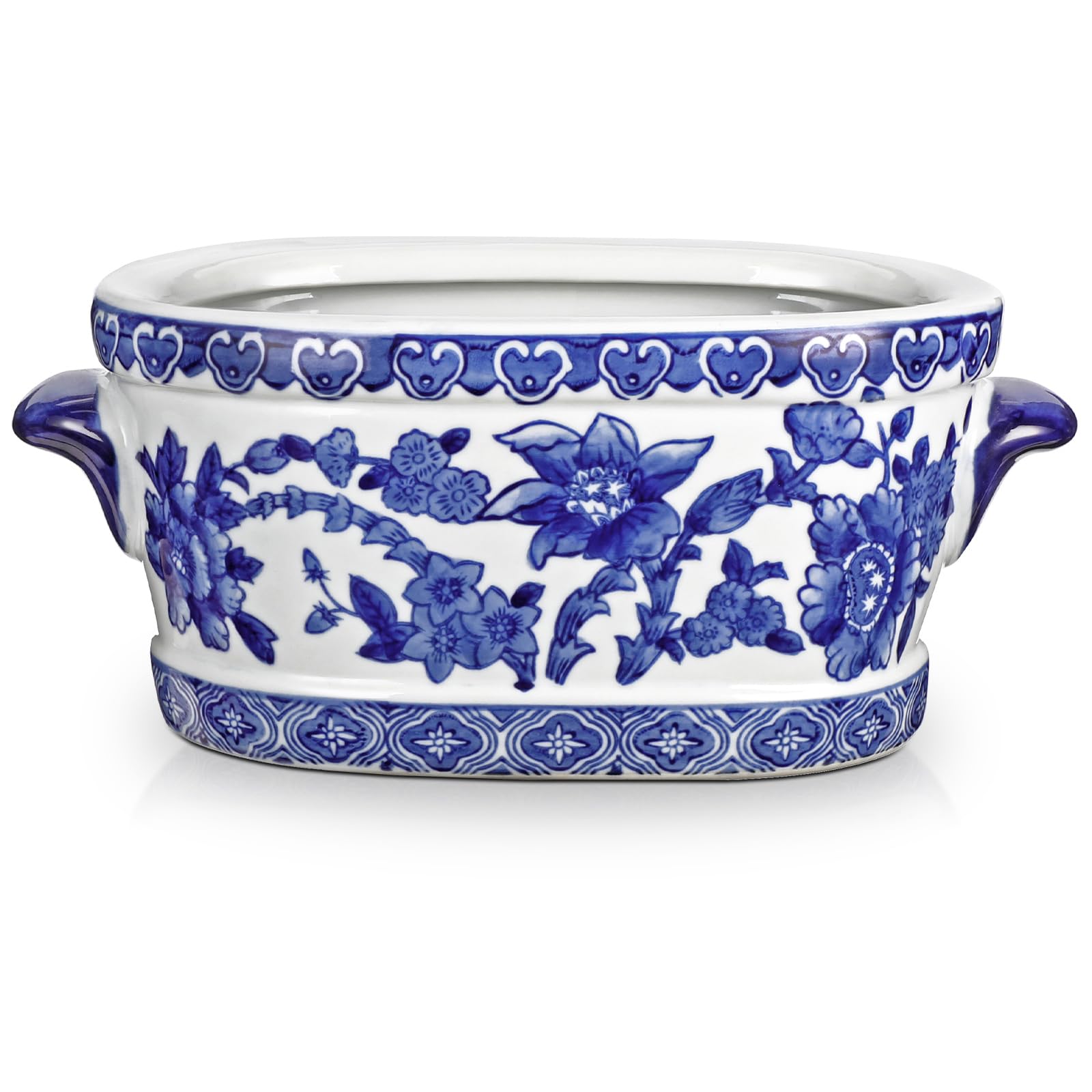
The Arborus Oval Cachepot is 10 inches long by 4 inches wide, making it the top pick for anyone who wants a long, low-profile planter that looks like a museum piece and fits a tall orchid or a bundle of stems. Its polished gloss finish reflects light beautifully, and the hand-painted floral pattern feels genuinely classy rather than stamped on. The oval shape suits a centerpiece or a row of succulents better than a standard round pot.
The ceramic is kiln-fired and weighs 1.48 kilograms, which is 76% heavier than the smaller Retro Distressed pot, giving it a reassuring, solid presence when you pick it up. Buyers report it arrived well-packaged, and the blue color is “very pretty” with just the right amount of gloss, owners mention. Because it has no drainage hole, you will need to drill one yourself (several reviewers mention this is easy with a ceramic bit) or use it as a cachepot with a nursery pot inside.
This is for you if you value timeless looks over convenience features, but the catch is that you cannot water a plant directly in it without a backup plan. For timeless style with a solid, hand-painted finish, the Arborus Oval Cachepot is the clear top pick.
Why it’s great
- Heavy, quality ceramic at 1.48 kg
- Polished gloss finish resists fading
- Oval shape fits tall plants well
Good to know
- No drainage hole (drill or use cachepot method)
- Best for indoor use only
2. Galt International Fluted Set of 3
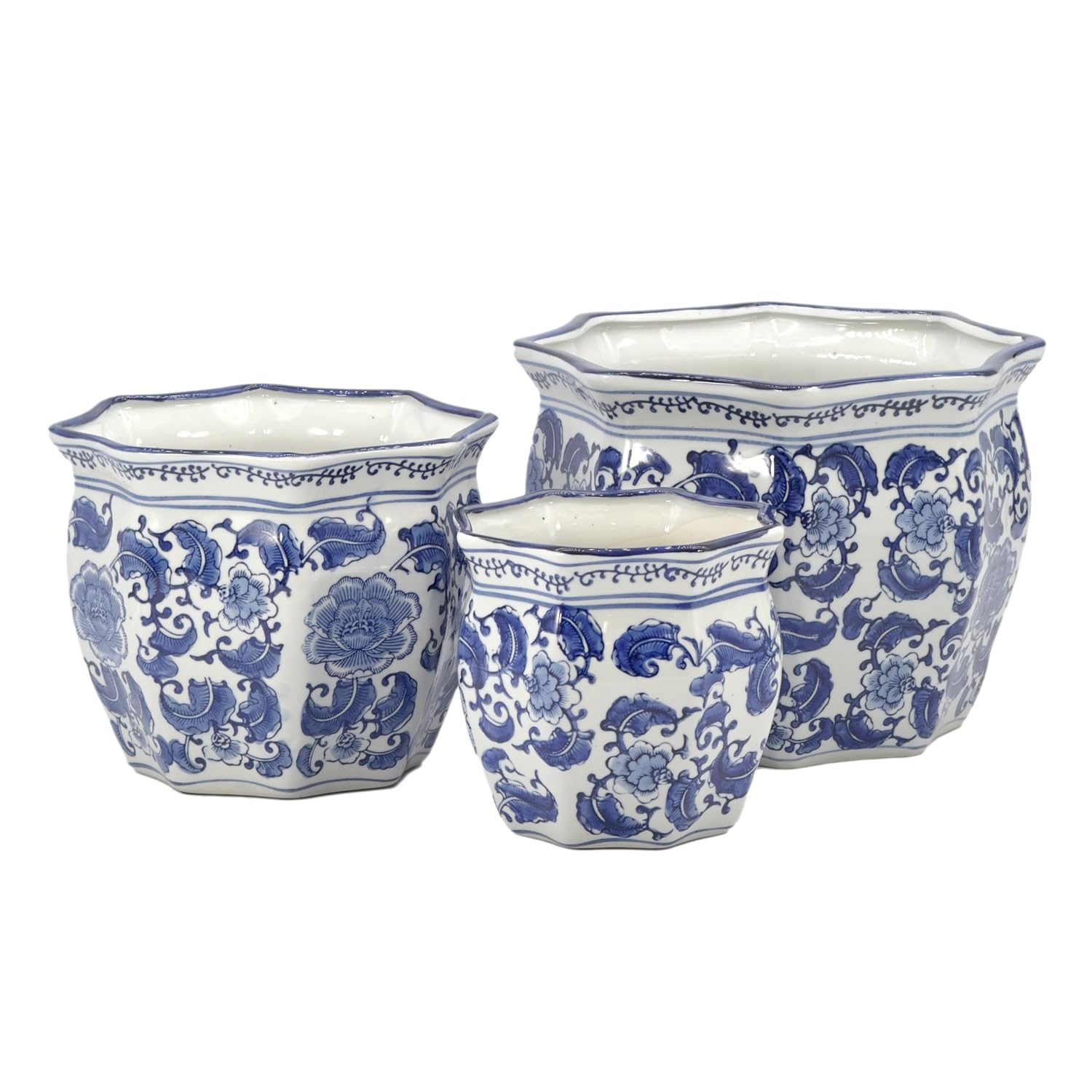
Compared to the Arborus cachepot, this fluted set gives you three graduated sizes—7.5, 10, and 13 inches wide—instead of a single pot. The total set weighs 8.98 kilograms, so each pot feels dense and expensive. The classic floral pattern is hand-painted, which means subtle variations that make each piece feel unique.
In real-world use, the 13-inch pot is big enough to hold a bushy fern or a small shrub. The 7.5-inch pot fits a succulent cluster. Customers note that the containers arrived perfectly packed and look “stunning yet affordable.” One buyer says they have received many compliments and shared the link multiple times. Each pot has a drainage hole, so you can plant directly—unlike the Arborus cachepot design.
Choose this set over the single Arborus pot if you have space for multiple large planters and prefer a traditional round, fluted shape instead of an oval silhouette.
Where it shines
- Three graduated sizes for a cohesive display
- Hand-painted floral detail adds uniqueness
- Drainage hole allows direct planting
Worth noting
- Shipping damage reported on rare occasions
- Each pot is very heavy (8.98 kg total set)
3. Ceramic Scroll Planter 6.5 Inch
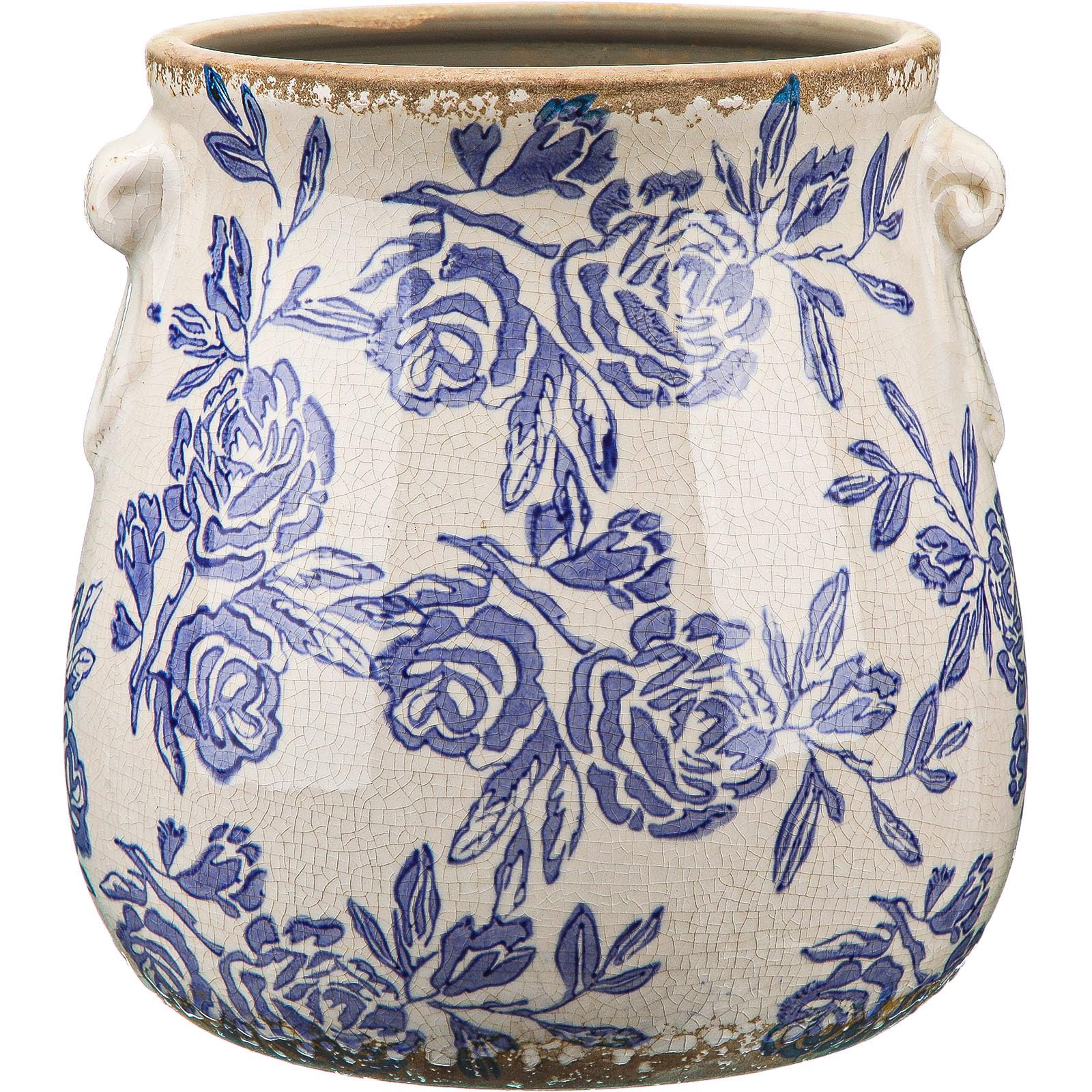
If you want a planter that can hold a live ivy on a windowsill one day and corral cooking utensils on a desk the next, this scroll planter fits both roles. It weighs 2.9 pounds — 38% heavier than the Vintage Chinoiserie planter (2.1 pounds) — so it feels sturdy and won’t tip when bumped. The drainage hole lets you plant directly without worrying about root rot, unlike the cachepot-style Arborus which has no hole.
The scroll rim and rustic floral pattern give it a worn, European antique look that blends into farmhouse kitchens and modern living rooms. One reviewer wrote: “I love this vintage looking planter so much, I purchased a couple for myself & several for gifts!” The smooth glaze surface cleans easily with just a damp cloth.
Its standout feature is that it works as a planter or a decor piece equally well, making it the most flexible single pot in this lineup — skip it only if you need a pot larger than 6.5 inches for a bushy plant.
What stands out
- Heavy ceramic (2.9 lbs) for stable placement
- Drainage hole supports direct planting
- Smooth glaze finish is easy to clean
The trade-offs
- 6.5 inch size is best for medium plants only
- White-and-blue pattern is more subtle than bright royal blue
4. Briwooody Set of 3 Blue and White Porcelain Pots
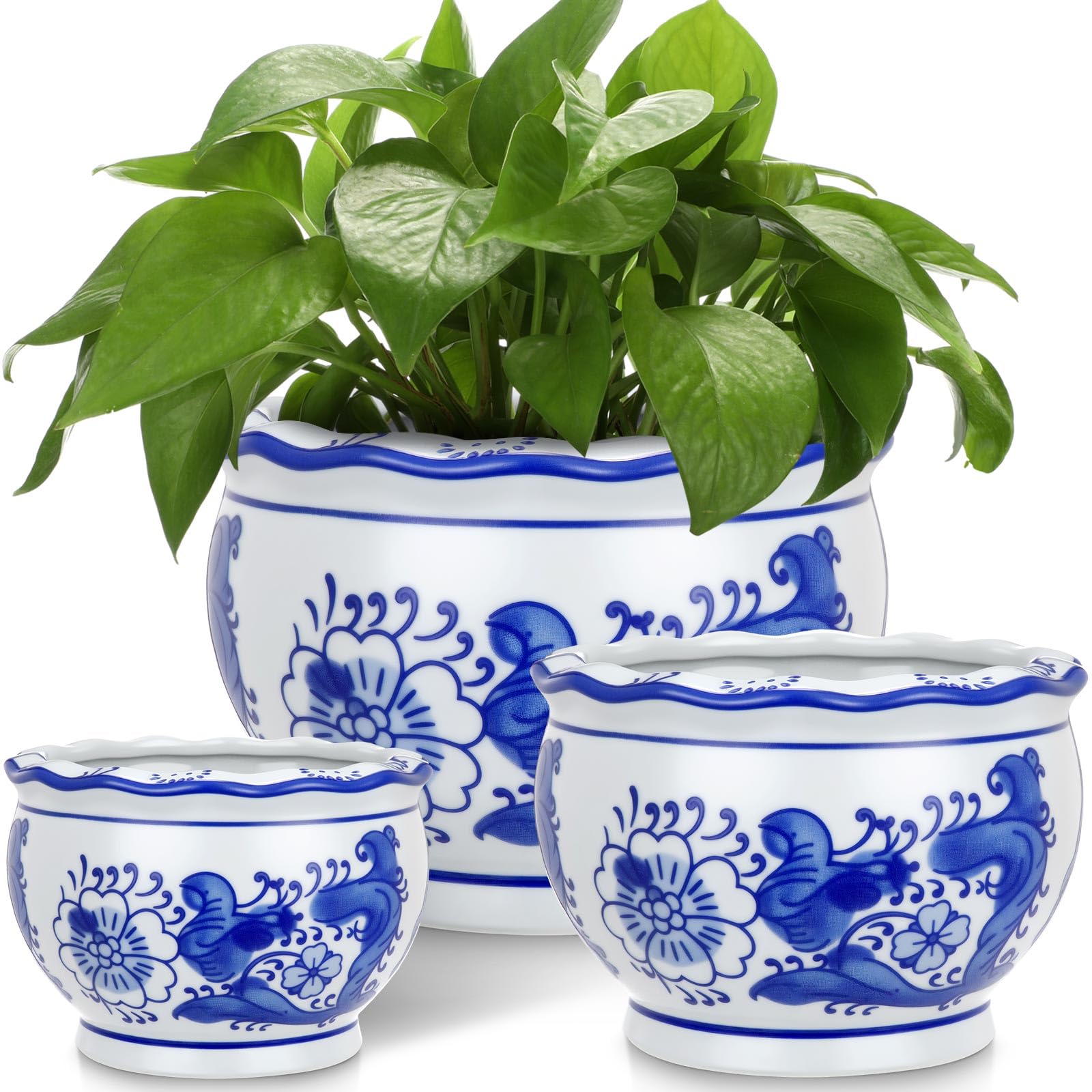
The single number that matters most in a multi-pot set is whether each size is actually useful, and this set scores with three distinct diameters: 7.28 inches, 5.91 inches, and 3.94 inches. That means you can pot a small succulent, a medium pothos, and a starting fern all at once. The plastic saucers prevent water from leaking onto your furniture. Each pot has a drainage hole, so you do not have to worry about root rot.
The downside is that the ceramic feels less dense than heavier single pots like the Ceramic Scroll Planter. At 4.97 pounds total for all three pots, each individual pot is much lighter than the Arborus cachepot (which is 1.48 kg for just one piece). One reviewer noted: “I personally did not like the item because it was 3 tiny bowls.” Be aware that the largest pot is still on the smaller side for a standard houseplant pot. The pots are decorated with a delicate blue floral pattern that reviewers call “elegant” and “absolutely beautiful.”
This set is the most affordable way to get three matching chinoiserie pots that all have drainage and saucers, making it a strong price-to-value read if you are decorating a shelf or windowsill with multiple small plants. skip it if you need pots larger than 7.28 inches.
The upsides
- Three graduated sizes cover small to medium plants
- Drainage holes and plastic saucers included
- Durable ceramic with smooth glazed surface
Keep in mind
- Pots are smaller than typical decorative planters
- Ceramic feels lighter compared to premium single pots
5. Retro Distressed Ceramic Flower Pot
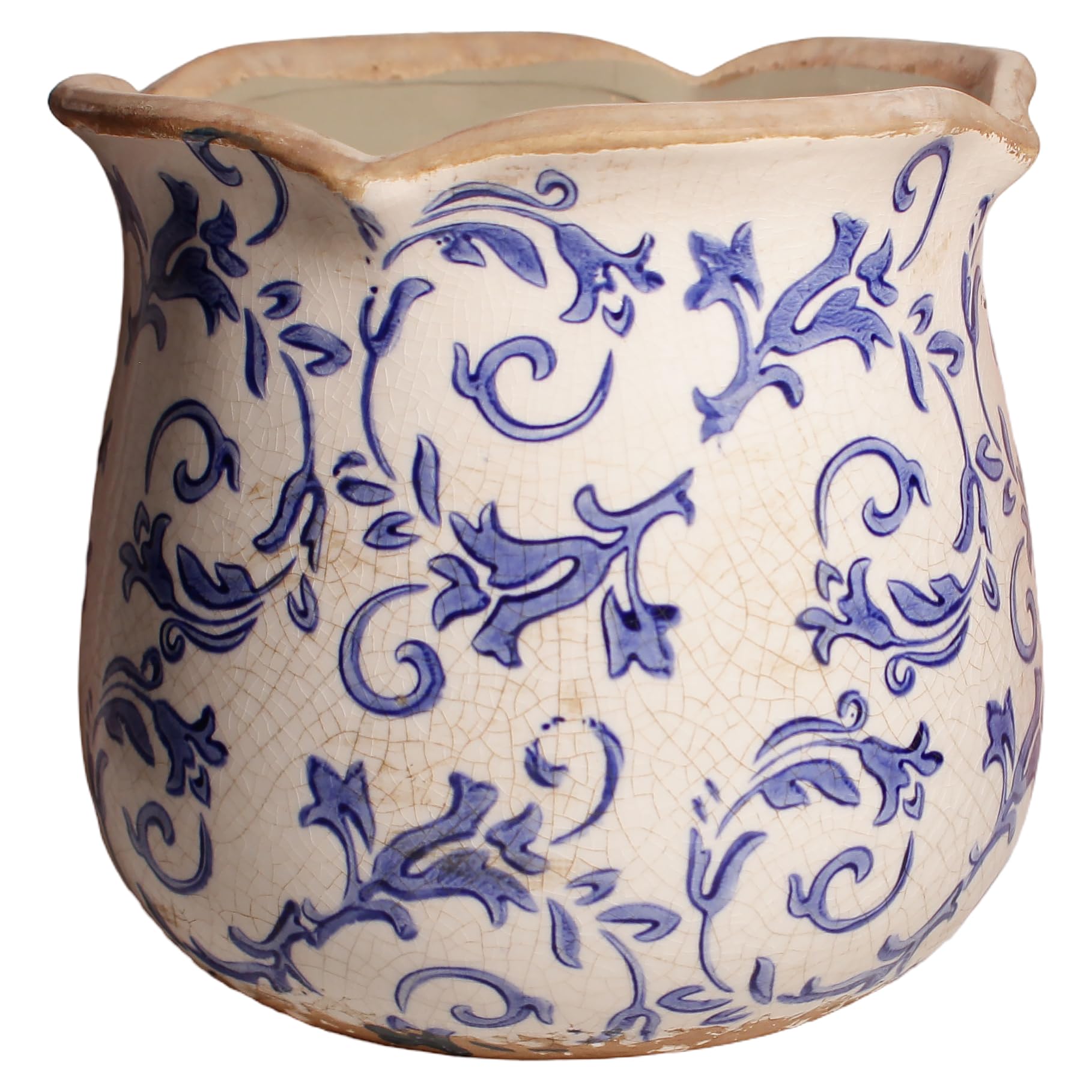
At this entry-level price, you get a ceramic pot that is lighter (0.84 kilograms) than the premium options but still feels like substantial material — not plastic. The distressed crackle glaze (a finish with deliberate hairline cracks) creates the look of aged ceramic. The drainage hole gives you planting flexibility. Reviewers point out it is “cute and a good size.” One buyer adds that the colors are “much clearer than the pics on the website would suggest.”
What you give up is interior space. The 6.11-inch diameter and 5.72-inch height are best for small to medium plants only. One reviewer mentions that “one drainage hole is a minor concern but manageable with proper soil.” This means the single hole works if you use a well-draining potting mix. The ceramic is also thinner than the Scroll Planter or Arborus models, so it will feel less weighty in your hands. Its weight is 0.84 kg, compared to the Vintage Chinoiserie pot at 2.1 lbs — the Retro is lighter.
This is the perfect pick for you if you want the vintage distressed look on a strict budget. It also suits you if you are confident keeping a small plant healthy with proper soil.
Why we’d pick it
- Distressed crackle glaze gives antique look
- Drainage hole prevents overwatering
- Affordable entry into chinoiserie style
A few caveats
- Single drainage hole may be too slow for heavy waterers
- Lighter ceramic (0.84 kg) feels less premium
6. Vintage Planter Large Ceramic Blue Chinoiserie
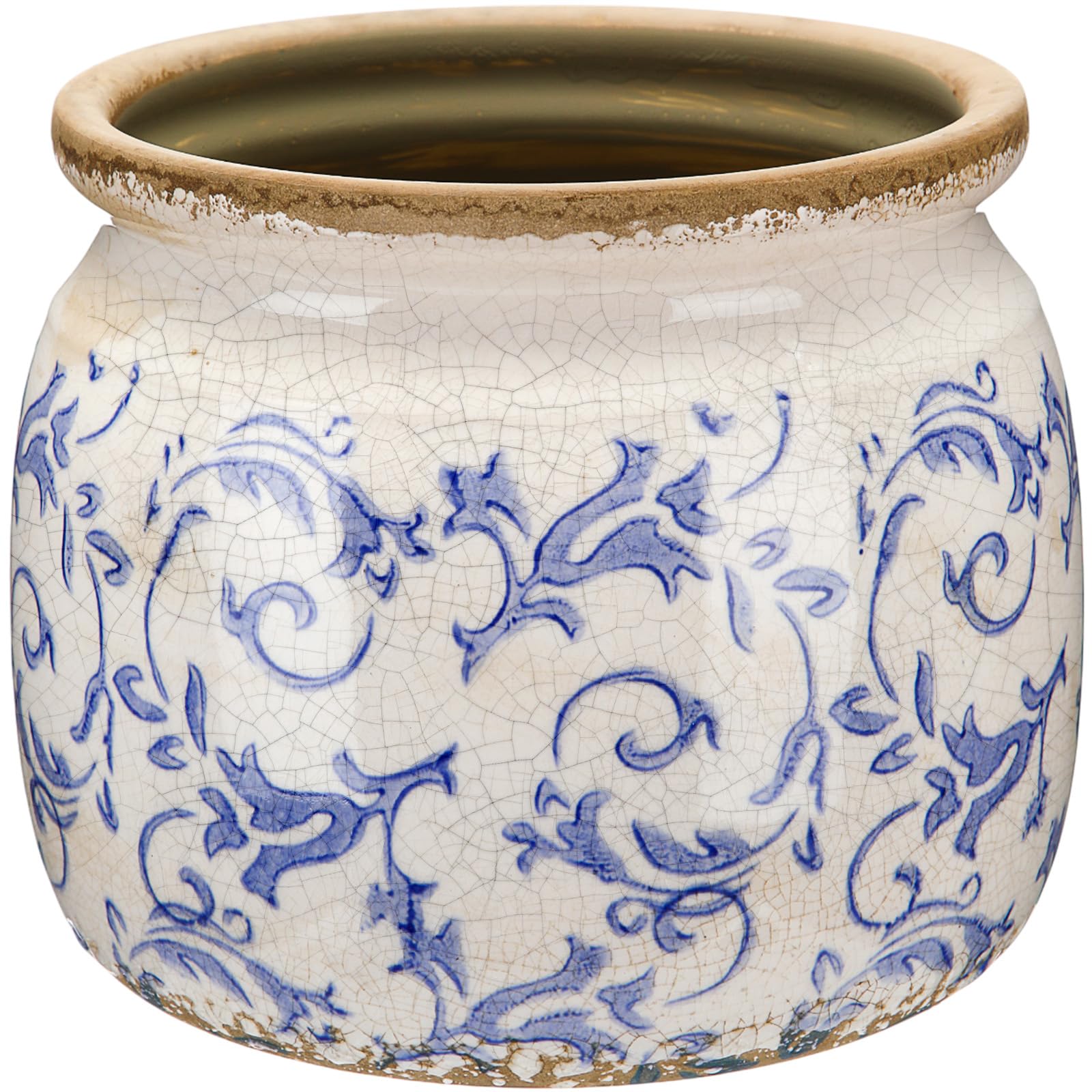
This vintage European planter is perfect for the shopper who wants a single pot that looks like it came straight from a Pottery Barn catalog. It has a warm beige body and a subtle crackle finish (a finish with fine hairline cracks to mimic age). At 2.1 pounds, it is lighter than the 2.9-pound Ceramic Scroll Planter, but it is still solid enough that one reviewer says its “solid weight, versatile for stems or decor” works in its favor. The floral pattern is painted in a muted blue that reviewers call “beautiful” and “vintage fairy garden” style.
Its 5.91-inch width is ideal for small succulents, herbs, or a single cactus. The drainage hole makes direct planting safe, though one buyer mentioned a drawback: “Decorative, needs insert for live plants.” This is because the crackle glaze can allow moisture to seep through over time, so using a plastic nursery pot inside is the safer approach if you are heavy-handed with watering. It competes directly with the Retro Distressed pot but beats it on weight (2.1 lbs vs 0.84 kg) and on that premium “Pottery Barn” feel.
The one reason to choose this over the Retro Distressed pot is you want a pot that looks convincingly old without the thinner ceramic feel. Just be cautious: the crackle glaze that gives it that aged look also means it is not fully waterproof for direct planting.
Strong points
- Convincing antique/vintage look
- Warm beige with subtle crackle glaze
- Solid 2.1 lb weight for its size
Before you buy
- Best used with a nursery pot insert
- Smaller size (5.91″ wide) limits plant options
Understanding the Specs
Drainage: The Root Health Decider
A drainage hole is a simple hole in the pot’s bottom. It lets extra water escape after you water the plant. Without it, water collects in the bottom and rots the roots — root rot (roots decaying from too much moisture) is the #1 killer of indoor plants. If you water on a schedule and tend to overwater, always pick a pot with a drainage hole. If you prefer a cachepot (a decorative outer pot with no hole), you must keep the plant in its original plastic nursery pot. Remove it to water, let the water drain away, then put it back.
Glaze Finish: The Look That Lasts
The glaze is the glass-like coating fired onto the ceramic surface. A polished gloss finish (a smooth, shiny coating) is easy to clean and resists stains. A crackle glaze (a finish that deliberately creates a network of fine hairline cracks) mimics aged ceramic. It can look beautiful but may allow moisture to seep through if you leave standing water in the pot. A distressed finish (uneven color application) makes the pot look worn and antique. Each finish changes how the pot feels — glossy for formal, crackle for rustic, distressed for shabby chic.
Ceramic Weight: Real or Hollow?
Weight is the easiest indicator of ceramic quality. A heavy pot (more than 2 pounds for a 6-to-7-inch diameter) means the ceramic walls are thick and dense. This makes the pot feel expensive and durable. It will not tip over easily when your plant gets tall. A lighter pot (under 1 kilogram for a similar size) is often thinner and more fragile. It is also more prone to cracking if dropped. A light pot can still look beautiful — it just will not have that same substantial, investment-piece feel.
Chinoiserie vs. Generic Floral Pattern
True chinoiserie (pronounced shin-wah-zuh-ree) is a European decorative style. It imagines Asian-inspired scenes — pagodas, bamboo, birds, or floral vines in blue on a white background. A real chinoiserie pattern is painted or transferred onto the ceramic in a way that shows some variation and depth. A generic floral pattern just means flowers, without the specific Eastern-inspired motifs. If you want that classic blue-and-white porcelain look, look for pots described as “chinoiserie” or “Chinese style” rather than just “blue floral.”
FAQ
Can I use these blue and white Chinese planter pots outdoors?
Do these planters work for succulents and cacti?
How do I know if a pot is real ceramic or just painted plastic?
What size pot do I need for a specific plant?
Final Thoughts: The Verdict
For most people, the blue and white chinese planter pots winner is the Arborus Oval Cachepot. Its polished gloss finish, hand-painted floral detail, and heavy 1.48 kg ceramic weight make it feel like a real investment piece that elevates any plant. If you want a set of large statement planters with drainage holes, grab the Galt International Fluted Set of 3. And for a budget-friendly single pot with that antique distressed look, the Retro Distressed Ceramic Flower Pot delivers at a lower weight of 0.84 kg.