
Rust fungus shows up as orange, yellow, or brown powdery spots on your plant leaves — it spreads fast, weakens the plant, and can ruin a whole garden if you don’t stop it early. You need a fungicide that actually knocks out the rust spores without burning your plants or leaving behind harsh residues you have to worry about around kids and pets.
I’m Rikta — the co-founder and writer behind Lawn Gear Lab. This guide is built by comparing the manufacturers’ published specifications and the patterns across verified customer reviews, so you get each pick’s real strengths and trade-offs instead of marketing spin.
Choosing the right treatment means looking at the active ingredient, how you apply it, and how long the protection lasts. Here is a direct comparison of the top-rated options to find the fungicide for rust fungus that fits your exact situation.
How To Choose The Best Fungicide For Rust Fungus
The most important thing to understand is that rust fungus is a specific type of spore that needs a topical killer or a systemic protectant (a chemical absorbed into the plant). You want a product that lists ‘rust’ on its label — that is your first filter. Beyond that, three main questions will guide you.
Active Ingredient
Some ingredients coat the leaf surface and smother the rust spores (contact fungicides), while others get absorbed into the plant tissue and protect new growth from the inside (systemic fungicides). For rust, you commonly see neem oil extract, mineral oil, or myclobutanil. Each has a different strength and duration of protection.
Application Method
You can buy a ready-to-use spray bottle that attaches to your garden hose, or a concentrate that you mix with water in a pump sprayer. Ready-to-use is easier for small beds, but concentrates give you more control over the dose and are far more economical for larger gardens or multiple trees.
Organic vs. Synthetic
Neem oil and mineral oil options are approved for organic gardening and are generally safer around people and pets, but they may require more frequent reapplications. Synthetic fungicides like myclobutanil and propiconazole offer longer-lasting, systemic protection and can cure an active infection, but they require careful handling and following the label safety instructions.
Quick Comparison
On smaller screens, swipe sideways to see the full table.
| Model | Category | Best For | Key Spec | Amazon |
|---|---|---|---|---|
| Atticus Gravex 20EW | Systemic | Professional-level rust control | 19.7% Myclobutanil | Amazon |
| Dow Eagle 20EW | Systemic | Strong, long-lasting protection | Systemic Myclobutanil | Amazon |
| Quali-Pro Propiconazole 14.4 | Systemic | Lawn and landscape rust | 14.3% Propiconazole | Amazon |
| Bonide Captain Jack’s Orchard Spray | Multi-Purpose | Fruit tree rust and pests | 32 oz Concentrate | Amazon |
| Garden Safe Fungicide3 | Organic Multi-Purpose | Large gardens with neem oil | 128 oz Ready-to-Spray | Amazon |
| Bonide All Seasons Oil | Organic Oil | Dormant and growing season | 32 oz Ready-to-Spray | Amazon |
| Fertilome Triple Action | Value Multi-Purpose | Budget-friendly basic protection | 16 oz Concentrate | Amazon |
In‑Depth Reviews
1. Atticus Gravex 20EW Fungicide (16 oz)
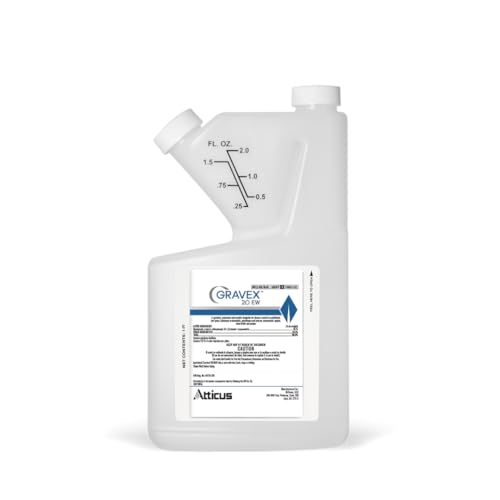
28 days of protection from a single spray — more than triple the reapplication interval of contact-only options — makes this the top pick for anyone facing a severe rust outbreak. It contains 19.7% myclobutanil (the same active ingredient as the pro-grade Eagle 20EW) and is a systemic fungicide, meaning it moves through the plant so new leaves that grow after you spray are still protected.
Buyers report it works powerfully on plumeria rust — one reviewer noted that “it doesn’t cure attacked leaves but prevents new leaf infection,” meaning you need to catch the rust early or remove heavily infected leaves first. The concentrate mixes easily: reviewers mention using just 2 ml per gallon in a backpack sprayer. Compared to the Bonide All Seasons Oil (a contact spray that only smothers existing spores), the Gravex gives you far more time between applications because its systemic action protects new growth. This is the pick if you want the heaviest hitter for active rust outbreaks.
If you have a small flower bed with just a few rust-prone roses, you might find the 16-ounce bottle of concentrate far too much chemical to store and mix safely. Consider a ready-to-use spray instead. For a severe rust outbreak, this is the heaviest hitter you can buy.
Why it’s great
- Up to 28 days of systemic protection
- Controls over 38 different fungi including rust
- Cost-effective concentrate — a little goes a long way
Good to know
- Requires PPE (gloves, goggles, long sleeves) during mixing
- Not available for sale in all states (check restrictions)
2. Dow AgroSciences Eagle 20EW Fungicide (16 oz)

Where the Atticus Gravex is a newer generic version of this same active ingredient, the Eagle 20EW is the original brand-name Dow product that turf and landscape pros have trusted for years. It works the same way — systemic protection that soaks into the plant and targets rust, powdery mildew, and black spot from the inside — but it comes with a higher price tag for the brand name and its proven track record.
Buyers consistently report it as a “go to product for zone 7 for powdery mildew,” and one reviewer called it a “very effective” lifesaver that worked on shot-hole disease where copper-based fungicides had failed. It requires a two-step application: one treatment, then a second about 10 to 14 days later. One buyer mentioned it worked on clover and dandelions on Zoysia grass after two applications spaced 30 days apart. It controls more than 15 fungal diseases including all the major rusts on turfgrass and ornamentals.
Choose this over the Atticus Gravex if brand familiarity matters to you, or if you are managing a high-value landscape where you want the exact product name used by commercial applicators. The catch is that the mixing instructions are written for large-scale use (ounces per acre), so you will need to do a little math to dial in the right dose for a home garden sprayer.
Where it shines
- Trusted brand-name systemic fungicide for pros
- Works on rust, dollar spot, brown patch, and anthracnose
- Protects new growth from inside the plant
Worth noting
- Complex mixing ratios meant for large areas
- Requires careful PPE and two applications for full effect
3. Quali-Pro Propiconazole 14.4 Fungicide (32 oz)

If your rust problem is in your lawn grass — think St. Augustine, Bermuda, or Zoysia with orange powdery patches — this is your best match. It is a locally systemic fungicide, meaning it moves through the leaf tissue to stop rust spores from germinating, and it targets rusts specifically along with 12 other common turf diseases like brown patch, dollar spot, and gray leaf spot.
The real-world results are strong: one reviewer with a 1/3 acre lawn applied 2 oz per gallon per 1,000 sq ft on bad patches and saw “visible new growth after the first week,” with a significant recovery after a second application 14 days later. Another buyer used it to eliminate “orange rust fungus on wild blackberry bushes after three sprays” and said the rust did not return all summer. Compared to the Atticus Gravex, this has a slightly lower concentration (14.3% propiconazole vs. 19.7% myclobutanil), but the 32-ounce bottle treats a much larger area — one buyer expects their bottle to last 4 to 5 years for lawn maintenance.
If you do not want to wear a full protective suit, respirator, goggles, and gloves for mixing and application, you should skip this synthetic concentrate. One 32-ounce bottle covers up to 16,000 square feet at the standard lawn rate.
What stands out
- Large 32 oz bottle covers extensive turf areas
- Works on rust, brown patch, and snow mold
- Low-odor microemulsion formulation
The trade-offs
- Strong synthetic; requires full protective gear
- Some users found it less effective on St. Augustine than alternate fungicides
4. Bonide Captain Jack’s Citrus, Fruit & Nut Orchard Spray (32 oz Concentrate)

The single number that matters most in this category is the dilution ratio: one 32-ounce pint of this concentrate makes up to 6.4 gallons of finished spray — that is an extremely high ratio, meaning this is one of the most cost-effective options if you have multiple fruit trees or a large vegetable garden to protect from rust. It also doubles as an insecticide and miticide, so it handles Japanese beetles and spider mites in the same pass.
The downside you accept is that it is not a true systemic — it works mostly on contact, so you need to coat every leaf surface thoroughly for the fungicide to stop rust. One owner reported that “the leaf spots on my apple tree are disappearing and it is noticeably greener” after application, which proves it can work well on active leaf infections. Reviewers also mention it leaves a slight sulfur residue on leaves, and you must reapply after heavy rain because the protection is not absorbed into the plant.
For the price-to-value read, this is the best all-in-one concentrate for a mixed orchard or vegetable plot where rust, powdery mildew, and insect pests all show up — it is approved for use up to the day before harvest, which is a big plus for edible crops.
The upsides
- One pint makes 6.4 gallons of spray
- Controls rust, insects, and mites in one product
- Safe to use right up to day before harvest
Keep in mind
- Not systemic; requires thorough coverage of all leaf surfaces
- Leaves a slight sulfur residue on foliage
5. Garden Safe Fungicide3 (1 Gallon)
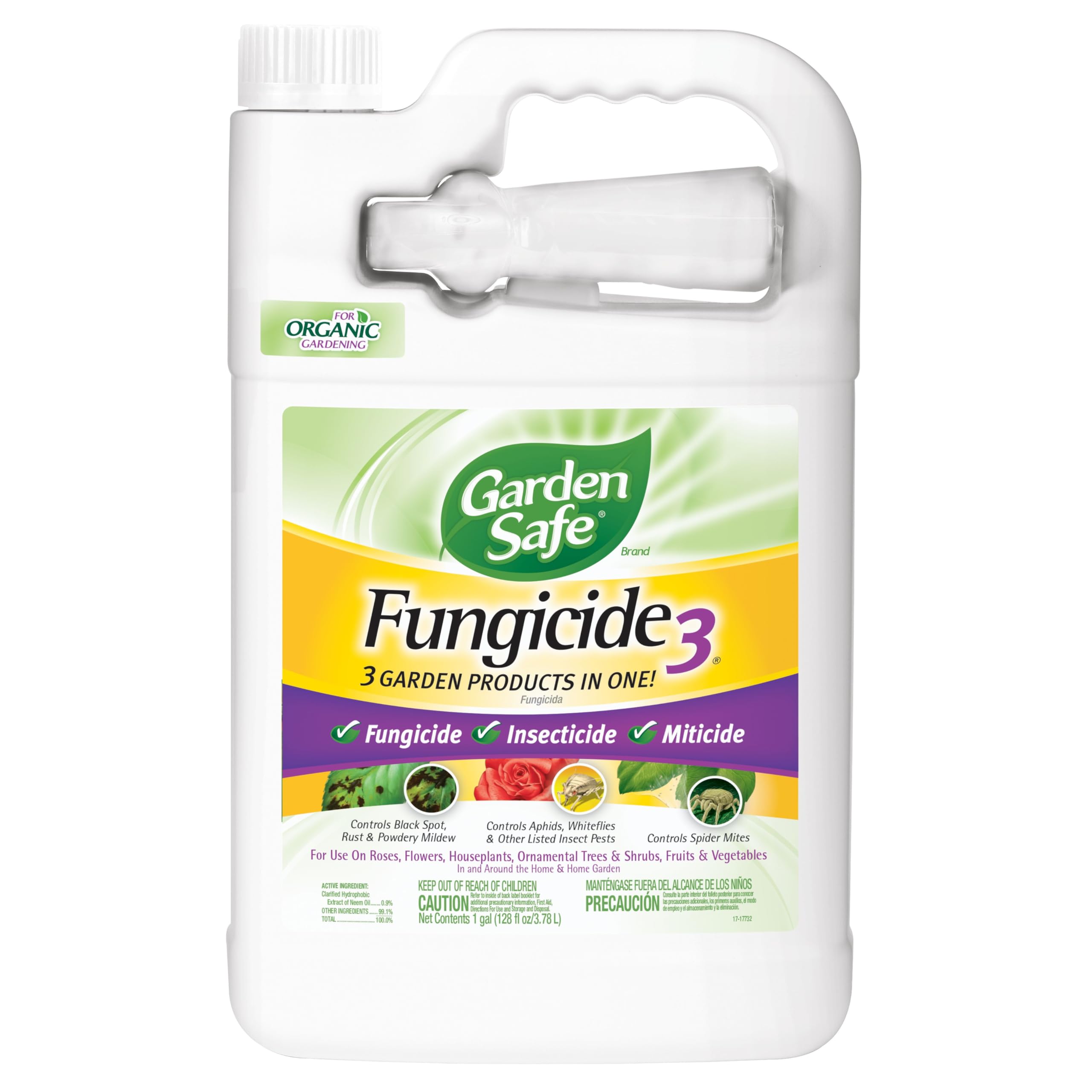
You simply screw a garden hose onto the container and spray your plants, which makes it incredibly convenient for covering large rose beds, vegetable gardens, or rows of ornamentals without mixing anything.
What you give up is control and strength. The neem oil extract works as a contact fungicide, smothering rust spores it touches, but it does not penetrate the plant. One customer observed it was “effective against mildew on hibiscus, roses, tomatoes, blueberries” when used weekly, but noted it “doesn’t heal damaged leaves.” The included spray wand is a frustration point — multiple reviewers call the design “dumb” because the coiled hose is only about 4 inches long, making it awkward to reach into dense shrubs. Many advise using a separate pump sprayer instead for better coverage.
This is perfect for the organic gardener who wants a single, hose-attached solution that works on rust prevention across multiple plant types without the need to handle or measure concentrates. Just plan on weekly reapplication for best results.
Why we’d pick it
- Massive 128 oz ready-to-spray bottle
- Organic neem oil formula safe for edibles
- Convenient hose-end attachment
A few caveats
- Short, awkward spray wand design
- Requires frequent weekly reapplications
6. Bonide All Seasons Horticultural & Dormant Spray Oil (32 oz)

This product is made for the gardener who wants a single non-chemical solution they can use in every season — it works as a dormant spray in late winter to smother overwintering rust spores, and it works during the growing season to coat and kill active rust on contact. The active ingredient is mineral oil, which is approved for organic gardening and leaves no toxic residue around people or pets.
The feature that serves that precise buyer is the hose-end sprayer attachment that makes application fast on shrubs, fruit trees, and ornamental beds. One buyer with a 25-foot Spanish broom tree reported that the “mineral oil effectively controlled bugs” when they gave the plant “thorough soaking and good hydration,” and they appreciated the lack of chemical odors. Another reviewer says the only pesticide they need for their small yard is this single product for worms, sooty mildew, fungus, and thrips — it is less viscous (runs thinner) and spreads better than other brands.
The honest limit here is that the hose-end sprayer itself gets poor marks from several buyers — they say it is poorly calibrated, wasteful, and messy, and recommend emptying it into a pump sprayer instead for better control. Also, this is strictly a contact smotherer, so it does not offer the lingering systemic protection of the myclobutanil products. Reapplication is key.
Strong points
- Can be used as dormant spray or growing-season spray
- Mineral oil leaves no toxic residues
- Spread well and covers leaves thoroughly
Before you buy
- Included hose-end sprayer has calibration issues
- Contact-only mode requires frequent reapplication on new growth
7. Fertilome (12245) Triple Action (16 oz)
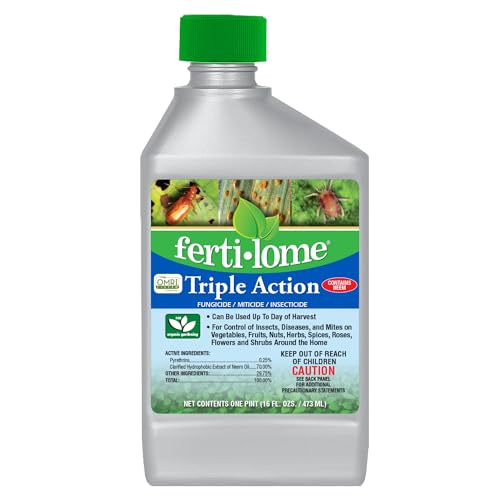
When you compare this to the rest of the field on a dollar-for-coverage basis, the Fertilome Triple Action is the entry-level option that will get you started on rust control without a big upfront cost. At 16 oz of concentrate, you get exactly half the volume of the Bonide Captain Jack’s Orchard Spray (which is 32 oz), but this product focuses purely on prevention — it works as an insecticide, miticide, and fungicide on fruits, herbs, nuts, vegetables, and ornamentals.
What that money gets you is a straightforward neem-oil-based formula that controls aphids, spider mites, and leafminers alongside rust and powdery mildew. One long-time buyer says, “I have used this product for years works well on our apple trees,” though they note the price is climbing and they are not sure how much longer they can afford it. The reapplication schedule is every 7 to 14 days, and it is best used as a preventive spray rather than a cure for an aggressive outbreak.
The one reason to choose this over the others is if you have a small garden with just a few fruit trees or rose bushes and you want the lowest-cost way to cover rust protection without committing to a large bottle. For that limited use case, it works exactly as described.
What we like
- Low entry cost for a multi-purpose fungicide
- Covers fruits, vegetables, and ornamentals
- Effective on apple trees year after year
The downsides
- Only 16 ounces of concentrate — small volume per bottle
- Rising price may reduce long-term value
Understanding the Specs
Systemic vs. Contact Action
A systemic fungicide is absorbed into the plant’s vascular system and moves through new growth, so it protects leaves that grow after you spray. A contact fungicide stays on the leaf surface and kills spores it touches, but new growth is unprotected. For rust outbreaks already spreading in your garden, a systemic like myclobutanil or propiconazole can stop the infection from the inside and provide weeks of protection. Contact sprays like neem oil or mineral oil work well as a preventive coating but need reapplication after rain and on every new flush of leaves.
Concentrate vs. Ready-to-Use
A concentrate is a liquid you mix with water at a specific ratio — for example, Captain Jack’s Orchard Spray tells you to mix 2.5 ounces per gallon of water. This gives you a huge amount of finished spray from a small bottle, so it is far more economical for covering multiple trees or a large garden. Ready-to-use sprayers are bottles you just hook to your hose — convenient for quick spot treatments or small flower beds, but you pay for that convenience with a higher cost per gallon of spray and less control over the dose.
FAQ
Can I use a general-purpose fungicide that doesn’t list rust on the label?
How often should I reapply a contact fungicide to control rust?
Is it safe to spray fungicide on edible fruits and vegetables right before harvest?
Final Thoughts: The Verdict
Across the board, the fungicide for rust fungus winner is the Atticus Gravex 20EW because it provides up to 28 days of systemic protection with the same active ingredient used by pros. If you want a single product that works on fruit trees, pests, and fungi in one pass, grab the Bonide Captain Jack’s Orchard Spray. And for large-scale lawn rust treatment with excellent coverage, the Quali-Pro Propiconazole 14.4 is the clear choice for its 32-ounce bottle that can last multiple seasons.