
Getting a rose bush to explode with colorful, fragrant blooms isn’t about luck — it’s about choosing the right plant food for what your roses actually need right now. Some formulas push for dark green leaves, while others are built specifically to pump out more flowers and strengthen roots against heat and pests.
I’m Rikta — the co-founder and writer behind Lawn Gear Lab. This guide is built by comparing the manufacturers’ published specifications and the patterns across verified customer reviews, so you get each pick’s real strengths and trade-offs instead of marketing spin.
Whether you are bringing a struggling rose back to life or keeping an established garden show-ready, the best rose fertilizer comes down to its NPK ratio, ingredient source, and how easy it fits into your weekly routine.
How To Choose The Best Rose Fertilizer
Rose bushes are heavy feeders — they pull a lot of nutrients from the soil to push out those big blooms. The right fertilizer gives them what they need without burning the roots or leaving you with leaves and no flowers.
NPK Ratio — The Three Numbers That Matter
Every fertilizer label shows three numbers (for example, 4-3-2 or 2-6-4). The first number (Nitrogen) drives leaf and stem growth. The second (Phosphorus) fuels root development and flower production. The third (Potassium) boosts overall plant health and disease resistance. For roses, you want a formula where the middle number is equal to or higher than the first — otherwise you will get a bushy plant with few blooms.
Liquid vs Granular — Speed vs Convenience
Liquid fertilizers (like the Neptune’s Harvest picks) get into the soil and roots within hours, so you see results fast — great for reviving a struggling rose or giving a quick bloom boost. Granular options (like Espoma Rose-Tone) break down slowly over weeks, so you apply once a month and don’t have to mix anything. The catch is that granules take longer to show an effect.
Organic Ingredients — What the Label Actually Means
“Organic” on a rose fertilizer usually means it contains fish emulsion, seaweed, bone meal, shrimp meal, or compost extracts — these ingredients feed the soil microbes as well as the plant, building long-term soil structure. Synthetic fertilizers deliver nutrients fast but don’t improve the soil biology. If you are growing roses organically or want to avoid chemical runoff, look for OMRI-listed or natural-ingredient formulas.
Quick Comparison
On smaller screens, swipe sideways to see the full table.
| Model | Category | Best For | Key Spec | Amazon |
|---|---|---|---|---|
| Neptune’s Harvest (18oz) | Liquid Organic | Fast bloom & root boost | 2-6-4 NPK / 473 mL | Amazon |
| True Organic Rose & Flower Food | Granular Organic | Monthly feeding for 15+ bushes | 4 lb bag / Covers 70 sq ft | Amazon |
| Espoma Rose-Tone | Granular Organic | Slow-release all-season feeding | 4-3-2 NPK / 4 lb | Amazon |
| BIOPLENAFEED All-Purpose | Liquid Concentrate | No-mess indoor/outdoor feeding | 12 bottles / 38 mL each | Amazon |
| Great Big Roses Booster | Liquid Mineral | Reviving old or dormant roses | 32 oz / 70+ minerals | Amazon |
| Neptune’s Harvest (36oz) | Liquid Organic | Larger gardens needing frequent feed | 2-6-4 NPK / 1064 mL | Amazon |
| Farmer’s Secret Booster | Liquid Concentrate | Super concentrated for big gardens | 32 oz / 2 tsp per gallon | Amazon |
In‑Depth Reviews
1. Neptune’s Harvest Rose & Flowering Fertilizer (2-6-4) – 18oz Pint
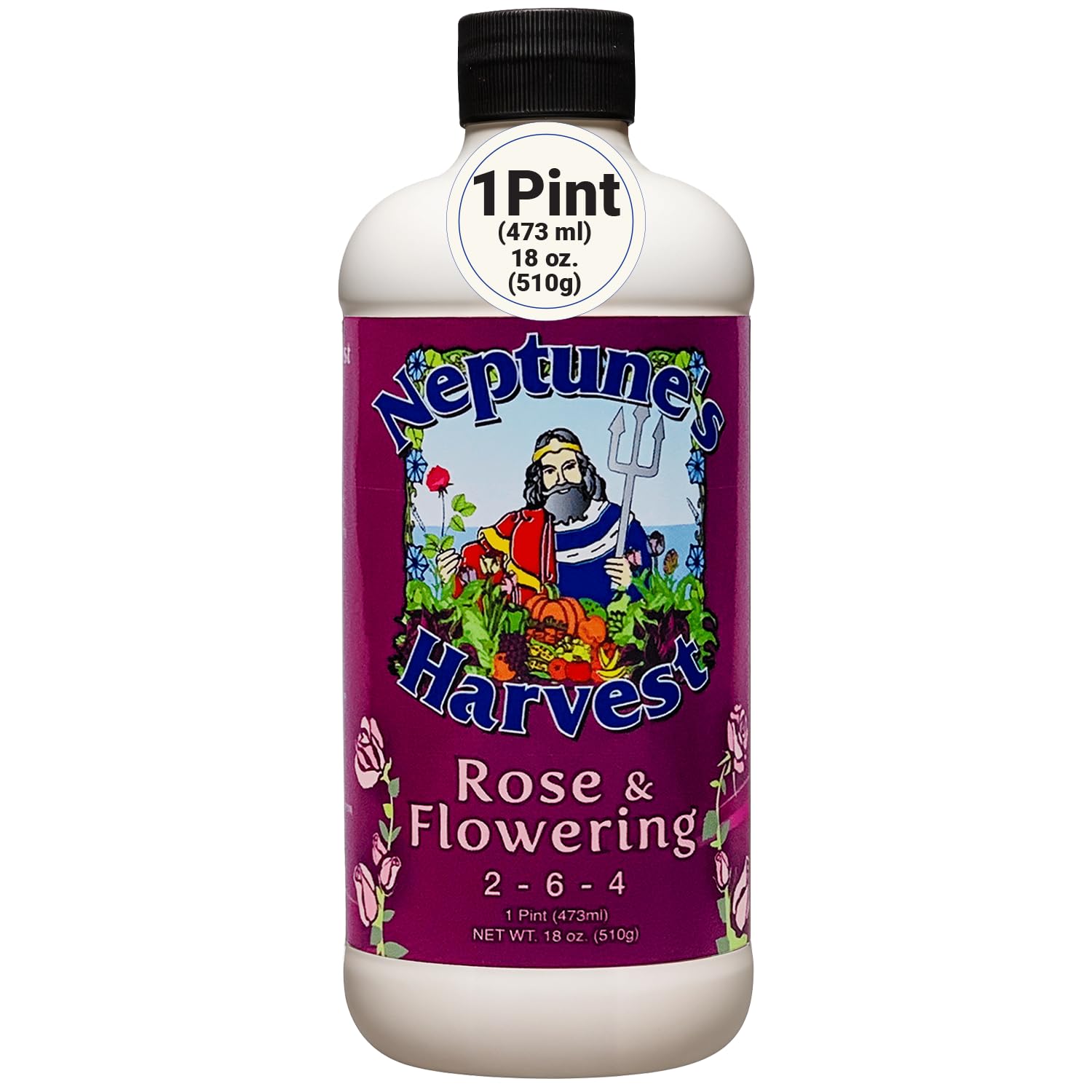
The 2-6-4 NPK ratio — with phosphorus as the highest number — delivers the fastest visible bloom push of any pick here, making it the top choice for gardeners who want immediate flower production from a single bottle. The formula combines fish, seaweed, molasses, humic acids (organic compounds that improve root uptake), and liquid calcium so both the plant and soil microbes around its roots get fed. Buyers report that mixing just 1 ounce per gallon of water and applying it as a soil drench or foliar spray revived even dying plants, and one reviewer noted that after just one month of using 15ml per gallon on indoor tomatoes under LEDs, a single plant produced 102 bell peppers.
The real trade-off is the smell — it has a strong ocean-like fish odor that fades once it dries, but you will notice it during mixing. That minor inconvenience aside, this is the best pick for anyone who wants predictable, fast flower production from a single bottle.
This bottle gives you the fastest bloom turnaround and the most versatile use across indoor and outdoor roses.
Why it’s great
- Higher phosphorus (6) delivers more blooms faster
- All-natural ingredients improve long-term soil health
- Can be used as a foliar spray or soil drench
Good to know
- Strong fishy smell until it dries
- Pint size requires more frequent repurchases for large gardens
2. True Organic Rose & Flower Food – 4lb Bag
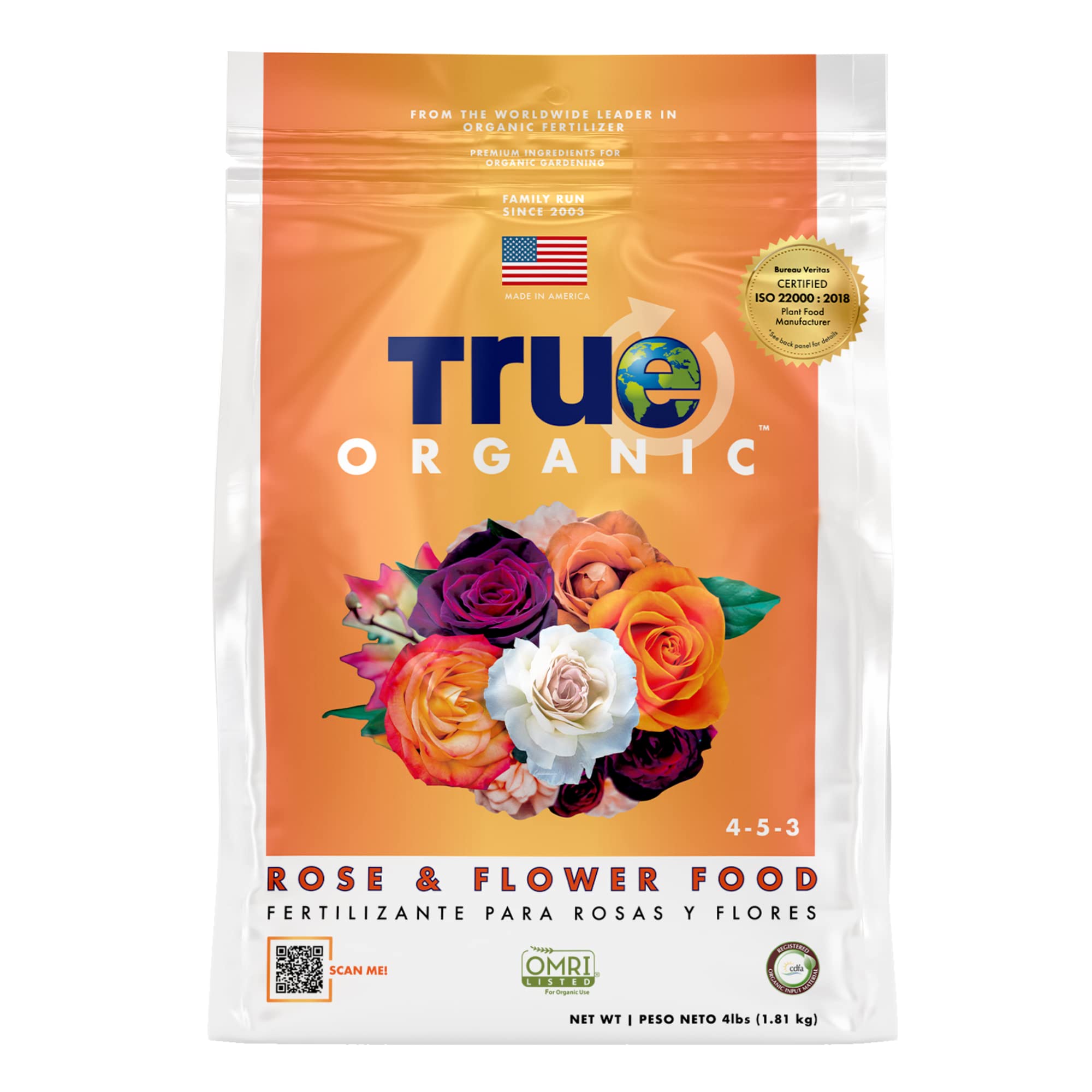
Where the Neptune’s Harvest liquid feeds fast but needs weekly mixing, this granular formula gives you a once-a-month no-mix schedule that lasts for 15 rose bushes all summer long. The 4-pound bag covers 70 square feet, and owners mention a single bag easily gets through an entire growing season without running out. That beats the top pick on convenience and coverage per dollar — especially because there is zero fishy smell on the flowers themselves, even after rain or hot sun, a big plus if you grow roses near a patio or walkway.
The organic blend of seabird guano, shrimp and crab shell meal, and fish bone meal provides a slow-release nutrient stream that keeps roses fed consistently. One buyer mentioned that a 6ft 2 user’s Playboy rose actually grew to 7 feet tall after using this monthly. The downside is that the 4-5-3 NPK ratio is slightly lower on phosphorus (5) than the Neptune’s Harvest (6), so you may see slightly smaller individual blooms in the first month before the soil builds up.
Choose this over the Neptune’s Harvest liquid if you have 10+ bushes and want a single application per month that keeps everything fed without weekly mixing.
Where it shines
- One application per month covers up to 15 bushes
- No fishy smell on flowers after drying
- Nutrient-rich organic ingredients improve soil
Worth noting
- Slower initial effect compared to liquid fertilizers
- 4lb bag can feel small for very large gardens
3. Espoma Organic Rose-Tone 4-3-2 – 4lb Bag (Pack of 2)

If you want to feed your roses once in May and not think about it again until the next monthly application, this two-pack of Espoma Organic Rose-Tone delivers a 4-3-2 NPK that leans heavier on nitrogen (4) to push strong green growth while still supporting blooms with a slow-release phosphorus source. It’s also approved for organic gardening, meaning no sludge or synthetic chemicals enter your soil.
Customers note that using 1 cup per plant per month during the growing season transformed spindly drift roses into vibrant, colorful blooms with dramatically more bud count. The exclusive Bio-tone formula—a blend of beneficial microbes—helps break down nutrients in cooler soil, so even early spring feedings are effective. It also contains 5% calcium, which helps prevent blossom-end rot and strengthens cell walls in flower petals.
One buyer’s wife complained about the mild odor, but the same user confirmed it produced the best blooms they had ever seen on their drift roses. Perfect for gardeners who want a set-it-and-forget-it granular that also strengthens flower structure. The standout spec: no other granular option on this list includes calcium as a listed percentage.
What stands out
- Slow-release granules feed for a full month per application
- Added 5% calcium strengthens blooms and roots
- Bio-tone formula works even in cool spring soil
The trade-offs
- Mild odor when first applied, especially in heat
- Pack of 2 is heavy (8 lbs total) for small-container shipping
4. BIOPLENAFEED All-Purpose Rose Plant Food Fertilizer – 12 Bottles
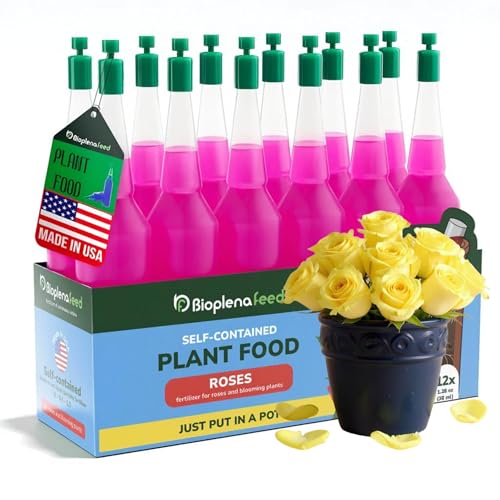
The single number that matters most here is the 12-bottle count — each bottle is a pre-measured liquid spike that you just cut the tip off and insert into the soil, so there is zero measuring, zero mixing, and zero mess. That makes it the most foolproof option for indoor roses or anyone who hates handling liquid concentrates. It works on indoor and outdoor container plants, and one owner reported it revived a dying clearance plant within 4 days.
The trade-off you accept is liquid volume — each bottle holds only 38 milliliters, so the total is about 1.5 cups of fertilizer. That is roughly one-tenth the volume of the Neptune’s Harvest 18oz pint (473 mL), meaning you will use a spike more frequently for multiple bushes. This is a price-to-performance winner if you have one or two roses in pots and value convenience over raw volume.
For a full garden bed, the per-bottle cost adds up fast, but for a single patio rose that you want to feed without touching a measuring cup, this is the cleanest option available — delivering strong price-to-value for small-scale, mess-free feeding.
The upsides
- No measuring or mixing — just cut and stick
- Works on indoor and outdoor container plants
- Made in the USA
Keep in mind
- Small total volume means fewer feeds per bottle
- Not cost-effective for large rose gardens
5. Great Big Roses and Flowers Liquid Fertilizer Booster – 32 oz
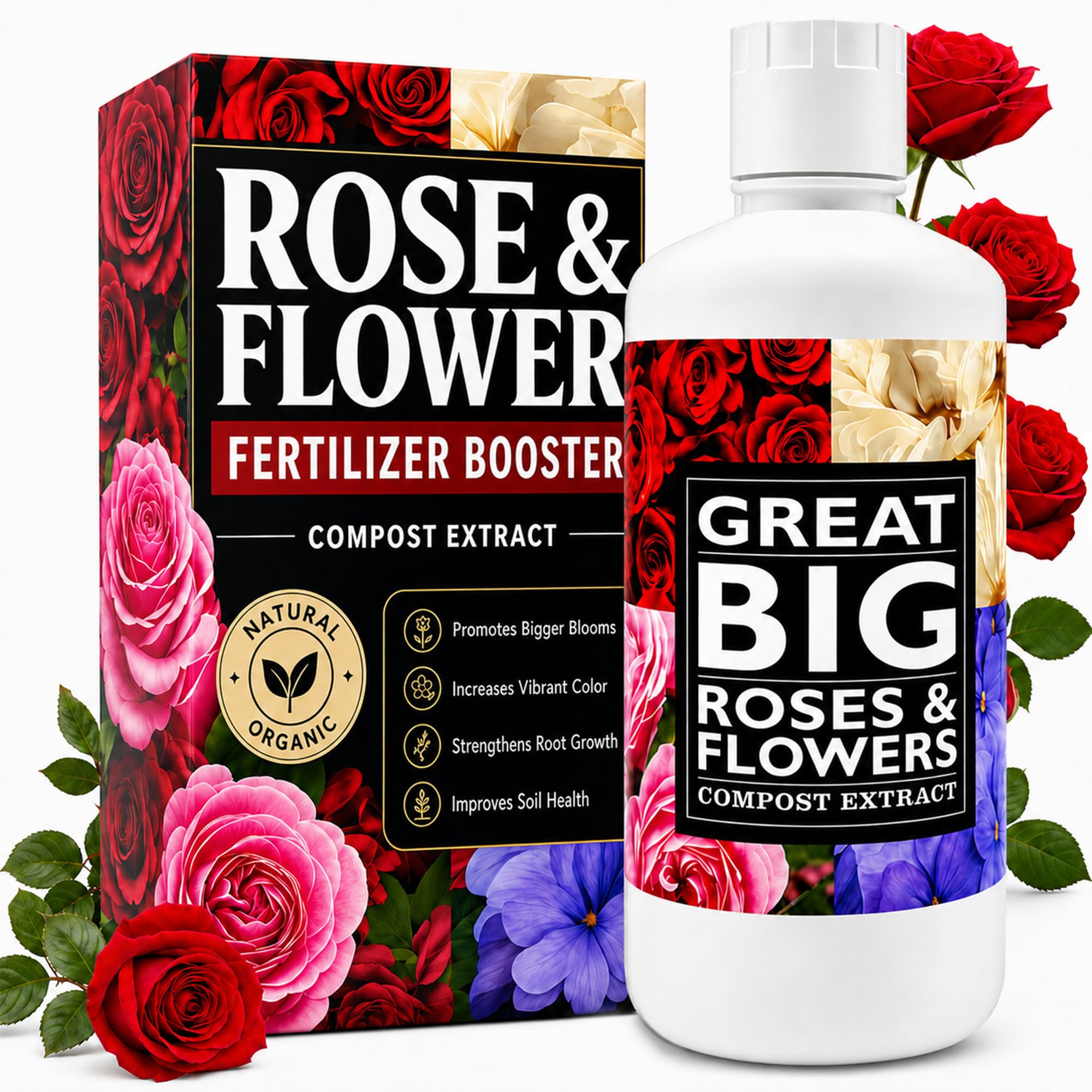
What you actually get at this lower price is a liquid booster that delivers humic acids, seaweed, and over 70 chelated trace minerals (nutrients wrapped in a form roots can grab instantly) directly to the root zone to unlock nutrients that are already in your soil but locked up by pH or poor biology. It is designed to be used alongside your regular fertilizer (not as a replacement), amplifying whatever base feed you already use.
One customer observed that rose bushes which had not bloomed in years produced big, beautiful flowers within weeks of application. Another noted their roses produced over 500 blooms non-stop into late October after using this booster with their regular feed. The 32-ounce bottle makes 8 gallons of mixed solution — enough for around 8 full applications for a medium rose garden. The real standout-spec callout is the 70+ trace minerals plus humic acid combination — no other product on this list provides that soil-unlocking chemistry.
One limitation is that you still need a base fertilizer (like the Neptune’s Harvest or True Organic) alongside it, adding to your total cost. If you have old, dormant rose bushes that have stopped blooming despite regular feeding, this is the booster to add. The bottle design makes measuring messy, with users reporting spills — making this perfect for the budget buyer who already owns a base fertilizer and wants to revive tired, non-blooming roses without replacing their entire feeding routine.
Why we’d pick it
- Revives dormant roses that haven’t bloomed in years
- 70+ trace minerals and humic acids unlock soil-bound nutrients
- Works alongside any existing fertilizer to amplify results
A few caveats
- Requires a separate base fertilizer — not a standalone feed
- Bottle design makes measuring messy; users report spills
6. Neptune’s Harvest Rose & Flowering Fertilizer (2-6-4) – 36oz Bottle
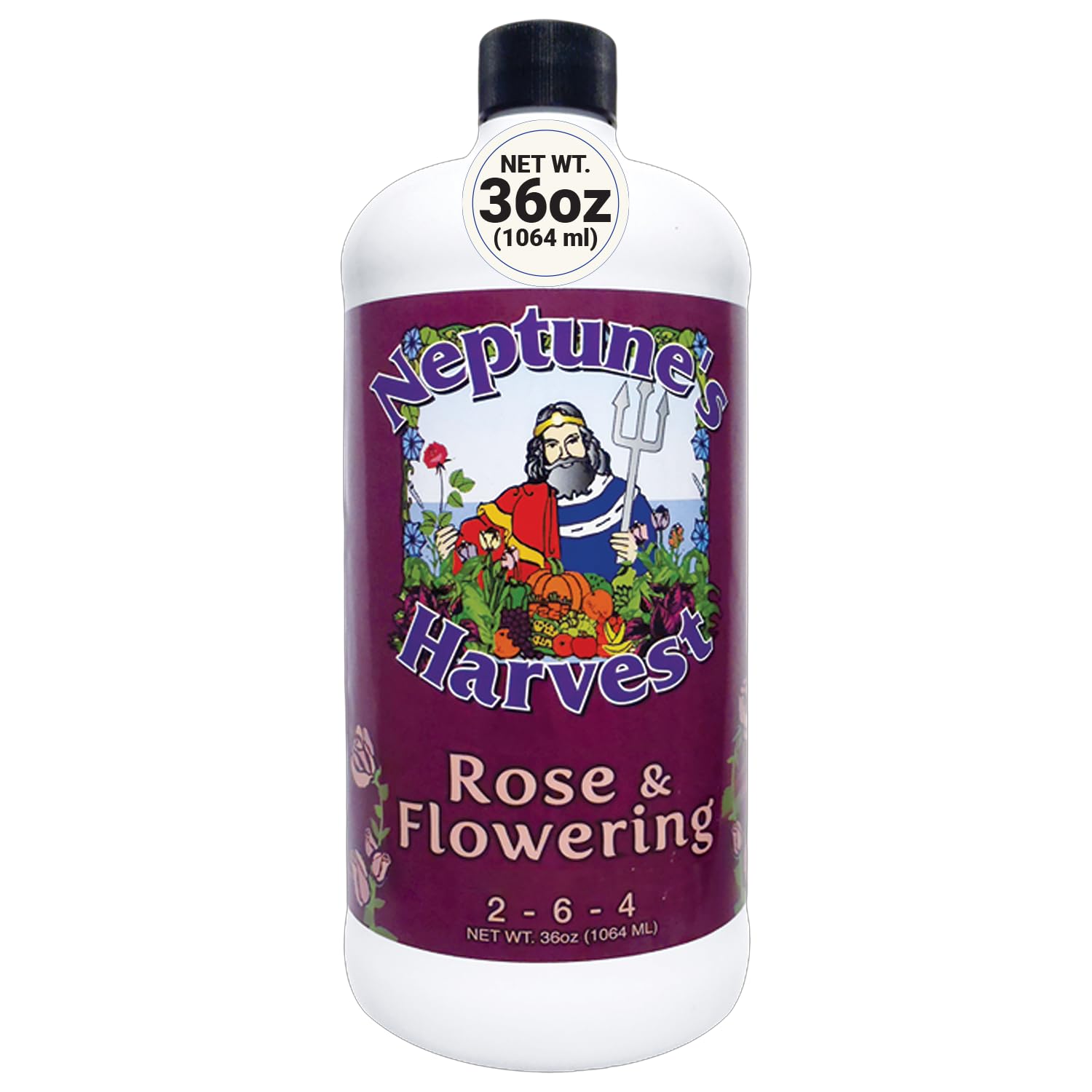
This 36-ounce bottle of Neptune’s Harvest Rose & Flowering Fertilizer (2-6-4) is perfect for the gardener who already trusts the original 18-ounce version but wants to stop buying a new bottle every two weeks. It delivers exactly double the volume (1064 mL) of the same organic fish-and-seaweed blend with humic acids and calcium, making it the clear economical choice for anyone with a serious garden who wants liquid feed volume without switching brands. The 1064 mL provides a 12.4x volume advantage over the BIOPLENAFEED spikes (38 mL).
This is the ideal pick for anyone with 10 or more rose bushes who wants to use liquid feed weekly through the entire growing season. One user highlighted they used 15 ml per gallon on indoor tomatoes and peppers, and ended up donating excess cherry tomatoes to a food pantry because production was so high. The versatility extends beyond roses — it works on houseplants, vegetables, and even hemp.
The limit here is the smell remains the same as the smaller bottle (strong fish odor that fades when dry), and the larger bottle means you commit to a bigger up-front purchase.
Strong points
- Double the volume of the best-selling 18oz pint
- Same proven organic formula with calcium
- Works across roses, vegetables, and houseplants
Before you buy
- Strong fishy smell during mixing
- Requires weekly mixing for best results
7. Farmer’s Secret Rose Booster Fertilizer – 32oz
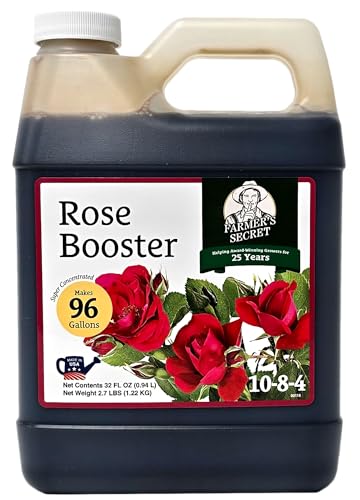
On a price-to-volume basis, this 32-ounce bottle is the most concentrated formula here — you only need 2 teaspoons per gallon of water, meaning a single bottle makes well over 150 gallons of mixed feed. That is enough to treat a large rose garden weekly all season without repurchasing. It is specifically formulated for all rose varieties throughout their life cycle, from new planting to mature bloom production. One reviewer claims it produced over 500 blooms from 50 rose bushes in a single season.
Another buyer reported that three nearly dead roses were fully revived within a month after using this, with healthy leaves, buds, and dramatically increased bloom size. The formula smells like sulfur when wet, but the smell fades quickly after application. The compromise is that you need to be comfortable measuring precisely (2 tsp per gallon), and the sulfur smell is different from the fish odor of Neptune’s Harvest products, so it comes down to personal tolerance. For the serious rose grower with 30+ bushes, this is the smartest financial choice per bloom produced.
The one clear reason to choose this over the field is the raw value per gallon of mixed feed — no other product stretches as far.
What we like
- Ultra-concentrated formula makes 150+ gallons of feed
- Revived dying roses in under a month per buyer reports
- Formulated for all rose types through every growth stage
The downsides
- Sulfur smell during mixing may be off-putting
- Requires precise measurement to avoid over-feeding
Understanding the Specs
NPK Ratio — What the Three Numbers Actually Do
The three hyphenated numbers on a fertilizer label (like 2-6-4 or 4-3-2) represent the percentage by weight of Nitrogen (N), Phosphorus (P), and Potassium (K) in that order. Nitrogen drives green leaf and stem growth — too much and you get a bushy plant with few flowers. Phosphorus directly fuels root development and bloom production, so a higher middle number (like the 6 in 2-6-4) means the plant is pushed to flower more. Potassium strengthens overall plant health, disease resistance, and drought tolerance. For roses specifically, look for a middle number that is equal to or higher than the first.
Liquid vs Granular — Which Form Works Faster
Liquid fertilizers (like Neptune’s Harvest or Farmer’s Secret) are water-soluble and get absorbed by the roots within hours, so you see results in days. They require regular mixing and application (usually weekly or every two weeks). Granular fertilizers (like Espoma Rose-Tone or True Organic) are slow-release — they break down gradually over weeks as soil microbes and water work on them. You apply once a month and don’t need to mix anything, but the effect takes longer to appear. Granules are better for busy gardeners who want set-and-forget feeding; liquids are better for reviving sick plants or pushing a quick bloom burst.
FAQ
How often should I fertilize my roses during the growing season?
What NPK ratio is best for roses compared to other flowers?
Can I use rose fertilizer on other plants in my garden?
Will organic rose fertilizer smell bad?
Should I use liquid or granular fertilizer for a new rose bush?
Final Thoughts: The Verdict
For the majority of shoppers, the best rose fertilizer winner is the Neptune’s Harvest 18oz Pint because its 2-6-4 NPK ratio and organic ingredient blend deliver the fastest, most noticeable bloom improvement with the least effort. If you want granular convenience and monthly no-mix feeding for a larger garden, grab the True Organic Rose & Flower Food. And for reviving old, dormant rose bushes that have stopped blooming, the standout is the Great Big Roses Booster with its 70+ trace minerals and humic acids that wake up locked soil nutrients.