
The single biggest mistake people make with succulents and cacti is using regular potting soil, which holds too much water and rots the roots. A proper cactus and succulent mix drains fast, stays loose, and mimics the gritty, sandy ground these plants evolved in. This guide cuts through the marketing to show you which bag actually delivers that.
I’m Rikta — the co-founder and writer behind Lawn Gear Lab. This guide is built by comparing the manufacturers’ published specifications and the patterns across verified customer reviews, so you get each pick’s real strengths and trade-offs instead of marketing spin.
Whether you are repotting a jade plant or starting a dish garden, knowing what makes a mix drain properly is the difference between a thriving collection and a soggy mess — and this cactus and succulent mix guide shows you exactly which bag to grab.
How To Choose The Best Cactus And Succulent Mix
The right cactus mix does not look like normal dirt — it should look like a pile of small rocks and chunky bark. Here are the three things you need to check before buying.
Drainage Speed and Grit Level
The number one job of a cactus mix is to let water pass through quickly so the roots never sit in moisture. Look for ingredients like pumice, perlite, lava rock, and calcined clay — these create air pockets that allow water to drain within seconds, not minutes. If the bag looks like fine, dark soil, it is probably too dense for succulents.
Organic Matter vs. Peat
Peat moss holds water like a sponge, which is the exact opposite of what succulents need. Many good mixes skip peat entirely and use pine bark, worm castings, or coconut coir instead, which provide nutrients without trapping moisture. If you see peat listed high on the ingredient list, you may need to mix in perlite to compensate.
Bag Size and Value
Cactus mix is sold in quarts, and the volume matters more than you might think. A 4-quart bag typically fills two to three standard 4-inch pots. If you have a large collection, buying in larger bags (8 quarts or more) saves money, but you want to be sure the mix stays fresh between uses — resealable bags make a real difference here.
Quick Comparison
On smaller screens, swipe sideways to see the full table.
| Model | Category | Best For | Key Spec | Amazon |
|---|---|---|---|---|
| Soil Sunrise Cactus and Succulent Potting Mix | Premium | Gritty, no-amendments-needed blend | 8 quarts / hand-blended grit | Amazon |
| Rosy Soil Cactus & Succulent Potting Mix | Premium | Peat-free, organic with microbes | 8 quarts / peat-free / resealable | Amazon |
| Hoffman 10410 Organic Cactus and Succulent Soil Mix | Mid-Range | Large volume for big collections | 10 quarts / 2-pack | Amazon |
| Spike & Bloom High Drainage Cactus Soil | Premium | Specialty cacti needing extreme drainage | 4 quarts / mycorrhizae / pH 6.5 | Amazon |
| Midwest Hearth Cactus & Succulent Potting Soil | Mid-Range | Budget-friendly, ready-to-use | 4 quarts / made in USA | Amazon |
| DUSPRO Succulents Soil Potting Mix | Budget | Small pots and terrariums | 1 quart / 7-in-1 blend | Amazon |
In‑Depth Reviews
1. Soil Sunrise Cactus and Succulent Potting Mix
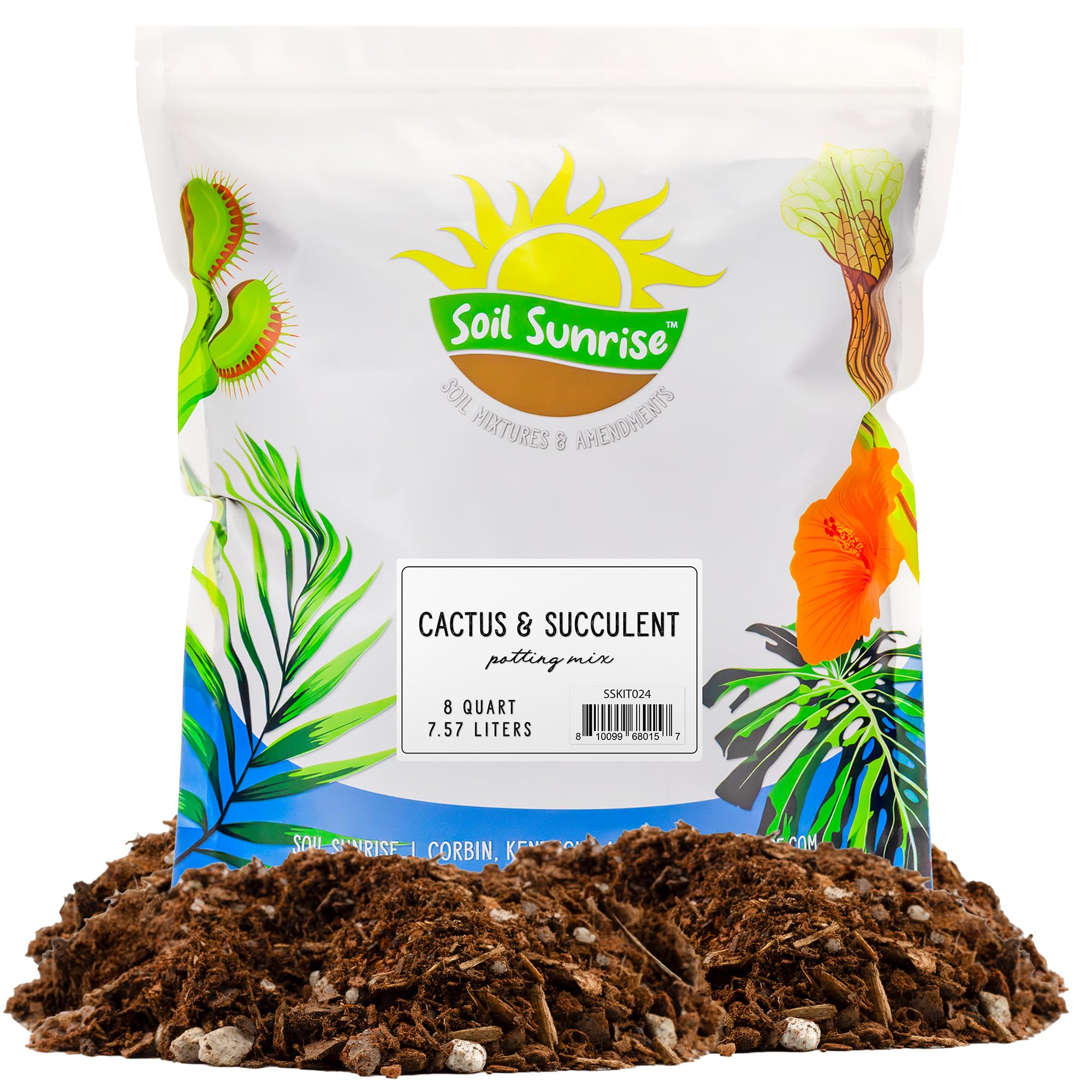
0.5–3mm particle size makes this hand-blended mix of pine bark, silica sand, calcined clay, and pumice the top pick for anyone who wants to open a bag and repot without adding perlite or sand.
Buyers report that one buyer called it the “best gritty mix I have ever bought” and highlighted how it looks visibly different from big-brand soils that contain too much topsoil. You can use it on a large 12-inch pot, and water runs straight through, with no bugs or gnats, according to reviewers. skip it if you need a bark-free blend for very sensitive dwarf cacti — this mix contains pine bark, so a purely mineral mix would suit you better.
For a ready-to-use gritty mix that drains instantly, this is the confident one-line verdict.
Why it’s great
- True gritty texture straight from the bag
- No bugs, no smell, no added topsoil
- 8 quarts handles a large 12-inch pot
Good to know
- Contains pine bark (not purely mineral)
- Pricier per quart than some options
2. Rosy Soil Cactus & Succulent Potting Mix
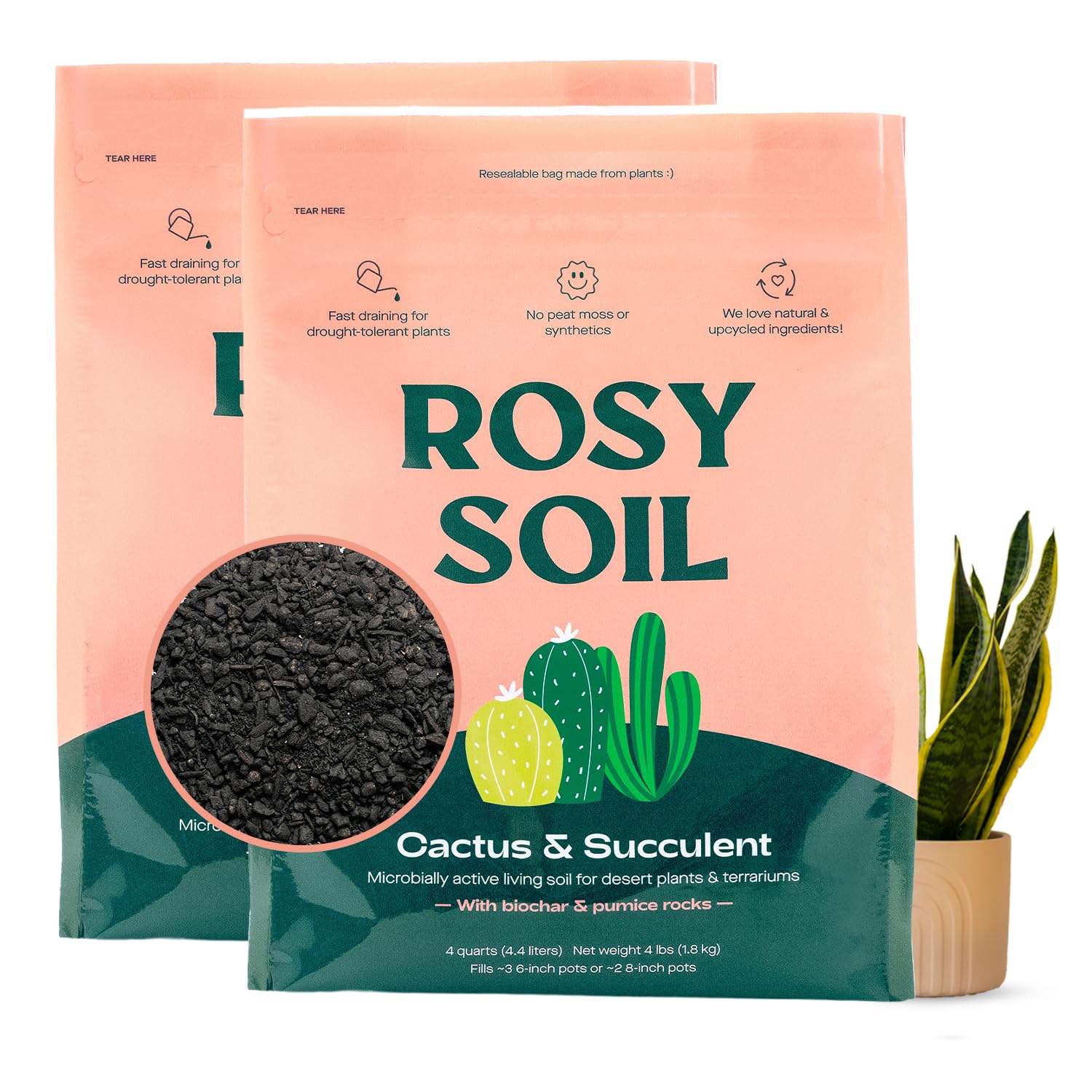
This mix drains even more freely than the top-pick Soil Sunrise because it is completely peat-free — no sphagnum peat moss (a moisture-trapping material that can hold water like a sponge). It comes pre-loaded with beneficial fungi (mycorrhizae, which form a network on roots to pull in water) and worm castings (worm droppings that feed plants without synthetic fertilizer), so you get a living soil that builds a mini ecosystem in the pot.
Owners mention that succulents replanted one month ago are healthy and the soil looks clean, dark, and even. After six-plus bags, reviewers cite zero bugs. The mix is chunky and loose, so roots can breathe, and because it skips peat moss, you are less likely to overwater. Some customers note the 4-quart bag is smaller than expected for the price, and one noted the resealable bag is genuinely difficult to close. It shines for a few prized plants that deserve the best, but you may want the Hoffman 10-quart pack if you have a big collection.
Choose this over the top pick if you want a completely peat-free living soil with mycorrhizae and worm castings built in, and you are willing to pay more per quart for a smaller bag that prioritizes root health and overwatering prevention over bulk volume.
Where it shines
- Peat-free formula prevents overwatering
- Includes microbes and worm castings for natural feeding
- Chunky texture stays airy in the pot
Worth noting
- Resealable bag is hard to close
- Smaller volume for the price
3. Hoffman 10410 Organic Cactus and Succulent Soil Mix

You just unboxed a dozen new succulents from a weekend nursery run and realize you need enough soil to repot them all without making another trip — that is when the Hoffman 10410 Organic Cactus and Succulent Soil Mix makes sense. You get 10 quarts across two bags, which is 2.5 times more soil than the Midwest Hearth 4-quart bag — that is the obvious pick for serious plant lovers who do not want to reorder often. Reviewers point out this is a “rich soil” that retains water well, which is a double-edged sword: for established succulents that like more organic matter, it works great, but many shoppers say you should mix it with perlite (a lightweight volcanic glass that creates air pockets) for true cactus drainage.
The texture is fine and fluffy rather than chunky, so it is not a true gritty mix out of the bag. For the price per quart, it beats other options — just plan to add a couple of handfuls of perlite or pumice, and you have a custom blend at a fraction of the cost. This is for the budget-focused collector with many pots, not the person wanting a no-mix, ready-to-use gritty soil.
One satisfied buyer said their plants “thrived” after repotting multiple times — and at 2.5 times the volume of the leading competitor, you will not be repotting the soil shortage problem anytime soon.
What stands out
- 10 quarts total — excellent for large collections
- Rich organic base helps plants thrive
- Ready to use out of the bag
The trade-offs
- Retains more water than true gritty mixes
- Recommended to mix with perlite for succulents
4. Spike & Bloom High Drainage Cactus Soil

The single number that matters most in this category is drainage speed, and this mix scores extreme — thanks to a custom blend of clays, sands, and very little organic matter. It has a pH of 6.5 (slightly acidic, which cacti prefer for taking in nutrients). Buyers who own exotic cacti like lophophora (a specific genus that rots at the slightest hint of moisture) report this soil is excellent and that their plants rooted and flowered quickly after repotting.
The mix includes mycorrhizae powder (a fungus that creates a network around roots to pull in water and nutrients more efficiently). The catch is the price per quart — at roughly the same cost as the Hoffman 10-quart pack, you get only 4 quarts here. This is a specialist soil for your most sensitive cacti, not for filling dozens of cheap pots.
For those collection centerpieces, it is worth the premium — a price-to-value read that favors targeted investment over bulk economy.
The upsides
- Extreme drainage for rot-prone cacti
- pH 6.5 optimized for cactus health
- Contains mycorrhizae for stronger root systems
Keep in mind
- Expensive relative to volume
- Best for small specialty pots, not bulk use
5. Midwest Hearth Cactus & Succulent Potting Soil
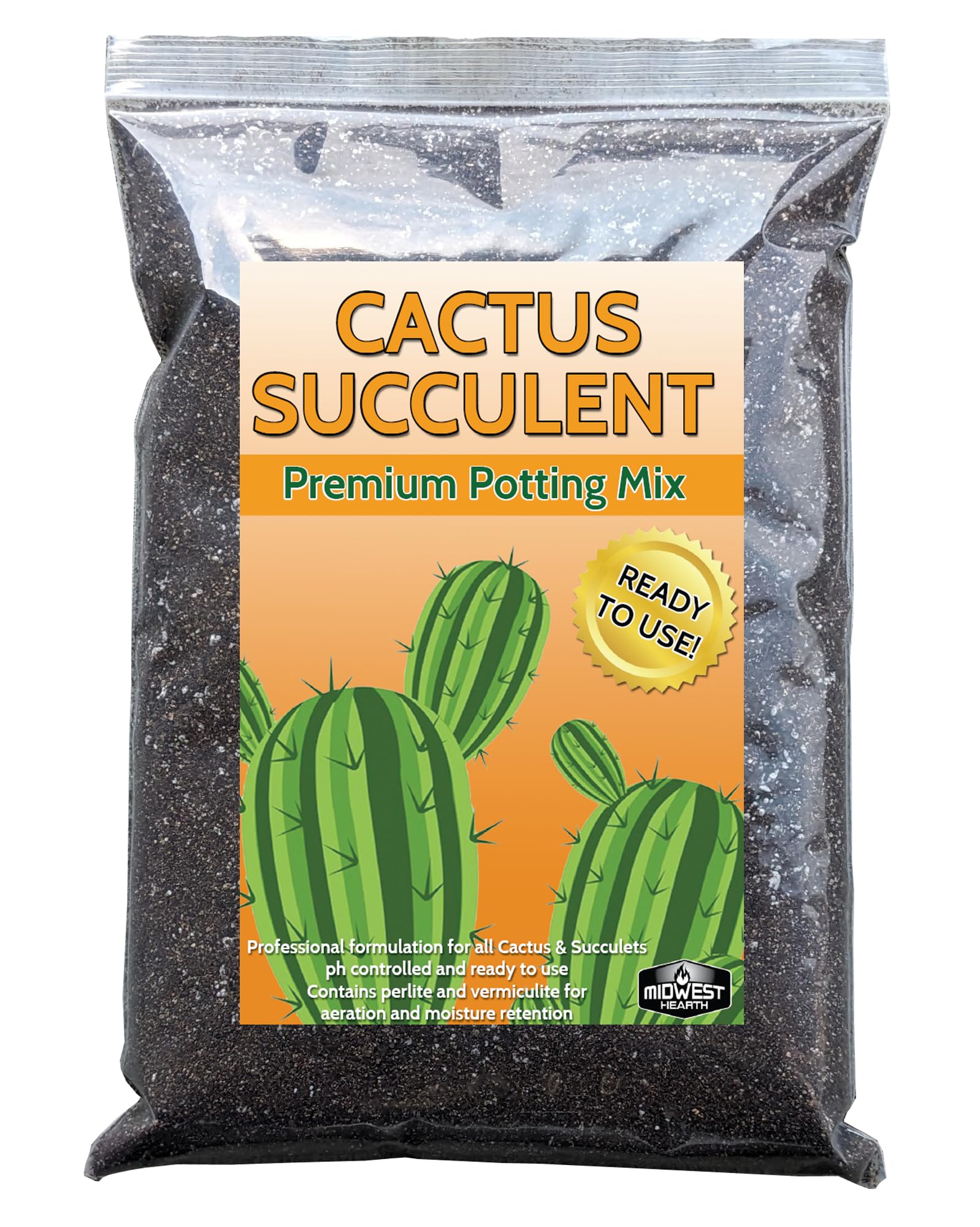
You get a solid, fast-draining blend of peat moss (partially decomposed moss that holds some moisture), perlite, and vermiculite (a mineral that expands when heated to hold air and water) — no mixing required, and it is made in the USA. Buyers report planting five succulent dish gardens with this soil and their plants are happy, which is the kind of entry-level success most beginners need.
The downside is that this mix is not as gritty as the premium options — it uses peat moss, which holds some moisture, so you may still need to let the soil dry out longer between waterings. One reviewer noted that dry particles from the top can blow around near an open window, creating a dust issue.
For someone repotting their first jade or aloe plant and wanting a reliable bag that will not break the bank, this is a solid starting point.
Why we’d pick it
- Budget-friendly and ready to use
- Made in the USA with consistent quality
- Good for beginners repotting a few plants
A few caveats
- Peat-based, so it retains more moisture than gritty mixes
- Dry particles can become dusty by open windows
6. DUSPRO Succulents Soil Potting Mix
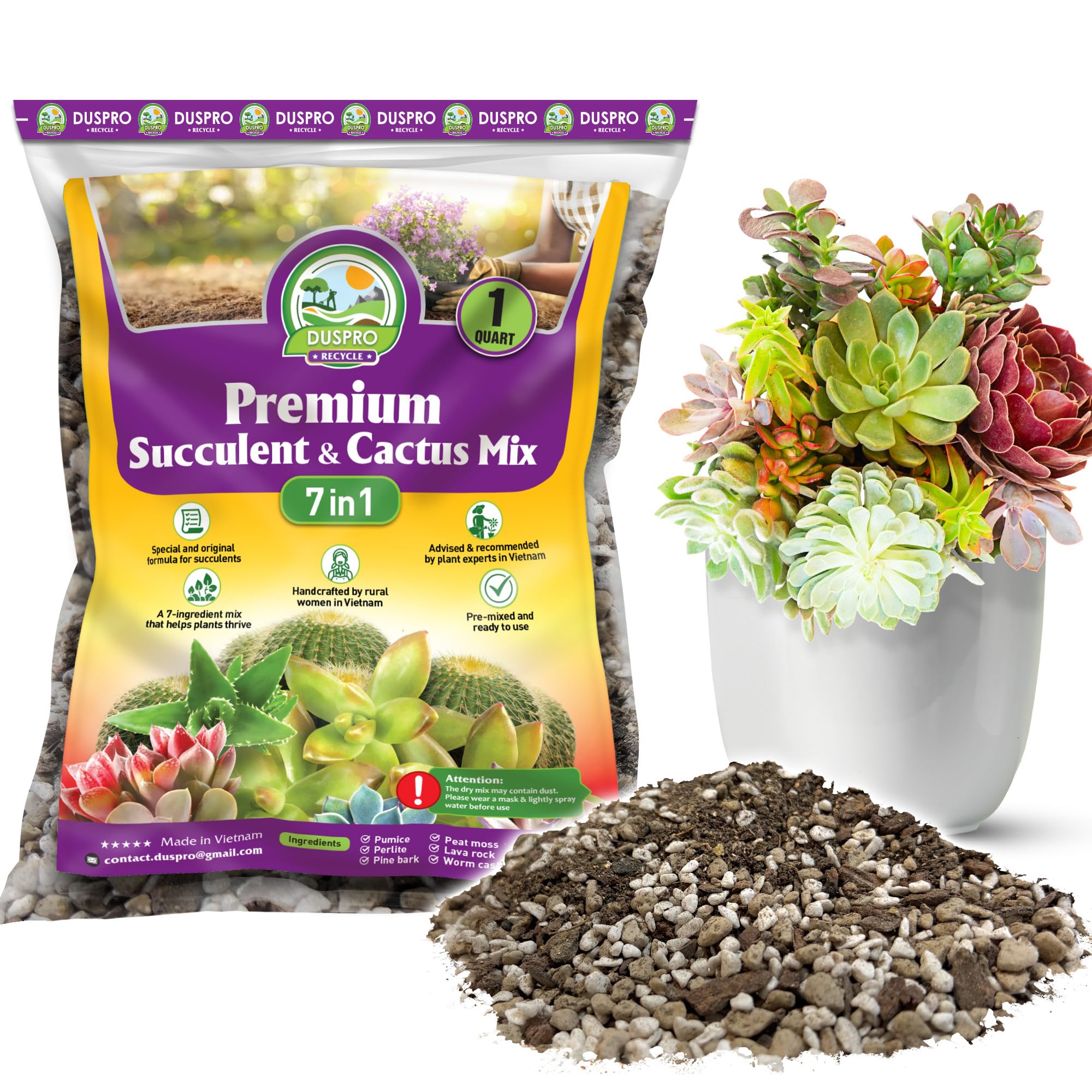
This mix is perfect for the casual plant owner who needs just enough high-quality soil for a single small pot or a desktop terrarium. You get a balanced blend of 7 ingredients — perlite, pumice, lava rock, peat moss, pine bark, worm castings, and vermiculite — in a 1-quart bag. Owners mention it works great for small and large plants alike, and note it has good moisture retention if you let the water drain properly.
One buyer mentioned it is smaller than expected, but the quality is solid — their succulents are healthy and thriving with no moisture-holding issues. If you have a single succulent or cactus that needs repotting and you do not want to commit to a large bag, this is the most economical choice.
For larger collections, you will want to move up to a bigger size from the same brand or one of the higher-volume options above — just be aware that the 1-quart bag may run out sooner than you expect if you have more than one plant to repot.
Strong points
- 7 high-quality ingredients in one bag
- Perfect size for a single pot or terrarium
- Ready to use with no mixing needed
Before you buy
- Only 1 quart — not enough for multiple plants
- Pricier per quart than larger bags
Understanding the Specs
Drainage and Grit Level
Drainage is how fast water passes through the soil. A good cactus mix has visible chunks of pumice (a lightweight volcanic rock), perlite (a glassy volcanic mineral that expands when heated), lava rock, or calcined clay (clay fired into hard fragments) — these create air pockets that let water drain in seconds. If the soil looks like fine, dark dirt, it will hold water and likely cause root rot. The best indicator is the ingredient list: look for at least two of those gritty ingredients near the top.
Organic Matter and pH
Cacti and succulents prefer slightly acidic soil with a pH around 6.0 to 6.5 — pH measures how acidic or alkaline the soil is. Organic matter like worm castings and pine bark provides slow-release nutrients, but peat moss should be minimal because it holds too much water. The ideal mix has just enough organic material to feed the plant without turning the pot into a swamp. Premium mixes often skip peat entirely and use coconut coir (a fiber from coconut husks) or bark instead.
FAQ
Can I use regular potting soil for my succulents?
How do I know if my cactus mix drains fast enough?
Why do some cactus mixes contain peat moss?
What is the best size bag to buy for a few plants?
Final Thoughts: The Verdict
For most buyers, the cactus and succulent mix winner is the Soil Sunrise Cactus and Succulent Potting Mix because it delivers true gritty drainage straight from the bag, requires no amendments, and has a proven track record with buyers. If you want a peat-free, organic option with root-boosting microbes, grab the Rosy Soil Cactus & Succulent Potting Mix. And for the best value when repotting a large collection, the standout is the Hoffman 10410 Organic Cactus and Succulent Soil Mix.