
The biggest mistake people make when growing herbs indoors is grabbing any bag of dirt and hoping for the best. The reality is that most generic potting soils are too dense, hold too much water, and lack the specific drainage and aeration that basil, mint, and rosemary need to actually thrive on your windowsill. This guide cuts through the marketing to show you what a proper herb soil actually does — with the drainage rate, ingredient makeup, and bag size that separates success from a droopy plant.
I’m Rikta — the co-founder and writer behind Lawn Gear Lab. This guide is built by comparing the manufacturers’ published specifications and the patterns across verified customer reviews, so you get each pick’s real strengths and trade-offs instead of marketing spin.
A good herb soil is the difference between a harvest that fills your kitchen and a plant that struggles from day one, which is why we spend time identifying the best potting soil for herbs for both indoor pots and outdoor containers.
How To Choose The Best Potting Soil For Herbs
Herbs have thinner, more sensitive root systems than most ornamentals, so the soil you pick has to do three specific jobs at once: drain excess water fast, hold just enough moisture between waterings, and stay fluffy enough for roots to spread without resistance. Here is what to look for before you open a bag.
Drainage and Aeration — The Non-Negotiables
Herb roots rot quickly if they sit in wet soil. Look for ingredients like perlite (the small white volcanic rocks), pumice, or coarse sand that create air pockets. Coco coir (coconut husk fiber) is good for holding moisture without becoming soggy, but avoid mixes that rely heavily on fine peat moss alone — it compacts over time and traps water.
Organic Matter and Nutrients
Organic herbs need slow-release nutrients rather than a chemical fertilizer spike. Worm castings, compost, and kelp or alfalfa meal provide steady nutrition without burning tender roots. Biochar (charcoal made from plant matter) is a newer ingredient that acts as a porous sponge for nutrients and beneficial microbes. Mycorrhizae fungi also help roots absorb water more efficiently.
Bag Size and Value for Your Setup
One 6-inch pot needs roughly 1.5 to 2 quarts of soil. A 2.2-quart bag fills one medium pot with a little left over for a small seedling container. An 8-quart bag handles three to four medium pots. If you have a large outdoor container garden, look for bags in the 1-cubic-foot range — that is about 25-30 quarts. Buying too-large bags can lead to stored soil drying out and losing its texture before you use it.
Quick Comparison
On smaller screens, swipe sideways to see the full table.
| Model | Category | Best For | Key Spec | Amazon |
|---|---|---|---|---|
| Espoma Organic Potting Mix | Premium | Large indoor/outdoor containers | 1 Cubic Foot (25+ quarts) | Amazon |
| Rosy Soil Herb Mix | Mid-Range | Sustainable, peat-free indoor herb gardens | 4 Quarts | Amazon |
| Leaves and Soul Professional Mix | Mid-Range | Single pot indoor herbs + bonsai | 2.2 Quarts | Amazon |
| Useful Universe Organic Mix | Budget-Friendly | Value-priced for multiple small pots | 8 Quarts | Amazon |
| Halatool Indoor Potting Soil | Multi-Use | Larger planters and mixed container gardens | 10 Quarts | Amazon |
In‑Depth Reviews
1. Espoma Organic Potting Soil Mix

You need a mix that can fill an entire windowsill garden or several outdoor pots without running out, and the Espoma delivers with the largest volume you will see — 1 cubic foot, which is about 25 to 30 quarts. It contains sphagnum peat moss, humus, perlite (the white volcanic rocks for drainage), worm castings, alfalfa meal, and kelp meal. The standout ingredient is Myco-Tone, a proprietary blend of endo and ecto mycorrhizae fungi that bond with herb roots to pull in more water and nutrients. Owners mention that after storing an opened bag outside under cover, they observed zero fungus gnats or other pests, making it a safe bet for indoor use. Compared to the Halatool mix, this one avoids synthetic plant foods entirely — it is certified organic with no chemical fertilizers. The honest trade-off: the bag has no added fertilizer, so you need to layer and hand-moisten the soil (using a watering can and mixing by hand, as one reviewer noted) before transplanting. For most herb growers, that extra step is worth it for a clean mix that customers note stays pest-free.
Why it’s great
- Largest volume in the roundup — 1 cubic foot handles big container gardens
- Myco-Tone mycorrhizae for better root absorption
- Insect-free — reviewers point out no gnats even after storage
Good to know
- No added fertilizer — requires pre-moistening before use
- Some buyers found it needs outdoor use to avoid occasional flying insects
2. Rosy Soil Herb Mix
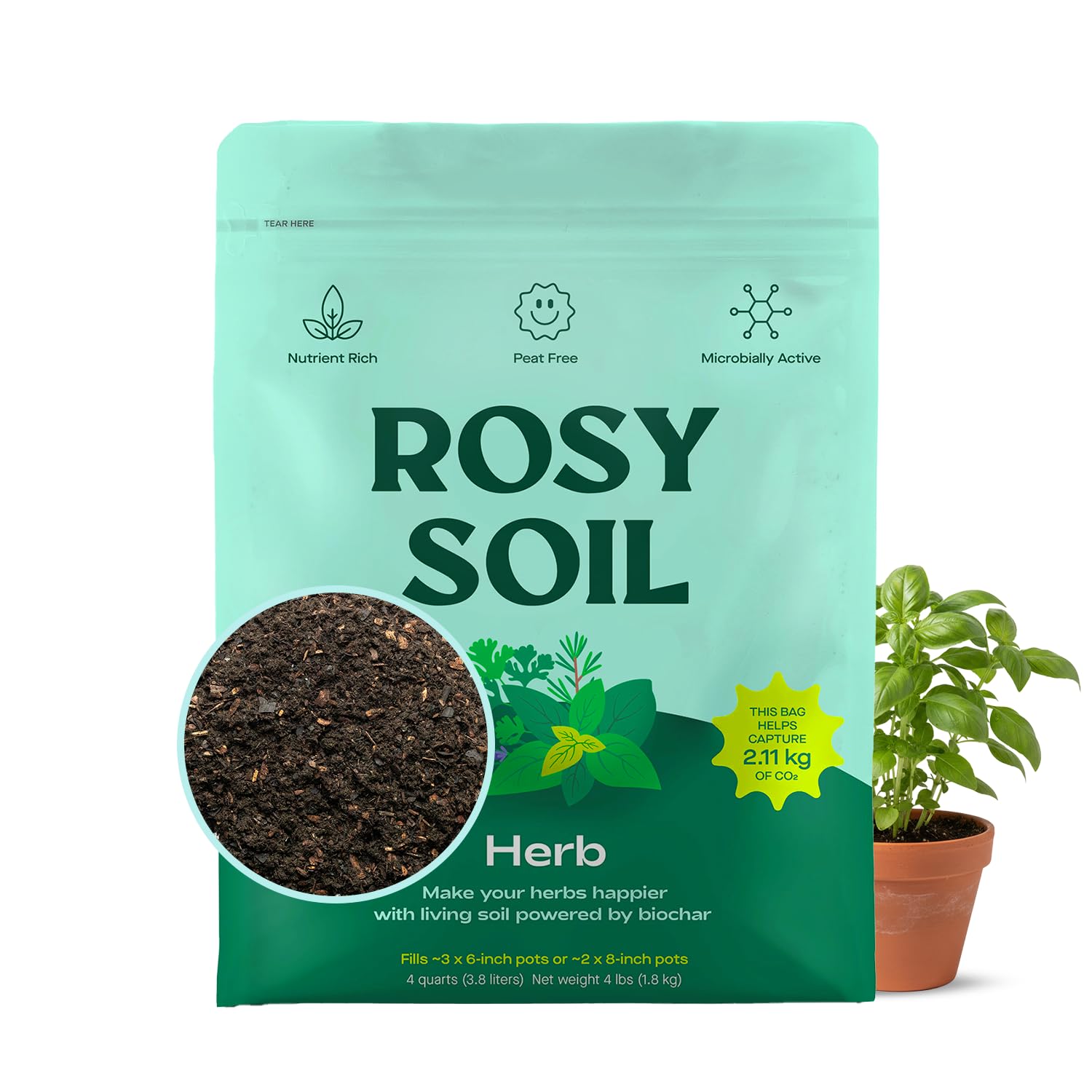
If you want a mix that skips peat moss entirely, this is the only one in the roundup that does it — it uses wood biochar (a charcoal-like material), compost, worm castings, bark fines, and beneficial mycorrhizae fungi instead. The biochar acts like a porous sponge that holds nutrients and water while hosting beneficial microbes, giving it better moisture retention than the Useful Universe Organic Mix without turning muddy. Buyers growing Thai basil, lavender, mint, and rosemary report that seedlings sprouted in record time, and one buyer mentioned the mix “grows Thai basil okay” while calling the moisture retention “good.” The 4-quart bag fills two to three medium 6-inch pots and works straight from the bag for indoor windowsills or outdoor balcony planters — no mixing required. The key spec is the carbon-negative formula: it uses upcycled ingredients and avoids the environmental cost of strip-mined peat moss. It is the right choice if you want fast-draining soil without the ecological footprint, but keep in mind that the bag has some empty space at the top, and it will not repel existing bugs if they are already in your pots.
Where it shines
- Peat-free and carbon-negative — upcycled ingredients only
- Biochar and worm castings for slow-release nutrition
- Fast-draining structure that prevents standing moisture
Worth noting
- Does not repel existing bugs if they are already in your pots
- Bag is smaller than expected — some empty space at the top
3. Leaves and Soul Professional Indoor Herb Soil Mix

For anyone who only needs to repot a single medium herb pot and does not want a half-empty bag sitting around, this is the precision-sized option. The 2.2-quart bag is exactly enough for one 6-inch pot of basil, mint, rosemary, or thyme — one buyer used it to repot a Ginseng Ficus bonsai after three years and said “perfect amount and size bag.” It combines peat moss, coco coir, perlite, and dolomite in a balance that holds moisture while draining excess water, which prevents the root rot that kills many indoor herbs. The resealable packaging keeps the soil fresh between uses, and shoppers say that even when the soil separated during shipping, it was easy to remix by hand. One owner reported an aloe plant was “thriving after transplant.” The honest downside: at 2.2 quarts versus the 10 quarts in the Halatool mix, this bag is best for a single pot — you will need multiple bags for a larger garden. But for one or two kitchen windowsill pots, the portion control and resealable bag make it a practical, waste-free choice.
What stands out
- Perfect single-pot size — no wasted leftover soil
- Balanced peat moss, coco coir, and perlite for drainage
- Resealable bag keeps soil fresh between uses
The trade-offs
- Only 2.2 quarts — small volume for the price
- Soil can separate during shipping; needs remixing
4. Useful Universe Organic Potting Mix Soil

The single number that matters most here is volume-to-price ratio, and this mix delivers 8 quarts of soil at a budget-friendly cost — enough to fill three to four medium pots without breaking your weekly grocery budget. Buyers describe it as “soft and light” with a “pleasant texture” that makes transplanting herbs easy and fast. The catch is that this mix is essentially pulverized leaves and tree bark rather than a dense, nutrient-rich potting soil. One customer observed that it “does not keep water inside of soil” and warned that you cannot care for plants if you are away for a couple of days. Another buyer described it as “shredded bark” and said they added it to regular potting soil just to loosen the ground, which actually worked well as a soil conditioner rather than a standalone growing medium. If you view this bag as a lightweight aerator and organic top dressing to mix into denser soil, the 8-quart volume makes it a smart price-to-performance buy. But as a standalone potting soil for thirsty herbs like basil, expect to water more frequently than with coco coir or peat-based mixes like the Rosy Soil.
The upsides
- 8 quarts at a budget-friendly price — great value for the volume
- Soft, light texture — easy to work with during transplanting
- Works well as a soil conditioner to loosen dense mixes
Keep in mind
- Very low water retention — dries out quickly, needs frequent watering
- Primarily shredded bark and pulverized leaves, not dense potting soil
5. Halatool 10QT Indoor Potting Soil
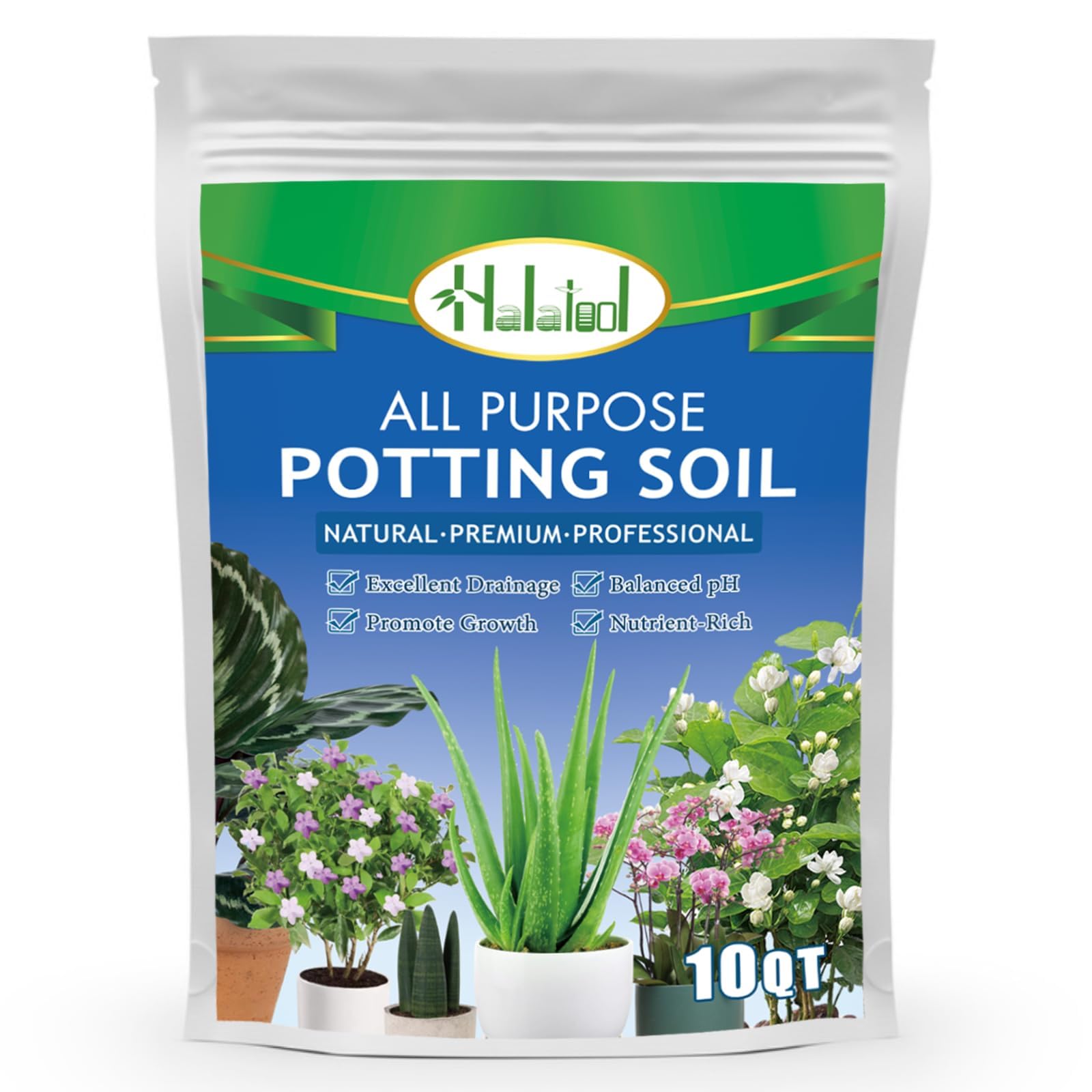
At 10 quarts, this Halatool bag gives you the most raw volume of any product in this guide — 4.5 times more soil than the 2.2-quart Leaves and Soul mix — for a price that lands in the budget-friendly tier. It combines peat, vermiculite, breathable perlite, humic acid, and coconut bran to create a fluffy, fine-textured mix that promotes aeration and drainage. What you give up is consistent quality control. One buyer called the bag “too expensive for the amount of soil,” saying they could only plant one aloe plant and had to supplement with regular potting soil. Another noted “it appears to be good potting soil but the price is too high for the amount.” The resealable aluminum foil bag is a practical touch for storage, but the mix itself leans heavily on peat and vermiculite, which can compact over time in herb pots. This bag is perfect for the gardener who needs a large single batch of soil for multiple containers or mixed plantings and is willing to accept that the quality may be inconsistent from bag to bag. For herbs specifically, mixing in extra perlite for aeration is recommended — unlike the Espoma, which comes ready to use out of the bag.
Why we’d pick it
- Largest raw volume at 10 quarts — fills multiple large pots
- Fluffy, fine texture with vermiculite and perlite for drainage
- Resealable aluminum foil bag for clean storage
A few caveats
- Inconsistent value — some buyers felt the price was too high for the soil quality
- Peat-heavy formula can compact over time in herb pots
Understanding the Specs
Volume and Bag Size
The volume of a soil bag is measured in quarts or cubic feet. One cubic foot equals about 25 quarts. A single 6-inch pot needs about 1.5 to 2 quarts of soil. If you see “2.2 Quarts,” that fills one medium pot. “10 Quarts” handles three to four pots. “1 Cubic Foot” is for large container gardens. Matching bag size to your number of pots prevents wasted soil that dries out in storage.
Drainage Ingredients (Perlite, Coco Coir, Biochar)
Perlite is the small white volcanic rock that creates air pockets in the soil, letting roots breathe and excess water drain away. Coco coir is coconut husk fiber that holds moisture without becoming waterlogged — better than peat moss for herbs. Biochar is a charcoal-like material that acts as a porous sponge for nutrients and beneficial microbes. A mix with all three gives herbs the drainage, moisture balance, and nutrient access they need.
FAQ
Can I use regular potting soil for herbs?
How much soil does one herb pot need?
What does organic potting soil mean for herbs?
Final Thoughts: The Verdict
Across the board, the potting soil for herbs winner is the Espoma Organic Potting Mix because it delivers the largest volume, clean organic ingredients with Myco-Tone mycorrhizae, and buyer reports of no pest issues. If you want a peat-free, sustainable option with biochar and worm castings, grab the Rosy Soil Herb Mix. And for a single-precision pot on your windowsill, the standout is the portion-sized Leaves and Soul Professional Indoor Herb Soil Mix.