
Your wrist aches after twenty minutes, and that ragged tear on the rose stem is already turning brown. A good pair of garden pruners turns that into a clean, healthy cut that helps the plant heal fast, but picking the wrong style leaves you with sore palms and a dull blade after a few uses. This guide helps you match the right tool to your job: from precision needle-nose pruners for deadheading perennials to heavy-duty anvil cutters for dry, old wood. You get each pick’s real strengths and trade-offs based on the manufacturers’ published specs and patterns across verified customer reviews, not marketing spin.
The seven models here cover bypass pruners for living stems, anvil pruners for dead wood, and specialty shapes for tight spots. After reading this, you will know exactly which garden pruners will handle your daily pruning without causing hand fatigue or dulling after a few uses.
How To Choose The Best Garden Pruners
The right pruner for you balances three things: how you need to cut, how the handles feel in your hand, and how much maintenance you want to do. Here is what matters most.
Bypass vs. Anvil: Choose Your Cutting Style
A bypass pruner works like a pair of scissors — two curved blades slide past each other for a clean, scissor-like cut. This is the best choice for living, green stems because the clean cut helps the plant heal faster. An anvil pruner has a single straight blade that closes onto a flat metal plate, crushing the stem. It is better for cutting dry, dead wood or tough branches up to about an inch thick, but the crushing action can damage live stems.
Cutting Capacity: Match the Branch Thickness
Every pruner has a maximum cutting width — usually between 0.8 inches and 1 inch. Stick within this limit. Trying to cut a branch thicker than the pruner is designed for will leave a ragged cut, damage the blade edge, or require so much force that it hurts your hand. If you regularly prune branches thicker than 1 inch, you need a pair of loppers instead of a hand pruner.
Handle Material, Weight, and Ergonomics
Lightweight aluminum handles reduce fatigue if you are pruning for more than thirty minutes. Steel handles are heavier but can feel more durable. The grip surface matters a lot — soft, non-slip rubber or PVC coatings help keep control when your hands are sweaty or wet. If you have arthritis or small hands, look for models specifically described as ergonomic or designed for smaller hands, and pay attention to whether the pruner is ambidextrous or right-hand-only.
Blade Steel and Coatings
High-carbon steel takes and holds a very sharp edge but can rust if left wet. Titanium coatings reduce friction (so sap and debris slide off) and add corrosion resistance. Stainless steel resists rust without a coating but does not hold as sharp an edge as high-carbon steel. A replaceable blade extends the life of the pruner significantly — you swap out a dull blade for a new one instead of buying a whole new tool.
Quick Comparison
On smaller screens, swipe sideways to see the full table.
| Model | Category | Best For | Key Spec | Amazon |
|---|---|---|---|---|
| Corona BP 6250 | Premium | Heavy pruning up to 1-inch branches | 1-inch cutting capacity | Amazon |
| Felco F5 | Premium | Durable, long-lasting daily use | All steel, 1-inch cutting | Amazon |
| Haus & Garten EnduroPRO | Mid-Range | Balanced power and comfort | 2.06-inch blade length | Amazon |
| Haus & Garten PrecisionPRO | Mid-Range | Smaller hands or precise cuts | 0.8-inch cutting capacity | Amazon |
| ARS HP-130DX | Mid-Range | Light gardening and floral work | 7-inch overall length | Amazon |
| ARS Needle Nose HP-SE45 | Mid-Range | Deadheading and tight spots | 46mm blade, 1.81″ cut | Amazon |
| Original LÖWE Professional | Premium | Heavy dry wood cutting | Anvil blade, 22mm cut | Amazon |
In‑Depth Reviews
1. Corona Tools BP 6250 MAXFORGED Aluminum Bypass Pruner
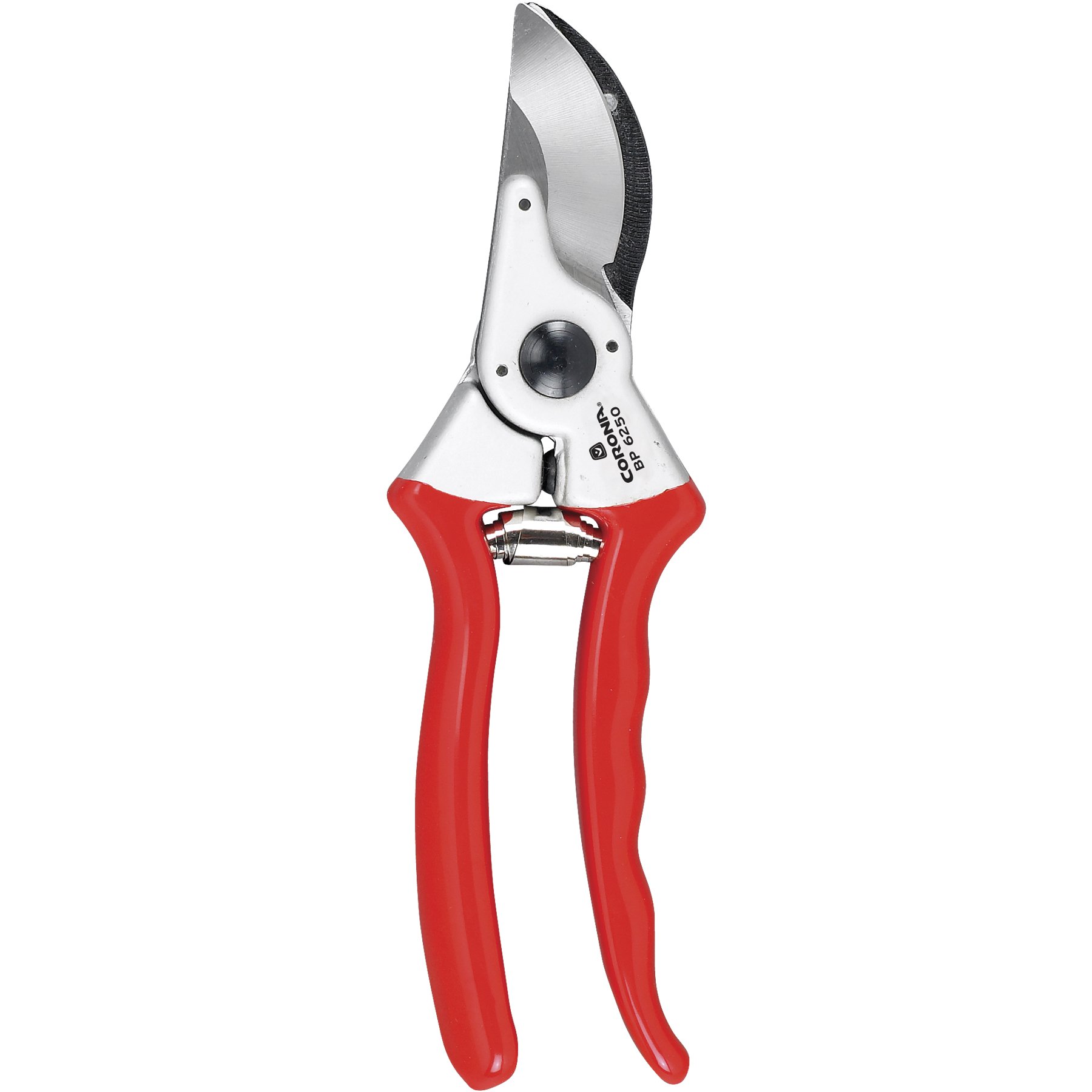
1-inch cutting capacity at just 0.6 pounds makes this the top pick for any gardener who regularly prunes shrubs, small trees, and thick perennials and wants a tool that will not wear out their hand after an afternoon of work. You get a full 1-inch cutting capacity so you can slice through live branches and woody stems up to a full inch thick without forcing the blade, and the forged aluminum handles keep the weight at just 0.6 pounds so your hand does not tire. Buyers report it is “sharp out of box, cuts 1″ branches easily,” which backs up that 1-inch spec in real-world use.
It leads on raw capacity versus the Haus & Garten EnduroPRO (both handle 1-inch branches) but does so in a lighter, better-balanced frame. The precision-honed forged steel blade delivers smooth scissor cuts that minimize plant damage, and features like the self-cleaning sap groove and shock-absorbing bumper keep it running smoothly season after season. A wire cutting notch is built into the blade, so you can snip through thin garden wire without dulling the edge.
The carbon steel blade will rust if you leave it wet without oiling, and the locking mechanism is a basic thumb lock rather than a more secure closure. For most home gardeners who can spend thirty seconds cleaning and oiling after use, this is the best balance of capacity, weight, and price in the group. This is the best balance of capacity, weight, and price in the group.
Why it’s great
- Full 1-inch cutting capacity handles woody stems and live branches
- Forged aluminum handles keep weight low at 0.6 pounds
- Self-cleaning sap groove and replaceable blade add longevity
Good to know
- Carbon steel blade requires cleaning and oiling to prevent rust
- Basic thumb lock, not a more secure latch
2. Felco F5 Pruning Shears
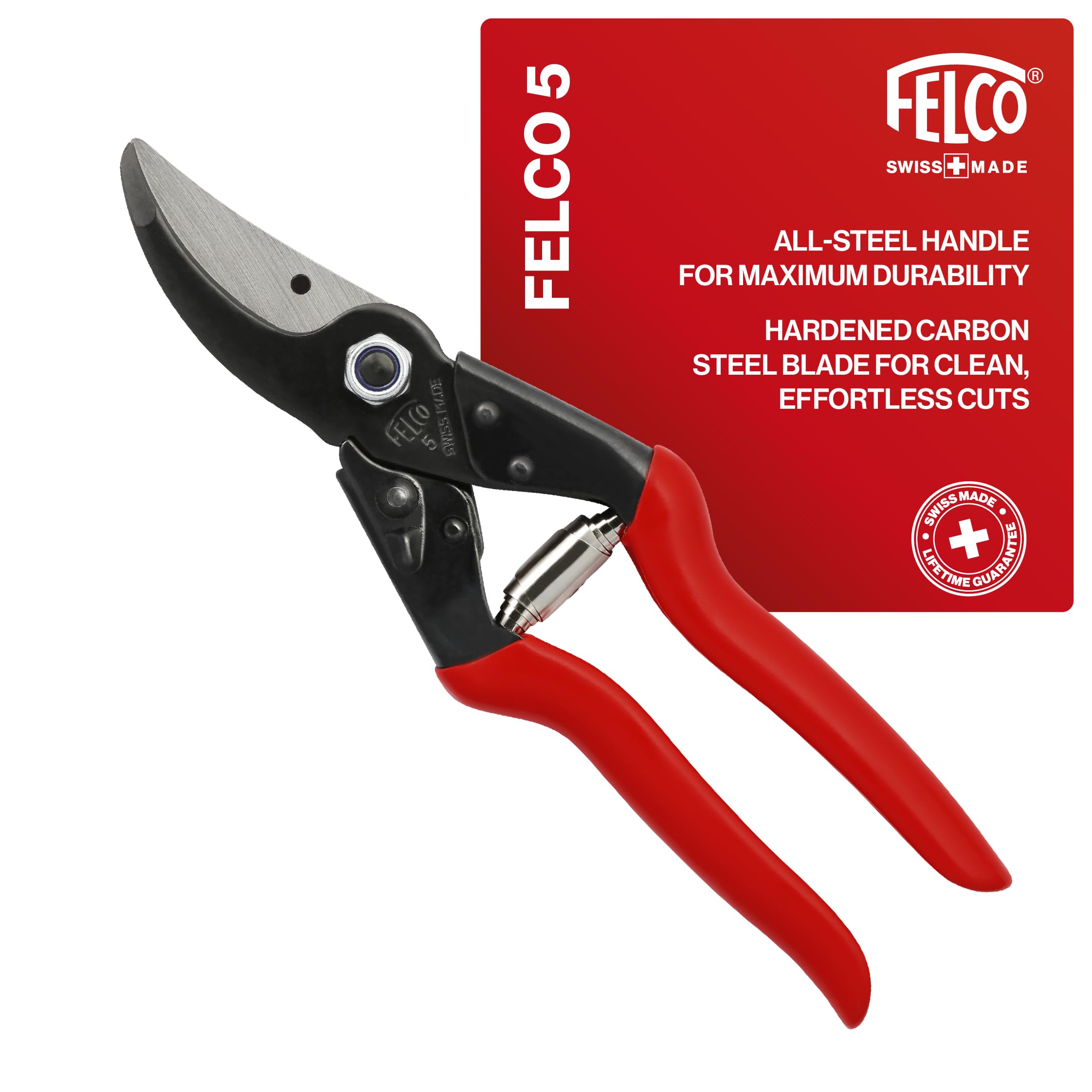
Against the top-pick Corona BP 6250, the Felco F5 matches its 1-inch cutting capacity but surpasses it with fully replaceable parts—blade, spring, and anvil—so you can keep the same tool for a decade or more. It is heavier at roughly 0.6 pounds versus the Corona, but buyers call it “the best Felco pruners” and note that “with care these should last a long time.”
The all-steel handles with rubberized grips make the F5 sturdier than aluminum-handled pruners, and the hardened alloy steel blade holds an edge for very long periods, keeping the cutting action smooth even after months of regular use. Sap and debris wipe off easily from the metal surfaces.
Choose this Felco over the top pick if you want to buy a tool exactly once, sharpen it yourself, and replace only the blade when it eventually wears out—longevity and full repairability matter more to you than a lower initial price.
Where it shines
- Every part, including the blade, is replaceable for near-infinite life
- All-steel body with rubberized grips is tough and feels solid
- Cuts cleanly through 1-inch branches with smooth action
Worth noting
- Heavier than aluminum-handled alternatives
- Grip shape may not suit very small hands
3. Haus & Garten EnduroPRO Ergonomic Bypass Pruners
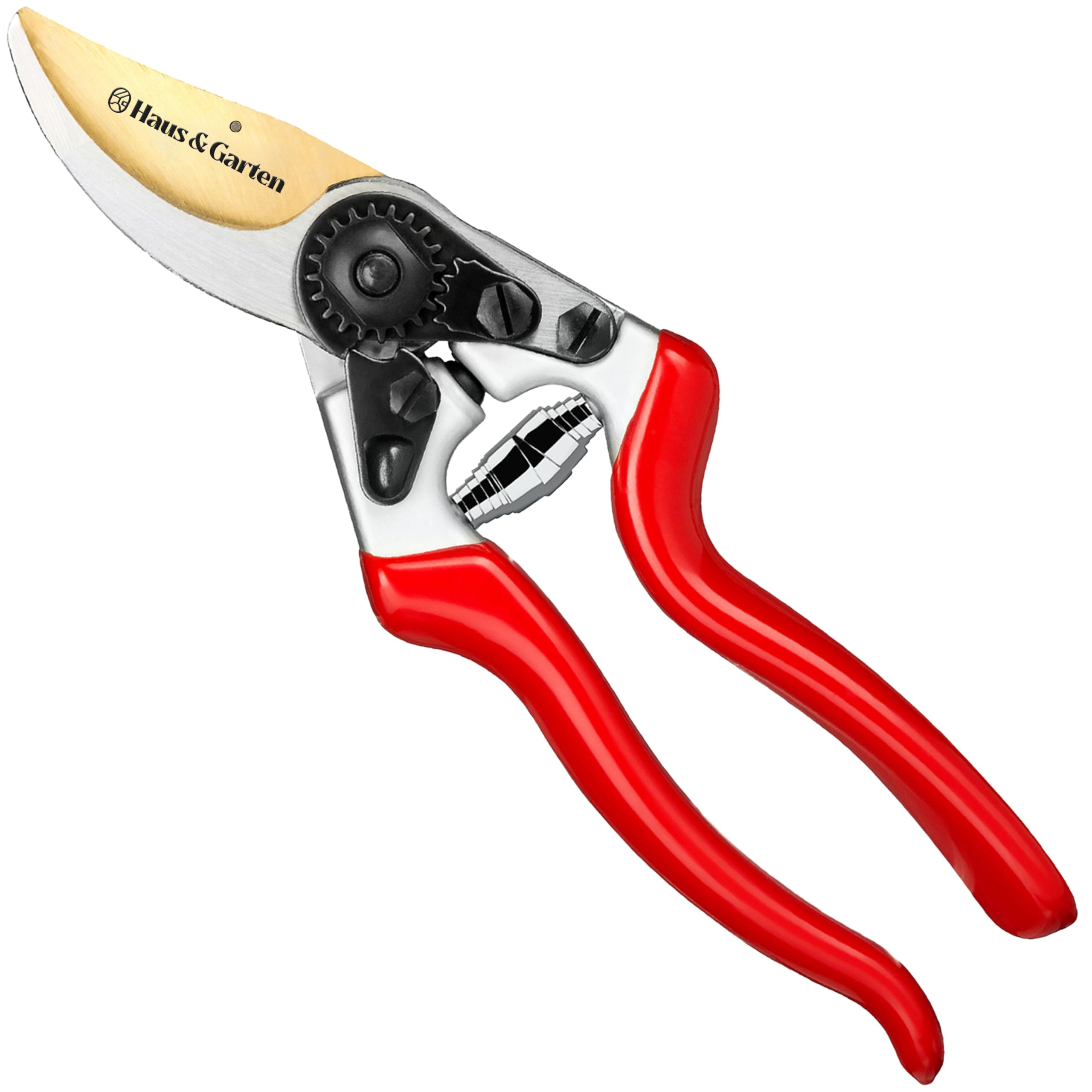
You are reaching deep into a dense rose bush to snip a spent bloom, and the 2.06-inch blade — 23% longer than the 1.67-inch blade on the Haus & Garten PrecisionPRO — lets you cut inner stems without pushing your hand into thorns or leaves. It is ideal for rose pruning, hedge trimming, and cutting through shrub interiors where a shorter blade cannot reach. Reviewers specifically praise the “excellent build quality” and note the “titanium blade stays sharp and resists corrosion.”
The 8.6-ounce weight is 16% heavier than the PrecisionPRO’s 7.4 ounces, but the extra heft comes from a drop-forged aluminum body and a larger handle that provides more leverage for thicker branches. The titanium coating on the high-carbon steel blade reduces friction, so sap does not stick, and the blade resists rust better than uncoated steel. The ergonomic handles are designed to align your wrist properly, reducing fatigue during longer sessions.
The catch is that the larger handles may feel bulky for users with small hands, and the 1-inch cutting capacity is the same as the Corona but with more effort required on the thickest stems. The standout spec is that 2.06-inch blade length — no other pruner in this list has a longer blade for reaching deep into plants.
What stands out
- 2.06-inch blade is the longest in this list for reaching deep stems
- Titanium coating reduces friction and resists rust
- Drop-forged aluminum body is durable and well-balanced
The trade-offs
- At 8.6 ounces, it is the heaviest of the mid-range picks
- Larger handles may not suit very small hands
4. Haus & Garten PrecisionPRO 8″ Titanium Pruning Shears

The single number that matters most in this category is cutting capacity: 0.8 inches. This is narrower than the 1-inch on the Corona or Felco, but for roses, flowers, and thin shrub stems, that is plenty. One buyer, a 6’1″ male, noted that it “cut cleanly through 5/8″ base with little effort,” showing the blade is plenty sharp for most garden tasks.
The downside you accept here is the reduced cutting capacity: you cannot force this pruner through a 1-inch branch without risking a blade nick, as one reviewer discovered. But for its intended use — precise, daily pruning of soft green growth — the titanium-coated high-carbon steel blade stays sharp and rust-free for a very long time. At 7.4 ounces, it is lighter than the EnduroPRO, which means less hand fatigue during extended sessions.
For a mid-range price, you get a specialized ergonomic design that no other pick here offers for small hands. It is the best choice if standard-sized handles leave your hand cramping after ten minutes of pruning. If you have small hands or arthritis, this is a strong price-to-value read.
The upsides
- Ergonomic handle designed specifically for smaller hands
- Lightweight at 7.4 ounces, reducing hand fatigue
- Titanium-coated blade resists rust and stays sharp
Keep in mind
- 0.8-inch cutting capacity limits use to thinner branches
- Spring tension may feel stiff for some users
5. ARS HP-130DX 7-Inch Ideal Light Pruner

You get a high-carbon steel blade and a compact 7-inch overall length that fits easily in a pocket or apron — making it a great grab-and-go pruner for light daily garden work. The soft PVC handles are especially good for people with smaller hands, and the precision-ground blade cuts flowers and thin stems with very little force. One reviewer who is a professional florist said these are “the best floral snips we have ever gotten” and that they “cut any type of flower super smoothly.”
What you give up is the ability to cut branches thicker than about 0.5 inches, as another buyer noted: “excellent for branches up to 0.5″; cannot cut larger branches.” The high-carbon steel blade will rust if left wet, and the handles are plastic rather than aluminum or steel, so the overall tool feels less substantial than the Haus & Garten options. But for its intended job — snipping flowers, deadheading perennials, and light pruning — it is sharp, nimble, and costs less than most alternatives.
This is the exact budget-friendly pruner for anyone who does mostly flower cutting, deadheading, and trimming soft annuals, and does not want to spend more than necessary for a tool that does that one job perfectly.
Why we’d pick it
- Compact 7-inch size fits in a pocket for quick garden trips
- High-carbon steel blade is very sharp for clean cuts
- Soft PVC handles suit smaller hands well
A few caveats
- Cannot cut branches thicker than 0.5 inches
- Plastic handles feel less durable than metal options
6. ARS Needle Nose Pruner HP-SE45, Orange

The dedicated flower gardener or precision pruner who spends hours deadheading and snipping in dense, tangled growth is the perfect buyer for the ARS Needle Nose Pruner HP-SE45. The narrow, pointed tip gets into dense clusters of spent blooms without crushing the surrounding healthy stems — that makes it the perfect choice for deadheading flowers and snipping in tight spots where a standard-width blade cannot reach. The 46mm stainless steel blades stay sharp and resist rust, and the 1.81-inch cutting width is enough for most perennials and thin-stemmed shrubs. Owners mention “I’ve had them for a season now and I’m very happy with them” and love how the “streamlined nose reaches tight spots.”
This feature — the needle nose — is what makes the HP-SE45 unique in this list. While other pruners have wider blades that cannot navigate dense flower heads or between intertwined stems, the ARS needles slip in precisely. The comfortable ergonomic hand grips and lightweight 0.09-kilogram body make it easy to use for extended deadheading sessions without hand pain. The lock mechanism is a simple band on the handle that secures the blades for safe storage.
The honest limit is that this is a specialty tool, not a general-purpose pruner. It will struggle with branches thicker than a pencil, and the narrow tip is not designed for heavy cutting. But if deadheading, fine pruning, and working in tight spaces are your main tasks, this is the best tool for the job. A dedicated flower gardener will find it indispensable — just be aware that its narrow tip is not built for thick, woody stems.
Strong points
- Needle nose tip reaches tight spots other pruners cannot
- Stainless steel blades resist rust well
- Very lightweight at 0.09 kg for fatigue-free use
Before you buy
- Not suitable for cutting thick branches or woody stems
- Right-hand orientation only, not ambidextrous
7. Original LÖWE Professional Anvil Pruner

Compared to every bypass pruner on this list, the LÖWE Professional uses an anvil blade — a single straight blade that closes onto a flat metal plate — which makes it far better for cutting hard, dry, or old wood that would dull or damage a bypass blade. It is the premium pick for anyone who prunes dead tree branches, thick rose canes from last season, or woody shrubs where the stems have already dried out. One reviewer called it the “best pruner I have ever used,” noting it “cuts rose stems and tree branches effortlessly.”
The 290-gram weight is heavier than the aluminum-handled options, but that weight provides the leverage needed to cut through tough, dry material. The carbon steel blade is coated with a sliding lacquer that reduces friction and protects against corrosion, and every part of the tool is replaceable — a hallmark of German engineering that means you can repair it rather than replace it. The one-hand safety lock is simple to operate and secures the blade when not in use.
The reason to choose this over the field is simple: if you regularly cut dead wood, an anvil pruner like this LÖWE is the right tool for the job, and no bypass pruner can match its performance on dry, hard branches. It is a specialist tool for a specific task, and it does that task better than anything else here. Grab this one if your main job is cutting dry, old branches.
What we like
- Anvil blade crushes through dry, hard wood that bypass pruners struggle with
- All parts replaceable for decades of use
- Sliding lacquer coating reduces friction and resists rust
The downsides
- Heavier than bypass pruners at 290 grams
- Anvil cut crushes stems, not ideal for live green growth
Understanding the Specs
Cutting Capacity (Inches)
This is the maximum branch thickness the pruner can handle in a single cut. A 1-inch capacity lets you cut branches about as thick as your thumb. Stay within this limit — forcing a pruner through a thicker branch can damage the blade edge, leave a ragged tear on the plant, and require significantly more hand strength. For routine flower cutting, a 0.5-inch to 0.8-inch capacity is sufficient. For woody shrubs and small tree branches, look for a full 1-inch capacity.
Blade Material and Coatings
High-carbon steel takes the sharpest edge and holds it the longest, but it will rust if not cleaned and oiled after use. Stainless steel resists rust but does not get quite as sharp. Titanium coatings or lacquer finishes (like the sliding lacquer on the LÖWE) reduce friction so sap slides off and add a layer of corrosion protection. For most gardeners, a titanium-coated high-carbon steel blade offers the best balance of sharpness, edge retention, and rust resistance.
FAQ
What is the difference between bypass and anvil pruners?
How do I know what cutting capacity I need?
Can I sharpen my pruner blades at home?
How do I prevent my pruners from rusting?
What does ambidextrous mean for pruner handles?
Final Thoughts: The Verdict
For most gardeners, the best garden pruners winner is the Corona BP 6250 because it strikes the best balance between a full 1-inch cutting capacity, lightweight forged aluminum handles, and a replaceable blade at a mid-range price. If you want a tool that will never need replacing because every part is individually replaceable, grab the Felco F5. And for reaching deep into shrubs or cutting dead dry wood, the standout is the Haus & Garten EnduroPRO for reach or the Original LÖWE Professional for heavy-duty anvil cutting.