
Indoor herbs need a specific environment — a light, airy mix that drains quickly but holds enough moisture for steady growth. Using dense garden soil or a generic potting mix is the fastest way to drown roots, attract gnats, and watch your basil or mint turn yellow. This guide breaks down the real differences between soil blends so you can pick the right bag for your kitchen windowsill.
I’m Rikta — the co-founder and writer behind Lawn Gear Lab. This guide is built by comparing the manufacturers’ published specifications and the patterns across verified customer reviews, so you get each pick’s real strengths and trade-offs instead of marketing spin.
Finding the right soil for indoor herbs comes down to three things: drainage, aeration, and organic ingredients. These keep roots healthy and leaves flavorful, whether you are starting seeds or repotting a tired rosemary plant.
How To Choose The Best Soil For Indoor Herbs
Indoor herbs live in containers, so you control the drainage, airflow, and nutrients completely. Choose a mix that keeps roots healthy and leaves producing.
Drainage and Aeration
Herb roots need oxygen and hate sitting in water. A good mix contains coarse materials like perlite (a volcanic glass that creates air pockets), pumice, or lava rock. These let excess water escape instantly. Without them, roots rot fast and leaves turn yellow within days.
Water Retention
The soil must also hold enough moisture for a day or two between waterings, especially in dry indoor air. Coco coir (made from coconut husks) and peat moss are the main ingredients that do this. But peat moss can become dry and hard to rewet, while coco coir stays spongy and absorbs water more evenly.
Organic vs Synthetic Ingredients
Organic soils use natural nutrients like worm castings, kelp meal, or compost that release slowly as plants grow. Synthetic fertilizers can feed faster but risk burning delicate herb roots and may leave a chemical taste in leaves over time. For edible herbs, organic ingredients are the safer bet.
Fungus Gnat Prevention
Many standard potting mixes hold too much water, creating perfect conditions for fungus gnats (tiny flying insects that lay eggs in wet soil). Drier, chunkier soils with good airflow — especially those using coco coir instead of peat — dry faster on top and reduce the chance of gnats setting up in your herb pots.
Quick Comparison
On smaller screens, swipe sideways to see the full table.
| Model | Category | Best For | Key Spec | Amazon |
|---|---|---|---|---|
| Grow Queen Craft Organic Houseplant Potting Mix | Best Overall | Houseplant & herb all-rounder | 64.0 oz, 2 Quarts | Amazon |
| Leaves and Soul Professional Indoor Herb Soil Mix | Top Performer | Herb-specific blend | 2.2 Quarts | Amazon |
| ZESTIGREENS 16 Pack Expanding Organic Fiber Soil | Best Value | Starting seeds & small pots | 10 Quarts total | Amazon |
| Jessi Mae Potting Soil | Compact Pick | Snake plants & small repots | 4 Quarts | Amazon |
| Avalution 18QT Potting Soil Mix | Best Value | Large batches & multi-plant setups | 18 Quarts | Amazon |
| Espoma Organic Potting Soil Mix | Premium Pick | Organic purists & long-term feeding | 1 Cubic Foot | Amazon |
| Coast of Maine Bar Harbor Blend | Premium Pick | Heavy feeders like tomatoes & basil | 16 Quarts | Amazon |
In‑Depth Reviews
1. Grow Queen Craft Organic Houseplant Potting Mix
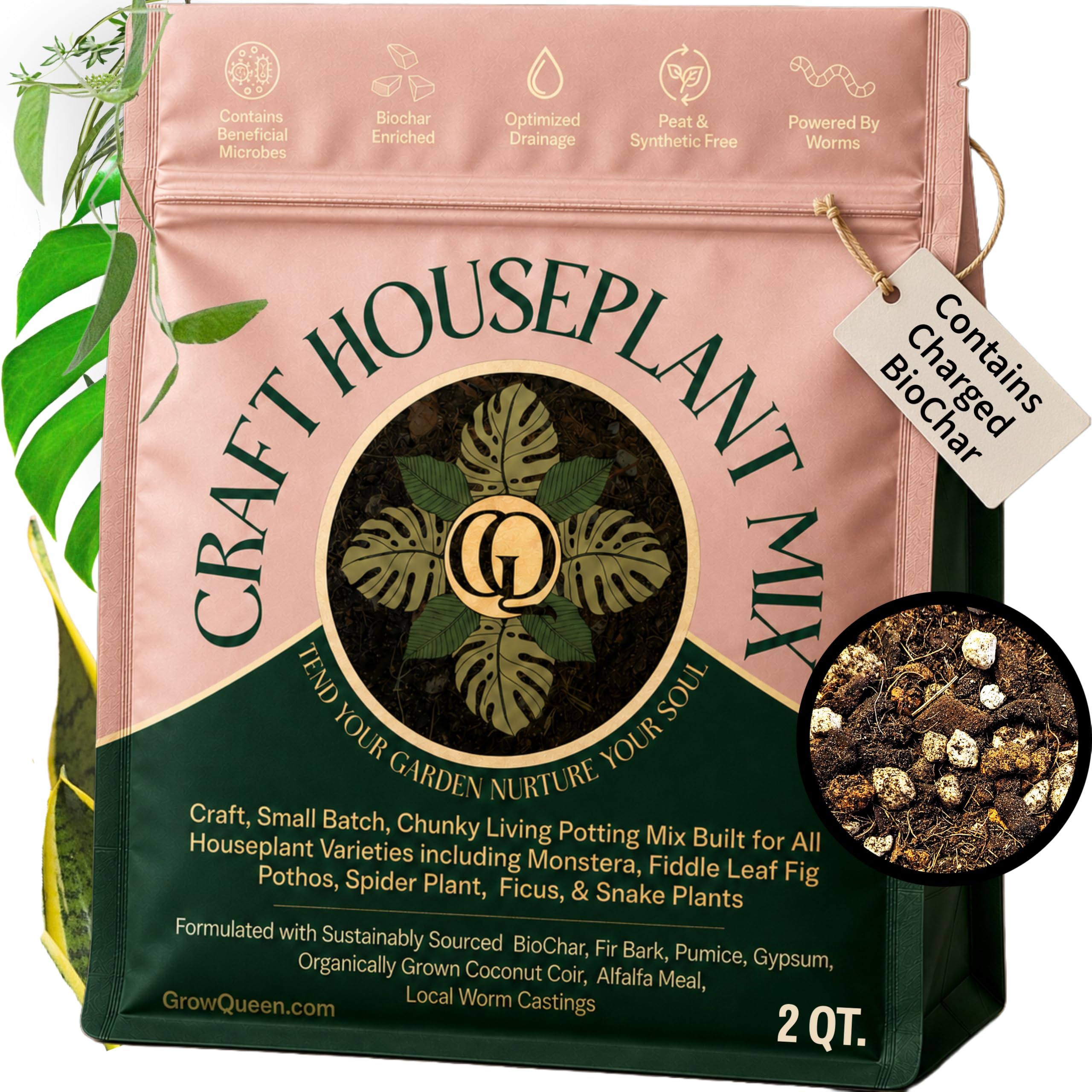
If you want one bag that handles everything from basil to monstera without guesswork, this is it. The mix arrives pre-moistened — you never fight dry, water-repelling dust — and the chunky texture (Douglas fir bark, lava rock, pumice) creates instant drainage so you cannot easily overwater. It uses premium organic worm castings (rich natural fertilizer from earthworms) instead of cheap compost filler, giving your plants steady micronutrients for leaf growth. The 2-quart bag weighs 64.0 ounces — far denser than standard 2-quart bags that are mostly air and peat. Compared to the Leaves and Soul 2.2-quart mix, this bag delivers about 32 times more soil by weight (64.0 oz vs 1.0 oz per unit). Because it is peat-free and perlite-free, you get no dusty mess and no floating white chunks on your windowsill. The catch is a higher per-bag cost, and the 2-quart bag may be small for larger container gardens. If you grow only a few small pots, this mix gives you the best root health for your money — just know you pay a bit more per scoop.
Why it’s great
- Chunky aroid-style mix drains instantly, preventing root rot
- Pre-moistened, so you never deal with dry hydrophobic soil
- Peat-free and perlite-free for cleaner indoor use
Good to know
- Premium blend means a higher per-bag cost
- 2-quart bag may be small for larger container gardens
2. Leaves and Soul Professional Indoor Herb Soil Mix

While the Grow Queen mix is a generalist for all houseplants, this one is formulated specifically for kitchen herbs like basil, mint, rosemary, thyme, and parsley. It contains a balanced blend of peat moss, coco coir, perlite, and dolomite (a mineral that adjusts pH). This improves aeration and keeps excess water draining away — so your herbs get oxygen at the roots. It falls short of the Grow Queen’s chunkiness for drainage, but it holds slightly more moisture, which can be better for herbs like mint that like consistently damp soil. Buyers report this mix revived a neglected, nearly dead orchid — the plant is now sprouting new growth — which shows how well it supports root recovery. The 2.2-quart bag is a perfect size for a small windowsill garden with 3–4 herb pots, and the bag is resealable, so leftover soil stays fresh. Choose this over the Grow Queen if you want a dedicated herb mix that is ready to use straight out of the bag, with a moisture level that suits basil and mint better than dry-loving herbs. The biggest limitation: the smaller bag means you will need to replace it sooner if you expand your garden.
Where it shines
- Formulated specifically for indoor herbs, not all-purpose houseplants
- Resealable bag keeps soil fresh between uses
- Balanced moisture retention ideal for basil and mint
Worth noting
- Smaller bag (2.2 quarts) may need replacing quickly for larger gardens
- Less chunky than premium aroid mixes, so drainage is slightly lower
3. ZESTIGREENS 16 Pack Expanding Organic Fiber Soil

Perfect for starting seeds or repotting into small 3–4 inch pots, this is a pack of 16 compressed coco coir discs that expand into 2 cups of soil each — a total of 32 cups (10 quarts) from a single lightweight box. Owners mention they opened the mesh bag, added water, and watched the discs swell to over twice their original size, making it a fun and mess-free way to get soil without hauling heavy bags. The coco coir fibers provide abundant oxygen, reducing the chance of root rot from overwatering — the number one cause of indoor herb failure. Each disc is shrink-wrapped to stay dry and fresh until you need it, so you never have to store a half-used bag of damp soil. The coco coir has a slightly acidic pH (around 5.8–6.8) that herbs prefer, and it holds water and nutrients better than peat moss without becoming hydrophobic. One warning: a few buyers noted the outer plastic bag packaging can split during shipping, so soil may spill inside the box. Still, the product itself is clean and simple to use. At 10 quarts total, this pack is a 5x leap over the 2-quart bags from Grow Queen or Jessi Mae — making it the best volume for your money if you have multiple herb pots to fill. Just note that pure coco coir needs added nutrients over time since it contains no fertilizer, so you will want to pair it with a liquid herb feed after the first month.
What stands out
- Lightweight, compact storage — discs expand only when you add water
- 10 quarts total volume is excellent value for multiple pots
- Eco-friendly renewable coco coir with neutral pH
The trade-offs
- Pure coco coir contains no fertilizer, so you need to add nutrients
- Plastic packaging can tear during shipping
4. Jessi Mae Potting Soil

At 4 quarts, this bag hits a sweet spot — bigger than sample-sized 2-quart bags but not so large that you are stuck storing half a cubic foot of soil. It is hand-mixed in small batches with a light, fluffy texture that incorporates perlite (small white volcanic beads) for drainage and organic materials for slow-release nutrition. Customers note their peace lily pushed a new bud after a few weeks, and snake plants show strong growth in this mix. The slightly acidic pH suits a broad range of indoor herbs and houseplants. The downside is that this soil has a noticeable organic “earthy” smell when you first open it — one buyer described it as “definitely smelling organic,” adding that the smell dissipates after a couple of days. If you are sensitive to strong soil odors in a small kitchen or apartment, you may want to let it air out for a day before potting. Otherwise, it is a clean, chemical-free mix that supports herb roots without the risk of synthetic burn. Price-wise, it sits in the mid-range — not as cheap as the expanding coco coir discs, but not as expensive as premium bioactive blends. For the 4-quart size and organic ingredient list, you get decent value for a dedicated herb or houseplant repotting project in a small space.
The upsides
- Hand-mixed in small batches for consistent quality
- Light, fluffy texture with perlite for good drainage
- Organic and chemical-free for safe herb growing
Keep in mind
- Strong organic smell for a couple of days after opening
- Bag appears smaller than expected — check dimensions
5. Avalution 18QT Potting Soil Mix
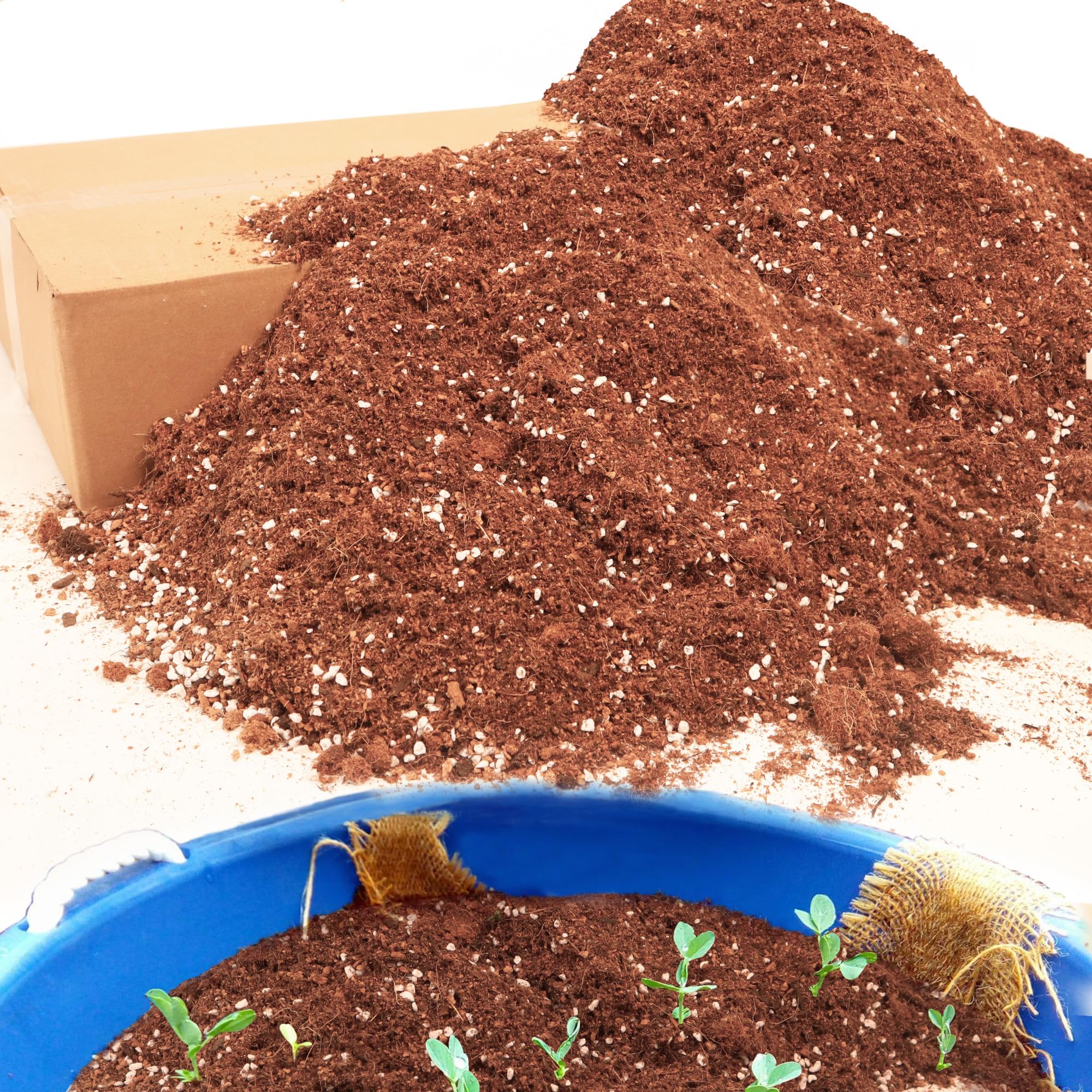
This 18-quart bag is the biggest single bag in the lineup, making it the clear winner if you have several large pots or a whole windowsill garden to fill. It uses a five-ingredient blend: 55% coconut coir fiber for moisture, 12% peat moss, 11% perlite and 11% vermiculite (a mineral that holds water and air) for aeration, and 11% rice hull charcoal for slow nutrient release and structure. The rice hull charcoal gives the mix a dark, interesting appearance and helps maintain a light, airy texture that prevents compaction over time. What you give up is the chunky, premium feel of smaller-batch artisan mixes. This is a more commercial blend — it holds moisture well (reviewers point out reviving a severely wilted plant overnight), but it is not as free-draining as the Grow Queen or as precisely tuned for herbs as the Leaves and Soul mix. You may need to add extra perlite if you grow rosemary or thyme that prefer very dry soil. For the price, you get a massive volume of decent mix. One reviewer noted that the 18-quart bag is a “nice amount of nice quality” without having leftover soil sitting around. If you want to fill multiple 6–8 inch pots without buying several small bags, this delivers the best raw volume-to-cost ratio.
Why we’d pick it
- 18 quarts — the largest bag, perfect for big projects
- Rice hull charcoal adds aeration and slow-release nutrients
- Good moisture retention for less frequent watering
A few caveats
- Drainage is adequate but not as fast as chunkier aroid mixes
- May need extra perlite for herbs like rosemary and thyme
6. Espoma Organic Potting Soil Mix

Espoma is a well-known name in organic gardening, and their AP1 mix is designed for indoor and outdoor containers including herbs and vegetables. It is a rich blend of sphagnum peat moss, humus, perlite, and a proprietary mix of endo and ecto mycorrhizae (beneficial fungi that attach to roots and help them absorb water and nutrients more efficiently). The bag is a full cubic foot — enough to fill several large pots or a small raised bed — so it is for gardeners who want a serious quantity of quality organic soil. However, multiple shoppers say that after a week of indoor use, small flying insects (fungus gnats) can appear. One buyer mentioned that “it is only suitable for outdoor use, not indoor use” because of the insect issue. The peat-heavy composition holds more moisture than coco-coir-based mixes, which creates a breeding ground for gnats in indoor conditions. If you are squeamish about bugs in your kitchen, this mix may not be the best choice for indoor herb pots unless you are prepared to manage gnat populations. Pick this if you plan to use it outdoors or on a sunny balcony, where the organic ingredients and mycorrhizae give plants a strong head start — but skip it for a low-maintenance indoor setup where a faster-drying coco-coir or chunkier mix works better.
Strong points
- Rich organic ingredients with mycorrhizal fungi for root health
- Large 1 cubic foot bag for substantial projects
- Versatile for indoor and outdoor containers
Before you buy
- Peat-heavy mix can attract fungus gnats in indoor environments
- May need to add perlite for better drainage with herbs
7. Coast of Maine Bar Harbor Blend Potting Soil
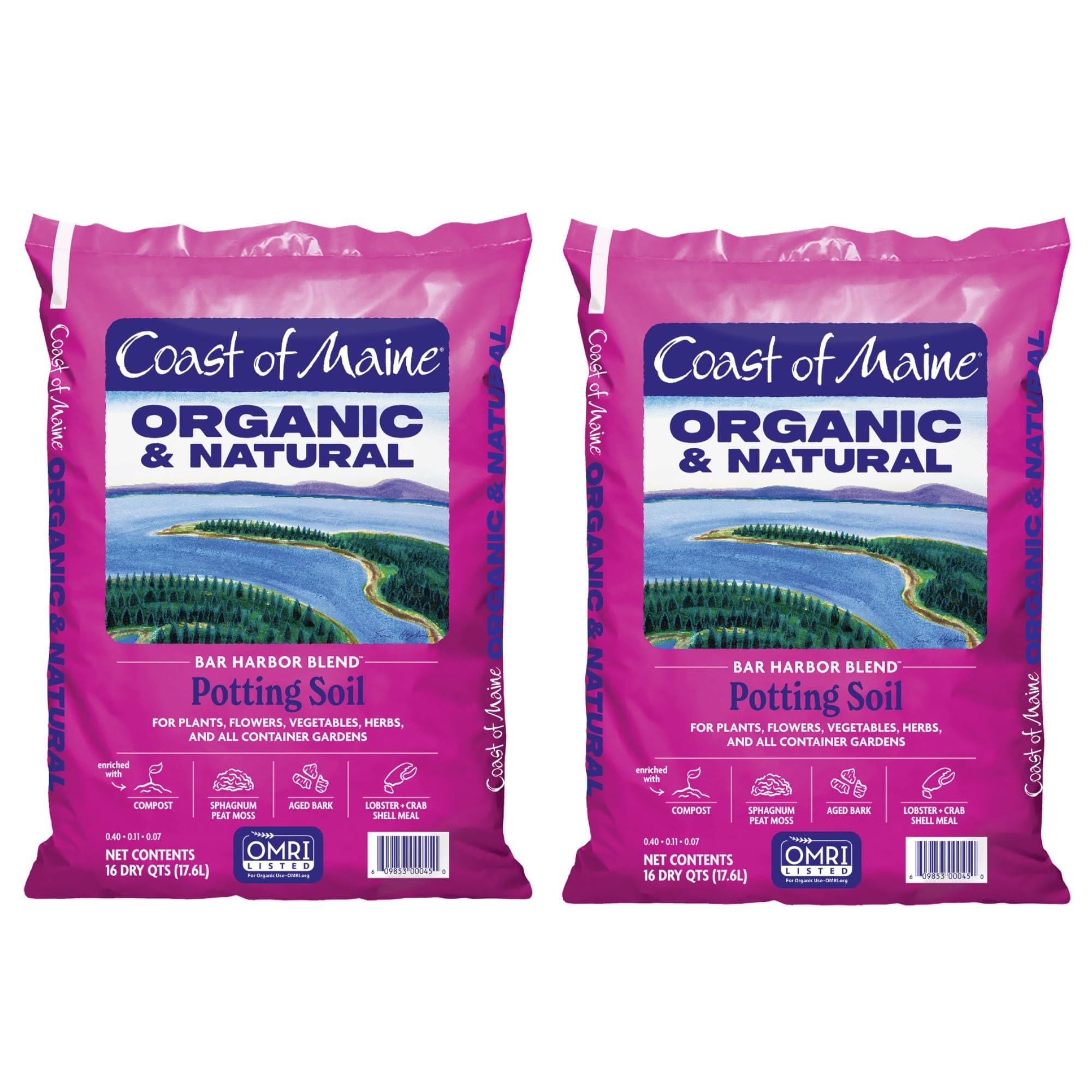
This is a premium, structured mix formulated with sphagnum peat moss, compost, perlite, and a unique addition of lobster and crab shell meal plus kelp meal. The shellfish meal provides a slow-release source of nitrogen and calcium, which heavy-feeding herbs like basil and mint love for producing lush, fast growth. Buyers report their tomatoes have “never looked so good” and that this soil outperforms top brands for container gardens. Two 16-quart bags were enough to mound up 8 potato plants with extra for two more planters — excellent value for serious growers. At 16 quarts, it is smaller than the Espoma 1 cubic foot bag but still a substantial amount for a dedicated herb or vegetable setup. The texture is lighter and more structured than standard peat-based mixes, with visible perlite and compost bits that indicate good aeration. One owner reported the “darker color indicates less peat moss” compared to other brands, meaning you get more actual nutrient material per scoop. The blend is approved for organic gardening and contains no synthetic additives. If you are willing to pay a premium for a unique, regionally sourced blend with shellfish meal, this is the field-vs-this value that outperforms most standard bagged soils on nutrient density. It is ideal for container herbs that demand consistent feeding without chemical fertilizers, especially if you enjoy growing alongside tomatoes or peppers. The richer compost content does mean the soil holds more moisture than a pure aroid mix, so be cautious with watering for herbs that prefer drier feet.
What we like
- Lobster and crab shell meal provides natural slow-release nitrogen
- Lighter, structured texture with visible perlite and compost
- Excellent for heavy-feeding herbs and vegetables
The downsides
- Higher moisture retention means careful watering for dry-loving herbs
- Premium price for a unique regional product
Understanding the Specs
Drainage & Aeration
Herb roots cannot survive in compact, waterlogged soil. A mix that contains perlite (volcanic glass beads), pumice, lava rock, or coarse sand creates tiny air pockets that let oxygen reach the roots and excess water drain out. Without these, roots rot within days. If you see a mix described as “chunky” or “airy,” it means the ingredients are physically large enough to stop the soil from turning into a dense mud.
Coco Coir vs Peat Moss
Coco coir (made from coconut husks) is the better choice for indoor herbs because it stays soft and spongy even when dry, absorbs water evenly, and has a neutral pH. Peat moss (harvested from bogs) dries into a hard, water-repelling block and is more acidic, which can stress many herbs. Coco coir is also renewable and sustainable, while peat mining damages natural ecosystems.
FAQ
Can I use regular garden soil for indoor herbs?
How do I know if my herb soil has fungus gnat eggs?
Should I add fertilizer to my herb soil?
What size bag do I need for a small windowsill herb garden?
Final Thoughts: The Verdict
For the majority of shoppers, the soil for indoor herbs winner is the Grow Queen Craft Organic Houseplant Potting Mix because it combines chunky drainage, organic worm castings, and a pre-moistened texture that works for herbs, houseplants, and everything in between. If you want a dedicated herb mix that is ready to use straight out of a resealable bag, grab the Leaves and Soul Professional Indoor Herb Soil Mix. And for starting seeds or filling multiple small pots without hauling heavy soil, the standout is the versatile ZESTIGREENS 16 Pack Expanding Organic Fiber Soil.