
You spent all spring coaxing those big, beautiful blooms out of your hydrangeas, and now you are staring at splotchy, mildewed leaves. Fungus can turn a showstopping shrub into a mess fast, but the right treatment stops it cold without harming your plant or the pollinators that visit it. The pick here is a copper-based spray — it works as both a cure and a shield — but not all bottles are the same.
I’m Rikta — the co-founder and writer behind Lawn Gear Lab. This guide is built by comparing the manufacturers’ published specifications and the patterns across verified customer reviews, so you get each pick’s real strengths and trade-offs instead of marketing spin.
This breakdown of the best copper based fungicide for hydrangeas will help you choose the right bottle for your yard, whether you need a ready-to-use (RTU) spray, which is pre-mixed and ready to apply from the bottle, for quick action on a single bush, or a concentrate (a liquid you mix with water yourself) to cover a whole garden.
How To Choose The Best Copper Based Fungicide For Hydrangeas
The right copper fungicide for your hydrangeas comes down to three key choices: how you want to apply it, how much copper your plants can handle, and whether you need a versatile product that also works on your vegetables and roses.
Ready-to-Use vs. Concentrate
If you have one or two hydrangea bushes and want to spray immediately, a ready-to-use (RTU) bottle with a trigger sprayer is the easiest option — just shake and spray. If you have a larger garden with multiple shrubs, fruit trees, and vegetables, a concentrate mixes with water and goes much further per dollar, though you will need your own sprayer.
Copper Soap vs. Other Copper Formulas
Most modern copper fungicides use copper octanoate (also called copper soap), which is a form of copper that is gentler on leaves and less likely to cause leaf burn (leaf damage from chemicals) than older copper sulfate formulas. Copper soap also breaks down naturally after rain, so it is safer for the soil and the helpful microbes living in it.
Protecting Pollinators and Edible Plants
Hydrangeas attract bees, so you need a fungicide that will not harm them once it dries. The products reviewed here are all labeled safe for organic gardening and can be used up to the day of harvest on edible plants, meaning the copper residue is low enough to be considered non-toxic after it dries on the leaf surface.
Quick Comparison
On smaller screens, swipe sideways to see the full table.
| Model | Category | Best For | Key Spec | Amazon |
|---|---|---|---|---|
| Bonide Captain Jack’s RTU (Pack of 2) | Premium Pick | Fast, no-mix treatment for 2-3 bushes | 32 oz Ready-to-Use x 2 | Amazon |
| Southern Ag Liquid Copper | Top Performer | Largest coverage for the best value | 32 oz Concentrate | Amazon |
| Neudorff Copper Soap RTU | Best for Delicate Plants | Gentlest formula for sensitive hydrangeas | 16 oz Ready-to-Use | Amazon |
| Ferti-lome (16136) RTU | Best Value | Budget-friendly single-bottle solution | 32 oz Ready-to-Use | Amazon |
| Bonide Captain Jack’s Concentrate | Budget Champion | Most economical for whole-garden treatment | 16 oz Concentrate | Amazon |
In-Depth Reviews
1. Bonide Captain Jack’s Copper Fungicide, 32 oz Ready-to-Use Spray (Pack of 2)

64 fluid ounces total (two 32-ounce ready-to-use bottles) makes this the top pick for hydrangea owners who want immediate, no-mix coverage across front and back yards. Buyers report it “saved five tomato plants from fungus/blight within 3 weeks,” so it acts fast when powdery mildew appears in humid weather. The copper soap formula (copper octanoate) is gentle enough that owners mention a “non-toxic smell” and safe use up to harvest day on edibles, meaning no worry about harming bees once the spray dries.
The honest trade-off: the trigger bottle can leak slightly when tilted to spray under leaves. But for most hydrangea growers, having two full bottles means you treat the problem now and keep a spare for next week’s follow-up spray. Choose this one over the Ferti-lome if you want a reliable nozzle that will not fail halfway through the bottle.
For fast-acting, gentle copper protection in a double-volume pack that requires no mixing, this is the confident top pick.
Why it is great
- 64 oz total volume from two bottles — covers more plants than any single RTU option
- Ready-to-use means no measuring, mixing, or sprayer needed
- Proven against blight and powdery mildew in three weeks or less per reviews
Good to know
- Bottle may drip from the trigger at odd angles
- More expensive upfront than a concentrate, even though you get less total treatment per dollar
- 16 oz per bottle is a smaller volume than the 32 oz single bottles from other brands
2. Southern Ag Liquid Copper Fungicide, 32oz – Quart

While the Bonide Captain Jack’s RTU Pack is the easiest to grab and spray, the Southern Ag concentrate gives you far more for your money — a single 32-ounce bottle of concentrate (a liquid you mix with water yourself) dilutes into several gallons of spray. That is enough to cover a dozen hydrangeas, fruit trees, and a vegetable patch for roughly the same price as two ready-to-use bottles. One reviewer says it “effectively eliminated a multi-year fungus on a mulberry tree after two early-season sprays,” so the strength is there even at a diluted rate. The label lists control for moss and algae in addition to standard fungal diseases, making it a multi-purpose tool if you deal with slippery paths or green growth on hardscaping.
You will need a separate sprayer — no trigger bottle is included here. Several reviewers also note the bottle design is poor; it is hard to pour without spilling, so they recommend transferring the concentrate to a measuring bottle. This product outpaces the Bonide Concentrate in sheer volume per bottle — 32 oz compared to 16 oz — so you get more diluted spray per purchase.
Choose the Southern Ag over the top pick if you have a larger garden and do not mind spending 10 minutes mixing concentrate into a tank sprayer.
Why it is great
- 32 oz concentrate dilutes into gallons of spray — best coverage per bottle
- Controls moss and algae in addition to common fungal diseases
- Reviewers report success after just 2 applications for stubborn fungus
Worth noting
- You need a separate sprayer — no trigger bottle included
- The original bottle is hard to pour without spilling, per several reviewers; they recommend transferring to a measuring bottle
- The copper can stain hardscapes and clothing if you are not careful
3. Neudorff Plant Fungicide Spray, Copper Soap RTU

If you have a prized hydrangea already stressed from drought, transplant shock, or a recent heat wave, the Neudorff’s copper soap formula (copper octanoate) is the safest option. It is gentler than older copper sulfate formulas and less likely to cause leaf burn. However, one reviewer cautions it “stopped fungus/bugs on hostas but burned the plants,” so even this gentle formula requires careful application. The formula includes a blue dye that shows you exactly where you have sprayed, which helps when you are coating the undersides of hydrangea leaves without missing spots. Another reviewer notes it is “effective immediately on black spot, powdery mildew, red blotch,” so it works fast when you catch the disease early.
The standout detail: Neudorff uses copper soap with citric acid for edible plants, and the spray is odorless. That means you will not smell chemicals around your patio hydrangeas. The catch is the 16-ounce bottle goes quickly if you have more than one midsize shrub. Skip this if you need to cover many bushes — choose the Southern Ag concentrate for volume instead.
When you need a copper fungicide that won’t reek or scorch already-stressed leaves, the Neudorff copper soap spray delivers a gentler, odorless, food-plant-safe formula with a built-in blue dye for precise coverage.
Why it is great
- Blue dye in the spray shows coverage clearly
- Odorless formula — pleasant to use near doors and patios
- Gentler on stressed plants than standard copper sulfate formulas
The trade-offs
- Can still burn sensitive plants if over-applied, per a verified review
- Only 16 oz in the bottle — smaller than most competition
- Lower copper concentration than some alternatives
4. Fertilome (16136) Copper Fungicide Ready to Use, 32 oz
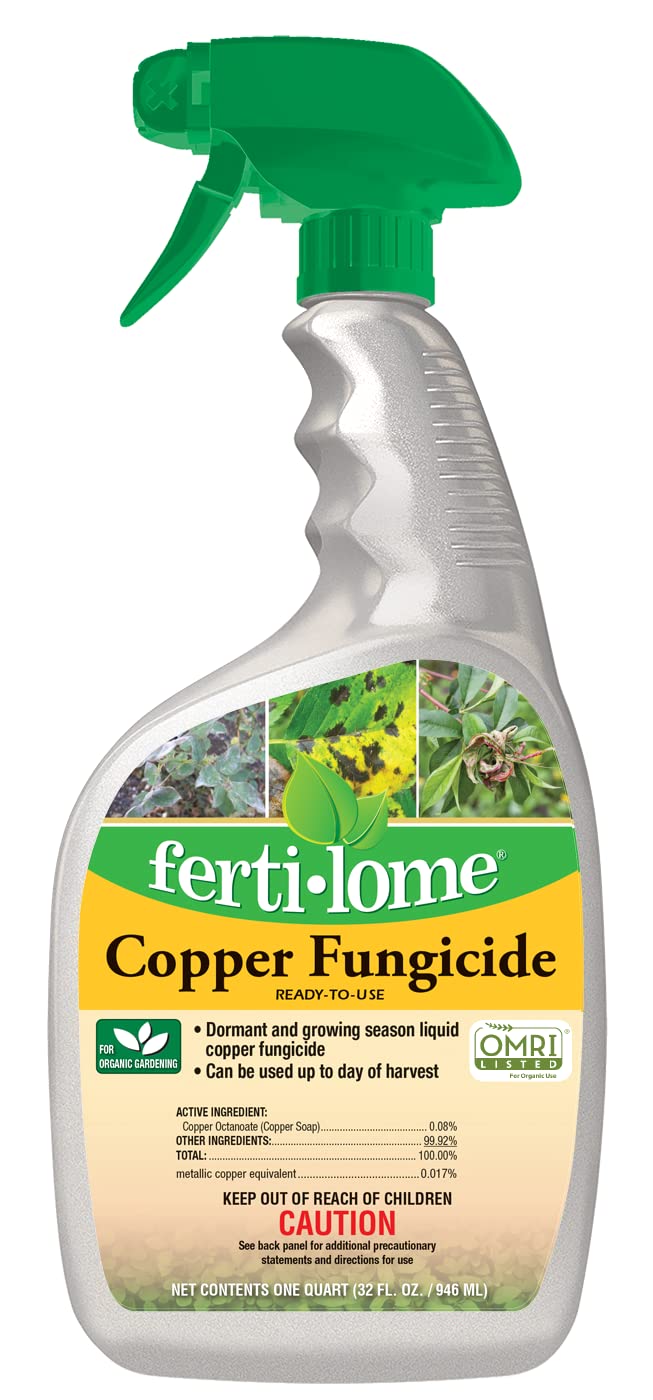
The single number that matters most in this category and how it scores: 32 ounces of premixed spray at the lowest cost per ounce among the ready-to-use picks. It is OMRI-listed (Organic Materials Review Institute, meaning it is approved for organic gardening) so it meets the same standards as pricier brands, and it covers a broad spectrum of diseases including needle blight, black spot, powdery mildew, and cedar apple rust. One buyer says it “revived nearly dead peach trees after 3 applications; easy to apply, safe near harvest, and non-harmful to monarchs/bees.” That safety for pollinators is a major win for hydrangeas that attract bees all summer.
The downside: packaging quality. Multiple reviewers mention that “the spray nozzle quits working long before the liquid is all used.” That is frustrating when you have half a bottle left. The fungicide itself gets high marks, but plan to transfer the liquid to a different sprayer halfway through. This is the cheapest RTU option, but it lacks the proven nozzle reliability of the Bonide Captain Jack’s RTU Pack.
For a single hydrangea or a small grouping of shrubs, the Fertilome gives you an entry-level price with organic certification — a price-to-value read that rewards budget-conscious buyers who don’t mind swapping sprayers mid-bottle.
Why it is great
- 32 oz ready-to-use at the lowest price point on this list
- OMRI-listed for organic use and safe near pollinators per reviews
- Broad disease coverage includes needle blight and leaf spot
Keep in mind
- Spray nozzle often fails before the bottle is empty — plan to transfer liquid to a different sprayer
- Only available as a single bottle, no multi-pack
- Some users say the product itself is excellent despite the bad bottle
5. Bonide Captain Jack Copper Fungicide 16 oz Concentrate

At this lower price, you get a 16-ounce concentrate that dilutes into gallons of spray — the most economical fungicide on the list. You have to mix it yourself (dilute at a ratio of 1 part concentrate to 40 parts water to get a 0.25% copper solution), you need a separate sprayer, and there is no measuring cap on the bottle. Multiple customers note you will want your own measuring cup. There is also a small risk of leaf burn if you accidentally mix the concentrate too strong, but one reviewer who “sprayed ~4x/week (recommended daily for 2 weeks)” reports it “doesn’t dry or kill leaves (unlike homemade remedies)” when mixed correctly.
One buyer who gardens in humid North Carolina says, “I use this on my Redbuds to prevent fungus on the leaves… one bottle lasts me a season.” If you are treating a single hydrangea and just want to spray it today, buy the Fertilome RTU instead. But if you are protecting a whole yard of hydrangeas, fruit trees, and ornamentals, this concentrate stretches further than any ready-to-use bottle. One reviewer’s story confirms: a single bottle lasts a full growing season.
This is the perfect pick for the budget buyer who already owns a sprayer and wants to stretch every dollar across a large garden.
Why it is great
- 16 oz concentrate dilutes to gallons of ready spray — lowest cost per treatment on this list
- USDA-listed for organic gardening and safe up to day of harvest
- One bottle lasts a full growing season for many home gardeners per reviews
A few caveats
- No measuring cap — you need your own measuring cup to mix
- Requires a separate sprayer (hose-end or pump sprayer)
- Can cause leaf burn if you accidentally mix the concentrate too strong
Understanding the Specs
Copper Octanoate vs. Copper Sulfate
Copper octanoate (also called copper soap) is the active ingredient in most modern copper fungicides for home gardens. It breaks down naturally after it dries, so it is safer for soil microbes and less likely to cause leaf burn than the older copper sulfate formulas. The trade-off is that copper sulfate can be slightly more effective on certain stubborn fungi like peach leaf curl, but for hydrangeas — where leaf spot and powdery mildew are the main problems — copper octanoate is the gentler, safer choice.
Ready-to-Use vs. Concentrate: Volume vs. Value
A 32-ounce ready-to-use (pre-mixed) bottle is the fastest solution: shake, spray, done. But it is mostly water — you pay for convenience. A 16-ounce concentrate bottle dilutes into 6-8 gallons of spray, which treats about eight times more foliage area per dollar. The decision comes down to garden size: small urban yards with 1-2 hydrangeas are fine with RTU; anyone with a shrub border, fruit trees, or a veggie patch gets better value from concentrate.
FAQ
How often should I spray copper fungicide on my hydrangeas?
Will copper fungicide turn my hydrangea flowers blue?
Is it safe to use copper fungicide when my hydrangeas are blooming and bees are visiting?
Can I mix copper fungicide with neem oil or other sprays?
Why do some leaves turn yellow or brown after I spray copper fungicide?
Final Thoughts: The Verdict
For the majority of shoppers, the best copper based fungicide for hydrangeas is the Bonide Captain Jack’s RTU Pack of 2 because you get two full bottles with zero mixing and proven results against powdery mildew and blight. If you want the best value for a larger garden, grab the Southern Ag Liquid Copper concentrate — it dilutes into gallons of spray for roughly the same price as the Bonide RTU pack. And for protecting a delicate or stressed hydrangea with the gentlest formula available, the Neudorff Copper Soap RTU is your pick, thanks to its odorless spray and blue dye that shows coverage.