
Getting a Mandevilla to produce those explosive, tropical blooms comes down to one thing: giving it the right nutrients at the right time. The wrong fertilizer can leave you with a vine full of leaves and zero flowers, while the right formula can turn a shy plant into a showpiece. This guide cuts through the garden-center confusion to find the pick that actually works for Mandevilla’s specific needs — heavy on phosphorus (the middle number in the NPK ratio that fuels flowers) and light on nitrogen (the first number that pushes leaf growth).
I’m Rikta — the co-founder and writer behind Lawn Gear Lab. This guide is built by comparing the manufacturers’ published specifications and the patterns across verified customer reviews, so you get each pick’s real strengths and trade-offs instead of marketing spin.
For a Mandevilla that keeps flowering from spring through the first frost, understand the difference between a bloom booster and a general feed. Here is what you need to know when shopping for a high-quality fertilizer for mandevilla.
How To Choose The Best Fertilizer For Mandevilla
Mandevilla is a heavy feeder — it burns through nutrients fast when it is actively growing and blooming. Choosing the right fertilizer means matching the feeding style to how you garden. Here is what to look for.
NPK Ratio: The Numbers That Matter
The three numbers on a fertilizer bag (Nitrogen-Phosphorus-Potassium) tell you the story. For Mandevilla, you want a higher middle number — the phosphorus that drives flower production. A ratio like 17-7-10 or a bloom-specific mix like 1-3-1 pushes energy toward blooms rather than just leaves. Avoid high-nitrogen lawn foods that will give you a lush green vine with zero flowers.
Release Type: Set It and Forget It or Mix It Fresh?
Slow-release granules (like Osmocote) feed your plant for months with a single application — perfect if you want a hands-off approach. Liquid concentrates (like Espoma) give you more control and faster results but require mixing every few weeks. Water-soluble powders (like Jack’s Classic) are the most economical for large gardens because a small tub makes many gallons of feed.
Organic vs. Synthetic
Organic fertilizers feed the soil microbes along with the plant, which improves long-term soil health. They are gentler and won’t burn roots, but they release nutrients more slowly. Synthetic fertilizers deliver a faster, more predictable nutrient hit — ideal if your Mandevilla is already in good soil and you just want blooms fast.
Quick Comparison
On smaller screens, swipe sideways to see the full table.
| Model | Category | Best For | Key Spec | Amazon |
|---|---|---|---|---|
| Osmocote Smart-Release Plant Food Plus | Slow-Release Granules | Set-it-and-forget-it feeding | Feed for up to 6 months | Amazon |
| Miracle-Gro Performance Organics Blooms | Organic Granules | Organic blooms boost | Covers up to 165 sq. ft. | Amazon |
| Fertilome Hibiscus and Tropical Plant Food | Specialty Granules | Targeted tropical feeding | 17-7-10 NPK ratio | Amazon |
| Espoma Organic Bloom! | Liquid Concentrate | Fast-acting organic bloom boost | 1-3-1 NPK ratio | Amazon |
| Jack’s Classic 20-20-20 All Purpose | Water-Soluble Powder | Budget-friendly versatile feed | 1.5 lbs makes many gallons | Amazon |
In‑Depth Reviews
1. Osmocote Smart-Release Plant Food Plus Outdoor & Indoor1 – Granular
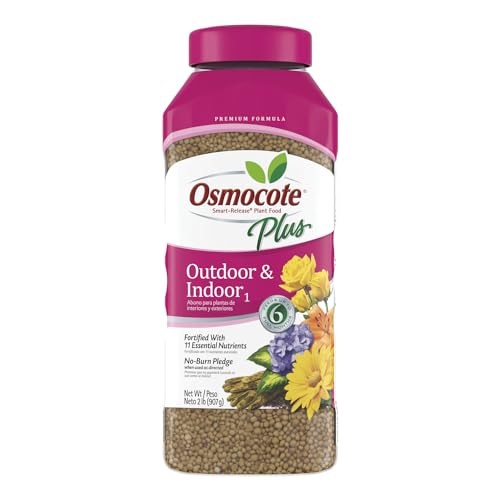
6 months of steady feeding from a single application makes this the top pick for anyone who wants a “set it and forget it” granular fertilizer for their Mandevilla. The 2-pound container covers 75 square feet of garden space, and some buyers report a local nursery “recommended this plant food” to them. Each granule is coated with a unique resin (a plastic-like shell) that controls the release of 11 essential nutrients, so your plant gets a steady supply without any mixing or mid-season work.
The formula carries a “no-burn pledge” — according to the maker, it will not damage your Mandevilla’s roots when you use it as directed. Reviewers report it delivers “greener, faster growth” and that their “plants thrive on it,” with several noting it “doesn’t burn plants” specifically. It works in containers, raised beds, or in-ground gardens.
You have less control compared to liquids — you cannot adjust the dose mid-season if your Mandevilla needs a sudden phosphorus boost. If you want a low-maintenance approach, this granular formula delivers steady, reliable results better than the others here. skip it if you like to tweak your feed schedule every week based on what you see. For effortless, season-long feeding, this is the one to choose.
Why it’s great
- Feeds for up to 6 months with one application
- Won’t burn plants when used as directed
- Covers 75 sq. ft. per container
Good to know
- Cannot adjust dose mid-season
- Recommended amount may be too strong for small pots
2. Miracle-Gro Performance Organics Blooms Plant Nutrition Granules

Against the top pick’s 75-square-foot coverage, this organic granule covers 165 square feet — 2.2 times more — and carries OMRI-listed certification for organic gardening. The catch is reapplication every 4-6 weeks instead of once per season, and at 2.5 ounces actual product weight it is lighter than Osmocote’s 2 lbs. One reviewer noted about their Mandevilla: “My Mandevilla was being slow this summer and this made the blooms really pop!!” Users across the board report seeing results within 1-2 weeks, with noticeable “larger blooms on all plants” and a “huge difference in my garden.” The 5-7-10 NPK ratio means phosphorus (the middle number, which fuels flowers) is higher than nitrogen (the first number, which pushes leaves), exactly what a tropical bloomer like Mandevilla needs.
Choose this over the Osmocote if you want organic gardening proof and your Mandevilla is stubbornly refusing to bloom. pass on it if you hate reapplying every month and prefer Osmocote’s one-and-done schedule.
Where it shines
- OMRI-listed organic ingredients
- 5-7-10 NPK ratio targets blooms
- Covers up to 165 sq. ft.
Worth noting
- Requires reapplication every 4-6 weeks
- Bottle may arrive with loose lid or less full than expected
3. Fertilome Hibiscus and Tropical Plant Food 17-7-10 (4 lbs.)
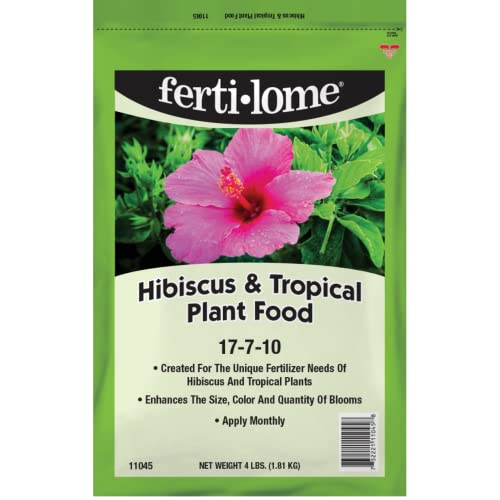
Got a Mandevilla that is all vine and no flowers? This blend is built specifically for tropical plants that refuse to cooperate. It uses a 17-7-10 NPK ratio (17 parts nitrogen for foliage, 7 parts phosphorus for blooms) and reviewers confirm it works fast — “flowers boomed within a week” and “helps get the plant blooming.” The application schedule is unusual: you apply every other week until you see blooms, then switch to once per month. Owners mention one honest packaging complaint — “the description say 4 pounds, bag says 3.25” — so the bag weight may vary from the listed 4 lbs. At 16 ounces total weight, it is lighter than the 2-pound Osmocote container. The standout spec is the specialized 17-7-10 ratio: it has the highest nitrogen content in this lineup, which seems counterintuitive for a bloomer, but according to the maker, tropical plants use that nitrogen for the rapid growth that supports heavy flowering.
What stands out
- 17-7-10 NPK ratio for tropical plants
- Blooms reported within one week
- Enhances size, color, and quantity of flowers
The trade-offs
- Bag weight may be less than advertised (3.25 lbs vs 4 lbs)
- Requires frequent application until blooms appear
4. Espoma Organic Bloom! 16-Ounce Concentrated Plant Food

This liquid concentrate delivers a 1-3-1 NPK ratio where the middle number (phosphorus, the bloom engine) is three times higher than nitrogen (the first number). That makes it the most bloom-focused ratio in this entire lineup — the best choice if your Mandevilla is already green but refusing to set buds. The downside is that this is 16 fluid ounces versus the Fertilome’s advertised 4 lbs of granules, and at 16 ounces total weight it is the same as the Miracle-Gro but delivers a much smaller volume of usable feed per bottle. Users note that the “small bottle doesn’t last long” and the “product odor can be pungent” — one reviewer specifically warns to “use bloom away from children and pets” because of the strong smell. Buyers confirm that this “significantly improved flower vibrancy and beauty across zinnias, gardenias, geraniums, azaleas, hydrangeas,” and it works well for Mandevilla too.
The upsides
- 1-3-1 NPK ratio — highest phosphorus for blooms
- Approved for organic gardening
- Fast-acting liquid formula
Keep in mind
- Small bottle runs out quickly
- Strong pungent odor during mixing
5. Jack’s Classic 20-20-20 All Purpose Water-Soluble Fertilizer, 1.5 lbs

At 1.5 pounds of powder, this is the most economical option in the lineup and it still delivers professional-grade results — but it is a balanced 20-20-20 NPK ratio, not a bloom booster. You can use it as a foliar spray (sprayed directly on leaves for quick absorption) or as a root drench (poured into the soil), and it includes added micronutrients (trace minerals like iron and zinc) that other budget options skip. Customers note that it “dissolves easily, no mixing needed” and that a single 1.5 lb tub “lasts most of the growing season.” Compared to the Espoma liquid, you give up a specific bloom-boosting ratio — the 20-20-20 is equally balanced, so it will green up your Mandevilla’s leaves fast and support healthy growth, but it will not push the same explosive flower production as a dedicated bloom formula. One reviewer notes that “high nitrogen requires careful dosing,” so use the included measuring spoon to avoid overfeeding. This pick is for the budget-conscious gardener who has multiple plants — vegetables, ornamentals, flowers, and Mandevilla — and wants one versatile powder that handles them all.
Why we’d pick it
- 1.5 lbs makes many gallons of liquid feed
- Dissolves easily with no clumping
- Includes measuring spoon for precise dosing
A few caveats
- Balanced 20-20-20 ratio — not a specialized bloom booster
- High nitrogen requires careful application to avoid burn
Understanding the Specs
NPK Ratio: The Three Numbers
The first number (Nitrogen) drives leaf and stem growth — too much and your Mandevilla gets leggy with no flowers. The second number (Phosphorus) is the bloom engine — a ratio like 1-3-1 or 5-7-10 means more phosphorus than nitrogen, pushing energy toward flowers. The third number (Potassium) supports overall health and disease resistance. For Mandevilla, look for a middle number that is higher than or equal to the first number.
Slow-Release vs. Liquid vs. Powder
Slow-release granules (like Osmocote) coat each particle in resin that dissolves over time — you apply once and get steady feeding for months. Liquid concentrates (like Espoma) are already dissolved and get absorbed within days, giving you fast results but requiring repeat mixing. Water-soluble powders (like Jack’s Classic) are the most economical — a small tub mixes into many gallons of feed, but you must measure and mix each time. Choose based on your tolerance for mixing and how closely you want to control the dose.
Organic Certification
An OMRI-listed or organic input material label means the fertilizer meets federal standards for organic production — it contains no synthetic chemicals or sludge. Organic formulas feed soil microbes along with the plant, improving long-term soil structure. They work more slowly than synthetic options but are gentler on roots and less likely to cause fertilizer burn if you accidentally over-apply.
Coverage Area
Measured in square feet, this tells you how much garden space one container will feed. The Miracle-Gro Performance Organics Blooms covers 165 sq. ft., while the Osmocote covers 75 sq. ft. — a 2.2x difference. If you have a single Mandevilla in a pot, even the smaller coverage is plenty. If you are feeding a whole row of tropical plants in a garden bed, the larger coverage saves you from buying multiple containers.
FAQ
How often should I fertilize my Mandevilla?
What NPK ratio is best for Mandevilla blooms?
Can I use a general all-purpose fertilizer on Mandevilla?
Should I stop fertilizing my Mandevilla in winter?
What happens if I over-fertilize my Mandevilla?
Final Thoughts: The Verdict
For most people, the fertilizer for mandevilla winner is the Osmocote Smart-Release Plant Food Plus because it delivers 6 months of steady feeding from a single application and comes with a no-burn guarantee that protects your plant. If you want organic ingredients and faster bloom results, grab the Miracle-Gro Performance Organics Blooms. And for the budget-conscious gardener who needs one versatile fertilizer for multiple plants, the standout is the Jack’s Classic 20-20-20.