
If you are building a raised bed, the single biggest mistake is grabbing any bag of “garden soil” off the shelf. Most of it is too dense for a raised bed, which means your roots drown in waterlogged dirt or get starved of nutrients within weeks. The right organic soil mix is light, loose, and packed with living organisms that feed your plants from day one — and picking the wrong one sets your entire growing season back months.
I’m Rikta — the co-founder and writer behind Lawn Gear Lab. This guide is built by comparing the manufacturers’ published specifications and the patterns across verified customer reviews, so you get each pick’s real strengths and trade-offs instead of marketing spin.
Choosing the best raised bed organic soil comes down to weight, volume, and how much the bag actually feeds your plants without extra fertilizer.
How To Choose The Best Raised Bed Organic Soil
Raised bed soil is different from regular potting mix, topsoil, or in-ground garden soil. Because your bed is elevated, water drains faster, roots have less insulation from temperature swings, and the soil needs to hold its own structure without compacting under its own weight over a season. Here is what to look for.
Bag Weight vs. Actual Volume
Two bags sitting next to each other on the shelf can look identical, but one may hold 40 pounds of dense, heavy soil while the other packs a lightweight, airy mix into a larger bag. The real number to check is cubic feet (volume), not pounds (weight). A 40-pound bag full of sand and peat will fill far less space than a 30-pound bag of fluffy compost and perlite. You want the highest cubic-foot volume you can get for the money — more air pockets mean better root growth.
Organic Ingredients That Actually Feed
Certified organic soil is not just a label — it means no synthetic fertilizers, pesticides, or sludge. But the real difference is what is inside. Look for bags that list worm castings, kelp meal, alfalfa meal, bone meal, or feather meal. These ingredients release nutrients slowly over weeks, so your vegetables get steady food instead of one big chemical hit that burns the roots. Mycorrhizae (a beneficial fungus that attaches to roots and helps them pull water and nutrients from the soil) and biochar (a charcoal-like material that holds moisture and gives microbes a place to live) are strong signs of a quality mix.
Water Retention Without Sogginess
Raised beds dry out faster than ground soil, especially in sun. The best organic mixes balance coconut coir, peat moss, or compost (which hold water) with perlite or pumice (which drain excess). If a soil feels wet and heavy in the bag, it will compact into a brick after one rain. You want a mix that feels moist and crumbly — one that holds water like a sponge but never pools at the bottom of the bed.
Quick Comparison
On smaller screens, swipe sideways to see the full table.
| Model | Category | Best For | Key Spec | Amazon |
|---|---|---|---|---|
| Coast of Maine Castine Blend | Premium Pick | Filling deep beds with long-season vegetables | 2 Cubic Feet (40.3 lbs) | Amazon |
| BuildASoil Light Garden Soil | Top Performer | Organic purists who want full ingredient transparency | 1 Cubic Foot (30 lbs) | Amazon |
| Gaia Green Organic Living Soil | Great All-Around | Direct planting without mixing or amending | 1.5 cu ft (35 lbs) | Amazon |
| Espoma Organic Raised Bed Mix | Best Value | New beds on a budget with reliable root health | 1.5 Cubic Feet (1.5 kg) | Amazon |
| Wiggle Worm Raised Bed Mix | Soil Health Booster | Jump-starting transplants and building worm populations | 640 fl oz (40 lbs) | Amazon |
| Wakefield Biochar Blend | Water Saver | Amending clay or sandy soil to improve retention | 4 Quarts (3.75 lbs) | Amazon |
| Home and Country Topsoil | Compact Pick | Small container or patio bed touch-ups | 96 fl oz (24 lb Pail) | Amazon |
In‑Depth Reviews
1. Coast of Maine Castine Blend Soil
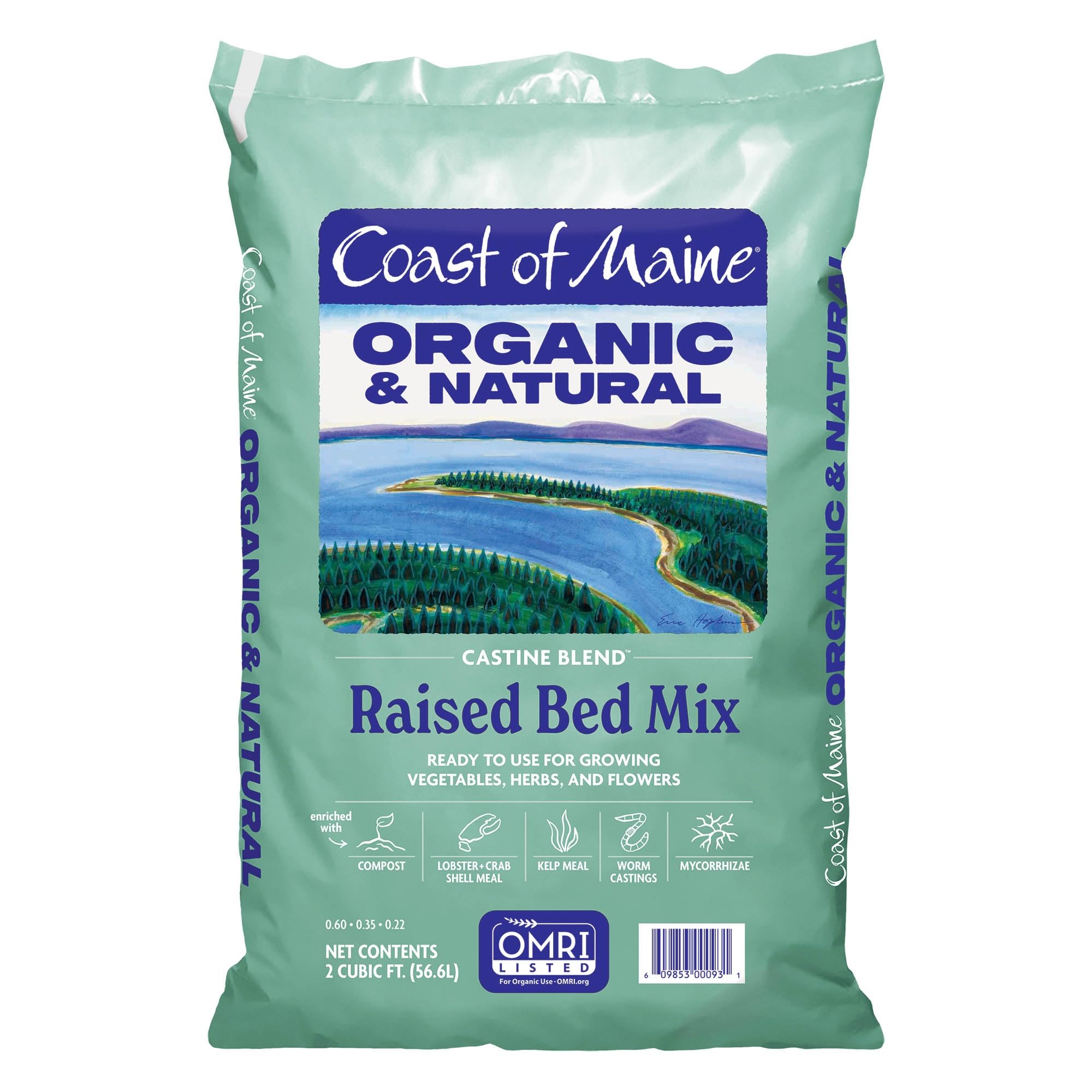
The Coast of Maine Castine Blend wins because it gives you the most volume for filling deep beds. At 2 cubic feet (40.3 pounds), it delivers 33% more volume than the Espoma bag — and 10.7 times the weight of the tiny Wakefield bag — so you buy fewer bags overall. This mix feeds your plants slowly over weeks without chemical burn, using worm castings, mycorrhizae, biochar, green sand, kelp meal, and lobster and crab shell meal. Reviewers report it is “light, fluffy soil” with no twigs or bugs, and one reviewer noted they “grew some pretty awesome tomatoes and sunflowers” all summer. The biochar (a charcoal-like material that traps moisture and gives microbes a home) keeps the soil aerated and well-draining, so roots never sit in a puddle. For filling a new 4×8 bed, this is the one to start with. If you need less volume and want lab-tested ingredient purity instead, the BuildASoil is a better fit for smaller beds.
Why it’s great
- Largest volume of any pick (2 cu ft) — fewer bags needed to fill a bed
- Rich blend of seafood meals, kelp, biochar, and mycorrhizae for slow-release feeding
- Buyers praise its soft, dark texture with zero rocks or debris reported
Good to know
- At 40.3 lbs, the bag is heavy to carry and move around the garden
- Some reviewers wish the bag size were larger for bigger projects
2. BuildASoil Light Garden Soil
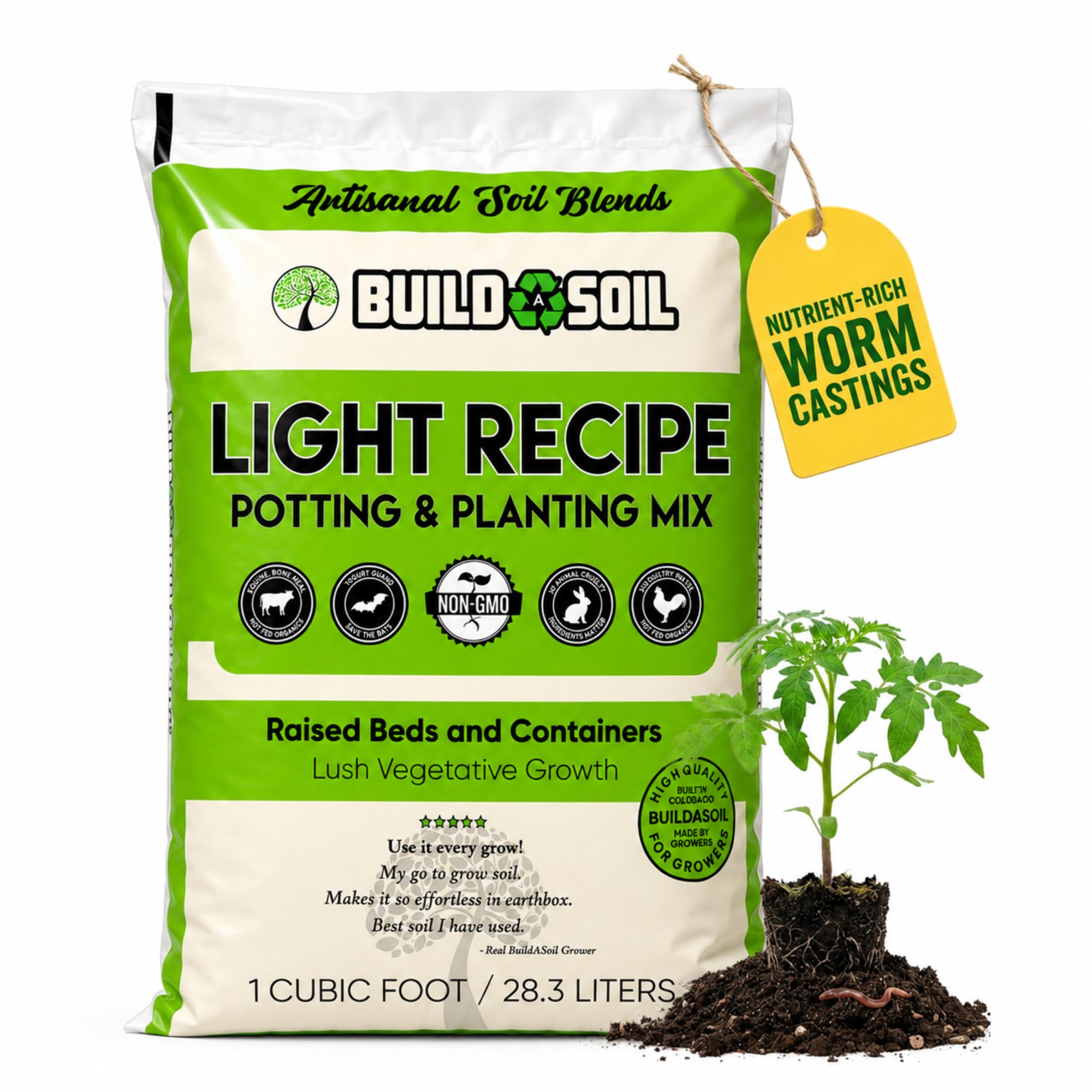
Where the Coast of Maine wins on bulk, BuildASoil wins on purity and ingredient transparency. This bag holds 1 cubic foot (30 pounds) versus Coast of Maine’s 2 cubic feet, so you get about half the volume for a similar price. But BuildASoil’s formula is certified organic with a low-sodium profile — meaning fewer salts that can stress roots — and it is loaded with worm castings and compost to fuel microbial life from day one. This is a premium potting mix for outdoor vegetables, containers, and raised beds. Buyers report it “won’t burn your plants,” a real risk with cheap soil that uses raw, uncomposted manure. The loamy soil structure gives you excellent aeration and drainage while still holding moisture, so you don’t have to water twice a day in summer heat. If you garden organically and want to know exactly what is in your soil — no synthetic additives, no hidden fillers — this is the most transparent option. Choose this over the Coast of Maine if you are filling smaller beds or containers and you prioritize lab-tested, clean ingredients over sheer volume.
Where it shines
- Certified organic with complete ingredient transparency and zero synthetic additives
- Low sodium formula helps prevent salt stress on delicate roots
- Buyers love that it feeds without burning plants
Worth noting
- Only 1 cubic foot of volume — half what the Coast of Maine bag delivers
- Priced at a premium tier, making it costly for large beds
3. Gaia Green Organic Living Soil

You just built two new 4×4 raised beds and you want to fill them with soil that is ready to plant immediately — no measuring, no mixing, no waiting. The Gaia Green Organic Living Soil is designed for that. It is a pre-charged mix, meaning slow-release nutrients like kelp meal, alfalfa, bone meal, and glacial rock dust are already blended in. You simply open the bag, pour it into your bed, plant your starts, and water. At 1.5 cubic feet (35 pounds), this bag lands between the BuildASoil (1 cubic foot) and the Coast of Maine (2 cubic feet) in volume. The mix includes worm castings, insect frass (a nutrient-rich insect waste product), composted inputs, peat, perlite, and coco coir — all of which create a light, well-draining structure that prevents compaction. Owners mention that “plants love this soil” and call it “one of the best out of the bag soils on the market.” The standout feature is that this soil is described as “living” and “biologically active,” meaning it comes packed with the microorganisms that break down organic matter into plant food naturally. If you want to skip the fuss of amending your own soil and trust a pre-made mix that works out of the bag, this is your pick.
What stands out
- Pre-charged with slow-release nutrients — ready to use with no mixing needed
- Contains worm castings, insect frass, and compost for a biologically active soil
- Buyers consistently report it is fresh and effective right out of the bag
The trade-offs
- Price is high, though free delivery offsets some of the cost for heavy bags
- Bag arrives inside a cardboard box, which can be damaged in transit
4. Espoma Organic Raised Bed Mix

The single number that tells you if a bag is a good deal is cubic-foot volume, and the Espoma delivers a solid 1.5 cubic feet. That puts it ahead of the BuildASoil (1 cu ft) and the tiny Wakefield bag (4 quarts) in terms of what you actually spread in your bed. At this price-to-volume ratio, it is one of the most affordable options per cubic foot on this list. The catch is that some buyers received a mix they described as “mostly wood, looks like mulch” — a handful of negative reviews note the soil left young plants yellowing and stunted after a few weeks. That said, the vast majority praise it. One detailed review says it “retains moisture well without sogginess; supports robust root growth for vegetables, herbs, and flowers; low pest infestations; fresh, clean smell; worth the price.” The formula includes earthworm castings, alfalfa meal, kelp meal, and feather meal, plus Espoma’s proprietary Myco-Tone blend of endo and ecto mycorrhizae (two types of beneficial root fungus that work together to pull more nutrients from the soil). If you are on a mid-range budget and need a reliable, organic soil that is ready to use for new or existing beds, the Espoma mix delivers the best balance of cost and proven root-boosting performance — just be aware that bag consistency can vary.
The upsides
- Strong value with 1.5 cubic feet of organic mix at a mid-range price point
- Enriched with worm castings, kelp meal, and feather meal for steady nutrition
- Buyers love its moisture retention and clean, odor-free texture
Keep in mind
- A small number of bags are reported to contain mostly wood chips rather than quality compost
- Some users found it insufficient as a sole growing medium for long-season plants
5. Wiggle Worm Raised Bed Mix
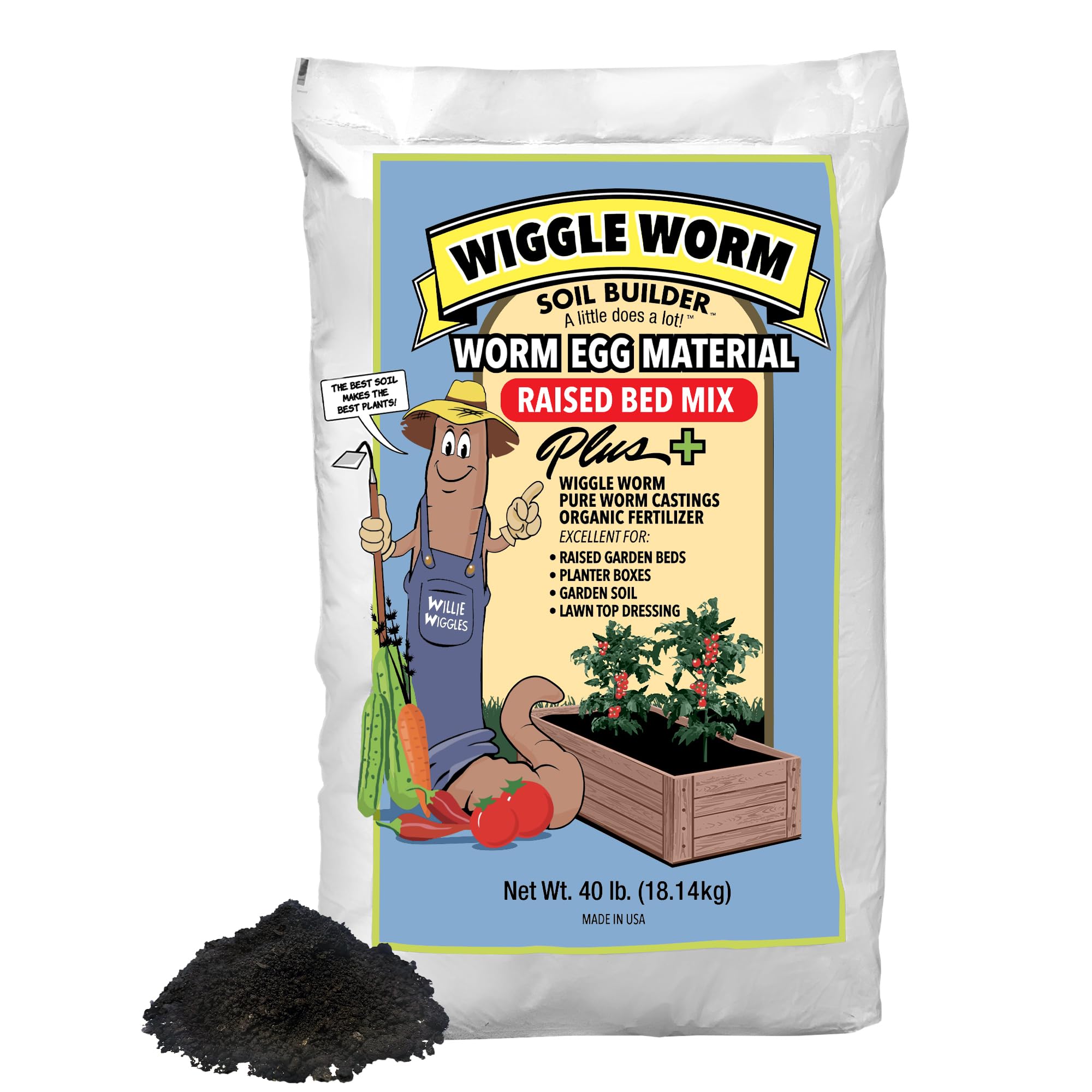
At 40 pounds, the Wiggle Worm bag is one of the heaviest on the list in terms of actual weight, but this is not a typical bag of fluffy soil. This mix is a blend of high-quality compost soil combined with pure worm castings (worm waste that is packed with beneficial microbes) and trace amounts of worm eggs. What you are really paying for is the living biology — the worm eggs can hatch in your raised bed, establish a worm population, and naturally aerate the soil as they tunnel through it. What you give up is consistency. Several reviewers report finding “rocks and twigs and chunks of wood” in their bag, with one buyer saying they had to sift out gravel. The positive reviews, however, are emphatic: one gardener calls it the “absolute best stuff ever for moving young plants out to the garden,” noting that a small scoop in the planting hole makes young transplants “take off like wildfire.” The mix works as an all-in-one soil and fertilizer — you can pour it straight from the bag into your planter box or raised bed without adding anything else. This bag is perfect for the gardener who wants to build a self-sustaining soil ecosystem over time. Scatter it into your existing raised bed to introduce worms and castings, rather than using it as your only fill for a brand-new bed.
Why we’d pick it
- Infused with pure worm castings and worm eggs that build a living soil ecosystem
- Customers note extremely vigorous growth in transplants with just a small scoop
- Heavy 40-pound bag gives you plenty of material for multiple beds
A few caveats
- Quality control varies — some bags contain rocks and wood debris that need sifting
- Bag is heavy and arrives squished, needing a good fluffing before use
6. Wakefield Biochar Blend
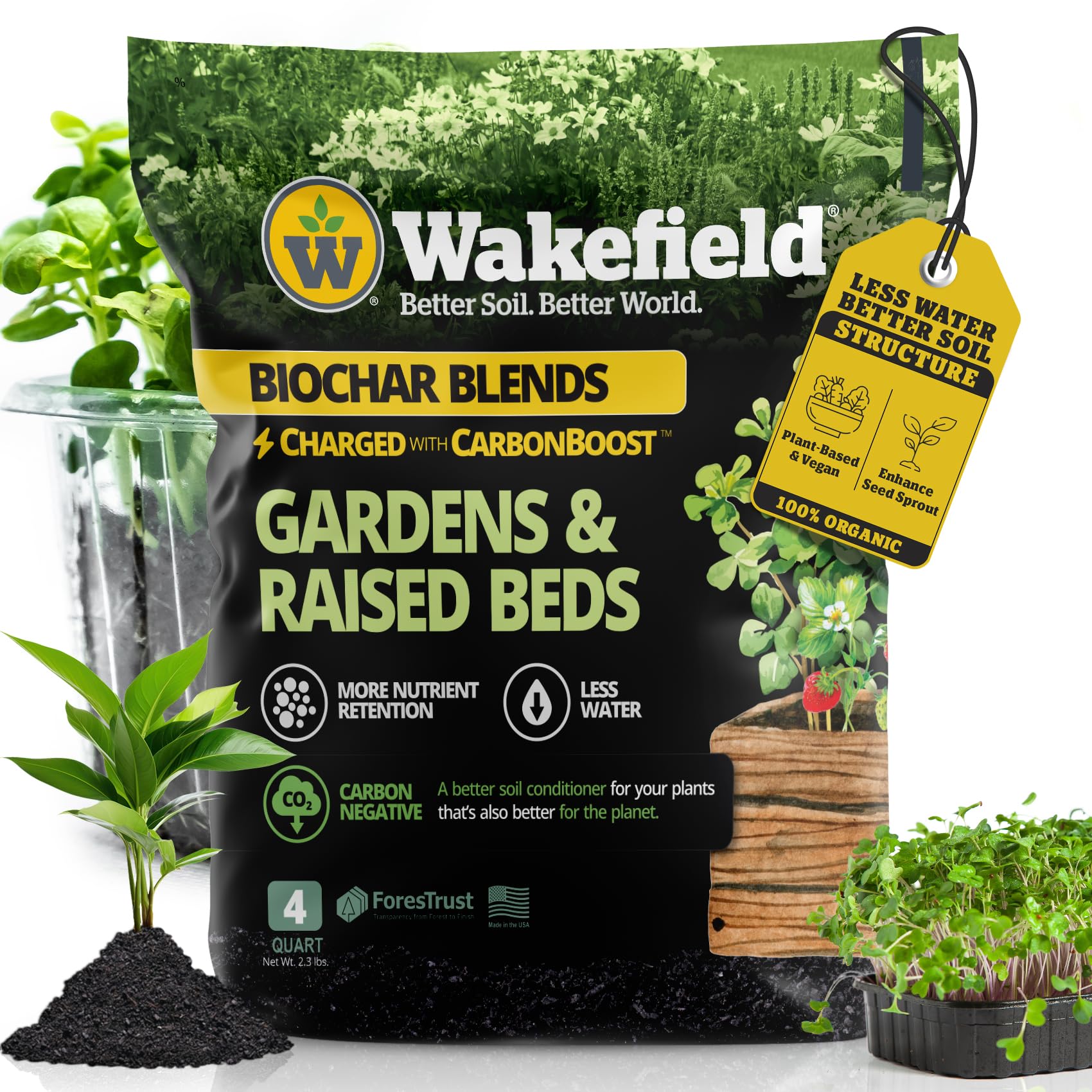
The Wakefield Biochar Blend is not meant to fill an entire raised bed on its own. At 4 quarts (3.75 pounds), it is a soil amendment, not a bulk fill — think of it as a booster you mix into your existing garden soil rather than a bag you dump in and call it done. Its purpose is to improve the soil you already have, especially if you are dealing with heavy clay that holds too much water or sandy soil that lets water drain away too fast. The key ingredient here is biochar with CarbonBoost technology, which creates microscopic pores that hold onto water and fertilizer like a reservoir. One buyer says it is “great for water retention in soil, lets plants need less watering, as the soil retains more water” — the brand claims it can cut watering needs by up to 50%. The bag also includes a probiotic and mycorrhizae blend to boost root growth, and the formula is carbon-negative (it traps carbon instead of releasing it into the air). The honest limit is the bag size. For a raised bed that holds 8-12 cubic feet of soil, a single 4-quart bag will not make a noticeable difference. This is best for targeted use — mixing into potting soil for a few large containers or amending the top layer of a single planter box.
Strong points
- Biochar technology reduces watering frequency by holding moisture in the root zone
- Carbon-negative formula is environmentally friendly for eco-conscious gardeners
- Reviewers point out it works well to boost clay or sandy soils
Before you buy
- Small 4-quart bag is expensive per cubic foot compared to bulk fill options
- Not designed to fill a whole raised bed — best used as an amendment, not a standalone soil
7. Home and Country All Purpose Topsoil
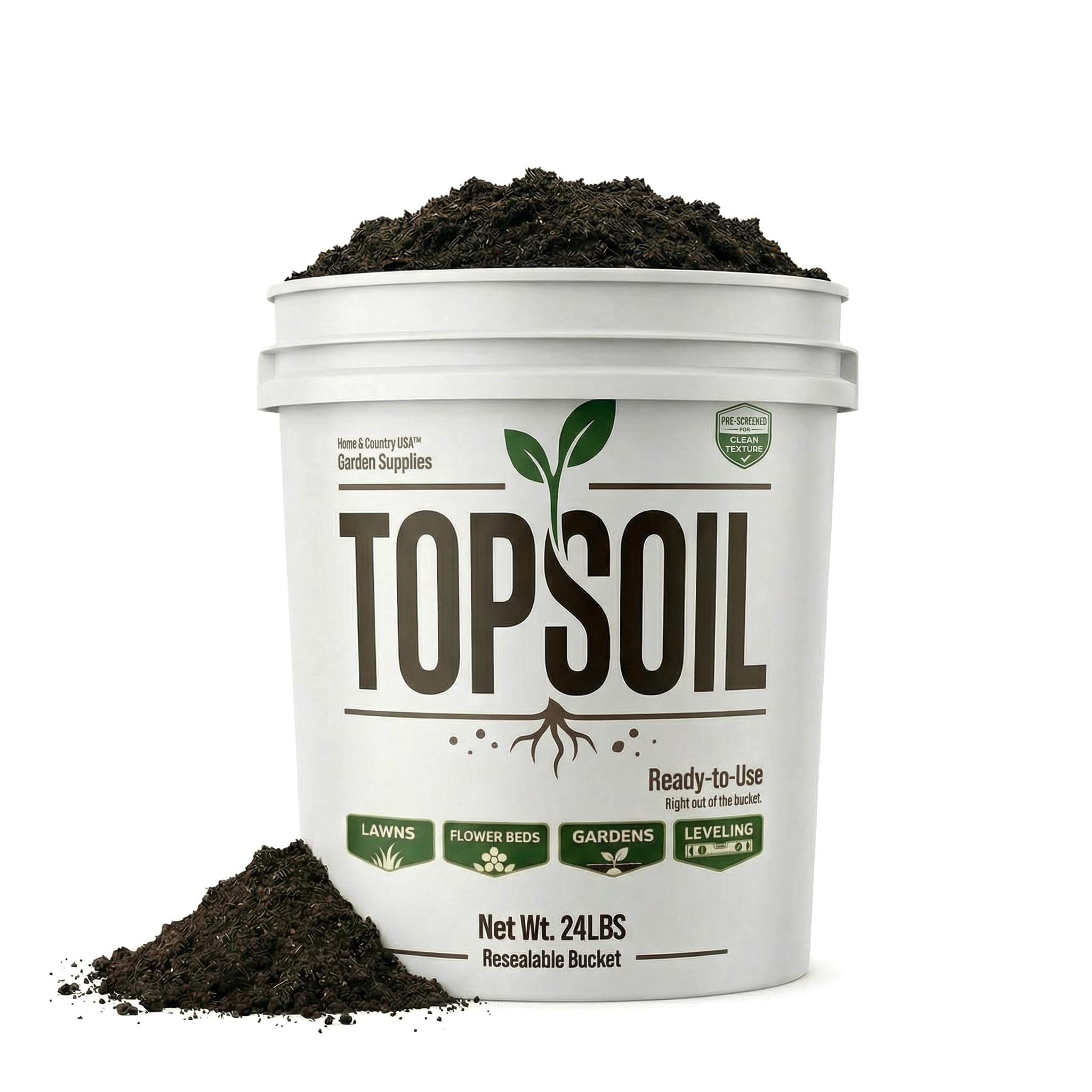
At a premium price point for a small container (24 pounds in a pail), the Home and Country Topsoil is the least economical choice per cubic foot on this list. Several buyers express this bluntly: “Quantity is low for the price,” “way too small container,” and “the tub is smaller than I expected.” If you need to fill an entire raised bed, you would need dozens of pails. What that money actually gets you is a convenient, resealable pail of organic topsoil that is versatile enough for indoor and outdoor containers, raised beds, vegetable gardens, and shrubs. The formula is designed to improve clay soil drainage and increase sandy soil water retention simultaneously. Some buyers had positive results: one said they used it for sprouting herbs and reported the seeds “seems to be sprouting” well. Others complained of a “very foul odor” from the soil. The one reason to choose this pail over the other options is the convenience of the bucket format — it stacks neatly, stays sealed, and is easy to scoop from without making a dusty mess. It is perfect for the urban patio gardener who has one small raised planter and wants a tidy, portable soil supply without wrestling a 40-pound plastic bag.
What we like
- Convenient pail packaging is easy to store, stack, and scoop from without mess
- Versatile formulation works for indoor pots, outdoor containers, and raised beds
- Improves both clay drainage and sandy soil water retention
The downsides
- Small 24-pound pail offers very poor value per cubic foot for filling large beds
- Some batches reported with a foul, unpleasant odor
- Seal tab on the pail is notoriously difficult to remove
Understanding the Specs
Bag Volume (Cubic Feet)
This is the most important number to check because it tells you how much actual soil you get. A bag that says 40 pounds might hold only 1.5 cubic feet of heavy, dense soil, while a lighter bag that weighs 30 pounds might hold 2 full cubic feet of fluffy, aerated mix. More cubic feet means fewer bags you need to buy, and more air pockets for your plant roots to spread through freely.
Organic Amendments (Worm Castings, Kelp, Biochar)
These are not marketing gimmicks — they are the food your plants eat. Worm castings release nutrients slowly and feed soil microbes. Kelp meal supplies trace minerals and growth hormones. Biochar holds water and gives beneficial bacteria a permanent home in your soil. A bag that lists two or three of these on the label will keep your vegetables fed for weeks without you needing to add liquid fertilizer.
Mycorrhizae
Mycorrhizae (pronounced my-koh-RY-zee) are a beneficial fungus that forms a partnership with plant roots. The fungus extends the root system’s reach underground, helping your plants pull up water and nutrients they could not reach on their own. In a raised bed that dries out faster than ground soil, mycorrhizae can be the difference between a plant that wilts on a hot afternoon and one that stays lush.
Water Retention vs. Drainage
Good organic soil should feel like a wrung-out sponge — moist but not dripping. Ingredients like coconut coir, peat moss, and compost hold moisture, while perlite, pumice, or biochar create air pockets that let excess water drain away. If a bag feels heavy and soggy in your hands, it will compact into mud after the first rain. If it feels light and crumbly, it will drain well and keep your roots breathing.
FAQ
Can I use regular garden soil in a raised bed instead of raised bed organic soil?
How many cubic feet of soil do I need to fill a typical 4×8 raised bed?
Do I need to add fertilizer if the bag says it has organic nutrients already?
Is it worth paying more for a soil that contains biochar?
Final Thoughts: The Verdict
For most people filling a new raised bed, the raised bed organic soil winner is the Coast of Maine Castine Blend because it packs the most cubic-foot volume (2 cu ft) with a premium ingredient list including lobster shell meal, biochar, and mycorrhizae that feeds vegetables all season long. If you want full ingredient transparency and a low-sodium certified organic formula for smaller containers or beds, grab the BuildASoil Light Garden Soil. And for skipping all mixing and amending — just open the bag and plant — the standout is the pre-charged living soil from Gaia Green Organic Living Soil.