
If you dread the weekend ritual of raking, bagging, and dragging piles of leaves across your yard, a leaf collector turns a two-hour chore into a ten-minute roll. The question is which one actually picks up what it promises — wet leaves, pine needles, acorns — without jamming, tipping over, or wearing you out halfway through the lawn.
I’m Rikta — the co-founder and writer behind Lawn Gear Lab. This guide is built by comparing the manufacturers’ published specifications and the patterns across verified customer reviews, so you get each pick’s real strengths and trade-offs instead of marketing spin.
You will find a leaf collector here that matches your yard size, your strength, and your patience for assembly — whether you need a cordless blower-vacuum combo for a small patio or a heavy-duty push sweeper for a full acre.
How To Choose The Best Leaf Collector
Before you buy, decide between two main types: a push-behind lawn sweeper or a handheld blower-vacuum-mulcher. Your choice depends on your yard size, the type of debris you deal with most, and how much physical effort you want to put in.
Yard Size vs Sweeping Width
For small yards under a quarter acre, a handheld unit with a 21-inch sweeping width (the path it clears in one pass) or a blower-vac with a 45-liter bag is plenty. For larger properties, a push sweeper with a 26-inch sweeping width and a 7 cubic foot hopper (the debris storage bag) will save you many trips back and forth.
Bag Capacity and Mulch Ratio
Bag capacity is measured in cubic feet for sweepers or liters for blower-vacs. A larger bag means fewer stops to dump. A mulch ratio like 15:1 tells you that 15 bags of leaves get reduced to one bag of shredded material — so you can fit much more debris in the same bag before emptying.
Power Source and Mobility
Corded models offer unlimited runtime but tie you to an outlet and extension cord. Cordless battery-powered units give you freedom of movement but have a limited run time — usually 30 to 40 minutes at high speed. Manual push sweepers need no power but require you to walk every inch of the lawn.
Quick Comparison
On smaller screens, swipe sideways to see the full table.
| Model | Category | Best For | Key Spec | Amazon |
|---|---|---|---|---|
| Push Lawn Sweeper (EAGWON) | Push Sweeper | Large yards with pine needles | 26-inch width, 7 cu. ft. bag | Amazon |
| MZK 3-in-1 Corded | Blower-Vac-Mulcher | Budget-friendly mulching | 460 CFM / 40-liter bag | Amazon |
| Dapper Supply 21-Inch | Push Sweeper | Small flat lawns | 21-inch width, 3.5 cu. ft. bag | Amazon |
| WORX Trivac WG505.2 | Blower-Vac-Mulcher | Heavy mulching / wet leaves | 350 CFM / 210 MPH / metal impeller | Amazon |
| SOYUS 3-in-1 Cordless | Cordless Blower-Vac | Cordless convenience / small yards | 385 CFM / 45L bag / 2x 4.0Ah | Amazon |
| ZEGJAW 40V Cordless | Cordless Blower-Vac | Long runtime / medium yards | 360 CFM / 45L bag / 5 speeds | Amazon |
| MAXLANDER 40V Cordless | Cordless Blower-Vac | Lightweight / multi-surface | 360 CFM / 45L bag / 7.2 lbs | Amazon |
In-Depth Reviews
1. EAGWON Push Lawn Sweeper (26-Inch)
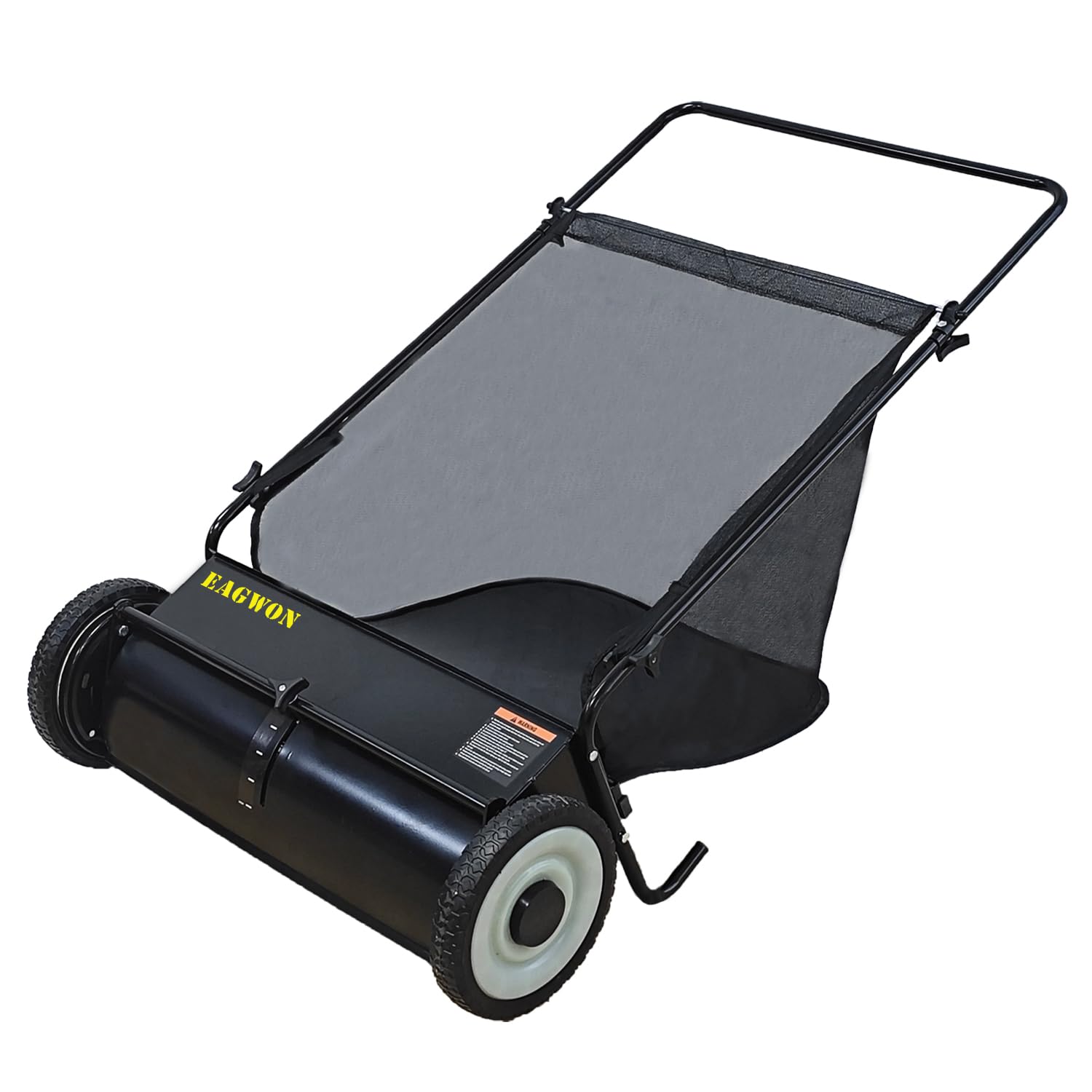
26-inch brush width and 7 cubic foot hopper make this the top pick for anyone with a half-acre or more who wants the fastest coverage and fewest dump stops. Its brush clears a path 5 inches wider than the Dapper Supply’s 21-inch model, so you cover more ground per pass, and the hopper holds twice as much as the Dapper Supply’s 3.5 cubic feet — that means you make half the trips to the pile.
Buyers report that it “picks up 70-80% of pine needles in two passes with the right setting” — a tough test that many sweepers fail. The steel frame and rubber wheels make it durable, but a few reviewers mention that the bag quality could be better and that assembly requires patience.
If you have a half-acre or more and want the biggest single-pass coverage available in a push-sweeper, pick the EAGWON.
Why it’s great
- 26-inch brush width covers ground quickly
- 7 cu. ft. hopper reduces dumping stops
- Adjustable height for pine needles, leaves, or grass
Good to know
- Some owners mention bag durability issues over time
- Steel frame is sturdy but adds weight when pushing uphill
2. MZK 3-in-1 Corded Leaf Blower / Vacuum
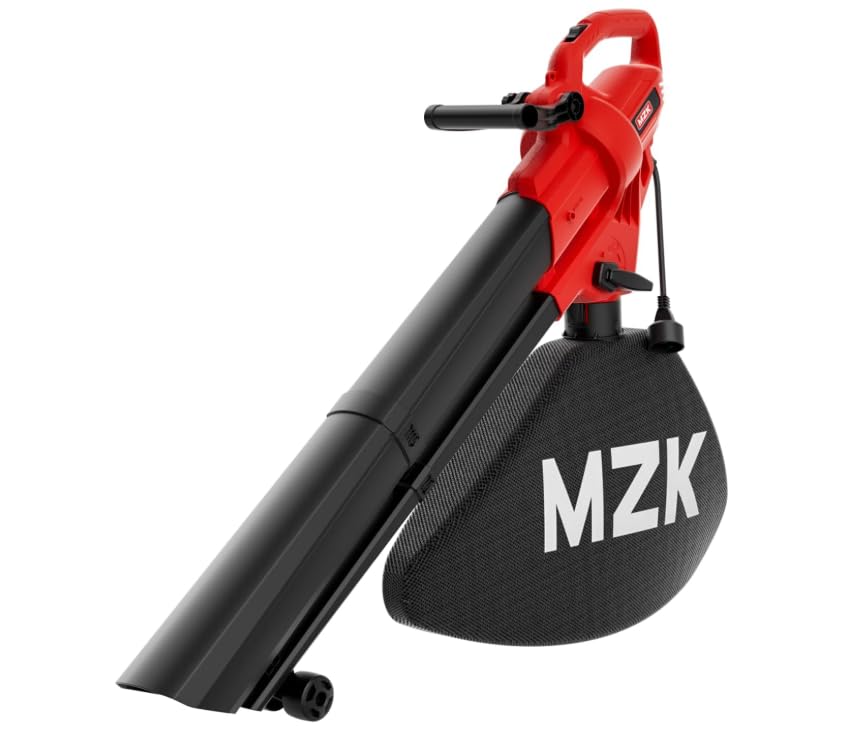
The MZK beats the WORX Trivac on raw blowing volume — 460 CFM (cubic feet per minute of air volume) versus the WORX’s 350 CFM — so you clear wet leaves faster without bogging down. Its 40-liter bag is smaller than the WORX’s included setup, but the 15:1 mulch ratio means 15 bags of leaves compress into one bag of shredded material, giving you serious volume reduction from the bag you have.
Buyers confirm that “strong airflow handles dry/damp leaves,” and they praise the tool-free switch between blower, vacuum, and mulcher modes. At under 10 pounds, your arms won’t tire during a full session.
Buy this if you want the most powerful corded blower-vac for the money and you don’t mind plugging into an extension cord. It is the smarter choice over the WORX if airflow volume is your top priority. If you need a metal impeller for heavy twigs and acorns, step up to the WORX instead.
Where it shines
- 460 CFM is class-leading airflow for corded units
- 15:1 mulch ratio drastically reduces waste volume
- Tool-free switch between blower, vacuum, and mulcher
Worth noting
- Requires a nearby outlet and extension cord
- 40L bag holds less than premium competitors
3. WORX Trivac WG505.2 3-in-1

You are clearing a yard thick with wet leaves and acorns after a storm, and you need a mulcher that won’t crack under the load. The WORX Trivac uses a metal impeller — not plastic — so it chews through wet leaves, twigs, and acorns without overheating or breaking. Customers note it reduces two 32-gallon trash cans of leaves into just a quarter of a can.
The curved vacuum tube reaches under decks and patio furniture, so you clean spots other blowers miss. Its 210 MPH air speed blasts leaves out of flower beds, and the 16:1 mulch ratio is slightly better than the MZK’s 15:1, meaning even less volume ends up in your yard waste bin.
At 9.7 pounds, it is 75% heavier than the Dapper Supply push sweeper but still manageable for handheld use. The catch: it is corded, so you manage a cord, and some reviewers point out that the netting on the collection hose can slip off during use. If wet leaves and heavy mulching are your main challenge, this is the one to get — a metal impeller that turns tough debris into fine dust without cracking.
What stands out
- Metal impeller lasts through wet, heavy debris
- 16:1 mulch ratio for extreme volume reduction
- Curved tube reaches under decks and furniture
The trade-offs
- Corded — limited by extension cord length
- Collection netting can detach during use
4. Dapper Supply 21-Inch Push Lawn Sweeper
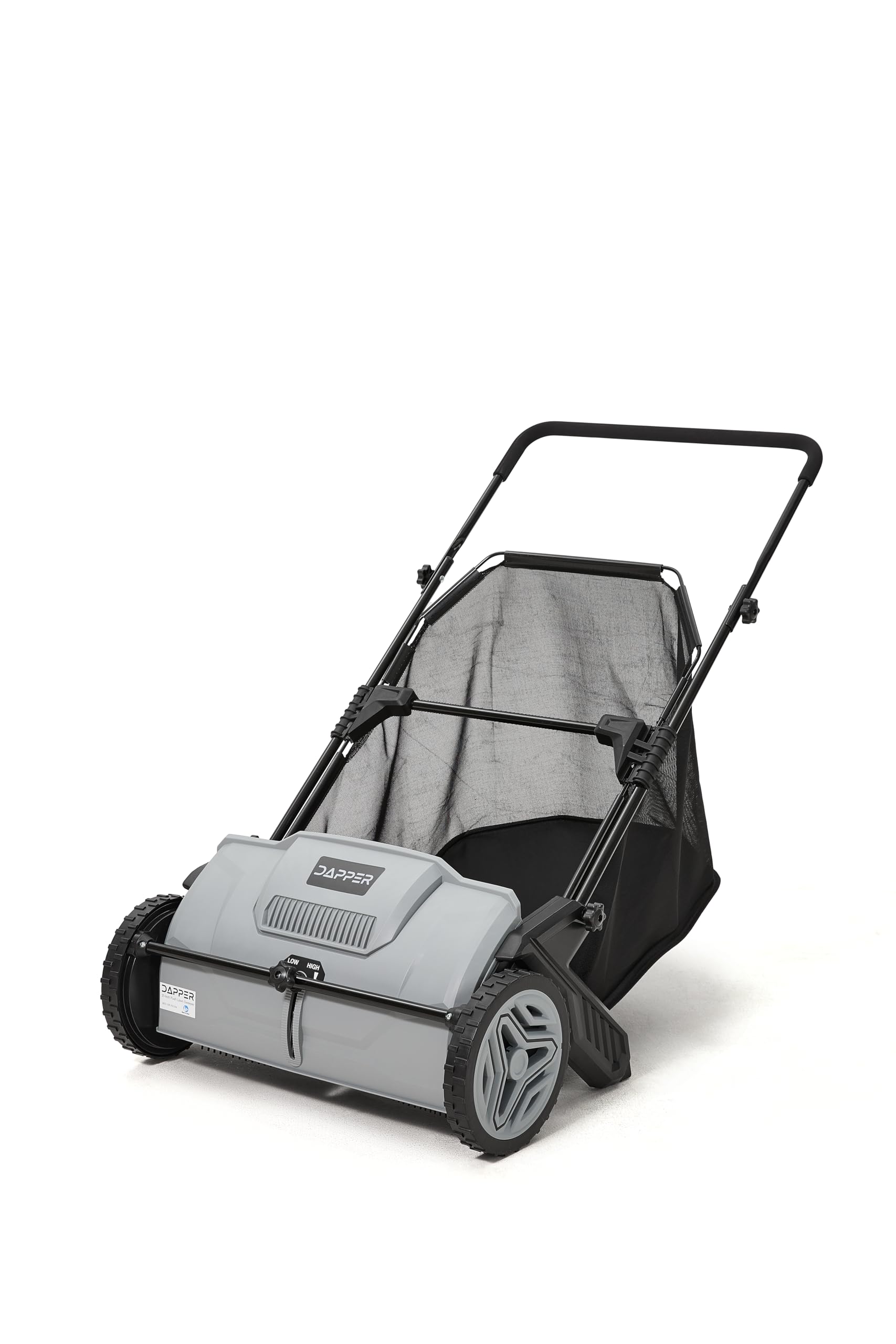
At 17 pounds, this sweeper is a full 7 pounds lighter than the EAGWON 26-inch unit, making it the pick for anyone who needs to haul their collector up steps or store it on a wall hook. The 21-inch sweeping width is adequate for small lawns, though it is 24% narrower than the EAGWON, so you will need more passes.
The downside: 3.5 cubic feet of hopper space is exactly half the capacity of the EAGWON, so expect more trips to dump. Shoppers say that on artificial turf it “cleared 900 sq ft of flowers from gumball tree easily,” but the same review warns that pushing too fast causes debris to overshoot the hopper.
This is a budget-friendly, lightweight sweeper that does the job on flat, small lawns. Larger than a quarter acre or have slopes? You will outgrow it quickly and are better off with the EAGWON.
The upsides
- Lightweight 17 lbs — easy to carry and store
- Height-adjustable brushes for different debris types
- Quick assembly with clips
Keep in mind
- 3.5 cu. ft. hopper fills up fast on larger yards
- Poor assembly instructions — blurry black-and-white images
5. SOYUS 3-in-1 Cordless Leaf Blower / Vacuum
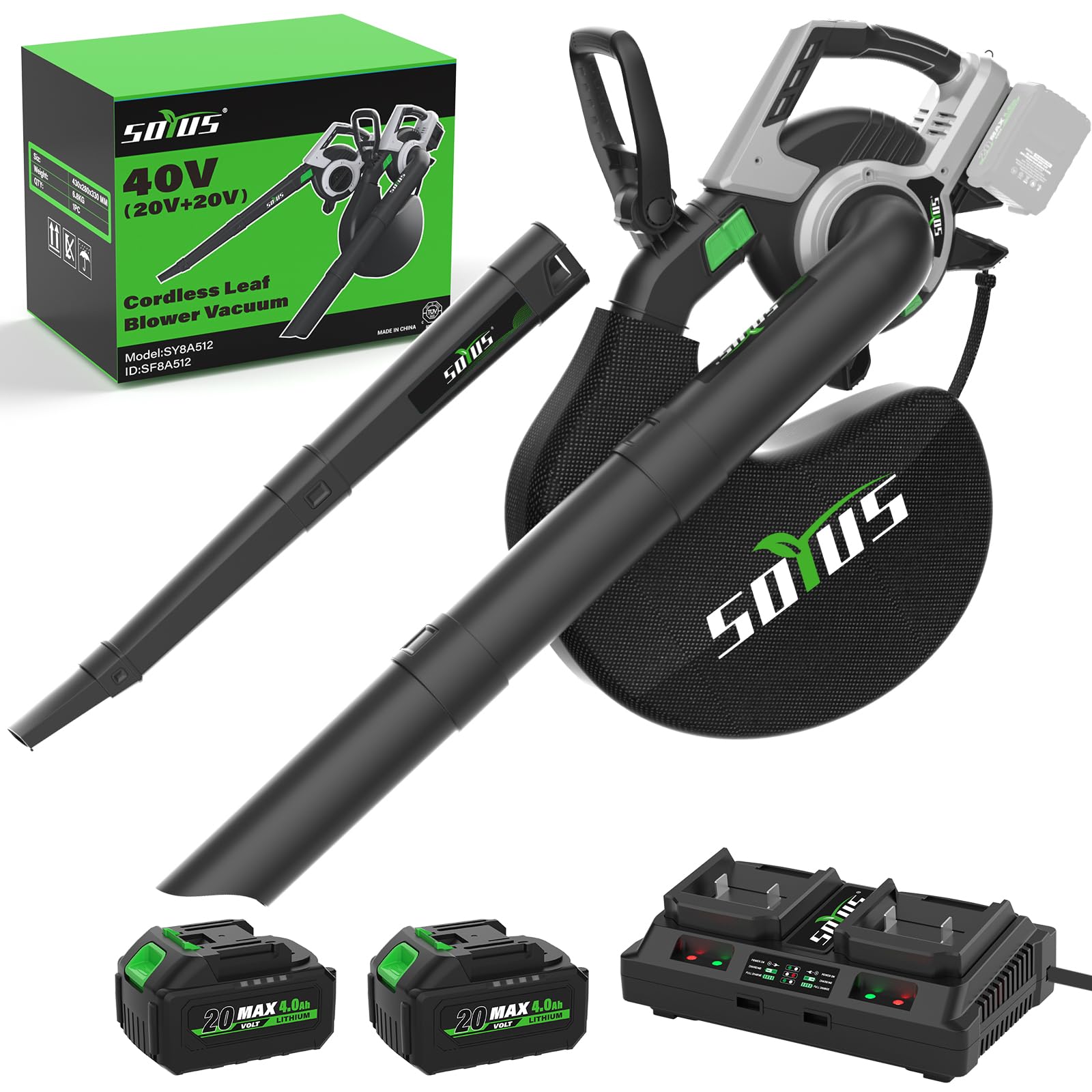
At this entry-level cordless price, you get a 3-in-1 unit with two 20V 4.0Ah batteries, a 45-liter bag, and a brushless motor that delivers 385 CFM. You can run at low speed for up to 90 minutes, or blast on turbo mode for about 30 minutes — enough for a small to medium yard without dragging a cord.
What you give up is battery longevity over years. A buyer noted that one of the two batteries “has already died after 11 months of ownership.” The blower is genuinely powerful on turbo — it clears wet leaves — but the vacuum suction is weaker than corded units, so heavy wet debris may need a second pass.
Buy this for cordless convenience on a property under a quarter acre, where battery wear is less of a factor over time. If you need longer runtime or a heavier-duty build for medium yards, the ZEGJAW 40V is a step up.
Why we’d pick it
- Includes two 4.0Ah batteries for extended runtime
- 45L collection bag with zippered bottom for easy empty
- 5-speed control plus turbo mode
A few caveats
- Some users report battery failure within a year
- Turbo mode drains batteries quickly
6. ZEGJAW 40V Cordless 3-in-1
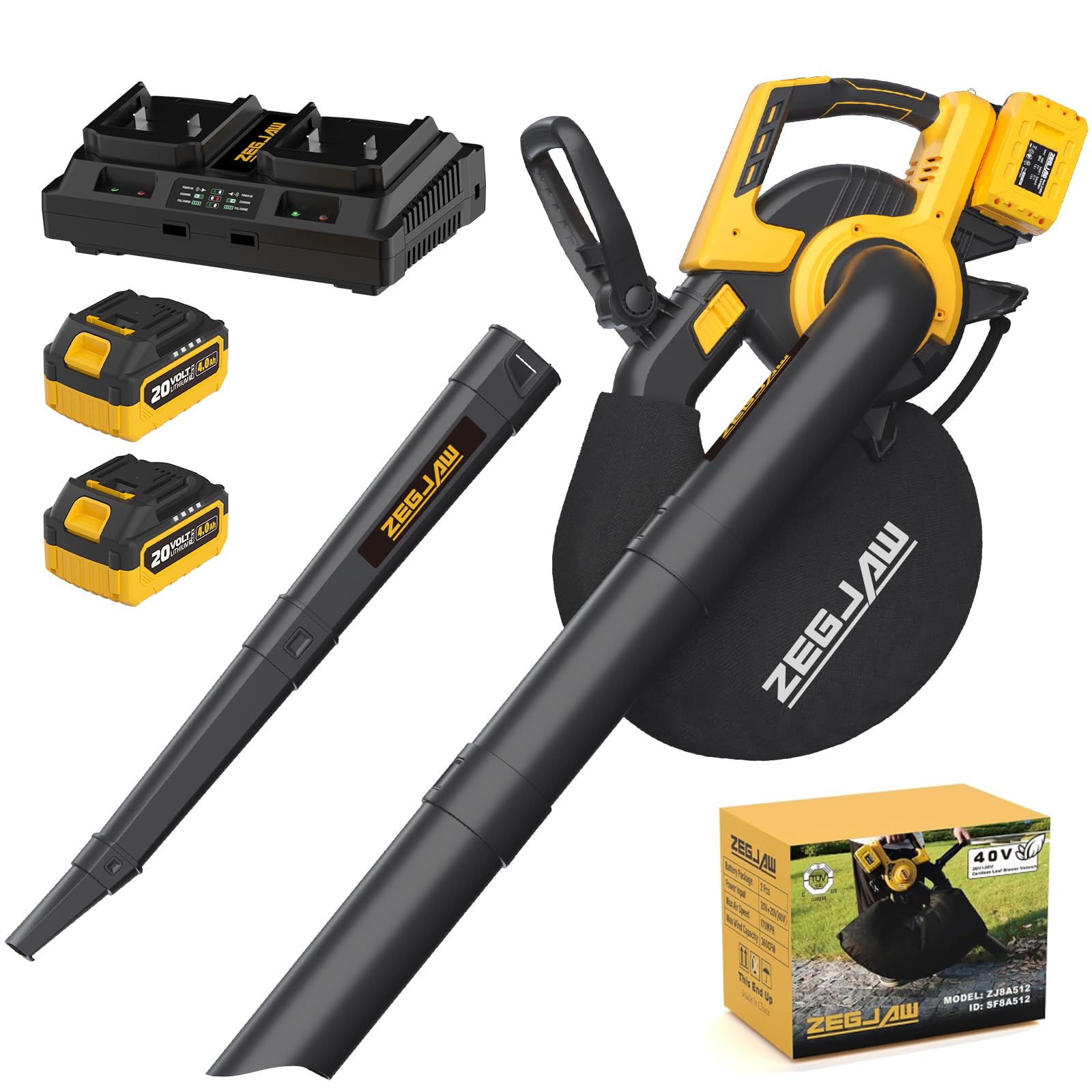
This pick is perfect for the homeowner who wants one tool that can handle both indoor dust on speed 1 and outdoor wet leaves on turbo. The ZEGJAW’s 5-speed dial lets you dial in exactly the power you need — speeds 1-2 for dust and pet hair, 3-4 for leaves and light snow, and turbo for heavy debris. That range means one tool replaces both a shop vac and a yard blower.
The 40V brushless motor delivers 360 CFM and 170 MPH, which is enough to move gravel and pine needles easily. Buyers call it “a genuine little monster (in the best way)” and praise its lightweight feel. The two 4.0Ah batteries give you 30-40 minutes on max speed or up to 240 minutes on low. The trade-off: 12:1 mulch ratio is lower than the WORX’s 16:1, so you get slightly less volume reduction.
If you want variable power across multiple surfaces without buying separate tools, the ZEGJAW is the strong pick. A few reviews mention the bag zipper can be fiddly, but its range and speed control make it the best cordless all-rounder here — just be aware that the bag zipper can be fiddly.
Strong points
- 5-speed control covers indoor dust to wet leaves
- Two 4.0Ah batteries provide long runtime
- Lightweight and well-balanced
Before you buy
- 12:1 mulch ratio is lower than some competitors
- Bag zipper can be difficult to operate
7. MAXLANDER 40V Cordless 3-in-1
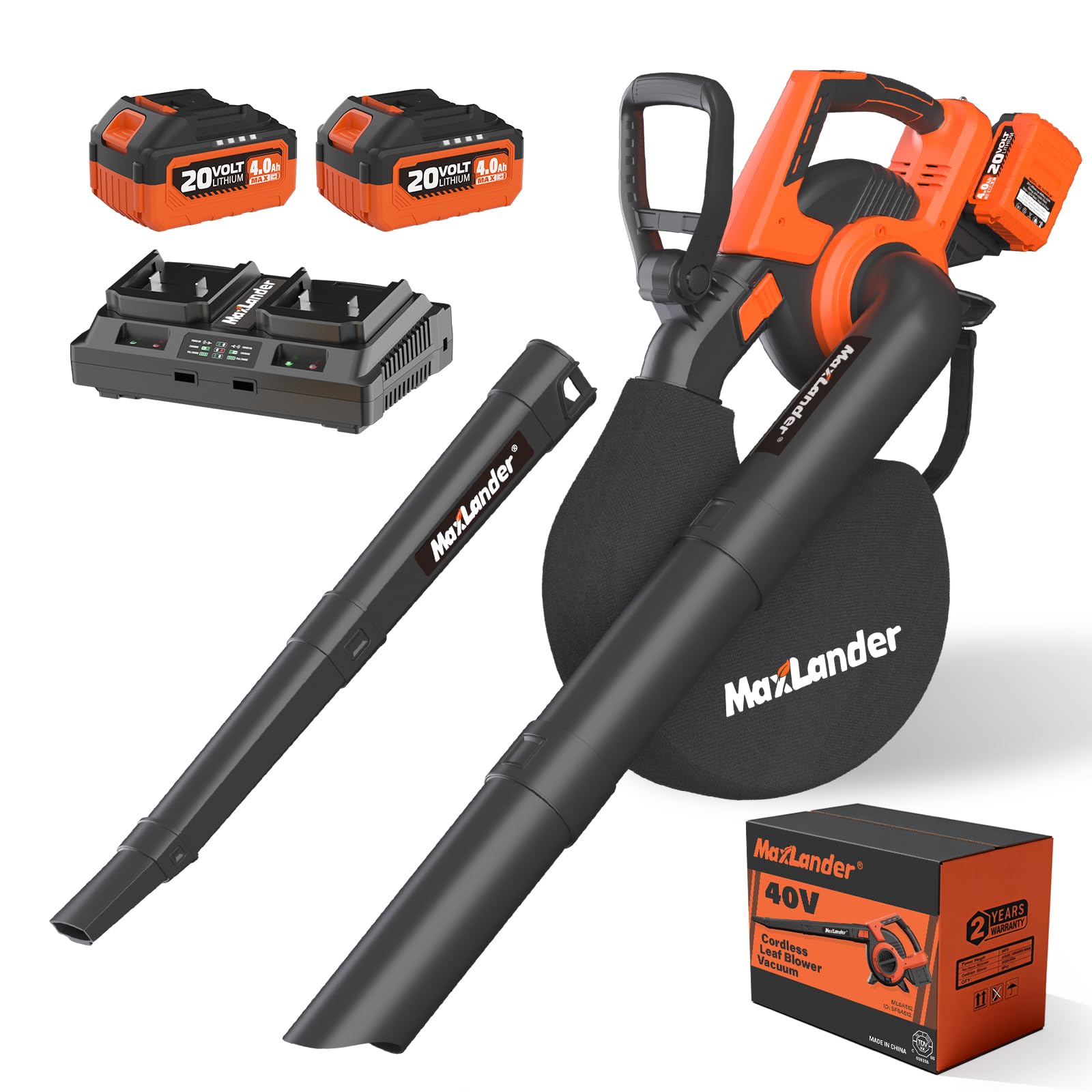
At a similar price to the SOYUS and ZEGJAW, the MAXLANDER undercuts them on weight — just 7.2 pounds in blower mode, which is noticeably lighter than the ZEGJAW’s 14 pounds. That makes a real difference when you hold it for 30 minutes of vacuuming.
What that lighter weight buys you: a 40V brushless motor with 360 CFM and 170 MPH wind speed, a 45-liter bag, and two 4.0Ah batteries that provide up to 36 minutes on high and 240 minutes on low. The internal fan blade design reduces the chance of debris tangling and damaging the motor — a smart detail for a cordless unit.
Buyers praise it as “lightweight and easy to use” for small patios and front porches. Choose it over the SOYUS for the lower weight, and over the ZEGJAW for simpler operation if you do not need five speeds. One reviewer noted that the unit “gets stuck every few seconds and powers down even on small leaves,” so quality control may vary. The one clear reason to choose it: the lightest option for small jobs.
What we like
- Ultra-lightweight 7.2 lbs reduces arm fatigue
- 45L bag with shoulder strap for comfortable carrying
- Anti-tangle fan blade protects motor
The downsides
- Some units may stall on small, damp debris
- No variable speed — just on/off
Understanding the Specs
CFM vs MPH — Which Matters More?
CFM (cubic feet per minute) measures the volume of air the blower moves — more CFM means you clear a wider path faster. MPH (miles per hour) measures the speed of that air — higher MPH helps dislodge wet, stuck leaves. For a leaf collector, prioritize CFM first (look for 350+), then MPH (160+ is solid). A unit with high MPH but low CFM will blow leaves but take forever to cover a whole lawn.
Mulch Ratio
The mulch ratio tells you how many bags of leaves get compressed into one. A 15:1 ratio means 15 full bags of leaves become one bag of shredded material. A higher ratio (16:1, 18:1) is better because you empty the bag far less often. One limitation: higher ratios usually require a metal impeller (the spinning blade that shreds) because plastic impellers wear out faster under heavy use.
Sweeping Width and Hopper Capacity
For push sweepers, sweeping width (measured in inches) is how wide a path the brushes clear in a single pass — 26 inches is better than 21 inches on a large lawn. Hopper capacity (measured in cubic feet) is how much debris the bag holds before you need to dump it. A 7 cu. ft. hopper holds twice as much as a 3.5 cu. ft. hopper, so you make half as many trips to the pile.
Battery Voltage and Amp-Hours
Voltage (V) indicates the motor’s potential power — 40V is stronger than 20V. Amp-hours (Ah) measure the battery’s energy capacity — 4.0Ah holds more charge than 2.0Ah. Two batteries double your runtime, but battery quality varies; some users report failures after a year of occasional use. For cordless leaf collectors, aim for at least 36V and 4.0Ah per battery for a full yard session.
FAQ
Can a leaf collector handle wet leaves or only dry ones?
How do I know if a push sweeper will work on my grass length?
Is a cordless leaf collector powerful enough for a large yard?
What does a 15:1 mulch ratio actually mean for my yard waste?
Final Thoughts: The Verdict
Across the board, the best leaf collector overall is the EAGWON Push Lawn Sweeper (26-Inch) — its 26-inch sweeping width and 7 cubic foot hopper give you the fastest coverage and fewest dumping stops on a typical suburban lawn. If you want a cordless blower-vac that handles both indoor dust and outdoor leaves, grab the ZEGJAW 40V 3-in-1. And for the best raw mulching power with a metal impeller that chews through tough debris, the WORX Trivac WG505.2 is your pick.