
Breaking up hard, compacted soil so your plants can breathe is often the hardest part of gardening — and the right cultivator saves your back and your time. You need to match the power source, tine strength, and tilling width to your garden size and soil toughness.
I’m Rikta — the co-founder and writer behind Lawn Gear Lab. This guide is built by comparing the manufacturers’ published specifications and the patterns across verified customer reviews, so you get each pick’s real strengths and trade-offs instead of marketing spin.
This roundup of the best cultivator for gardening helps you choose the model that turns your toughest soil into a planting-ready bed without the guesswork.
How To Choose The Best Cultivator For Gardening
Picking the right cultivator comes down to three main factors: your soil type, the size of the area you need to cover, and your tolerance for managing a cord or fuel. Here is what to look for in each.
Power Source: Corded, Cordless, or Gas
Corded electric models give you the most consistent, unlimited power as long as you are within reach of an outlet — great for large gardens with tough soil, but you will be managing an extension cord. Cordless battery models let you move freely and run more quietly, making them ideal for smaller beds and raised gardens, though runtime is limited to what the batteries provide. Gas-powered tillers, like the Honda, deliver the most raw muscle for breaking new ground in heavy clay, but require fuel mixing and more maintenance.
Motor Power (Amps or RPM) vs. Tine Strength
For corded models, look at the amperage — a 12-amp motor is a beast that will chew through rocky clay, while a 2.5-amp motor is for light weeding and soft soil. For cordless, the max RPM (rotations per minute — how fast the tines spin) tells you the pace; 360 RPM is a strong pace. Just as important are the tines themselves — thick steel tines resist bending against buried rocks or roots, and models with 48 tines (like some cordless picks) put more cutting edges into the dirt with each rotation.
Tilling Width and Depth: Match to Your Garden
The tilling width determines how much ground you cover per pass: an 8-inch width is nimble in narrow raised beds, while a 14-inch width lets you finish a large plot faster. Depth — typically 6 to 8 inches — is the zone where most plant roots thrive. A depth-adjustment bar (like the one on the Honda) gives you fine control to avoid going too deep near sensitive plants.
Quick Comparison
On smaller screens, swipe sideways to see the full table.
| Model | Category | Best For | Key Spec | Amazon |
|---|---|---|---|---|
| MAXLANDER 14-Inch | Corded | Heavy clay soil, large beds | 12 Amp motor | Amazon |
| IncwBo 12-Inch | Corded | Mid-size gardens, hard dirt | 10.5 Amp motor | Amazon |
| Saker 22V | Cordless | Small beds, raised gardens | 9-inch width | Amazon |
| DEGGE 48-Tine | Cordless | Extended sessions, small plots | Dual 3.0Ah batteries | Amazon |
| TaskStar Cordless | Cordless | Freedom of movement in various beds | 48 steel tines | Amazon |
| Westinghouse 6-Inch | Corded | Tight spaces, light weeding | 9.9 lbs weight | Amazon |
| Honda FG110 | Gas | Untouched ground, row cultivation | GX25 engine | Amazon |
In‑Depth Reviews
1. MAXLANDER Electric Garden Tiller Cultivator, 14 Inch 12 Amp Corded Tiller

The 12-amp motor — the most powerful in this guide — makes the MAXLANDER the top pick for anyone who needs to break through heavy clay or rocky soil without the machine stalling. Buyers confirm that the “12 amp motor handles clay soil with rocks/roots” successfully, making it the corded model that simply won’t quit.
Its 14-inch tilling width is a full 33% wider than the 9-inch Saker cordless model, so you cover more ground per pass. The 8.4-pound weight — 52% lighter than the TaskStar cordless at 12.79 pounds — makes it far easier to maneuver and control. The foldable handle and built-in wheels make storage simple, and the double-safety start button prevents accidental starts.
The catch is managing the extension cord, which buyers report can be “challenging” and requires care not to run it over. If your soil is tough and your garden is large, this is the one to get.
Why it’s great
- 12-amp motor provides serious power for tough clay and rocky soil
- 14-inch width and 8-inch depth cover large areas quickly
- Foldable handle with wheels makes transport and storage a breeze
Good to know
- Requires careful extension cord management to avoid tangling or damage
- Safety shield can send debris flying — eye protection is a must
2. IncwBo Electric Rototiller Garden Tiller 12 Inch Tilling Width

You can finish beds in fewer passes with the IncwBo — its 12-inch tilling path is 33% wider than the 9-inch cordless models like the Saker and TaskStar. It falls short of the MAXLANDER’s raw 12-amp power with its 10.5-amp motor, but one reviewer noted it “took five minutes and this little beast went to work on NC hard clay dirt like it was splitting water,” so it performs well in real conditions.
It also digs 8 inches deep — a full 33% more depth than the Westinghouse’s 6-inch maximum, which matters when you are breaking new ground for deep-rooted plants like tomatoes. The unique equipment spur (a small spike that digs into the ground) helps control forward movement, reducing arm fatigue that comes with fighting a bouncing tiller on hard dirt.
If the MAXLANDER’s 12-amp motor feels like more power than you need, but you still want a wide, deep cut for a medium-to-large garden, the IncwBo gives you nearly the same coverage for a very accessible investment.
Where it shines
- Wide 12-inch tilling path clears ground fast
- 8-inch depth is great for breaking new ground
- Unique spur helps control forward force and reduces fatigue
Worth noting
- Early reports of left-handle hardware loosening during use
- Overload protection works, but may need resetting in very tough soil
3. Saker 22V Cordless Electric Garden Tiller Cultivator
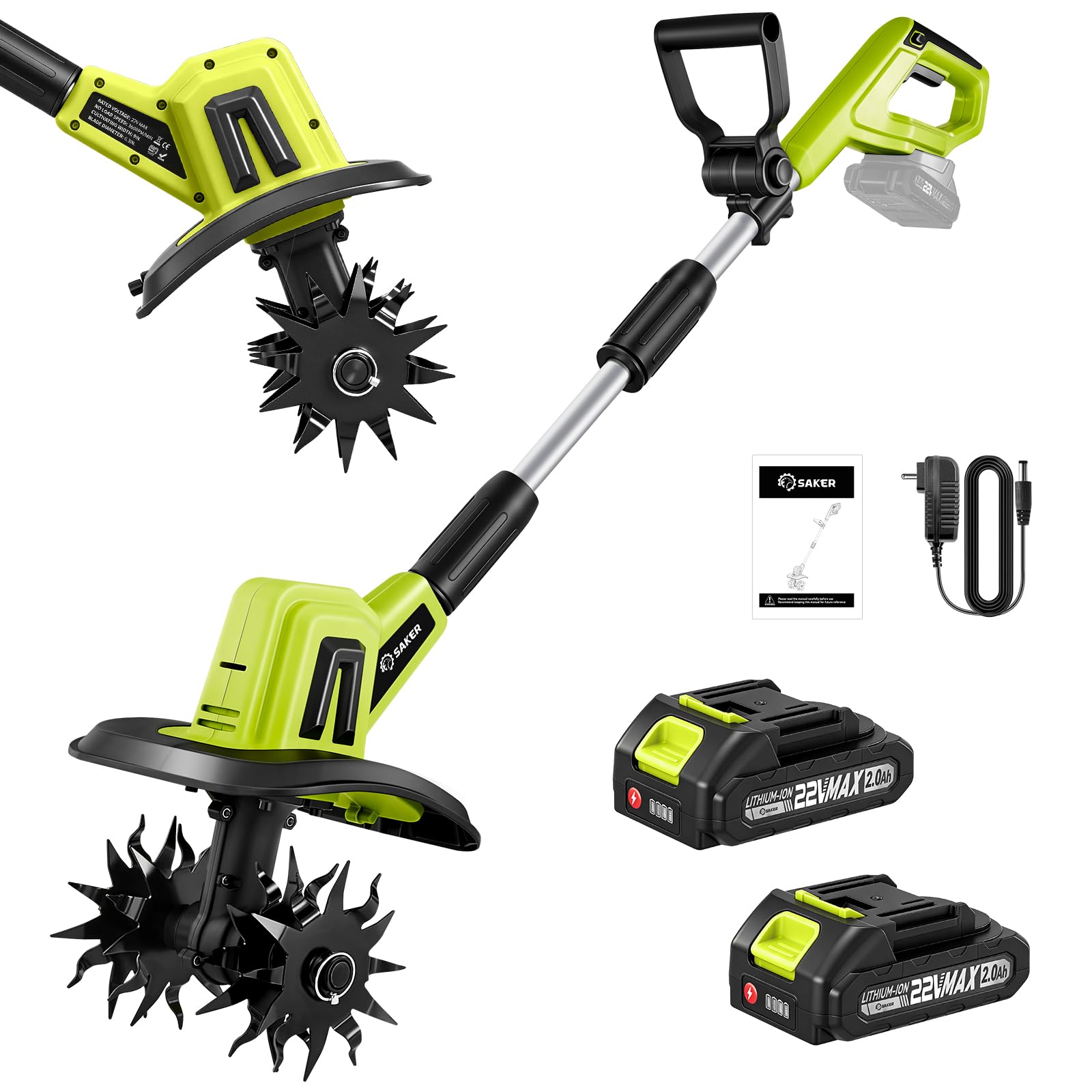
You can work multiple small beds without dragging a cord — the Saker offers a smooth cordless experience at 360 RPM, which matches the MAXLANDER’s top speed. With 9 inches of width and 6.3 inches of depth, it is built for tighter spaces like raised beds and border rows.
One buyer mentioned that “the battery lasted full use; two batteries allow swapping,” which is a massive practical advantage for uninterrupted work. The dual 2.0Ah batteries each provide up to 30 minutes of runtime, and the ergonomic adjustable handle keeps fatigue low during longer sessions.
Just know this is best suited for established soil that isn’t pure clay — one buyer admitted it “does not till hard clay” well on a single pass. For light-to-medium garden ground, though, this is a battery-powered gem that avoids fumes and noise at 360 RPM.
What stands out
- 360 RPM motor delivers cordless power on par with corded models
- Two 2.0Ah batteries allow swap-and-go extended sessions
- Lightweight and ergonomic design reduces fatigue for seniors
The trade-offs
- Struggles with unbroken hard clay — may need multiple passes
- No rear guard; risk of hitting feet when pulling the tiller back
4. DEGGE Tiller, Cordless Tiller Cultivator with 48 Steel Tines
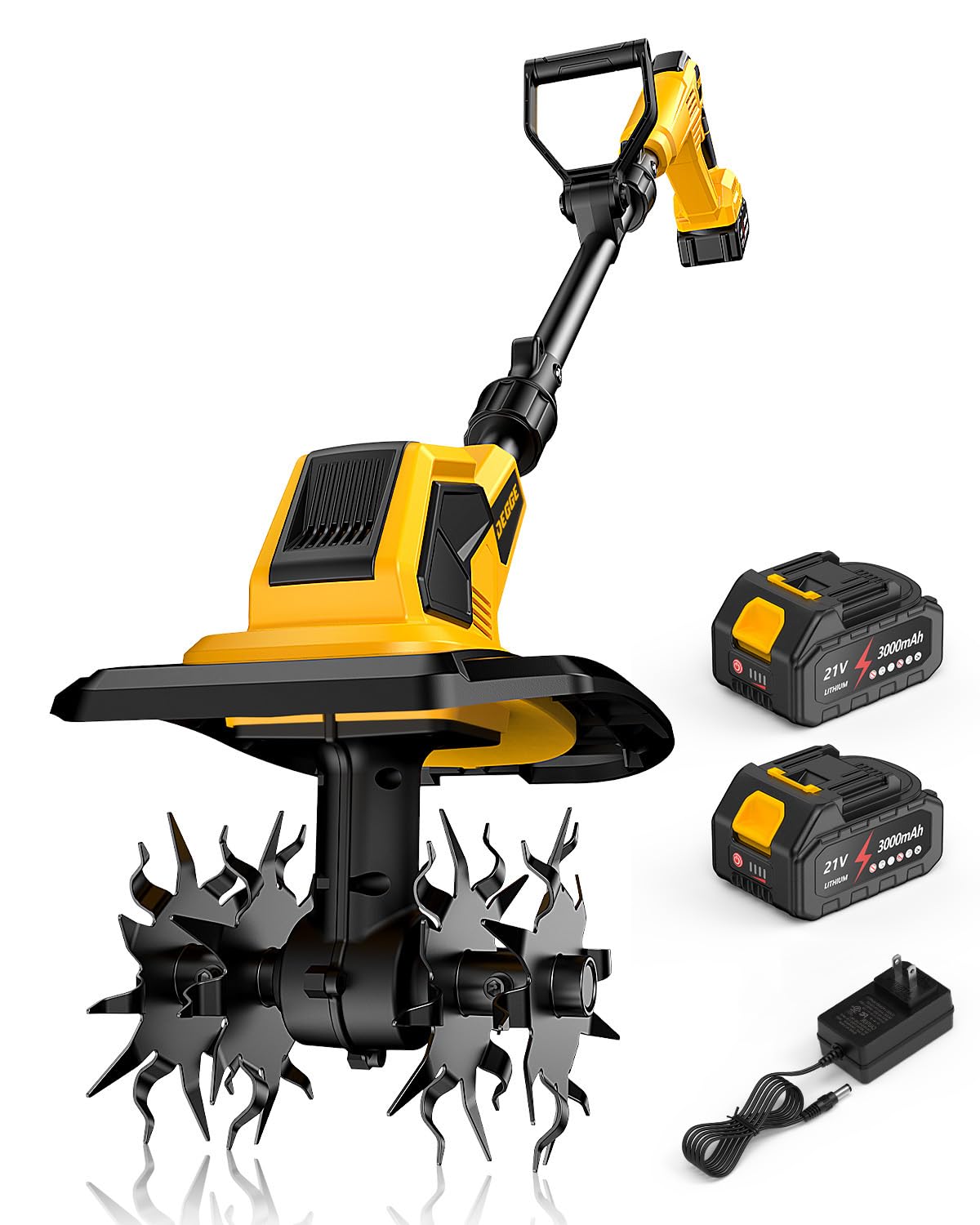
50 minutes of continuous tilling — the DEGGE delivers nearly double the total runtime of the Saker’s two 2.0Ah batteries. Its two 3.0Ah batteries (amp-hours, the energy capacity) each last 25 minutes, making it the king of long sessions without recharging.
The downside is a 9-inch width and 6.7-inch depth — adequate for small plots and raised beds, but narrower than the corded options. One owner reported it “exceeded expectations for power” and was “easy to assemble (<20 min) and easy to use.” The 48 hardened steel tines put more cutting edges into the soil per rotation than 4-tine models, resulting in a finer, better-aerated finished.
If you need good runtime and a fine tilling result in a cordless package, the DEGGE offers a lot of capacity for your investment. Just be ready to work in sections and rotate batteries for larger yards.
The upsides
- Dual 3.0Ah batteries provide up to 50 minutes of total runtime
- 48 steel tines create a finer, more aerated soil bed
- Lightweight and easy to assemble; no tools needed
Keep in mind
- Narrower 9-inch width means more passes for larger gardens
- Best performance on moist soil — hard clay may slow it down
5. TaskStar Cordless Tiller Cultivator for Gardening, 360 RPM
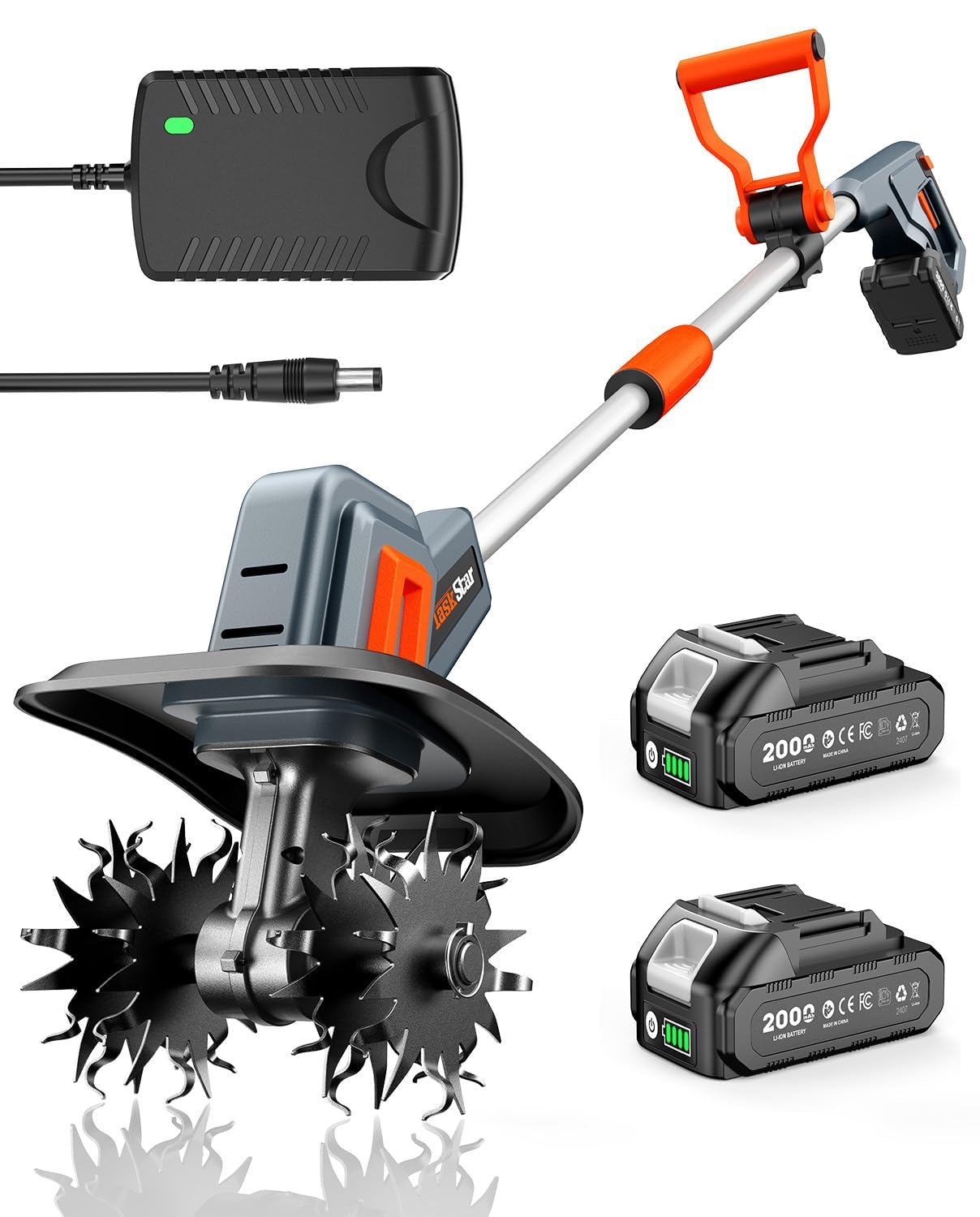
You get 48 steel tines and a total 4000mAh battery capacity with the TaskStar, but it weighs 12.79 pounds — 52% heavier than the 8.4-pound MAXLANDER. It runs at 360 RPM (rotations per minute), matching the Saker’s speed, and offers a 9-inch tilling width with a 7-inch depth — solid specs for breaking up medium-hard soil.
What you give up is the luxury of infinite power — one customer observed that “weeds/tall grass cause tine tangling,” so you will need to clear large before tilling. Another buyer, a 63-year-old woman, found it “easy to operate” on hard soil, so the weight is well-balanced. The batteries charge quickly and provide two 20-30 minute sessions.
If you want a mid-range cordless option with plenty of tine surface area and a good balance of power and price, the TaskStar is a strong contender for gardeners with multiple small-to-medium beds.
Why we’d pick it
- 48 steel tines and 360 RPM provide thorough soil aeration
- Two 2.0Ah batteries (4000mAh total) offer reliable runtime
- Light enough for a 63-year-old to operate comfortably
A few caveats
- Weeds and tall grass can tangle in the tines — pre-clear the area
- Heavier than corded models; may tire your arms in long sessions
6. Westinghouse 6-Inch, 2.5 Amp Corded Electric Mini Tiller Cultivator
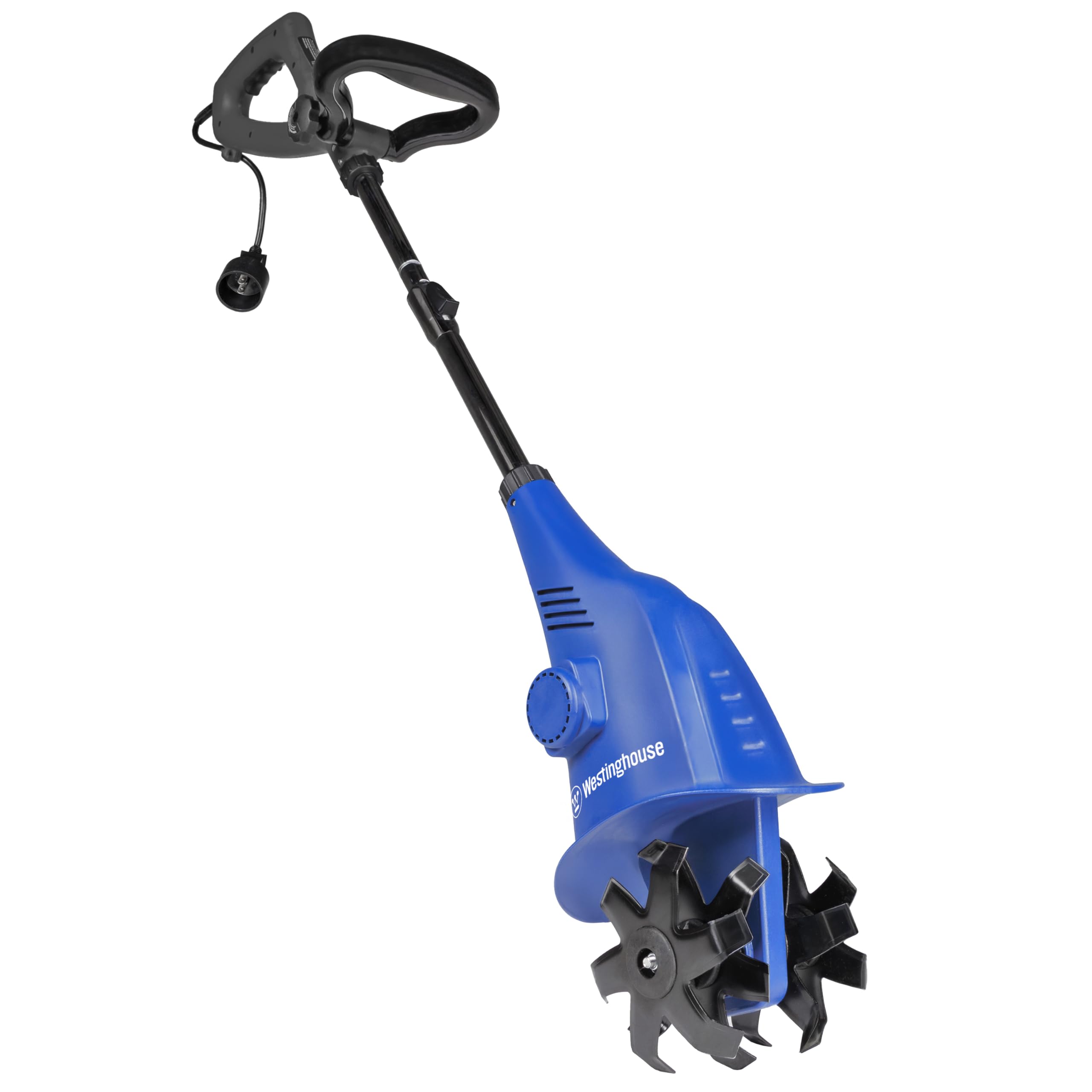
This electric mini tiller is perfect for the weekend gardener who needs to fluff up existing flower beds, mix in compost, or work in tight rows and small spaces.
You get a 2.5-amp motor and a narrow 6-inch tilling width. Owners mention it “tills hard, neglected soil” and is “less work than pick/shovel,” so it does punch above its weight for light-duty work. The 9.9-pound weight makes it one of the lightest picks, ideal for maneuvering around established plants.
However, the vibration is noticeable, and some left-handed users report the safety-and-trigger design is not ambidextrous — so be aware that it is not easy to use with both hands, and it is not built for breaking sod or tackling virgin clay.
Strong points
- Lightweight 9.9 pounds makes it easy to carry and maneuver
- Great for light weeding and maintaining established flower beds
- 2-year limited warranty provides peace of mind
Before you buy
- 2.5-amp motor struggles with hard, compacted clay on first pass
- Design is not ambidextrous; lefties may find safety button awkward
7. Honda FG110 Mini Tiller Cultivator
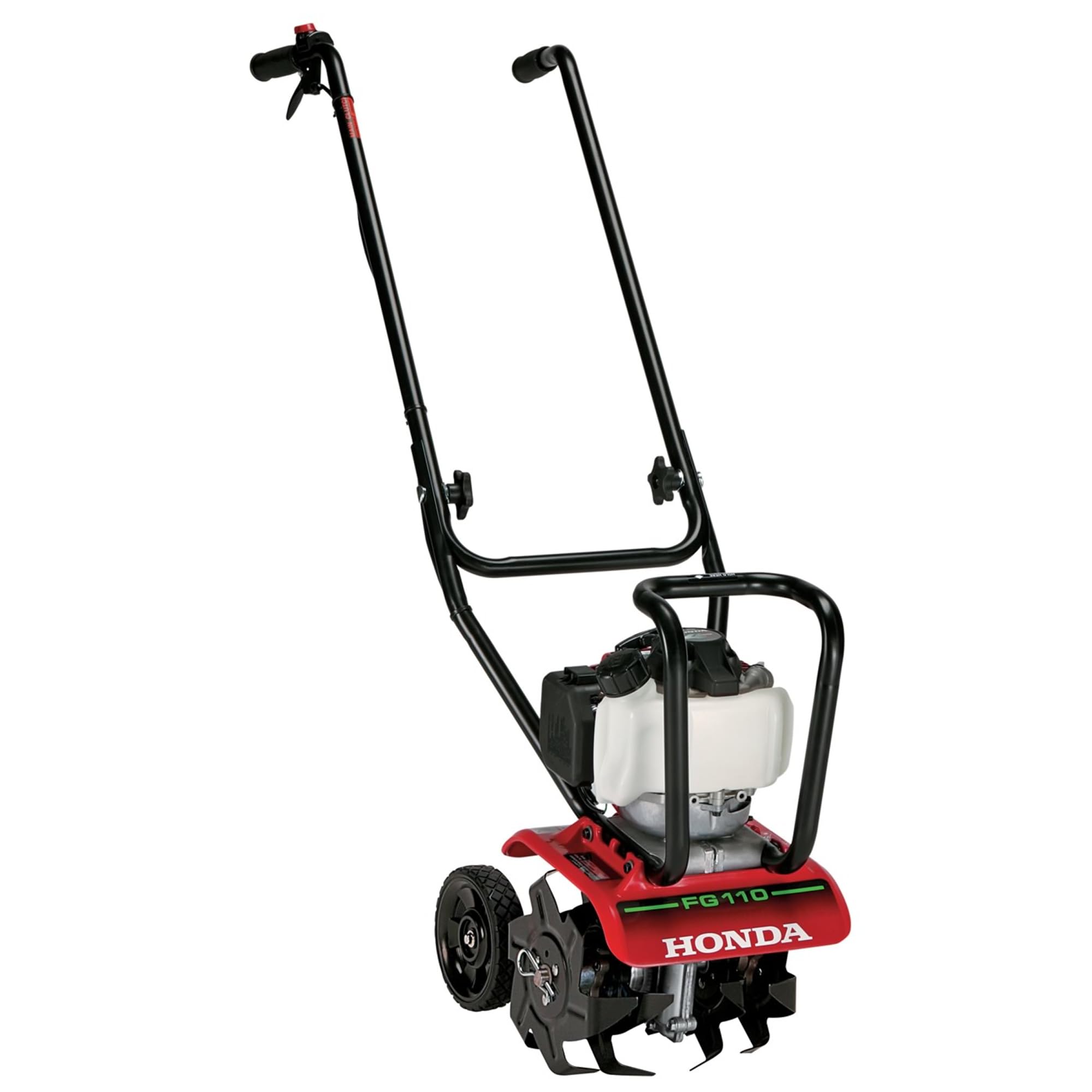
At a premium price compared to the rest of the field, the Honda FG110 brings the legendary reliability of the GX25 4-stroke engine (a type of engine that uses straight unleaded fuel, not a mix) to break new ground without an outlet and without mixing gas and oil — outperforming every corded and cordless model here when it comes to raw, untethered digging power in untouched ground.
You get an adjustable tilling width (6 to 9 inches by removing the outer tines), a depth-adjustment bar for precise control, and two-position transport wheels that roll over rough terrain. At 28 pounds, it is heavier than any electric model, but buyers call it “small but mighty” and note that it “starts easy and works great.” Its slim profile lets you till “within 1 inch of plants without damage,” making it ideal for row cultivation.
If your gardening involves breaking new ground or working rows where cords cannot reach, and you want a machine that will last for years with simple maintenance, the one clear reason to choose it is no cord, no battery anxiety, just solid gas power.
What we like
- Honda GX25 engine is legendary for easy starts and long life
- Adjustable width (6 to 9 inches) for tight spaces or wider coverage
- No gas-oil mix needed — just fill with straight unleaded fuel
The downsides
- Heavier than electric models at 28 pounds; best for ground-level work
- Intended for light-to-moderate jobs; may only dig a few inches in extreme hardpan
Understanding the Specs
Amperage (on Corded Models)
Amps measure the electric motor’s power draw — more amps means more torque to spin the tines through hard dirt. A 12-amp motor (like the MAXLANDER) can chew through clay and small rocks, while a 2.5-amp motor (like the Westinghouse) is meant for soft, already-tilled soil or light weeding. For most gardens with typical soil, 8 to 10 amps is a comfortable middle ground.
Battery Voltage and Amp-Hours (on Cordless Models)
Voltage (V) tells you the motor’s potential power — 21V or 22V is the standard for cordless tillers. Amp-hours (Ah) tell you the energy capacity: a 3.0Ah battery holds 50% more energy than a 2.0Ah battery. Two batteries mean you can rotate them, so a pair of 3.0Ah batteries (total 6.0Ah) gives you the longest possible cordless session without waiting for a recharge.
Tilling Width and Depth
Width is how wide a strip the tines churn per pass — wider means fewer passes but harder to fit between raised beds. Depth is how deep the tines can dig — 6 to 8 inches covers the root zone for most vegetables and flowers. A depth-adjustment bar (like on the Honda) lets you set a consistent depth so you do not accidentally dig too deep near shallow-rooted plants.
Number and Material of Tines
More tines (e.g., 48 vs. 4) means more contact points with the soil per revolution, resulting in a finer, more evenly tilled bed. The material matters too: hardened steel tines resist bending when they hit buried rocks or roots, while cheaper stamped steel may bend or break. Look for “alloy steel” or “hardened steel” in the specs for long-lasting performance.
FAQ
Is a corded or cordless cultivator better for a first-time gardener?
How deep should a cultivator till for a vegetable garden?
Can I use a cultivator to remove weeds?
What size cultivator do I need for a 10×10 foot garden bed?
Final Thoughts: The Verdict
For most gardeners, the cultivator for gardening winner is the MAXLANDER Electric 14-Inch Tiller because its 12-amp motor and wide 14-inch cutting width tackle everything from light weeding to breaking hard clay in a single tool. If you prefer cordless freedom for small raised beds, grab the Saker 22V Cordless Tiller. And for breaking new ground where no outlet exists, the standout is the Honda FG110 Gas Tiller.