
Hard, compacted soil that water runs off of instead of soaking in keeps air away from your grass roots. A manual lawn aerator fixes that — no gas, no extension cords, just you stepping on spikes or hollow tubes to pull plugs of soil. The challenge is finding one built well enough to penetrate tough ground without breaking your back or clogging up after a few steps.
I’m Rikta — the co-founder and writer behind Lawn Gear Lab. This guide is built by comparing the manufacturers’ published specifications and the patterns across verified customer reviews, so you get each pick’s real strengths and trade-offs instead of marketing spin.
This roundup of the best manual lawn aerator options will show you exactly which tool fits your soil type and your stamina level.
How To Choose The Best Manual Lawn Aerator
Picking the right tool comes down to your soil type and how much work you want to do. Spike aerators push solid rods into the ground to create holes. Core (plug) aerators remove a small cylinder of soil core (a plug of dirt you pull out). For most lawns with compacted clay or heavy soil, core aeration gives better long-term results because it actually removes material, so roots have room to spread. Spike aeration can sometimes make compaction worse around the edges of each hole in dense clay.
Spike vs. Core (Plug) Aerators
Spike aerators are simpler and usually cheaper — you step on a frame with metal spikes that poke holes into the ground. They work well for loosening lightly compacted soil and are great for small lawns or spot treatments. Core aerators use hollow tines (hollow tubes that cut a soil core) that cut and lift a plug of soil, typically 2 to 3 inches long, out of the ground. This physically removes compacted material, making them the better choice for clay-heavy soil or lawns that have not been aerated in years. The catch is that core aerators take more effort per step and require you to clean up the soil plugs afterward.
Tine Length, Thickness, and Material
Longer tines reach deeper into the soil where compaction is worst. Look for spike tines at least 3 inches long and core tines at least 3 inches deep. Thicker spikes (around 0.5 inches in diameter) create wider holes that let more air and water through, so the soil stays loose longer. The tine material matters too — heat-treated steel or stainless steel resists bending and rust far better than basic painted steel, especially if you store the tool in a damp garage or shed.
Handle Height and Foot Plate Design
A taller handle (36 to 42 inches) saves your lower back because you do not have to bend as far to push the tines into the ground. A wide, non-slip foot plate lets you put your full weight onto the tool without your foot slipping off, which is essential for penetrating hard, dry soil. Some foot plates have raised edges or textured surfaces to improve grip with wet boots.
Build Quality and Weight
Heavier tools (around 5 to 6 pounds) generally mean thicker steel and a more durable frame that will not flex or break under repeated stomping. Lighter tools (under 4 pounds) are easier to carry and maneuver but may not hold up as well on very compacted ground. Powder-coated or stainless steel finishes resist rust far better than raw metal.
Quick Comparison
On smaller screens, swipe sideways to see the full table.
| Model | Category | Best For | Key Spec | Amazon |
|---|---|---|---|---|
| Colwelt 38″ Spike Aerator | Spike Aerator | Light compaction in small lawns | 3.5-inch spikes, 0.5-inch diameter | Amazon |
| Jardineer 36″ Spike Aerator | Spike Aerator | Clay soil aeration | 12 heat-treated steel spikes, 2.75 inches | Amazon |
| Manual Core Aerator (LawnVigor) | Core Aerator | True plug aeration on compacted soil | 3 hollow tines, pulls 3-inch cores | Amazon |
| EEIEER 38″ Core Aerator | Core Aerator | Mess-free aeration with soil tray | 3 coring tines, built-in storage basket | Amazon |
| Dolibest 4-Core Stainless Steel | Core Aerator | Durable stainless steel, 4 plugs per step | 4 corer plugs, stainless steel bottom | Amazon |
| Dolibest Core Aerator with Storage Tray | Core Aerator | Plug collection and easy cleanup | 4 stainless steel tines, built-in tray | Amazon |
| Landzie Original Hollow Tine Aerator | Core Aerator | Professional-grade durability | 42-inch handle, self-cleaning tines | Amazon |
In‑Depth Reviews
1. Colwelt 38″ Heavy Duty Spike Aerator

The four steel spikes measure 3.5 inches long and 0.5 inches in diameter, making this the top pick for anyone with a small to medium lawn and lightly compacted soil who wants the deepest, widest holes in this roundup without much effort.
The 38-inch handle lets you stand nearly upright while you work, saving your back. The foot plate is 6 inches wide and 5.5 inches tall, so you can stomp with any boot size. Reviewers report that the cushioned T-handle keeps hands comfortable even on longer sessions. At 4.31 pounds, it is light enough to carry around the yard but still feels solid underfoot.
One honest limit: as a spike aerator, it pushes soil aside rather than removing it. That makes it less effective on heavily compacted clay where you really need to pull plugs like the LawnVigor core aerator does. But for regular seasonal maintenance on typical lawn soil, this is the most balanced value in the lineup. Buyers report a key tip: water your lawn for 15 minutes before using the aerator to get the best penetration. For the best balance of deep penetration and easy handling in a spike aerator, this is the one to beat.
Why it’s great
- Long, thick spikes (3.5″ length, 0.5″ diameter) for deep holes
- Tall 38″ handle reduces back strain during use
- Wide, anti-slip foot plate for maximum leverage
- Lightweight at 4.31 lbs yet sturdy steel build
Good to know
- Spike design pushes soil aside instead of removing it
- Less effective on heavy clay without pre-watering
2. Jardineer 36″ Spike Aerator
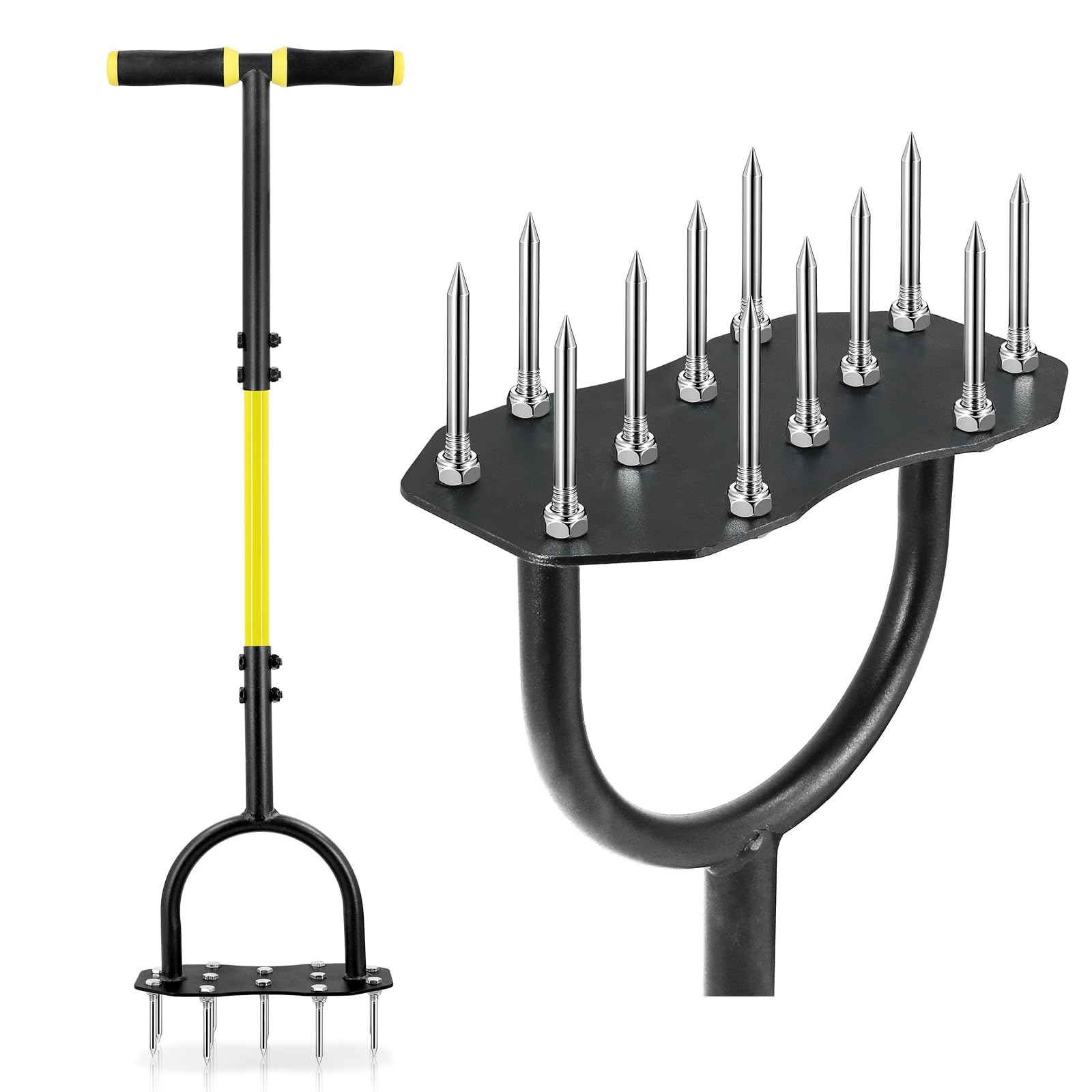
Where the Colwelt wins on spike thickness, the Jardineer leads on spike count — 12 spikes versus the Colwelt’s 4. That means each step covers more ground. But its spikes are shorter at 2.75 inches, so they do not reach the same depth. At 5.02 pounds, it is also heavier than the Colwelt (4.31 pounds), a 16% weight gap that makes it more tiring to carry but gives it more momentum to drive into hard ground.
Owners mention this tool is especially effective on compacted clay soil. One reviewer noted it was “easy to use, especially in compact clay.” The 36-inch handle still saves your back, and the thick steel foot plate lets you put your full weight down. The powder-coated steel resists rust well, and the tool comes with a few extra spikes in case any bend over time.
Choose this over the Colwelt if your lawn has clay-heavy patches that need serious force to break through, or if you want the broader coverage of 12 spikes per step. Just know the shorter spike length means you are not reaching as deep into the soil profile.
Where it shines
- 12 heat-treated steel spikes per step for wide coverage
- Proven effective on compacted clay soil per buyer reports
- Powder-coated steel frame resists rust
- Includes extra replacement spikes
Worth noting
- Spikes are only 2.75 inches, shorter than the Colwelt’s
- Heavier at 5.02 lbs, more tiring for long sessions
3. Manual Core Aerator (LawnVigor)
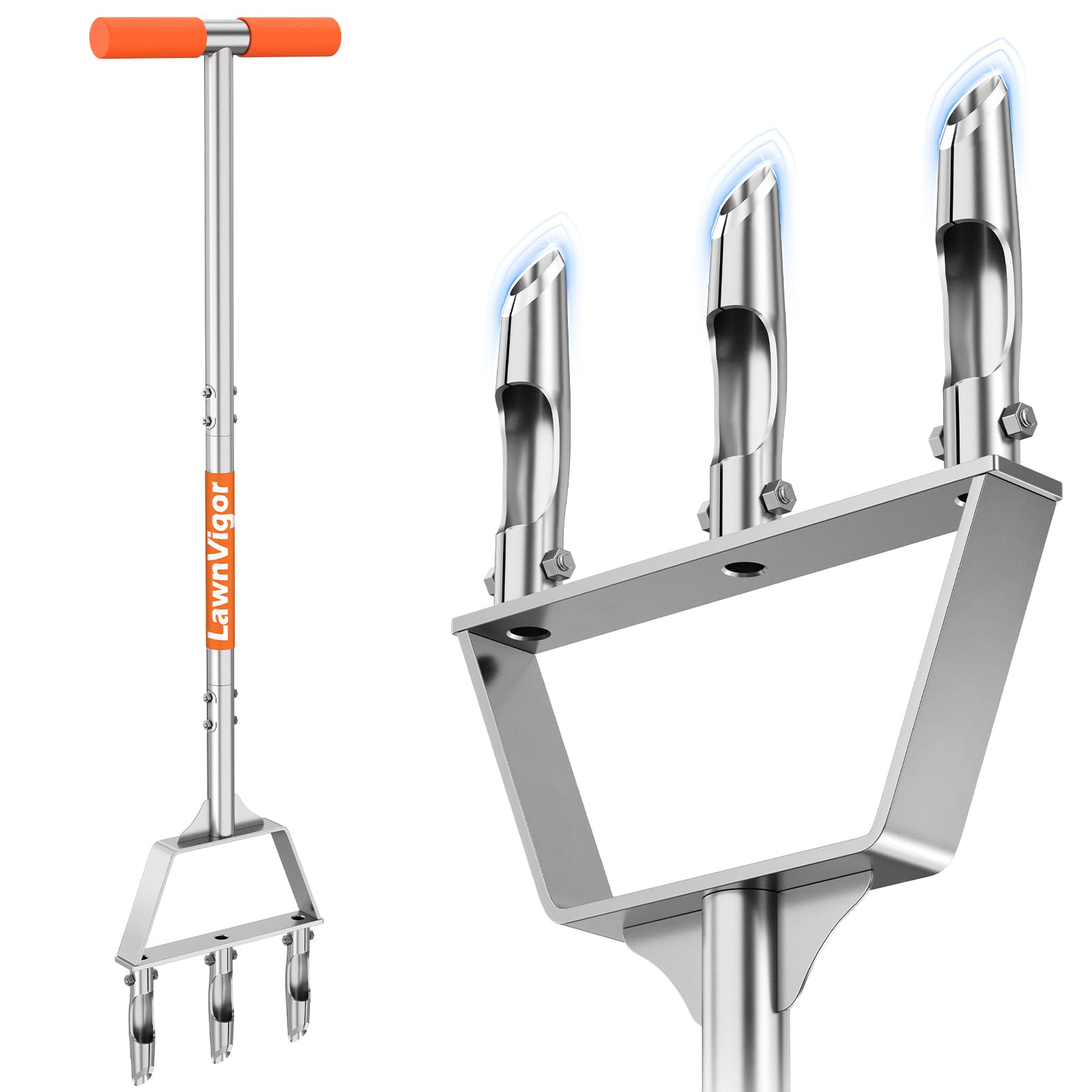
If your lawn has not been aerated in years and compaction is severe, this core aerator is the best mid-range choice. Its three hollow tines pull actual plugs of soil about 3 inches deep out of the ground instead of just pushing them aside. That is exactly what compacted clay and heavy loam need. The tool is semi-assembled out of the box, and customers note it takes under 5 minutes to finish setup.
Buyers consistently praise the ejection mechanism (the part that pushes the soil plug out of the hollow tine). One buyer mentioned it “pulls deep, uniform 3-inch cores on moist soil” and that the “reliable ejection mechanism rarely clogs.” The foam-covered T-handle is wide and comfortable. At 3.52 pounds, it is noticeably lighter than spike-only options like the Jardineer (5.02 pounds), a 43% weight difference that makes it easier to handle over a full afternoon.
The standout spec is the heat-treated hollow tines that stay sharp and resist bending even on rocky soil.
What stands out
- Removes 3-inch deep soil plugs to relieve compaction
- Reliable ejection mechanism rarely clogs per buyer feedback
- Lightweight at 3.52 lbs for easy handling
- Heat-treated hollow tines stay sharp and resist bending
The trade-offs
- Do not rock or twist the tool sideways in the ground
- Requires pre-moistened soil for best performance
4. EEIEER 38″ Core Aerator with Soil Basket

The single number that matters most in this category is 2.46 kilograms (about 5.42 pounds) — the EEIEER 38″ Core Aerator with Soil Basket is one of the heavier manual options, which helps drive its three tines into hard ground.
The downside is that the basket fills up quickly. Reviewers point out that in wet or sandy soil, the hollow tines can still clog, requiring you to use the included cleaning stick to clear them. The design uses a one-piece integrated structure at the bottom (not welded), which the manufacturer says is more durable and less likely to break than welded joints. The inner wall of each tine is thickened from 1.2mm to 2mm for extra strength.
At a mid-range price point, you get a core aerator with a useful cleanup feature that no other tool in this price bracket offers — a price-to-value read that favors anyone who hates raking up soil plugs after aeration.
The upsides
- Built-in soil storage basket catches plugs for easy cleanup
- One-piece integrated bottom is more durable than welded designs
- Thickened tine walls (2mm) resist breakage
- Includes a cleaning stick for unclogging tines
Keep in mind
- Basket fills quickly, requiring frequent emptying
- Hollow tines can still clog in wet or sandy soil
5. Dolibest 4-Core Stainless Steel Aerator
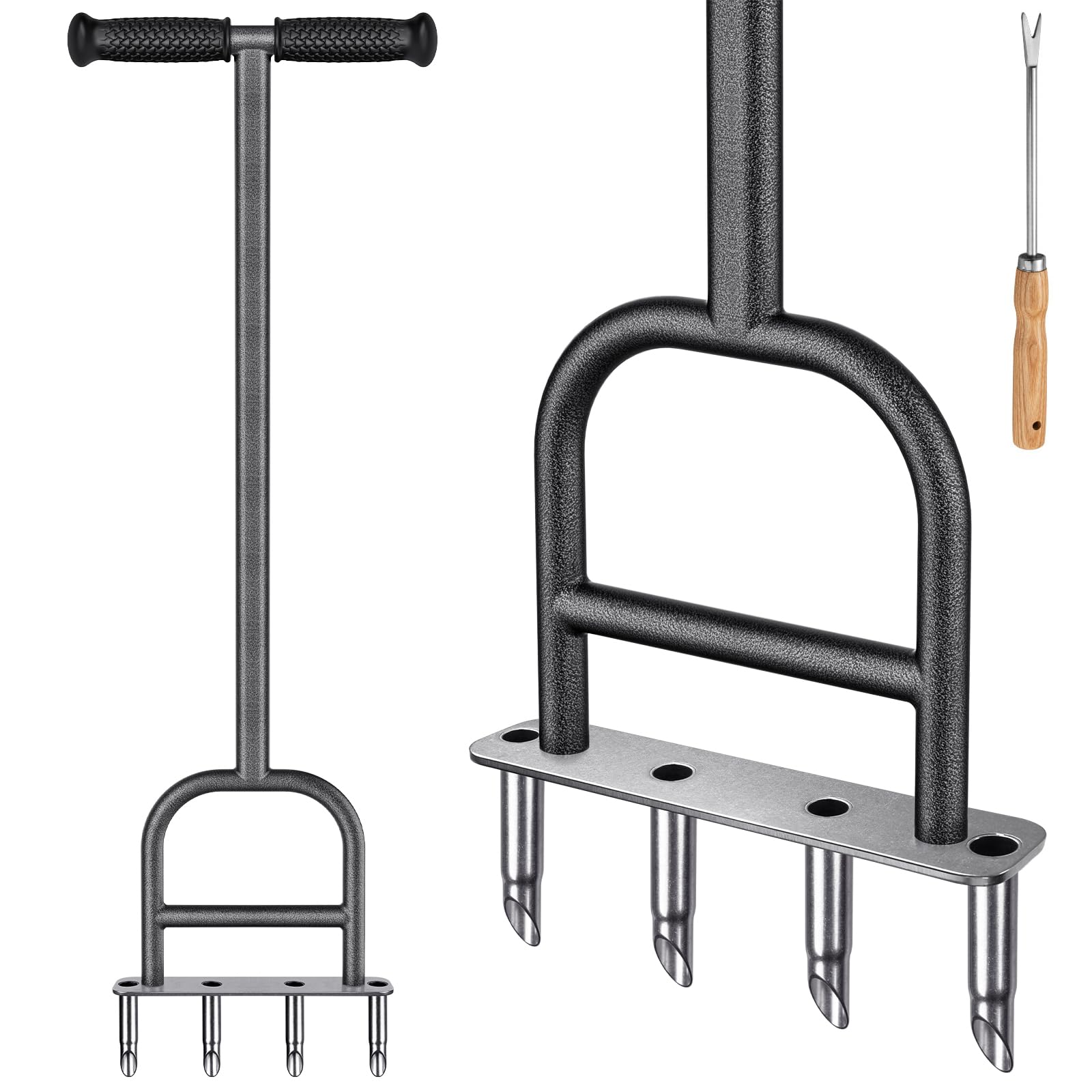
What you actually get at this lower price is the only tool in the lineup with four coring tines instead of three, meaning each step removes four plugs — 33% more coverage per step than three-tine models. The bottom section and the tines themselves are made of stainless steel, which will not rust or bend over time, a real advantage if you store tools in a damp environment. At 5.54 pounds, it is the heaviest option here, but that weight is pure stainless steel durability.
The soft rubber grip on the handle prevents blisters during longer sessions. The elevated foot bar keeps your shoe from interfering with the core ejection. Buyers confirm the tool works well on moist soil and that the cores eject cleanly for the most part. One owner reported that on large yards you may need to clear the tines about 8 times over a 2-hour session depending on soil moisture, but that is typical for any core aerator.
The trade-off is the tines are shallower than some competitors at about 2 inches of effective depth in firm soil. If your compaction runs deeper than that, you may want a tool with longer tines, like the LawnVigor’s 3-inch reach. It also comes with a 12-inch weeding tool that doubles as a cleaning stick for the tines — making it the perfect budget buy for a homeowner with a small, moist lawn who wants stainless steel durability without paying for deeper tines they do not need.
Why we’d pick it
- Four stainless steel tines remove 33% more plugs per step
- Stainless steel bottom and tines resist rust and bending
- Soft rubber grip prevents blisters during use
- Includes 12-inch cleaning and weeding tool
A few caveats
- Effective plug depth is shallower (~2 inches) in firm soil
- Tines may need occasional clearing during long sessions
6. Dolibest Core Aerator with Storage Tray
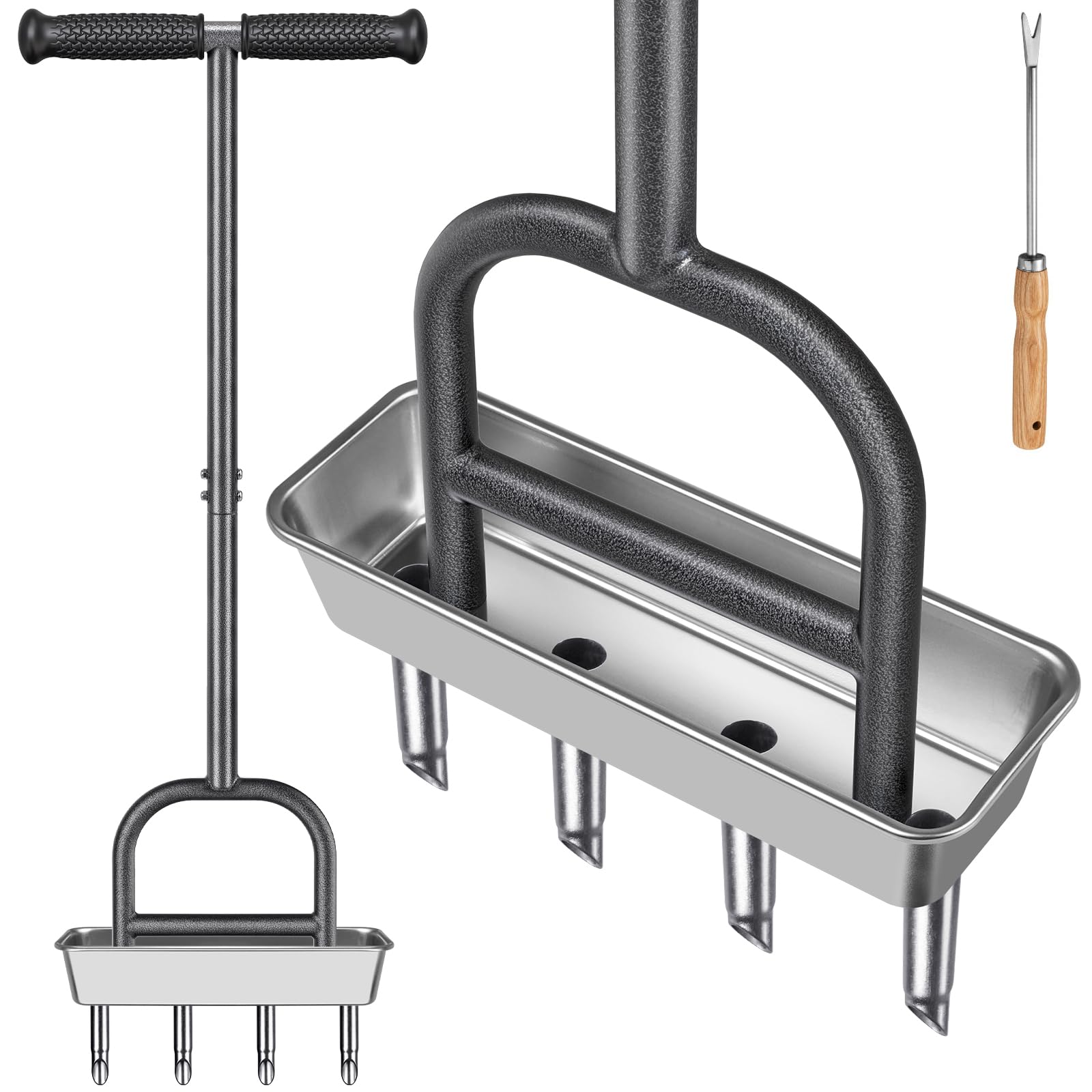
This is the premium version of the Dolibest coring aerator, perfect for the homeowner who wants stainless steel tines AND a built-in soil storage tray so plugs do not scatter across the lawn. The storage tray is made from SUS 304 stainless steel, the same material as the tines, so it will not rust or deform over time. It weighs about 6.19 pounds (2.81 kilograms), making it one of the heaviest tools here, but that weight reflects the stainless construction and the tray.
The four coring tines are also SUS 304 stainless steel, and the rod is powder-coated solid steel for extra durability. The handle has a soft rubber grip to prevent hand fatigue, and the elevated crossbar keeps your shoes clear of the core ejection path. Shoppers say it is “half the price of the very similar one from a big-box store,” making it a strong value play if you want premium materials without the premium retail markup.
One honest limit: the storage tray can encourage clogging in very wet or sticky soil because the cores have to eject through the tray opening. Buyers report that the included cleaning tool (a screwdriver-like stick) is needed occasionally to clear the tines, especially in clay-heavy soil.
Strong points
- Stainless steel storage tray collects cores for easy cleanup
- Four SUS 304 stainless steel tines resist rust and bending
- Half the cost of comparable big-box store models
- Soft rubber grip handle reduces hand fatigue
Before you buy
- Storage tray can contribute to clogging in wet soil
- Heavier build makes it more tiring for long sessions
7. Landzie Original Hollow Tine Aerator
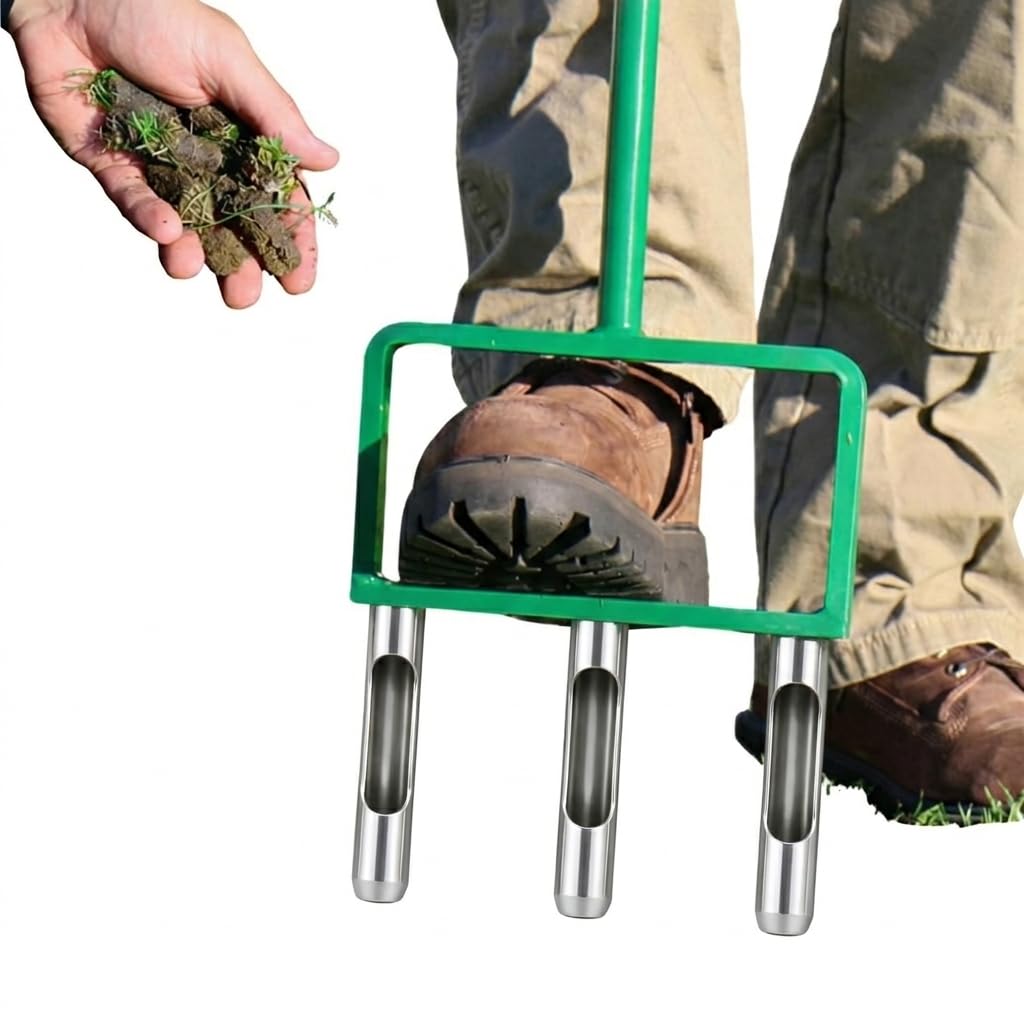
The Landzie is the most expensive tool in this roundup, and its price reflects a build quality designed for landscapers and serious homeowners who want a tool that will last for decades. It features three stainless steel hollow tines with a patented beveled edge that the manufacturer says prevents clogging. Buyers confirm that even after hours of use, the tines rarely jam. At 5.6 pounds with a 42-inch handle, it is both the tallest and one of the heaviest options, giving you maximum leverage and a nearly upright posture.
What that money gets you is a tool that arrives fully assembled — no screws, no wrenches, no instructions needed, just pull it out of the box and start working. The tines are replaceable and the steel frame is powder-coated for rust resistance. Buyers who have put 50 to 60 hours into their lawns report the tool still feels solid and the tines remain sharp. One reviewer with a 3/4-acre lot used it over multiple seasons and said the only maintenance needed was tightening the tine retaining bolts every 1-2 hours of use.
The one clear reason to choose this over the rest of the field is if you want professional-grade durability and plan to aerate a large area (over 5,000 square feet) season after season.
What we like
- Patented beveled tines resist clogging better than standard designs
- 42-inch handle offers maximum leverage and back-saving height
- Fully assembled out of the box, ready to use immediately
- Replaceable stainless steel tines for long-term durability
The downsides
- Premium price point, higher than other manual options
- Heavy at 5.6 lbs, can be tiring on very large lawns
Understanding the Specs
Tine Length
This tells you how deep the spike or hollow tube goes into the soil. For spike aerators, look for at least 3 inches to reach below the surface crust. For core aerators, 3 inches of tine depth means you are pulling plugs deep enough to relieve compaction where roots actually grow. Shorter tines (under 2.5 inches) only scratch the surface and will not fix deeper soil problems.
Tine Material and Coating
Heat-treated steel or stainless steel tines resist bending when you hit rocks or hard clay. Basic painted steel can rust quickly and bend on the first tough spot. Powder-coated finishes add a layer of corrosion protection, which matters if you store the tool in a shed or garage that gets humid. Stainless steel costs more but will never rust.
FAQ
Should I water my lawn before using a manual aerator?
How long does it take to aerate a typical lawn with a manual tool?
Can I use a manual aerator on wet or muddy soil?
Final Thoughts: The Verdict
For most buyers, the best manual lawn aerator winner is the Colwelt 38″ Spike Aerator because its long, thick spikes and tall handle offer the best balance of penetration and comfort for regular lawn maintenance. If you want true plug aeration for compacted clay, grab the Manual Core Aerator by LawnVigor. And for professional-grade durability that will outlast a decade of seasons, the Landzie Original Hollow Tine Aerator is the one if you aerate over 5,000 square feet per year.