
Mowing a full acre with a push mower is less about fitness and more about choosing a machine that cuts thick grass without stalling. You need a wide deck to cover ground fast, an engine that keeps spinning in damp patches, and height options for different seasons. The wrong pick means bogging down and taking twice as long.
I’m Rikta — the co-founder and writer behind Lawn Gear Lab. This guide is built by comparing the manufacturers’ published specifications and the patterns across verified customer reviews, so you get each pick’s real strengths and trade-offs instead of marketing spin.
Whether you need self-propelled assistance on a slope or a reliable starter that fires up in spring, these reviews cover what actually matters when choosing the best push mower for 1 acre.
Before you scroll through specs, here is the one thing that separates a good acre-mower from a frustrating one: the engine’s displacement (the size of the engine’s cylinders, measured in cubic centimeters or cc) and how wide a path it cuts with each pass. A 140cc engine paired with a 21-inch deck will handle a flat, well-maintained acre just fine. If you have rough terrain, wet grass, or hilly spots, you want closer to 170cc or 201cc to maintain momentum without the blade bogging down.
Cutting Deck Width
The width of the deck (measured in inches) tells you how much grass you slice per pass. A 21-inch deck covers about 0.6 inches more per pass than a 20-inch — sounds small, but over an acre that saves you from retracing your steps dozens of times. A 22-inch deck, like you find on the PowerSmart 22-inch model, shaves even more time off the job. Wider is better for an acre, provided the engine has enough power to push that blade through thick grass without stalling.
Engine Power (cc Rating)
Engine displacement (in cc, or cubic centimeters) is the volume the engine’s cylinders can handle — more cc generally means more torque (twisting force) to spin the blade through tough grass. For an acre, look for at least 140cc. A 170cc to 201cc engine gives you a comfortable margin: it will handle your whole yard at once without you needing to slow down for thicker patches. A smaller engine may struggle and overheat, especially during the lush growth of spring.
Adjustable Cutting Height
Cutting height is how high the blade sits above the ground. The number of positions (from 6 to 7 settings) and the range (from a low fraction of an inch to nearly 4 inches) determine how you handle different conditions. In summer, you want a taller cut (around 3 to 3.5 inches) so the grass shades the soil and retains moisture. In spring, you can drop it lower to manage rapid growth. A single-lever system that adjusts all four wheels at once is more convenient than individual wheel adjustments.
Self-Propelled vs. Push
For an acre, self-propelled (the mower drives its own wheels forward, so you just guide it) is a huge time and energy saver. The drive system matters: rear-wheel drive gives you better traction on slopes because the weight of the engine is over the drive wheels. Front-wheel drive can slip on wet grass or steep hills. If you have a flat, open acre, a push mower with a powerful engine still works — but expect your upper body to feel the workout.
3-in-1 Functionality
Most modern mowers offer three modes: mulching (chopping clippings fine and dropping them back onto the lawn), bagging (collecting clippings in a bag), and side discharge (blowing clippings out the side). For an acre, mulching saves you from emptying a bag every 20 feet, and it returns nutrients to the soil. Bagging is useful when the grass is too tall to mulch without leaving clumps. Side discharge handles overgrown grass fast. A mower that does all three gives you flexibility across the seasons.
Quick Comparison
On smaller screens, swipe sideways to see the full table.
| Model | Category | Best For | Key Spec | Amazon |
|---|---|---|---|---|
| PowerSmart EasyGlide 21-Inch | Mid-Range | Reliable starter for flat acre | 144cc OHV engine, 21″ deck | Amazon |
| Baotree 201cc | Value | High power on a budget | 201cc engine, 7 height settings | Amazon |
| PowerSmart 21″ 140cc | Entry-Level | Simple push mowing, light grass | 140cc engine, 21″ steel deck | Amazon |
| PowerSmart 22″ RWD | Premium | Hilly acre with thick grass | 170cc RWD, 22″ deck | Amazon |
| YARDMAX YG2860 | Top Performer | Tough, uneven terrain | 201cc CVT, 22″ deck | Amazon |
| PowerSmart 21″ RWD | Mid-Range | Self-propelled on moderate slopes | 140cc OHV, 21″ RWD | Amazon |
In‑Depth Reviews
1. PowerSmart EasyGlide 21-Inch Gas Lawn Mower
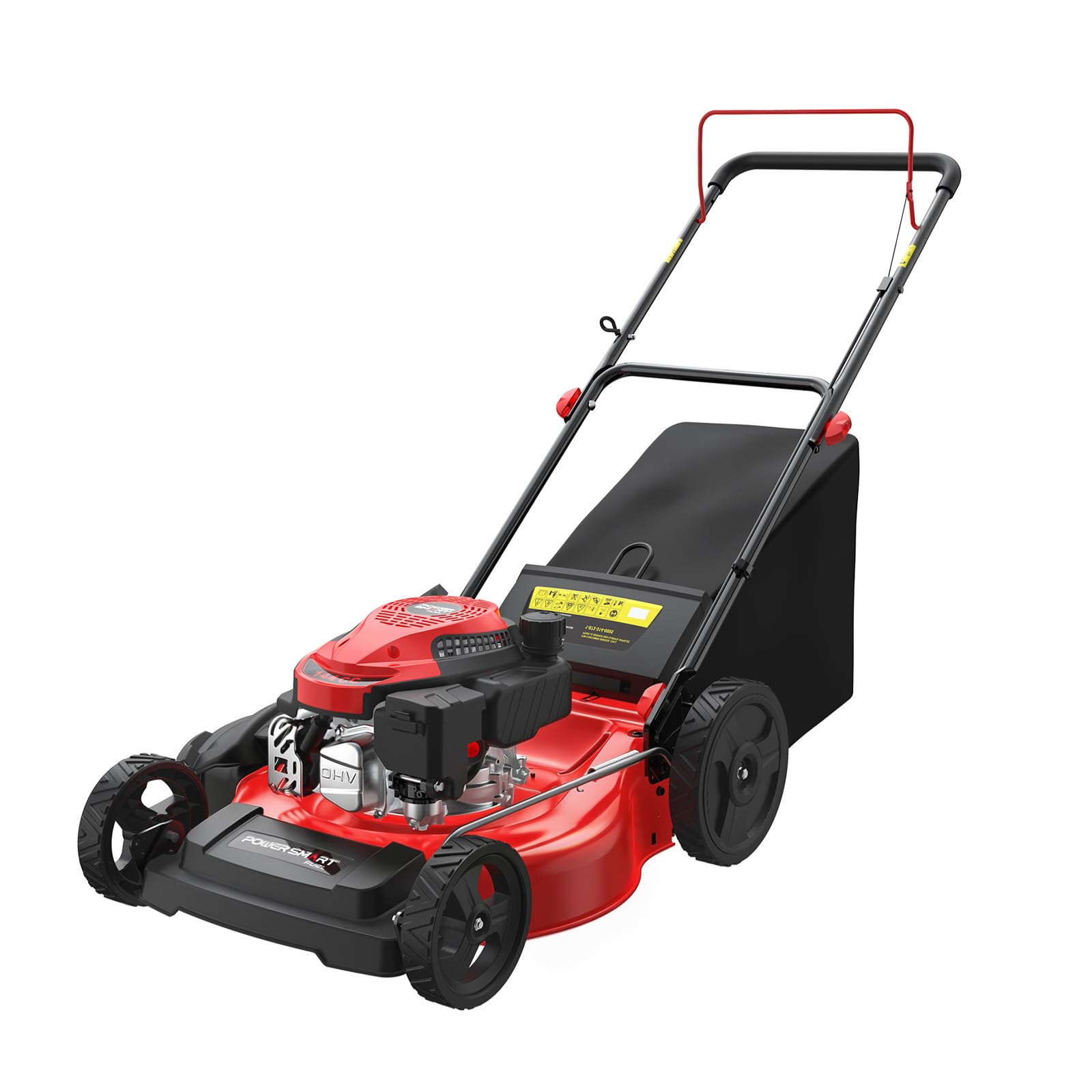
The 144cc OHV engine makes the PowerSmart EasyGlide the top pick for anyone mowing a flat, well-kept acre who wants reliable starting and fuel efficiency. Its 21-inch steel deck covers an acre in about an hour, and the single-lever height adjustment offers six positions from 1.5 to 3.9 inches for seasonal grass changes.
At 61.6 pounds, it is 12% lighter than the 69-pound Baotree 201cc, reducing arm fatigue across a full lawn. The 10-inch rear and 7-inch front wheels roll smoothly over small bumps, and buyers report it handles thick grass easily. The catch is a small fuel tank that may require one refill during an acre, especially when mulching thick grass.
For a flat acre, the PowerSmart EasyGlide delivers hassle-free mowing with a light, easy-starting design.
Good to know
Why it’s great
- Starts on the first pull, even after storage — buyers confirm this repeatedly.
- Six-height lever system is fast to adjust mid-mow if you hit a patch of different grass.
- Light enough at 61.6 lbs to maneuver in tight flower bed areas.
Good to know
- Small fuel tank means you may refill once per acre.
- Handle foam grip can arrive with minor damage in transit according to some reviews.
2. Baotree 201cc Gas Powered Push Lawnmower
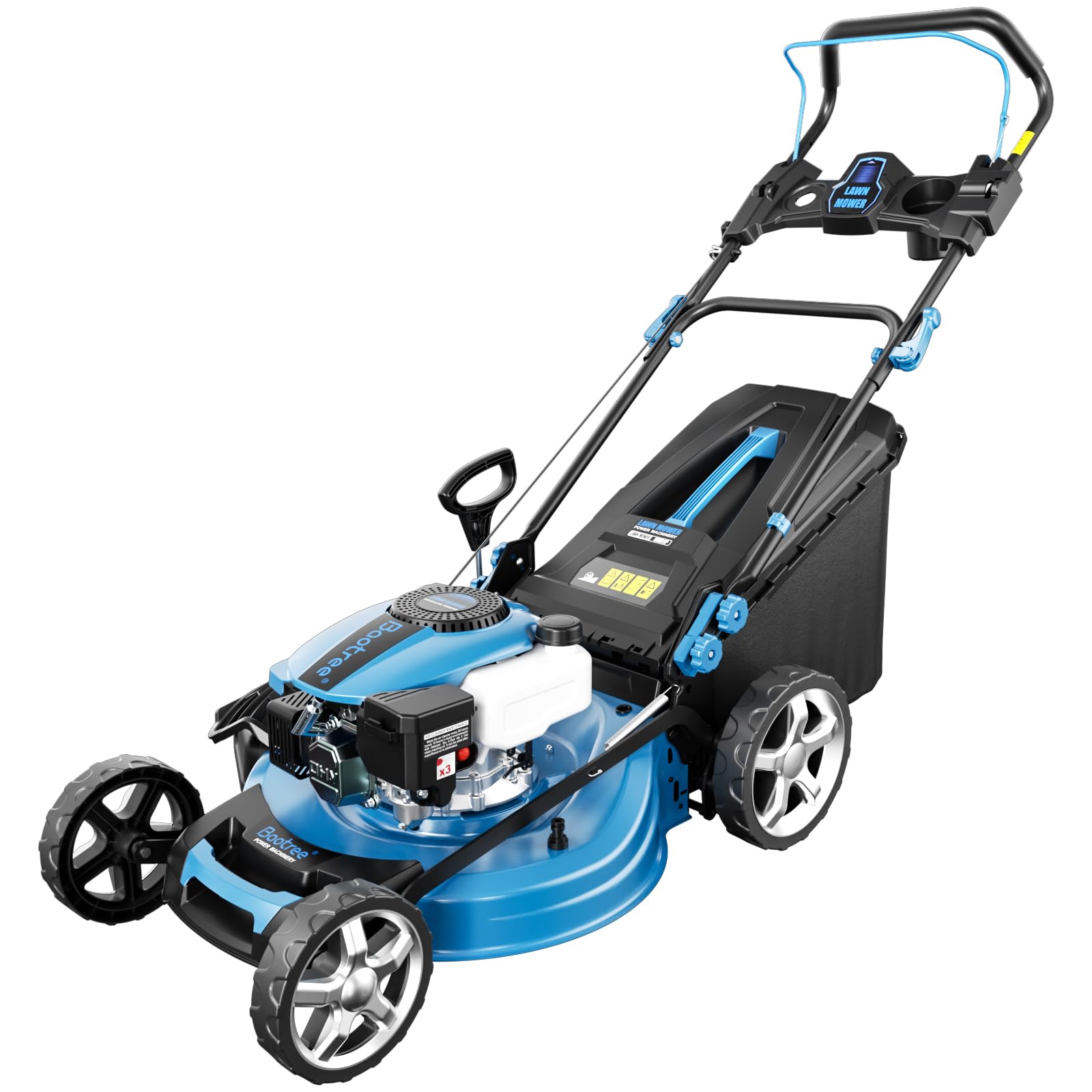
Where the PowerSmart EasyGlide gives you steady reliability, the Baotree 201cc delivers significantly more muscle to power through thick grass. Its 201cc engine is 44% larger than the 140cc engines in some PowerSmart models — that extra displacement means more torque to cut damp spring turf without bogging, making it sharper at night than the EasyGlide in tall conditions. The 7-position height adjustment (0.7 to 3.2 inches) also beats the 6-position standard on the top pick, giving you finer control over your cut.
Owners mention it “handles thick grass with ease” and “moves smoothly across the yard.” With a 21-inch deck, it still covers ground at a good pace. The downside shows up in a few critical reviews: one buyer reports the height lever arrived broken, and another says the self-propelled speed is too fast to match your walking pace. At 69 pounds, it is heavier than the EasyGlide, so you feel it on slopes.
Choose this over the top pick if your acre has thick, fast-growing grass that bogged down a smaller engine before, and you are comfortable handling assembly with care.
Good to know
Where it shines
- 201cc engine outpowers the 170cc and 144cc options when grass is tall and damp.
- Seven height settings give you more precision, especially in spring when growth is uneven.
- Strong self-propelled drive saves energy across a full acre.
Worth noting
- At 69 lbs, it is 12% heavier than the EasyGlide — you feel it on slopes.
- Some units arrive with the height lever damaged from shipping.
3. PowerSmart 21″ 3-in-1 Gas Push Lawn Mower (140cc)
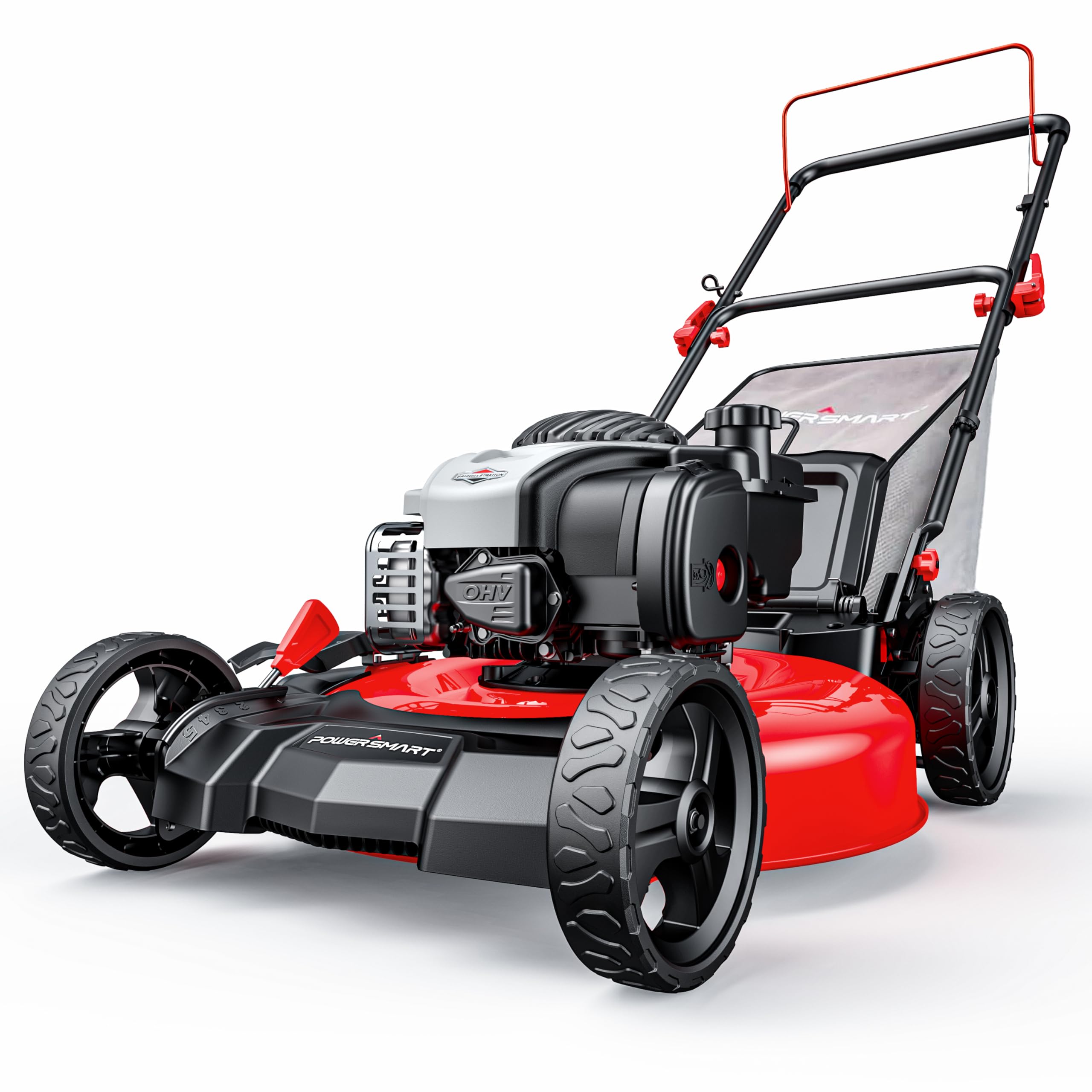
If your acre is mostly flat and you mow weekly, the 140cc PowerSmart push mower keeps costs low while still giving you a 21-inch deck and 6-position height adjustment (1.5 to 3.9 inches) that matches pricier models. Its 4-stroke engine (a four-stroke engine uses standard gasoline, no mixing with oil) starts reliably — customers note “it started on the first pull” out of the box. On an acre of moderate grass, it finishes the job in about an hour.
The 140cc engine is notably smaller than the 201cc on the Baotree. If you let the grass get tall or cut damp grass, you will hear the engine labor. One buyer points out that “missing bolts for belt cover” arrived on their unit. Weighing just over 60 pounds, a push-only model, it makes the hour less tiring on flat ground. This is a solid entry-level pick for the acre owner who mows regularly and does not need self-propelled assistance, but if your terrain is hilly or you often push through wet grass, consider stepping up to the 144cc EasyGlide or the 201cc Baotree instead.
At just over 60 pounds, it is the lightest push mower in this guide with a 21-inch deck.
Good to know
What stands out
- 21-inch deck matches the cutting width of premium models for same ground coverage per pass.
- Multiple buyers confirm it started on the first pull, even after off-season storage.
- Full 3-in-1 mulching, bagging, and side discharge flexibility.
The trade-offs
- 140cc engine is the smallest in this lineup — best kept for flat, maintained lawns.
- A few reviewers point out missing parts or self-propel issues out of the box.
4. PowerSmart 22 in. 170cc Self Propelled Gas Lawn Mower RWD

For an acre with a noticeable slope, the single number that matters most is rear-wheel drive — this model’s RWD system (rear-wheel drive, meaning the powered wheels are behind you) pushes the mower forward from the heavy end, giving you traction instead of spinning out. The 22-inch deck is the widest in the lineup, covering 4.8% more ground per pass than a 21-inch model, which saves about 15 to 20 passes across a full acre. The 170cc engine sits between the 144cc and 201cc options for a balanced power profile.
The trade-off is a slight drop in polish: the cutting height uses two levers (one on each rear wheel) instead of a single lever, so you adjust each side separately. Some shoppers say the blade is not very sharp out of the box. The bag also has a small gap where very fine clippings can leak out. At 68 pounds, it stays planted on slopes but is still maneuverable. This is the mower to pick if your acre has an incline that makes front-wheel-drive mowers slip.
Given the RWD traction and widest deck in the lineup, this model delivers strong slope performance without demanding a premium, making it a solid price-to-value read for uneven terrain.
Good to know
The upsides
- Rear-wheel drive gives you real traction on slopes where front-wheel mowers spin.
- 22-inch deck is the widest here — fewer passes across a full acre.
- Tool-free assembly: unfold the handle and go according to most buyers.
Keep in mind
- Height adjustment requires two separate levers, not one single lever.
- A small number of units arrived with no spark due to a faulty safety switch.
5. YARDMAX 22 in. 201cc Select PACE 6 Speed CVT High Wheel FWD
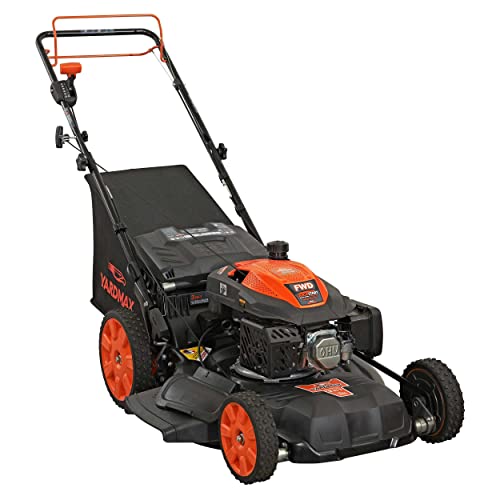
At this lower price you get a 201cc engine paired with a CVT (continuously variable transmission — essentially a stepless gear system) that lets you dial in your walking speed instead of being stuck with a single gear, plus a 22-inch deck and aggressive tread tires that grip uneven ground well. Buyers report it handles 3/4 acre easily on a single tank of fuel and starts on the second pull.
At 84.9 pounds, it is the heaviest mower here — 53 pounds heavier than the 31.8-pound PowerSmart 21-inch RWD. That weight adds stability but makes it harder to push with the self-propel off or to maneuver into a shed. A few owners mention front-wheel drive loses traction on wet grass, and the speed lever can slip. The bag attachment is also described as awkward.
If your acre is rough terrain where raw power matters more than weight, this is the mower. For flat lawns, the lighter PowerSmart EasyGlide is easier to live with day to day. This YARDMAX is perfect for the budget buyer who prioritizes raw power and hill-climbing ability over light weight and easy storage.
Good to know
Why we’d pick it
- CVT transmission gives you stepless speed control — no more fixed gear that is too fast or too slow.
- Aggressive tread tires grip muddy or uneven ground better than standard wheels.
- 201cc engine handles tough, hilly terrain with authority.
A few caveats
- At 84.9 lbs, it is the heaviest mower here — moving it manually is a chore.
- Front-wheel drive can slip on wet grass, especially going uphill.
6. PowerSmart 21-Inch Gas Push Lawn Mower with OHV Engine RWD
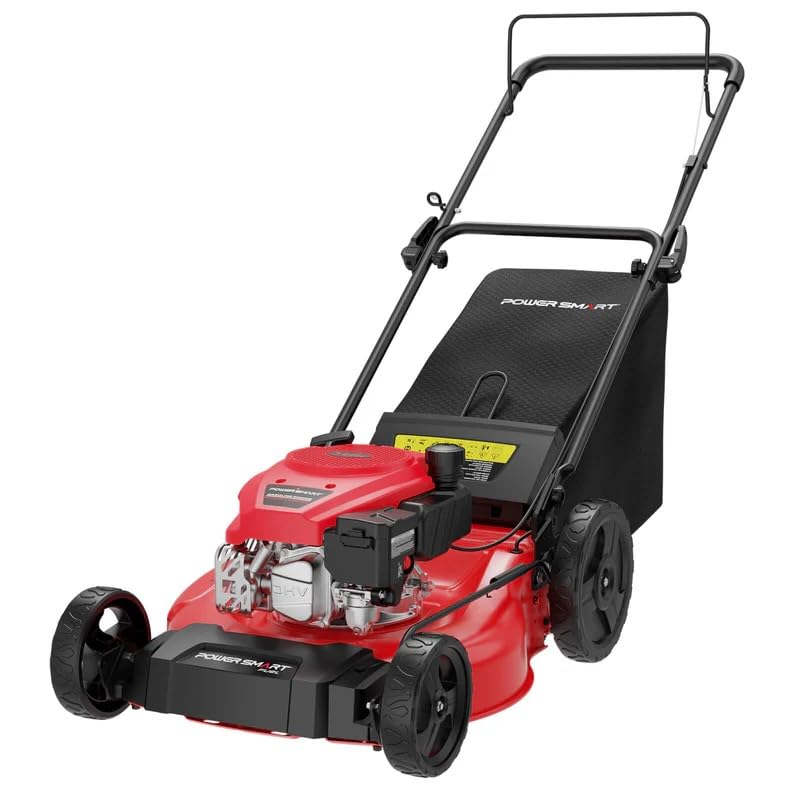
This PowerSmart RWD is perfect for the acre owner who needs rear-wheel drive traction on moderate slopes but cannot wrestle a 68-pound machine — at just 31.8 pounds, it is a full 36 pounds lighter than the 22-inch RWD model and 53 pounds lighter than the YARDMAX. You can lift it out of a shed, turn it around in tight corners, and push it on flat sections without the self-propel running. The self-propelled RWD gives you traction on moderate slopes, and the 6-position height adjustment (1.5 to 3.9 inches) matches premium models.
Buyers confirm it “starts easily” and “cuts long grass” well, with one reviewer noting it handled Florida’s thick grass where their electric mower failed. The 1.4-bushel bag is on the smaller side for a full acre — expect to empty it a few times if bagging. The 140cc engine is the same as the budget model, so it lacks the power of the 170cc or 201cc options for thick, wet grass.
For the value-conscious buyer who needs RWD on a moderate-slope acre and wants a light machine, this is a smart pick — just be aware that the 140cc engine may struggle in thick, wet grass compared to more powerful options.
Good to know
Strong points
- At 31.8 lbs, it is the lightest self-propelled RWD mower in this list.
- Starts first pull with no primer or choke needed — buyers confirm this across multiple seasons.
- Rear-wheel drive provides good traction on moderate slopes without the bulk.
Before you buy
- 140cc engine may struggle with tall, wet, or overgrown grass on a full acre.
- Look for authorized service centers before buying — some reviewers could not find one locally.
Understanding the Specs
Engine Displacement (cc)
Measured in cubic centimeters (cc), this number tells you the size of the engine’s cylinders. More cc means more torque (twisting force) to keep the blade spinning through thick grass instead of bogging down. For a one-acre lawn, 140cc is the minimum to consider. A 170cc to 201cc engine gives you a safety margin for tall, damp, or overgrown grass. A 140cc engine on a damp spring lawn may require you to slow your walking pace to avoid stalling.
Cutting Deck Width (inches)
The deck width determines how much grass you cut in one pass. A 21-inch deck cuts a 1.75-foot path; a 22-inch deck cuts a 1.83-foot path. Over a standard one-acre lawn (roughly 208 feet by 209 feet), switching from a 21-inch to a 22-inch deck saves you about 15 to 20 passes across the long dimension. If you are pushing manually, that is several minutes of walking you skip. Wider is better, but only if the engine has enough power to spin that wider blade.
Adjustable Cutting Height (Inches)
This is the range of heights you can set the blade to, measured from the ground up to the blade. More positions (6 to 7) give you finer control. The range matters: lower cuts (around 1.5 inches) are useful for the first spring mow or for leveling an overgrown lawn. Higher cuts (around 3.5 to 3.9 inches) are better for summer, when you want the grass to stay longer to shade the soil and reduce watering needs. Never cut more than one-third of the grass blade’s height at a time — it stresses the grass.
Self-Propelled Drive Type
Self-propelled mowers drive their own wheels forward, so you just steer. Front-wheel drive (FWD) pulls the mower from the front — it works fine on flat ground but loses traction going uphill, especially on wet grass, because the weight shifts to the rear. Rear-wheel drive (RWD) pushes from behind, keeping the heavy engine over the drive wheels, which gives you much better grip on slopes. For a one-acre lawn with even a moderate incline, RWD is the better bet. For a flat lawn, FWD is lighter and easier to maneuver.
FAQ
Can a push mower handle a full acre without overheating?
Is mulching or bagging better for a one-acre lawn?
How long should a push mower last mowing one acre weekly?
Do I need self-propelled for a flat acre?
Final Thoughts: The Verdict
For most owners of a flat to moderately sloped acre, the best push mower for 1 acre is the PowerSmart EasyGlide 21-Inch because it combines a reliable 144cc engine that starts on the first pull with a light 61.6-pound frame that makes an hour of mowing feel manageable. If your acre has a steep hill that robs front-wheel drive mowers of traction, grab the PowerSmart 22-inch RWD for its rear-wheel drive grip and wider 22-inch deck. And for the budget-focused buyer who wants maximum power for the money, the Baotree 201cc delivers 44% more displacement than entry-level models, handling the toughest grass on your acre without slowing down.