
If you want a thick, green lawn without relying on harsh synthetic chemicals that can wash away into local streams, the right natural manure for grass is your single best tool. The problem is that not all manure is the same — some types can burn your grass with too much nitrogen, while others are so slow-release you see little benefit. The key is picking the right source and the right form for your specific yard.
I’m Rikta — the co-founder and writer behind Lawn Gear Lab. This guide is built by comparing the manufacturers’ published specifications and the patterns across verified customer reviews, so you get each pick’s real strengths and trade-offs instead of marketing spin.
For most yards, the best first pick is the Fancy Chicken 40lb All-Purpose, because it covers up to 10,000 square feet with a balanced 4-2.5-2 NPK ratio (4% nitrogen, 2.5% phosphorus, 2% potassium) that feeds grass steadily without burning it.
How To Choose The Best Manure For Grass
Feeding your lawn manure is about feeding the soil, not just the grass blades. You want a product that adds organic matter, feeds microbes, and releases nutrients slowly so you don’t get a nitrogen burn followed by a crash. Here are the three things to look for.
NPK Ratio — The Three Numbers That Matter
Every fertilizer bag has three numbers: Nitrogen (first), Phosphorus (second), and Potassium (third). For grass, you want a higher first number for green growth, but not so high that it burns. A balanced mix like 4-2.5-2 gives you steady growth without scorching your lawn. The nitrogen promotes leaf greening, phosphorus helps roots establish, and potassium keeps the grass resilient to stress and disease.
Pelleted vs. Composted vs. Raw
Pelleted manure is dried and formed into small granules that you can spread easily with a push spreader. It is convenient but often has a short-term odor until watered in. Composted manure has already been broken down by microbes, so it smells like rich soil, not barnyard, and it will not burn your grass even if applied heavily. Raw manure should always be avoided for lawns because it can introduce weed seeds and pathogens, and it may burn your grass badly if applied fresh.
Volume and Coverage
Manure is heavy and bulky by nature, so you need to match the bag size to your yard. A 5-pound bag of pelleted chicken manure covers roughly 300–500 square feet, which works for small patches. If you have a standard 5,000-square-foot lawn, you will want a 40-pound bag that can cover up to 10,000 square feet. The catch is that bigger bags are cheaper per square foot but harder to carry and store.
Quick Comparison
On smaller screens, swipe sideways to see the full table.
| Model | Category | Best For | Key Spec | Amazon |
|---|---|---|---|---|
| Fancy Chicken 40lb All-Purpose | Premium | Large lawns needing a big coverage from one bag | Covers up to 10,000 sq ft, 4-2.5-2 NPK ratio | Amazon |
| Michigan Peat Baccto Wholly Cow | Premium | Buyers who want odor-free, fluffy compost that works immediately | 40 Quarts, odor-free, uniform consistency | Amazon |
| R&M Organics Premium Compost | Mid-Range | Smaller garden beds and container plants needing fine, low-odor compost | 10 lb bag, 0.31 cubic feet, manure-based compost | Amazon |
| Brut Cow Compost | Mid-Range | Gardeners who want pure composted cow manure in a compact size | 10 Quarts, OMRI certified, odor-free | Amazon |
| Fancy Chicken 5lb Pelleted | Budget | Small lawns or garden patches with a simple, effective pellet fertilizer | 5 lbs, covers 300–500 sq ft, 4-2.5-2 NPK | Amazon |
In‑Depth Reviews
1. Fancy Chicken 40lb All-Purpose Organic Lawn & Garden Food
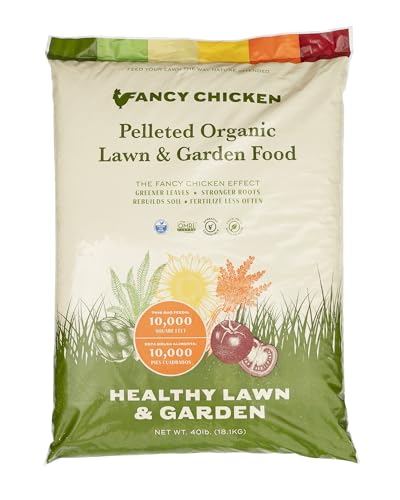
4-2.5-2 NPK ratio (4% nitrogen, 2.5% phosphorus, 2% potassium) makes this the top pick for anyone wanting steady green growth without the green-then-brown cycle of synthetic products. The 40-pound bag feeds up to 10,000 square feet — roughly a quarter-acre lawn — making it 8.0 times the coverage of the 5-pound Fancy Chicken bag in this list.
The pelleted chicken manure form (dried and formed into small granules) spreads easily with a hand spreader or push spreader without clumping. The pellets have a temporary odor after application, but buyers report it fades completely after watering or a rain shower. Owners mention they “have been using for two years now” and call it “a great alternative to chemical fertilizers.”
If you want one straightforward, high-value bag that covers a big lawn, this is the top pick for most people — but skip it if you cannot store a heavy 40-pound bag or if a barnyard smell, even short-lived, bothers you. For a big lawn without the chemical roller coaster, this is the one to get.
Why it’s great
- Huge 40 lb bag covers up to 10,000 sq ft — 8.0x more than the 5 lb Fancy Chicken bag
- Balanced 4-2.5-2 NPK ratio feeds grass without burning
- Easy to apply with any spreader; odor disappears after watering
Good to know
- Creates a dusty cloud when opened — open outdoors with a mask and gloves
- Heavy at 40 lbs, so plan for storage space
2. Michigan Peat Baccto Wholly Cow Horticultural Compost and Manure
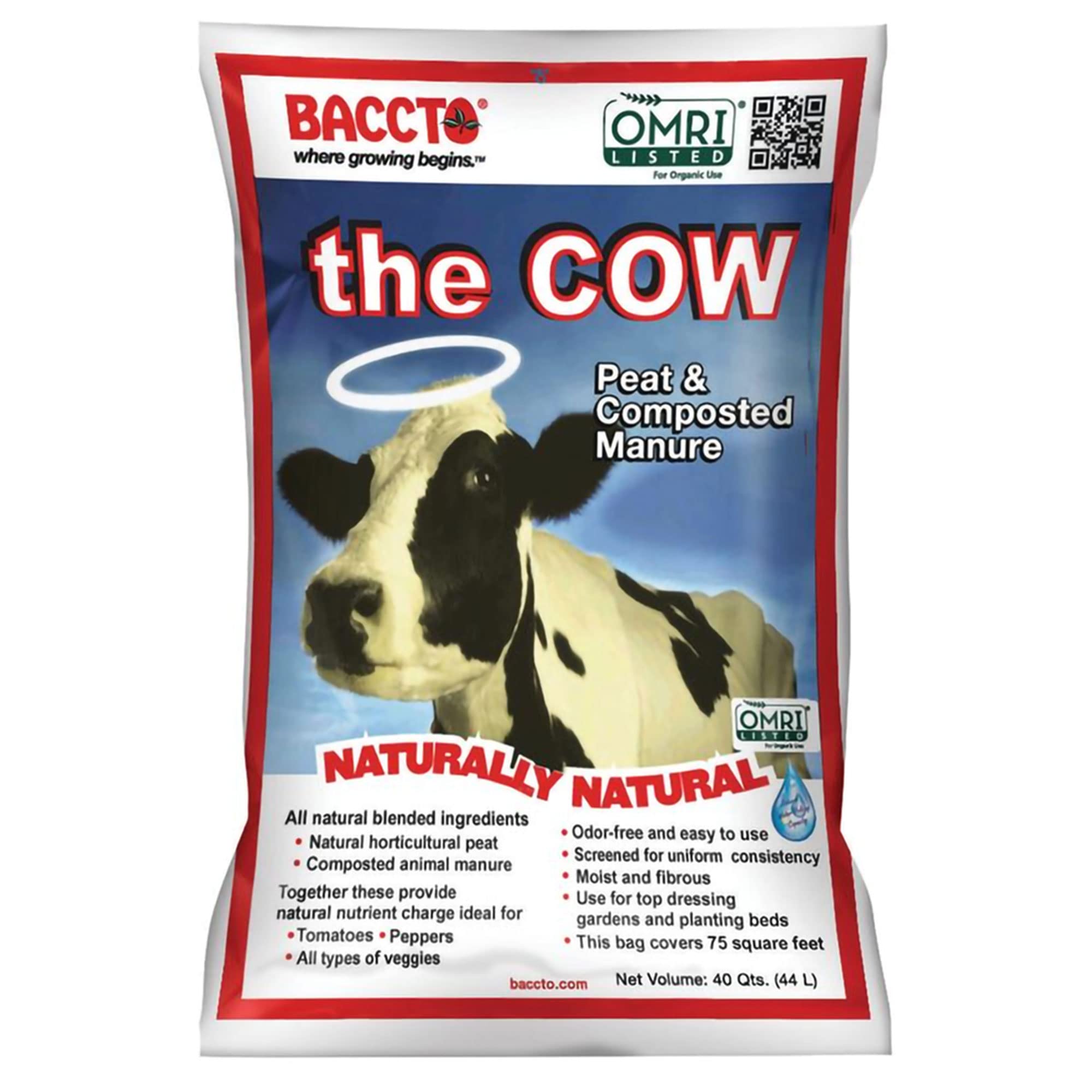
Against the top pick’s 10-quart Brut Cow Compost, this Michigan Peat Baccto Wholly Cow bag delivers 4.0 times the volume (40 quarts) while weighing 34 pounds—actually lighter than the Fancy Chicken bag’s 40 pounds. It is made from fully composted cow manure and natural peat, blended for a uniform consistency that customers note is “lightweight, fluffy, and pleasant to work with.”
The lack of odor is the key advantage here, especially if you are top-dressing near your house. One downside compared to the Fancy Chicken bag is lower nitrogen content, so the visible green-up is slower. Additionally, this is not a fast-release pellet—it works by improving soil moisture retention and feeding the soil food web gradually. Despite being composted, reviewers report “high manure concentration for bumper mushroom crops.”
If odor bothers you and you want immediate usability, choose this over the top pick; pass on it if you need a fast nitrogen boost for a struggling lawn.
Where it shines
- Odor-free formula means no unpleasant smells during or after application
- Screened for uniform consistency — no large sticks or debris
- Blend of peat and cow manure improves soil moisture retention
Worth noting
- Lower nitrogen content compared to chicken manure, so growth boost is slower
- Heavy at 34 pounds for the volume
3. R&M Organics Premium Organic Compost 10 lb Bag
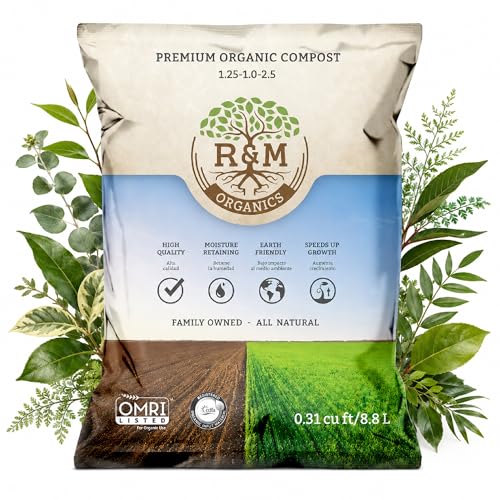
For a small lawn patch, a container garden, or a single flower bed, this 10-pound bag of composted dairy cow manure delivers immediate soil benefits without overpowering plants. The manure is aerated continuously during composting to break down into a fine, soil-like texture — no clumps and no manure smell. One reviewer reports the “compost revived ailing tomato plant: yellow leaves turned green, new growth and flower buds appeared within a week of mixing into 27-gallon planter.”
Because the manure is fully composted (broken down by microbes before bagging), nutrients are available to plant roots immediately without the risk of burning. The key spec is the 5:1 mixing ratio, so a little goes a long way when blended into existing soil. However, at only 0.31 cubic feet of volume, this bag is too small for a full lawn — it is for small-scale use. It costs more per pound than the bigger bags here. Skip this if you need to cover more than 500 square feet; it is perfect if you just want to revive a few plants.
This bag delivers a 5:1 mixing ratio from just 0.31 cubic feet of fully composted dairy manure — a precise revival dose, not a lawn-wide spread.
What stands out
- Fine, uniform texture with no clumps and no manure odor
- Immediately available nutrients — buyers saw plant revival within a week
- Suitable for both indoor and outdoor use
The trade-offs
- Only 0.31 cubic feet of volume — too small for a large lawn
- Higher cost per pound than buying a bigger bag
4. Brut Cow Compost – Nutrient-Rich Composted Cow Manure

The single number that matters most in this category is OMRI listing—this product has it, meaning an independent certifier has confirmed no synthetic additives, sewage sludge, or prohibited chemicals. This compact 10-quart bag gives you third-party verified organic purity, thanks to its OMRI (Organic Materials Review Institute) listing. The composted cow manure is finely sifted and odor-free, so it blends seamlessly into garden beds and container soil without any barnyard smell.
Reviewers point out using it in a 3:2 ratio of compost to soil for growing vegetables, saying “plants growing very fast.” The nutrient profile is rich in nitrogen, calcium, and iron, which help grass grow deeper roots and a richer green color. However, at 10 quarts, you get 4.0 times less volume than the 40-quart Michigan Peat Wholly Cow bag for a similar price, so you need multiple bags for a large lawn. This bag is for the organic-focused gardener who wants a pure cow manure product for small beds or containers.
it’s not for you if you need to cover a big lawn affordably—the price-to-value read is clear: you pay about the same as a 40-quart bag for only 10 quarts of material.
The upsides
- OMRI certified organic — third-party verified purity
- Finely sifted texture with no additives or filler
- Odor-free so you can use it indoors or near the house
Keep in mind
- Small 10-quart bag means higher cost per square foot for large lawns
- Composted cow manure releases nutrients more slowly than chicken manure
5. Fancy Chicken All-Purpose Manure – 5lbs Pelleted Dried Organic Chicken
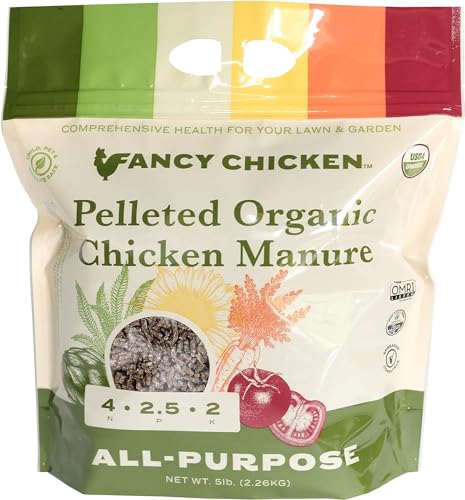
What you actually get at this lower price is a 5-pound bag of pelleted dried organic chicken manure with a 4-2.5-2 NPK ratio (4% nitrogen, 2.5% phosphorus, 2% potassium) — the same nutrient profile as the 40-pound Fancy Chicken bag, but sized to cover 300 to 500 square feet.
What you give up is bulk efficiency. The 5-pound bag costs more per pound than the 40-pound version, and you get 8.0 times less product by weight (80 ounces vs. 640 ounces). The pellets have a temporary odor, but shoppers say “it is not too stinky” and the smell “goes away once you water or get some rain.” Like the bigger bag, you must open it outdoors with a mask and gloves because the dry pellets create a fine, dusty powder.
This bag is perfect for first-timers or tiny yards; look elsewhere if you know you will need more coverage — go straight to the 40-pound bag. It is the exact budget buyer it is perfect for: someone wanting to test organic fertilizer on a small strip of lawn without spending much.
Why we’d pick it
- Same effective 4-2.5-2 NPK ratio as the larger bag at a small scale
- Pellet form spreads easily by hand or small spreader
- Safe for pets and kids after watering
A few caveats
- Higher cost per pound than buying the 40 lb bag
- Pellets are very dusty — open with a mask and gloves outdoors
- Has a temporary odor that needs watering to disappear
Understanding the Specs
NPK Ratio — The Numbers That Control Growth
The three numbers on a fertilizer bag tell you the percentage of nitrogen (for green leaf growth), phosphorus (for root development), and potassium (for overall plant health). For grass, you want a balanced ratio like 4-2.5-2 that gives steady green-up without shocking the lawn. Too much nitrogen (like a 30-0-0 synthetic) can cause a rapid growth spurt that weakens the grass and leads to disease.
Pelleted vs. Composted Manure
Pelleted manure is dried and formed into small granules that store easily and spread with a standard fertilizer spreader. It releases nutrients over a few weeks but can have a strong smell until watered in. Composted manure has been fully broken down by microbes first, so it smells like soil, feeds the soil food web immediately, and will not burn roots even if applied generously.
Coverage — Matching Bag Size to Your Yard
Manure is heavy — a 5-pound bag of pellets covers about 300–500 square feet, while a 40-pound bag can handle up to 10,000 square feet. Always check the coverage number on the bag so you don’t underfeed your lawn (weak results) or overfeed (nutrient runoff). A bag that says “covers 10,000 sq ft” is suited for a quarter-acre lawn, not a small garden patch.
OMRI Certification — What It Means
OMRI (Organic Materials Review Institute) listing means a third party has verified that the product meets organic farming standards. It guarantees no synthetic additives, no sewage sludge, and no prohibited chemicals. If you are growing vegetables alongside your grass or want the cleanest possible soil amendment, look for the OMRI seal on the bag.
FAQ
Can I use chicken manure on my grass without burning it?
How often should I apply manure to my lawn?
What is the difference between composted cow manure and pelleted chicken manure?
Is manure safe for pets and kids after application?
Final Thoughts: The Verdict
For most people, the manure for grass winner is the Fancy Chicken 40lb All-Purpose because it offers the best balance of coverage (up to 10,000 sq ft), a balanced 4-2.5-2 NPK ratio, and proven results from real buyers. If you want a completely odor-free experience with no waiting for the smell to fade, grab the Michigan Peat Wholly Cow. And for small gardens or first-time organic fertilizer users, the standout is the entry-level value of the Fancy Chicken 5lb Pelleted bag.