
The worst feeling in a raised bed garden is spending hours weeding, only to realize your mulch is the culprit — sprouting seeds instead of suppressing them. The right mulch keeps your soil moist, blocks weeds, and feeds your plants without turning your garden into a second job. This guide covers the top options, from compressed coconut husk blocks to clean straw and pine needles, so you know exactly what to spread and what to skip.
I’m Rikta — the co-founder and writer behind Lawn Gear Lab. This guide is built by comparing the manufacturers’ published specifications and the patterns across verified customer reviews, so you get each pick’s real strengths and trade-offs instead of marketing spin.
Here are the seven contenders for the best raised bed mulch, ranked by real-world performance, seed cleanliness, and how well they hold moisture through a growing season.
How To Choose The Best Raised Bed Mulch
Raised bed gardening is intense — every square inch is precious, and your mulch choice directly affects water use, soil temperature, and whether you spend summer pulling weeds. Here are the three factors that separate a good mulch from a headache.
Seed Contamination — The Hidden Problem
Not all straw is created equal. Many straw mulches are packed with wheat, grass, or hay seeds that sprout aggressively in your raised beds. One bad bag can introduce more weeds than your soil ever had. Look for mulches labeled “seed-free” or opt for coconut coir (fibers from coconut husks), which has no seeds at all.
Moisture Retention vs. Drainage
Coconut husk chips hold many times their weight in water, slowly releasing it to plant roots — one reviewer noted it “reduced watering by half.” Wood mulches like aspen do the same but break down faster. Straw sits on top and insulates, but may not hold as much water. Your climate and watering schedule should guide this choice.
Coverage and Expansion
Compressed bricks of coconut coir expand dramatically when soaked — a single 10-pound block can grow into 2 cubic feet of mulch. Loose straw and pine needles are easier to spread but harder to store. Measure your bed’s square footage before ordering so you do not run short mid-season.
Quick Comparison
On smaller screens, swipe sideways to see the full table.
| Model | Category | Best For | Key Spec | Amazon |
|---|---|---|---|---|
| Back to the Roots 100% Organic Mulch | Coconut Husk | Best overall raised bed mulch | Expands to 2 cubic feet | Amazon |
| Riare Coco Chips | Coconut Husk | Best value coco mulch | Expands to 72 quarts | Amazon |
| HealthiStraw GardenStraw | Wheat Straw | Best clean straw mulch | 3 cubic feet coverage | Amazon |
| Brut Organic Aspen Mulch | Wood Bark | Best for moisture retention | 1 cubic foot volume | Amazon |
| Long Needle Pine Straw Mulch | Pine Needles | Best for weed control | 65-80 sq ft coverage | Amazon |
| Premium Garden Straw | Wheat Straw | Best budget straw option | 4 pound package | Amazon |
| Blue Mountain Hay Organic Garden Straw | Straw/Hay | Premium straw (with caution) | 5 pound package | Amazon |
In‑Depth Reviews
1. Back to the Roots 100% Organic Mulch, 58 Quart (2 Cubic ft)
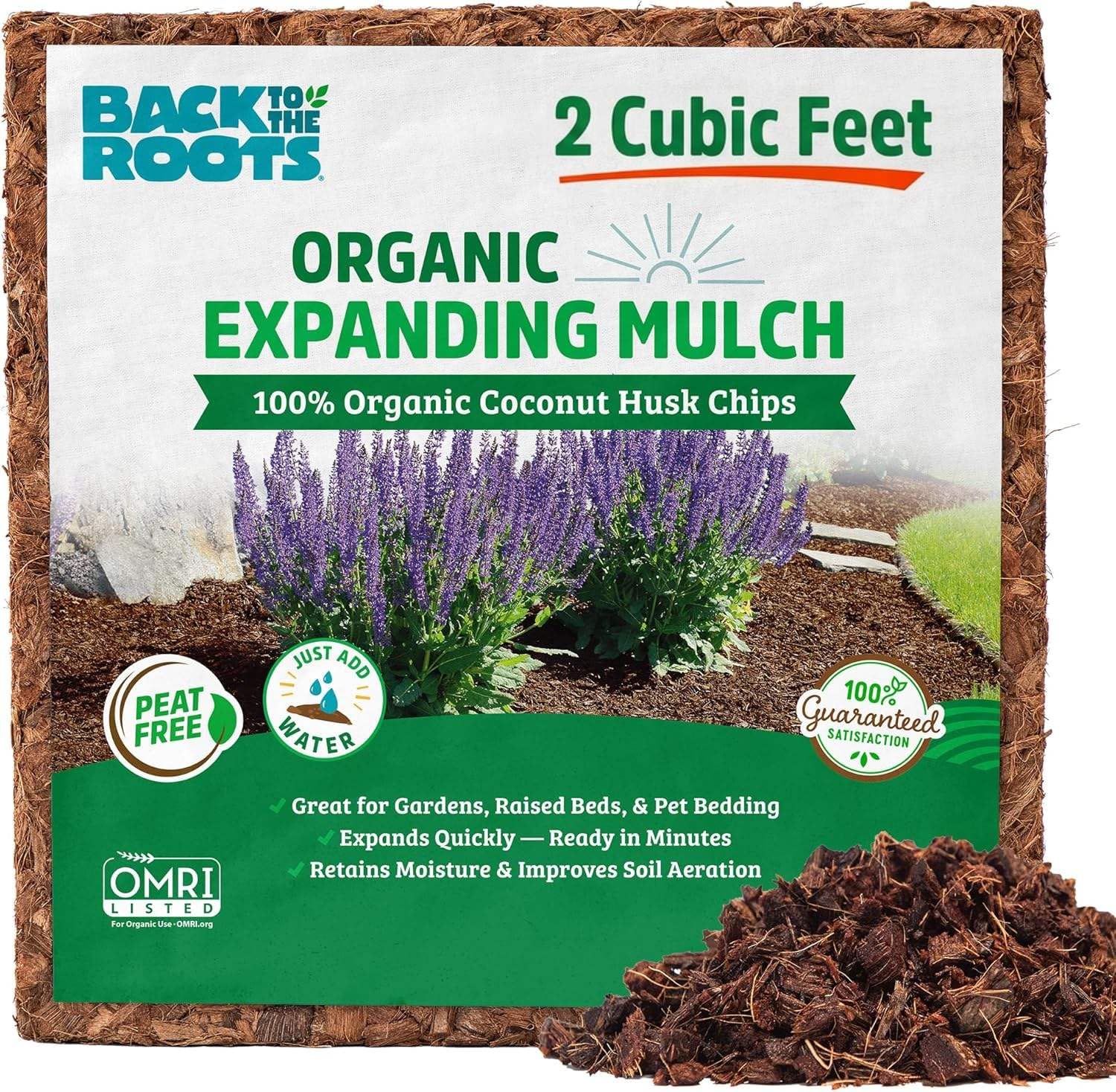
58 quarts (2 cubic feet) of compressed coconut husk that expands with water — this is the top pick for organic gardeners who want the most coverage per bag from a single, lightweight block. You get twice the volume of the Brut Aspen Mulch because this 10-pound compressed block expands to 2 cubic feet when you add water — so a single bag covers a 4×8 bed at a 2-inch layer. Buyers report it expands “significantly with water,” one using a wheelbarrow (filling it three-quarters full) and another a kiddie pool. It is OMRI-listed for organic gardening (certified for use around food crops), so you can spread it around vegetables and herbs without worry. The coconut husk holds moisture and blocks weeds naturally, and it is peat-free, making it a sustainable choice.
The only real trade-off is the upfront effort — you need to soak the block and break it apart, which takes a little planning. For the coverage-to-weight ratio and the peace of mind of zero seeds, this is the one to buy if you have a single raised bed or a whole row.
For unmatched coverage per bag and certified organic safety around edibles, this is the raised-bed mulch to beat.
Why it’s great
- Expands to 2 cubic feet from a 10-pound block
- OMRI-listed organic and peat-free
- No seeds — zero weed sprouting
Good to know
- Requires soaking and breaking apart before use
- Pricier per bag than loose straw
2. Riare 10LBS Coco Chips Substrate for Plants

Compared to the top pick Back to the Roots, the Riare 10LBS Coco Chips cost less per bag but deliver roughly 0.35 cubic feet (10 liters expanded) versus 2 cubic feet — a volume difference of about 5.7 times less material. One buyer summarized the value perfectly: “Coconut mulch outperforms pine straw in raised beds.” It breaks down slowly, so you do not need to replace it as often as straw.
Owners mention the chips are “thick, coarse texture with large chunks” — ideal for a chunky soil mix that improves aeration and drainage. The compressed 11.81 x 11.81 x 5.12 inch bricks are easy to store, and the pH is balanced so it will not mess with your soil chemistry. It is a solid middle-ground for gardeners who want the benefits of coco coir without paying for the premium name.
Where it falls short of the Back to the Roots is the expansion ratio: customers note the “product quantity should be doubled for the price,” and some wish the bag were cheaper. If you are covering multiple large beds and want the most cubic feet for your money, the Back to the Roots gives you 2 cubic feet versus roughly 0.35 cubic feet from this 10-liter block. Choose the Riare over the top pick if you need a smaller, cheaper block for a single small bed or container and prefer a coarse, chunky texture over a finer mulch.
Where it shines
- Thick, coarse chunks improve soil aeration
- Low EC and pH balanced for sensitive plants
- Breaks down slowly — less frequent replacement
Worth noting
- Expands to only 10 liters, less than the top pick
- Some buyers feel the price is high for the quantity
3. HealthiStraw GardenStraw, 3 cu ft (20 lbs)
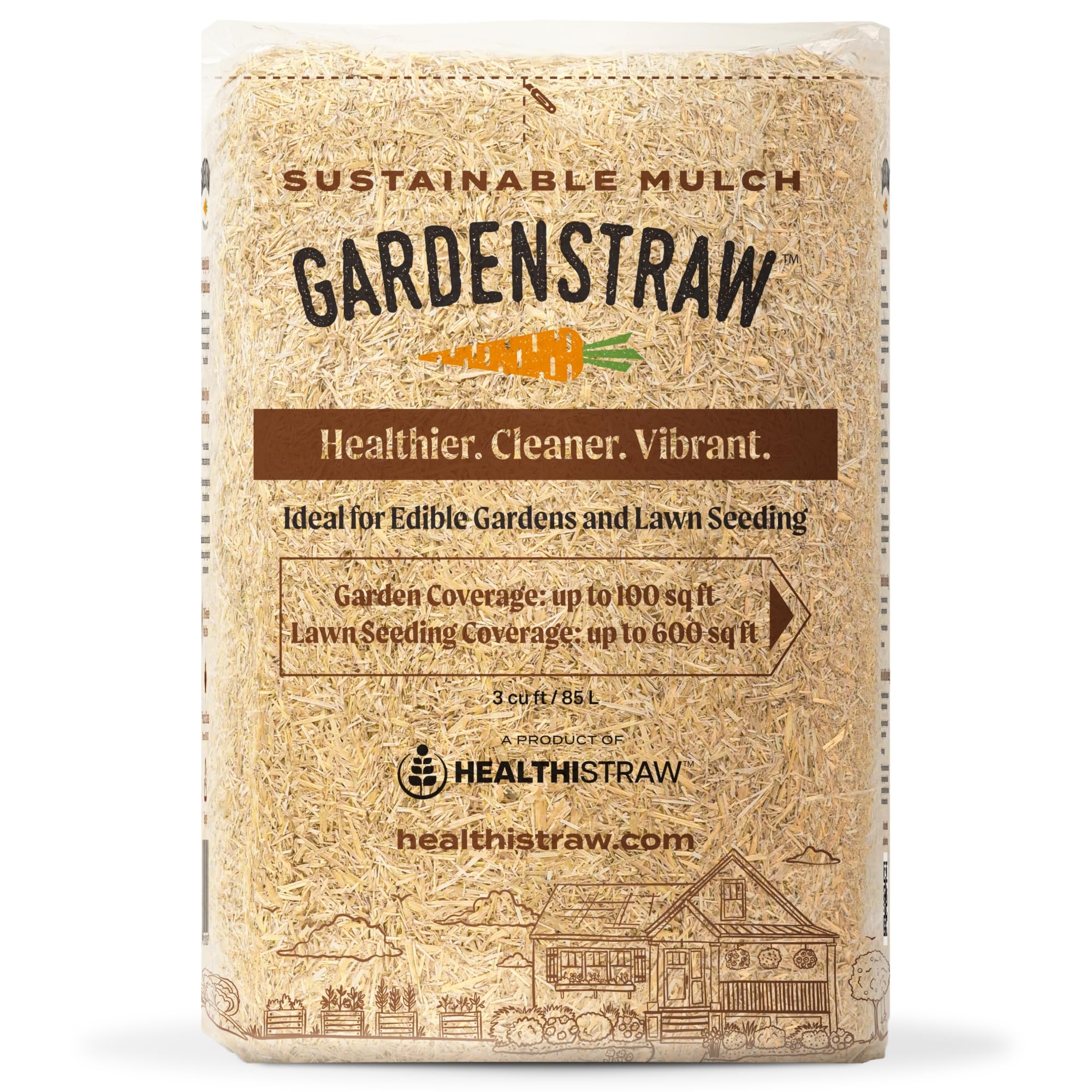
If you’re tired of straw that turns your raised bed into a weed nursery, this filtered option is worth a look. The HealthiStraw brand specifically filters its wheat straw “to remove dust, dirt, and as many seeds as possible” — a critical feature after seeing how seed-heavy straw can ruin a bed. At 3 cubic feet, it covers up to 100 square feet at a 2-3 inch layer, which is triple the coverage of the Brut Organic Aspen Mulch (1 cubic foot).
Reviewers confirm it stays in place when watered (the interlocking fibers resist wind), and one buyer mentioned “haven’t noticed any weed seeds in the package.” It is sustainably sourced, non-GMO, and breaks down quickly to add carbon to your compost. The moisture retention is excellent — it reduces watering needs by up to 50%, similar to the aspen mulch but with a lighter texture.
The standout spec is the coverage: 3 cubic feet is a serious amount of mulch, enough for a large raised bed or several medium ones — triple the volume of the Brut Organic Aspen Mulch.
What stands out
- Filtered to remove as many seeds as possible
- 3 cubic feet — covers up to 100 sq ft
- Interlocking fibers resist wind and rain
The trade-offs
- Some users still report seed sprouting (though rare)
- Bulky — needs storage space
4. Brut Organic Aspen Mulch 1 CU FT
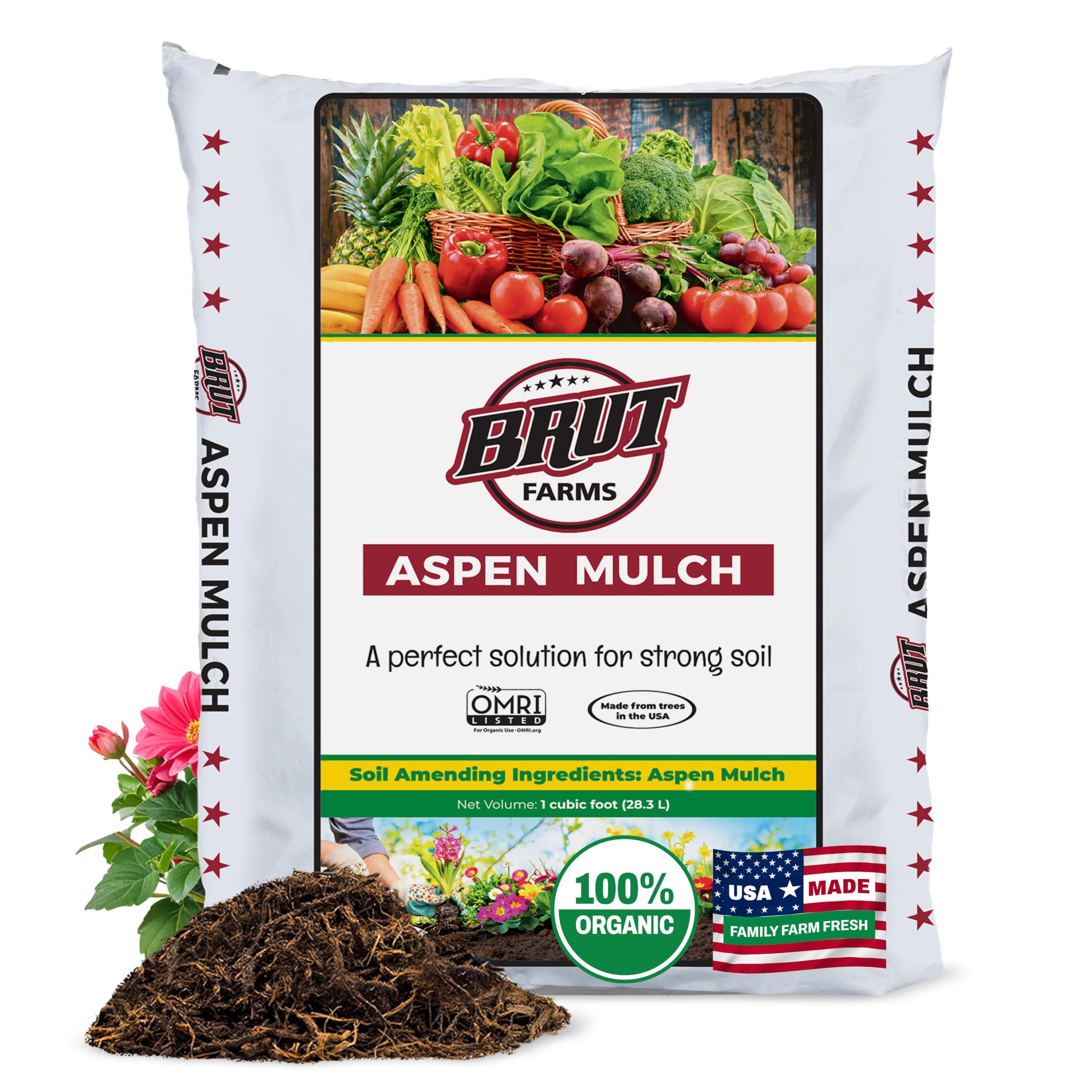
The single number that matters most here is the 28-pound weight for just 1 cubic foot of mulch — this stuff is dense and heavy, meaning it packs real moisture-holding power. One owner reported that “composting wood chips retain moisture, reducing watering by half,” which is the highest moisture-retention claim among the wood-based options.
The catch you accept is the coverage — at 1 cubic foot, this bag covers much less area than the HealthiStraw (3 cubic feet) or the Back to the Roots (2 cubic feet). Reviewers point out “bag covers less than expected,” and one person thought the description was misleading about the volume. It is OMRI-listed and odor-free, made from clean aspen bark with a fine texture that is easy to spread around tender plants.
If you need deep moisture retention for a small, high-value bed (like herbs or tomatoes) and do not want to mess with soaking bricks, this is a premium pick. Just measure your space first — at 1 cubic foot, you might need two bags for a standard 4×8 raised bed, which makes the price-to-value read as a concentrated investment for small spaces rather than a budget-friendly bulk option.
The upsides
- Reduces watering by up to half
- OMRI-listed organic, clean aspen bark
- Fine texture, easy to apply around plants
Keep in mind
- Only 1 cubic foot — low coverage per bag
- Heavy at 28 pounds
5. Long Needle Pine Straw Mulch – 65-80 Sqft Coverage
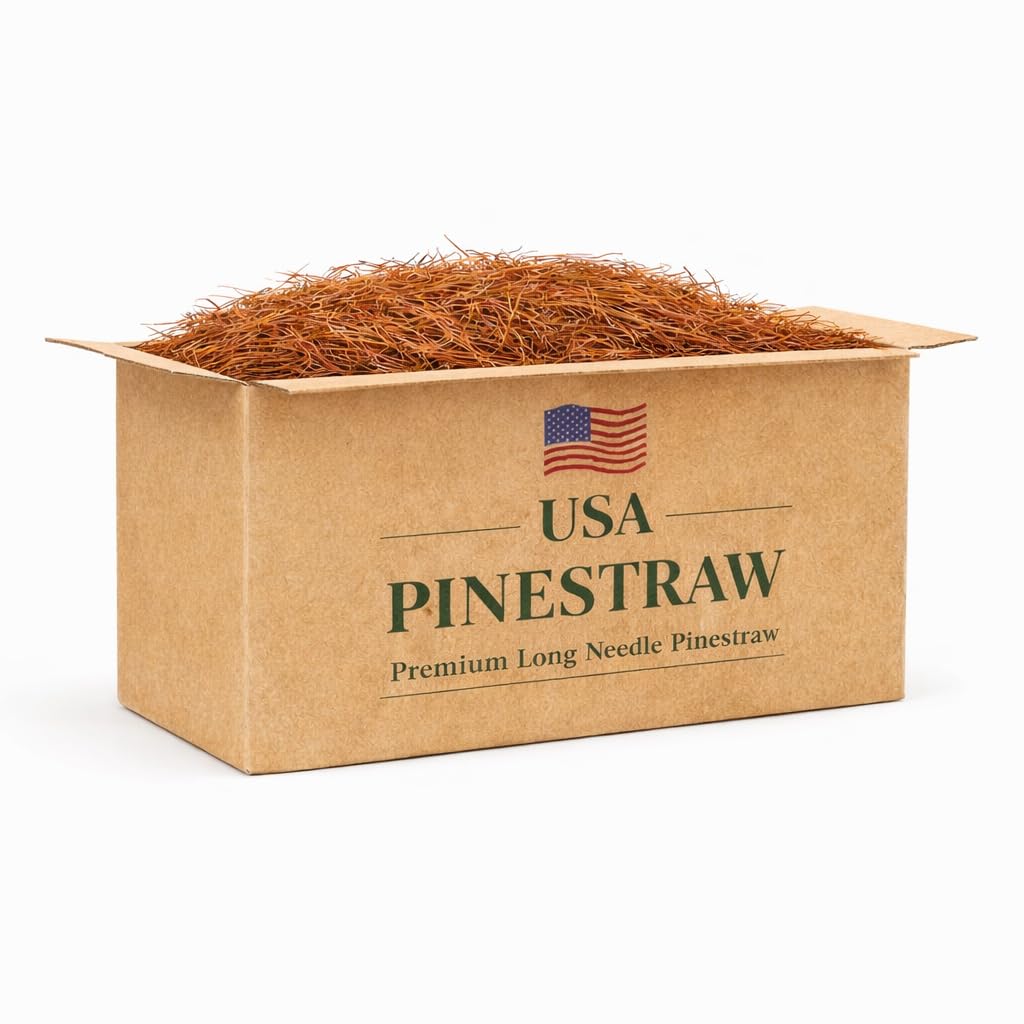
What you actually get at this price point is a compressed square bale of long-needle pine straw that covers between 65 and 80 square feet when fluffed and spread. That is roughly the area of two standard 4×8 raised beds, making it one of the highest-coverage options in the lineup after the HealthiStraw.
What you give up is precision — several shoppers say the coverage claim is optimistic, with one reviewer noting “not enough to adequately cover 80sqft.” The pine needles are 100% organic and sustainably harvested, and they naturally inhibit weed growth without chemicals. They also have a classic reddish-brown color that many gardeners find attractive.
This is the exact pick for a gardener who wants a natural, chemical-free weed barrier that also looks great. It is easy to apply: just break apart the bale sections and spread. The price feels high for the volume, as some buyers report, but the long-lasting nature of pine straw (it decomposes slowly) makes it a solid investment for perennial beds. This is the exact budget buyer it is perfect for.
Why we’d pick it
- 100% organic pine needles — no seeds
- Covers 65-80 sq ft, good for multiple beds
- Naturally blocks weeds without chemicals
A few caveats
- Coverage may fall short of 80 sq ft claim
- Pricier than loose straw per square foot
6. Premium Garden Straw (4 LBS) – Home and Country USA

This pick is perfect for someone who needs a small amount of clean straw for non-vegetable uses — like insulating outdoor cat shelters or layering into a compost bin. At 4 pounds, this is the lightest and cheapest straw option in the list — perfect for a single small raised bed or for topping off containers. Owners mention it is “clean, dust free” and works great for compost piles and pet bedding, but the real story for raised beds is the seed problem.
The specific buyer this is perfect for is someone who needs a small amount of clean straw for non-vegetable uses — like insulating outdoor cat shelters or layering into a compost bin. One vegetable gardener reported “a very large quantity of wheat seeds,” requiring constant wheat sprout pulling. That is a dealbreaker for a raised bed where you want to plant, not weed.
If you are strictly using it for compost or animal bedding, this is a fine budget option. If you are mulching vegetables, avoid this one and spend a little more on the HealthiStraw or a coco coir product instead. Just be aware that the seed risk is too high for a raised bed.
Strong points
- Clean and dust-free for animal bedding
- Perfect small quantity for compost piles
Before you buy
- High risk of wheat seeds sprouting in beds
- Not recommended for vegetable gardens
7. Blue Mountain Hay Organic Garden Straw (5 lb)
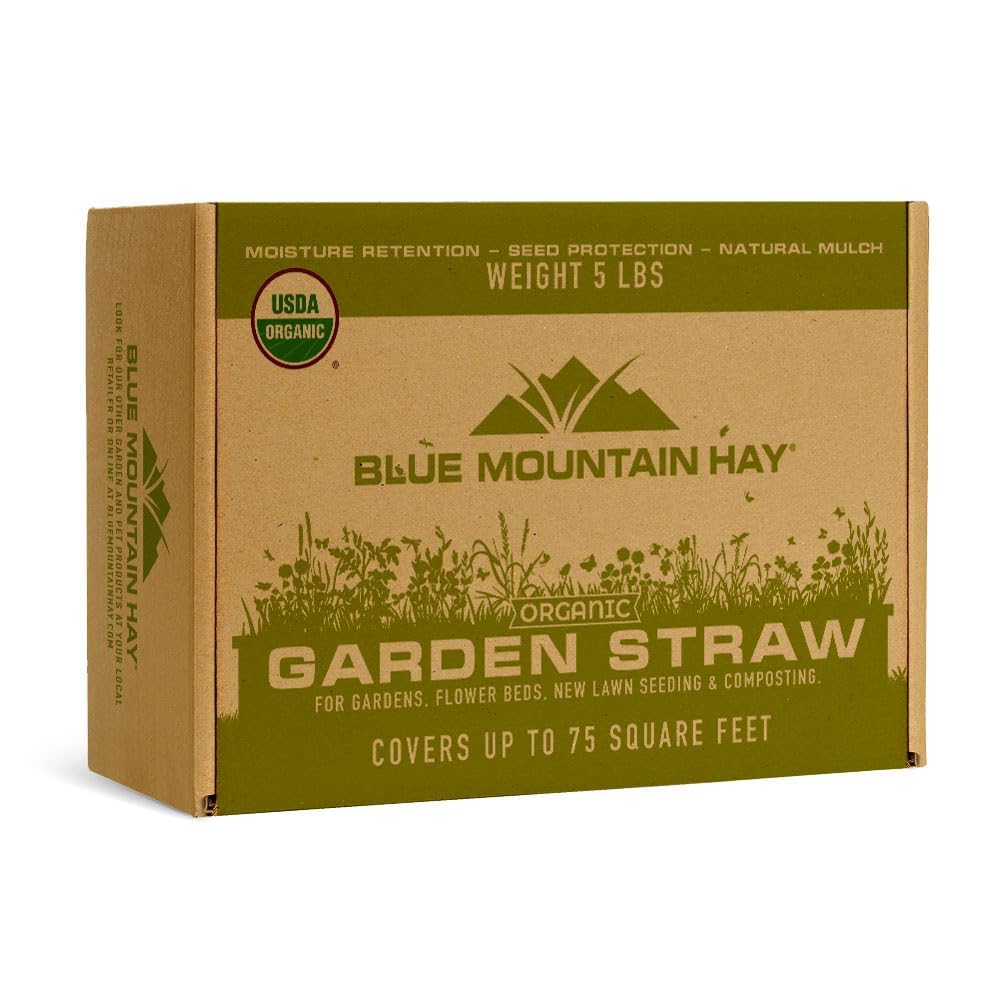
Compared to the Premium Garden Straw, this is a step up in quality — one buyer called it “very clean, soft, no dirt or bugs” and noted a single 5-pound box was “more than enough” for potted plants and onion tubs. It is also organic and minimally processed, making it a premium pick if you want the look and feel of straw without the dust.
What that money actually gets you is clean, natural straw that one customer observed “keeps soil moist” and works well for layering. However, the same seed problem appears: one user highlighted “straw caused massive grass shoots in all raised beds, ruining vegetables and strawberries.” Another noted the coverage claim of 300 sq ft is overstated — one box covers about 100 sq ft at a 1-inch depth, which is about one-third of a traditional bale.
The one clear reason to choose it is if you absolutely need certified organic straw and you trust the low-seed promise. But given the real risk shown in reviews, you are safer with the HealthiStraw or a coco coir product for raised beds. This is a “buyer beware” option — great for compost or non-vegetable uses, a gamble for your tomatoes.
What we like
- Clean, soft, low-dust organic straw
- Good for potted plants and composting
The downsides
- Significant risk of grass shoots in raised beds
- Coverage less than advertised
Understanding the Specs
Expansion Ratio (Hydrated vs. Compressed)
Compressed coconut husk bricks are the most space-efficient — a 10-pound block can expand to 2 cubic feet (the Back to the Roots) or 72 quarts (the Riare). This matters for storage and planning: a block takes up less shelf space than a loose bale, but you need a tub or wheelbarrow to hydrate it. Straw bales do not expand; what you see is what you get.
Seed Contamination and Purity
This is the single most important spec for raised beds. Straw mulches (like the Premium Garden Straw and Blue Mountain Hay) are notorious for carrying wheat, grass, or hay seeds that sprout aggressively. Coco coir and pine straw have zero seeds. If you see “clean straw” claims, check reviews for real-world seed reports. The HealthiStraw is the only straw-based product that actively filters seeds out.
FAQ
Will straw mulch really sprout weeds in my raised bed?
How much mulch do I need for a standard 4×8 raised bed?
Final Thoughts: The Verdict
For most gardeners, the best raised bed mulch is the Back to the Roots 100% Organic Mulch because it expands to 2 cubic feet from a compact block, has zero seeds, and holds moisture beautifully without introducing weeds. If you want the most coverage for your money in a straw format, grab the HealthiStraw GardenStraw — it is the only straw actively filtered to reduce seeds. And for a budget-friendly coco option that still outperforms pine straw, the Riare Coco Chips is a solid choice that one reviewer confirmed “outperforms pine straw in raised beds.”