
You have a patch of soil ready for organic tomatoes, peppers, and greens, but the wrong plant food can leave them pale and small — or sneak in ingredients that don’t meet organic standards. The trick is finding a fertilizer that gives you visible growth, is certified organic, and fits your schedule without a complex mixing routine or a smell that lingers for days. The best organic fertilizers use natural ingredients like fish emulsion, kelp, and bone meal to feed both your plants and the soil microbes they depend on.
I’m Rikta — the co-founder and writer behind Lawn Gear Lab. This guide is built by comparing the manufacturers’ published specifications and the patterns across verified customer reviews, so you get each pick’s real strengths and trade-offs instead of marketing spin.
You will find five different formulas — from dry granules to liquid concentrates — that are OMRI (Organic Materials Review Institute) listed for organic use, including the fertilizer for organic vegetable garden that balances nutrition with ease of application.
How To Choose The Best Fertilizer For Organic Vegetable Garden
An organic vegetable garden depends on steady, natural nutrition — not synthetic quick fixes. The right fertilizer feeds the soil microbes that, in turn, feed your plants. To pick correctly, you need to understand three key factors that determine whether your garden thrives.
Understand the N-P-K Ratio
The three numbers on the label (for example 4-6-2 or 5-1-1) stand for Nitrogen (N), Phosphorus (P), and Potassium (K) — the primary nutrients your plants need. Nitrogen powers leafy growth — essential for spinach, lettuce, and kale. Phosphorus supports root development and blooms, which matters for tomatoes and peppers. Potassium helps overall plant health and disease resistance. A balanced ratio like 3-4-4 works for most vegetables, while a higher nitrogen option like 5-1-1 is better for building foliage early in the season.
Liquid vs Granular: Which Fits Your Routine?
Liquid fertilizers, like fish emulsion or liquid kelp, get absorbed quickly by roots and leaves — you see results within days. They require mixing with water and reapplication every 2-4 weeks. Granular fertilizers break down slowly in the soil, feeding plants over several weeks to months. They are easier to apply — just sprinkle and water in — but take longer to show results. Choose liquid for speed and control; choose granular for slow, steady feeding with less effort.
Look for OMRI Listing
OMRI (Organic Materials Review Institute) listed means the product meets federal organic production standards. The label clearly states “OMRI Listed” or “For Organic Gardening”. If you are growing food for your family, this certification guarantees no synthetic chemicals, sewage sludge, or genetically modified ingredients are in the bag or bottle.
Quick Comparison
On smaller screens, swipe sideways to see the full table.
| Model | Category | Best For | Key Spec | Amazon |
|---|---|---|---|---|
| Alaska Fish Fertilizer 5-1-1 | Liquid | Nitrogen boost for leafy greens | 115 fl oz per bottle | Amazon |
| Down To Earth All Purpose 4-6-2 | Granular | Slow feed for tomatoes & peppers | 5 lb bag | Amazon |
| Espoma Garden-tone 3-4-4 (2-pack) | Granular | All-season vegetable feeding | 4 lb bag (two bags) | Amazon |
| Arber Liquid Plant Food 1:512 | Liquid | Indoor & outdoor use | 16 fl oz bottle | Amazon |
| GS Plant Foods Fish & Kelp 1 Gal | Liquid | Maximum yield in large gardens | 128 fl oz bottle | Amazon |
In‑Depth Reviews
1. Down To Earth All Natural Fertilizers Organic All Purpose Tomato & Vegetable Mix 4-6-2, 5 lb

The 4-6-2 ratio — moderate nitrogen with higher phosphorus for fruit and flower development — makes this the top pick for any organic vegetable gardener who wants a single granular feed that won’t burn plants even with a generous application. This 5-pound box of Down To Earth All Natural Fertilizers contains fish bone meal, blood meal, feather meal, rock phosphate, langbeinite, greensand, humates, and kelp meal, feeding both vegetables and soil microbes across tomatoes, peppers, herbs, flowers, container plants, and row crops.
Buyers report that a 15 lb bag lasts nearly a year for an avid gardener, and one reviewer noted that it revived pale, flimsy tomato plants within two weeks of application. The granules are easy to sprinkle around each plant base, and you just water them in — no mixing, no mess. Compared to liquid options like the GS Plant Foods Fish & Kelp, this granular formula feeds slowly over several weeks, meaning you apply it less often.
One honest trade-off: it has an unpleasant smell that owners mention dissipates in a few days after application, so do not store the open box indoors. For most gardeners who want a balanced, OMRI-listed granular feed that simplifies their fertilizing routine, this is the smartest one-box solution.
Why it’s great
- Gentle, non-burning formula safe for vegetables and herbs
- Rich ingredient list with 8 natural components for soil health
- OMRI Listed for certified organic production
Good to know
- Unpleasant smell for a few days after application
- Granular action is slower than liquids — you wait weeks for full effect
2. Alaska Fish Fertilizer OMRI Listed 5-1-1, 115 fl oz

Against the top pick’s Down To Earth 4-6-2, the Alaska Fish Fertilizer 5-1-1 delivers a nitrogen-rich liquid dose that plants absorb within days, far faster than the slower granular action of the Down To Earth mix. With 115 fluid ounces per bottle, this jug holds far more liquid volume than most consumer-sized bags, so you get many months of regular feeding from a single purchase.
It is cold-processed to preserve micronutrients and feeds soil microbes naturally. Apply it every three weeks during the growing season by mixing with water — no burning risk when diluted correctly.
The obvious downside is the strong fishy smell. Reviewers warn the odor is pungent and can linger indoors for up to a day, so it is best used in a ventilated area, and pets may be attracted to the treated soil. Choose this over the top pick if you need fast, nitrogen-heavy feeding for leafy greens like spinach, kale, and lettuce, and you are not sensitive to odors or growing mostly flowers and fruiting vegetables that need more phosphorus.
Where it shines
- Huge 115 fl oz bottle — lasts many months of regular feeding
- Absorbs quickly for visible results in days
- OMRI Listed and safe for vegetables
Worth noting
- Strong fishy smell that lingers for hours
- You may need a phosphorus supplement for flowering stages
3. Espoma Organic Garden-tone 3-4-4 (2-Pack), 4 lb Each

You are setting up a medium-sized raised bed for the season and need a single fertilizer that will work for both your early cool-season lettuce and kale and your summer tomatoes, peppers, and squash. This Espoma Garden-tone 2-pack gives you two 4-pound bags totalling 8 pounds of granular 3-4-4 fertilizer, plus 5% calcium to help prevent blossom-end rot in tomatoes.
Buyers call this their go-to year after year, with one avid gardener reporting dramatic improvements in growth and blooms after switching to this brand. The Bio-tone formula — a proprietary blend of beneficial microbes and organic nutrients — feeds the soil biology while your vegetables eat. No mixing required: just sprinkle around the drip line of each plant and water thoroughly.
While the single-bag Down To Earth costs less upfront, this pack gives you two bags with a slightly more balanced ratio for all-season use. The Espoma brand has a devoted following among long-time organic gardeners. skip it if you prefer fast liquid feeding or need a smaller quantity for just a few containers — but for a full season of raised-bed feeding, this 8-pound total is the standout spec.
What stands out
- Two 4 lb bags offer great total volume at the price point
- Includes 5% calcium to prevent tomato blossom-end rot
- Bio-tone formula feeds soil microbes for healthier roots
The trade-offs
- Granular — takes weeks to show results vs liquid
- Has a smell, though customers note it is bearable
4. Arber Organic Liquid Plant Food & Fertilizer, 16 fl oz
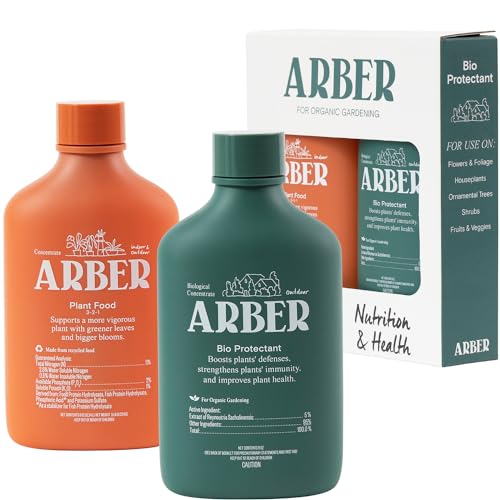
Arber’s 1:512 mixing ratio (one part fertilizer to 512 parts water) means this 16-fluid-ounce bottle stretches far, lowering the risk of burning your plants and making it suitable for weekly use on both indoor and outdoor vegetables. This extreme dilution is a standout spec — you get precise control over feeding strength from seedlings to mature foliage.
The catch: each feeding session requires careful measurement (8 ounces of mixed solution per 2 gallons of water for houseplants), and some reviewers found the cost per use higher than simpler fish emulsion formulas. One buyer mentioned the plants were healthy and happy but the product felt expensive compared to other organic options. On the positive side, the rosemary-fresh scent is much more pleasant than fish-based fertilizers, and it is pollinator safe and people- and pet-safe when used as directed.
This is a premium liquid for those who garden both indoors and outdoors, want a clean-smelling option, and do not mind a weekly mixing routine. If you have a large garden and prioritize cost per feeding, the GS Plant Foods gallon is a better deal — making this a higher price-to-value pick for smaller-scale or mixed-space gardeners.
The upsides
- Very diluted 1:512 ratio — safe, gentle weekly feeding
- Clean, rosemary-fresh scent — pleasant for indoor use
- OMRI Listed and pollinator safe
Keep in mind
- Requires regular weekly mixing and measuring
- Some reviewers consider it less cost-effective than fish emulsion
5. GS Plant Foods Liquid Fish & Kelp Fertilizer, 1 Gallon
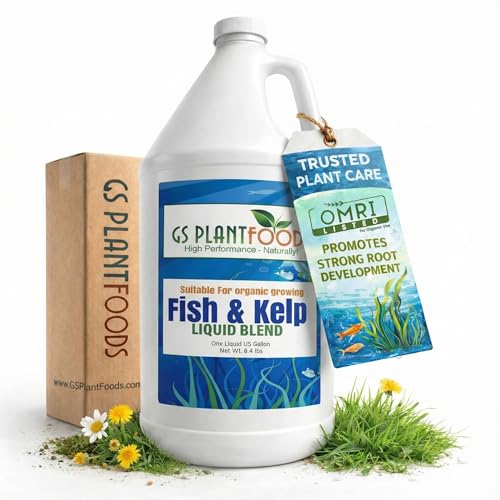
What you actually get at this lower price is the most concentrated nutrition per dollar in this lineup — a full gallon (128 fluid ounces) of GS Plant Foods Liquid Fish & Kelp Fertilizer. At a 2 oz per gallon mixing rate for outdoor soil drenches, this single bottle can produce up to 64 gallons of finished fertilizer. It combines North Atlantic seaweed (Ascophyllum nodosum) and fresh fish hydrolysate for a dual-action formula that feeds plants through both roots and leaves, while also supporting the soil microbiology that drives nutrient uptake.
What you give up is the convenience of a smaller container — at 144 ounces (9 pounds), this jug is heavy and requires a measuring spoon for each application. One reviewer described the smell as a dirty fish tank that attracts houseflies outdoors, though they confirmed the efficacy was excellent. The results, however, are hard to argue with: a verified buyer reported that their cherry tomato plants reached over 12 feet tall, one growing to 14 feet 7 inches, yielding thousands of tomatoes from just three plants.
This gallon is perfect for the budget buyer who has a large garden or small hobby farm and whose priority is maximum yield-per-dollar. If your main concern is speed and you only have a few pots on a balcony, the smaller Alaska Fish Fertilizer is a more practical choice.
Why we’d pick it
- Gallon size provides the lowest cost per application
- Fish + kelp duo supports both leaf growth and stress resistance
- OMRI Listed and made in the USA with sustainable production
A few caveats
- Heavy jug (9 lbs) and pungent fishy smell
- Needs measuring and mixing each time you feed
Understanding the Specs
N-P-K Ratio
The three numbers on the label stand for Nitrogen (N), Phosphorus (P), and Potassium (K) — the primary nutrients your plants need. Nitrogen drives leaf and stem growth, so a 5-1-1 ratio (like the Alaska Fish Fertilizer) is best for early-season leafy greens. A more balanced ratio like 4-6-2 (Down To Earth) or 3-4-4 (Espoma) supports flowering and fruiting, making it better for tomatoes, peppers, and squash. Higher first numbers mean more leafy growth; higher middle numbers mean more flowers and fruit.
Liquid vs Granular
Liquid fertilizers (fish emulsion, kelp concentrates) are absorbed by roots and leaves within hours — you see results in days. They require mixing with water and reapplying every 2-4 weeks. Granular fertilizers (like the Down To Earth and Espoma picks) release nutrients slowly as soil microbes break them down, feeding plants for weeks to months from a single application. Granules are easier to apply (sprinkle and water in) but take longer to show visible results. Choose liquid for speed and control; choose granular for low-effort, steady feeding.
FAQ
What does OMRI Listed mean for organic vegetable fertilizers?
Should I use liquid or granular fertilizer for my vegetable garden?
How do I know how much fertilizer to apply without burning my plants?
Final Thoughts: The Verdict
For most people, the fertilizer for organic vegetable garden winner is the Down To Earth All Purpose Mix 4-6-2 because it delivers a balanced, OMRI-listed granular feed with premium natural ingredients that feed your soil as well as your vegetables, all at a price that fits any budget. If you want fast-acting liquid nutrition for a quick green-up on leafy greens, grab the Alaska Fish Fertilizer 5-1-1. And for the largest gardens where yield matters most, the GS Plant Foods Liquid Fish & Kelp Gallon offers the best cost per feeding and proven results.