
Lemon trees are heavy feeders that demand sharp drainage, yet most standard potting soils trap water and quickly lead to yellow leaves and root rot. The right mix must be light enough to let air reach the roots, acidic enough to unlock nutrients, and rich enough to support fruit production inside a container. This guide walks you through exactly which pre-mixed bag delivers that balance.
I’m Rikta — the co-founder and writer behind Lawn Gear Lab. This guide is built by comparing the manufacturers’ published specifications and the patterns across verified customer reviews, so you get each pick’s real strengths and trade-offs instead of marketing spin.
The biggest decision you will make for a healthy lemon tree is choosing the right potting soil for lemon trees. Get this step right, and you set up your tree for strong growth and a harvest of juicy fruit.
How To Choose The Best Potting Soil For Lemon Trees
Your lemon tree roots live their whole life in a pot, so the soil you pick must do three tough jobs at once: drain fast, stay slightly acidic (pH between 5.5 and 6.5), and hold enough nutrients to feed a fruiting plant. Here are the specs that separate a good mix from a dud.
pH Level (Acidity)
Lemon trees are acid-loving plants. If the soil is too alkaline — above pH 7.0 — the tree cannot absorb iron and manganese, which turns leaves yellow between the veins (a condition called chlorosis, or iron deficiency). Look for a mix that keeps the pH between 5.5 and 6.5. Most citrus blends use peat moss or organic acidic compost to hit that target.
Drainage and Aeration
In a pot, water has only gravity to escape, so the soil must be chunky enough for excess water to run out. Ingredients like perlite (volcanic glass that creates air pockets), coarse sand, and coconut coir (fibrous material from coconut husks) create that loose texture. A mix heavy in fine peat or garden dirt will compact, drown the roots, and invite fungus.
Nutrient Content and Fertilizer
Lemon trees are heavy feeders, especially when they are flowering and making fruit. Many premium mixes come pre-loaded with an organic fertilizer that releases nutrients slowly over months. The key micronutrients to look for are iron, magnesium, and manganese. A bag that says “feeds for up to 6 months” saves you from having to remember a fertilizing schedule.
Bag Volume
Potting soil is sold by quart volume, not by weight. A 3-quart bag is enough to repot a small 6-inch pot or fill a 10-inch pot when you mix it with some old soil. A 12-quart bag handles a larger 14-inch container or several smaller pots. If you are repotting a full-grown Meyer lemon in a 16-inch pot, you will need roughly 10 to 12 quarts.
Quick Comparison
On smaller screens, swipe sideways to see the full table.
| Model | Category | Best For | Key Spec | Amazon |
|---|---|---|---|---|
| Soil Sunrise Citrus Tree Mix | Premium | Large indoor citrus trees | 12 Quarts volume | Amazon |
| GARDENWISE Organic Lemon Tree Soil | Mid-Range | Quick results and built-in fertilizer | Feeds for 6 months | Amazon |
| GARDENWISE Premium Citrus Potting Soil | Mid-Range | Balanced moisture and pH control | pH 5.5–6.5 | Amazon |
| DUSPRO Citrus Tree Potting Mix | Value | Small pots and multiple plants | 6 Quarts volume | Amazon |
| Miracle-Gro Cactus, Palm and Citrus | Budget | Cost-conscious multi-plant use | 3 x 8 Quarts bags | Amazon |
In‑Depth Reviews
1. Soil Sunrise Citrus Tree Potting Soil Mix (12 Quarts)

12 quarts — the biggest bag in this roundup — makes Soil Sunrise Citrus Tree Potting Soil Mix the top pick for anyone repotting a mature indoor lemon tree or tackling several smaller citrus projects at once. This blend is designed for citrus and tropical plants, with a loose, chunky texture from perlite and other air-pocket ingredients so roots can breathe and spread through the pot.
This mix balances moisture retention with good drainage, preventing waterlogged roots. Buyers report a “total transformation” on their Meyer Lemon Tree: after repotting, every branch pushed out new leaf growth even in tough Oklahoma wind conditions, according to reviewers. Compared to the GARDENWISE Organic Lemon Tree Soil (3 quarts), the Soil Sunrise gives you 4 times the material, making it a better fit for larger containers.
One trade-off: the bag uses a plastic liner inside a cardboard box, and reviewers mention it would be easier to reseal if it came in a zip-close bag. For the volume and the results on struggling trees, this is the most versatile citrus soil here.
Why it’s great
- 12 quarts is enough for large pots or multiple trees
- Excellent aeration and nutrient retention for healthy root growth
- Works for oranges, lemons, limes, and guava trees
Good to know
- Packaging is a box with an unsealed plastic bag inside, not a resealable bag
- Volume makes it heavier to move than smaller bags
2. GARDENWISE Organic Lemon Tree Soil (3 Quarts)
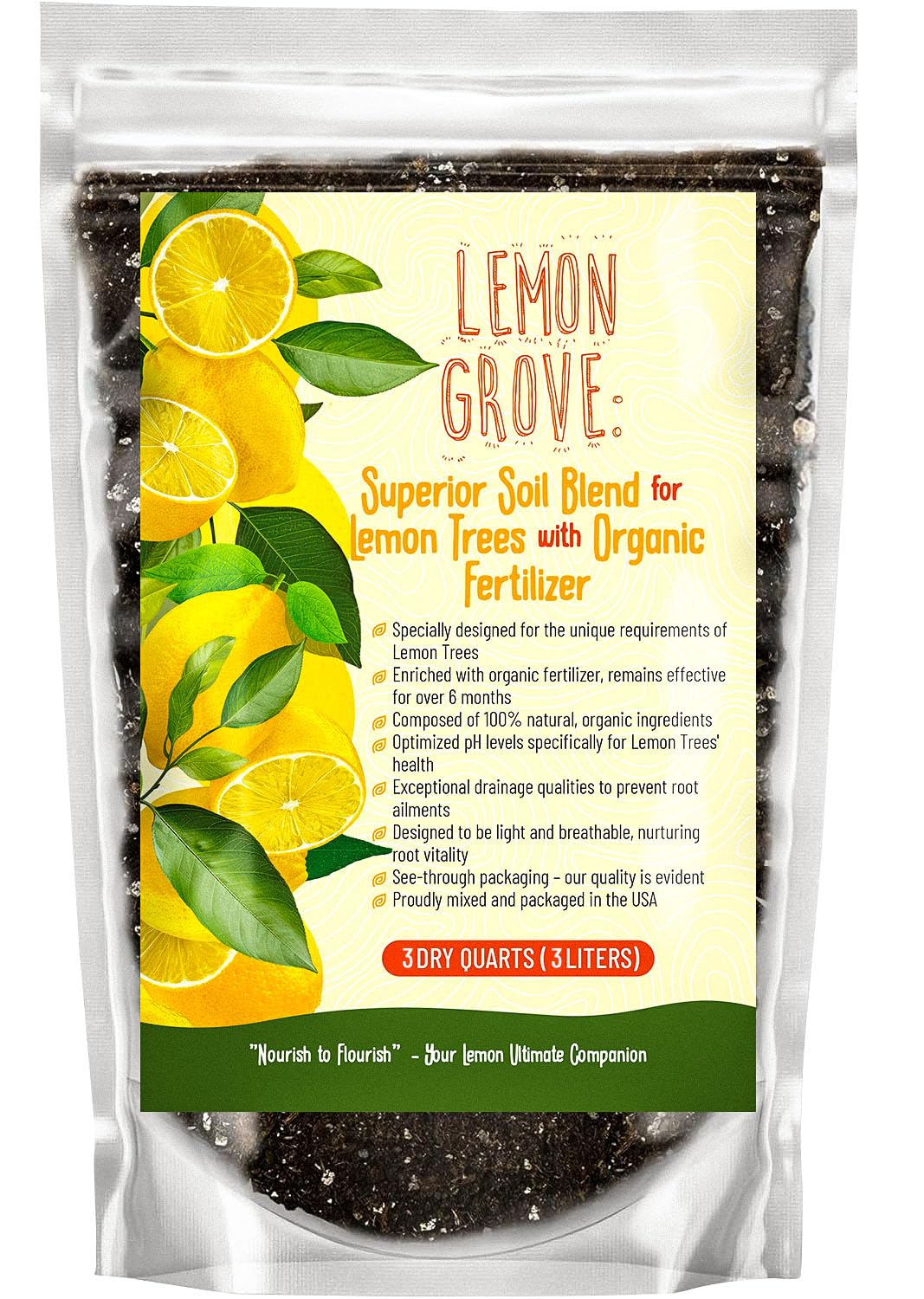
Where the Soil Sunrise leads on volume (12 quarts), the GARDENWISE Organic Lemon Tree Soil wins on convenience: it has an organic fertilizer already mixed in. The manufacturer says it feeds your tree for up to 6 months. That means you repot and can skip fertilizing for half a year — a real time-saver if you tend to forget weekly feeding.
This mix includes extra perlite and coarse sand for drainage and aeration, which is critical for potted lemon trees that rot easily in soggy soil. Owners mention that their Meyer dwarf lemon tree showed “new sprout growth in 2 weeks time” after repotting, and many note the tree is thriving with abundant blooms. The 3-quart bag holds 96 fluid ounces — enough for a 10-inch pot or a small indoor tree.
If you are working with a very large pot (14 inches or bigger), you will need more than one bag, since the volume is a quarter of the Soil Sunrise. But for a single small-to-medium lemon tree where you want fast results and zero extra fertilizing effort, this is the smarter pick.
Where it shines
- Built-in organic fertilizer, claimed to feed for 6 months
- Excellent drainage prevents root rot
- Customers note new growth in just 2 weeks
Worth noting
- 3 quarts may not be enough for large pots
- Feels pricey for the bag size compared to bulk options
3. GARDENWISE Premium Organic Citrus Potting Soil (3 Quarts)
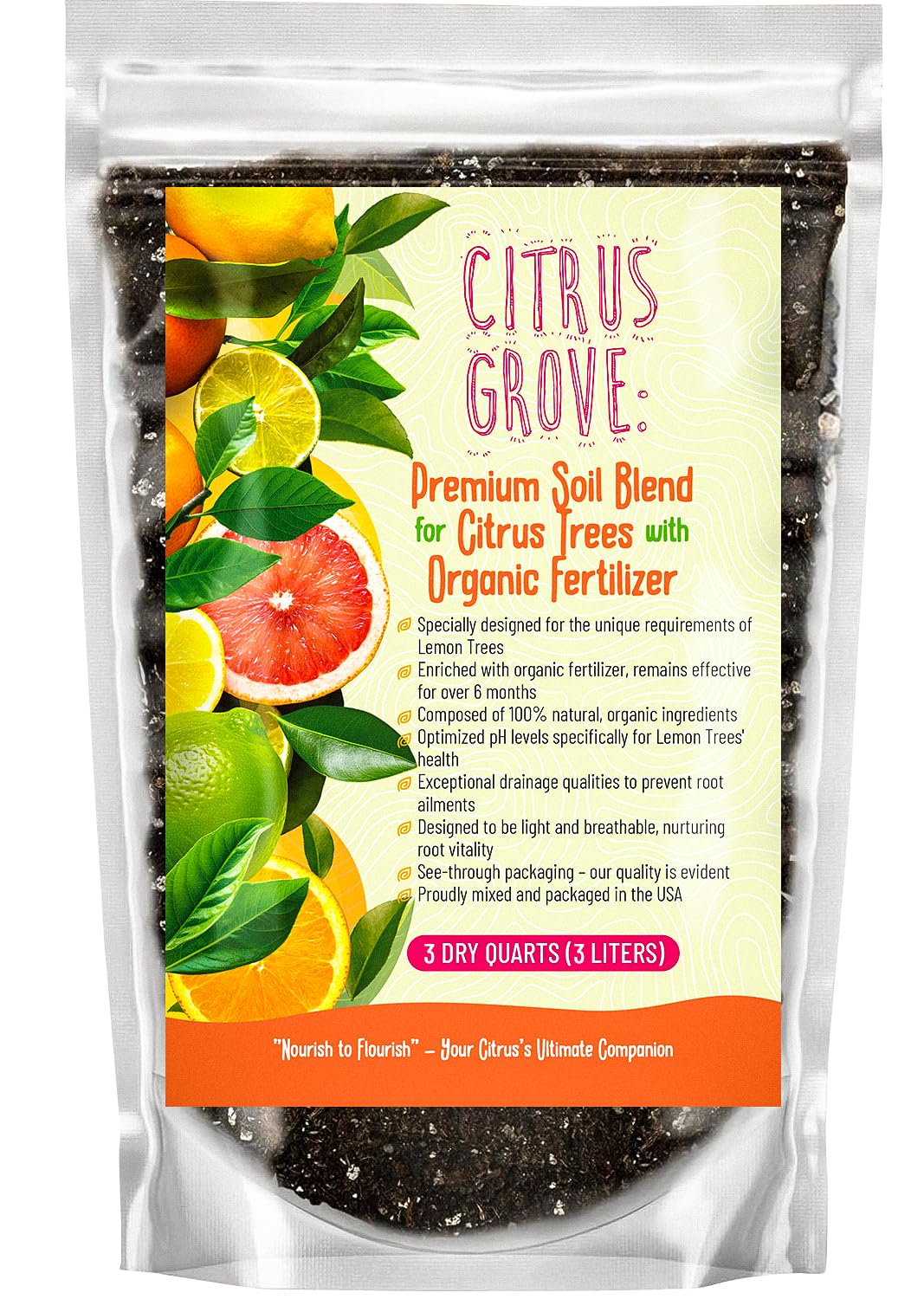
If you have a lemon tree that is alive but not thriving—sparse leaves, slow growth, fruit that never develops—this GARDENWISE mix is built for exactly that scenario. It uses a hand-blended formula with specially chosen compost to hold moisture without waterlogging the roots, plus dolomite lime to lock the pH steady between 5.5 and 6.5.
That stable pH means your tree can absorb iron and manganese over the long haul without you needing to test and adjust the soil constantly. The mix also includes perlite, coarse sand, coconut coir, and organic acidic compost to keep water from pooling at the bottom of the pot. One reviewer says their grapefruit plants are “thanking me every day” with dark green, thick leaves after repotting.
Where this falls short of the Soil Sunrise is bag size: at 3 quarts, it is meant for one tree in a medium pot, and the cost per quart is higher. But for a perfectly stable pH range and a moisture balance that forgives occasional overwatering, this formula delivers.
What stands out
- Stable pH between 5.5 and 6.5 for healthy nutrient uptake
- Hand-blended with compost for perfect moisture retention
- Reviewers point out rapid greening of leaves and new growth
The trade-offs
- 3 quarts is a smaller bag for the price
- Best for one tree in a medium container
4. DUSPRO Citrus Tree Potting Soil Mix (6 Quarts)
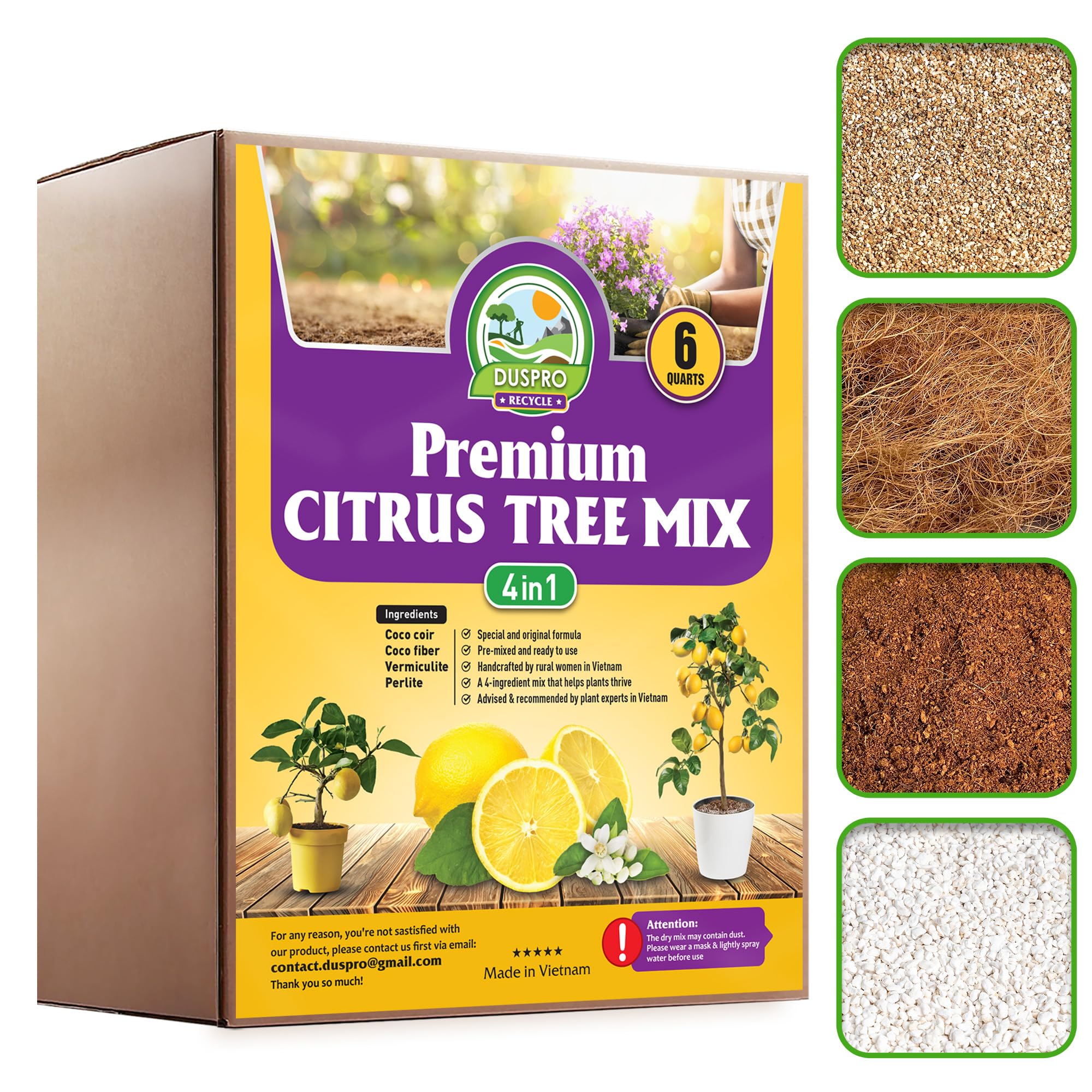
If you are on a budget but still want a soil made for citrus, the DUSPRO mix gives you 6 quarts of double-screened soil at a price that undercuts the premium options. The key spec here is “double-screened” — that means fewer dust clumps and a more even texture that drains the same way throughout the pot.
The catch is that this mix does not come with a long-term fertilizer blended in, unlike the GARDENWISE Organic Lemon Tree Soil. You will need to start a feeding schedule yourself after the first month. Shoppers say the soil is “clean” and that their plants show “thriving with new leaves after 3-4 weeks.” One reviewer even called it the “best money tree soil” for its quick results.
For the price per quart, this is the most accessible entry point for a first-time lemon tree owner. It is available in 6, 10, and 20-quart sizes, so you can scale up as your tree grows without switching brands.
The upsides
- Double-screened ingredients for consistent, dust-free texture
- 6 quarts is a good mid-size for most indoor pots
- Available in larger sizes for future repotting
Keep in mind
- No pre-mixed fertilizer included
- Can be dusty at the bottom of the bag — wear a mask when pouring
5. Miracle-Gro Cactus, Palm and Citrus Potting Mix (3-Pack, 8 Quarts Each)

What you actually get at this lower price is 24 total quarts across three 8-quart bags, giving you the most soil for your money by a wide margin. It uses a fast-draining formula enriched with Miracle-Gro Plant Food, so you get a starter dose of nutrients without extra fertilizing for the first few weeks.
What you give up is specialization. This mix is designed for cacti, palms, and succulents as well as citrus. So the pH balance and texture are a compromise that works for many plant types rather than being optimized purely for lemon trees. Some users recommend blending it half-and-half with regular Miracle-Gro potting soil and adding a cup of powder fertilizer for better results with heavy-feeding citrus. One reviewer notes the price feels steep for the quality, while others say their transplanted plants are “doing amazing.”
This is the pick if you have a mix of container plants — citrus, succulents, and palms — and want one bag that works for all of them. For a pure citrus-only setup, the GARDENWISE options above are more precisely formulated. But if budget is the main concern and you are supplementing with fertilizer, this gets the job done across your whole patio — making it perfect for the budget buyer who needs one versatile mix for multiple plant types.
Why we’d pick it
- 24 quarts total across 3 bags — highest volume for the price
- Fast-draining formula works for multiple plant types
- Enriched with Miracle-Gro Plant Food for initial feeding
A few caveats
- Not specifically optimized for citrus pH or nutrient balance
- You may need to mix with regular potting soil for best results
Understanding the Specs
pH Range (5.5 – 6.5)
This is the measure of acidity in the soil, on a scale from 0 (most acidic) to 14 (most alkaline). Lemon trees need a soil pH between 5.5 and 6.5 to unlock iron and manganese from the dirt. If the pH drifts above 7.0, the roots cannot absorb those nutrients, and leaves turn yellow even if you water and feed perfectly. Most citrus-specific soils use peat moss or organic acidic compost to hit this target.
Drainage Ingredients (Perlite and Coarse Sand)
Perlite is lightweight, porous volcanic glass that looks like small white pebbles. When mixed into potting soil, it creates tiny air pockets so water flows through quickly and the root zone stays oxygenated. Coarse sand does the same: it adds weight and creates gaps in the soil structure so water does not pool. A good citrus mix has visible perlite and/or sand; a mix that looks like fine black dirt will compact and drown your tree roots.
Pre-Mixed Fertilizer (Feeds for X Months)
Some premium soils come with an organic fertilizer already blended in. The “feeds for up to 6 months” spec means the fertilizer is slow-release: it breaks down gradually and provides a steady supply of nitrogen, phosphorus, and potassium without you needing to add liquid feed weekly. This is convenient for busy owners, but you should not add extra fertilizer during that period, or you risk burning the roots.
Bag Volume (Quarts)
Potting soil is sold by volume in quarts, not by weight. A 3-quart bag roughly fills a 6-inch to 8-inch pot. A 12-quart bag handles a 14-inch to 16-inch pot. If you are repotting a tree that is root-bound (roots circling the inside of the pot), you need enough soil to fill a new pot that is 2–4 inches wider. Measure your empty pot before buying — running out of soil mid-repot is frustrating.
FAQ
Can I use regular potting soil for a lemon tree?
How often should I repot a potted lemon tree?
What is the best pH level for lemon tree soil?
Should I add fertilizer to citrus-specific potting soil right away?
How much soil do I need for a 14-inch pot?
Final Thoughts: The Verdict
For most people, the potting soil for lemon trees winner is the Soil Sunrise Citrus Tree Potting Soil Mix because it gives you the largest volume (12 quarts) with great aeration and proven results on struggling trees. If you want built-in fertilizer for a hassle-free setup, grab the GARDENWISE Organic Lemon Tree Soil. For the best budget value across multiple plants, the Miracle-Gro Cactus, Palm and Citrus 3-Pack gives you the most soil per dollar.