
The difference between a chili pepper that is just “spicy” and one that actually delivers intense heat and flavor often comes down to one thing — the nutrients you feed the plant while it is growing. With so many fertilizers on the shelf, it is easy to grab something that promises big results but ends up giving you bushy leaves and almost no fruit. This guide breaks down six fertilizers specifically formulated for chili peppers, with the real specs you need to push your plants to produce heavy yields and serious heat.
I’m Rikta — the co-founder and writer behind Lawn Gear Lab. This guide is built by comparing the manufacturers’ published specifications and the patterns across verified customer reviews, so you get each pick’s real strengths and trade-offs instead of marketing spin.
We look at liquid concentrates, water-soluble powders, and organic blends that target every stage of growth, all to help you find the best fertilizer for chili peppers for your garden and growing style.
How To Choose The Best Fertilizer For Chili Peppers
Picking a fertilizer for chili peppers is not the same as picking one for tomatoes or leafy greens. Chili plants are sensitive to nitrogen overload, which creates huge, dark leaves at the expense of flowers and pods. You need a formula that supports root strength and fruit development while keeping foliage growth in check. Below are the key specs to focus on.
The N-P-K Ratio (Nitrogen, Phosphorus, Potassium)
The three numbers on the label tell you the percentage by weight of nitrogen (N), phosphorus (P), and potassium (K). For chili peppers, you want a lower first number (nitrogen) once the plant starts flowering. A ratio around 5-1-5 or 11-11-40 keeps leaves manageable and pushes energy into fruit. High potassium, the third number, is what drives capsaicin (the compound that makes peppers hot) and results in thicker-walled, crunchier pods.
Liquid Concentrate vs. Water-Soluble Powder
Liquid concentrates, like the 8 oz or 32 oz bottles, are ready to dilute and apply immediately — they absorb into the roots within hours. Powders, like the 1 lb or 12 oz bags, offer more feedings per dollar and are better for large gardens or hydroponic systems. Both work well, but powders require thorough mixing to avoid clogging sprayers or drip lines.
Micronutrient Content
Beyond the main three numbers, look for chelated micronutrients — iron, zinc, manganese, and copper in a form plants can use across a wide pH range. These prevent nutrient lockout (where the plant cannot absorb what is in the soil) and keep leaves from yellowing during fruit production. Formulas that list these on the label are almost always higher quality.
Quick Comparison
On smaller screens, swipe sideways to see the full table.
| Model | Category | Best For | Key Spec | Amazon |
|---|---|---|---|---|
| Greenway Biotech 11-11-40 | Premium | Maximum heat & yield | High-potassium 11-11-40 powder | Amazon |
| GT Chilli Focus 250ml | Premium | Hydroponic & container growing | Complete nutrient blend, 250ml | Amazon |
| TPS Pepper Fertilizer 32oz | Mid-Range | Large volume liquid feeding | 32oz liquid concentrate | Amazon |
| Leaves & Soul 5-1-5 8oz | Mid-Range | Balanced all-stage liquid feeding | Balanced 5-1-5 liquid | Amazon |
| Growth Technology 100ml | Mid-Range | Small-space chili growers | Concentrated 100ml liquid | Amazon |
| Big A Organic 12oz | Budget | Organic, easy-to-use powder | 12oz organic powder | Amazon |
In‑Depth Reviews
1. Greenway Biotech Pepper & Herb Fertilizer 11-11-40
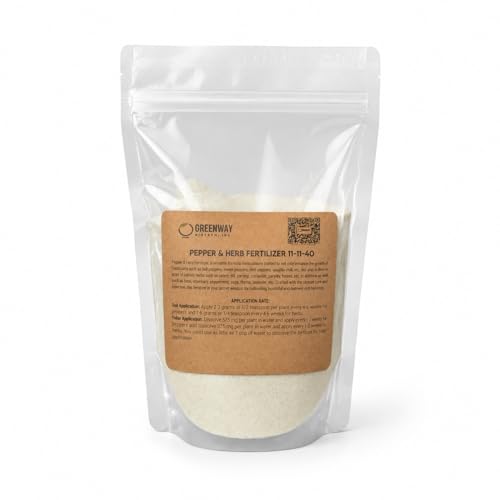
The 40% potassium (the “40” in its 11-11-40 N-P-K ratio) makes this the top pick — it delivers more than double the potassium of most pepper fertilizers, directly driving capsaicin for maximum heat and building thick, crunchy fruit walls. This is the best overall pick for any grower who wants maximum heat and heavy harvests.
This powder dissolves completely in room-temperature water, so you can use it for soil drenches, foliar sprays, and hydroponic systems without clogging drip lines. Buyers report that plants grew more leaves and flowered heavily within just two weeks of first application. It is also CDFA-registered and independently tested for heavy metals — a level of quality control you rarely see at this price point.
The catch is that the bag does not come with usage instructions printed on it; you need to visit the website to find the mixing ratio of 1/2 tbsp per gallon. It also comes as a 1 lb bag rather than a liquid, so you need to mix it yourself. That small hassle is worth it for serious growers wanting the highest-potency formula on this list. Skip this one if you prefer a ready-to-use liquid you do not have to mix.
Why it’s great
- Ultra-high 40% potassium drives maximum heat and fruit size
- 100% water soluble for soil, foliar, or hydroponic use
- Independently tested for purity with chelated micronutrients
Good to know
- No usage instructions on the bag — check the website
- Powder requires mixing; not as ready-to-use as liquids
2. GT Chilli Focus Liquid Plant Food 250ml
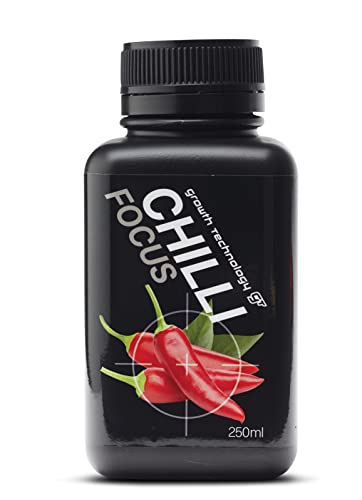
Against the Greenway Biotech top pick’s 40% potassium powder, the GT Chilli Focus delivers a balanced liquid formula at just 5 ml per liter of water—no weighing required. Its 250ml (8.5 fl oz) bottle stretches far for container and indoor growers who want a pre-mixed solution.
Owners mention significant new growth and larger leaf size within a short time, with one reviewer noting “my plants love this fertilizer!!! the new growth and leaf size is significantly larger!!!” The downside reported by multiple buyers is that the original bottle can leak during shipping—open it over a sink to be safe.
Choose this over the top pick if you use hydroponic systems or grow in containers indoors, not if you want a huge garden supply for the lowest cost per feeding.
Where it shines
- Works in hydroponics, soil, and semi-hydroponic systems
- Very concentrated — only 5ml per liter of water needed
- Supports strong flowering and fruiting cycles
Worth noting
- Bottle may leak during shipping — open carefully
- Premium price for the bottle size
3. TPS Nutrients Pepper Fertilizer 32oz

You have a dozen or more chili plants in your garden or under lights, and you want a liquid fertilizer that won’t run out after a few waterings — the TPS bottle holds 32 fluid ounces, which is four times as much as the Leaves & Soul 5-1-5 (8 fl oz). You will refill far less often if you have a decent-sized garden of hot and sweet peppers.
You mix just one tablespoon per gallon of water, and buyers confirm this dilution rate works without burning plants. One reviewer says it revived plants that had turned light green with weak leaves, bringing them back to “dark, glossy, blooming in under a month.” Another grower reported that bell peppers under a grow light “thrived after using this: greener, faster growth, blooms.”
At a mid-range price point, you get a 32 oz bottle that supports both hot and sweet pepper varieties. It is made in the USA and covers flowering and root development. This is your pick if you have multiple plants and want a liquid that lasts — for single-plant growers, the smaller Growth Technology bottle may be a better fit.
What stands out
- Largest liquid volume at 32 oz — fewer refills
- Gentle 1 tbsp per gallon mix — low risk of burning plants
- Effective on both hot and sweet pepper varieties
The trade-offs
- Some buyers find it slightly pricey for the concentrate
- No specific N-P-K ratio listed on the Amazon page
4. Leaves & Soul Professional Pepper Fertilizer 5-1-5 8oz
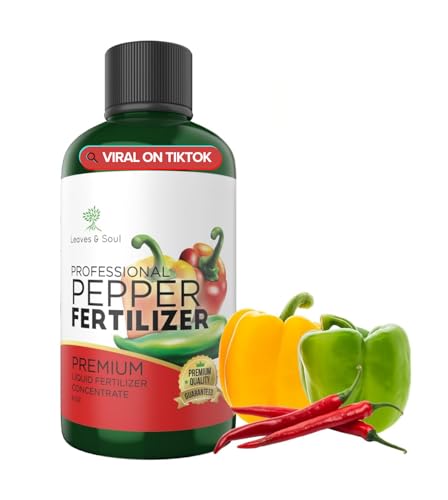
The single number that matters most in this category is the N-P-K ratio, and the Leaves & Soul Professional Pepper Fertilizer scores a 5-1-5, keeping nitrogen low enough to prevent excessive leaf growth while providing enough potassium for fruit development. This makes it safe to use from seedling through harvest without switching formulas. It is a simpler option than the Greenway Biotech 11-11-40, which requires careful timing.
The trade-off with a balanced 5-1-5 is that it does not pack the high-potassium wallop of the Greenway Biotech 11-11-40. If you are chasing extreme heat, you may want to supplement with a bloom booster later in the season. However, one buyer growing Hot Lemon Drop peppers reported that the fertilizer “keeps plants healthy and flourishing; no leaf discoloration, early flowering,” which speaks to its reliability.
This is a mid-range entry that gives you an 8 oz liquid bottle with good results at a fair price. It covers all pepper types and is made in the USA. For the grower who wants a simple “dilute and pour” product that works start to finish, this is a smart choice. The 8 oz bottle is small — large-garden growers will want the TPS 32oz instead, making this a fair price-to-value read.
The upsides
- Balanced 5-1-5 ratio works for all growth stages
- Fast-absorbing liquid for quick results
- Made in the USA
Keep in mind
- Lower potassium than specialist bloom formulas
- Small 8 oz bottle — may need to reorder for large gardens
5. Growth Technology Chili Fertilizer 100ml

What you actually get at this lower price is the most concentrated liquid on the list, with a mixing ratio of 1:200 (1 part fertilizer to 200 parts water). A tiny bottle goes much further than its size suggests. It is formulated specifically for chili and pepper plants, not generic vegetables, so the nutrient profile is targeted.
What you give up is quantity — the 100ml bottle will serve a few containers but not a large garden bed. Customers note that while it is “expensive for amount,” it also “boosted habanero and scotch bonnet growth rate significantly in one week; plants doubled in size and leaves grew 5X larger.” That is an impressive result for a concentrated formula.
This is for the grower with a small collection of chili plants — maybe on a balcony, windowsill, or a few raised containers — who wants a product designed specifically for chilis. It is a better value for small spaces than the larger TPS 32oz bottle. Anyone with a big garden will run through it too fast, making it perfect for the budget buyer with a modest chili setup.
Why we’d pick it
- Specifically formulated for chili and pepper plants
- Very concentrated 1:200 mix ratio — goes far
- Reviewers point out dramatic growth in one week
A few caveats
- Small 100ml bottle — not for large gardens
- Higher price per ounce than most competitors
6. Big A Organic Pepper Fertilizer 12oz

This organic powder is perfect for the home grower who wants one versatile, organic fertilizer for multiple pepper types — bell, serrano, cayenne, and chili — without needing separate products. At 12 oz (0.38 kg), its proprietary organic blend includes kelp and humic acid to improve soil health.
The highly soluble powder mixes quickly into water, and shoppers say good results across varieties: one reviewer noted “jalapeños love this,” while another noted their bell peppers, jalapeños, and serranos “grew big and strong with this product.” It comes in a resealable bag for easy storage.
Choose this if you prioritize organic growing and want a single powder that works for different pepper varieties without needing to measure carefully. It is not as concentrated as the Greenway Biotech 11-11-40, but for an organic option at this price, it delivers solid results. The one caution: some users report mixed results on Anaheim peppers.
Strong points
- Organic proprietary blend with kelp and humic acid
- Suitable for bell, serrano, cayenne, and chili peppers
- Resealable bag for easy storage
Before you buy
- Less concentrated than synthetic powder formulas
- Some users report mixed results on Anaheim peppers
Understanding the Specs
N-P-K Ratio (Nitrogen, Phosphorus, Potassium)
This is the three-number code you see on every fertilizer bag, like 5-1-5 or 11-11-40. Nitrogen (the first number) drives leaf and stem growth — too much and you get a bushy plant with few peppers. Phosphorus (the middle number) supports root development and flower formation. Potassium (the last number) is the key to chili peppers: it pushes the plant to produce capsaicin (the chemical that creates heat) and builds thick, crunchy fruit walls. For chili peppers, you generally want the last number to be the highest, especially after flowering starts.
Liquid Concentrate vs. Water-Soluble Powder
Liquid fertilizers, like the 8 oz or 32 oz bottles, are already in solution and can be diluted and applied immediately. They absorb into roots within hours and are easy to measure. Water-soluble powders, like the 1 lb or 12 oz bags, require you to mix them with water before use. They often deliver more feedings per dollar and are better for large gardens or hydroponic systems, but they need thorough stirring to prevent clogging in sprayers or drip irrigation lines.
Chelated Micronutrients
“Chelated” means the micronutrients — iron, zinc, manganese, copper — are chemically bonded to an organic molecule so the plant can absorb them even if the soil pH is not ideal. Without chelation, these nutrients can become “locked” in the soil and unavailable to the plant. A fertilizer that lists chelated micronutrients on the label (like the Greenway Biotech 11-11-40 does) is almost always higher quality and prevents yellowing leaves during the fruiting stage.
Mixing Ratio
This tells you how much fertilizer to add to water. For example, a 1:200 mixing ratio means 1 part fertilizer to 200 parts water. A 5 ml/L ratio means 5 milliliters per liter of water. Getting this right is critical — too strong and you will burn the roots; too weak and the plant does not get enough nutrition. Always follow the manufacturer’s specific ratio for the growth stage your plant is in.
FAQ
Can I use tomato fertilizer on chili peppers?
When should I start fertilizing my chili seedlings?
How often should I fertilize chili plants during fruiting?
What does the potassium number actually do for heat?
Final Thoughts: The Verdict
For most growers, the fertilizer for chili peppers winner is the Greenway Biotech 11-11-40 because its ultra-high 40% potassium delivers the maximum heat and yield potential. If you grow in hydroponics or want a versatile liquid that works in any system, grab the GT Chilli Focus 250ml. And for a budget-friendly organic option that covers all pepper varieties, the standout is the Big A Organic 12oz.