
You notice holes in your rose leaves, sticky residue on the stems, or tiny white flies that scatter when you touch a leaf. You need something that stops the pests without burning your plants or making you worry about chemicals on your vegetables. The right spray tackles both the bug problem and the fear of harming your garden.
I’m Rikta — the co-founder and writer behind Lawn Gear Lab. This guide is built by comparing the manufacturers’ published specifications and the patterns across verified customer reviews, so you get each pick’s real strengths and trade-offs instead of marketing spin.
For tomatoes on the patio or houseplants indoors, the right protection starts with finding the best bug repellent for plants that matches your specific pest problem and gardening style.
How To Choose The Best Bug Repellent For Plants
Choosing a plant spray is not just about grabbing the strongest bottle. You need to think about what bugs you are fighting, whether you want something organic for your vegetables, and how often you are willing to reapply. Here are the key factors that separate a good spray from a waste of money.
Contact vs. Systemic Protection
Contact killers only work when the spray directly hits the bug — if you miss a spot, the pest survives. Systemic sprays are absorbed into the plant’s tissues, so when a bug takes a bite, it gets the poison. For heavy infestations like Japanese beetles, a systemic spray like the Ortho Rose and Flower Insect Killer offers protection that lasts up to 4 weeks, meaning you do not have to reapply after every rainfall.
Oil-Based vs. Chemical Formulas
Oil-based repellents, usually made from neem oil or other plant extracts, work by smothering the insect’s breathing pores. They are safer for beneficial insects once dry and are approved for organic gardening, but they can burn plant leaves if applied in direct sunlight or at too high a concentration. Chemical formulas tend to kill faster and last longer but may harm pollinators if sprayed on open flowers.
Ready-to-Use vs. Concentrate
Ready-to-use (RTU) sprays come pre-mixed in a bottle with a sprayer — you twist and spray. Concentrates require you to mix the product with water and sometimes liquid soap, which gives you more control over the strength but adds a step. If you have many plants or a large garden, a concentrate like the Botanical Tradesman Neem Oil is far more economical, yielding up to 20 full spray bottles from one small container.
Organic Certification and OMRI Listing
If you are growing vegetables, herbs, or anything you plan to eat, look for an OMRI-listed spray. This means the product has been reviewed and approved for use in organic production. The Organocide 3-in-1 Garden Spray, for example, carries this certification, so you can spray it on your tomato plants right up until harvest day without worrying about chemical residue.
Quick Comparison
On smaller screens, swipe sideways to see the full table.
| Model | Category | Best For | Key Spec | Amazon |
|---|---|---|---|---|
| Athena IPM | Premium | Indoor & hydroponic growers | EPA 25(b) minimum risk ingredients | Amazon |
| Bonide Captain Jack’s Neem Oil | Premium | Large garden coverage | 128 oz ready-to-use | Amazon |
| Organic Insecticide & Fungicide | Premium | All-in-one organic control | 16 oz concentrate | Amazon |
| Garden Safe Fungicide3 | Mid-Range | Value gallon-size treatment | 128 oz ready-to-use | Amazon |
| Botanical Tradesman Neem Oil | Mid-Range | Long-term concentrate refills | 3.4 oz concentrate (makes 320 oz) | Amazon |
| Organocide 3-in-1 | Mid-Range | Organic fruiting plants | OMRI-listed soybean & fish oil blend | Amazon |
| Ortho Rose and Flower | Budget | Targeted rose & flower protection | 24 oz ready-to-use | Amazon |
In‑Depth Reviews
1. Athena IPM Plant Pest Control Solution
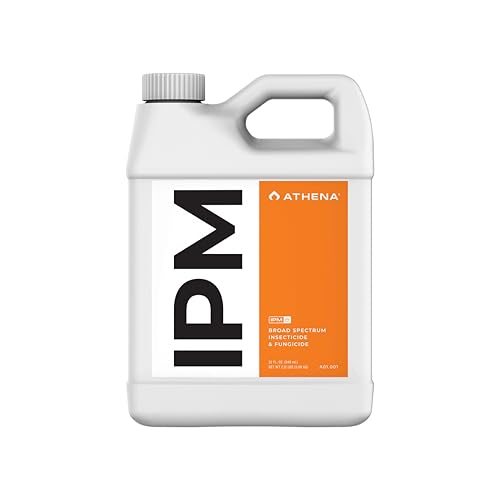
The 32-ounce concentrate bottle of Athena IPM Plant Pest Control Solution is the top pick for indoor, greenhouse, and hydroponic growers who need broad-spectrum control using EPA 25(b) minimum risk ingredients — natural oils that the EPA considers very low risk to people and pets. You get broad-spectrum control of spider mites, aphids, thrips, and powdery mildew, all from a concentrate you mix with water.
One reviewer called it “the best of the best to battle pests that come in the grow medium.” Buyers report that it “zaps mites as well as all the other critters,” and its pleasant smell makes it comfortable to use indoors. Unlike the Organocide 3-in-1 which uses a fish and soybean oil blend, the Athena relies on natural oils that smell far milder during application.
The one limit is its price per ounce compared to budget options, but since it is a concentrate, a single bottle goes a long way for most home gardens. For indoor and hydroponic gardeners who want the safest, most reliable control from seed to harvest, this is the clear winner.
Why it’s great
- EPA 25(b) exempt — very low risk to people and pets
- Broad spectrum control of mites, aphids, thrips, and mildew
- Simple mixing with clear dilution instructions
Good to know
- Premium price point for a 32 oz concentrate bottle
- Requires a separate pump sprayer for large areas
2. Bonide Captain Jack’s Neem Oil
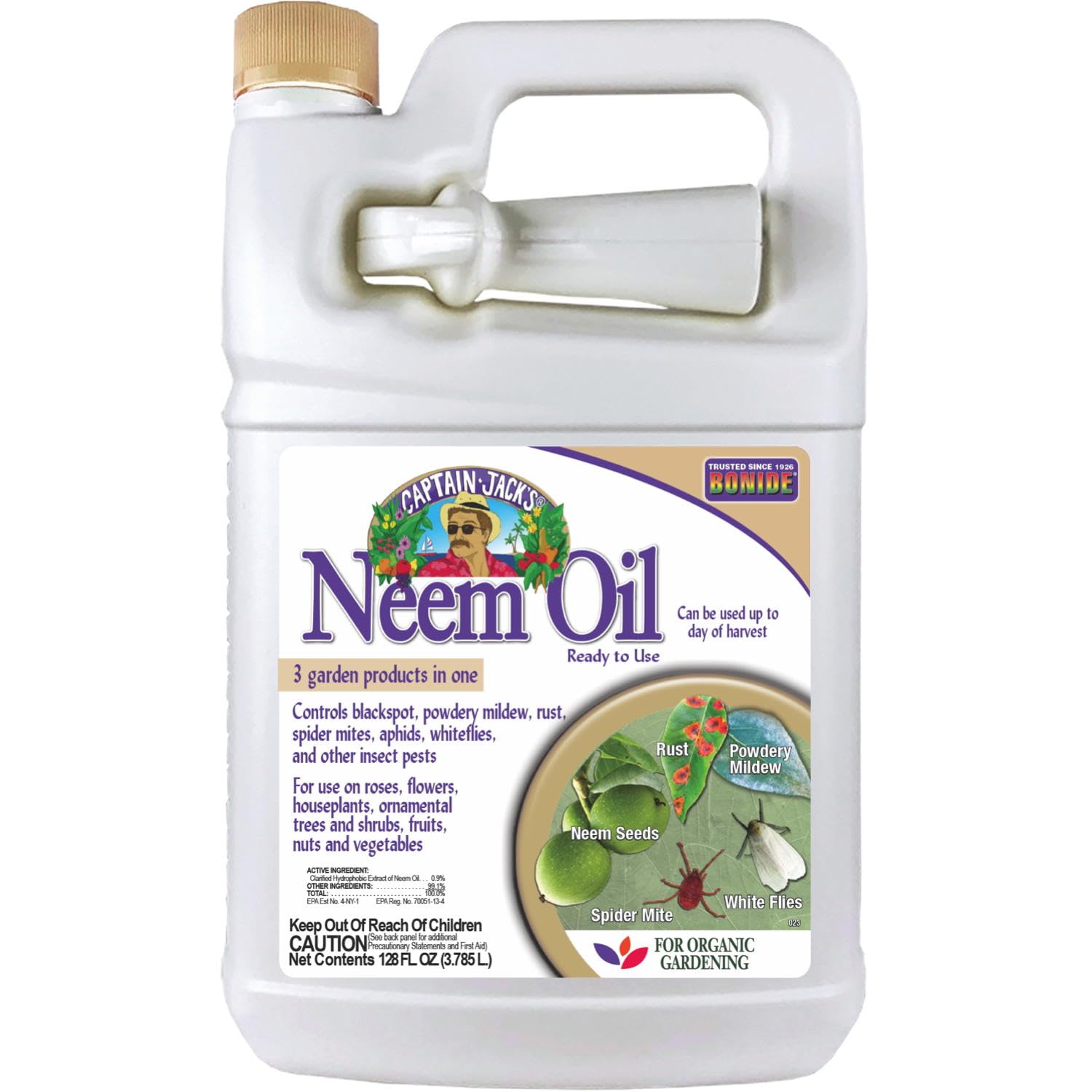
While the Athena IPM is a concentrate for targeted use, Bonide Captain Jack’s Neem Oil gives you the largest ready-to-use volume of any spray in this guide — a full 128-ounce jug that covers a massive garden without any mixing. That is 64 times more liquid than the 2-ounce Ortho bottle, so you can spray your entire vegetable patch, rose bed, and fruit trees without running out.
This spray uses clarified hydrophobic extract of neem oil (neem oil processed to be easier to mix and less likely to clog sprayers). It kills eggs, larvae, and adult stages of spider mites, aphids, and whiteflies while also fighting powdery mildew and rust. One reviewer noted that it “kept the fungus gnats away from my seedlings,” and that it has a light, fresh scent that works well indoors.
Owners mention that the spray takes consistent application every 7 to 14 days to fully control pests, and some notice a mild egg-like odor when first applied. Choose this over the Athena if you have a large outdoor garden and want a pre-mixed spray that is ready to use straight from the jug.
Where it shines
- Massive 128 oz ready-to-use jug — no mixing needed
- Triples as a fungicide, insecticide, and miticide
- Approved for organic use up to day of harvest
Worth noting
- Requires regular reapplication every 7-14 days
- Some users report a mild unpleasant odor
3. Organic Insecticide & Fungicide for Plants Concentrate

Here is the scenario: your tomato plants have whiteflies, your herb garden has aphids, and your houseplants have fungus gnats — you need one product that handles all three without using harsh chemicals. This advanced bio-based concentrate is designed to tackle leaf disease and chewing or sap-sucking pests in a single pass, and it is safe to use on vegetables right up until harvest.
Customers note that just 10 drops in 32 ounces of tap water kills bugs on contact within 5 to 10 seconds — the insects shrivel up immediately. The formula has no noticeable scent, which is a big advantage over oil-based sprays. One reviewer shared that a single “soaking eliminated a severe fungus gnat problem,” and that they now use a weekly misting with just 1 tablespoon in a spray bottle.
This concentrate is for the gardener who wants fast knockdown without smelling like oils all day. If you want economical whole-garden coverage that works fast and smells like nothing, this is your best bet. The fungicide side of this product also improves leaf color, as some buyers noted that their plants went from “horrible to great” after switching from a generic lawn care service.
What stands out
- Kills bugs within 5-10 seconds on contact
- Concentrate yields many gallons of spray
- No strong odor — suitable for indoor use
The trade-offs
- Stronger fungicide component has a thicker, smellier consistency
- Requires mixing before each use
4. Garden Safe Brand Fungicide3
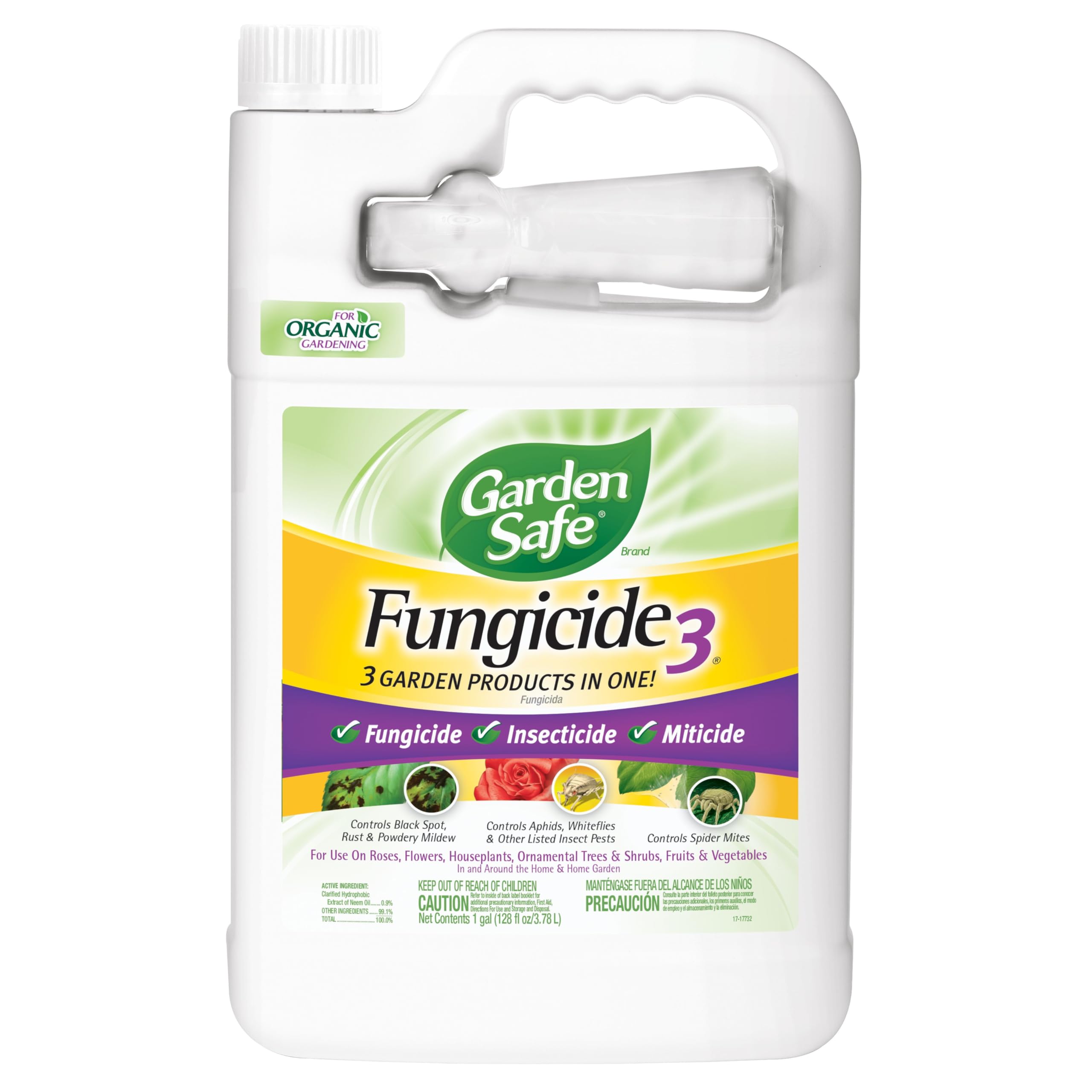
The single number that matters most in this category when you have a large garden is volume — and this spray gives you a full gallon (128 fluid ounces) of ready-to-use neem oil extract for a mid-range price. That is enough liquid to treat roses, tomatoes, blueberries, and ornamental shrubs across an entire season without constantly buying refills.
The catch you accept for that value is the built-in sprayer, which some buyers describe as a frustrating design — you only get about 4 inches of coiled hose to reach your plants, making it awkward to spray bushes at the back of the bed. One reviewer flatly said “get another sprayer.” The product itself works, but the delivery system needs an upgrade.
When you factor in the per-ounce cost, this is the most economical neem oil spray on the list. Reviewers point out that it produces “greener foliage, more blossoms, and higher yields” with weekly use on hibiscus, roses, and tomatoes. For price-to-performance on a budget, this gallon jug is the smartest buy.
The upsides
- Full gallon of ready-to-use neem oil spray
- Triple action: fungicide, insecticide, and miticide
- Excellent value per ounce
Keep in mind
- Built-in sprayer has very short reach
- Can burn plants if used in direct sunlight or at full strength
5. Botanical Tradesman 100% Cold-Pressed Neem Oil

What you actually get at this lower price is a 16-ounce trigger spray bottle and a 3.4-ounce bottle of 100% cold-pressed neem oil that dilutes into roughly 320 ounces of finished spray — that is about 20 full refills from one tiny concentrate bottle. Unlike the Garden Safe spray which uses a neem oil extract, this is the raw, pure neem oil with nothing added.
What you give up is convenience — this oil is very thick and does not easily mix with water. Buyers recommend putting the closed bottle in a container of hot water before measuring to thin it out, then blending it with water and a few drops of mild liquid soap. One buyer mentioned that the smell is “terrible” but effective, and that it reduced fungus gnats from 3-8 per plant to just 1-2 over a 4-week cycle.
This kit is for the gardener who wants the purest, most natural neem oil concentrate and is willing to spend a few minutes mixing each batch. If you prefer grabbing a bottle and spraying immediately, the Garden Safe Fungicide3 is easier, but for raw power and economy per gallon, this is the perfect budget buyer.
Why we’d pick it
- Pure 100% cold-pressed neem oil — no additives or diluents
- Makes 320 oz of finished spray from 3.4 oz of concentrate
- Includes a reusable trigger spray bottle
A few caveats
- Very thick oil — requires hot water bath to mix easily
- Strong garlic-like smell persists after drying
6. Organocide 3-in-1 RTU Garden Spray

This spray is specifically for the organic gardener who grows fruits, vegetables, and herbs and needs a product that is certified for organic use without any synthetic chemicals. The Organocide 3-in-1 uses a unique blend of soybean extract, sesame oil, and fish oil — not neem oil — making it a completely different type of bug repellent that works by smothering insects and fungal spores.
That oil blend is very effective against aphids, thrips, and powdery mildew without burning leaves, which is a common problem with neem-based sprays. One reviewer stated it “works great in a greenhouse, kills thrips without burning leaves or harming plants.” At just 1 pound for a 24-ounce bottle, it is half the weight of the Ortho spray (1.5 pounds), making it lighter and easier to hold for long spraying sessions.
Keep in mind that some buyers found the “ready-to-use” label misleading — the formula can be too thick for certain plants like marijuana and needs dilution despite saying it is ready to spray. Also, the fish oil gives it a strong smell, so reviewers recommend wearing a mask and glasses when applying. For organic vegetable growers who prioritize OMRI certification over convenience, this is the top choice.
Strong points
- OMRI-listed for organic production — safe on edibles
- Unique soybean and fish oil formula — no neem burn risk
- Effective on thrips, aphids, and powdery mildew
Before you buy
- Strong fish oil smell during application
- May be too concentrated for some plants despite “RTU” label
7. Ortho Rose and Flower Insect Killer

Compared to the other sprays in this guide, the Ortho Rose and Flower Insect Killer is the most affordable ready-to-use option, and it is the only one that offers true systemic protection — meaning the spray is absorbed into the plant and kills insects when they bite, not just when they get splashed. It protects against over 100 listed insects and lasts up to 4 weeks per application. For the budget-conscious gardener who just wants Japanese beetles, aphids, and spider mites gone fast without worrying about mixing or organic labels, this is a reliable winner.
What the lower price gets you is a 24-ounce bottle that weighs only 1.5 pounds, so it is easy to carry around the garden. The dual-action formula kills bugs on contact and then keeps working from inside the plant. One reviewer confirmed that it “did the trick” against Japanese Beetles on their roses, noting they had to spray “every other week or so, but they are finally gone!”
A caution: while the premium Athena IPM offers safer natural ingredients and the Organocide 3-in-1 has organic certification, the Ortho uses chemical actives that can harm pollinators if sprayed on open flowers. skip it if you grow vegetables you plan to eat without a waiting period; this one is not labeled as safe for food crops. But for price and pure knockdown power on ornamentals, you will not find a faster fix.
What we like
- Systemic action kills bugs from inside the plant for up to 4 weeks
- Dual-action: works on contact and systemically
- Very affordable price point
The downsides
- Weak systemic effect — struggles with heavy mealybug infestations
- Not organic — may harm pollinators if sprayed on open flowers
Understanding the Specs
Contact vs. Systemic Action
A contact killer only works when the spray directly hits the bug. Once the spray dries, it offers no protection. A systemic spray (like the Ortho Rose and Flower Killer) is absorbed into the plant’s leaves and stems, so when a pest takes a bite, it ingests the active ingredient. Systemic sprays protect new growth that was not even sprayed yet, but they take longer to kill existing bugs compared to a direct contact hit.
Neem Oil Extract vs. Cold-Pressed Neem Oil
Clarified hydrophobic extract of neem oil has been processed to remove solids and impurities, making it easier to mix and less likely to clog sprayers. Products like the Garden Safe Fungicide3 use this extract. Cold-pressed neem oil (like the Botanical Tradesman) is the raw oil squeezed directly from neem seeds. It is more concentrated but much thicker, harder to mix with water, and has a stronger garlic-sulfur smell. Both work, but extract is more convenient.
Ready-to-Use vs. Concentrate Form
A ready-to-use (RTU) spray comes pre-diluted in a bottle — you just squeeze the trigger and spray. This is ideal for small gardens or for buyers who want zero setup. A concentrate requires you to mix the product with water and often a wetting agent like mild liquid soap. Concentrates are more economical for large gardens and let you adjust the strength depending on how bad the infestation is. For example, the Botanical Tradesman 3.4 oz concentrate makes over 20 spray bottles worth of product.
OMRI Listing and EPA Certification
OMRI (Organic Materials Review Institute) listing means the product has been reviewed and approved for use in certified organic farming. Products like the Organocide 3-in-1 carry this listing. EPA certification means the product has been registered with the Environmental Protection Agency and has a proven safety and efficacy record. Some products, like the Athena IPM, use EPA 25(b) exempt ingredients — natural substances that are considered minimum risk and do not require full EPA registration. For edible gardens, prioritize OMRI-listed or EPA 25(b) products.
FAQ
How often should I spray my plants with bug repellent?
Will bug spray for plants hurt my bees or butterflies?
Can I use plant bug spray on my vegetable garden?
Why do my plant leaves look burned after spraying?
Final Thoughts: The Verdict
If you want one dependable pick, the best bug repellent for plants winner is the Athena IPM Plant Pest Control Solution because it combines broad-spectrum control with EPA 25(b) exempt ingredients that are safe for indoor and outdoor use. If you want the largest ready-to-use volume for a big garden, grab the Bonide Captain Jack’s Neem Oil. And for the budget-conscious gardener who wants fast systemic knockdown of Japanese beetles, the standout is the Ortho Rose and Flower Insect Killer.