
A yard that tilts like a ski slope can make a standard mower feel unsafe. You need a mower built to grip steep grades and uneven ground without tipping, so you keep your property trimmed without risking a fall.
I’m Rikta — the co-founder and writer behind Lawn Gear Lab. This guide is built by comparing the manufacturers’ published specifications and the patterns across verified customer reviews, so you get each pick’s real strengths and trade-offs instead of marketing spin.
These seven models set the current standard for a slope mower.
How To Choose The Best Slope Mower
Not every mower labeled “all-terrain” actually handles a hillside well. Focus on these three factors before you buy.
Slope Rating: Degrees vs. Percent
A slope rating tells you the steepest incline a mower can handle safely. A 45-degree angle equals a 100% grade — meaning the ground rises one vertical foot for every one horizontal foot. For most residential hillsides, a mower rated for at least 80% (roughly 38.6 degrees) gives you a solid safety margin. Anything rated below 50% is for gentle undulations, not real slopes.
Traction: Tracks vs. Wheels
Rubber tracks (like on a tank) spread the mower’s weight over a larger surface area. That reduces ground pressure and prevents slipping on loose soil or wet grass. Wheeled mowers with all-wheel drive (AWD) are lighter and more maneuverable in tight spaces, but they can lose grip on steep, damp slopes. If your hill stays mostly dry and firm, wheels are fine. For wet, loose, or very steep terrain, tracks are safer.
Cutting Height Adjustability
On uneven ground, a mower that cannot adjust cutting height in small increments will scalp the high spots and miss the low ones. Look for a range of at least 1 to 4 inches, with multiple positions or stepless adjustment. A wider deck (over 20 inches) reduces mowing time. A narrower deck (around 15–17 inches) follows contours better without bouncing.
Quick Comparison
On smaller screens, swipe sideways to see the full table.
| Model | Category | Best For | Key Spec | Amazon |
|---|---|---|---|---|
| AIWEIYA Remote Control | Mid-Range | Extreme 45° slopes with thick brush | 21.6″ cut / 286 lbs tracks | Amazon |
| Segway Navimow X430 | Mid-Range | Autonomous mowing on 84% slopes | 17″ cut / 63.7 lbs | Amazon |
| DREAME LiDAR A3 AWD Pro | Premium | Wire-free LiDAR navigation | 15.8″ cut / 26.4 lbs | Amazon |
| MOVA LiDAX Ultra 3000 | Premium | LiDAR + AI dual vision mapping | 15.8″ cut / 52 lbs | Amazon |
| Mammotion LUBA 3 AWD 3000H | Premium | Tri-fusion navigation (LiDAR+RTK+AI) | 15.7″ cut / 175 min runtime | Amazon |
| DareDevil VYPER 9HP | High-End | 55° slopes with hybrid battery charging | 22″ cut / 325 lbs tracks | Amazon |
| Mowrator S1 4WD 18Ah | High-End | 75% slopes with year-round attachments | 21″ cut / 147.7 lbs | Amazon |
In‑Depth Reviews
1. AIWEIYA Remote Control Lawn Mower
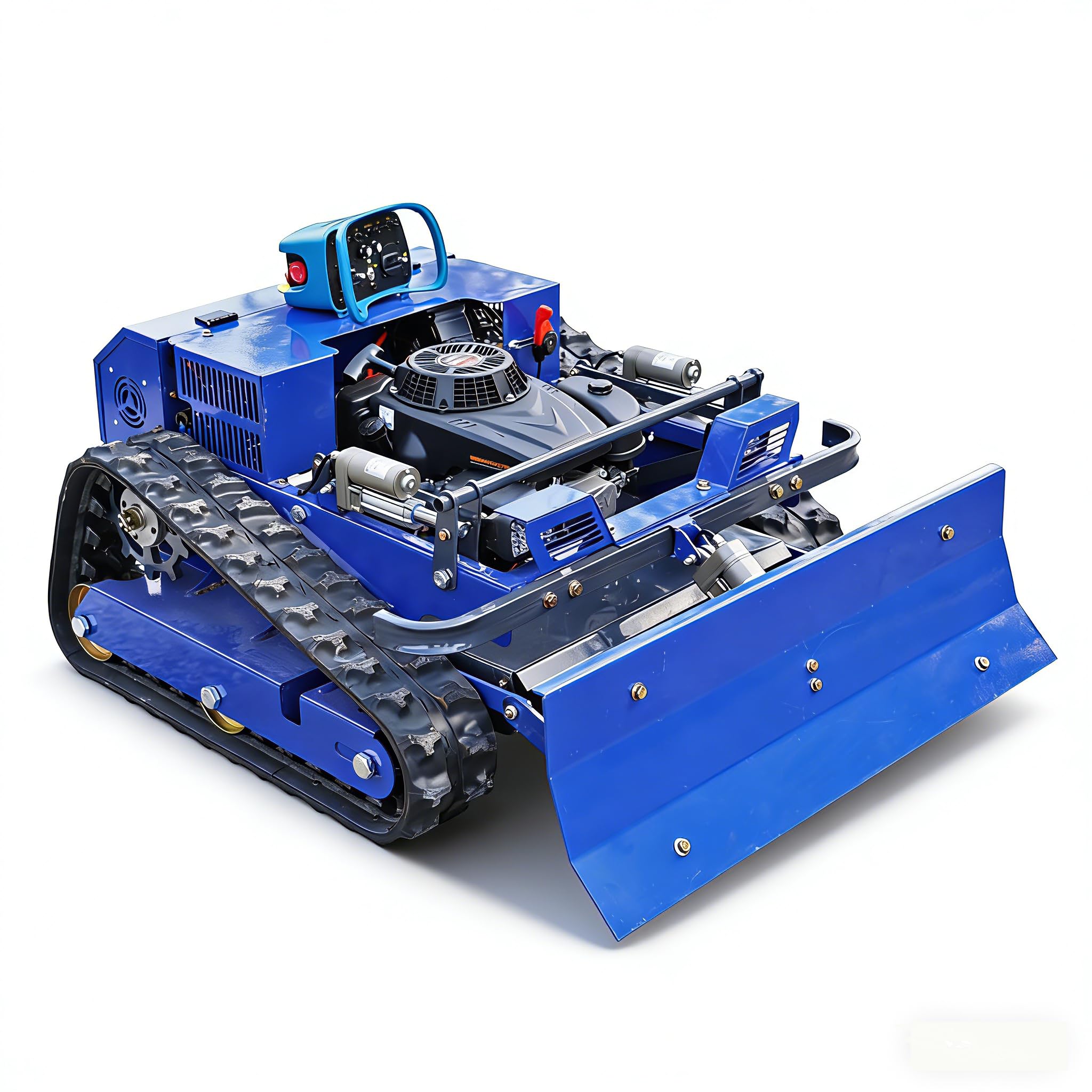
With a 45-degree (100%) slope rating and 286 pounds of planted weight, the AIWEIYA is for anyone who needs to mow the steepest, most extreme grades from a safe distance. It uses rubber crawler tracks and a 1600W 24V brushless drive motor to deliver that raw climbing authority.
You get an adjustable cutting height from 1.1 inches to 5.9 inches — that is 48% more range than the Dreame LiDAR A3 AWD Pro, which tops out at 4 inches — so you can mow overgrown brush and fine turf in the same pass. The 21.6-inch cutting width is also 37% wider than the Dreame’s 15.8-inch deck, meaning fewer trips across the hill. Buyers report a “very heavy duty build” with an “upgraded rechargeable remote” that handles the terrain well.
The catch is runtime: the gas tank only lasts about 15–20 minutes, so you will need to refuel for larger lots, and the starter on some units has been unreliable. This is the best for raw slope-climbing authority and a cut width that covers ground fast, but you will work around its fueling quirks.
Why it’s great
- Climbs a true 45° (100%) slope with crawler tracks
- Widest cutting deck in this lineup at 21.6 inches
- Full 1.1-to-5.9-inch height range via remote control
Good to know
- Fuel tank only delivers 15–20 minutes of runtime
- Setup instructions are sparse; YouTube videos required for hidden switches
- Quality control concerns with starter and carburetor on early units
2. Segway Navimow X430 Robot Lawn Mower
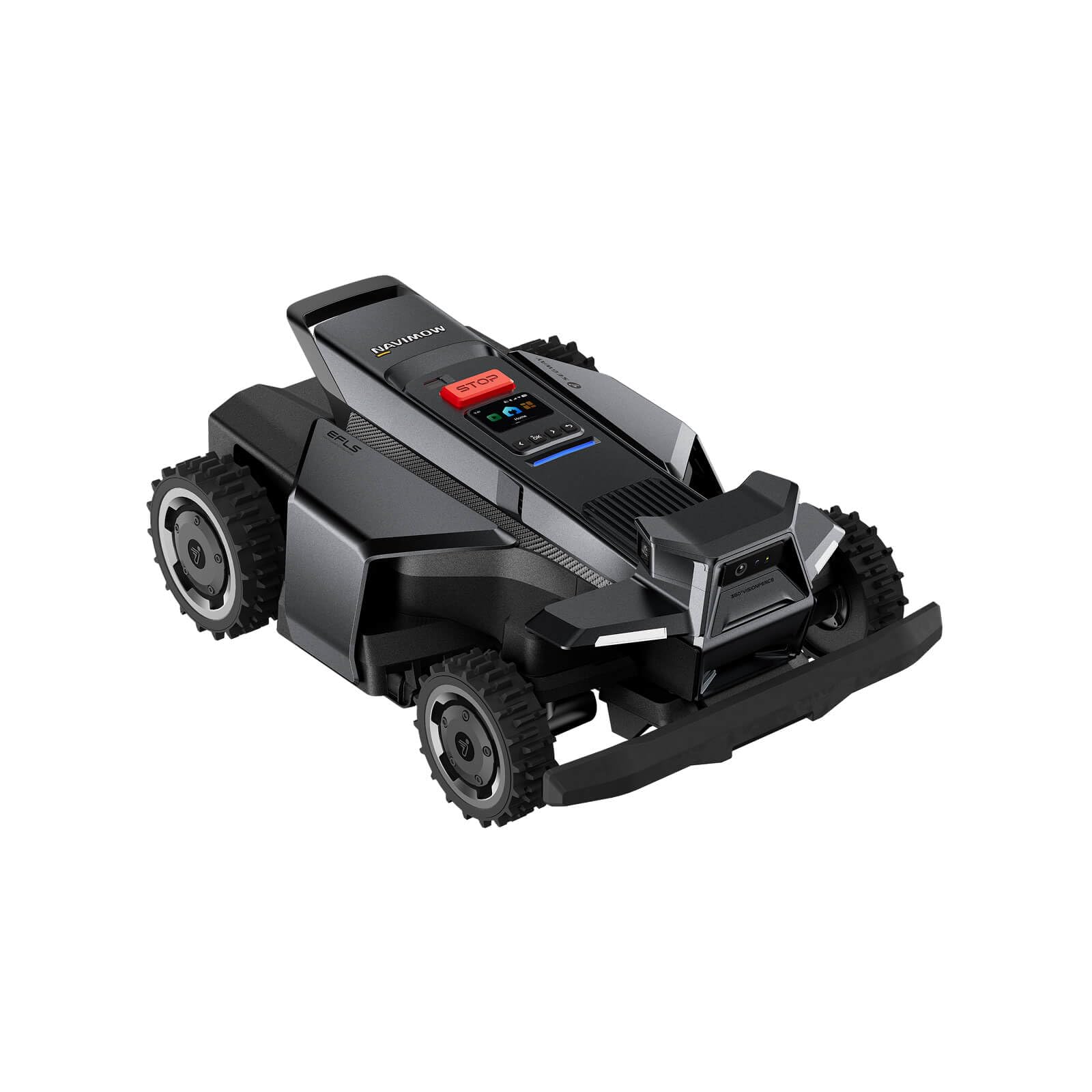
Where the AIWEIYA demands you stand there with a remote, the Segway Navimow X430 lets you sit inside and watch. It climbs slopes up to 84% (40°) using four-wheel drive and an ORV-tuned suspension, and its Xero-Turn steering prevents turf damage. Owners mention its “zero-turn agility handles slopes and tight areas well,” a feature the track-based AIWEIYA cannot match because its tracks tear grass on sharp pivots.
At 63.7 pounds, it is 222 pounds lighter than the AIWEIYA, so it will not rut a wet lawn the way a 286-pound machine does. Dual 180W motors drive a 17-inch cutting deck with 12 blades, and the EFLS tri-frequency RTK (real-time kinematic positioning) combined with 360-degree Vision and VIO (visual inertial odometry) delivers centimeter-level accuracy even under dense tree cover — GPS dropouts are rare.
Choose this over the AIWEIYA if you want a robot that maps itself, mows on a schedule, and handles up to 1 acre without you touching a remote. The caveat is firmware: a few customers note the mower spun in circles or drove into the road until updates settled. It is brilliant once dialed in, but the setup can test your patience.
Where it shines
- True hands-free operation with one-tap auto mapping
- Zero-turn steering prevents turf tearing on tight corners
- Tri-frequency RTK stays locked under trees and near buildings
Worth noting
- Early firmware versions caused erratic navigation for some users
- Cameras confuse low-hanging branches as obstacles
- Heavy at 63.7 pounds compared to other robotic mowers
3. DREAME LiDAR 3500 Robot Lawn Mower A3 AWD Pro
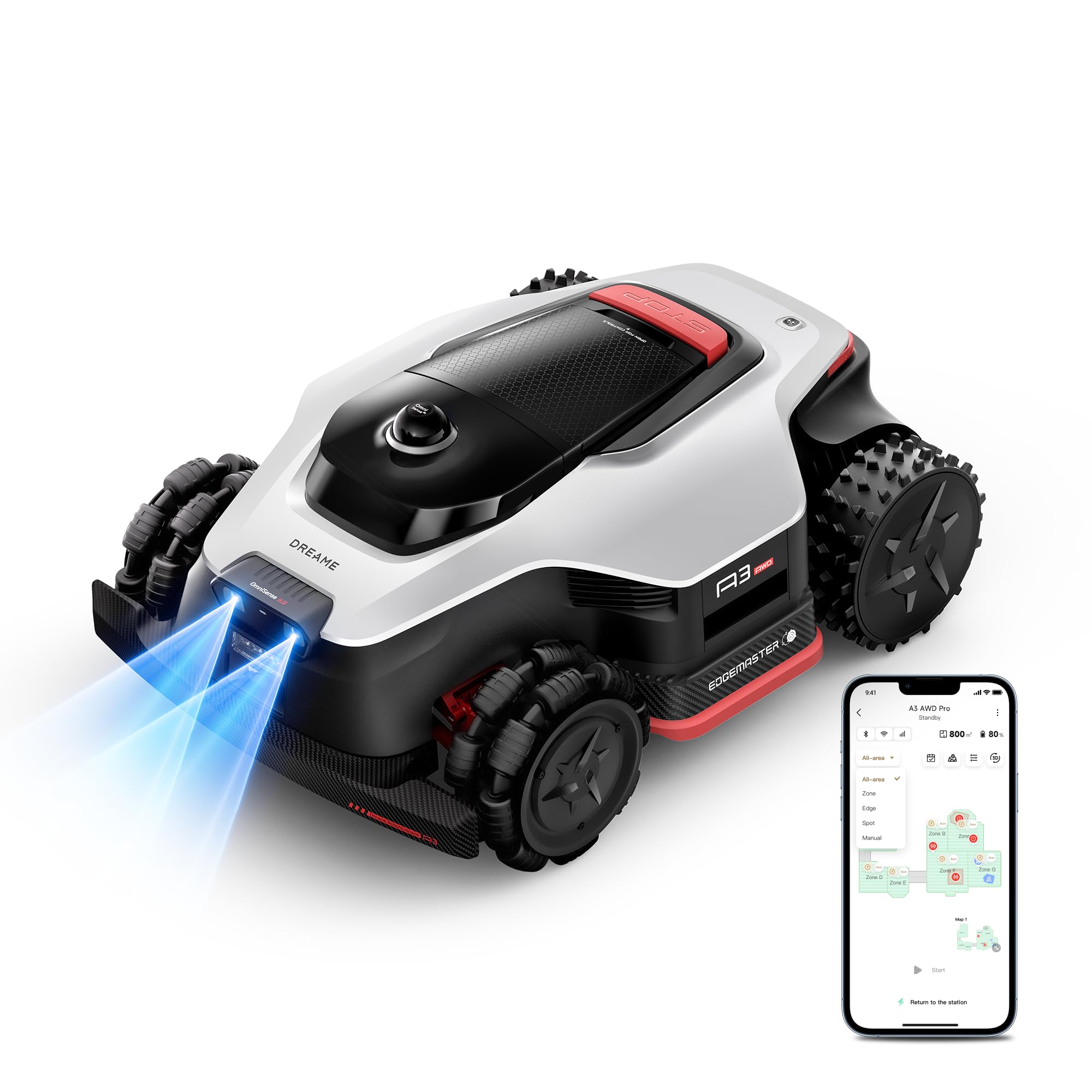
The DREAME A3 AWD Pro can see your entire yard as a 3D map — trees, flower beds, fences — without needing a single perimeter wire or RTK antenna. It uses 360-degree 3D LiDAR (Light Detection and Ranging, which measures distance with laser pulses) combined with binocular AI vision to detect over 300 obstacle types in real time, so it works perfectly under dense tree cover where GPS-based robots lose signal.
It climbs slopes up to 80% (roughly 38.7 degrees) using four hub motors (motors built directly into the wheels), and at just 26.4 pounds, it is the lightest model in this roundup — a huge advantage for not leaving ruts in damp soil. The dual floating cutting discs offer a 15.8-inch width, and the EdgeMaster 2.0 system cuts within an inch of borders. One reviewer notes it “handles tall, overgrown grass without struggling,” gradually trimming it down pass by pass.
Its standout spec is the OmniSense 3.0 navigation: 240-foot long-range detection with smart backup protection means it rarely gets stuck.
What stands out
- LiDAR + AI dual vision works without boundary wire or RTK
- Extremely light at 26.4 pounds — won’t rut wet lawns
- AWD hub motors climb 80% slopes reliably
The trade-offs
- Setup on non-perfect lawns (bumps, weeds) can be frustrating
- Maximum cutting height is only 4 inches
- App does not allow editing maps; must restart from scratch
4. MOVA LiDAX Ultra 3000 AWD Robot Lawn Mower
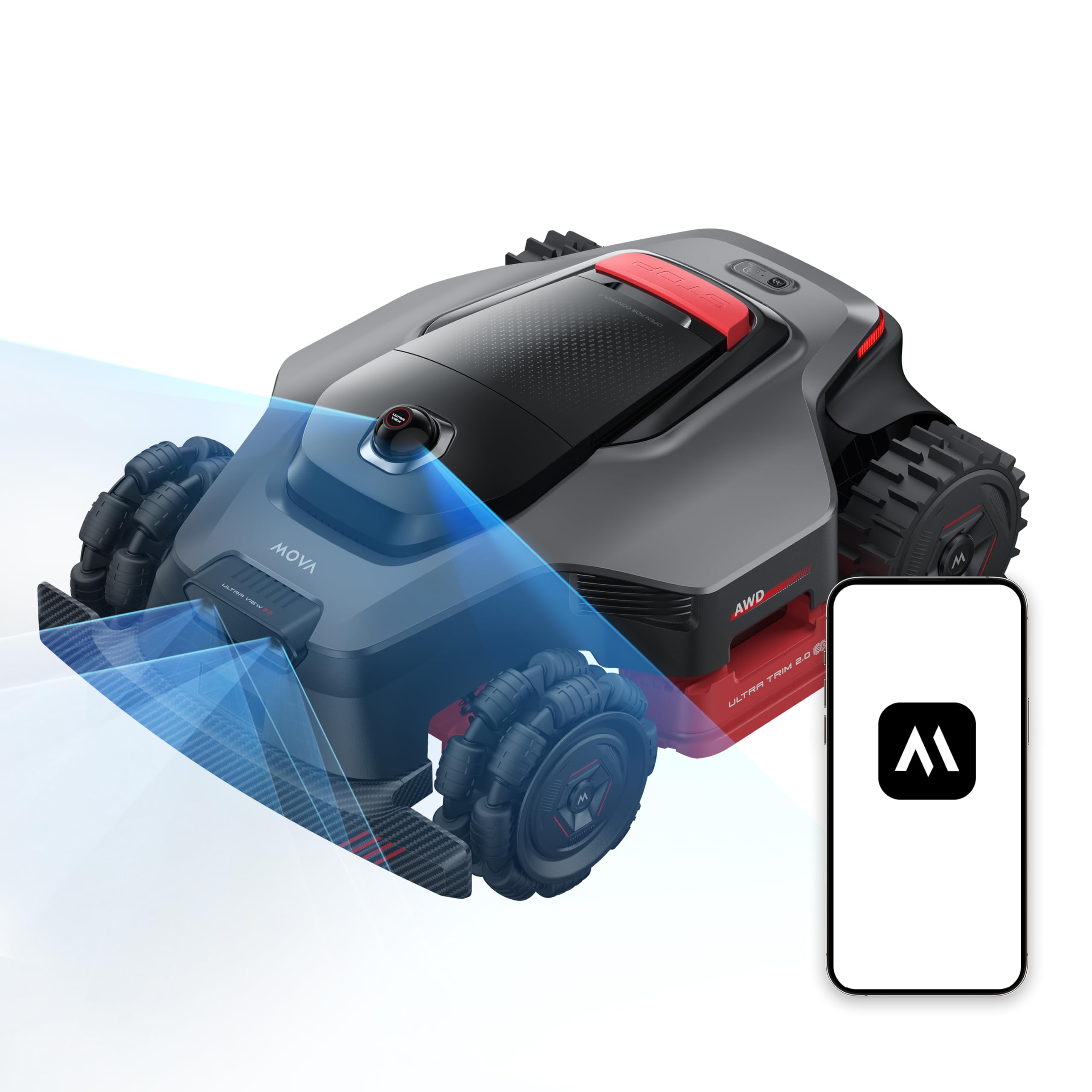
The single number that matters most in this category is slope rating, and the MOVA LiDAX Ultra 3000 AWD scores an 80% slope capability. If you have multiple lawn areas that need different mowing schedules — front yard short, backyard taller — the MOVA 3000’s dual-map system lets you assign unique zones, heights, and timings to each, all within one app. Its 360-degree LiDAR and AI dual vision detect over 300 obstacles, and the 3-year free 4G connectivity gives you real-time GPS tracking and theft alerts.
It climbs 80% slopes with four 116W hub motors, and the floating cutting discs adapt to uneven ground to prevent scalping. The battery lasts 165 minutes per charge, covering up to 0.75 acre total. Reviewers on a hilly 3/4-acre lot say it “replaced push and riding mowers” and that “the LiDAR (no GPS or antenna) is a standout” for wire-free setup. At 52 pounds, it is nearly double the Dreame A3’s weight, which helps stability but means you will not want to carry it.
This is for a property that demands zone-by-zone customization and you want the peace of mind of built-in 4G anti-theft, offering strong price-to-value for a fully featured, wire-free slope mower with theft protection.
The upsides
- Dual-map system for different zones with independent schedules
- 3 years of free 4G connectivity for real-time tracking and theft alerts
- 165-minute battery covers most of a 0.75-acre lot in one charge
Keep in mind
- Front wheels do not turn, which can rip dirt on some lawns
- App interface described as “cartoon map” with confusing zone setup
- Requires many no-go zones on irregular lawns
5. Mammotion LUBA 3 AWD 3000H Robot Lawn Mower
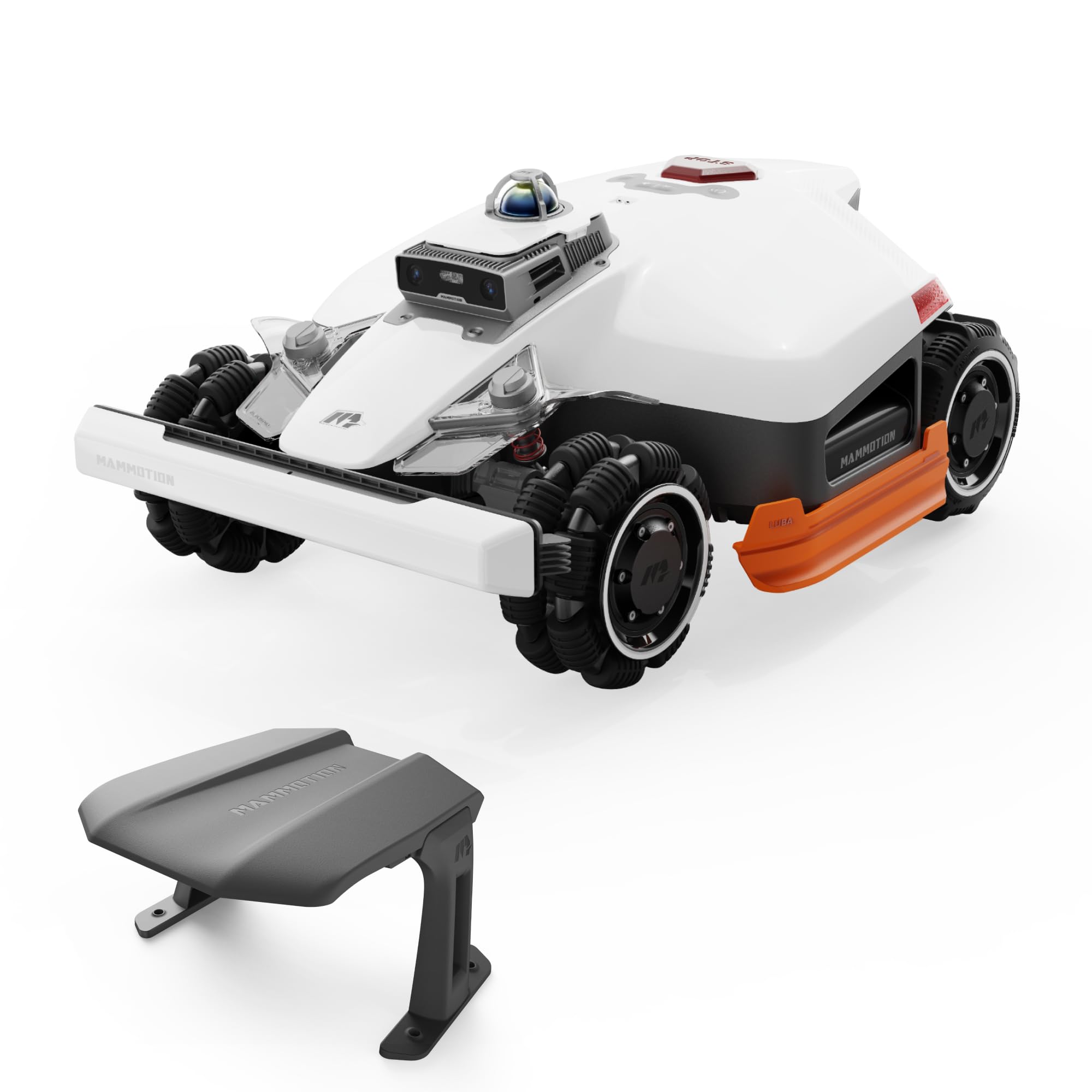
The LUBA 3 fuses three navigation methods — 360-degree LiDAR, NetRTK (a network-based GPS correction system), and dual-camera AI vision — and switches between them when one signal drops. It climbs 80% slopes with four independent motors and an omni wheel for zero-radius turns, and its 230-foot LiDAR range maps the entire yard in a single pass.
It manages up to 30 separate mowing zones and supports four cutting patterns (perimeter, zigzag, checkerboard, adaptive zigzag). The included garage keeps the mower sheltered, and the dual 165W motors with six-blade discs auto-adjust power based on grass density. One reviewer noted the “real-world battery coverage runs at about 60% of the advertised 500 m²/hr,” so factor that into your expectations — but they still called the automation and RTK reliability “excellent.”
The killer feature is the 12Ah lithium battery that runs up to 175 minutes per charge. For a large, complex yard with multiple separated areas, this is the most hands-off option available — and the perfect budget pick for anyone who needs multi-zone coverage without paying for a premium brand name.
Why we’d pick it
- Tri-fusion navigation (LiDAR + NetRTK + AI) never loses signal
- Manages up to 30 mowing zones with four cutting patterns
- 175-minute runtime from 12Ah lithium battery
A few caveats
- Real-world coverage is about 60% of advertised figures
- Battery is not user-replaceable; long-term parts availability unknown
- Mapping a large yard with multiple channels takes time
6. DareDevil VYPER 9HP Remote Controlled Lawn Mower
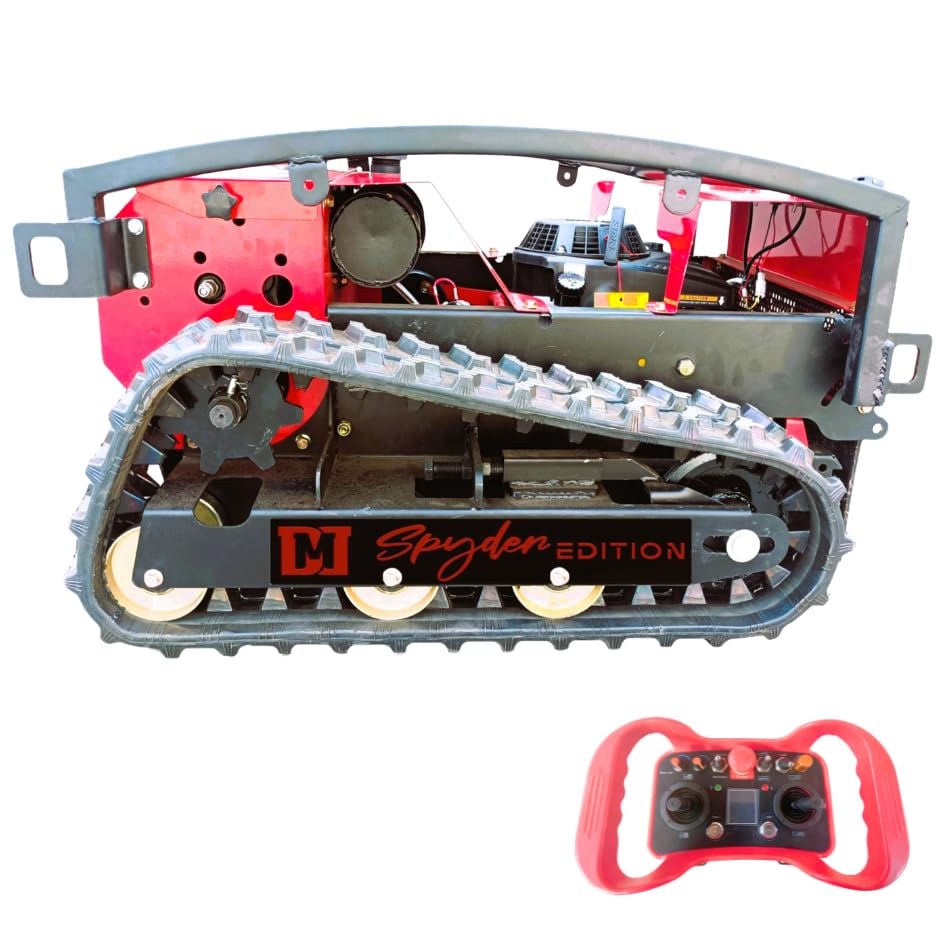
The DareDevil VYPER is perfect for the buyer who needs to mow the steepest, most overgrown hillsides where other slope mowers would stall or tip. Its 224cc gas engine drives a 1200W 24V brushless motor through rubber tracks, and an integrated alternator charges two batteries while you mow, so you never wait for recharge.
The 22-inch cutting deck is the widest in this list, with a height range from 1.18 to 6 inches, and the remote control operates from up to 200 meters (about 650 feet). Reviewers point out it “handles thick brush” like poison oak and scotch broom, and that “hill climbing and mowing performance” is excellent. It weighs 325 pounds, which is 4.9 pounds heavier than the already substantial AIWEIYA, so it stays planted on extreme grades.
Its one weakness is support: several shoppers say long wait times for customer service, and the remote has many non-functional buttons that the company says to ignore. For a buyer who needs a machine that will not stop on terrifyingly steep, brush-choked hills, this delivers — just budget extra patience for after-sale help.
Strong points
- Climbs a genuine 55° slope — the highest rating here
- 22-inch cutting width covers more ground per pass than any other
- Hybrid alternator charges batteries while the gas engine runs
Before you buy
- Customer support is reportedly difficult to reach
- Remote has several non-functional buttons
- Very heavy at 325 pounds — difficult to transport
7. Mowrator S1 4WD 18Ah Remote Control Lawn Mower
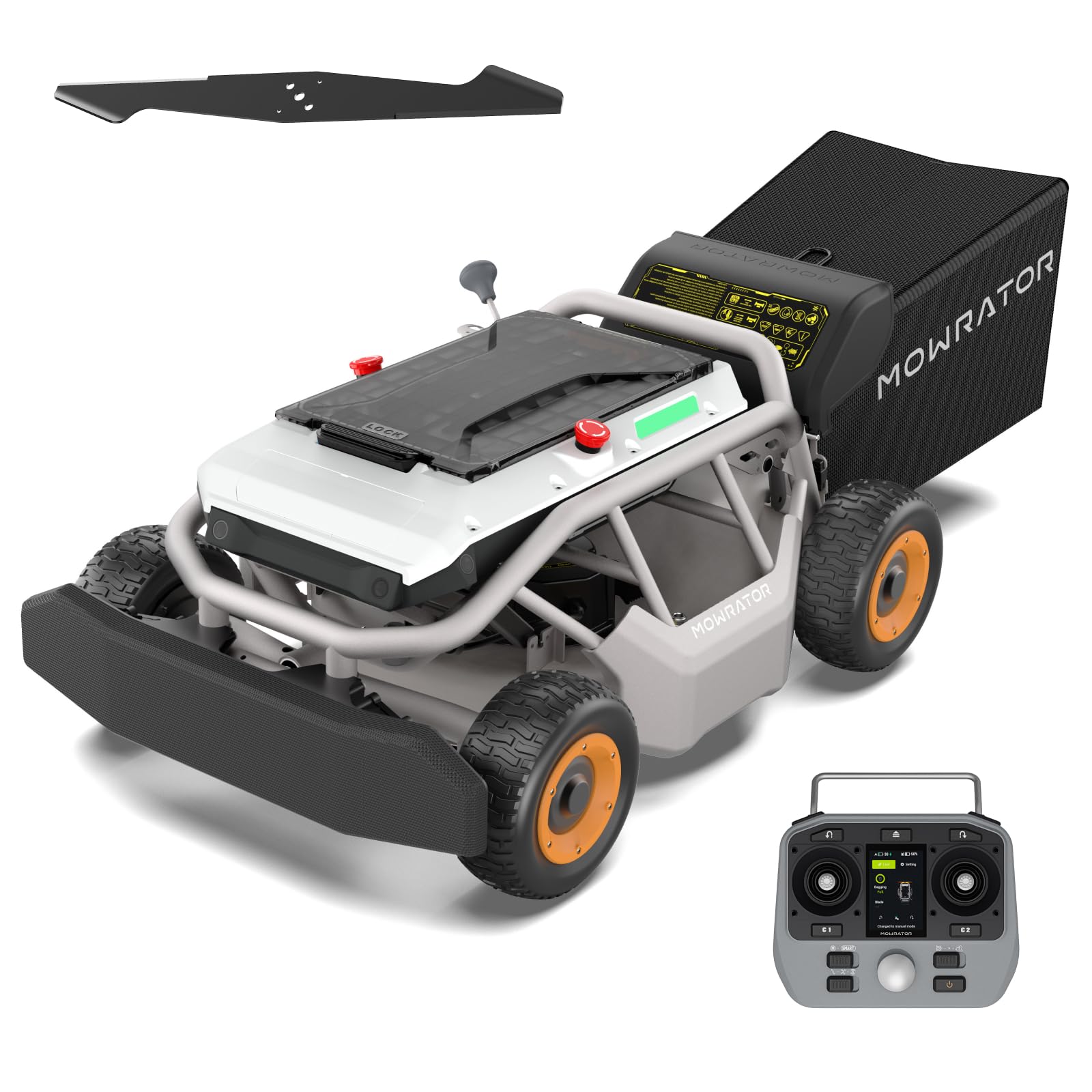
The Mowrator S1 sits at the top end of this list, but you can see where the money goes: a metal, steel, and aluminum frame with polyurethane wheels built to take abuse. It climbs 75% slopes (37 degrees) with a 21-inch cutting deck, and the 18Ah battery delivers 2.25 hours of runtime — enough to mow 1.12 acres on a single charge.
Buyers call it a “high quality tool” with “excellent build, powerful and quiet” operation. The low-latency remote control responds instantly, and the upgraded wheels handle deep, wet grass without slipping. Seasonal attachments (tow hitch, mulching blade, snow plow) transform it into a year-round utility machine, which makes the upfront investment easier to swallow.
Between the Mowrator and the DareDevil, the Mowrator offers better build documentation, a responsive support team (buyers praise “Sofi” for timely warranty replacements), and a lighter 147.7-pound frame that is far easier to move around. For the buyer who wants one machine that mows hills all summer and plows snow all winter, this is the long-term value play.
What we like
- 2.25-hour battery runtime covers up to 1.12 acres per charge
- All-season attachments (snow plow, mulching blade, tow hitch)
- Excellent build quality with responsive customer service
The downsides
- High upfront investment compared to gas-powered alternatives
- AWD can rip turf when turning on sensitive grass
- Amazon shipping reporting has been inconsistent per buyers
Understanding the Specs
Slope Rating: Degrees vs. Percent
A mower rated for 80% can handle a grade where the ground rises 8 feet for every 10 feet forward — that is roughly 38.6 degrees. A 100% slope equals 45 degrees. Most residential “steep” lawns fall between 30% and 60% (16 to 31 degrees). If your yard feels treacherous to walk on, shoot for a mower rated at 75% or higher for a safety buffer.
Cutting Width and Deck Material
Wider decks (20+ inches) finish faster on open hills, but narrower decks (15–17 inches) follow the ground’s contours more closely, reducing scalping. Steel decks are heavier but more durable; aluminum decks are lighter and resist rust. For a slope mower that you will leave outside, aluminum or stainless steel is worth the extra cost.
Battery Capacity vs. Gas Runtime
Battery-powered slope mowers run 60–175 minutes per charge and are quieter, but you need to plan for recharging. Gas-powered models run as long as you keep filling the tank, but they are louder and heavier. The hybrid designs (like the DareDevil) combine both: a gas engine runs the blades while an alternator charges batteries for the drive motors, giving you the best of both worlds.
Remote Control Range and Safety Shutoff
Most remote-controlled slope mowers operate from 100 to 200 meters (about 330 to 650 feet). Look for an automatic tilt shutoff — if the mower tips beyond a safe angle, it kills the engine or motor immediately. This is a critical safety feature that prevents runaway machines on steep hills. Some models also include a physical tether or tether-less shutoff button.
FAQ
Can I use a regular riding mower on a slope?
What is the difference between AWD and 4WD in a slope mower?
Do I need boundary wires for a robotic slope mower?
How do I maintain a slope mower on a steep property?
Final Thoughts: The Verdict
When it comes down to it, the winner is the slope mower AIWEIYA Remote Control Lawn Mower because it combines a 45-degree climbing capability with the widest cutting deck at 21.6 inches and a full 1.1-to-5.9-inch height adjustment range. For hands-free autonomous mowing with zero-turn precision, pick the Segway Navimow X430. For the absolute steepest terrain — 55-degree slopes — the DareDevil VYPER 9HP with its hybrid gas-electric system and 22-inch cutting deck is unmatched.