
You want composted cow manure that feeds your plants without burning their roots, improves your soil’s texture, and won’t stink up your yard. The best options are fully composted (meaning hot composting at 130-160°F has already killed weed seeds and pathogens) and release nutrients slowly over months, not all at once.
I’m Rikta — the co-founder and writer behind Lawn Gear Lab. This guide is built by comparing the manufacturers’ published specifications and the patterns across verified customer reviews, so you get each pick’s real strengths and trade-offs instead of marketing spin.
Starting a raised bed, amending clay soil, or brewing compost tea for seedlings? The right bag of composted cow manure for garden is the difference between plants that limp along and plants that truly thrive.
How To Choose The Best Composted Cow Manure For Garden
Composted cow manure is not a one-size-fits-all purchase. The right bag depends on your soil type (sandy, clay, or loamy), what you are growing (flowers, vegetables, or seedlings), and whether you plan to mix it into the ground or use it as a top dressing (a layer spread on the soil surface) or compost tea (liquid made by steeping manure in water). Here are the factors that separate a great buy from a disappointing one.
Check the “Composted” Label vs. “Fresh” or “Aged”
Only manure that has been through a hot composting process (reaching 130-160°F for weeks) is safe for direct use. Fresh cow manure can contain E. coli, weed seeds, and high ammonia levels that burn plant roots. Fully composted manure has a dark, crumbly texture, an earthy smell (not a stench), and a consistent NPK (nitrogen-phosphorus-potassium) ratio around 0.5-0.5-0.5 — low and balanced, meaning it feeds gradually without shocking your plants.
Match the Texture to Your Soil Type
For clay soil (heavy, compacted, poor drainage), you want a coarse, fibrous compost that physically breaks up clods and creates air pockets so roots can breathe. For sandy soil (fast-draining, low nutrient-holding capacity), you want a finer, more decomposed compost that holds moisture and nutrients around the root zone like a sponge. The product descriptions usually tell you what they are best at — read that line carefully.
Understand the NPK Ratio and Beneficial Microbes
NPK stands for nitrogen (N), phosphorus (P), and potassium (K) — the three numbers on every fertilizer bag. Composted cow manure typically scores low across all three (around 0.5-0.5-0.5), which is exactly what you want for a soil amendment (something added to improve soil) rather than a concentrated synthetic fertilizer. What matters more is the microbial life inside: beneficial bacteria that convert those nutrients into forms your plants can actually absorb. Products that mention “millions of beneficial bacteria” or “OMRI listed organic” (certified by the Organic Materials Review Institute for organic farming) are usually richer in that living biology.
Quick Comparison
On smaller screens, swipe sideways to see the full table.
| Model | Category | Best For | Key Spec | Amazon |
|---|---|---|---|---|
| Black Kow 20 lbs | Best Overall | Versatile garden & raised beds | 20 lbs, granular, slow-release | Amazon |
| Black Kow 8 qt | Best Value | Potted plants & compost tea | 6 lbs, 8 quarts, 1:1 mix ratio | Amazon |
| Insta-Cow 10 Cubes | Tea Maker | Compost tea & seedlings | 10 cubes, odorless, 1 gallon liquid | Amazon |
| Brut Cow Compost 10 Quart | Premium Organic | Certified organic gardeners | 10 lbs, OMRI listed, finely sifted | Amazon |
| Black Kow 35 lb Bag | Bulk Value | Large gardens & high volume users | 35 lb listed, 0.5-0.5-0.5 NPK | Amazon |
In‑Depth Reviews
1. Black Kow Composted Cow Manure 20 lbs

20 pounds per bag makes Black Kow Composted Cow Manure the top pick because it is bulky enough for serious soil amending yet light enough to move without a wheelbarrow, and it is for gardeners who need one product that works across raised beds, in-ground gardens, potted plants, and even direct-to-bag tomato planting.
The slow-release nutrients come from millions of beneficial bacteria that convert nitrogen and other elements into forms your plants can absorb, according to the manufacturer. Buyers report that mixing it with worm castings and soil actually changed rose colors (peach to dark pink, dark pink to red, white to lavender), and a vegetable garden planted from seed on April 20 was thriving. It also handles both sandy soils (holding moisture around roots) and clay soils (breaking up compaction and adding aeration) equally well.
The honest trade-off? Some owners mention it can feel overpriced on Amazon compared to buying the same Black Kow brand at local home improvement stores, where you may get six similar bags for less than one bag here. That said, for convenience and a proven formula that simply works, this is the most reliable all-around pick.
Why it’s great
- Versatile across soil types — improves clay aeration and sandy moisture retention
- 20-pound bag provides substantial volume for medium-to-large garden projects
- Slow-release nutrients from natural bacteria won’t burn tender roots
Good to know
- May cost more on Amazon than at local garden centers
- Weight varies based on moisture content at packaging
2. Black Kow Nitrogen Phosphate Composted Cow Manure Fertilizer for Soil (8 qt)

At 6 pounds and 8 quarts, this smaller bag is a fraction of the weight of the 20-pound Black Kow version — making it the smarter pick for container gardening, potted plants on a patio, or anyone who does not need a mountain of compost sitting in their garage. It is essentially the same proven Black Kow compost in a more manageable, lower-commitment size.
The 1:1 mixing ratio (equal parts manure to your existing soil) makes it foolproof for beginners, and the granular form (small, dry pellets) pours easily into planting holes or mixes into potting soil without clumping. One buyer summed it up simply: “My mama puts this in everything she plants.” Reviewers highlight that even though it smells earthy and strong when first opened, the results — vibrant flowers and healthy vegetable transplants — make the brief odor easy to ignore.
Where it really shines is as a base for compost tea (steeping the granules in water to create a liquid feed). The 8-quart size is perfect for making a few gallons of tea without wasting product. If you are new to composted manure and want a low-risk, high-reward entry point that still delivers the full Black Kow reliability, this bag is your best starting point.
Where it shines
- Small, manageable 8-quart bag ideal for containers and small gardens
- Granular form mixes easily without clumping
- Works well for both direct soil mixing and compost tea brewing
Worth noting
- Strong earthy odor when first opened, but it fades quickly
- Less economical per pound than the larger 20-lb bag
3. Insta-Cow – Composted Aged Cow Manure – 100% Natural Ingredients (10 Cubes)
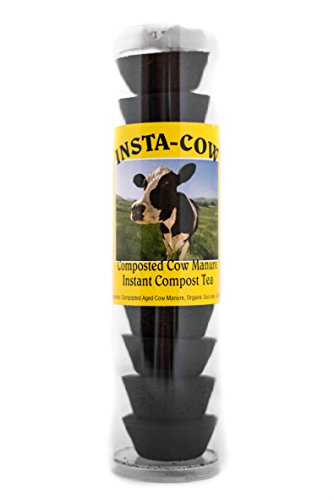
If your main goal is brewing compost tea for seedlings and delicate transplants, Insta-Cow is designed specifically for that job. It comes as 10 dehydrated cubes that dissolve into a rich, dark slurry when you add water — creating about a gallon of “tea” per cube. This is the most convenient form on this list if you want liquid feed rather than digging dry granules into soil.
The manufacturer says it is 100% natural and odorless once dissolved, and the shelf-stable cubes store for months without going bad. One reviewer noted already using one gallon of tea on their seedlings and seeing the leaves turn greener within days. Another noted that the cubes are easy to use through a sprayer for targeted feeding of specific plants or lawn spots, making this a highly versatile option for precision application.
The cubes are shelf-stable, so you can buy them in advance and store them in a cupboard without worrying about smell or pests — something you cannot do with bagged manure that often has a strong, persistent odor. If space or odor sensitivity is your main concern, this cube format solves both problems neatly — a full gallon of tea from a single cube that fits in your pantry.
What stands out
- Dissolves into liquid tea for easy application on seedlings and transplants
- Completely odorless when stored, unlike bagged manure
- Shelf-stable cubes last for months without spoiling
The trade-offs
- Best suited for compost tea use, less ideal for direct soil mixing
- Makes about 1 gallon per cube — may need multiple cubes for large gardens
4. Brut Cow Compost – Nutrient-Rich Composted Cow Manure Organic Soil Amendment (10 Quart)

The single number that matters most in this category is OMRI listing, and Brut scores a perfect 1 — it is the only product on this list that carries that independent organic certification. The 10-quart bag (10 pounds) is finely sifted, which gives it a uniform, soil-like texture with no big chunks, sticks, or debris. That smooth consistency matters when you are top-dressing (applying a thin layer on the soil surface) delicate plants or mixing into potting soil for containers.
The manufacturer packs it with nitrogen, calcium, and iron (all naturally present from the composting process) and guarantees no additives at all — just pure composted cow manure. One first-time grower reported using a 3:2 ratio of this compost to soil when planting tomato seeds on March 1st, and by April 22nd the plants were already well established and growing fast. Another reviewer mixed it with Miracle-Gro soil for vegetable plugs and noted “very fast” growth.
The standout callout here is the “no odor, no burn” guarantee: Brut is aerated thoroughly during composting to eliminate the strong ammonia smell that some manures carry, making it suitable for indoor use on houseplants without offending anyone in the room. For certified organic gardening indoors or out, this bag delivers a strong price-to-value read.
The upsides
- OMRI listed — certified organic for serious growers
- Finely sifted texture ideal for top-dressing and container mixes
- Odor-free and safe for indoor houseplant use
Keep in mind
- 10-pound bag is smaller than the bulk options, so price-per-pound is higher
- May not provide enough volume for large in-ground garden beds
5. Black Kow Composted Cow Manure 35 lb Bag

At face value, this 35-pound bag appears to be the bulk champion of the list — the most compost for your money from a trusted brand. The NPK ratio is 0.5-0.5-0.5, which is the classic slow-release balance you want for general soil amending without burning plants. The manufacturer also promotes the “plant right in the bag” method for growing tomatoes, where you lay the bag flat, cut a small opening, and grow directly in the compost.
Here is the catch, and it is a significant one: several verified customers note that the bag actually weighs about 19.8 pounds, not the 35 pounds advertised. One reviewer explicitly stated the bag “weighs 19.8 lbs, not 35 lbs as listed” and noted that 1 cubic foot of Black Kow is sold for at Home Depot, making this listing roughly three times the retail price for the same volume. Combined with a return shipping cost, this has frustrated a number of buyers.
That said, the compost itself — when you get the expected volume — is the same quality Black Kow material that gardeners have trusted for decades. If you are willing to check the actual weight upon arrival (and possibly return it if underweight), the product itself works fine for vegetables and houseplants alike. This is the perfect pick for the budget buyer who prioritizes the lowest advertised price per pound and is ready to verify the shipment themselves.
Why we’d pick it
- Low NPK ratio (0.5-0.5-0.5) is ideal for slow-release, no-burn feeding
- “Plant in the bag” method works well for tomatoes
- Large bag aims to deliver bulk value for big gardens
A few caveats
- Verified reviewers point out actual weight closer to 19.8 lbs than 35 lbs
- Amazon price often far exceeds local garden center pricing for same product
Understanding the Specs
NPK Ratio (0.5-0.5-0.5)
This is the three-number code on every fertilizer or compost bag. It stands for nitrogen-phosphorus-potassium. Composted cow manure has naturally low NPK values (each around 0.5), which is exactly what you want for a slow-release soil amendment. Unlike synthetic fertilizers that blast your plants with a high dose of nutrients all at once (risking root burn), a 0.5-0.5-0.5 ratio fuels gradual, steady growth over weeks. The numbers are low on purpose: the real magic is the beneficial bacteria that convert those small nutrient stores into forms your plants can actually use.
Mixing Ratio (e.g., 1:1 or 3:2)
This describes how much compost to blend with your existing soil. A 1:1 ratio means equal parts compost and soil — the richest possible mix, mostly used for heavy feeders like tomatoes or for starting raised beds from scratch. A 3:2 ratio (three parts compost to two parts soil) is a slightly lighter amendment, good for general flower or vegetable beds where you still want rich organic matter but not an overwhelming amount. Beginners should start closer to the 1:1 mark and adjust next season based on how your plants respond.
FAQ
Can I use composted cow manure directly on my vegetable garden without mixing it with soil?
Will composted cow manure smell up my yard like fresh manure does?
How much composted cow manure should I use for a 4×8 foot raised bed?
Final Thoughts: The Verdict
For the majority of shoppers, the composted cow manure for garden winner is the Black Kow 20 lb bag because it handles sandy and clay soils equally well, comes from a proven brand, and gives you enough volume for serious garden projects without committing to a 35-pound mystery. If you want the certified organic peace of mind, grab the Brut Cow Compost. And for brew-your-own compost tea feeding, the standout is the Insta-Cow cubes for convenience and zero odor.